
In this guide
The United Kingdom has a long record of home energy policies that were announced, funded, and then withdrawn. The zero carbon homes scheme was weakened or withdrawn1. The Green Deal, the main policy for improving the energy efficiency of existing homes, had its funding withdrawn by government2. The Feed-in Tariff closed to new applications on 1 April 2019, and all pathways for accreditation are now closed3. The Energy Company Obligation, the last large supplier-funded efficiency scheme, has been extended to 31 December 2026 but is closing to new applications4.
For a household, the practical question is not why each scheme ended but what remains. Some closed schemes still pay: Feed-in Tariff support runs for an installation's eligibility period, typically 20 years, and closure does not affect installations already accredited5. Others have left a regulatory legacy that outlives them, including the Energy Performance Certificate regime and the accreditation registers that installers and buyers still rely on.
This page records what was scrapped, what replaced each scheme, and what a household still encounters as a result. It covers the zero carbon homes standard, the Green Deal, the Feed-in Tariff, the Renewable Heat Incentive and the Energy Company Obligation, and sets out the rules that survive them.
The short answer: closed, defunded or superseded
Most of the household energy schemes launched between 2010 and 2015 have either closed, been defunded or been superseded, and the replacements are narrower in scope. The zero carbon homes scheme was weakened or withdrawn1. The Green Deal's funding was withdrawn2. The Feed-in Tariff closed to new applications on 1 April 20193. The Energy Company Obligation is closing, with funding ending in March 2026 and the scheme extended to 31 December 20264.
What replaced them is a mix of regulation and targeted grant funding rather than universal subsidy. The UK Government set out its policies for decarbonising homes in the Heat and Buildings Strategy in October 20215. The British Energy Security Strategy, published on 7 April 2022, set out how Great Britain would accelerate homegrown power for greater energy independence10. The Climate Change Committee's response to that strategy said it was "still disappointing not to see more on energy efficiency and on supporting households to make changes that can cut" bills4.
For households, the pattern matters more than any single scheme. Support has moved from broad, tariff-based payments available to anyone who installed qualifying technology, to means-tested and capital-grant support aimed at specific groups. The Energy Company Obligation focuses on low-income, vulnerable and fuel poor households11. The Feed-in Tariff, by contrast, was open to any qualifying generator within its capacity limits3.
The legacy is not only financial. Closed schemes created registers, standards and compliance obligations that persist. A household buying a property with an accredited solar installation inherits the accreditation, the payment rights and the dispute rules that go with them12.
The figures: what closed schemes paid out and what replaced them
The figures that matter fall into three groups: what the closed schemes cost and paid out, what the current schemes deliver, and what households have saved as a result of policy.
The Feed-in Tariff is the best documented. In Scheme Year 14, covering 1 April 2023 to 31 March 2024, the scheme was worth almost £1.86 billion, including £1.76 billion in generation payments and £78 million in export payments7. That was an increase of £125.3 million, or 7.3%, on the previous scheme year7. Ofgem's cost to administer the scheme was just under £3.9 million, equivalent to 0.22% of the levelisation fund7.
| Measure | Figure | Period | Source |
|---|---|---|---|
| FIT scheme value | almost £1.86 billion | Scheme Year 14 | 7 |
| FIT generation payments | £1.76 billion | Scheme Year 14 | 7 |
| FIT export payments | £78 million | Scheme Year 14 | 7 |
| FIT electricity generated | 8.3 TWh | Scheme Year 14 | 7 |
| FIT electricity exported | approximately 1.3 TWh | Scheme Year 14 | 7 |
| FIT administration cost | just under £3.9 million | Scheme Year 14 | 7 |
The Energy Company Obligation tells a different story. Between 2013 and December 2025, ECO delivered 4.4 million measures in 2.6 million homes across Great Britain6. Of those measures, 25% were cavity wall insulation, 21% new boilers, 18% loft insulation, 23% other heating measures mainly new heating controls, 6% solid wall insulation and 4% other insulation6. The Government decided to end ECO because it did not represent strong value for money6.
On the household bill side, government measures took an average £150 of policy costs off household bills from April 20268. The same figure appears in the Domestic Energy Tariff Reductions 2026 guidance, which states the government announced it would take an average of £150 off the cost of household energy bills13. A government press release of 26 August 2026 refers back to "the £150 of costs taken off energy bills in the Budget last year"14.
What drives the closures
Three forces drive the pattern of closure. The first is cost-effectiveness. The Government decided to end ECO because it did not represent strong value for money6. The Green Deal's financing option was, on paper, available to 85% of UK households but in practice hardly used, according to a 2015 Welsh Government consultation summary15. A scheme that is universally available but rarely taken up carries administrative cost without delivering measures.
The second is the shift from subsidy to regulation. The Climate Change Committee has repeatedly argued that the regulatory route is cheaper. Its work on climate policy that cuts costs found that regulation and standards deliver emissions reductions at lower public cost than subsidy12. The Committee's 2019 assessment was blunt: emissions reductions from the UK's 29 million homes have stalled9. Its 2017 review noted that while energy prices have risen, energy bills are actually down since the Climate Change Act was passed in 2008, reflecting improved energy efficiency10.
The third is the fragmentation of responsibility. England needs a comprehensive home energy retrofit scheme, according to the Climate Change Committee12. Making electricity cheaper by rebalancing prices to remove policy levies from electricity bills is a key recommendation to the UK Government13. Those two recommendations point in the same direction: the current patchwork of closed and closing schemes does not add up to a national programme.
"England needs a comprehensive home energy retrofit scheme."
The historical driver was different. The Carbon Emissions Reduction Target was the main legislative driver for improving the energy efficiency of existing households in Great Britain16. That model, a legal obligation on suppliers to deliver measures, survives in the Energy Company Obligation, which places legal obligations on energy suppliers to deliver energy efficiency measures to domestic premises17. The mechanism outlasted the schemes built on it.
How the record differs across the four nations
Energy efficiency policy is devolved, and the closed-scheme record differs by nation. The Feed-in Tariff operated across England, Wales and Scotland, and did not extend to Northern Ireland3. The Energy Company Obligation is a scheme for Great Britain, so it covers England, Scotland and Wales but not Northern Ireland11.
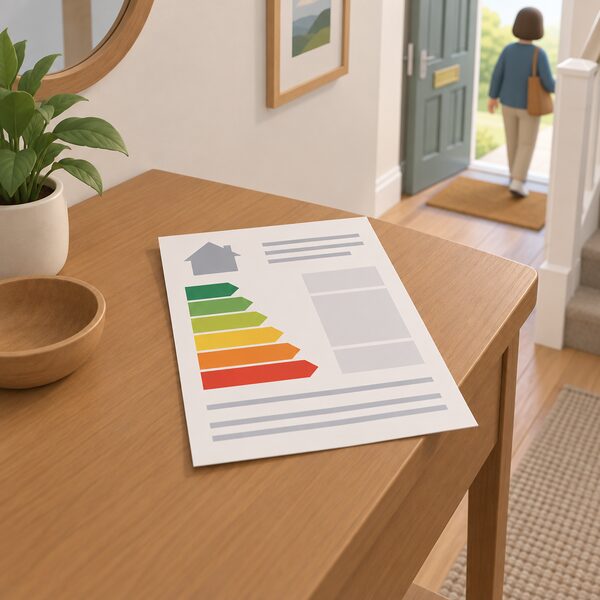
The Energy Performance Certificate regime is also split. The Energy Performance of Buildings (England and Wales) Regulations 2012 replaced the 2007 regulations and took effect on 9 January 201318. Those regulations set a fourteen-day deadline for producing documents following a request19. Separate regimes operate in Scotland and Northern Ireland.
On methodology, the UK Government has proposed replacing the SAP with a new methodology, the home energy model5. That change would affect the calculation behind EPCs in England and Wales.
| Nation | Feed-in Tariff | Energy Company Obligation | Notes |
|---|---|---|---|
| England | Covered | Covered | ECO eligibility set locally by statement of intent20 |
| Scotland | Covered | Covered | Devolved buildings policy3 |
| Wales | Covered | Covered | Devolved buildings policy3 |
| Northern Ireland | Not covered | Not covered | Separate regime3 |
Local delivery differs within nations as well. Local authorities can set their own criteria for eligibility for funding for domestic energy efficiency measures20. Local authorities must publish a statement of intent that defines who is eligible for funding before this can happen20. Grants and loans are made available for homeowner-occupiers, landlords and tenants for insulation works and heating installations20.
For a household, the practical consequence is that the same closed scheme can leave different legacies depending on where the property sits. A Feed-in Tariff accredited installation in Scotland or Wales is covered by the same scheme rules as one in England, but the building standards and retrofit support around it are set by a different administration3.
The rules that survive a closed scheme
The rules that survive closed schemes are of two kinds: the rules that govern existing participants, and the rules that govern the registers and certificates the schemes created.
For the Feed-in Tariff, the scheme is underpinned by the Feed-in Tariffs Order 2012 as amended and conditions 33 and 34 of the Standard Conditions of Electricity Supply Licence3. The scheme requires participating licensed electricity suppliers to make payments on electricity generated or exported by accredited installations21. Only the owner of the installation, or those who have been assigned FIT Payment rights as nominated recipients, may complain or raise a dispute, although non-owners may still make certain information requests22.
Deployment caps placed limits on the total capacity that could receive a particular tariff rate in a particular tariff period23. Tariff periods for solar photovoltaic, wind, hydro and anaerobic digestion installations were quarterly, while tariff periods for micro CHP installations were six monthly23. Those caps are part of why the scheme closed: the capacity available at each tariff rate was finite.
For the Energy Company Obligation, the rules are different again. Participation under NMAP routes is optional for suppliers11. The scheme has been extended to 31 December 2026 to meet existing targets and remediate non-compliant installations4. Energy suppliers have now stopped advertising, or accepting applications for ECO4 funding4. That means the extension is not an opportunity for new applicants.
The Energy Performance of Buildings (Certificates and Inspections) (England and Wales) (Amendment) Regulations 2012 were revoked by the Energy Performance of Buildings (England and Wales) Regulations 201219. The replacement regulations carry the fourteen-day deletion deadline for documents19. This is the pattern across the field: one instrument replaces another, and the obligations transfer rather than disappear.
What closed schemes mean for energy independence
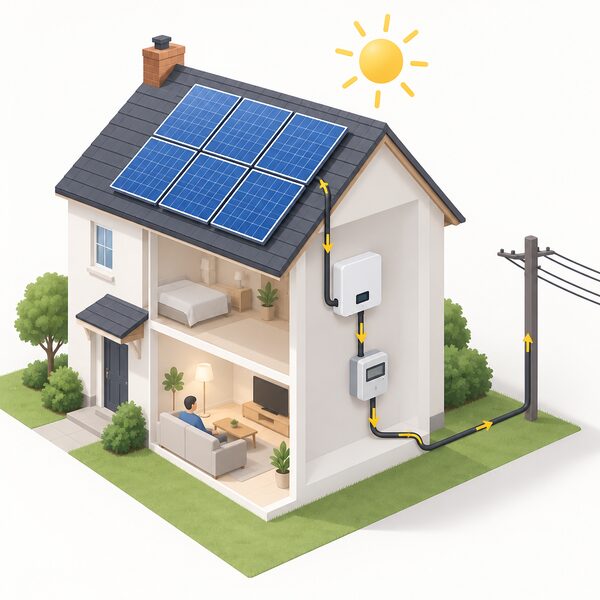
Closed schemes matter to energy independence because they determine what a household can still do for itself, and what it must still buy from the grid or a supplier.
The Feed-in Tariff was designed to promote the uptake of small-scale renewable and low-carbon electricity generation21. It succeeded on volume: by the end of Scheme Year 14, the scheme had supported a cumulative 870,164 small-scale low-carbon installations holding 6.5 GW of generating capacity7. Domestic installations accounted for 829,651 accreditations, or 95.38% of the total, and 2,955 MW, or 45.53% of capacity7. Those installations still generate, and their owners still hold payment rights, but no new household can join.
The Energy Company Obligation was aimed at reducing fuel poverty by improving the least energy efficient housing occupied by low income and vulnerable households17. Its closure removes the main supplier-funded route to insulation for those households. The Government's stated reason was value for money6.
The British Energy Security Strategy set out how Great Britain would accelerate homegrown power for greater energy independence, and described weaning Britain off expensive fossil fuels and boosting diverse sources of homegrown energy for greater energy security in the long term10. The Climate Change Committee's response to that strategy said it was "still disappointing not to see more on energy efficiency and on supporting households to make changes that can cut" bills4.
"This will be central to weaning Britain off expensive fossil fuels, which are subject to volatile gas prices set by inte"
The dependence that remains is structural. A household with a closed-scheme installation still relies on a licensed supplier to make its Feed-in Tariff payments, and on the grid to take its exports21. A household without one has no equivalent route to self-generation support. Domestic energy demand has fallen by 19% since 2000, despite a 12% increase in the number of households, according to Ofgem's Future Insights series14. That fall reflects efficiency and behaviour rather than any single scheme.
Consumer satisfaction data suggests the policy churn has not damaged the supplier relationship as much as might be expected. Dissatisfaction with energy suppliers declined from a peak of 13% to just 6% in January 2024, and the proportion neither satisfied nor dissatisfied fell from 21% in March 2022 to 13% in January 202524. That is a measure of supplier service, not of scheme design, but it indicates that households judge the relationship they have rather than the schemes they have lost.
Sources24 cited
- UK homes unfit for the challenges of climate change, CCC says, Climate Change Committee, 2019-02-21
- Green Deal Scheme, House of Commons Library
- Feed-in Tariffs: scheme closure, Ofgem
- ECO: closing to new applications, House of Commons Library
- Heat and Buildings Strategy briefing, House of Commons Library
- Energy Company Obligation statistics, House of Commons Library
- FIT annual report SY14, Ofgem
- DESNZ annual report and accounts 2025 to 2026, Department for Energy Security and Net Zero
- UK housing fit for the future, Climate Change Committee
- British energy security strategy, UK Government
- ECO4 new measures and products guidance, Ofgem
- Climate policy that cuts costs, Climate Change Committee
- Domestic energy tariff reductions 2026, UK Government
- Households can save as plug-in solar panels come to market, UK Government
- Summary of responses to the Green Deal consultation, Welsh Government
- Review of the second year of the Carbon Emissions Reduction Target, Ofgem
- Energy efficiency grants and funding, Tameside Council
- Energy Performance of Buildings (England and Wales) Regulations 2012, legislation.gov.uk
- Energy Performance of Buildings (England and Wales) (Amendment) Regulations 2012, legislation.gov.uk
- Energy efficiency advice, Torridge District Council
- FIT quarterly report issue 63, Ofgem
- FIT dispute resolution, Ofgem
- FIT deployment caps reports, Ofgem
- What drives consumer satisfaction with energy suppliers, Ofgem
 EPC Regulations and ReformSelling or renting out a home means you need an Energy Performance Certificate.
 Older People and Home EnergyOlder people often pay more to keep warm and can miss out on help they are entitled to.
 Moving Home Energy AccountsMoving home means you get a new energy supplier whether you choose one or not, so who supplies your new place and what happens to your old account?
 The Full Grants and Schemes GuideWhich grants can you actually get right now, and how do you apply for them?
 Get an EPC for Your HomeSelling or renting out a home means you need an Energy Performance Certificate.
 Solar Export PaymentsIf you have solar panels, how do you actually get paid for the electricity you send back to the grid?