

In this answer
Short answer
The Green Homes Grant is closed. All work had to be successfully completed by 31 March 2022, and the installer had to be a TrustMark registered, Green Homes Grant approved business1. There is no live application route, no voucher to redeem and no installer to register for it. The scheme ran in England only, providing grants to homeowners and landlords to make energy efficient improvements to homes2.
Its record is the reason it still matters. The National Audit Office reported 5,804 installations by the end of February 20213, against an official aim of upgrading over 600,000 homes before the end of the financial year4. Householders had difficulty finding installers and getting their applications approved5, and there were not enough installers certified under PAS 2030 to support the scheme5.
What survives is the rulebook. The Green Homes Grant was the first mass-market domestic retrofit scheme to require TrustMark registration, PAS 2030 certification and a named installer on the voucher, and those conditions now shape how grant-funded work is checked. This page sets out what the scheme required, who it covered, and what a household searching for a "green homes grant installer" today is actually looking at.
What the Green Homes Grant was, and who it covered
The scheme provided grants to homeowners and landlords to make energy efficient improvements to homes, and it supported domestic customers to install energy efficiency and low carbon heating measures, including heat pumps9. It was an England-only voucher scheme: the vouchers went to homeowners and landlords for domestic properties in England2.
Eligible applicants were wider than owner-occupiers alone. They included all owner-occupied homes, including long-leaseholders and shared ownership, landlords of private rented sector domestic properties, landlords of social sector domestic properties, and park homeowners10. Homeowners and residential landlords could apply for a voucher11.
The stated ambition was large. The scheme aimed to upgrade over 600,000 homes before the end of the financial year, providing a contribution towards the installation of household energy efficiency measures while fully funding the measures for low-income households4. That combination, a partial grant for most households and full funding for low-income households, is what made installer capacity the binding constraint rather than demand.
For a household's energy independence, the design mattered as much as the money. A voucher funded a fixed measure, fitted once, by a named business. It did not create an ongoing relationship with a supplier, and it did not remove the home's dependence on the grid or on gas for the measures it did not cover. What it could do was reduce the amount of energy a home needed to buy, which is the part of independence a household controls directly. The scheme's failure to reach scale meant that benefit reached a small number of homes rather than the 600,000 intended3.
Installer conditions: TrustMark, PAS 2030 and the voucher
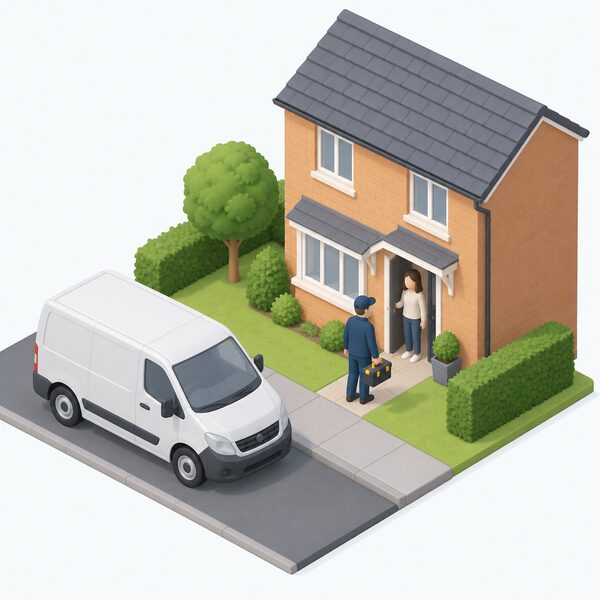
The installer rules were the scheme's defining feature, and they are the part still cited in later grant design. Only TrustMark registered businesses could register to be a Green Homes Grant installer6, and tradespeople had to be registered with TrustMark, which the government described as having a robust registration process12. The quote itself had to come from an appropriately certified and TrustMark registered installer13.
Certification went further than the register. Installations under the scheme had to be carried out under PAS 2030:2019, a requirement that applied to park homes, protected buildings and high-rise buildings7. The government's own account of the scheme describes it as only allowing TrustMark and PAS registered companies to participate14. Once the installation was complete, it had to be registered on the Microgeneration Installation Database and with TrustMark10.
The voucher then locked the choice in. A successful application's voucher contained the name of the installer or business selected to carry out the works8, and the government paid the voucher value directly to that installer once the work was completed and the voucher redeemed8. Redemption required a dated copy of the installer's invoice and homeowner confirmations8. Installers could be paid once the consumer had redeemed the voucher, provided the installation and procedures complied with MCS standards and the scheme's terms and conditions10.
"Do not start the installation until the consumer has successfully received their voucher."
That condition is worth reading alongside the application deadline. Householders had to apply before installation, with 31 March 2021 given as the deadline for heat pumps15. Work begun before a voucher was issued fell outside the scheme, which is one reason applications and installations became tangled as the deadline approached.
What was funded, and what was excluded
The scheme covered energy efficiency and low carbon heating measures, including heat pumps9. Solar thermal installations were eligible for a Green Homes Grant voucher16. The responsibility for matching product to property sat with the installer: under the voucher scheme, it was the responsibility of a certified installer to recommend an appropriate product that meets standards, while the homeowner was responsible for deciding the measures they wanted installed12.
Exclusions were explicit. Building a new extension or conversion to the home, insulating a conservatory with no fixed heating, and installing a new fossil fuel boiler such as a gas, oil or LPG boiler were not eligible10. The boiler exclusion is the one households most often misremember, because boiler replacement is the measure most commonly sold door to door.
| Measure | Green Homes Grant position |
|---|---|
| Heat pumps | Supported as a low carbon heating measure9 |
| Solar thermal | Eligible for a voucher16 |
| Energy efficiency measures | Supported9 |
| New gas, oil or LPG boiler | Excluded10 |
| Conservatory with no fixed heating | Excluded10 |
| New extension or conversion | Excluded10 |
The interaction with the Domestic Renewable Heat Incentive was the other condition households had to weigh. Consumers could claim both the Domestic RHI and the Green Homes Grant for an MCS certified renewable heat installation10, but the grant amount had to be declared and deducted, and an installation was not eligible for the Domestic RHI if the Green Homes Grant paid the entire cost of the installation17. A grant received after accreditation ended RHI payments altogether, while grants from private funds including Green Deal and ECO were not deducted17.
How the application and payment process worked
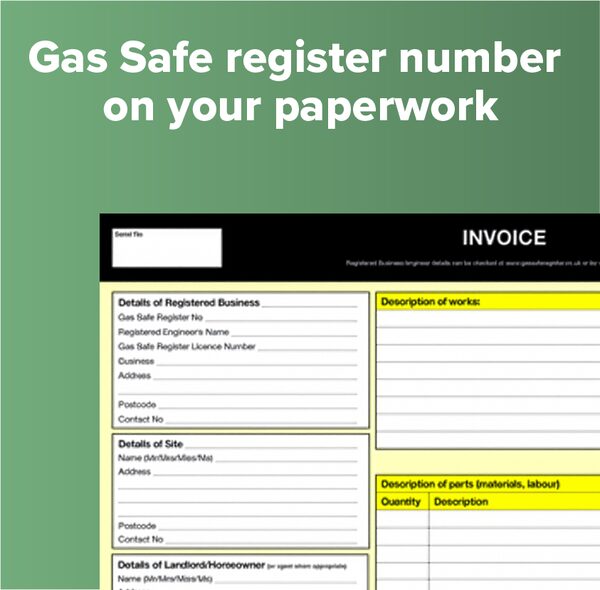
The process ran in a fixed order, and the order is what caused most of the friction.
- Search for local installers using the government's Simple Energy Saving Advice Service8.
- Obtain at least one quote from a registered installer, with three quotes advised8.
- Apply online and receive a voucher naming the chosen installer18.
- Wait for the voucher before any work starts10.
- Have the installation carried out under PAS 2030:2019 and MCS standards where relevant7.
- Register the installation on the Microgeneration Installation Database and with TrustMark10.
- Redeem the voucher with a dated invoice and homeowner confirmations, after which the government pays the installer directly8.
The installer issued the Installation Assurance Authority's guarantee once the work was carried out18. That guarantee is a separate instrument from the grant, and it is the part of a completed Green Homes Grant installation that a household may still be able to rely on, depending on the business that issued it and whether that business still trades.
Why the installer base could not deliver
The scheme's central problem was supply, not demand. There were not enough installers certified under PAS 2030 to support the scheme5, and householders had difficulty finding installers and getting their applications approved5. The certification requirement that gave the scheme its quality assurance was also the constraint on its capacity.
The installer workforce did respond where it could. Over half, 51%, of installers stated that they had hired new people19. That figure describes intent and action among those already in the market, not a sufficient base to deliver 600,000 homes.
The outcome is recorded in the installation count. The National Audit Office reported 5,804 installations by the end of February 20213. Against the stated aim of upgrading over 600,000 homes before the end of the financial year4, the gap is the scheme's defining number.
For a household, the practical lesson is about sequencing. A grant that names an installer on a voucher, requires certification before work starts and pays the installer rather than the household puts the risk of installer availability on the household at the point of application. Where the certified base is thin, that risk becomes a delay, and a delay against a fixed completion date becomes a lost grant.
What replaced it, and what to check now

There is no single successor scheme. Support is split by nation, and the installer conditions differ in each.
In Wales, the Green Homes Wales scheme sets an upper limit on the installation grant offered, being the lesser of the maximum eligible grant amount in the Eligible Measures Tables, calculated against eligible costs evidenced by installer quotations, or an amount equal to the loan funding offered by the scheme for the installation20. In Scotland, the Home Energy Scotland loans and cashback scheme allows a householder to apply to use an unaccredited installer in exceptional circumstances where no local installer can be found who meets the scheme requirements21. That is a different approach from the Green Homes Grant's absolute TrustMark condition, and it shows how much the rules vary by nation.
Certification still carries weight beyond grants. MCS certification is a requirement for heat pump installations made under the Domestic Renewable Heat Incentive, the Green Homes Grant and the Clean Heat Grant22, and permitted development rights for wind turbines and air source heat pumps are only accorded for equipment installed by an installer certificated through the scheme using a certificated product23. The Green Deal framework regulations took a comparable approach, requiring the person carrying out the installation to be authorised as a Green Deal installer24, and the Green Deal Home Improvement Fund was open to Green Deal authorised installers and providers only25.
For a household checking an installer today, the useful checks are the ones the scheme made compulsory: whether the business is TrustMark registered, whether it holds MCS certification for the technology, and whether the work falls under the installer requirements for grants of whichever scheme is being applied for. Where a business advertises itself as a Green Homes Grant installer, the claim refers to a scheme that closed, and the registration claim itself is worth verifying against the register rather than the marketing.
The wider point for energy independence is that grant-funded retrofit is a one-off intervention with a fixed end date, while the household's dependence on the grid, on gas and on a supplier continues afterwards. The measures a grant funds reduce how much energy a home needs to buy; they do not change who supplies it. That is why the installer conditions matter more than the grant headline: a certified installation that performs as specified is the part that keeps delivering, long after the voucher has been redeemed.
Sources25 cited
- Clarification on Installer Standards for the Green Homes Grant Scheme, NAPIT, 2021
- Register energy devices in homes or small businesses: guidance, GOV.UK, 2021
- The Green Homes Grant Scheme, National Insulation Association, 2020
- FAQs for Green Homes Grant Installers, Renewable Energy Consumer Code, 2020
- Green Homes Grants Scheme, Solar Energy UK
- Written questions: Green Homes Grant installer standards, UK Parliament, 2022
- Green Homes Grant, National Audit Office, 2021
- MCS responds to the closure of the Green Homes Grant, MCS, 2021
- Green Homes Grant voucher scheme: where did it go wrong and what comes next, Retrofit Academy, 2021
- Industry associations call for four point plan to fix Green Homes Grants scheme, Solar Energy UK, 2021
- Solar energy and the Green Homes Grant, Solar Energy UK
- Myth busting the Green Homes Grant scheme, HIES, 2020
- Green Homes Grant scheme: Committee report, Environmental Audit Committee, 2021
- Green Homes Grant scheme: Committee report, part two, Environmental Audit Committee, 2021
- Planning permission: wind turbines, Welsh Government
- Green Deal Framework Regulations, legislation.gov.uk, 2011
- Domestic Renewable Heat Incentive Essential Guide, Ofgem, 2024
- Heat in Buildings Quality Assurance Statement, Scottish Government, 2022
- Green Homes Wales loan standard terms and conditions, Development Bank of Wales
- Want to make green improvements to your home, Cornwall Council, 2025
- Green Homes Grant, Installation Assurance Authority
- Green Homes Grant finder, E.ON
- Green Homes Grant: maximising your home's energy efficiency, Warmup, 2022
- Heat pump deployment quarterly statistics, UK 2024 Q4, Department for Energy Security and Net Zero, 2025
- Heat pump deployment quarterly statistics, UK 2025 Q1, Department for Energy Security and Net Zero, 2025
 Closed Energy PoliciesIf a scheme you used has closed, do you still get paid?
 The Full Grants and Schemes GuideWhich grants can you actually get right now, and how do you apply for them?
 Apply for a Home Energy GrantThe application sequence common to funded schemes: the checker, the survey or assessment, the installer, the paperwork and the sign-off.
 Grant ScamsGrant schemes attract cold callers, doorstep sellers and fake approval letters using real scheme names.
 Check Which Energy Grants ApplyWhich energy grants can you actually get right now, and which have closed?
 Grants and Energy IndependenceCan you get a grant for solar panels or a battery?