
In this guide
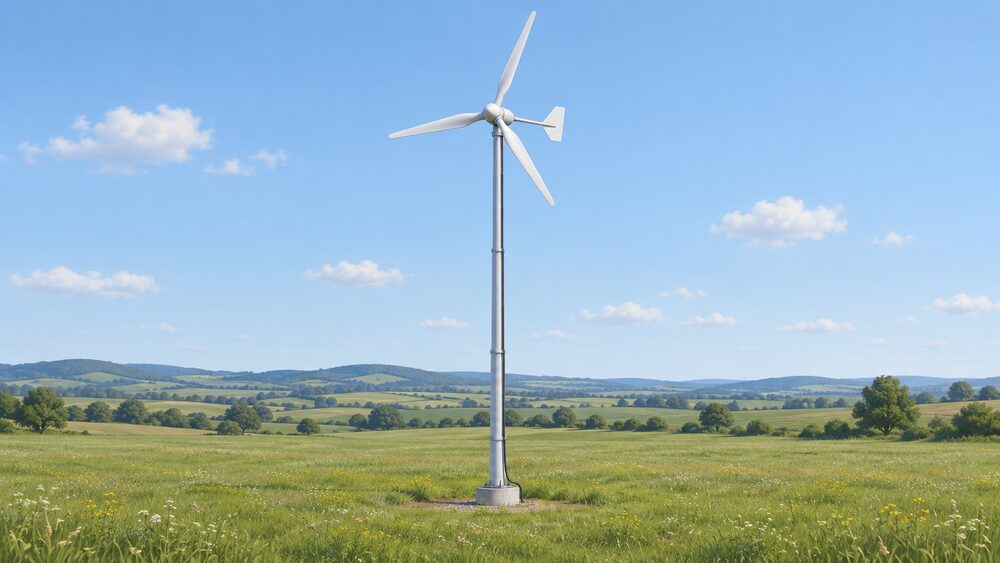
The Evance R9000 was one of the most widely installed small wind turbines in the UK, a 5 kW machine aimed at homes, smallholdings and rural businesses. The company behind it has gone into administration, and that single fact changes almost everything about owning one. There is no manufacturer to honour a warranty, no factory parts desk, no published fault code list and no technical support line.
What remains is the hardware, the installer relationship and the secondhand market. A small wind turbine is a long-lived asset, and the R9000's mechanical parts will usually outlast the company that made them. The practical questions for an owner are who can service it, where compatible parts come from, and whether the machine is still worth repairing.
For anyone considering a small wind turbine today, the R9000's story is a caution about manufacturer risk rather than about wind technology. The site assessment, the tower, the inverter and the grid connection all still matter, and the figures below set out what a machine of this class can realistically do.
Evance went into administration: what it means for R9000 owners
Administration is not the same as a company simply stopping trading. It means the business is being handled for the benefit of creditors, and the ordinary obligations a manufacturer carries, warranty repairs, spare parts supply, technical support and fault diagnostics, fall away unless a buyer takes them on. For an R9000 owner, the practical consequences are immediate and specific.
The product warranty is the first casualty. A warranty is a contract with the company that issued it, and once that company is in administration there is no counterparty to claim against. The workmanship warranty from the installer is a separate agreement and may still be live, because it is the installer's promise about the quality of the fitting rather than the maker's promise about the machine. Certified installers must offer a one-year warranty free of charge, and the Home Energy Scotland Grant and Loan will not fund any extended warranty beyond that one-year term5.
The second consequence is parts. Blades, inverters, controllers and bearings were made or specified by Evance, and without the company there is no first-party supply. Inverters are the component most likely to fail first: a small wind inverter may need replacing once during the turbine's lifetime, and on a larger system that replacement usually costs between £1,000 and £2,0002. That is a significant sum to spend on a machine whose maker no longer exists.
The third consequence is knowledge. Fault codes, commissioning settings and service intervals were documented by the manufacturer, and that documentation is no longer being maintained or issued. Owners are dependent on whatever paperwork came with the installation and on the experience of independent engineers.
The R9000 at a glance: 5 kW rated output
The R9000 sits in the middle of the domestic small wind market. Individual wind turbines vary in size and power output from a few hundred watts to two or three megawatts, and a typical domestic system for a home is 2.5 to six kilowatts, depending on the location and size of the house1. Domestic wind turbines as a category range from 1kW to 15kW6, and small turbines that can power a single property may have a generating capacity of 10kW7.
At 5 kW rated, the R9000 is a pole-mounted machine designed for sites with a reasonable wind resource and enough land to put a tower up. Rated output is not the same as delivered output: a turbine reaches its rated figure only at its rated wind speed, and spends most of its life below that. Building-mounted turbines illustrate the gap starkly, generating around 2kW of electricity and typically only around 2kW in practice, because they sit in disturbed air close to the roof8.
| Class | Typical output | Notes |
|---|---|---|
| Very small | around 100W | Charges a battery4 |
| Building-mounted | around 2kW | Smaller and less efficient than pole-mounted8 |
| Typical domestic system | 2.5 to 6 kW | Depends on location and house size1 |
| Single-property turbine | up to 10kW | Larger pole-mounted machines7 |
| Domestic range overall | 1kW to 15kW | Full span of domestic machines6 |
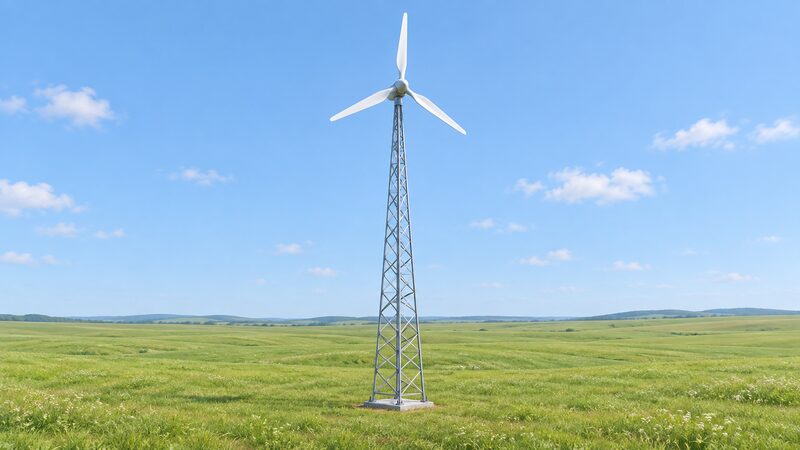
The R9000's 5 kW rating puts it in the upper half of the domestic band, which is why it was popular on farms, smallholdings and rural properties with space for a mast and a clear exposure to the prevailing wind.
How much electricity an R9000 actually generates
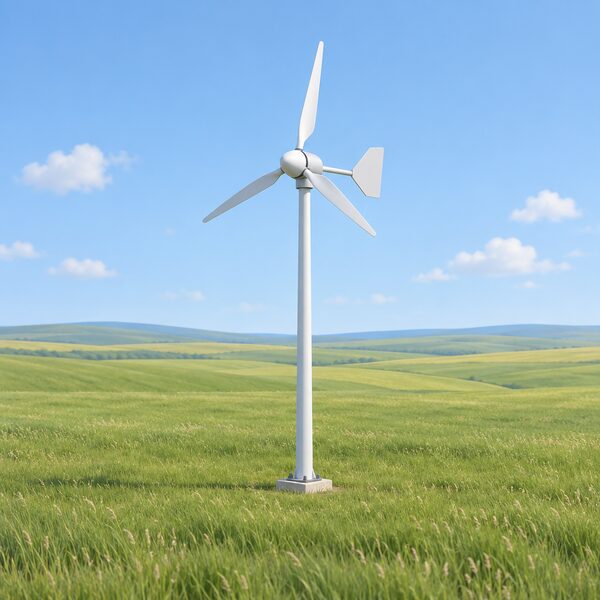
Generation is governed by wind speed at hub height, and the difference between an average site and a good one is larger than most people expect. A well-sited 6kW turbine can generate around 9,000kWh a year7, and the Energy Saving Trust puts a well-positioned 6kW turbine at around 9,000 kWh of electricity per year6. Those two figures agree, and they are the best available benchmark for a machine of this class on a genuinely good site.
A 5 kW R9000 on an average inland site will produce materially less than that. The 9,000 kWh figure assumes a well-sited, well-positioned machine, which in practice means an exposed rural location with a clean fetch and no nearby obstructions. Larger grid-connected turbines on suitable sites can make several thousand units of electricity per year3, which underlines how much of the outcome is down to siting rather than the machine.
For context on scale, UK wind turbines have enough capacity to meet 20% of the UK's electricity demand7, and UK onshore wind farms generate enough to power 9.9 million homes for an entire year9. A single domestic turbine is a very small contributor by comparison, and it is worth being clear about that before spending money.
The carbon saving is modest but real: installing a turbine lowers carbon emissions by around 2,600kg in Great Britain and 2,200kg in Northern Ireland8. The difference between the two figures reflects the different generating mix each displaces.
What this means for a household is that a 5 kW turbine is a partial contributor, not a replacement for a grid connection. Output is seasonal, highest in winter when wind speeds are greatest, and a household's demand peaks at different times of day. Without storage or an export arrangement, much of the generation is exported rather than used on site.
Costs: turbine, tower, foundations and installation
There is no published price for an R9000 now that the manufacturer has failed, and prices for small wind are installer-quoted. The figures that exist are for the class of machine rather than the specific model, and they are wide.
A 6kW wind turbine costs around £31,000 including installation6, and a 6kW pole-mounted system costs around £31,000 for equipment and installation7. A separate source puts a 6kW pole-mounted system at around £35,000 for equipment and installation8. The two figures differ by roughly £4,000, and both are indicative rather than a quote.
Expressed per unit of capacity, a turbine plus tower and installation might cost between £2,500 and £6,000 per rated kilowatt3. That range is the most useful planning figure, because it scales across machine sizes. On that basis a 5 kW machine sits somewhere in the middle of a very wide band, and the spread reflects tower height, foundation requirements, ground conditions and how far the cable run to the connection point has to go.
| Cost item | Figure | Source basis |
|---|---|---|
| 6kW turbine including installation | around £31,000 | Independent guidance6 |
| 6kW pole-mounted system, equipment and installation | around £31,000 | Independent guidance7 |
| 6kW pole-mounted system, equipment and installation | around £35,000 | Independent guidance8 |
| Turbine, tower and installation per rated kW | £2,500 to £6,000 | Independent guidance3 |
| Inverter replacement, larger system | £1,000 to £2,000 | Independent guidance2 |
| Annual maintenance | £100 to £200 | Independent guidance2 |
Costs include the turbine, mast, inverters, battery storage if needed, and installation1. Building-mounted turbines cost less to install than pole-mounted ones, but they tend to be smaller and less efficient8, which is why the pole-mounted route dominates for anyone with the space.
On funding, there are currently no specific schemes that can help fund a wind turbine installation8. The reduced rate of VAT for the installation of wind turbines and water turbines has been withdrawn10, and the UK was required to exclude wind and water turbines from the list of qualifying energy-saving materials in the 2019 changes11. Any grant or loan support that exists is general retrofit funding rather than wind-specific.
Planning permission and grid connection

Planning is the hurdle that catches most domestic wind projects. Residents in all British nations will usually need to apply for planning permission before starting any installation work4, and in Wales and Northern Ireland permission is required before installing a wind turbine8. England and Scotland have more complex rules, and in some specific situations permission may not be needed8, but England in particular has a number of stringent conditions that have to be met4.
The permitted development route is narrow. In England and Wales, development is not permitted if a stand-alone wind turbine is installed within the curtilage of the dwellinghouse or block of flats12, and the same restriction applies to a wind turbine installed on the same building or within its curtilage12. Where permitted development does apply, the turbine must use non-reflective materials on blades13. In other cases, an application to the local authority is needed to add a domestic wind turbine to a house or its surrounding grounds14.
Scotland has its own route. Installing a free-standing wind turbine in the curtilage of a dwellinghouse is subject to prior notification and prior approval16, and under Class 6G a householder applies to the planning authority for a determination on whether prior approval is required, covering the siting, design, size and external appearance of the proposed turbine17. Wales has separate guidance18, and the Planning Portal's England guidance notes that policy in Wales may differ13.
Grid connection is the other gate. Small wind systems can export unused or excess electricity to the grid and sell it to the local electricity supply company1, but the connection itself has to be agreed. One distribution network operator has raised its approval threshold for residential connections to 5kW20, which is relevant to a machine of the R9000's size, though thresholds vary by operator. Over 6GW of further projects have GB regulatory approval21, which indicates the scale of the connection queue nationally.
Servicing, spares and support after the company's failure
This is where R9000 ownership becomes genuinely difficult. There is no manufacturer service network, no parts catalogue and no technical helpline. What exists instead is the independent small wind sector, the secondhand market and whatever documentation came with the original installation.
The handover pack is the most valuable document an owner has. It is received on completion and includes key information such as product details and the workmanship warranty2. That pack identifies the exact model and build, records the installer, and sets out the terms the installer is still bound by. Finding it should be the first step for any owner facing a fault.
Maintenance itself is not expensive in normal operation. Small wind maintenance typically costs between £100 and £200 depending on the size of the system2, and running costs are relatively low because wind costs nothing to produce and turbines need little maintenance9. The problem is not routine cost but the availability of someone willing and able to work on a discontinued machine.
Inverters are the recurring replacement item. A small wind inverter may need replacing once during the turbine's lifetime2, and on a larger system that replacement usually costs between £1,000 and £2,0002. Compatible inverters from other manufacturers can often be substituted, but the control and protection settings have to be right for the grid connection.
For disputes with an energy supplier or network operator rather than the manufacturer, the Energy Ombudsman can be contacted at enquiry@energyombudsman.org22. It is worth being clear that this route does not cover manufacturer warranty claims, and the Ombudsman has previously stopped accepting new disputes about companies that have ceased to trade23. Feed-in Tariff administration contacts sit with the licensed suppliers rather than the manufacturer24, and the scheme's rules are set out in Ofgem's supplier guidance25.
What owning a small wind turbine means for energy independence
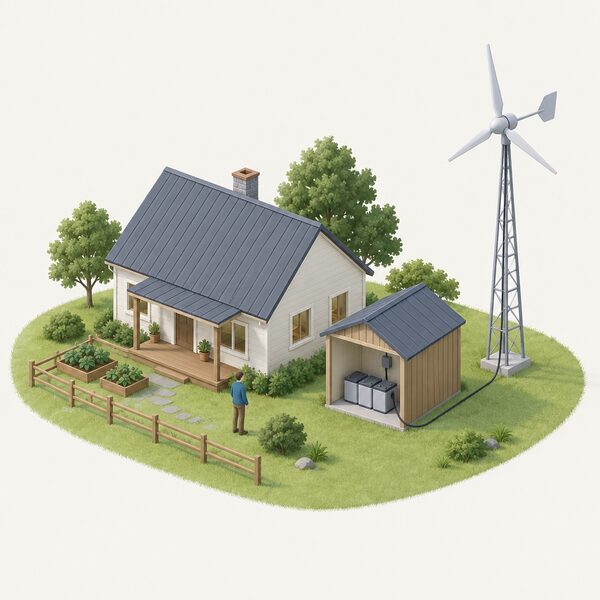
A small wind turbine changes the shape of a household's energy position without removing its dependence. Wind energy can be used as a clean, renewable power source for your own home2, and the benefits are free electricity, electricity storage, and cutting or eliminating a home's carbon footprint4. Those are real gains, and on a good site they are substantial.
The dependence that remains is on the grid. A grid-connected turbine exports surplus and imports when generation falls short, which means the household still relies on a supplier, a connection and the network's availability. Small wind is especially practical for remote areas where connecting to the grid may be costly or challenging2, and that is where the independence case is strongest: an off-grid property with a turbine, a battery bank and a backup source is genuinely self-sufficient in a way a grid-connected home is not.
The R9000's failure adds a second kind of dependence, on the manufacturer. A turbine whose maker no longer exists cannot be supported by the company that designed it, so the owner depends on independent engineers, compatible third-party components and the secondhand market. That is a different risk from grid dependence, and it is the one that has actually materialised for R9000 owners.
Community ownership offers an alternative model. A new approach has allowed energy consumers to own a wind turbine26, and one project is owned by over 900 members26. That spreads both the capital and the manufacturer risk across a group rather than resting it on a single household.
Alternatives if the R9000 is no longer available
For anyone who was considering an R9000 and finds it unavailable, the small wind market continues through other manufacturers, and the site assessment matters more than the badge. An installer can assess a property and recommend a suitably sized wind turbine8, and checking with the local council on the necessary planning permissions before installing is a sensible first step2.
The practical alternatives divide by site. A pole-mounted machine remains the default where there is space and exposure, since building-mounted turbines cost less to install but are smaller and less efficient8. Where the wind resource is poor, solar is usually the better use of the same budget, and where there is a stream with fall, micro hydro can outperform wind on a suitable site.
There is also a removal obligation to be aware of. A stand-alone wind turbine must be removed as soon as reasonably practicable when no longer needed for microgeneration18. That applies to any machine reaching the end of its life, including an R9000 that cannot be economically repaired.
On the wider policy picture, a hydrogen grid trial proposed in Whitby, Ellesmere Port is no longer going ahead27, which removes one of the alternative pathways sometimes discussed for domestic energy. For a household weighing options, the realistic choices remain wind, solar, hydro where the site allows, and a grid connection with an export arrangement.
Sources27 cited
- Wind, nidirect, 2026-05-18
- Small wind turbines, MCS Certified, 2026-08-18
- Domestic wind power, CAT, 2025-06-27
- Wind turbines, Uswitch, 2026-01-06
- Home Energy Scotland Grant and Loan terms and conditions, Home Energy Scotland, 2026-09-17
- Domestic wind turbines, Changeworks, 2026-06-01
- Wind power, Electricity North West, 2026-09-19
- Wind turbines, Energy Saving Trust, 2026-05-20
- What are the benefits of community owned wind power, Energy Saving Trust, 2026-03-16
- VAT changes to the reduced rate for energy-saving materials, HM Treasury, 2026-09-17
- The VAT (Energy-Saving Materials) Order 2022, legislation.gov.uk, 2026-09-17
- Class G: installation of air source heat pumps, legislation.gov.uk, 2026-09-17
- Planning permission: stand-alone wind turbines, Planning Portal, 2026-09-17
- Wind turbines, Planning Portal, 2026-09-17
- Planning permission: introduction, Planning Portal, 2026
- Circular 1/2024: householder permitted development rights, Scottish Government, 2024-05
- The Town and Country Planning (Permitted Development and Miscellaneous Amendments) (Scotland) Regulations 2024, legislation.gov.uk, 2024-05-24
- Planning permission: wind turbines, Welsh Government, 2026-09-17
- Planning permission: building-mounted wind turbines, Planning Portal, 2026-09-17
- UK Solar Roadmap, DESNZ, 2025-06
- Clean Flexibility Roadmap, GOV.UK, 2026-09-17
- Complain about your energy supplier or network operator, Ofgem, 2026
- Raise a dispute, Energy Ombudsman, 2026-09-19
- FiT licensee contact details, Ofgem, 2026-09-17
- FiT guidance for licensed electricity suppliers, Ofgem, 2024-09-06
- What are wind farms all about, Smart Energy GB, 2026-09-17
- New technology helping more homes connect to Britain's smart meter network, Smart DCC, 2026