In this guide
Community energy funding in the UK comes from a patchwork of sources: a £5 million Great British Energy Community Fund, a £30 million Energy Redress Scheme that community groups can now draw on, devolved schemes in Scotland and Wales, and a London fund with three separate streams. There is no single application, and no single pot. What a group can get depends on where it is, what it wants to build, and whether it is asking for money to test an idea or money to build it.
The distinction between feasibility and delivery runs through almost every scheme. Feasibility money pays for the work of finding out whether a project makes sense: technical studies, planning, governance, financing options. Delivery money pays for construction. Some funds, such as Scotland's Community and Renewable Energy Scheme (CARES), cover both, and CARES has provided over £67 million in funding to communities throughout Scotland1.
For a household, the relevance is direct. A community energy project is one of the few routes by which a home can take a stake in generation without owning the panels or the turbine itself. The funding determines whether such a project happens at all, and the terms of the funding determine who ends up owning it. This page sets out the schemes open now, who can apply to each, and what the deadlines are.
The main funds at a glance: who runs what and how much
The schemes differ in scale, in who administers them and in what they will pay for. The table below sets out the principal funds a community group in the UK might approach.
| Fund | Who runs it | What it covers | Scale |
|---|---|---|---|
| Great British Energy Community Fund | UK Government | Grant funding for community energy groups | £5 million2 |
| Energy Redress Scheme | Ofgem | Main Fund and other funds, open to community energy organisations since 23 July 2026 | £30 million scheme |
| CARES | Scottish Government, delivered by Local Energy Scotland | Renewable energy, heat decarbonisation, energy efficiency, shared ownership | Over £67 million to date1 |
| Ynni Cymru capital grants | Welsh Government | Community-led energy projects | £10 million3 |
| Rural Community Energy Fund | Defra and BEIS | Feasibility and development finance, rural England | £15 million4 |
| London Community Energy Fund | Greater London Authority | Feasibility, delivery and development streams | £3,000 to £60,000 |
| Powering Communities Fund | Younity | Groups with a Power Purchase Agreement | Up to £5,000 |
The scale of community energy in England and Wales gives a sense of what these funds support: the equivalent of 67,000 homes in England and Wales are now being powered by community energy, making a saving of 71,000 tonnes of carbon dioxide4. That figure dates from 2019 and the sector has changed since, but it indicates the order of magnitude.
Great British Energy itself is backed by £8.3 billion over the course of this Parliament5, with £125 million funding announced for 2025 to 2026 and a further £100 million of capital funding to spend in 2025 to 20266. The community fund is a small part of that total, but it is the part aimed directly at local groups.
Great British Energy community funding: £5 million and the Kickstart bridging loan

Great British Energy's Community Fund was launched providing £5 million in grant funding for community energy groups2. The fund sits within a body that was set up to kickstart investments in clean energy projects in 20256, and whose initial £100 million capital funding was confirmed in the 2024 Autumn Budget6.
The £5 million is grant funding rather than loan funding, which matters for community groups that have no balance sheet to borrow against. It is also small relative to the £8.3 billion backing Great British Energy as a whole5, so it functions as a seed fund rather than a capital programme.
For a group weighing up whether to apply, the practical question is what the grant will and will not cover. Grant funding of this kind typically pays for development work rather than construction, and the fund is aimed at community energy groups specifically rather than at households or individual installers. A group that has already done its feasibility work and is ready to build will usually need a different route, which is where the Energy Redress Scheme and the devolved funds come in.
The wider Great British Energy programme also matters to community groups because of what it signals about the direction of national policy. The government has described its mission as delivering a clean energy superpower, and Great British Energy is the vehicle for that6. Community energy sits at the edge of that mission rather than its centre, but the existence of a dedicated community fund is a change from the position a few years ago, when support came mainly through the Rural Community Energy Fund and the devolved schemes.
Energy Redress Scheme: £30 million, and community energy groups can now apply to all funds
The Energy Industry Voluntary Redress Scheme is funded by payments from energy suppliers that have breached their licence conditions. Utilita Energy, for example, paid £321,740 into the Energy Redress Fund following an Ofgem investigation7. The scheme is administered by Ofgem and distributes money to organisations that help energy consumers, particularly vulnerable ones.
The significant change for community energy came on 23 July 2026, when community energy organisations in England, Scotland and Wales became eligible for the Main Fund, which is around 75% of scheme funding. Before that, community groups could apply only to some of the scheme's funds. The change followed lobbying by Community Energy England.
The scheme runs in phases, with rounds approximately quarterly. The first funding round of phase three closed on Tuesday 23 June 2026. That quarterly rhythm is useful for groups that miss a deadline: the wait for the next round is measured in months rather than years.
Eligibility for the scheme extends to voluntary sector organisations, alongside businesses and public sector organisations8. That breadth is unusual among energy funds, most of which are restricted to particular types of applicant. A community interest company or a registered charity working on energy advice or generation can generally apply, provided it can show that the work benefits energy consumers.
Small Project Fund: grants of £20,000 to £49,999 for vulnerable households
The smaller end of community energy funding overlaps with fuel poverty programmes. Warm Homes: Social Housing Fund provides funding to local authorities, combined authorities, registered providers of social housing, and registered charities that own social housing in England9. Under its on gas grid low carbon heating incentive offer, participating applicants have access to a £20,000 per home grant offer, available for up to 10% of the homes included in an application10.
For homes using that offer, the total available grant funding for each home is £20,000, instead of the base cost cap, and those homes cannot access the base £7,500 cost cap or any other cost caps10. That is a substantial sum per property, and it is aimed at installing low carbon heating rather than at generation.
The Warm Homes: Local Grant operates on a different basis. Whole project averages are estimated up to £12,400 per household11. For private landlords' second and subsequent properties in England, the grant covers 50% of the cost up to £7,500 for energy performance improvements12, and for PRS second and subsequent properties the maximum is £8.3k for energy performance and £8.3k for low carbon heating, a total of £16.6k13.
These programmes are delivered through councils rather than directly to community groups, so a group wanting to work on a specific estate usually needs to partner with the local authority. The funding is for physical measures, not for feasibility work or core costs.
London Community Energy Fund: three streams from £3,000 to £60,000
The London Community Energy Fund (LCEF) is the capital's dedicated scheme, and it is structured in three streams that reflect the stages a project goes through. The feasibility and delivery streams of the ninth round close at 11:59pm on 30 September 2026. The development stream opened in October 2026, with more details to follow.
The three-stream structure is worth understanding because it maps onto how projects actually fail. A group that cannot afford a feasibility study never gets to the delivery stage. A group that has done the study but cannot fund construction stalls. The development stream sits between the two, supporting the work of turning a viable idea into a fundable project.
Grants range from £3,000 to £60,000 across the streams, with the smaller sums going to early-stage work and the larger ones to construction. For a London-based group, the fund is often the first port of call, and the deadlines are firm.
Funding in Scotland: CARES and the Community Energy Generation Growth Fund
Scotland has the longest-running and largest community energy support programme in the UK. CARES provides advice and funding to communities across Scotland looking to develop renewable energy, heat decarbonisation and energy efficiency projects, including shared ownership projects14. It is delivered by Local Energy Scotland14.
The scheme has provided over £67 million in funding to communities throughout Scotland1. Earlier figures show funding of over £51 million and support for over 600 projects to develop, own or take a stake in local renewable energy projects across Scotland15, and over £58 million offered to date as of October 202215.
CARES also funds project planning guidance, helping groups to navigate funding and avoid project pitfalls16. That is a recognition that the main risk to a community project is not usually construction but the process leading up to it.
The Community Heat Development Programme is funded by the Scottish Government through CARES17, and provides new support for communities and groups of householders across Scotland19. It is aimed at developing ideas on transforming heat in Scotland's homes and buildings, rather than at building anything.
There is also dedicated guidance for repowering projects, including support on financing, evaluation and governance, as well as targeted support from Local Energy Scotland through CARES, including help to develop proposals14. Repowering matters because Scotland's earliest community wind projects are reaching the end of their operational life, and the question of what replaces them is a live one for the groups that own them.
The first CARES community buildings funding round awarded over £2.6 million to 74 organisations to install renewable technologies in Scotland's community buildings15. Applications for the Community Buildings Fund are now open20.
Rural England: the Rural Community Energy Fund
The Rural Community Energy Fund (RCEF) is a £15 million joint Defra and BEIS fund that has offered feasibility and development finance for community-scale clean energy projects in rural England since 20134. It is the main England-wide route for rural groups, and it is explicitly a feasibility and development fund rather than a capital one.
That focus is deliberate. Rural projects face particular difficulties: smaller populations, higher connection costs, and fewer organisations with the capacity to run a project. Feasibility funding lets a group establish whether a scheme is viable before committing to it.
The fund sits alongside other England-wide programmes. The Local Authority Delivery Phase 3 provided £280 million for on-grid homes, combined with Home Upgrade Grant Phase 1 under Sustainable Warmth21, and Home Upgrade Grant Phase 1 allocated £218 million to improve energy efficiency in low-income homes off the gas grid21. Those are household retrofit programmes rather than community generation funds, but they are often the route by which a community project reaches individual homes.
At regional level, combined authorities have run their own programmes. The West Midlands Combined Authority has secured £70 million of funding from government and social housing providers22, and the UK Government allocated £300 million to the 5 Local Energy Hubs to deliver upgrades to around 30,000 homes across England by December 202123.
Powering Communities Fund: up to £5,000 for groups with a Power Purchase Agreement
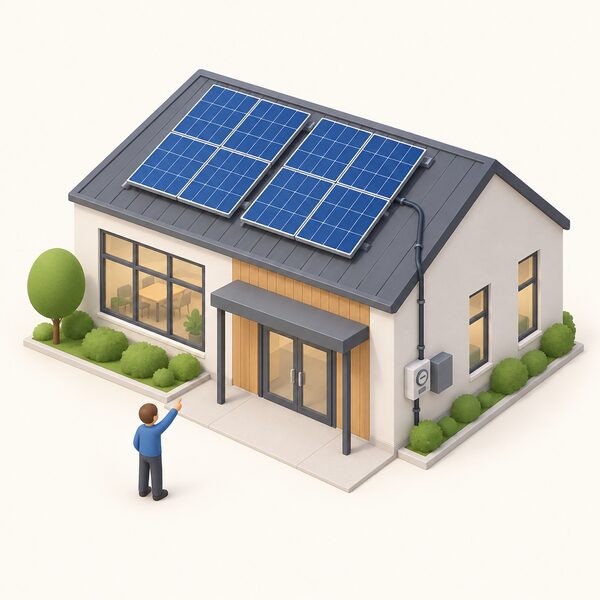
The Powering Communities Fund, provided by Younity, offers up to £5,000 to groups that have a Power Purchase Agreement in place. It closed to applications on 9 June 2026.
The requirement for a Power Purchase Agreement is the defining feature. A group must already have an arrangement to sell its generated electricity before it can apply, which means the fund supports groups that have got past the development stage and are generating or about to generate. It is not a route for a group still working out what to build.
The sums are small, and the fund is best understood as support for the running of a project rather than for its construction. For a group with an operating scheme, £5,000 can cover monitoring, community engagement or the administrative costs that capital grants rarely touch.
Deadlines and how to apply before the next round closes
Deadlines in this sector are firm and the gaps between rounds vary. The table below sets out the dates that matter.
| Scheme | Deadline | Date |
|---|---|---|
| London Community Energy Fund, feasibility and delivery streams | Applications close 11:59pm | 30 September 2026 |
| London Community Energy Fund, development stream | Opens | October 2026 |
| Powering Communities Fund | Closed to applications | 9 June 2026 |
| Energy Redress Scheme, phase three first round | Closed | 23 June 2026 |
| Heat Pump Ready Programme Round 2 | Applications close 1pm | 25 June 2026 |
| Heat Pump Ready Programme Round 2, questions | Submit by email | 14 May 2026 |
The Heat Pump Ready Programme Round 2 innovation funding competition is a research and innovation competition rather than a community fund, but it illustrates how these processes work: the deadline to submit applications is 1pm on 25 June 2026, and the deadline for submitting questions regarding the competition is 14 May 202624. Questions close weeks before applications, which is a pattern common to government competitions.
Lead grant recipients under Warm Homes: Social Housing Fund Wave 3 must spend all their grant funding by 31 March 2028 and will lose their opportunity to claim grant funding after that date10. Spending deadlines of this kind are common, and they mean that a group awarded money must be ready to use it.
Who can apply, and what the money can cover

Eligibility varies more than the headline figures suggest. Ynni Cymru capital grants provide financial support to community energy organisations, social enterprises, public sector bodies, and SMEs3. The Energy Redress Scheme covers businesses, voluntary sector organisations and public sector organisations8. Warm Homes: Social Housing Fund is narrower, limited to local authorities, combined authorities, registered providers of social housing, and registered charities that own social housing in England9.
The distinction between feasibility and delivery funding runs through the application process itself. Under Warm Homes: Social Housing Fund Wave 3, delivery assurance is an assessment of the feasibility and credibility of the project including resource, project management strategies, risk and issues management and confidence in delivery of the project10. For the Challenge Fund route, delivery assurance and internal resourcing covers the feasibility and credibility of the project, including organisational design, fraud management and planning10. The delivery processes differ between the two application routes10.
That phased model facilitates the approach taken by many organisations, with detailed information on the homes included within a phase required only once the grant recipient is ready to start delivery of that phase10. For a community group, that means the application burden is staged rather than front-loaded.
Core costs are the hardest thing to fund. Capital grants pay for equipment and installation; feasibility grants pay for studies and advice. Neither typically covers salaries, insurance or the day-to-day running of an organisation, which is why groups often combine a capital grant with other income.
Is funding available in my part of the UK?
The four nations have different provision, and the differences matter for what a group can realistically apply for.
Scotland has the most developed offer. CARES covers renewable energy, heat decarbonisation and energy efficiency, including shared ownership14, and has provided over £67 million to communities1. The Community Heat Development Programme adds support for communities and groups of householders across Scotland19. An additional £3 million was made available to support decarbonisation of Scotland's most remote and rural off-grid communities25.
Wales has the Ynni Cymru capital grants scheme, providing £10 million to support community-led energy projects across Wales3. It is open to community energy organisations, social enterprises, public sector bodies and SMEs3.
England has the Rural Community Energy Fund for rural areas4, the London Community Energy Fund for the capital, and the Warm Homes programmes delivered through councils9. Regional combined authorities have run their own schemes, including the West Midlands Combined Authority's £70 million programme22.
Northern Ireland has had less dedicated community energy funding. Support has tended to come through energy bill schemes, such as the Energy Bills Support Scheme Alternative Funding, which opened on 27 February 2023 and was delivered by local authorities with support provided by the UK Government26. That scheme closed on 31 May 202327.
What happens after a funding round closes

Rounds reopen, but the intervals vary. The Energy Redress Scheme runs rounds approximately quarterly, with the first round of phase three closing on 23 June 2026. The London Community Energy Fund's ninth round closed its feasibility and delivery streams on 30 September 2026, with the development stream opening in October 2026.
For a group that misses a deadline, the practical response is to use the interval to strengthen the application. Feasibility work done in the gap is not wasted, and several funds will pay for it. CARES, for instance, provides project planning guidance, helping groups to navigate funding and avoid project pitfalls16.
The wider policy context also shifts. The government has set out its clean energy superpower mission and the role of Great British Energy within it6, and the funding landscape for community energy has changed several times in recent years. Groups that track the announcements tend to be better placed when a round opens.
For households, the connection between community energy funding and their own energy independence is indirect but real. A funded community project is one route to local generation and, in some cases, local supply. The funding determines whether that route exists in a given place, and the terms determine who owns the result. Where a project is owned by the community, the benefits stay local; where it is owned by a commercial developer, they generally do not.
Sources27 cited
- Tackling fuel poverty in Scotland: periodic report 2021 to 2024, Scottish Government, 2025-04-01
- UK Solar Roadmap, DESNZ, 2025-03-21
- £10 million support for community-led energy projects across Wales, Welsh Government, 2025-05-01
- The future for small-scale low-carbon generation, BEIS, 2019-01
- Great British Energy: research briefing, House of Commons Library, 2026-07-10
- Accelerating to Net Zero: responding to the CCC Progress Report, GOV.UK, 2024-12-17
- £25,000 Utilita Energy customers receive compensation after Ofgem uncovers additional support credit failure, Ofgem, 2022-12-13
- Energy bills support: an update, National Audit Office, 2024-11-14
- Heat pump deployment tables Q2 2026, DESNZ, 2026-09-10
- Warm Homes: Social Housing Fund Wave 3 scheme guidance addendum, DESNZ, 2026-06
- Warm Homes Local Grant, Surrey County Council, 2026-09-17
- Warm Homes Local Grant, Greater Manchester Combined Authority, 2026-09-17
- Warm Homes: Local Grant policy guidance, DESNZ, 2026-07
- Local and small-scale renewables, Scottish Government, 2026-09-17
- Heat in Buildings Strategy 2022 update: progress, Scottish Government, 2022-10-31
- Heat pump guide: defining the project, Local Energy Scotland, 2026-09-20
- Introduction to the Community Heat Development Programme, Local Energy Scotland, 2026-09-20
- Introduction to the Community Heat Development Programme, Local Energy Scotland, 2024-02-13
- New support for communities to develop ideas on transforming heat, Local Energy Scotland, 2026-09-20
- Heat hub, Local Energy Scotland, 2025-07-23
- Energy efficiency schemes: research briefing, House of Commons Library, 2026-09-17
- £16m fund to help homeowners pay for energy efficiency improvements, West Midlands Combined Authority, 2024-01-16
- Energy efficiency in social housing, Public Accounts Committee, 2021-04-30
- Heat Pump Ready Programme Round 2 innovation funding competition, GOV.UK, 2026-06-25
- Heat in Buildings Strategy: achieving net zero emissions in Scotland's buildings, Scottish Government, 2021-10-07
- Thousands more households in Northern Ireland on course to benefit from £600 government help with energy bills, GOV.UK, 2023-02-27
- Energy Bills Support Scheme Alternative Funding, Carmarthenshire County Council, 2023-03-24
 Community Energy in the UKWhat community energy means in practice, the legal structures used, and the types of project householders can join or benefit from.
 Community Energy in EnglandCommunity energy lets neighbours own their own power together, often through solar panels, and share the money it makes.
 The Full Grants and Schemes GuideWhich grants can you actually get right now, and how do you apply for them?
 Community Energy in ScotlandCommunity energy in Scotland lets you join a local scheme for cheaper, greener heat and power, or get advice and funding to make your own home warmer and cheaper to run.
 Community Energy in NICan a community group in Northern Ireland sell power to its neighbours, and is there funding to get a project off the ground?
 Community Energy StatisticsHow much of the UK's energy comes from projects owned by local people, and is that number growing?