In this guide
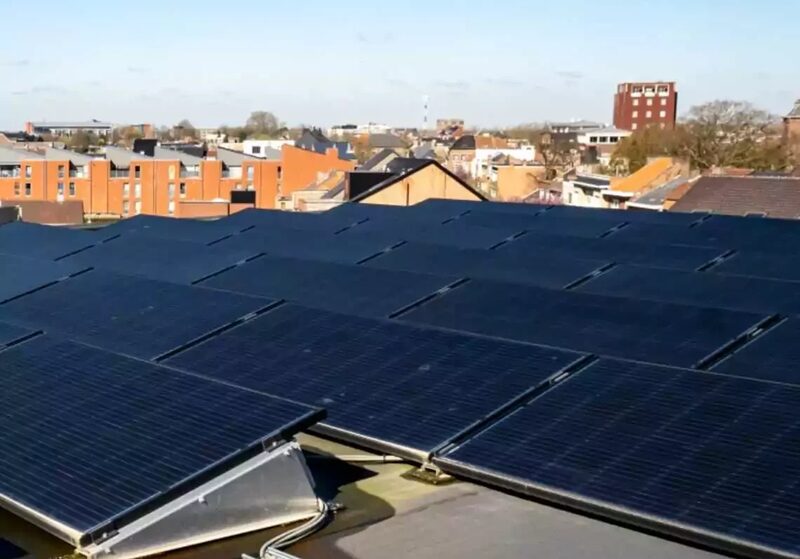
Community energy in the UK is energy that is owned, developed or governed at a local level rather than by a distant utility. It takes several forms: a co-operative that owns a solar array or a hydro turbine, a community benefit society that funds retrofit advice, a local authority partnership that installs heat networks, or a group of neighbours buying into a shared generation scheme. The defining feature is not the technology but who holds the decision and where the value lands.
The scale is real but uneven. The Community and Renewable Energy Scheme in Scotland has supported over 600 community and locally owned renewable projects and offered funding of over £58 million to date1. In Wales, the Swansea Community Energy and Enterprise Scheme has generated a community benefit fund of over £500,0002, and the Welsh Government has set a target of 1 GW of locally owned renewable electricity and heat capacity by 2030, with an aspiration of 1.5 GW by 20353. The UK Government's Great British Energy Community Fund was launched with £5 million in grant funding for community energy groups4.
For a household, community energy is a route to partial independence rather than full. It can cut bills, fund insulation and retrofit, and give a local stake in generation. It rarely removes the grid connection, the supplier relationship or the gas boiler on its own. This page sets out what the structures are, how projects are funded, what they achieve, and where they fall short.
What community energy is and what it does for a community
Community energy is best understood by what it changes about ownership and control. The Scottish Government's Community and Renewable Energy Scheme exists to encourage community ownership of renewable energy projects across Scotland, helping to maximise the benefits of renewable energy systems and ensuring that the delivery of community energy comes with benefits for people in Scotland1. That framing matters: the scheme is not simply a grant pot for hardware, it is a policy instrument for shifting who benefits from generation.
The benefits fall into three broad categories:
- Financial: a community benefit fund, a dividend to members, or a reduction in a local building's running costs.
- Practical: advice, retrofit coordination and energy efficiency support that individual households would struggle to organise alone.
- Structural: a local body that can hold a relationship with a network operator, a council or a developer on behalf of residents.
There is also a supply-side model. Ovo Communities operates mainly in southwest England and provides a model for local authorities, communities and co-operatives that want to supply energy directly to their tenants, communities or members6. That is a licensed supply arrangement rather than a generation project, and it shows that community energy can extend into the retail relationship itself, though the example is dated and geographically narrow.
What community energy does not do is make a household independent of the grid. A member of a community solar scheme still draws power from the network at night and still buys electricity from a supplier. The independence it offers is collective and partial: a share of local generation, a say in how local money is spent, and in some cases a local advice service that reduces consumption. For households weighing this against installing their own panels, the trade-off is between collective ownership and direct control, which is set out in joining a community energy scheme vs installing your own solar.
What community energy can achieve: carbon, costs and local benefit
The carbon case for community energy rests on the same physics as any renewable generation, but the local benefit case is distinct. The Welsh Government's consultation on capturing the value of renewable energy projects states that community benefits should be integral to any development, but be transparent about what is and is not possible in relation to renewable energy development7. That transparency principle is important: not every project can deliver the fund or the discount that residents expect.
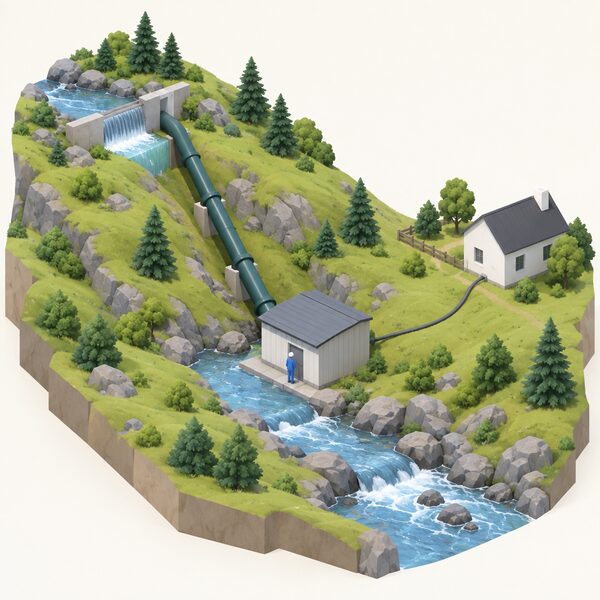
The measurable outcomes vary widely by project type. Bonwm Hydro was expected to generate £220,000 for a local community benefit fund in 20232. The Swansea Community Energy and Enterprise Scheme has generated over £500,0002. These are single-project figures and should not be generalised, but they show the order of magnitude that a well-sited scheme can produce over its life.
On the household cost side, the context is the price cap. Ofgem's cap levels for 1 October to 31 December 2025 show a single-rate Standard Credit annual figure of £1,008.32 for 3,100 kWh in the Southern region, £1,023.11 in Eastern, £1,033.02 in South East, £1,028.99 in Southern Scotland, £1,053.29 in Southern Western, and £935.81 in Northern on prepayment8. These are the baseline costs that any community scheme is measured against, and they differ by region, which means the value of a local generation project differs by region too.
| Region | Single-rate Standard Credit annual figure, 3,100 kWh |
|---|---|
| Southern | £1,008.32 |
| Eastern | £1,023.11 |
| South East | £1,033.02 |
| Southern Scotland | £1,028.99 |
| Southern Western | £1,053.29 |
| Northern (prepayment) | £935.81 |
The Climate Change Committee has modelled that the gradual shift towards low-carbon electricity could add a further £85 to £120 per year to a typical bill by 2030 if further policies are put in place9. That figure is a projection, not an observed cost, and it sits alongside the Committee's earlier finding that UK climate action has reduced emissions without increases in household energy bills10. The two are not contradictory: the first is a forward-looking estimate of additional policy cost, the second a retrospective finding. Both are relevant to how a household judges whether a community scheme is worth joining.
How a community energy project is structured and funded
The legal structure determines who controls the project and what happens to any surplus. The most common form for member-owned generation is the community benefit society, in which members hold one vote each and surplus is applied to a community purpose. Co-operative societies are used where the emphasis is on member trading. Some projects sit inside local authority partnerships or social enterprises instead.
Funding comes from several directions. The Community and Renewable Energy Scheme provides advice and funding to communities across Scotland looking to develop renewable energy, heat decarbonisation and energy efficiency projects, including shared ownership projects1. In its 2022 update, the scheme reported offering funding of over £58 million to date and supporting over 600 community and locally owned renewable projects throughout Scotland1. Earlier figures show up to £5.25 million made available in a single financial year for community groups developing renewable energy projects11.
In Wales, Ynni Cymru capital grants provide financial support to community energy organisations, social enterprises, public sector bodies and SMEs12. The Welsh Government has also announced £10 million to support community-led energy projects across Wales13. In England, the London Community Energy Fund supports community projects across London that reduce greenhouse gas emissions, lead to collective action to reduce, manage and generate energy, promote community-led development and delivery of energy projects that provide direct benefit to the local community, increase community awareness and action on clean energy, and increase the resilience of communities vulnerable to the impacts of climate change and high energy costs14.
The structure and the funding route are linked. A community benefit society can issue a share offer to members, which is covered in community energy share offers and co-operative ownership. A local authority partnership is more likely to draw on grant funding and procurement. The choice affects how quickly a project can be built and who carries the risk if it underperforms.
Funding routes: Great British Energy, Energy Redress Fund and network operator schemes

The funding landscape changed materially in 2026. Great British Energy, and local authorities Camden and Haringey, offer funding opportunities to support community energy projects14. Great British Energy's Community Fund was launched providing £5 million in grant funding for community energy groups4. The Department for Energy Security and Net Zero's annual report records £8.3 billion for GBE and GBE Nuclear15, which is the wider capital envelope rather than the community fund itself.
The Energy Industry Voluntary Redress Scheme is the other major shift. From 23 July 2026, community energy organisations in England, Scotland and Wales became eligible for the Main Fund, around 75% of scheme funding, following Community Energy England lobbying5. Before that date, community energy groups were confined to smaller funds within the scheme. The practical effect is that a community group can now apply to the largest pot in the redress scheme rather than only the peripheral ones.
Network operator schemes add a third route. The Welsh Government's consultation recommends providing support for communities to develop smart local energy systems where these could help balance supply and demand or provide a solution where grid capacity is constrained, enabling infrastructure7. Smart local energy systems can be delivered by community energy organisations, social enterprises, public sector bodies and SMEs3. That is a flexibility market rather than a grant, and it rewards projects that can shift or reduce demand at the right times.
For households in Northern Ireland, the route is different again. NI Energy Advice provides referrals to energy grants and other sources of help17, and the Energy Company Obligation operates in Great Britain, not Northern Ireland18. That territorial split matters: a community energy group in Belfast cannot use ECO, and the funding routes described above are largely England, Scotland and Wales schemes. The Northern Ireland picture is covered in community energy in Northern Ireland.
Where projects fall short: licensing barriers and the advice gap
The barriers to community energy are not primarily technical. They are licensing, accreditation and advice capacity. A community group that wants to supply electricity directly to its members needs a supply licence or an exemption, which is a significant regulatory undertaking. The Ovo Communities model in southwest England shows one way through, but it is a single example in one region6.
The advice gap is more immediate. The Scottish scheme maintains a network of development officers across Scotland to provide free, expert and impartial advice and support to community groups, charities and other eligible organisations seeking to explore their renewable energy options1. That is a public-funded advisory capacity that does not exist at the same scale in every nation. In England, the Climate Change Committee has recommended a UK Government public engagement campaign focused on reducing energy demand, aimed at both businesses and households9, which implies the current advice provision is not sufficient.
On the delivery side, small local retrofit firms often possess the necessary skills for retrofitting but avoid government schemes due to upfront costs of accreditation and past negative experiences19. That is a supply chain problem that community bodies try to bridge by acting as coordinators. Green Homes Wales, for example, offers fully funded access to a Retrofit Coordinator to create a detailed home assessment providing energy-efficiency and decarbonisation advice20. The Optimised Retrofit Programme is available to Registered Social Landlords and local authorities to install a variety of home decarbonisation measures in existing social housing stock21.
The result is that community energy works best where a funded coordinator, a willing local authority and a supportive network operator overlap. Where any one of those is missing, the project stalls. That is a structural limit, not a failure of ambition, and it explains why the sector's growth is uneven across the four nations.
Low Carbon Hub: an Oxfordshire community benefit society
Low Carbon Hub is an Oxfordshire community benefit society, and its work illustrates how a local body can combine generation ownership with practical household support. It is not a national organisation and does not operate a general advice line in the way a council service does. Households in its area encounter it through the projects it runs and the partners it works with.
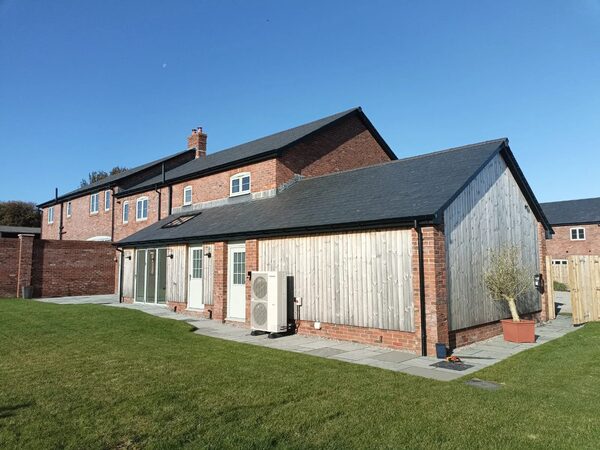
One documented example is the Home Efficiency Hub for Heat Pumps in Cherwell, Oxfordshire, whose project partners are Oxfordshire County Council, the National Energy Foundation and Scottish and Southern Electricity Network22. That partnership structure is typical of the model: a community organisation convenes a council, an advice charity and a network operator around a specific local need. The network operator's involvement matters because it connects the project to the distribution network and to flexibility arrangements.
The community benefit society form gives Low Carbon Hub a specific character. Members hold one vote each, and surplus is applied to community purposes rather than distributed to external shareholders. That is the same structure used across the sector, and it is why community energy organisations are often described as member-owned rather than investor-owned. The trade-off is that capital is raised from members and grants rather than from conventional equity markets, which limits the scale of any single project.
For a household in Oxfordshire, the practical value is access to advice and to a local body that holds relationships with the council and the network operator. For a household outside Oxfordshire, Low Carbon Hub is a model rather than a service. The wider question of how such bodies compare with direct household generation is covered in joining a community energy scheme vs installing your own solar, and the organisation itself is described in Low Carbon Hub: the Oxfordshire community energy organisation.
Carbon Co-op: member-owned retrofit in Manchester
Carbon Co-op is a member-owned retrofit organisation based in Manchester. Its focus is household energy efficiency rather than generation, which makes it a different kind of community energy body: the output is reduced demand rather than local supply. That distinction matters for independence, because cutting consumption reduces import dependence directly, while local generation offsets it.
The retrofit context in which Carbon Co-op operates is documented at programme level. The Green Deal Communities programme saw twenty-three areas in England, covering 98 individual local authorities, receive £85 million to help deliver the Government's Green Deal23. Research on cutting VAT for energy efficiency measures estimated that in the first year this could generate a potential saving of up to 36,358 tonnes of CO2 by retrofitting 14,000 homes, with an additional £1.08 billion spent on energy efficiency measures over five years24. These are programme-wide figures, not Carbon Co-op's own totals, and the available material does not record how many homes the Community Green Deal retrofit or how much energy it saved.
The Social Housing Decarbonisation Fund Wave 2.1 will see proposed energy performance improvements to around 90,000 social homes25. The New Warm Homes Programme in Wales estimates societal benefits worth £314 million from 2.11 million tonnes of carbon savings, using HM Treasury guidance26. These figures show the scale of public retrofit activity that community bodies sit alongside or within.
The supply chain problem described earlier bears directly on member-owned retrofit. Small local firms often avoid government schemes because of accreditation costs and past negative experiences19. A member-owned co-op can act as the coordinating layer that makes accredited work accessible to households, which is why retrofit coordination is a recurring function of community energy bodies. The available material does not record an approved tradespeople list held by Carbon Co-op, so no such list can be confirmed here.
Community energy and the grid: flexibility and constraint relief
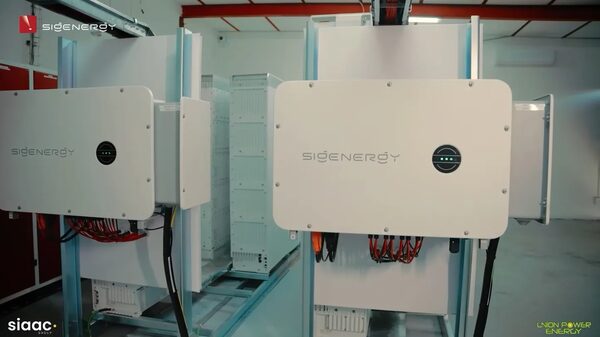
The grid relationship is where community energy has moved furthest from its origins. Early projects were about owning generation. Current policy interest is in using local assets to relieve constraint and balance supply and demand. The Welsh Government's consultation recommends providing support for communities to develop smart local energy systems where these could help balance supply and demand or provide a solution where grid capacity is constrained, enabling infrastructure7.
That recommendation sits alongside a broader Welsh policy direction. The proposed single public energy company for Wales would help retain more of the value from energy development in Wales for people and communities27, and the Welsh public energy company would aim to increase Welsh ownership of energy projects and help communities, businesses and public services make better use of energy produced in Wales28. The Welsh Government's current target is 1 GW of locally owned renewable electricity and heat capacity by 20303, with an aspiration of 1.5 GW by 20357. The Renewable Energy (Wales) Bill is proposed to legislate to enable greater community ownership from renewable energy7.
Behind-the-meter systems are the household-level counterpart to these local flexibility arrangements. The Welsh Government publishes guidance on behind-the-meter energy systems29, which covers generation and storage installed on the customer side of the meter. For a household, a behind-the-meter battery or solar array is the smallest unit of the same logic that a smart local energy system applies at community scale. The relationship between local generation, storage and the wider network is set out in microgrids and local energy systems in the UK and behind-the-meter energy systems explained.
The independence question here is subtle. A community that can shift demand or discharge storage at the right moment reduces its reliance on central generation at peak, but it remains connected and dependent on the network for the majority of its energy. Flexibility is a form of influence over the grid, not a replacement for it.
The future of community energy: targets and policy direction
The policy direction is toward larger targets and more explicit community ownership. The Energy Security and Net Zero Committee published its first report of Session 2026 to 2027 on 17 June 2026, making recommendations to the Government on community energy24. The report states that the community energy target is 8 GW by 2030, and that GB Energy is reported to have committed to support at least 1,000 local and community projects by 203024. Both figures are reported commitments rather than delivered capacity.
In Wales, the direction is set out in the local ownership targets and the proposed public energy company3. In Scotland, the Community and Renewable Energy Scheme continues to provide advice and funding across renewable energy, heat decarbonisation and energy efficiency, including shared ownership projects1. In England, the London Community Energy Fund and the Great British Energy Community Fund provide the main dedicated routes14.
The unresolved questions are licensing and advice capacity. The Climate Change Committee's recommendation for a public engagement campaign on reducing energy demand9 points to a gap that community bodies currently fill unevenly. The accreditation barrier that keeps small retrofit firms out of government schemes19 limits how quickly local delivery can scale. And the territorial split means that Northern Ireland operates on a different funding map from the rest of the UK17.
For a household, the practical implication is that community energy is likely to become more available over the next few years, particularly in Wales and Scotland where targets and funding are explicit. It will remain a complement to household measures rather than a substitute. The wider picture of what independence a UK home can achieve is set out in household energy independence in the UK, and the funding routes in more detail in funding for community energy projects.
Sources29 cited
- Community and Renewable Energy Scheme, Scottish Government, 2026
- Energy generation in Wales 2023, Welsh Government, 2023
- Welsh Government response to Preparing Wales for a Renewable Energy 2050, Welsh Government, 2023
- UK Solar Roadmap, Department for Energy Security and Net Zero, 2025
- Energy Industry Voluntary Redress Scheme, Community Energy England, 2026
- Scotland without fuel poverty, Scottish Government, 2016
- Preparing Wales for a Renewable Energy 2050, Welsh Government, 2023
- Energy price cap levels 1 October to 31 December 2025, Ofgem, 2025
- Climate policy that cuts costs, Climate Change Committee, 2026
- UK climate action has reduced emissions without increases in household energy bills, Climate Change Committee, 2017
- Heat in buildings strategy 2022 update, Scottish Government, 2022
- £10 million to support community-led energy projects across Wales, Welsh Government, 2025
- £129 million to support Welsh communities transition to renewable energy, Welsh Government, 2026
- London Community Energy Fund ninth round, Community Energy England, 2026
- DESNZ annual report and accounts 2025 to 2026, Department for Energy Security and Net Zero, 2026
- Bristol City Leap Community Energy Fund, Community Energy England, 2026
- Energy saving grants in your area, nidirect, 2026
- Energy Company Obligation: homeowners and tenants, Ofgem, 2026
- Review of retrofit assessment in Scotland, Scottish Government, 2025
- Green Homes Wales, Development Bank of Wales, 2026
- Grant funding will support decarbonising 100 homes in Flintshire, Welsh Government, 2024
- Heat Pump Ready Programme stream 1 phase 2 projects, Department for Energy Security and Net Zero, 2026
- Green Deal and Energy Company Obligation statistics, Department for Energy Security and Net Zero, 2023
- Environmental Audit Committee report, House of Commons Environmental Audit Committee, 2026
- Social Housing Decarbonisation Fund, Department for Energy Security and Net Zero, 2024
- New Warm Homes Programme integrated impact assessment, Welsh Government, 2024
- Formation of a consolidated Welsh public energy company, Welsh Government, 2026
- Shape plans for a new clean energy company owned by Wales, Welsh Government, 2026
- Behind the meter energy systems guidance, Welsh Government, 2026
 Community Energy in EnglandCommunity energy lets neighbours own their own power together, often through solar panels, and share the money it makes.
 Community Wind and HydroExplains how community-owned wind and hydro projects are organised, financed and shared with local households, and the scale of installed community capacity across the UK.
 Community Energy StatisticsHow much of the UK's energy comes from projects owned by local people, and is that number growing?
 Community Energy in NICan a community group in Northern Ireland sell power to its neighbours, and is there funding to get a project off the ground?
 Community Energy Share OffersHow community energy share offers work in community benefit societies and co-operatives, what returns and risks are stated, how withdrawal works, and how owning shares differs from owning generation on your own roof.
 Community Energy in ScotlandCommunity energy in Scotland lets you join a local scheme for cheaper, greener heat and power, or get advice and funding to make your own home warmer and cheaper to run.