In this guide
AlphaESS, also written Alpha ESS and shortened to Alpha, is a global energy storage manufacturer that has been trading since 2012 and builds systems for homes, businesses and utility projects1. Its household products use lithium iron phosphate chemistry throughout, carry a 10-year performance warranty, and are sold in the UK through installers and wholesalers rather than direct to householders3.
The company was reaffirmed as a BNEF Tier 1 global energy storage manufacturer for 2026, appearing in BloombergNEF's Q1 2026 list, and received EUPD Research TOP Brand Awards for the German and Benelux markets in June 20266. Those are industry and market recognition measures rather than product ratings, and they say nothing about how any individual installation will perform.
For a household, an AlphaESS battery does one clear thing: it moves electricity in time. It stores surplus solar generation or cheap off-peak grid electricity and releases it later, and it can keep a set of critical circuits running during a power cut through a built-in UPS function4. What it does not do is remove the household from the grid, from a supplier, or from the manufacturer's app and support chain.
Who Alpha ESS is and what the company does
AlphaESS describes itself as a global energy storage systems company serving both residential and commercial applications, offering what it calls a range of cutting-edge products2. The company dates its own trading history to 2012, giving it more than a decade in the storage market1. Its product lines span home batteries, EV chargers, portable power stations and large-scale battery energy storage systems, and it sells into residential, commercial, industrial, large-scale and utility segments8.
The UK presence is a registered entity, Alpha ESS UK Ltd, at Drake House, Long Street, Dursley, GL11 4HH1. That matters for a household because it establishes a UK corporate address for the brand, though it does not by itself guarantee a UK-based service engineer network. In practice, support runs through the installing company, which holds the commissioning record and the warranty registration.
The company's commercial activity is largely outside the UK. In February 2026 AlphaESS and its partners signed an agreement for a 320 MWh independent energy storage project in the Czech Republic, and in June 2026 it signed strategic cooperation agreements with UB Solar, Sunly, Ecker and LSG to support deployment in European markets6. In Australia, AlphaESS and OSW marked 10 years of partnership in June 2026, with the SMILE-M10 and AlphaQ debuting10. None of that is a UK domestic fact, but it indicates the scale the company operates at and where its revenue sits.
For a household weighing independence, the structure of the company matters less than the structure of the supply chain. AlphaESS is a manufacturer, not an installer, and not an electricity supplier. Buying its battery means buying a piece of equipment whose warranty, service and app all run through a chain of third parties.
Chemistry and cells: LiFePO4 throughout
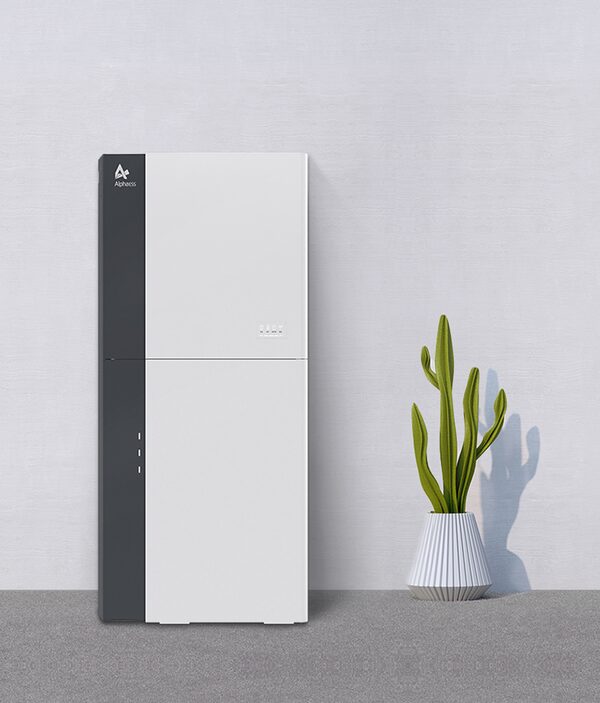
AlphaESS uses lithium iron phosphate, written LiFePO4 or LFP, across its battery range. The company states plainly that it uses only LiFePO4 batteries8, and describes its home systems as using LFP chemistry known for long cycle life and reliability3. On the SMILE-G3-S5 it goes further, describing high-quality LiFePO4 cells as renowned for safety, thermal stability and extended lifespan, with each cell tested for compression, impact, overcharge, over-discharge and short circuit5.
That chemistry choice is the mainstream one for home storage. LFP has a lower energy density than nickel manganese cobalt alternatives, which makes the units physically larger for the same capacity, but it is generally more thermally stable and holds up better over many cycles. The trade-off is well understood across the sector rather than specific to this brand, and it is covered in more detail in home battery chemistries.
Cell sourcing is a separate question from cell chemistry. AlphaESS states that it selects global Tier 1 cell manufacturers8, which is a claim about its supply chain rather than a published list of suppliers. The company does not name the cell makers in the material available here, so the claim cannot be checked against a named counterparty.
"AlphaESS utilizes high-quality LiFePO₄ cells renowned for their safety, thermal stability, and extended lifespan."
The practical consequence for a household is that the battery's degradation profile should be flatter than an older NMC unit, and its fire risk profile different. Neither chemistry removes the need for correct installation, ventilation and siting, which are governed by separate standards.
Battery capacity: what the module figure means for sizing
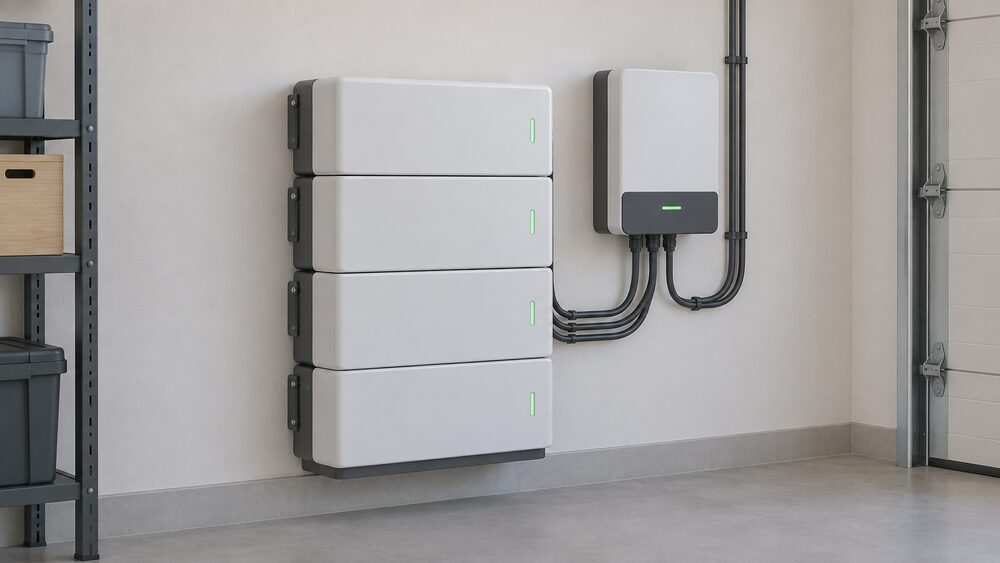
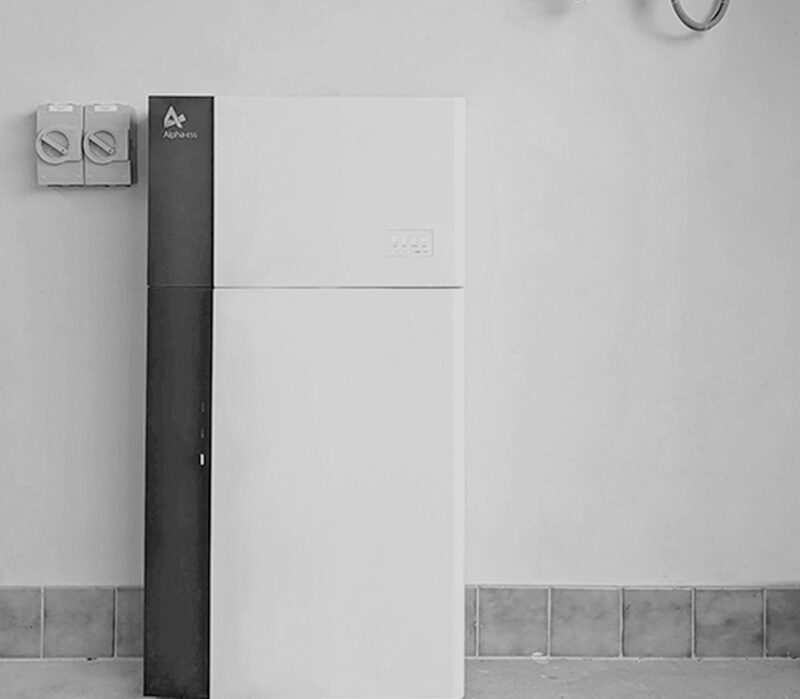
AlphaESS publishes module capacities rather than a single system size. The SMILE-G3-BAT-3.8S is a 3.8 kWh battery module and the SMILE-G3-BAT-9.3 S is a 9.3 kWh battery module9. Those are the building blocks: a household sizes its system by choosing how many modules to stack, which is why the range starts small and scales.
Sizing should be worked from the published module capacities and the number of modules specified in the installer's design.
For context on how module sizes compare across the market, an Enphase AC Battery is listed at 1.2kWh with a 10-year term11, and a GoodWe all-in-one unit combines 5 kWh or 8 kWh battery modules12. Module size is not the same as usable capacity: the nominal figure on a datasheet is not what a household can draw, because depth of discharge and round-trip losses sit between the two. That distinction is set out in battery capacity and usable capacity.
Sizing decisions should follow the household's consumption pattern rather than the module count. A system sized to shift a whole evening peak needs more capacity than one sized to cover a few critical circuits during an outage, and the two goals pull in different directions.
Residential to utility-scale: where the product range fits
AlphaESS sells across five segments: residential, commercial, industrial, large-scale and utility projects8. The household products sit at the small end of that range, and the same company builds grid-scale installations measured in hundreds of megawatt hours, such as the 320 MWh Czech project agreed in February 20266.
That spread has two implications for a household. The first is that the residential line is not the company's only business, so its commercial fortunes do not depend solely on domestic sales. The second is that engineering attention is divided across very different products, from a wall-mounted home unit to containerised grid storage.
Within the home segment, AlphaESS also sells portable power stations with fast solar charging and a car outlet, marketed for use during blackouts13. Those are a different product class from a fixed home battery: they are not wired into the house's circuits and do not carry the same installation standards. The distinction between fixed and portable storage is covered in all-in-one battery systems.
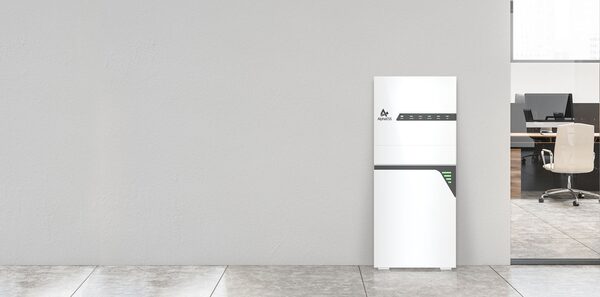
The company's home systems are described as complete packages that do not require a separate battery inverter, which simplifies the bill of materials for an installer4. That is a design choice rather than a performance claim, but it does reduce the number of components that can fail independently.
Recognition and standing: BNEF Tier 1 and TOP Brand Awards
AlphaESS was reaffirmed as a BNEF Tier 1 global energy storage manufacturer for 2026, named in BloombergNEF's Q1 2026 list6. In June 2026 it received EUPD Research TOP Brand Awards for the German and Benelux markets, announced at Intersolar and ees Europe 20267.
Tier 1 status in this context is a bankability measure. It reflects the scale at which a manufacturer has supplied projects that financiers were willing to fund, and it is used by developers and investors rather than by householders choosing a battery. It is not a statement that any particular model is reliable, efficient or well supported. The same caution applies to the TOP Brand Awards, which are market recognition in two European countries outside the UK.
For comparison, Fox ESS is separately described in its own announcement as recognised as a Tier 1 energy storage manufacturer14. Both companies hold or claim similar standing, which is why the label alone does not separate them for a buyer.
What a household can reasonably take from this is that AlphaESS is an established manufacturer with a track record at project scale, not a new entrant. What it cannot take from it is any assurance about the installer who fits the unit, the quality of the commissioning, or the speed of a warranty claim.
What owning an Alpha ESS battery means for household energy independence
The independence an AlphaESS battery delivers is temporal, not structural. It shifts when electricity is drawn, not where it comes from. The company states that its batteries can be installed without solar panels and can store grid electricity bought off-peak3, which makes the system useful on a tariff with a cheap overnight window even in a home with no generation.
Where solar is present, the effect is larger. Independent guidance puts self-consumption without a battery at 30 to 50% of generation15, with the rest exported or wasted. A home battery captures that surplus for later use, including overnight EV charging16. Solar panels themselves generate on cloudy days and work year-round without consistent direct sunlight, though they produce nothing at night17.
Backup is the second strand. AlphaESS states that its home battery includes a built-in UPS function providing emergency power during an outage, and that a number of critical devices can be connected to the backup output, with the entire house powered from stored surplus solar in some cases4. That is a maker's claim about capability, and the extent of it depends on the backup circuits wired at installation. The mechanics are covered in battery backup power and EPS.
The dependence that remains is substantial. The household stays connected to the grid and to a supplier for whatever the battery cannot cover. The app, remote monitoring and any ticket-based support depend on the manufacturer's servers and a broadband connection. Maintenance is light, with AlphaESS stating that its systems should not require more than a yearly check plus routine visual checks by the owner3, but the warranty relationship runs through the installer and the manufacturer rather than the householder alone.
How Alpha ESS compares with other home batteries in UK guides
AlphaESS appears in UK consumer and trade comparisons alongside the larger storage brands. A Heatable comparison updated in July 2026 ranks ten home solar batteries including the Tesla Powerwall 3, the AlphaESS Smile G3 and the Enphase IQ Battery 5P, with prices and specifications21. A separate Heatable guide updated in August 2026 names the AlphaESS Smile B3 Plus as its best storage battery22, and a third, also updated in August 2026, lists AlphaESS among alternatives to the Tesla Powerwall 3 alongside Enphase, Powervault, sonnen and LG Chem23.
Those are editorial selections by one publisher, not test results, and they should be read as such. No independent laboratory performance data for AlphaESS units appears in the material available here.
The comparison that matters most for safety is with brands that have failed. LG ESS home batteries are subject to a recall in which LGESS is replacing all potentially affected units, and the recall scope has expanded to include additional models and batteries, with owners required to register affected batteries through a serial number checker24. That is the clearest illustration of what a household depends on when it buys storage: a manufacturer that remains solvent, contactable and willing to act.
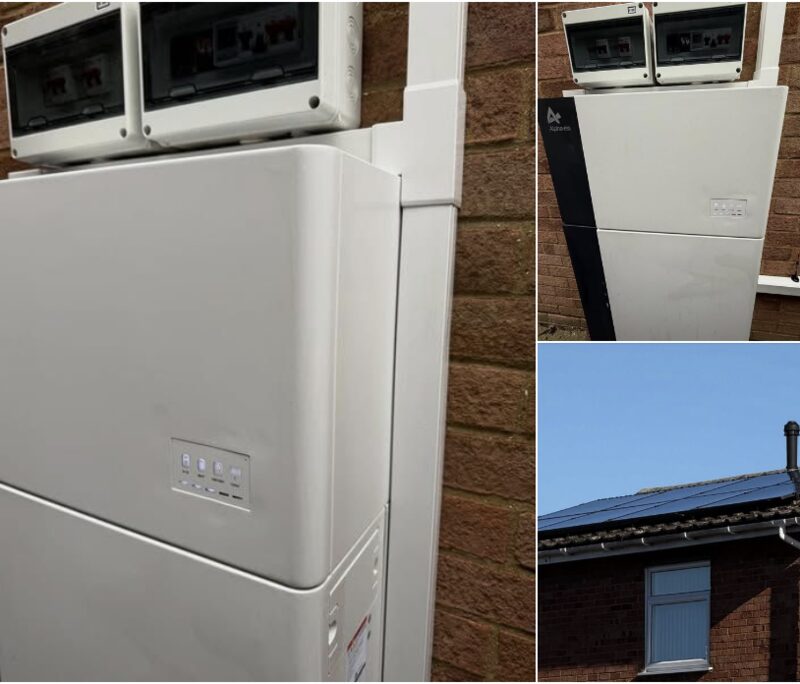
On installation standards, the MCS battery installation standard MIS 3012 covers electrical energy storage systems in classes 1 to 427, and retrofit work of this kind is typically delivered by TrustMark registered businesses28. Those apply to the installation rather than the brand.
Warranty, support and fault handling
AlphaESS states that its battery systems come with a 10-year performance warranty3, and the SMILE-G3-S5 page repeats a 10-year battery performance warranty alongside a built-in ticket support service in the app5. A performance warranty of this kind normally guarantees a retained proportion of capacity rather than the unit's continued operation, and the terms behind it are set out in home battery warranties.
The company's own durability claim is that storage capacity will drop by a maximum of 20% after 10,000 cycles4. That is a maker's assurance, not an independently verified figure, and it is stated as a ceiling on degradation rather than a prediction for a specific installation.
Fault handling is less well documented. AlphaESS publishes no fault code list in the material available here. What is documented is control behaviour: after reaching the cut-off state of charge the battery will not discharge, and outside the discharge period it will not discharge while photovoltaic output remains normal20. Persistent alarms are a different matter, and the general safety position for a faulty battery or charger is to stop using it immediately and report the fault to the manufacturer or retailer29. Battery faults traced to poor design, incorrect charging or damage are a recognised cause of fires in the wider storage sector30.
Support in the UK runs through Alpha ESS UK Ltd at the Dursley address1 and, in practice, through the installing company, which holds the commissioning record. Systems with the app's ticket service have a second route. Where a household needs to identify a specific unit, the general principle is that each battery is marked with a unique serial number used to identify it26, and that number is recorded at handover.
Sources30 cited
- AlphaESS Global Brochure, AlphaESS, 2022
- How lithium-ion batteries work in an energy storage system, AlphaESS, 2022
- Ask Alpha: your top questions answered about home energy storage, AlphaESS, 2024
- AlphaESS home battery support article, AlphaESS, 2026
- SMILE-G3-S5 product page, AlphaESS, 2025
- AlphaESS reaffirmed as BNEF Tier 1 global energy storage manufacturer for 2026, AlphaESS, 2026
- AlphaESS showcases full-scenario energy storage solutions at Intersolar and ees Europe 2026, AlphaESS, 2026
- AlphaESS product range, Midsummer Wholesale, 2026
- SMILE-G3 battery module specifications, AlphaESS, 2026
- AlphaESS homepage, AlphaESS, 2026
- Solar panel battery storage, Which?, 2026
- GoodWe all-in-one ESA battery module, Alternergy, 2026
- AlphaESS portable power station, AlphaESS, 2026
- Fox ESS and Axle Energy partnership, Fox ESS, 2026
- Solar panels guide, Uswitch, 2026
- Can solar panels charge electric cars?, The CPA, 2026
- Do solar panels work in winter?, Uswitch, 2026
- Generating renewable electricity, Energy Saving Trust, 2025
- Can your toilet generate electricity?, Energy Saving Trust, 2025
- The ultimate guide to battery energy storage systems, AlphaESS, 2024
- Best solar batteries comparison, Heatable, 2026
- How does battery storage work, Heatable, 2026
- Tesla Powerwall alternatives, Heatable, 2026
- LG ESS battery division RESU ESS home batteries, Electrical Safety First, 2026
- LG ESS Home Batteries recall notice, LG Energy Solution, 2026
- LG ESS serial number checker, LG Energy Solution, 2026
- MCS launches industry-first battery installation standard, MCS, 2021
- Retrofit advice for homeowners, Centre for Sustainable Energy, 2026
- E-scooter battery safety, Electrical Safety First, 2026
- Is your e-bike battery safe, Electrical Safety First, 2026