

In this answer
Short answer
An Article 4 direction is the mechanism a local planning authority, or the Secretary of State, uses to withdraw permitted development rights in a defined area or for a defined type of development. Where one applies, work that would otherwise need no application requires planning permission instead. Directions are made when the character of an area of acknowledged importance would be threatened, and they are most common in conservation areas1.
The effect is narrow but decisive. A direction does not ban the work; it moves the decision into the planning system. Each direction states precisely which permitted development rights have been removed and for which properties, so the scope varies from one direction to the next2. A household inside a covered area can still apply, but the fallback of permitted development is gone.
For a household pursuing energy independence, this matters most for solar panels, external wall insulation, heat pumps and flues, all of which sit on permitted development rights that a direction can remove. The rest of this page sets out where directions are made, what they cover, how long they last, and how to check whether a property is caught.
Where and why directions are made
Directions are made when the character of an area of acknowledged importance would be threatened, and they are most common in conservation areas1. The wording is deliberately broad: the trigger is the threat to character, not the designation itself. A conservation area without a direction leaves householder permitted development intact; a conservation area with one does not.
The pattern across England bears this out. Wandsworth Council notes that there are Article 4 directions in place for specific conservation areas that control some building works, and that the council can take away permitted development rights using a direction6. East Hertfordshire states that permission is also required where an Article 4 direction has been put in place2. In the New Forest National Park, directions are again described as most common in conservation areas7.
Coverage is patchy by design. Wirral Council states that there is only one conservation area in Wirral to have an Article 4 direction, Bromborough Pool8. Southampton lists a set of Article 4 areas including Oakmont Triangle, Portswood Residents Gardens, Uplands Estates, Ethelbert Avenue, The Avenue, Carlton Crescent and Cranbury Place9. Two authorities, two very different footprints, which is why a general answer about conservation areas is never enough on its own.
The purpose is not to prevent change but to make it subject to assessment. Where a direction applies, the local planning authority considers whether the proposed work preserves or harms the character that prompted the direction in the first place. For a household, that means the same solar array or heat pump that would be permitted development elsewhere becomes an application with drawings, a fee and a decision period.
What a direction covers, and what it protects

A direction can cover all or any development of the relevant Part, Class or paragraph in an area specified in the direction, or any particular development falling within that class which is specified in the direction3. That drafting gives authorities two levers: a blanket withdrawal across a class of development in a defined area, or a surgical withdrawal of one specific type of development.
In practice, directions are used for changes of use as well as physical works. Wandsworth notes that they control the change of use of pubs, shops and offices6. That is a reminder that Article 4 is not only about extensions and roofs; it reaches the use of buildings, which is why a direction can restrict changes of use that would otherwise fall within permitted development.
Several protections sit alongside the withdrawal:
- Development subject to prior approval is not affected where the prior approval date is before the direction comes into force and the development is completed within three years starting with the prior approval date3.
- Development permitted under Schedule 2 in an emergency is not affected3.
- A direction does not, unless the direction so provides, affect the carrying out by a statutory undertaker of specified development3.
- No direction has effect in relation to the installation, alteration or replacement of a Regulation 2020/1070 small cell system10.
The prior approval protection is the one most likely to matter to a household mid-project. It preserves a route that has already been approved, provided the work is completed inside the three-year window. The statutory undertaker protection is narrower than it sounds: in Northern Ireland, the building regulations exemption for statutory undertakers does not extend to dwellings or to buildings used as offices, shops, showrooms or passenger stations for air, road, rail or sea travel11.
"Each Article 4 Direction will be clear about precisely which permitted development rights have been removed, and for which properties."
Temporary or permanent: how long a direction lasts
A direction can remove permitted development rights with temporary or permanent effect5. The temporary form is the one that catches people out, because it has a clock attached.
A direction with immediate effect lasts six months, and a direction under Article 4(2) expires at the end of six months from the date it was made unless confirmed by the local planning authority4. The immediate route lets an authority act before consultation, on the understanding that the restriction lapses if it is not confirmed. Confirmation converts it into a lasting control.
Once in place, a direction is not fixed forever. Any power to give a direction includes power to cancel or vary the direction by a subsequent direction3. The procedures for making, modifying or cancelling a direction are set out in Schedule 33. In Northern Ireland, directions bring particular categories of development in specified geographical areas back under full planning control until cancelled12.
There is also a broader statement of endurance in a separate approval notice, which records that a methodology approval continues in effect until withdrawn by the Secretary of State or superseded13. That is a different instrument, but it illustrates the same principle: these controls persist until an authority acts to end them.
For a household, the practical reading is that a direction found today is likely still to apply at the point of sale or the next project, and that a lapsed immediate direction may leave no trace in the planning record. Checking the current position, not a historic one, is what matters.
How a direction changes what a project needs

Where a direction applies, an application for planning permission will be required8. That is the whole of the effect, and it is enough to change a project's cost, timetable and risk.
The same principle appears across the guidance for individual technologies. Permitted development rights may have been removed by an Article 4 direction for external walls14, for fuel tanks15, and for flue, chimney or soil and vent pipes16. For air source heat pumps, the Planning Portal notes that permitted development rights may be removed through a planning condition, Article 4 direction or other restriction17. Cornwall Council puts it plainly: in some cases some permitted development rights may have been removed by condition or the issuing of an Article 4 direction, requiring a planning application for works that normally would not need one18.
The technical guidance for householders adds the authority's side of the same point: a local planning authority is allowed to remove permitted development rights in some or all of its area by issuing what is known as an Article 4 direction19. Welsh guidance on wind turbines notes that a local planning authority may have Article 4 directions in place which remove permitted development rights in certain areas20.
What a household should expect in practice:
- Establish whether the property is inside a covered area before designing the work.
- If it is, treat the project as a full application: drawings, a fee, a decision period.
- Check whether the direction withdraws the specific right the project relies on, since directions are drafted by class.
- If work has already started lawfully, note that the direction cannot prevent development already commenced or carried out5.
The independence consequence is real but modest. A direction does not stop a household generating its own electricity or heating its own water; it adds a consent step and the possibility of refusal or conditions. The dependence it creates is procedural, on the local planning authority, rather than physical.
Solar panels and Article 4 directions
Solar is the case households ask about most, and the answer is genuinely area-specific. Swindon Council states that in the Swindon Railway Village and Bishopstone conservation areas there are additional planning restrictions known as Article 4 directions, which means planning permission will be required to install solar panels21.
Southampton's guidance is framed the same way: buildings in conservation areas covered by Article 4 directions which remove permitted development rights for roof alterations may require planning permission9. The conditionality matters. The direction must actually withdraw the roof alteration right for the installation to be caught.
Welsh guidance records the general position that permitted development rights may also have been removed by an Article 4 direction, and that these are most common in conservation areas22. The same sentence appears in Welsh guidance on flues and pipes16.
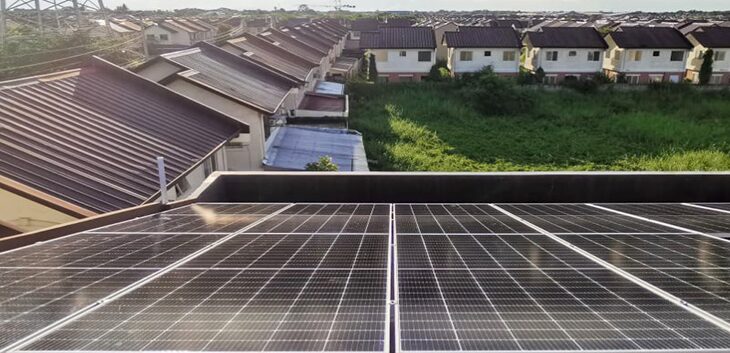
For a household weighing solar, the sequence is straightforward. Check whether the property sits in a conservation area, check whether that conservation area has a direction, and check which rights the direction withdraws. Where solar is caught, the application route remains open; the array is not prohibited, it is assessed.
Checking whether a property is covered
Your solicitor should have informed you whether an Article 4 direction exists when you purchased your property, but you can check with the Local Planning Authority if you are not sure14. That is the authoritative route in every part of the UK, because the authority that made the direction holds the record.
The four nations differ in how the rules are published rather than in the underlying mechanism. In Wales, the Planning Portal sets out permitted development rights and the responsibilities that attach to them23, and Welsh Government guidance covers the individual technologies a direction can affect22. In Scotland, Article 4 of the General Permitted Development Order contains provisions which allow planning authorities and the Scottish Ministers to make directions removing permitted development rights for particular types of development or classes of development in specified locations24. A Scottish consultation also records that current restrictions on permitted development rights in specified areas under Class 9E(3) are removed, with the option of an Article 4 direction retained for locations which raise concerns requiring a planning application25.
In Northern Ireland, the Planning (General Permitted Development) Order 2015 provides that directions bring particular categories of development in specified geographical areas back under full planning control until cancelled12. The building regulations there also set the statutory undertaker exemption limit described above11.
A practical check for any of the four nations:
- Ask the Local Planning Authority directly whether a direction covers the property14.
- Read the direction itself, since it states which rights are removed and for which properties2.
- Check the date and confirmation status, because an immediate direction lasts six months4.
- For a purchase, rely on the solicitor's search and confirm anything unclear with the authority14.
Sources25 cited
- Permitted development rights, Planning Portal, 2026
- Article 4 directions and listed building consent requirements, East Hertfordshire District Council, 2023
- The Town and Country Planning (General Permitted Development) (England) Order 2015, legislation.gov.uk, 2026
- Permitted development rights consultation document, Welsh Government, 2021
- When is permission required, GOV.UK, 2014
- What is permitted development, Wandsworth Borough Council, 2026
- Do I need planning permission, New Forest National Park Authority, 2026
- Solar panels, Wirral Council, 2026
- Solar Together domestic planning guidance, Southampton City Council, 2026
- The Town and Country Planning (General Permitted Development) (England) Order 2015, as amended, legislation.gov.uk, 2024
- The Building Regulations (Northern Ireland) 2012, legislation.gov.uk, 2012
- The Planning (General Permitted Development) Order (Northern Ireland) 2015, legislation.gov.uk, 2015
- Notice of approval of the methodologies of calculation of the energy performance of new buildings, GOV.UK, 2026
- Planning permission: external walls, Welsh Government, 2026
- Planning permission: fuel tanks, Welsh Government, 2026
- Planning permission: flue, chimney or soil and vent pipe, Welsh Government, 2026
- Planning permission: air source heat pump, Planning Portal, 2026
- Do I need planning permission, Cornwall Council, 2026
- Permitted development rights for householders: technical guidance, GOV.UK, 2026
- Planning permission: wind turbines, Welsh Government, 2026
- Solar Together, Swindon Borough Council, 2026
- Planning permission: solar panels, Welsh Government, 2026
- Permitted development rights (Wales), Planning Portal, 2026
- Permitted development rights: support for new homes consultation, Scottish Government, 2025
- Scottish Government review of permitted development rights: phase 2 consultation analysis, Scottish Government, 2023
 Devolution and Energy PowersLiving in Scotland, Wales or Northern Ireland can mean different grants and building rules for your home than in England.
 The Full Scotland, Wales and Northern Ireland GuideWhy a householder in Glasgow, Cardiff or Belfast faces different schemes, standards, targets and markets from one in England.
 Check Which Energy Grants ApplyWhich energy grants can you actually get right now, and which have closed?
 Building Rules Northern IrelandDoing building work in Northern Ireland?
 Devolved vs Reserved PowersWho decides what you pay for gas and electricity, and who decides how your home is insulated or improved?
 Renting and Home EnergyThe position of a tenant in a privately rented home: which measures need no permission, which are fixtures the landlord controls, and what the law says about heating, insulation, certificates and bills across the four UK nations.