
In this guide
A warm hub, sometimes called a warm space or a warm bank, is a free, heated place in the community where anyone can spend time without spending money on their own heating. They are run by councils, charities and community groups, funded through local authorities, and they offer far more than a chair by a radiator: many provide practical help with managing bills, claiming benefits and accessing energy-saving advice1.
The networks are substantial. Welsh Government funding for Warm Hubs reached £1.5 million in 2024 to 2025, building on a total of £4 million invested since 20222. Hubs are not a winter-only measure: they support communities throughout the year, not just during winter months, and individual hubs such as Canolfan y Bont operate all year round1.
For a household, a warm hub is a form of energy independence that does not depend on your own meter, your own boiler or your own supplier. It shifts a few hours of heating and comfort onto a shared, publicly funded building. What it cannot do is change the fabric of your home, your tariff or your heating system. It is a supplement to household energy security, not a substitute for it.
What a warm hub is and what it offers
A warm hub is a welcoming and safe space for people of all ages, open without charge and heated for the benefit of those who use it1. The defining feature is that it removes the trade-off between staying warm and spending money at home. The building is already heated, the lights are already on, and the cost falls on the organisation running it rather than the visitor.
What is offered varies with the size and ambition of the hub. At the smaller end, a warm hub is a room, a kettle and company. At the larger end, hubs help people access library services, health and wellbeing activities, housing and benefit advice, employment support, IT training, and services delivered by partner organisations1. The Llandaff North and Gabalfa Hub is cited as an example of this fuller model.
The people running them matter to the character of the offer. Warm hubs rely on dedicated volunteers, working alongside council staff and charity employees1. That mix shapes what a visitor can expect: a friendly welcome and local knowledge, with professional advice available either on site or by referral.
Warm hubs sit alongside, rather than inside, the formal energy support system. The Warm Home Discount, for instance, is a government scheme aimed at tackling fuel poverty in Great Britain, providing a £150 rebate off energy bills1. A warm hub will often be the place where someone first hears about that rebate, or gets help applying for it, but the hub itself is not the scheme.
"Many warm hubs provide practical help with managing bills, claiming benefits, and accessing energy-saving advice."
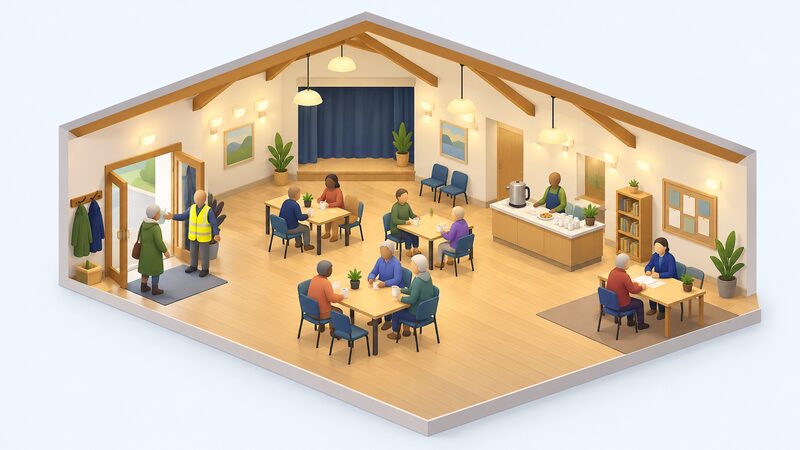
Over 400 warm hubs across the UK, funded through local authorities
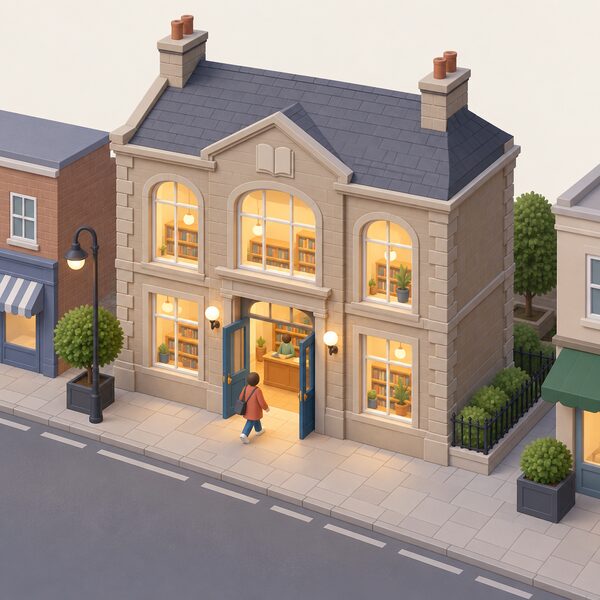
The warm hub model is delivered locally but funded through a recognisable chain. Warm hubs receive funding through local authorities, which in turn distribute money from national governments1. That structure explains why provision looks different in each nation and why the number of hubs is not published as a single UK-wide figure.
In Wales, the Warm Hubs programme has been the clearest example of direct national funding. Welsh Government funding of £1.5 million for 2024 to 2025 provided warm and safe spaces in the community, building on previous rounds3. A separate statement confirmed £1.5 million funding for Warm Hubs5. The total invested since 2022 stands at £4 million2.
In Northern Ireland, the picture is more fragmented. Belfast City Council's cost of living and winter support pages set out the local offer, and 17 libraries across Belfast offer free and inclusive spaces, with a range of services including books, access to information, free events, Wi-Fi and internet access6. Libraries are often the most dependable warm space because they are already open, already staffed and already heated.
In England, warm hubs are typically funded and promoted by individual councils rather than through a named national programme. Cornwall Council publishes winter wellbeing guidance, and Birmingham City Council publishes energy bill help pages, both of which direct residents to local support7. The result is a patchwork: some areas have dozens of listed venues, others very few.
The practical consequence for a household is that there is no single national register. Finding a warm space means going through your own council, your library service or a community organisation, not a central government list.
£1.5 million in funding and £4 million invested since the scheme began
The funding figures for warm hubs are modest next to the wider warm homes budget, and the contrast is instructive. The Welsh Government's £1.5 million for 2024 to 2025 and £4 million since 2022 are the specific warm hub numbers2. Against that, the Warm Homes Plan carries £15bn of committed funding, with £0.5bn allocated to the Warm Homes: Local Grant9.
That gap reflects what each pot is for. Warm hubs buy immediate comfort and advice. The Warm Homes Plan buys physical upgrades. The Warm Homes: Local Grant provides grants for energy performance upgrades and low carbon heating to low-income households living in the worst quality, privately owned homes in England, to achieve energy bill savings and carbon savings9. It is a government-funded scheme delivered by local authorities.
The scale of delivery on the grant side is large. 74 projects involving 271 local authorities, over 97% of eligible local authorities in England, have been allocated funding9. In London, the grant is delivered on behalf of 31 local authorities working together as a consortium, with total funding shared between local authorities based on the number of homes in fuel poverty in each area10. Liverpool City Council was awarded £5.8m to spend on improving the energy efficiency of approximately 450 homes over a three-year period11.
Wales has its own parallel investment. The Warm Homes Nest scheme continues with more than £30 million allocated this year to help low-income households improve energy efficiency and access affordable heating solutions, and over £30 million has been allocated next year to fund energy efficiency, renewables and clean heat measures12.
For a household, the distinction matters. A warm hub is available now, with no eligibility test. A grant is a capital improvement that depends on eligibility, assessment and a delivery queue.
Warm hubs run all year, not just in winter
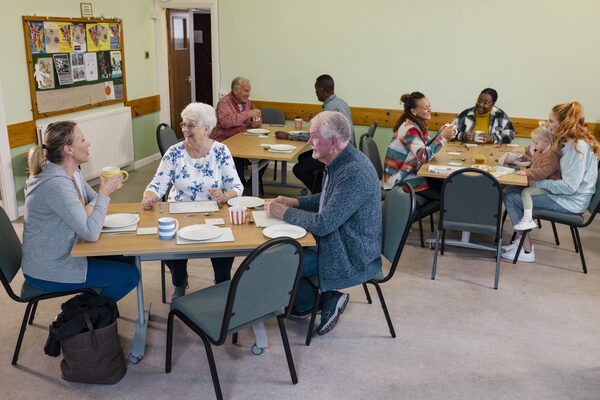
The phrase "warm bank" suggests a winter emergency measure, and that is how many began. The current model is broader. Warm hubs support communities throughout the year, not just during winter months1, and the Warm Hub at Canolfan y Bont is open all year round, operating four times a week1.
Year-round operation changes what a hub can be. In summer, the same building offers shade, company, Wi-Fi and advice rather than heat. For households in flats that overheat, or for older people living alone, the social function continues when the heating function does not.
The funding cycle, however, remains annual. The £1.5 million figure is tied to 2024 to 2025, and each round is announced separately3. That means provision can change from year to year, and a hub listed one winter may not be running the next. Checking with the council or the venue directly before travelling is sensible.
There is also a wider policy context in which warm hubs sit. In Northern Ireland, work is actively progressing on a Warm Healthy Homes Fund to help make fuel poverty and cold, damp homes a thing of the past14. In Scotland, the Warmer Homes Scotland scheme has invested around £399 million and helped over 47,000 households across Scotland since 201515. These are structural programmes; warm hubs are the immediate, human-scale layer beneath them.
Practical help with bills, benefits and energy-saving advice
The advice function is where a warm hub does the most durable work for a household's energy independence. Many warm hubs provide practical help with managing bills, claiming benefits, and accessing energy-saving advice1. That help is delivered face to face, which matters for households who find phone queues and online forms difficult.
The topics covered mirror those of the formal advice services. NI Energy Advice offers independent and impartial energy advice to domestic householders in Northern Ireland, covering energy grants and support, heating and energy use, energy bills and fuel poverty support, damp, condensation and ventilation, insulation and home improvements, renewable energy, changing electricity or gas supplier, and heating-oil savings17. A warm hub is often the first point at which a household hears that such advice exists.
For households in England and Wales, Citizens Advice offers information and support on a range of topics, including struggling to pay bills, problems with your energy supplier or supply, saving energy at home and getting a better energy deal19. Where a complaint is difficult or urgent, Citizens Advice may refer you to the Extra Help Unit if you need support with a difficult or urgent complaint, cannot deal with your energy supplier on your own due to personal circumstances, are considered vulnerable, or are at risk of being disconnected from an energy supply20.
The Energy Ombudsman also handles disputes that have not been resolved directly with a supplier21. Warm hub staff and volunteers can help a household work out which route applies.
What a warm hub cannot do is act as your supplier, change your tariff, or carry out work on your home. The advice is signposting and support; the decisions and applications remain with the household.
Extra services at larger hubs: libraries, health activities, IT training and employment support

The larger hubs have evolved into multi-service community buildings. They help people access library services, health and wellbeing activities, housing and benefit advice, employment support, IT training, and services delivered by partner organisations1. Each of these has a bearing on household energy, directly or indirectly.
Employment support and benefits advice affect income, which is the strongest determinant of whether a household can afford to heat its home. IT training matters because a growing share of energy support, from grant applications to supplier account management, is delivered online. Health and wellbeing activities connect to the well-documented relationship between cold homes and poor health.
Libraries are the backbone of this wider network. In Belfast, 17 libraries offer free and inclusive spaces, with a range of services including books, access to information, free events, Wi-Fi and internet access6. That combination of warmth, connectivity and staff support is hard to replicate elsewhere at no cost.
Printed information still plays a role. Winter Wellbeing Guides are available in paper copies from council information points, GP surgeries, NHS premises, libraries and other partner sources, plus downloadable copies7. For households without internet access, the paper route is often the only one.
The pattern across the UK is that the smallest hubs offer warmth and company, and the largest offer something closer to a one-stop support centre. A household looking for help with bills, health and work at the same time is better served by a larger hub, where partner organisations are present on set days.
Who to call for energy advice: Citizens Advice and National Energy Action helplines
Two national helplines carry most of the formal energy advice load, and both are free to call.
Citizens Advice can be reached on 0808 223 1133 in England and Wales, open Monday to Friday, 9am to 5pm, with a Welsh language line on 0808 223 114422. In England there is also a separate number, 0808 144 884419. The service covers struggling to pay bills, problems with your energy supplier or supply, saving energy at home and getting a better energy deal19.
National Energy Action can be reached on 0800 304 715921. It offers advice and support to help people across England, Wales and Northern Ireland stay warm and manage energy costs, and provides free advice about energy bills and keeping warm and safe at home, along with benefits advice and income maximisation21. A British Sign Language (BSL) interpreter can be requested8.
In Northern Ireland, the Northern Ireland Energy Advice Service can be contacted on 0800 111 4455, open 9am to 5pm Monday to Friday23. NI Energy Advice offers free advice on saving energy in your home, energy efficiency grants, and oil buying clubs, plus referrals to energy grants and other sources of help17.
| Service | Number | Hours and coverage |
|---|---|---|
| Citizens Advice | 0808 223 1133 | Monday to Friday, 9am to 5pm, England and Wales22 |
| Citizens Advice Welsh language line | 0808 223 1144 | England and Wales22 |
| Citizens Advice (England) | 0808 144 8844 | England19 |
| National Energy Action | 0800 304 7159 | England, Wales and Northern Ireland21 |
| Northern Ireland Energy Advice Service | 0800 111 4455 | 9am to 5pm Monday to Friday23 |
There is an unresolved point on Welsh language provision. One source gives the Welsh language number as 0808 223 1144, while another gives 0800 702 2020.
Why warm spaces matter: fuel poverty in context
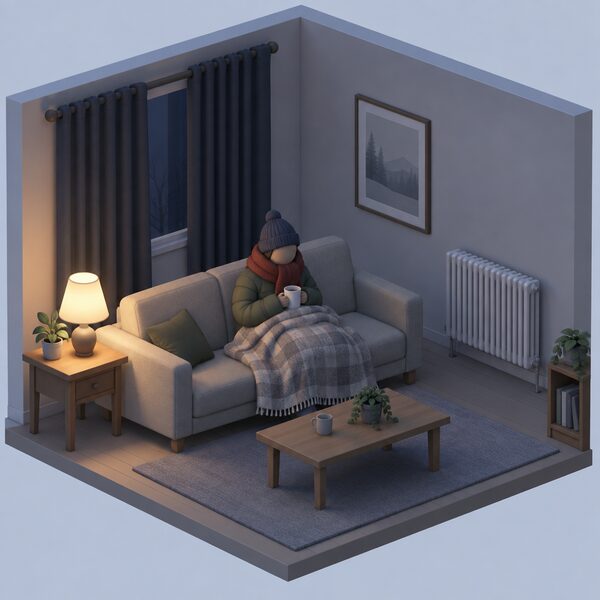
Warm hubs exist because a substantial number of households cannot afford to heat their homes adequately. Fuel poverty relates to households that must spend a high proportion of their household income to keep their home at a reasonable temperature4. National Energy Action estimates 6 million households are in fuel poverty3. The Warm Home Discount is aimed at people who are in or at risk from being in fuel poverty1, and the Warm Welcome Spaces project lists tackling fuel poverty and energy affordability as a strategic priority area22.
What is not in dispute is the direction of policy. The Warm Homes: Local Grant aims to reduce fuel poverty and support Londoners through the transition to net zero, improving energy efficiency in thousands of homes across 31 boroughs10. Nationally, the grant targets low income households in private housing in England, including off-grid homes24. The Warm Homes: Social Housing Fund provides government funding for local authorities and social housing landlords to improve the energy performance of social housing in England24.
The Warm Home Discount has expanded alongside. The scheme provides low-income and vulnerable households with a £150 rebate off their energy bills, and it is aimed at people who are in or at risk from being in fuel poverty1. It is a government scheme aimed at tackling fuel poverty in Great Britain1.
Warm hubs sit at the sharp end of this. They are the part of the system that requires no eligibility test, no application and no waiting list. For a household in a cold, hard-to-heat home, that immediacy is the point. The dependence that remains is real: the hub is someone else's building, funded by an annual grant round, and it does not improve the home you return to.
Sources24 cited
- £1.5m to help communities stay warm and connected, Welsh Government, 2025-01-17
- £4 million helping keep communities warm and connected, Welsh Government, 2025-12-22
- Tackling fuel poverty: priority actions, Welsh Government, 2024-04
- Warm Home Discount (Amendment) Regulations 2025Regulations2025), UK Parliament, 2025-09-03
- Written statement: tackling fuel poverty, Welsh Government, 2025-01-27
- Cost of living and winter support, Belfast City Council, 2026-09-20
- Winter wellbeing, Cornwall Council, 2026-06-30
- Getting help with your energy bills, Birmingham City Council, 2026
- Warm Homes: Local Grant statistics August 2026, GOV.UK, 2026-08
- Warmer homes, Greater London Authority, 2026-09-17
- Apply for a Warm Homes Local Grant, Liverpool City Council, 2026-09-17
- Fuel vouchers helping families across Wales keep warm this winter, Welsh Government, 2025-10-17
- Written statement: support available to help with the cost of living, Welsh Government, 2026-03-18
- Lyons announces agreement on home heating oil support, Department for Communities, 2026-04-16
- Scotland's Climate Change Plan 2026-2040, Scottish Government, 2025-11-06
- Minister encourages Pembrokeshire residents to make use of support, Welsh Government, 2023-03-10
- Energy saving grants in your area, nidirect, 2026-09-17
- Energy, Northern Ireland Housing Executive, 2026-09-17
- Getting help if you can't afford your energy bills, Ofgem, 2026-09-17
- Complain about your energy supplier or network operator, Ofgem, 2026
- Worried about your energy bills, Energy Ombudsman, 2026-03-24
- Consumer protection rights, GOV.UK, 2026-09-17
- NISEP List of Schemes 2026-27, Utility Regulator Northern Ireland, 2026-04
- Warm Homes: Social Housing Fund statistics August 2026, GOV.UK, 2026-08
 Warm Air Heating SystemsWarm air heating works by pushing heated air through vents in your floors or walls.
 The Full Heat Pumps GuideWill a heat pump keep my house warm in winter, and what does one cost to buy and run?
 Heat Network SuppliersWho supplies the heating in your home if it runs on a communal or district system?
 Which Homes Suit a Heat PumpMost UK homes can have a heat pump fitted, so the real question is whether yours makes it easy or expensive.
 The Full Insulation and Glazing GuideWhere is your home losing the most heat, and what can you do about it?
 Cold Homes and HealthCold homes cause real harm, especially to older people and anyone with a heart or lung condition.