

In this guide
Northern Ireland has a distinct set of help for households that struggle with energy costs, and the routes into it run through a small number of named bodies rather than through a national scheme. The headline figures are these: 24% of households in Northern Ireland were classed as fuel poor in the latest estimates for 2021, and a 2023 consultation put the rate at 34%1. The Affordable Warmth Scheme offers up to £7,500 for energy-efficiency upgrades, rising to £10,000 for homes of solid wall construction needing insulation3. Advice and referrals are handled by NI Energy Advice, run by the Northern Ireland Housing Executive, and by National Energy Action on 0800 304 71594.
Fuel poverty in Northern Ireland is measured using the 10% indicator, where a household is fuel poor if the fuel costs required to maintain a satisfactory heating regime are greater than 10% of household income6. That definition matters because it sets who the schemes are built for, and it is the test the Affordable Warmth Scheme and the Northern Ireland Sustainable Energy Programme are designed around.
What follows sets out each scheme, who administers it, how to enter it, and what it does and does not cover. It also states plainly where the help stops: most of these routes fund insulation and heating measures, not renewables, and the largest single payment, the £600 Energy Bills Support Scheme payment, was a one-off rather than an ongoing entitlement.
Fuel poverty in Northern Ireland: what counts and who it affects
Northern Ireland measures fuel poverty differently from England, and the difference shapes every scheme on this page. The 10% indicator defines a household as fuel poor if the fuel costs required to maintain a satisfactory heating regime are greater than 10% of household income6. The Warm Healthy Homes Fund consultation states the same test in plain terms: fuel poor households are those needing to pay more than 10% of their full household income to maintain a satisfactory heating regime at an affordable cost10.
The scale is significant. The latest fuel poverty estimates for Northern Ireland are for 2021, when an estimated 24% of all households were defined as fuel poor1. A 2023 building regulations consultation reported a fuel poverty rate of 34%2. A later consultation, dated September 2026, states that nearly a quarter of the population experiences challenges in heating their homes adequately11. The 24% figure is the official statistic; the 34% figure is the higher of the two and appears in a consultation rather than in the statistical release.
For a household, the practical consequence is that fuel poverty in Northern Ireland is defined by income relative to heating cost, not by a benefit receipt or a means-tested passport. That is why the Affordable Warmth Scheme uses a gross income threshold rather than a benefits test, and why the referral route starts with an advice service that can assess a household against the entry requirements.
"In Northern Ireland, fuel poor households are those needing to pay more than 10% of their full household income to maintain a satisfactory heating regime at an affordable cost."
The dependence that remains is structural. Northern Ireland has a high proportion of homes off the gas grid and a housing stock that includes a large solid wall element, which is why the solid wall grant rate is higher than the standard rate. A household that qualifies for help is still dependent on the electricity or heating oil market for its running costs; the schemes reduce the capital cost of improvement, not the unit price of energy.
NI Energy Advice: free, impartial advice and referrals to grants

NI Energy Advice is the front door to most of the help described on this page. It offers independent and impartial energy advice to domestic householders in Northern Ireland, plus referrals to energy grants and other sources of help12. The service is free, and it is for all households across Northern Ireland rather than only for those on a particular benefit13.
The topics it covers are broad: energy grants and support; heating and energy use; energy bills and fuel poverty support; damp, condensation and ventilation; insulation and home improvements; renewable energy; changing electricity or gas supplier; and heating-oil savings13. The Consumer Council NI and Northern Ireland Energy Advice give free, independent and impartial energy advice to all domestic householders in Northern Ireland14.
The referral function is the part that matters most for a household seeking a grant. NI Energy Advice can make referrals to energy grants and other sources of help, which means a household does not have to identify the right scheme itself before making contact12. For the Affordable Warmth Scheme specifically, the application process begins with the NI Energy Advice Service: if the household meets the entry requirements, an application form is sent out, and the household completes and returns it with supporting documents to its local Grant Office15.
The independence of the advice is worth stating plainly, because it is the reason the service can be used as a starting point without committing a household to a particular installer or product. The advice is described in the official guidance as independent and impartial, and the referral is to grants and other sources of help rather than to a named contractor12.
What this does for a household's energy independence is limited but real: it converts an opaque set of schemes into a single contact point, and it can identify measures that reduce consumption, such as insulation, which lower the running cost of the home. It does not change the household's dependence on a supplier or on the grid, and it does not itself pay for anything.
Affordable Warmth Scheme: grants for fuel-poor owner-occupiers and private renters
The Affordable Warmth Scheme is the Executive's main scheme to target and assist low income owner-occupiers and householders who rent their home from a private landlord who are most at risk of fuel poverty16. It is funded by the Department for Communities and delivered by the Northern Ireland Housing Executive3.
The grant levels are the key figures. Owner occupiers and private renters in Northern Ireland may be able to get up to £7,500 for energy-efficiency upgrades, and homes of solid wall construction needing insulation may be entitled to grant-aid up to £10,0003. The higher rate recognises that solid wall insulation is a more expensive measure than loft or cavity wall work.
Eligibility turns on income and residency. Households with a total annual gross income of less than £23,000 may be able to get funding, and applicants must live in Northern Ireland3. The scheme is not open to housing executive or housing association tenants, because it is aimed at the owner-occupier and private rented sectors.
| Feature | Detail |
|---|---|
| Grant for energy-efficiency upgrades | Up to £7,5003 |
| Grant for solid wall insulation | Up to £10,0003 |
| Income threshold | Total annual gross household income under £23,0003 |
| Residency | Must live in Northern Ireland15 |
| Who it targets | Low income owner-occupiers and private renters most at risk of fuel poverty16 |
| Funder | Department for Communities3 |
| Delivery body | Northern Ireland Housing Executive3 |
The application route is deliberately gated through advice. A household contacts the NI Energy Advice Service; if the service understands that the household meets the entry requirements, an application form is sent out; the household completes and returns it with supporting documents to its local Grant Office15. That sequence means the first step is a conversation, not a form.
For a household's independence, the scheme's value is in reducing heat loss and improving the heating system, which lowers the energy needed to keep the home warm. It does not remove the need to buy fuel, and the grant is capital funding rather than a running-cost subsidy. The scheme also sits alongside a wider policy direction: the Warm Healthy Homes Fund consultation covers an energy efficiency scheme to improve warmth, health and energy affordability of low-income households in the owner-occupier and private rented sectors in Northern Ireland10.
Northern Ireland Sustainable Energy Programme: energy-saving measures for vulnerable households
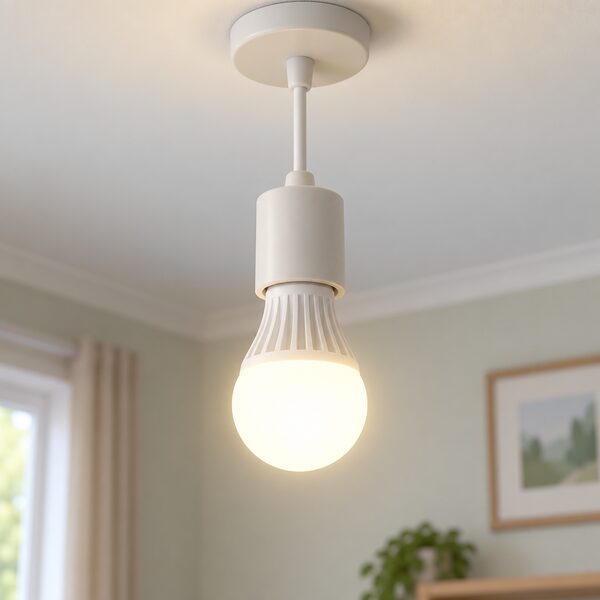
The Northern Ireland Sustainable Energy Programme (NISEP) is an energy efficiency programme for domestic and non-domestic customers17. It funds various energy saving schemes such as boiler upgrades, LED light bulbs and draught proofing18. The fund is collected from all Northern Ireland electricity customers through a public service obligation, which means it is levied on bills rather than funded from general taxation19.
The priority share is the figure that matters most to a low-income household: the majority of this funding, at least 80%, is available to vulnerable or priority customers8. The programme provides funding across several categories: priority whole house solutions covering heating and insulation measures; priority individual measures covering insulation and various other energy efficiency measures; priority whole house solutions for innovative measures; and non-priority conventional schemes covering various measures for non-priority domestic and commercial customers17.
Applying is scheme-specific rather than centralised. The published guidance is to identify the scheme you want to apply for and check that you are eligible to receive funding, then contact the relevant Scheme Manager via the telephone number or email address provided for further details8. That means a household needs to look at the list of schemes for the current programme year and approach the manager of the one that fits.
The programme's structure explains why it reaches households that other schemes miss. Because it is funded through a public service obligation on all electricity customers, it is not dependent on a government capital budget in the same way as a grant scheme, and the 80% priority allocation directs most of it to vulnerable customers. For a household, the measures it funds, boiler upgrades, LED lighting and draught proofing, are consumption-reducing rather than price-reducing, so they lower the amount of energy needed without changing the tariff.
The dependence that remains is on the electricity bill itself, since the fund is collected through it. A household that benefits from a NISEP measure still pays into the programme through its electricity charges, and it remains connected to the grid and dependent on a supplier for its power.
Bill support schemes: the £600 Energy Bills Support Scheme payment and the Energy Price Guarantee
Northern Ireland received bill support on a different timetable and through different mechanisms from Great Britain, and the largest single item was a one-off payment. All households in Northern Ireland received a single, one-off £600 payment to help with their bills7. That payment was made up of £400 of support under the Energy Bills Support Scheme Northern Ireland and £200 of support under the Alternative Fuel Payment scheme7.
The cost of the Northern Ireland scheme was estimated at approximately £332 million, based on estimates of eligible households20. The Energy Bills Support Scheme Alternative Fund was intended to provide £400 of support for household energy bills for households across the UK that do not receive the equivalent support through the main Energy Bills Support Scheme due to not having a domestic energy contract20.
The Energy Price Guarantee also applied in Northern Ireland through separate scheme documents, covering domestic electricity consumers in Northern Ireland and domestic gas consumers in Northern Ireland, alongside ministerial directions21. Those documents set out the scheme as it applied to Northern Ireland consumers specifically, rather than as an extension of the Great Britain scheme.
| Scheme | Amount | Basis |
|---|---|---|
| Energy Bills Support Scheme Northern Ireland | £400 | Part of the £600 payment7 |
| Alternative Fuel Payment | £200 | Part of the £600 payment7 |
| Total one-off payment | £600 | Single payment to all Northern Ireland households7 |
| Estimated scheme cost | Approximately £332 million | Based on estimates of eligible households20 |
| Energy Bills Support Scheme Alternative Fund | £400 | For households without a domestic energy contract20 |
The distinction between a one-off payment and an ongoing entitlement is the point a household should hold on to. The £600 was a single payment, not a recurring credit, and it has been made. The Energy Price Guarantee operated as a cap on unit prices for a defined period rather than as a payment to households. Neither is a route a household can apply for now.
A separate scheme has been announced to cut energy bills in Northern Ireland by £30 a year per household5. That is a standing reduction rather than a crisis payment, and it is a different mechanism from the £600.
For energy independence, these schemes did nothing structural. They reduced bills for a period, which helped households absorb price spikes, but they left the underlying dependence on imported gas and oil, on the electricity network, and on a supplier relationship unchanged.
Priority Services Register: free extra support from your supplier
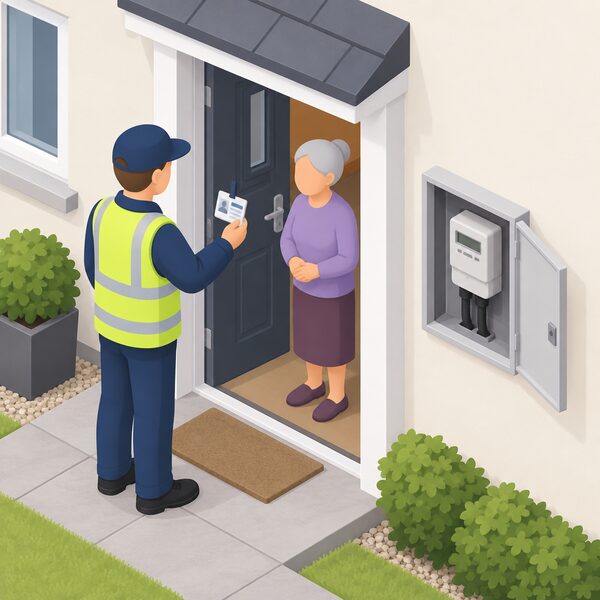
The Priority Services Register is a free service provided by water and power suppliers22. It is not a Northern Ireland-specific scheme, but it is available to households there and it is one of the few forms of support that costs nothing and requires no eligibility test beyond need.
The benefits are practical. They include priority support with heating and cooking facilities if your supply is cut off, advanced notice of power cuts, and an identification and password scheme for home visits23. The password element matters because it gives a household a way to verify that someone at the door is who they claim to be.
The register sits alongside the wider set of supplier support options that energy suppliers offer to customers in difficulty. Those include a review of payments and debt repayments, payment breaks or reductions, more time to pay, access to hardship funds, energy saving advice, and the Priority Services Register itself5. A household does not have to choose between them; the register is one item in a set.
The register's value for independence is that it reduces the harm caused by an interruption rather than the likelihood of one. A household on the register gets advance notice and priority support, which matters most for anyone dependent on powered medical equipment or unable to manage a prolonged outage. It does not reduce bills, and it does not change the household's reliance on the network.
NIE Networks Customer Care Register: priority help during power cuts
The NIE Networks Customer Care Register is the network operator's equivalent for Northern Ireland, and it carries a specific set of services. They include doorstep services, a password scheme, a special advice scheme, large print bills, Braille bills, support for people who are deaf or hard of hearing, and a carers contact24.
The carers contact is the answer to a common question about registering someone else. Where a consumer needs alternative forms of communication, your electricity or gas supplier or NIE Networks will provide this free of charge25. That means a relative or neighbour can be recorded as an alternative point of contact, and the arrangement costs nothing.
Registration is free and is made directly with NIE Networks. The register is designed for customers who need extra help during a power cut, and the services are delivered by the network operator rather than by the supplier, which is the key difference from the Priority Services Register.
For a household's energy independence, the register is a resilience measure rather than a self-sufficiency one. It does not generate or store energy, and it does not reduce consumption. What it does is shorten the period of vulnerability during an outage and give the household a named route to help. The dependence on the network remains absolute; the register changes the experience of a failure, not the fact of it.
National Energy Action: free advice by phone for Northern Ireland households

National Energy Action offers advice and support to help people across England, Wales and Northern Ireland stay warm and manage energy costs5. Its phone number is 0800 304 71595. The charity provides free advice about energy bills and keeping warm and safe in your home, and it can also help with benefits advice and income maximisation26.
Accessibility is built in: a British Sign Language interpreter can be requested26. That matters for households that cannot use a telephone advice line in the usual way, and it is one of the few published accessibility commitments among the advice routes on this page.
The distinction between National Energy Action and NI Energy Advice is worth setting out, because both offer free advice and both cover Northern Ireland. NI Energy Advice is the Northern Ireland Housing Executive service, offering independent and impartial advice to domestic householders in Northern Ireland plus referrals to energy grants12. National Energy Action is a charity operating across England, Wales and Northern Ireland, with a focus on energy bills, keeping warm and safe, benefits advice and income maximisation26. A household can use either, and the referral routes differ.
| Service | Contact | Scope |
|---|---|---|
| NI Energy Advice | nienergyadvice@nihe.gov.uk | Independent and impartial advice, referrals to grants12 |
| Northern Ireland Energy Advice Service | 0800 111 4455, 9am to 5pm Monday to Friday | Advice and scheme enquiries9 |
| National Energy Action | 0800 304 7159 | Energy bills, keeping warm and safe, benefits advice, income maximisation26 |
| NIE Networks Customer Care Register | Direct registration with NIE Networks | Doorstep services, password, large print and Braille bills, carers contact24 |
| Priority Services Register | Through water and power suppliers | Priority support in a supply cut, advance notice, password scheme23 |
The income maximisation element is the part that most directly affects a household's position, because it addresses the income side of the fuel poverty definition rather than the cost side. A household that is fuel poor under the 10% indicator is fuel poor because its heating cost exceeds 10% of its income; benefits advice can change the denominator. That is a different lever from insulation or a boiler upgrade, and it is why the advice services are not simply a signposting layer above the grant schemes.
What none of these routes does is make a household self-sufficient. The advice services reduce cost and improve access to capital funding; the registers reduce the harm of an outage; the grants reduce consumption. The household remains connected to the electricity network, dependent on a supplier, and, in most cases, dependent on delivered fuel for heat. That is the honest limit of the help available in Northern Ireland, and it is worth stating as clearly as the help itself.
Sources26 cited
- Fuel poverty statistics, 2021 estimates, UK Parliament, 2021
- Building regulations discussion document and pre-consultation, Northern Ireland Department of Finance, 2023-10-11
- Fuel poverty research briefing, UK Parliament, 2026-05-13
- NI Energy Advice, Northern Ireland Housing Executive, 2026-09-17
- Worried about your energy bills, Energy Ombudsman, 2026-03-24
- Fuel poverty modelled estimates for Wales, Welsh Government, 2025-10-16
- Vital help with energy bills on the way, UK Government, 2022-12-19
- Northern Ireland Sustainable Energy Programme: list of schemes 2026 to 2027, Utility Regulator, 2026-04-01
- NISEP list of schemes 2026-27, Utility Regulator, 2026-04
- Warm Healthy Homes Fund consultation, Department for Communities, 2026-05
- Fuel poverty consultation, Department for Communities, 2026-09-20
- Heating technologies to suit your home, nidirect, 2026-09-17
- Energy efficiency tips, nidirect, 2026-09-17
- Low carbon heating, nidirect, 2026-09-17
- Affordable Warmth Scheme, Northern Ireland Housing Executive, 2026-09-17
- Minister Hargey announces improvements to Affordable Warmth eligibility criteria, Department for Communities, 2021-06-09
- 2024/2025 annual report on the Northern Ireland Sustainable Energy Programme, Utility Regulator, 2026-07-03
- Cost of living and winter support, Belfast City Council, 2026-09-20
- Energy saving grants in your area, nidirect, 2026-09-17
- Energy Bills Support Scheme Alternative Fund legislation, UK Parliament, 2022-10-18
- Energy Price Guarantee scheme documents, UK Government, 2022-10-31
- What to do in a power cut, Met Office, 2026-09-20
- Support schemes, Cheshire West and Chester Council, 2026-09-17
- NIEE social action plan, Utility Regulator, 2020
- Code of practice for consumers in vulnerable circumstances, Utility Regulator, 2025
- Getting help with your energy bills, Birmingham City Council, 2026-06-24
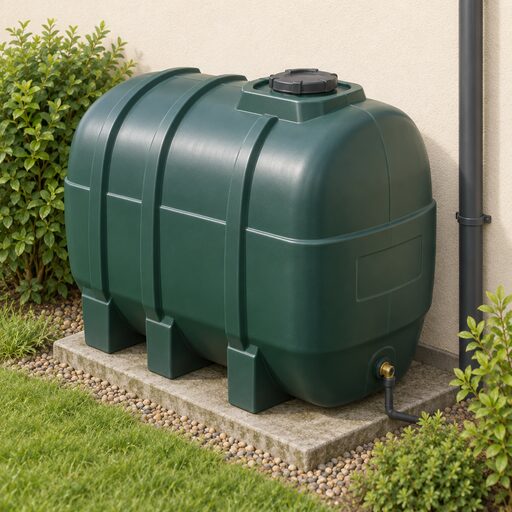 Fuel PovertyWhy does Northern Ireland have such a high rate of fuel poverty, and how many households are affected?
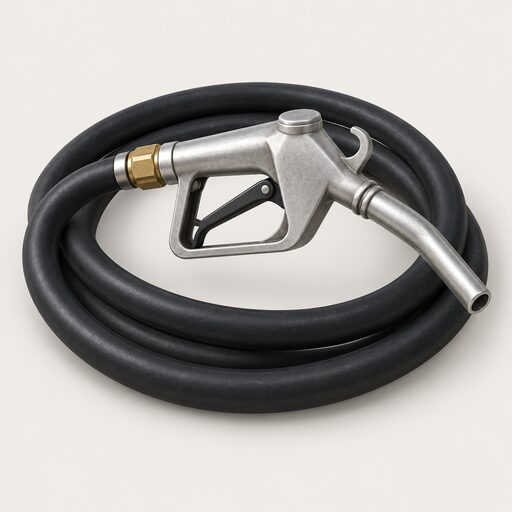 Housing Stock Data for NIMost homes in Northern Ireland heat with oil, so why are the grants and help different from the rest of the UK?
 Utility Regulator NIWho sets your energy prices in Northern Ireland and who can you complain to?
 Home HeatingWhy do so many homes in Northern Ireland run on heating oil, and will that ever change?
 Energy Bills in Northern IrelandNorthern Ireland has no price cap.
 Vulnerable Households EnergyIf someone in your home relies on powered medical equipment, or needs extra warmth because of a health condition, what help is available?