

On this page
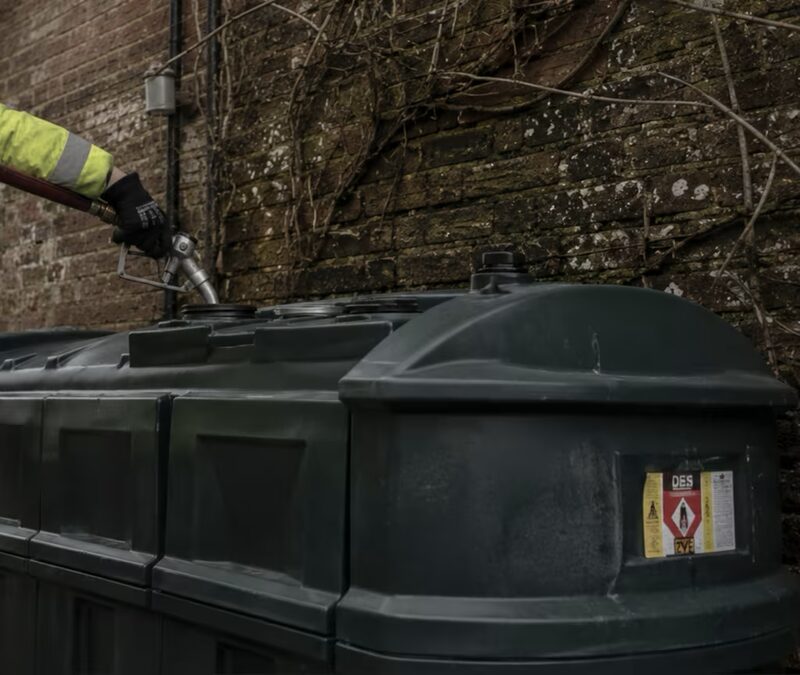
In March 2026 the UK government announced over £50 million of targeted financial support for low-income households who heat their homes with oil1. The trigger was stark: in March 2026 the price of heating oil rose by 91% on the February 2026 level2, and the heaviest burden fell on Northern Ireland, where almost two thirds of homes rely on heating oil3. The government allocated £17 million to support households there3.
But the money does not arrive the same way in each nation. Northern Ireland has a dedicated scheme paying a £100 prepaid card on application. Wales received £3.8 million for oil and LPG households. England has no oil-specific payment at all: help flows through local council crisis funds. And the support sits alongside wider measures announced in the October 2026 Budget, including a £100 energy payment for council tax bands A to D and a new debt relief scheme. This page sets out what each nation's oil households can expect, who qualifies, and the deadlines that matter.
What help exists for heating oil households
Heating oil households sit outside most of the machinery of energy bill support. There is no supplier to apply to for a discount on the oil itself, no direct debit to spread the cost, and no price cap on kerosene. The government's response to the Competition and Markets Authority's heating oil market study acknowledged this reliance, noting that funding has been made available to the Northern Ireland Executive, Wales and Scotland, reflecting reliance on heating oil in those nations1.
What exists instead is a patchwork of local and national schemes. East Sussex's guidance is typical of the English approach: heating oil prices have increased sharply, leaving some households facing immediate hardship, and extra government funding is now available locally, with households eligible if they are at immediate risk of being unable to heat their home or access hot water due to rising oil costs7. Pendle Borough Council similarly points households facing immediate financial hardship from significant increases in energy costs, such as a large increase in heating oil prices, towards financial support to cover their energy bill8.
The Household Support Fund, now succeeded in many areas by the Crisis and Resilience Fund, can cover energy bills for any form of fuel used for domestic heating, cooking or lighting, including oil or portable gas cylinders9. Kent's Crisis and Resilience Fund spells this out: support for low-income households who rely on heating oil and are facing an immediate heating crisis10. There is also a consumer-protection legacy: the government secured voluntary compensation from suppliers after the CMA found heating oil customers were affected by unfair practices11.
For the longer term, oil households can also draw on the wider grants system, including the Boiler Upgrade Scheme for heat pumps and the grants available for off-gas-grid homes.
Support by nation: England, Wales and Northern Ireland
England: council crisis payments
England has no national heating oil payment. Help is delivered through local councils, which receive funding to support households with essentials including energy and water bills12. Because each council runs its own scheme, eligibility, application routes and amounts vary by area. East Sussex, for example, takes referrals through a Citizens Advice self-referral form with a specific heating oil checkbox7, while Kent and Westmorland and Furness operate crisis funds that flag extra support for households struggling with the cost of heating oil, particularly in rural areas10. An oil household in England should expect to apply to its council, demonstrate immediate hardship, and receive a discretionary payment rather than an automatic grant. The council energy grants page explains how these funds work.
Wales: £3.8 million for oil and LPG households
Wales received £3.8 million from the UK Government to support households that use oil for heating and hot water14, funding confirmed again in the Welsh Government's announcement of help with oil and LPG heating costs6. Unlike England, the Welsh support is a defined national allocation aimed specifically at off-gas-grid fuel households, including LPG users as well as oil. Households in Wales can also draw on the grants and schemes available in Wales, including Nest, and the charity National Energy Action operates across Wales alongside England and Northern Ireland15.
Northern Ireland: the £100 prepaid card
Northern Ireland has the most developed scheme, reflecting that almost two thirds of its homes rely on heating oil3. The Home Heating Oil Support Scheme is funded through a combination of £17.2 million provided by the UK Government and a further £19.2 million from the NI Executive4, within a £36.4 million support package agreed by the Executive5. The payment is a £100 prepaid card that can be used at heating oil suppliers5, and the scheme is designed to deliver targeted support to more than 300,000 households5.
Eligibility is broader than most English council schemes. The scheme is open to households who use oil as their primary source of heating, are resident in Northern Ireland, and, in either of the qualifying months, are in receipt of a qualifying benefit, or are a single person or couple, including pensioners, with an annual income of less than £30,000 net of allowable deductions16. Applications opened on 9 September 2026 and close on 31 March 2027, and are made through nidirect4.
Fuel poverty and the missing supplier hardship support
The scale of the problem behind these schemes is measured. In the 2024 Scottish House Condition Survey, the fuel poverty rate among households using oil as their primary heating fuel was 23%, compared with 27% for gas, 26% for other heating fuels and 42% for electricity17. Scottish modelling published in 2026 shows how exposed oil households are to policy and price change: under the modelled scenario, extreme fuel poverty among oil-heated households moves from 37% to 30%, while gas-heated households move from 26% to 25%18. Fuel poverty itself is driven by four factors: household income, the price of fuel required for space and water heating, the energy efficiency of the dwelling, and the fuel households must use to maintain satisfactory heating regimes19.
The harder problem is that much of the help that does exist never reaches the people it is for. Energy Ombudsman guidance directs worried customers to advice services, including National Energy Action, which offers support across England, Wales and Northern Ireland15. For oil households the lesson is that electricity-supplier hardship schemes and the Warm Home Discount still apply to the electricity side of the bill, even though the oil tank is where the biggest cost sits.
The £100 energy bill payment for council tax bands A to D
The October 2026 Budget added a general payment that oil households can claim alongside any oil-specific help. The government will provide a £100 Household Energy Payment for households in council tax bands A to D20. In England, households are eligible if they are liable for council tax on, and live in, the property as their main home21. The payment is not fuel-specific: it goes to eligible households regardless of whether they heat with gas, electricity, oil or LPG.
For households in the wrong band, or not liable for council tax on their home, the government is also providing councils with a £100 million discretionary fund to support households the main payment does not reach20. This mirrors the structure of earlier schemes: Cornwall Council's 2022 discretionary scheme, for example, sat alongside the £150 council tax rebate for bands A to D of that year22. Councils will decide locally how the discretionary money is distributed, so an oil household in band E or above should ask its council directly. The payment is expected to reach households from January 202720.
Warm Homes Loan Scheme: lenders and what it covers

For oil households weighing a permanent move away from the tank, the Warm Homes Loan Scheme launched in October 2026 offers finance for energy saving improvements such as heat pumps or solar panels23. The loan is provided by a lender, for example a bank, rather than by the government23. Named participants include Hometree Finance, The Money Co-op (a not-for-profit co-operative), Secure Trust Bank through its V12 Retail Finance platform, and This Bank, which offers retail finance through multiple partners24.
The scheme sits within a wider £2 billion programme of low-interest loans for heat pumps, solar panels, batteries and more, helping households meet upfront costs25. Technology caps are set by measure:
| Technology | Maximum loan |
|---|---|
| Ground source heat pump | up to £35,000 |
| Air-water source heat pump | up to £20,000 |
| Air-air source heat pump | up to £10,000 (when MCS certification available) |
| Heat network connection | up to £7,500 |
All figures from the scheme factsheet of 27 October 202624. A loan is debt, not a grant: unlike the Boiler Upgrade Scheme, the money is repaid, and the household's independence from the oil market is bought by taking on an obligation to a lender. The interest-free and low-interest finance options page compares the schemes.
Warm Home Discount: who must confirm details and by when
The Warm Home Discount requires large domestic energy suppliers to provide an annual discount of £150 to eligible households26, funded through a levy on all domestic gas and electricity customers27. The scheme obligates participating suppliers to provide rebates to eligible low-income households, and it helps households in, or at risk of, fuel poverty with direct energy bill payments as well as other financial and energy-related support28. Oil households qualify on the electricity side: the discount reduces the electricity bill, not the cost of oil.
For the 2026 to 2027 scheme year, the Secretary of State has issued the eligibility statement required under Regulation 10 of the Warm Home Discount (England and Wales) Regulations 202629. Around six million households will receive a confirmation letter, and recipients will either get the discount automatically or, if they need to phone the helpline, must do so before 26 February 2027 and provide further information to receive the funding30. Caravan and park home residents must contact the helpline and provide evidence that the caravan is their sole, legal residence and that they are named on the electricity bill28. In Scotland, only customers on a low income need to apply through their energy supplier, and eligible customers should receive the discount by 31 March 2026 for the 2025/26 winter9. If no letter arrives, the steps to take without a Warm Home Discount letter matter, because the 26 February 2027 deadline is hard.
What the Energy Debt Relief Scheme will cover
Ofgem has launched a one-off Debt Relief Scheme to reduce debt accumulated during the energy crisis, scheduled to launch in Spring 2027, helping thousands of households in genuine financial difficulty31. The scheme forms part of Ofgem's wider circuit-breaker strategy to help households get out of energy debt31.
Who it covers is described differently in different official announcements, and the difference matters to applicants. Ofgem's announcement describes households in genuine financial difficulty who built up debt during the 2022 to 2024 energy crisis and have little realistic prospect of paying it back31. The Budget announcement describes energy billpayers on means-tested benefits, disability benefits, or pensioners, with debt built up since the energy crisis of 2022 to 2024, provided they re-engage with paying their debt21. The two descriptions differ on whether repayment re-engagement is a condition, so households should check the final scheme rules when applications open in Spring 2027. For oil households, the scheme's relevance is indirect: it addresses electricity and gas arrears, while oil debt is typically owed to a fuel distributor rather than an energy supplier, and may fall outside the scheme altogether. The crisis funds and energy debt help page covers the alternatives.
How the rising price cap affects help with costs
The wider bill backdrop explains why these payments are landing now. The January to March 2024 price cap was 5% higher than the previous cap, and the July to September 2024 cap was still almost 30% higher than in winter 2021/2232.
For oil households the cap is not the direct problem, since kerosene is uncapped, but it shapes the help available. Every rise in the electricity cap increases the standing charge and unit rate an oil household pays on the electricity it still needs, and it drives the political decisions that produce packages like the March 2026 oil support. The 91% oil price rise of March 20262 shows the sharper risk: an oil household buys a whole tank at once, so a spike lands as a single large bill rather than a gradual increase. That is why the government's oil support is built around immediate crisis payments, while the cap-linked payments, the Warm Home Discount and the Debt Relief Scheme work on the electricity side. A household that understands which of its bills each scheme touches, and which nation's scheme it falls under, is far better placed to claim everything it is owed.
Sources32 sources
- Government response to the CMA heating oil market study, Department for Energy Security and Net Zero, 2026-10-13
- Fuel poverty, House of Commons Library, 2026
- Heating oil support, Commons debate 16 March 2026, UK Parliament, 2026-03-16
- Home Heating Oil Support Scheme FAQs, Department for Communities, 2026-09-17
- Lyons announces agreement on home heating oil support, Department for Communities, 2026-04-16
- Thousands of Welsh households get help with oil and LPG heating costs, Welsh Government, 2026-03-31
- Help for households using oil heating, East Sussex County Council, 2026-11-09
- Help for households, Pendle Borough Council, 2026-11-09
- Commons Library briefing on energy prices, House of Commons Library, 2026
- Crisis and Resilience Fund, Kent County Council, 2026
- Heating oil suppliers: using fair terms and conditions, HM Government, 2026-09-10
- Cost of living help from your local council, HM Government, 2026-09-17
- Crisis and Resilience Fund (DWP), Westmorland and Furness Council, 2026
- Written statement: support available to help with cost of living, Welsh Government, 2026-03-18
- Worried about your energy bills, Energy Ombudsman, 2026-03-24
- Home Heating Oil Support Scheme, Department for Communities, 2026-09-17
- Scottish House Condition Survey 2024: key findings, Scottish Government, 2026-02
- Scenario modelling: impact of the reduction of the Renewables Obligation and ending ECO on fuel poverty in Scotland, Scottish Government, 2026
- Scenario modelling: 2023 fuel poverty levels under 2019 fuel prices, Scottish Government, 2025-03-25
- Council tax information letter 6/2026: Household Energy Payment 2027, HM Government, 2026-10-29
- What the Autumn Budget 2026 means for your energy bills, HM Government, 2026-10-28
- Council Tax Energy Rebate Discretionary Scheme, Cornwall Council, 2022-12-12
- Warm Homes Loan Scheme, HM Government, 2026-10-28
- Warm Homes Loan Scheme factsheet, Department for Energy Security and Net Zero, 2026-10-27
- Reforming consumer protection for home upgrade schemes: consultation, HM Government, 2026-06-17
- Warm Home Discount statistics 2025 to 2026, HM Government, 2026-06-18
- Warm Home Discount (WHD) scheme pages, Ofgem, 2026-09-17
- Warm Home Discount eligibility statement, England and Wales 2026 to 2027, HM Government, 2026-08-07
- Warm Home Discount eligibility statement 2026 to 2027: cover page, HM Government, 2026-08-07
- Households to receive £150 Warm Home Discount confirmation letter, HM Government, 2026-10-22
- New circuit breaker strategy launched to help households get out of energy debt, Ofgem, 2026-10-29
- Commons Library briefing on the energy price cap, House of Commons Library, 2024-07
 Off-Gas-Grid Home GrantsWhat grants can you get if your home has no mains gas?