

In this answer
Short answer
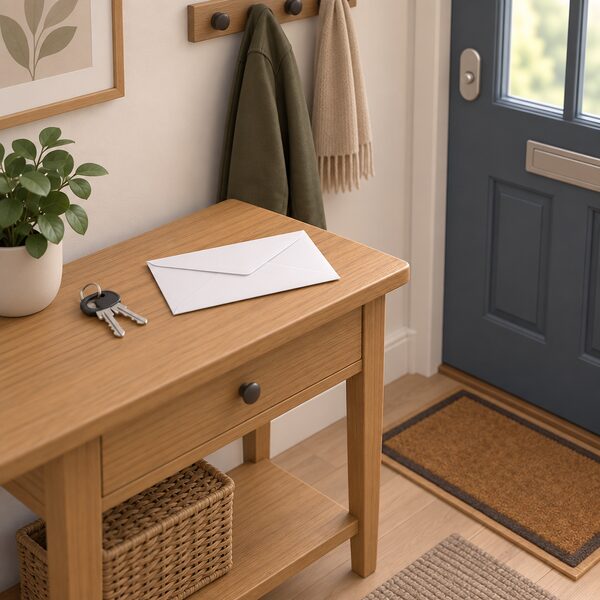
The Warm Home Discount is a £150 discount applied to an electricity bill by the supplier, not a payment sent to the household1. In England and Wales it is automatic: there is no application to make, and the supplier applies the discount once eligibility is confirmed2. The letter that arrives in the post is a notification that the discount is coming, not a form to complete and return.
That distinction matters when no letter turns up. A missing letter does not mean a missing entitlement, and it does not usually mean an application was overlooked, because in England and Wales no application was ever required. The qualifying date for winter 2026 to 2027 is 23 August 2026, and payments for that scheme year are made at any time from October 2026 to the end of March 20273.
What follows sets out when the letter should arrive, why it may not have, who to contact, how the £150 reaches a household on a prepayment meter, and what happens if the supplier changes or stops trading.
The letter is a notification, not an application
The letter tells a household that the supplier has identified it as eligible, or that it may be eligible and further information is needed. Letters for the 2025 to 2026 scheme year were sent between October 2025 and January 2026 to households that met or possibly met the criteria8. National Energy Action's guidance is that a letter from the supplier arrives before January of the qualifying year if the household is eligible for the scheme or is being migrated onto it5.
The pattern is consistent across the winter payments. The Winter Fuel Payment letter arrives in October or November saying how much will be paid9. The Winter Heating Payment in Scotland is paid automatically with a letter sent before payment, and Social Security Scotland sends a letter or email telling the household it is coming2. None of these letters is an application form.

Why the letter may not have arrived
The largest single reason is data matching. The Department for Energy Security and Net Zero estimated that 2.4 million households, some 28% of the 8.1 million people estimated eligible, might not be data matched10. Those households are entitled but not automatically identified, which is precisely the gap the letter is meant to close and precisely the gap that leaves people waiting. The scheme as a whole supports two and a half million low-income and vulnerable households11.
Smaller suppliers may also limit how many broader group discounts they pay. The number of discounts paid by each supplier to broader group customers may be limited, and some smaller firms do not pay those who do not automatically qualify12. A household with a supplier that caps its broader group, or that does not participate at all, may never receive a letter.
In Scotland the position differs. An application process still applies for those in Core Group 2, known as the Broader Group in Scotland5. A Scottish household in that group should not wait for a letter before acting.
Park home residents are a separate case again. Permanent residents of park homes who pay the site owner for their electricity must apply themselves rather than wait for an automatic discount3. The Park Homes Warm Home Discount scheme requires applicants to be a permanent resident of a park home, to pay the park site owner for electricity usage, and to be on a relevant qualifying benefit or demonstrate household income or fuel poverty criteria4. Applications are made each year and only one application per household is considered13.
Who qualifies: the core group and the broader group
Eligibility in England and Wales is built around two groups. Core Group 1 covers customers of participating suppliers where the person named on the energy bill, or their partner, receives the Guarantee Credit element of Pension Credit on the qualifying date for that scheme year13. Core Group 2 covers receipt of a qualifying means-tested benefit by the person named on the bill, or their partner or legal representative, on the qualifying date14.
The broader group, which applies in Scotland, includes low income households that are not part of the core group9. That is the group where an application process still applies, and where supplier caps bite hardest.
Three conditions run through all of it: the energy supplier must be part of the scheme, the household must receive certain means-tested benefits, and the name on the electricity bill must be the claimant or their partner7. To receive the discount automatically in winter 2026 to 2027, you or your partner must be named on the electricity bill by Sunday 23 August 20269.
The scheme is large. It supports two and a half million low-income and vulnerable households11. Claiming it does not affect eligibility for any other discounts or payments3. In England and Wales, Core Group 1 rests on receipt of the Guarantee Credit element of Pension Credit on the qualifying date, while Core Group 2 rests on receipt of a qualifying means-tested benefit, by the person named on the bill, their partner or a legal representative, on the qualifying date15. Scotland differs: the broader group covers low income households that are not part of the core group, and an application process still applies for those in Core Group 2, known there as the broader group16. The number of discounts each supplier pays to broader group customers may be limited, and some smaller firms do not pay those who do not automatically qualify18.
How the £150 is paid, including prepayment meters
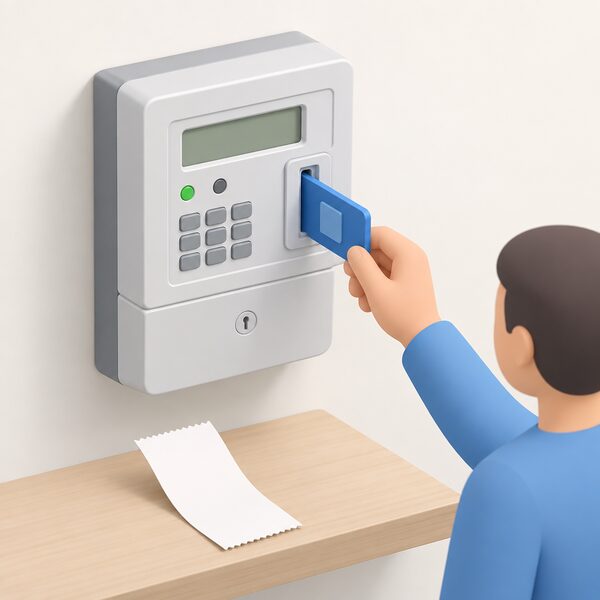
The discount is £150 off an electricity bill, applied by the energy supplier rather than paid directly to the household19. The Warm Home Discount (England and Wales) Regulations 2026 define the prescribed rebate as a rebate of £15020. Ofgem describes the scheme as providing £150 energy bill rebates funded through a levy on all domestic electricity suppliers21, and the department's own annual report refers to the £150 Warm Home Discount16.
For a prepayment meter the mechanism is different in form but the same in value: £150 off an electricity bill or £150 added to a prepayment meter2. The discount is paid automatically through the electricity supplier, either as a credit to the account or as a voucher for a prepayment meter top-up3. The money is not paid to the household; the supplier applies it to the bill1.
"Your electricity supplier will apply the discount to your bill. The money is not paid to you."
Two figures circulate for the value. One official source gives £140, while an official press release gives £150 off energy bills, and the two have not been reconciled. The £150 figure is the one carried by the regulations, Ofgem and the department's annual report, and it is the figure used here.
What to do instead of waiting
The first step is the supplier, because the supplier holds the eligibility record and applies the discount. If the supplier cannot resolve the query, guidance gives a postal address for eligibility queries: Warm Home Discount Scheme, PO Box 970, Preston, PR2 0FX3.
If a household believes it meets the criteria but no letter has arrived, StepChange advises contacting the Warm Home Discount helpline8. National Energy Action gives the number as 0800 731 0214 for households expecting a rebate that has not arrived by mid January6. Confused.com gives 0800 030 9322 for the Warm Home Discount phone line17. Both numbers appear in published guidance and the two figures disagree.
Where a supplier will not engage, the Energy Ombudsman route requires the complainant to have raised the complaint with the supplier first, then either received a deadlock letter or waited 8 weeks without resolution18. The same threshold applies to heat network complaints15. Evidence matters: the complaint date, and confirmation that the supplier name matches the name on the bill18.
The scheme has been evaluated through interviews and a survey with scheme recipients and interviews with supplier representatives22, which is the evidence base behind how suppliers administer it.
Switching suppliers, and what happens if yours stops trading
Switching away from a supplier that offers the Warm Home Discount to one that does not means losing it, even for the core group, so the new supplier's criteria are worth checking before switching12. Not all suppliers offer it, and the practical sequence is to switch after receiving the discount so it is not lost for that year23.
There is a partial protection. If a household switches supplier after the date its eligibility is checked, it might still get the discount from the supplier it was with on that date24. That covers the assessment date rather than the whole scheme year.
If a supplier fails, the Supplier of Last Resort arrangements apply. A household receiving the Warm Home Discount should have it honoured by the new supplier25. The regulations set a deadline for the notification of a failed supplier's non-core spending obligation: on or before 15 February in that scheme year20.
The scheme itself has a long horizon. The England and Wales regulations continue the scheme until 31 March 203020. The Scottish scheme has effect until 31 March 2031, with certain duties continuing afterwards.
Where the scheme does not run
The Warm Home Discount Scheme does not run in Northern Ireland, where an Affordable Warmth Scheme is available instead21. The scheme is not available in Northern Ireland13, and it operates in England, Wales and Scotland only9. A household in Northern Ireland should look to the Affordable Warmth Scheme and the Cold Weather Payment rather than waiting for a letter that will not come3.
For households in Great Britain, the wider grant landscape sits alongside the discount. The Warm Home Discount is a bill rebate rather than an installation grant, and it is separate from the Warm Homes: Local Grant and the Energy Company Obligation, which fund physical measures. Households comparing the discount with the winter payments can read Warm Home Discount vs Winter Fuel Payment, and those whose discount has been refused can read what to do if the Warm Home Discount is refused.
On independence, the discount reduces a bill but leaves the household dependent on the supplier to identify it, on the data match to find it, and on the supplier's participation to pay it. It is a levy-funded transfer, not a step towards self-supply. The grants and energy independence page sets out where bill support ends and measures that reduce consumption begin.
Sources25 cited
- Warm Home Discount Scheme: if you live in England and Wales, GOV.UK, 2026-09-17
- Grants and benefits to help you pay your energy bills, Citizens Advice, 2026-09-17
- Warm Home Discount guide, Uswitch, 2026-08-12
- Warm Home Discount eligibility statement, England and Wales, 2026 to 2027, GOV.UK, 2026-09-17
- Your home energy checklist, National Energy Action, 2026-09-10
- Struggling with energy bills, National Energy Action, 2026-05-06
- Warm Home Discount Scheme: if you live in Scotland, GOV.UK, 2026-09-17
- Warm Home Discount, StepChange, 2026-09-20
- Warm Home Discount Scheme: England, Scotland and Wales, Turn2us, 2026
- Warm Home Discount (Amendment) Regulations 2025 debateRegulations2025), Hansard, 2025-09-03
- Warm Home Discount Scheme inquiry, Public Accounts Committee, 2026-09-20
- Warm Home Discount, Which?, 2026-08-04
- Park Homes Warm Home Discount Scheme, House of Commons Library, 2026-02-26
- Warm Home Discount scheme, House of Commons Library, 2026-01-30
- Raise a dispute: Metropolitan Infrastructure Limited, Energy Ombudsman, 2026-09-19
- DESNZ annual report and accounts 2025 to 2026: performance report, GOV.UK, 2026-09-17
- Energy grants guide, Confused.com, 2026
- Raise a dispute: Cynon Taf Community Housing, Energy Ombudsman, 2026-09-19
- Energy bill support this winter, British Gas Energy Trust, 2026-08-26
- The Warm Home Discount (England and Wales) Regulations 2026, legislation.gov.uk, 2026-03-27
- Warm Home Discount, Ofgem, 2026-09-17
- Continuing the Warm Home Discount Scheme: government response, GOV.UK, 2026-01-30
- Dealing with your energy supplier, Centre for Sustainable Energy, 2026-01
- Grants and benefits to help you pay your energy bills (Scotland), Citizens Advice Scotland, 2026-09-17
- Energy supplier out of business, Uswitch, 2026-05-29
 Older People and Home EnergyOlder people often pay more to keep warm and can miss out on help they are entitled to.
 The Full Grants and Schemes GuideWhich grants can you actually get right now, and how do you apply for them?
 The Full Heat Pumps GuideWill a heat pump keep my house warm in winter, and what does one cost to buy and run?
 Apply for a Home Energy GrantThe application sequence common to funded schemes: the checker, the survey or assessment, the installer, the paperwork and the sign-off.
 The Full Installers GuideHow do you find an installer you can trust, and what should you check before signing anything?
 Warm Air Heating SystemsWarm air heating works by pushing heated air through vents in your floors or walls.