

In this guide
England has more open home energy grant money than any other part of the UK, and it is split across four schemes with four different gatekeepers. The Boiler Upgrade Scheme pays £7,500 towards an air-to-water or ground source heat pump, rising to £9,000 for eligible off-gas grid properties replacing oil or liquefied petroleum gas heating, and £2,500 towards an air-to-air heat pump1. The Great British Insulation Scheme funds insulation through energy suppliers, the Warm Homes: Local Grant delivers up to £30,000 of measures per property through local authorities, and the Warm Homes: Social Housing Fund works through landlords rather than households3.
The single most important thing to understand is who applies. For the Boiler Upgrade Scheme, the application is installer-led, with the installer applying for the grant on the property owner's behalf, discounting it from the invoice and redeeming the voucher with Ofgem after commissioning6. For insulation, the route runs through an energy supplier. For the Warm Homes: Local Grant, it runs through your council. An English household rarely applies to government directly.
What follows sets out each scheme, what it will and will not fund, the deadlines that are fixed, and what the money does and does not do for a household's energy independence.
The main grants in England at a glance
Four schemes carry most of the money, and they differ less in what they fund than in who holds the purse.
The Boiler Upgrade Scheme is a government scheme providing upfront grants to help reduce the cost of installing heat pumps and biomass boilers in homes and non-domestic buildings1. It opened on 23 May 2022 and supports the decarbonisation of homes and small and medium non-domestic buildings in England and Wales6. It is administered by Ofgem6.
The Great British Insulation Scheme is a government energy-efficiency scheme administered by Ofgem that operates in Great Britain, so it covers England, Scotland and Wales10. It works by placing an obligation on medium and large energy companies to deliver measures that result in reduced energy usage, and it complements the Energy Company Obligation (ECO4) scheme10. It is designed to deliver improvements to the least energy-efficient homes in Great Britain to help tackle fuel poverty and reduce carbon emissions10.
The Warm Homes: Local Grant provides grants to low-income households living in privately owned properties, administered by local authorities, and funds insulation, energy-efficient heating systems and renewable energy installations3. The Warm Homes: Social Housing Fund provides funding to local authorities, combined authorities, registered providers of social housing, and registered charities that own social housing in England, for installing energy efficiency upgrades and low-carbon heating measures in English social housing5.
Alongside these sit council-level advice services. East Herts, for example, runs a Home Energy Support Service offering information on grants and help with checking eligibility, benefits support, supplier switching advice, energy saving advice, debt advice and referral to other organisations or contractors3. That pattern repeats across English councils, and it is often the fastest route to finding which scheme a particular home fits.
| Scheme | What it funds | Who applies | Where it applies |
|---|---|---|---|
| Boiler Upgrade Scheme | Heat pumps, and biomass in limited circumstances | An MCS-certified installer, on your behalf | England and Wales6 |
| Great British Insulation Scheme | Insulation, and some heating controls | An energy supplier or its installer | Great Britain10 |
| Warm Homes: Local Grant | Insulation, efficient heating, renewables | Your local authority | England11 |
| Warm Homes: Social Housing Fund | Efficiency upgrades and low-carbon heating | Landlords and housing providers | England12 |
Boiler Upgrade Scheme: £7,500 towards a heat pump
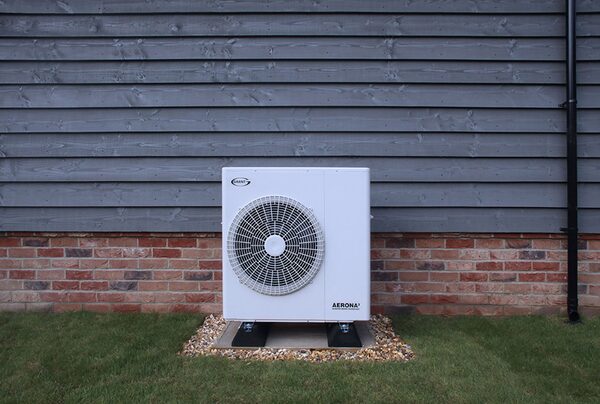
The headline grant value is £7,500, and it is an upfront capital grant rather than a payment made after the fact2. The scheme provides upfront capital grants to support the installation of heat pumps and biomass boilers in homes and non-domestic buildings14.
The grant is not a single flat rate. The approved categories and values set £7,500 for air-to-water heat pumps and ground source heat pumps, £9,000 for air-to-water or ground source heat pumps in off-gas grid properties replacing a heating system fuelled by oil or liquefied petroleum gas, £2,500 for air-to-air heat pumps, and £5,000 for biomass boilers2. Exhaust air-to-water heat pumps are eligible for the £7,500 grant3.
The scheme has been running since 23 May 2022, when it opened at 12:01am, and it launched to support the decarbonisation of heat in buildings6. It is targeted towards domestic and non-domestic properties in England and Wales, and self-build properties are eligible9.
Take-up gives a sense of scale. In the quarterly period from November 2025 to January 2026, 11,278 applications were made, 9,425 vouchers were issued, and their value came to £70,627,5007. Biomass grants paid in the same period numbered 307. The most recent quarterly report covers 1 May 2026 to 31 July 202616.
Boiler Upgrade Scheme eligibility: which properties and heating systems qualify
Only properties in England and Wales are eligible, a rule stated identically in guidance from 2023 and 20263. Scotland and Northern Ireland run their own arrangements, so a household north of the border or across the Irish Sea is looking at a different scheme entirely.
The property must have a valid energy performance certificate6. The installer supplies the latest EPC reference number with the voucher application, except for eligible self-builds17. The chosen installer must be certified by the Microgeneration Certification Scheme, a nationally recognised standards body6.
The voucher application itself carries a list of required evidence: the installation address, property owner details, technology type, the fuel type of the heating system being replaced where applicable, gas grid connection status, eligible self-build status and evidence where applicable, the latest EPC reference number, an insulation exemption template where applicable, a declaration that the property is not social housing, and agreed quote details17. That declaration is what closes the scheme to social tenants, who are served instead through their landlord under the Warm Homes: Social Housing Fund12.
The eligible heating system must be commissioned no more than 120 days prior to the voucher application being properly made8. In other words, the installation cannot be an old one being claimed for retrospectively.
The £9,000 off-gas-grid uplift and biomass boiler grants
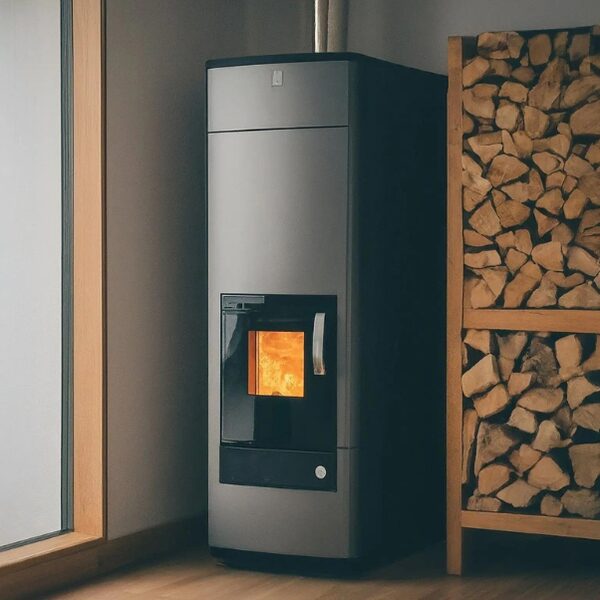
From 21 July 2026, eligible off-gas grid properties can apply for an uplifted grant of £9,0003. The uplift applies to air-to-water or ground source heat pumps in properties that are not fuelled by mains gas and that are replacing a heating system fuelled by oil or liquefied petroleum gas2.
The £9,000 figure appears consistently across the scheme's own documents: £9,000 off the cost and installation of air-to-water or ground source heat pumps in eligible off-gas grid properties, available until 31 March 20271; £9,000 towards an air-to-water or ground source heat pump for eligible off-grid properties heated by LPG or oil9; and the £9,000 uplifted grant value in installer guidance8.
Biomass is the narrowest category. Biomass boilers are eligible for a £5,000 voucher only, and the grant value from 28 April 2026 is £5,000 with a three-month voucher5. The scheme describes biomass as funded in limited circumstances, which is why the quarterly figures show only 30 biomass grants paid in a three-month period against thousands of heat pump vouchers7.
For a household off the gas grid, the arithmetic matters more than for most. An oil or LPG heated home replacing its system with an air-to-water heat pump is looking at the largest single grant the scheme offers, and it is the household least able to fall back on a mains gas connection if it does nothing.
How the BUS application works: installer-led vouchers and payment
The application is installer-led, with the installer applying for the grant on the property owner's behalf6. The installer discounts the grant from the invoice, applies to Ofgem for a grant voucher, and redeems the voucher after installation and commissioning6. The property owner does not submit the application.
The BUS grant application is a two-stage process: the installer submits the voucher application, Ofgem issues the voucher, the installer submits the voucher redemption application, and the installer receives the grant payment7.
The installer must submit the total quote amount including any VAT before the grant is deducted, the total cost of the heat pump unit or biomass boiler unit without the grant deducted, the quote reference number, and the date on the quote18. That is why the discount appears on the invoice rather than arriving as a payment to the household.
Vouchers for air source heat pumps and biomass boilers are valid for 3 months7. The same three-month window applies to air-to-water, air-to-air and biomass grants5. The final date on which Ofgem can issue vouchers is 31 December 2029, and the scheme closes on 30 December 2029 at 11:59pm4.
For enquiries, the BUS Enquiries team can be reached at BUS.Enquiry@ofgem.gov.uk, and complaints about scheme administration or the handling of an application go to feedback@ofgem.gov.uk3.

Great British Insulation Scheme: what it funds and who qualifies
The Great British Insulation Scheme helps people get free or cheaper insulation to reduce their home's energy bills15. It delivers the rapid installation of value-for-money insulation measures and, in some cases, heating controls13. Cavity wall insulation, including party wall, is among the measures funded for both eligible groups13.
Eligibility turns on two things: an energy performance certificate of D to G, and Council Tax bands A to D in England or A to E in Scotland and Wales3. The scheme targets the low-income group among its eligible groups13. It is designed to help around 300,000 households9.
The funding is not fixed. It is up to the energy companies to determine which retrofit projects they choose to fund and the level of funding they provide, depending on the measure type and other factors11. Eligibility for the scheme does not guarantee that an energy supplier or installer will decide to install measures11. You find out after the assessment if you need to pay anything towards the installation of the insulation15. Higher-cost measures, such as solid wall insulation, would be more likely to require a contribution from the household13.
All installers must be a TrustMark-registered business, and all measures available under the scheme must be delivered according to PAS2030/2035 standards13. There is no minimum requirement under the scheme for a property's Standard Assessment Procedure rating to be increased through the measure13. Ofgem does not administer appropriate guarantees or financial protection for measures installed under the scheme, and the current list of appropriate guarantees can be found on the TrustMark website13.
Warm Homes: Local Grant: up to £30,000 through your local authority
The Warm Homes: Local Grant provides grants to low-income households living in privately owned properties, and it is administered by local authorities11. Up to £30,000 of measures is available per property3. Eligible applicants receive upgrades such as insulation, energy-efficient heating systems, and renewable energy installations3.
The scheme's published rules set out different rates by tenure. For an owner occupier or a private landlord's first property in England, the grant covers 100% of the cost up to £15,000 of energy performance improvements. For a private landlord's second and subsequent properties in England, it covers 50% of the cost up to £7,50019.
Eligibility conditions include having an Energy Performance Certificate of D to G, or the equivalent for a park home18. The published eligibility criteria differ between documents: one gives households with a combined income of less than £36,000, while the scheme rules describe a home in England, privately owned, EPC D to G, household savings less than £25,000, and household income usually £36,000 a year or less, with postcode or benefits exceptions.
Because delivery sits with councils, the practical route differs by area. Greater Manchester Combined Authority publishes its own Warm Homes: Local Grant page, and SHINE London offers limited funding towards the cost of getting a new home energy certificate18. A household in one English region may find a different application process from a household in another.

Can you combine grants, and what each scheme will not fund

Stacking is where most confusion arises, and the rules are stricter than households expect.
For the Warm Homes: Social Housing Fund Wave 3, grant funding from other Energy Efficiency Schemes cannot be used as co-funding, and funding from multiple government schemes cannot be used to fund the same individual measure twice21. The principle is that a single measure is paid for once.
The Great British Insulation Scheme complements the Energy Company Obligation (ECO4) scheme, and the two share forms: the Great British Insulation Scheme and ECO4 forms are used to collect and provide evidence of measure eligibility10. That shared evidence base is what allows a supplier to assess a home against both.
The Boiler Upgrade Scheme is a capital grant towards a heating installation, not an insulation scheme, and the voucher application requires an insulation exemption template where applicable17. That template exists because the scheme expects a property to meet insulation standards before a heat pump is installed, and it is the mechanism by which a home that cannot meet them still proceeds.
What no scheme funds is the same work twice. A household that has already had a measure installed under one scheme cannot claim it again under another, and co-funding across Energy Efficiency Schemes is barred for the Social Housing Fund21.
Deadlines and what happens when a scheme ends
The Boiler Upgrade Scheme has a fixed end. It closes on 30 December 2029 at 11:59pm, and the final date on which Ofgem can issue vouchers is 31 December 20294. The £9,000 off-gas grid grant is stated as available until 31 March 20271.
Voucher validity is the deadline most households actually hit. Vouchers for air source heat pumps and biomass boilers are valid for 3 months, and the same window applies across the grant categories5. A voucher that lapses before the installation is commissioned and redeemed is a voucher that has to be applied for again, subject to the scheme still being open.
England has a history of schemes ending abruptly. The Green Homes Grant voucher scheme provided grants to homeowners and landlords to make energy efficient improvements to homes, and it ran between September 2020 and March 2021 for domestic properties in England22. The Home Upgrade Grant and Local Authority Delivery scheme supported energy efficiency for low energy-efficiency, low-income households across England22. There were no publicly funded energy efficiency schemes in England from the ending of Warm Front until 202023.
That gap is the reason the current landscape is worth understanding while it lasts. Schemes close, and the replacement is not guaranteed to look the same.
What the grants mean for household energy independence
Grants change who pays for a measure. They do not change what the household still depends on afterwards, and the distinction matters.
A Boiler Upgrade Scheme grant reduces the capital cost of a heat pump, but the home remains connected to the electricity grid and to a supplier. The scheme provides upfront capital grants towards the cost of installing approved heat pumps, which is a contribution to equipment, not a route to self-sufficiency15. A household that installs a heat pump without solar or battery storage has swapped a gas dependency for an electricity one, and the running cost then depends on the tariff and the grid.
Insulation is the measure that reduces dependence most directly, because it lowers the energy a home needs rather than changing the fuel it uses. The Great British Insulation Scheme is designed to deliver improvements to the least energy-efficient homes in Great Britain to help tackle fuel poverty and reduce carbon emissions10. A well-insulated home needs less of whatever it is heated by, which is a form of independence that does not depend on a supplier's decision.
The Warm Homes: Local Grant goes furthest, because it funds insulation, energy-efficient heating systems and renewable energy installations together3. A property that receives all three reduces both its demand and its reliance on imported fuel, though it remains grid-connected.
The dependence that remains is structural. Ofgem administers the schemes, energy companies decide which insulation projects to fund, and installers must be certified and registered6. Wider public funding sits behind the landscape: £8.3 billion for Great British Energy and Great British Energy Nuclear over the course of this Parliament24. None of that changes the fact that a household's energy independence after a grant is measured by how much energy it needs, not by how much grant it received.
Sources25 cited
- Boiler Upgrade Scheme, Ofgem, 2026
- Notice of approved grant categories and values for the Boiler Upgrade Scheme, GOV.UK, 2026-07-21
- Boiler Upgrade Scheme guidance for installers v5.1, Ofgem, 2026-07-02
- Boiler Upgrade Scheme guidance for property owners v5, Ofgem, 2026-04-24
- Boiler Upgrade Scheme guidance for installers v5, Ofgem, 2026-04-28
- Boiler Upgrade Scheme, Find Government Grants, 2026-09-18
- Boiler Upgrade Scheme quarterly report issue 15, Ofgem, 2026-02-27
- Boiler Upgrade Scheme installers, Ofgem, 2026-09-17
- Boiler Upgrade Scheme statistics July 2026, GOV.UK, 2026-08-27
- Great British Insulation Scheme, Ofgem, 2026-09-17
- Great British Insulation Scheme: homeowners and tenants, Ofgem, 2026-09-17
- Heat pump deployment tables Q2 2026, GOV.UK, 2026-09-10
- Great British Insulation Scheme: supply chain, Ofgem, 2026-09-17
- Boiler Upgrade Scheme annual report April 2025 to March 2026, Ofgem, 2026-07-31
- Apply for the Great British Insulation Scheme, GOV.UK, 2026-09-17
- Boiler Upgrade Scheme quarterly report issue 17, Ofgem, 2026-08-31
- Boiler Upgrade Scheme guidance for installers v2.1, Ofgem, 2023-05-18
- Boiler Upgrade Scheme installer guidance, Ofgem, 2022-07-21
- Warm Homes: Local Grant, Greater Manchester Combined Authority, 2026-09-17
- Warmer Homes, Greater London Authority, 2026-09-17
- Warm Homes: Social Housing Fund wave 3 scheme guidance addendum, GOV.UK, 2026-06
- Heat pump deployment quarterly statistics United Kingdom 2025 Q3, GOV.UK, 2025-12-04
- Research briefing CBP-9889, House of Commons Library, 2026-09-17
- DESNZ annual report and accounts 2025 to 2026: performance report, GOV.UK, 2026-09-17
- Research briefing CBP-9888, House of Commons Library, 2026-07-10
 The Full Grants and Schemes GuideWhich grants can you actually get right now, and how do you apply for them?
 The Full Where to Start GuideWhich home improvements actually cut your bills, and which should you do first?
 Why Energy Grants DifferWhere you live in the UK changes which home energy grants you can get.
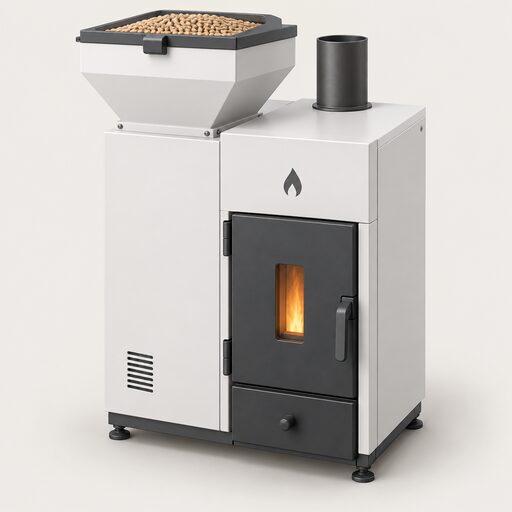 Biomass Boilers and StovesHow pellet and log biomass boilers and room stoves work in UK homes: the £5,000 Boiler Upgrade Scheme grant and its rural, off-gas-grid conditions, emissions limits, smoke control area law, fuel sourcing and the practical demands of storage and maintenance.
 Apply for a Home Energy GrantThe application sequence common to funded schemes: the checker, the survey or assessment, the installer, the paperwork and the sign-off.
 The Full How To GuideSwitching supplier, sending meter readings, sorting an EPC, claiming a grant, complaining when something goes wrong, coping in a power cut: where do you start with any of it?