
In this guide
The benefit that opens the door to a home energy grant depends entirely on which scheme you are asking about. There is no single national list. The Warm Home Discount pays a £150 rebate on electricity bills to eligible older and low-income consumers, and it does not run in Northern Ireland at all1. ECO4 funds energy-saving measures including insulation and heating for low-income and vulnerable households, and it uses five separate eligibility routes rather than one benefit test2. The Great British Insulation Scheme, which used a benefit list of its own, has closed to new applications4.
That difference matters because households often assume a benefit that qualifies for one scheme qualifies for all of them. It does not. The Warm Home Discount has a core group and a broader group, and your electricity supplier may have extra eligibility criteria and will tell you which benefits mean you are eligible5. ECO4 works through the Help to Heat Group, Social Housing, LA Flex, In-Fill and Supplier Flex routes2. The devolved nations add their own schemes on top, with income tests rather than benefit lists in some cases.
This page sets out the benefit gateways scheme by scheme, explains why the lists diverge, and covers what happens where no benefit is claimed but income is low. It also covers what has closed, because several schemes householders still search for are no longer taking applications.
The Great British Insulation Scheme has closed: what it means if you were waiting to apply
Applications for the Great British Insulation Scheme have now closed, and the service to check if you were eligible for free or cheaper home insulation has closed with it4. The scheme closed on 31 March 202610. Its closure was announced by the UK Government's Chancellor of the Exchequer in the autumn Budget, alongside the ending of funding for the Energy Company Obligation (ECO4) Scheme and the Great British Insulation Scheme11.
For a household that had been waiting to apply, the practical position is narrower than the headline suggests. Some energy suppliers are still accepting applications, so it is worth checking with your supplier directly8. If you have questions about an existing application, contact the energy supplier you applied to8. If you were eligible for support, your energy supplier arranges an assessment of your property8.
The scheme was a government energy-efficiency scheme administered by Ofgem in Great Britain, designed to deliver improvements to the least energy-efficient homes to help tackle fuel poverty and reduce carbon emissions12. It included incentives designed to support the delivery of innovative measures that can provide further energy efficiency improvements, or that offer additional benefits, under the NMAP innovation route12. None of that changes the fact that the front door is shut.
The closure sits alongside a wider pattern. The Green Homes Grant, Home Upgrade Grant and Green Deal loans are all now closed9. The Domestic Renewable Heat Incentive in Great Britain has closed to new applicants, with only applications following a change of ownership accepted13. Households searching for these schemes are searching for something that no longer exists, which is why the closed home energy grants page exists.
Which benefits qualify you for energy grants

The benefit lists differ between schemes because each scheme has a different purpose and a different funding mechanism. The Warm Home Discount is a rebate funded through a levy on all domestic electricity suppliers, so it is designed around a simple, verifiable gateway. ECO4 is an obligation on larger energy suppliers to fund physical measures, so it uses multiple routes to reach households that a single benefit test would miss.
For the Great British Insulation Scheme, the low-income group benefit list was: Income based Jobseekers Allowance (JSA); Income related Employment and Support Allowance (ESA); Income Support (IS); Pension Credit Guarantee Credit (PCGC); Working Tax Credit (WTC); Child Tax Credit (CTC); Universal Credit (UC); Housing Benefit; Pension Credit Savings Credit (PCSC); and Child Benefit, subject to income caps and composition15. That list is now of historical interest for new applicants, but it shows the shape of a means-tested gateway.
Pension Credit appears twice in that list, as Guarantee Credit and as Savings Credit, and it is one of the most commonly cited gateways across schemes. The Warm Home Discount's core group is built around older and low-income consumers, and the broader group is where suppliers apply their own criteria5.
| Scheme | Gateway type | Benefit or test used |
|---|---|---|
| Warm Home Discount | Core group and broader group | Older and low-income consumers; supplier criteria in the broader group1 |
| ECO4 | Five eligibility routes | Help to Heat Group, Social Housing, LA Flex, In-Fill, Supplier Flex2 |
| Great British Insulation Scheme (closed) | Low-income group benefit list | JSA, ESA, IS, PCGC, WTC, CTC, UC, Housing Benefit, PCSC, Child Benefit15 |
| Affordable Warmth Scheme (NI) | Income test | Total annual gross income under £23,0009 |
| Home Upgrade Grant (closed) | Income and property test | Low income households off the gas grid, EPC bands D to G16 |
The Home Upgrade Grant provided energy efficiency upgrades and low carbon heating to low income households in properties which are off the gas grid and in energy efficiency bands D to G16. It is a reminder that some schemes combine a benefit or income test with a property test, so qualifying on benefits alone is not always enough.
Warm Home Discount: a £150 rebate on your electricity bill
The Warm Home Discount primarily provides support through the provision of £150 energy bill rebates, funded through a levy on all domestic electricity suppliers1. It is a one-off £150 discount off household electricity bills6. The scheme provides a £150 annual rebate on energy bills to support low-income and vulnerable households17. Around 6 million households now benefit from a £150 rebate off their winter energy bill7.
The scheme operates in England, Wales and Scotland, and is not available in Northern Ireland17. If you live in Scotland, the scheme operates there under its own arrangements, and your electricity supplier may have extra eligibility criteria and will tell you which benefits mean you are eligible5.
There is a conflict in the published figures that households should be aware of. One official source gives the payment as £140, while others give £150 off energy bills18. Where a household is budgeting, the £150 figure is the one to plan around, with the caveat that the published sources are not unanimous.
"The scheme primarily provides support through the provision of £150 energy bill rebates, funded through a levy on all domestic electricity suppliers"
The rebate is applied to the electricity bill, not paid as cash, and it is a one-off discount rather than a recurring monthly credit. For a household's energy independence, the Warm Home Discount does something narrow but real: it reduces the amount of grid electricity you pay for over a winter, without changing how much you depend on the grid. It does not fund a measure that would reduce your consumption. That is the job of ECO4 and the insulation schemes.
ECO4: insulation, heating and renewables through your energy supplier
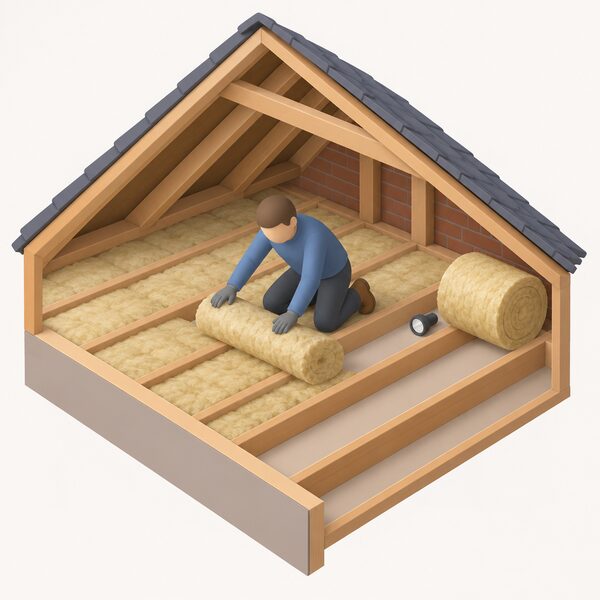
ECO4 funds energy-saving measures including insulation and heating for low-income and vulnerable households3. The measures it pays for include insulation, boilers and central heating, and solar and renewable energy technologies19. ECO funding pays for energy efficiency measures such as heating improvements and insulation to be installed20.
The scheme does not run on a single benefit list. It has five eligibility routes: Help to Heat Group, Social Housing, LA Flex, In-Fill and Supplier Flex2. The Help to Heat Group is the route built around qualifying benefits. LA Flex allows local authorities to set their own flexible eligibility criteria for households that do not meet the national gateway, which is covered in more detail on the ECO4 Flex page. Supplier Flex allows suppliers to identify households themselves.
If you think you may qualify for ECO funding, the official route is to speak to an organisation who can offer you free and impartial energy and bill saving support and assess whether you might be eligible for funding20. That is deliberately not a direct application to government: ECO4 is delivered by energy suppliers and their installers, so the assessment starts with an advice body or the supplier.
For privately rented homes, the property condition matters as much as the benefit. If you rent from a private landlord, the house must have an energy efficiency rating of E, F or G to be eligible, and the owner's permission is required21. That combination, a low EPC and a landlord's consent, is what makes a rented property eligible for ECO4 work.
| ECO4 route | Who it serves | Benefit test |
|---|---|---|
| Help to Heat Group | Households on qualifying benefits | Yes, benefit gateway2 |
| Social Housing | Social housing tenants | Route-specific2 |
| LA Flex | Households set by local authority criteria | Local criteria, not national list2 |
| In-Fill | Properties adjacent to eligible work | Route-specific2 |
| Supplier Flex | Households identified by the supplier | Supplier criteria2 |
The breadth of ECO4 is its strength and its complication. A household on Pension Credit will usually find the Help to Heat Group route applies. A household just above the benefit threshold may still qualify through LA Flex if the local authority has published criteria that fit. The ECO4 eligibility page sets out the benefit and property conditions in full.
The four eligibility routes into the Great British Insulation Scheme
The Great British Insulation Scheme used four eligibility routes: General Eligibility, Low-income and Social Housing, In-fill and LA Flex2. That is one fewer than ECO4, and the difference is deliberate. Route 4, which is applicable under ECO4, is not applicable under the Great British Insulation Scheme15.
General Eligibility was the route that did not depend on a benefit at all. It required an energy performance certificate of D to G and Council Tax bands A to D in England, or A to E in Scotland or Wales22. That made the scheme unusual: a household could qualify on the property and the Council Tax band alone, without being on any benefit.
The Low-income and Social Housing route is where the benefit list applied, and it is the list set out above15. In-fill allowed properties to be treated alongside neighbouring eligible work. LA Flex allowed local authorities to set flexible criteria, as with ECO4.
The scheme's purpose was to deliver improvements to the least energy-efficient homes in Great Britain to help tackle fuel poverty and reduce carbon emissions12. The General Eligibility route, based on EPC and Council Tax band rather than benefits, was the mechanism for reaching households that were not on the benefit system but still lived in hard-to-heat homes. That design question, how to reach low-income households that are not on benefits, is the same one that LA Flex answers under ECO4.
Warm Home Discount, ECO4 or insulation scheme: which fits which household
The three schemes do different things, and a household can be in scope for more than one at the same time. The Warm Home Discount is a bill rebate. ECO4 is funding for physical measures. The insulation scheme was funding for insulation specifically, and it has closed.
A household on Pension Credit Guarantee Credit, living in a home with a low EPC, is the classic case that fits ECO4 through the Help to Heat Group. The same household may also receive the Warm Home Discount, because the two are not mutually exclusive: one reduces the bill, the other funds the work. A household just above the benefit threshold but in a property with an EPC of D to G may have fitted the General Eligibility route of the insulation scheme, and may now fit LA Flex under ECO4 instead.
A household off the gas grid on a low income was the target of the Home Upgrade Grant, which provided energy efficiency upgrades and low carbon heating to low income households in properties which are off the gas grid and in energy efficiency bands D to G16. That scheme is closed, and the Home Upgrade Grant page explains what it covered.
| Household situation | Scheme that fits | Why |
|---|---|---|
| On Pension Credit, low EPC home | ECO4 | Help to Heat Group route2 |
| On a qualifying benefit, any EPC | Warm Home Discount | £150 electricity rebate1 |
| Just above benefit threshold, EPC D to G | ECO4 via LA Flex | Local authority flexible criteria2 |
| Off gas grid, low income, EPC D to G | Home Upgrade Grant (closed) | Off-gas, low income, EPC D to G16 |
| Private renter, EPC E, F or G | ECO4 | Landlord permission required21 |
The choice is not really a choice. A household takes what it qualifies for, and the schemes stack. What matters is knowing which gateway applies, because applying to the wrong scheme wastes time. The ECO4 page covers the supplier-funded route in detail, and the Warm Home Discount page covers the rebate.
Where you live changes the scheme: Scotland and Northern Ireland
The schemes are not uniform across the four nations, and the differences are structural rather than cosmetic.
In Scotland, the Home Energy Scotland Grant and Loan Scheme provides homeowners in Scotland a grant, interest free loan or a combination of both, to install clean heating systems and energy efficiency measures23. The published statistics for that scheme cover the number of grants and loans provided, the types of energy efficiency measures and clean heating systems installed, total funding distributed, and installations by local council area by financial year24. The Community and Renewable Energy Scheme provides advice and funding to communities across Scotland looking to develop renewable energy, heat decarbonisation and energy efficiency projects, including shared ownership projects23.
In Wales, Nest provides free home energy efficiency improvements, and people who do not think they are eligible or are not sure can still contact Nest for energy efficiency advice, help with other grants, energy tariffs and benefits entitlement checks25. That advice function matters: it is a route to a benefits entitlement check for households that have never claimed.
In Northern Ireland, the position is different again. The Warm Home Discount Scheme does not run in Northern Ireland, however there is an Affordable Warmth Scheme available1. The Affordable Warmth Scheme is delivered by the government of Northern Ireland9. Households with a total annual gross income of less than £23,000 may be able to get funding, and owner occupiers and private renters in Northern Ireland may be able to get up to £7,500 for energy-efficiency upgrades9. Homes of solid wall construction needing insulation may be entitled to grant-aid up to £10,0009.
| Nation | Main scheme | Gateway |
|---|---|---|
| England | ECO4, Warm Home Discount | Benefit routes and supplier criteria2 |
| Scotland | Home Energy Scotland Grant and Loan | Homeowners in Scotland23 |
| Wales | Nest | Advice and eligibility checks for the unsure25 |
| Northern Ireland | Affordable Warmth Scheme | Gross income under £23,0009 |
The Northern Ireland income test is the clearest example of a scheme that does not use a benefit list at all. A household on a low income but not on any qualifying benefit can still qualify, because the test is the income figure. The home energy grants in Northern Ireland page covers the devolved schemes in more detail.
What the schemes pay for, and what you may be asked to contribute
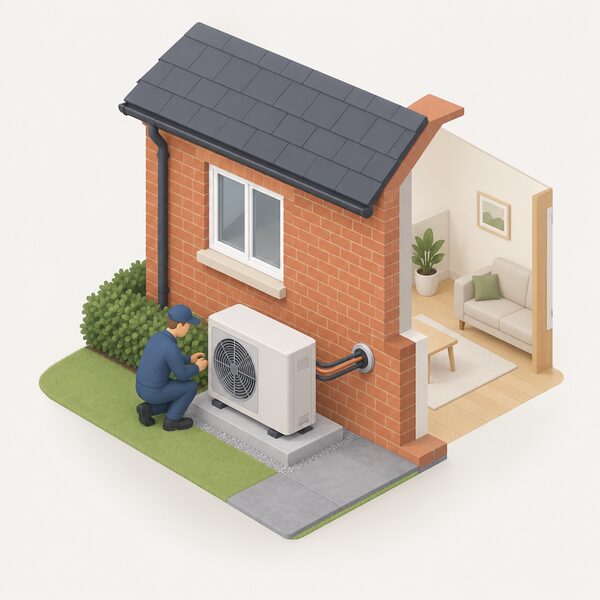
What a scheme pays for varies by scheme and by measure. ECO4 pays for energy efficiency measures such as heating improvements and insulation20. Grants for home energy efficiency cover loft, cavity wall insulation and a new boiler or heating system26. The Warm Homes Local Grant covers hybrid heat pumps among its eligible measures27.
On contributions, the position is not uniform. Under the Warm Homes: Social Housing Fund on gas grid low carbon heating incentive offer, the total available grant funding for each home is £20,000, instead of the base cost cap, and these homes cannot access the base £7,500 cost cap or any other cost caps28. With that £20,000 grant funding, installation of a low carbon heating measure is mandatory in each home, and it is expected that energy efficiency measures such as solar PV or insulation are also installed to ensure bills do not go up28.
The distinction between a grant amount and a household contribution is where most confusion arises. A grant of up to £7,500 towards energy-efficiency upgrades in Northern Ireland is a maximum grant-aid figure, not a promise that the work is free9. A £20,000 grant under the social housing fund is a total available grant funding figure per home, and it replaces the base cost cap rather than adding to it28.
For a household's energy independence, the measures matter more than the money. Insulation reduces the heat you need to buy. A heat pump or a low carbon heating measure changes what you buy. Solar and renewable technologies change who you buy it from. The grant is the mechanism; the measure is the point. The grants and energy independence page sets out how the two connect.
How the schemes are funded, and what it costs everyone else
The funding model is the reason the benefit lists look the way they do. The Warm Home Discount is funded through a levy on all domestic electricity suppliers, which is why it can operate a simple core group and a broader group rather than a complex property test1. ECO4 is an obligation on energy suppliers, which is why it is delivered through suppliers and their installers rather than through a government application portal3.
The Great British Insulation Scheme was a government energy-efficiency scheme administered by Ofgem in Great Britain12. Its closure was announced by the Chancellor in the autumn Budget, alongside the ending of funding for ECO4 and GBIS11. That is a reminder that these schemes are spending decisions, not permanent entitlements, and that the benefit list attached to a scheme lasts only as long as the scheme does.
The cost to everyone else is the levy and the obligation. The Warm Home Discount is funded through a levy on all domestic electricity suppliers, so the cost is spread across the customer base1. ECO4 is an obligation on suppliers, and suppliers recover the cost through bills. That is the trade-off: the schemes redistribute the cost of energy efficiency from the households that receive the measures to the wider customer base.
For a household, the practical implication is that scheme funding is not guaranteed beyond the current spending period. The Warm Home Discount Scheme in England and Wales has been continued until 31 March 2030, and the Warm Home Discount (Scotland) Scheme has effect until 31 March 2031, with certain duties continuing afterwards29. Those dates are the ones to plan around, not an assumption that the schemes continue indefinitely.
Deadlines and what is confirmed beyond the current scheme years
The confirmed dates are limited, and it is worth separating what is legislated from what is proposed.
The Warm Home Discount Scheme in England and Wales is continued until 31 March 203029. The Warm Home Discount (Scotland) Scheme has effect until 31 March 2031, with certain duties continuing afterwards30. The Subsidy Scheme for Local Energy Support in Wales has a stated duration ending on 31 March 203131.
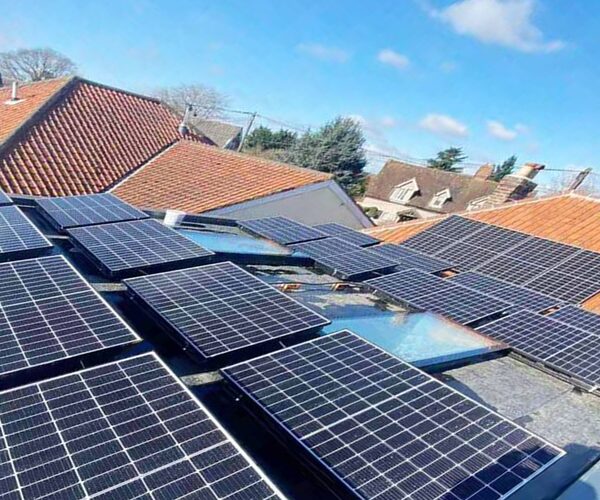
Beyond the schemes themselves, the wider policy framework has targets rather than entitlements. The Warm Homes Plan is intended to upgrade up to 5 million homes, lift up to a million families out of fuel poverty and triple the number of homes with rooftop solar panels by 2030, and it sets an objective of 180,000 additional jobs in energy efficiency and clean heating by 203032. Those are targets, not eligibility rules, and they do not create a benefit gateway a household can apply under.
The pattern across the closed schemes is consistent. The Green Homes Grant, Home Upgrade Grant and Green Deal loans are all now closed9. The Domestic Renewable Heat Incentive in Great Britain has closed, and only applications following a change of ownership can be made13. The Green Gas Support Scheme is open to applicants in England, Scotland and Wales for four years from 30 November 202133.
For a household planning work, the sensible reading is that the benefit gateway you qualify under today may not exist in the same form in two years. The schemes with legislated end dates are the ones to watch. The home energy grants pillar page tracks the schemes that are currently open.
Sources33 cited
- Warm Home Discount, Ofgem, 2026-09-17
- ECO4 and GBIS eligibility and pre-installation declaration, Ofgem, 2026-09-17
- ECO4 and ECO Flexible Eligibility, Breckland Council, 2026-09-17
- Apply for the Great British Insulation Scheme, GOV.UK, 2026-09-17
- The Warm Home Discount Scheme: if you live in Scotland, GOV.UK, 2026-09-17
- Warm Home Discount statistics 2025 to 2026, GOV.UK, 2026-09-17
- DESNZ annual report and accounts 2025 to 2026: performance report, GOV.UK, 2026-09-17
- Summary of updates to ECO4 delivery guidance and measures table, Ofgem, 2026-03-26
- Research briefing CBP-9585, House of Commons Library, 2026-09-17
- Domestic Energy Tariff Reductions 2026: guidance for energy suppliers, GOV.UK, 2026-03-18
- Written statement: fuel poverty, Welsh Government, 2026-02-26
- Great British Insulation Scheme: energy suppliers, Ofgem, 2026-09-17
- Domestic RHI: participants, Ofgem, 2026
- Domestic RHI tariffs and payments, Ofgem, 2026
- Great British Insulation Scheme Delivery Guidance, Ofgem, 2023-08-31
- Research briefing CBP-9889, House of Commons Library, 2026-09-17
- Research briefing SN06163, House of Commons Library, 2026-02-26
- Keeping your home warm in winter, Met Office, 2026-09-20
- ECO4 scheme, West Lindsey District Council, 2025-07
- Home energy efficiency, Bridgend County Borough Council, 2026-09-17
- Getting help with your energy bills, Birmingham City Council, 2026-09-17
- Home and business grants, schemes and advice, East Herts Council, 2026-09-17
- Local and small-scale renewables, Scottish Government, 2026-09-17
- Home Energy Scotland Grant and Loan scheme awards, Scottish Government, 2025-05-12
- Get free home energy efficiency improvements: Nest, Welsh Government, 2026
- Home heating, Belfast City Council, 2026-09-20
- Apply for a Warm Homes Local Grant, Liverpool City Council, 2026-09-17
- Warm Homes: Social Housing Fund wave 3 scheme guidance addendum, GOV.UK, 2026-06
- Warm Home Discount Scheme in England and Wales continued until 31 March 2030, legislation.gov.uk, 2026
- Warm Home Discount (Scotland) Scheme, legislation.gov.uk, 2026
- Subsidy Scheme for Local Energy Support Wales, Welsh Government, 2026
- Families to save in biggest home upgrade plan in British history, GOV.UK, 2026
- Key terms explained: Domestic Renewable Heat Incentive, Ofgem, 2026-09-17
 Why Energy Grants DifferWhere you live in the UK changes which home energy grants you can get.
 The Full Grants and Schemes GuideWhich grants can you actually get right now, and how do you apply for them?
 Check Which Energy Grants ApplyWhich energy grants can you actually get right now, and which have closed?
 Grants and Energy IndependenceCan you get a grant for solar panels or a battery?
 Apply for a Home Energy GrantThe application sequence common to funded schemes: the checker, the survey or assessment, the installer, the paperwork and the sign-off.
 DESNZ Energy PolicyThe government department behind home energy rules is not the one that pays your grant.