


In this guide
YES Energy Solutions is a community interest company that delivers government-funded energy efficiency work and runs free energy advice lines, including the Warm Homes Network line delivered with Citizens Advice1. It is not an installer and not a grant body: it is the delivery and advice layer between a household and the schemes that pay for the work, and it is named directly in council scheme pages as the local authority partner for households interested in ECO4, ECO Flex or GBIS Flex2.
The published contact route is a helpline on 03309 126199, open weekdays from 9am to 5pm2. The advice itself is free: the Warm Homes Network is described as free, expert advice from Citizens Advice and YES Energy Solutions1, and the equivalent service in Northern Ireland states plainly that its advice is free and impartial3.
The scale is national. Scottish Government guidance records that in 2025/26 its schemes supported 20,000 households, saving them up to £500 a year on energy bills4. The delivery work spans insulation, heating replacement, solar photovoltaics and advice, and the organisation has been running since at least 2017, when it delivered an air-to-air heat pump project at a park home site in Basingstoke with the borough council.
What YES Energy Solutions is, and what a community interest company means
YES Energy Solutions operates as a community interest company, which places it in a different category from a boiler installer or a lead-generation site. A community interest company carries a statutory asset lock: its assets and profits are committed to community benefit rather than distributed to shareholders. That structure matters to a household because the organisation advising on a funded measure is not selling the measure itself.
Its role in the published scheme rules is specific. West Lindsey District Council directs households interested in ECO4, ECO Flex or GBIS Flex to "our local authority partner at YES Energy Solutions"2. That is a delivery and referral function: the council sets the local eligibility rules, the energy supplier funds the obligation, and the delivery partner handles the household journey from enquiry to completed installation.
The funding behind that work is not discretionary. ECO4 requires energy suppliers to achieve a total of £224.3 million in annual bill savings for domestic premises by 31 December 20267. That obligation is what pays for the measures, and it is why the schemes have defined eligibility rather than open application.
The organisation also works through network operators. Scottish and Southern Electricity Networks has promoted the YES advice line to customers in its north of Scotland and central southern England areas, and its community advisors have raised awareness of the service at events across the Thames Valley, Hampshire and Wiltshire1. For a household, the practical consequence is that the route in is often a referral from a council, a network operator or an advice partnership rather than a direct approach.
What it does for householders: insulation, heating, solar and advice
The measures available through the schemes YES Energy Solutions delivers are set by the scheme rules, not by the delivery agent. Ceredigion's ECO4 Flex and GBIS Flex information document lists the examples: solid wall insulation, cavity wall insulation, room in roof insulation, loft insulation, flat roof insulation, electric storage heater upgrades, first time central heating to an air source heat pump, boiler upgrades from oil, LPG and solid fuel to an air source heat pump, and solar photovoltaic panels5. The specific measure for any property is determined by the ECO provider, agent or installer5.
That list is worth reading carefully, because it shows where the funding sits. The heating measures are conversions away from oil, LPG and solid fuel, or first-time central heating, rather than like-for-like gas boiler replacement. The insulation measures are the fabric of the building. Solar PV appears as an eligible measure under the Flex routes.
Alongside the physical work sits advice. The Warm Homes Network offers free, expert advice from Citizens Advice and YES Energy Solutions1. In Northern Ireland the equivalent service covers saving energy in the home, energy efficiency grants and oil buying clubs9, and NI Energy Advice states that it can make referrals to energy grants and other sources of help10.
The advice element is not a soft add-on. A published case study reports estimated annual savings of £1,334 and carbon reductions of 1,048 kilograms for a household that received a full energy review. Another reports total estimated annual savings of £1,561 and a 1.18 tonne annual CO2 reduction from behaviour changes, heating improvements and additional income identified. Those are case study figures for individual households, not averages, and they should be read as such.

The schemes it delivers: ECO4, ECO Flex, GBIS Flex and network partnerships
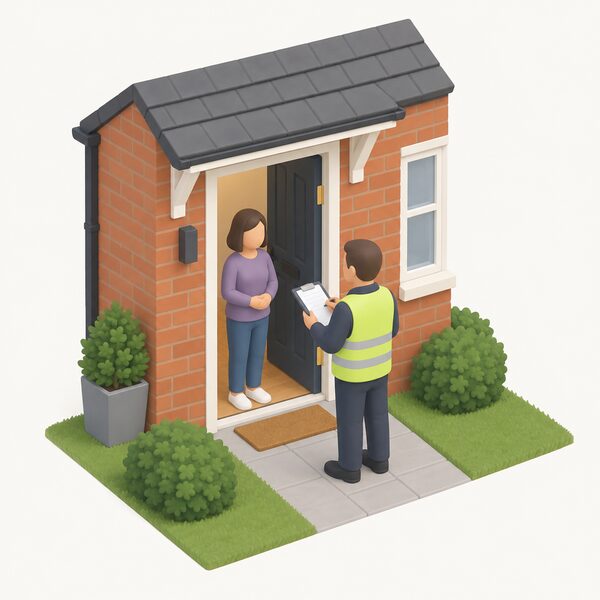
ECO4 is the current Energy Company Obligation scheme, and it is the largest single programme in this space. Ofgem's delivery guidance sets out the obligation: energy suppliers must achieve a total of £224.3 million in annual bill savings for domestic premises by 31 December 20267. Ofgem also publishes public reports and data on the scheme11.
ECO4 has five eligibility routes: the Help to Heat Group, Social Housing, LA Flex, In-Fill and Supplier Flex12. The Help to Heat Group route is the benefit-based one. The LA Flex route is the local authority discretionary route, and it is the one most often delivered through a council partnership.
GBIS, the Great British Insulation Scheme, continues ECO4's focus on reducing fuel poverty and energy bills but aims to deliver rapid installation of energy efficiency measures to a wider pool of households in the least efficient homes5. Suppliers may deliver up to 75% of their GBIS total home heating cost reduction obligation through delivery of ECO4 projects13, which is why the two schemes are often described together.
| Scheme | Who it targets | Property condition | Delivery note |
|---|---|---|---|
| ECO4 | Means-tested benefit or an ECO Flex route14 | Must need heating or insulation measures delivering a significant improvement14 | Five eligibility routes including LA Flex12 |
| ECO4 Flex | Local authority nominated households6 | EPC bands D to G6 | Includes a vulnerable household route6 |
| GBIS Flex | Wider pool in the least efficient homes5 | Least efficient homes5 | Up to 75% deliverable through ECO4 projects13 |
The Flex routes are where councils do the work that national eligibility rules cannot. Essex County Council's published criteria require the household to live in Essex and be a homeowner, private tenant or landlord, with a property rated between bands D and G, or to be identified by the council as a vulnerable household not eligible under any other scheme6. Those local criteria vary by council, which is why the same household can be eligible in one district and not in the next.
The advice line: free, impartial guidance and what it can cover
The advice line is the part of this service a household is most likely to encounter first. The Warm Homes Network is free, expert advice from Citizens Advice and YES Energy Solutions1. In Northern Ireland, NI Energy Advice describes its advice as free and impartial3, and the service offers free comprehensive advice on saving energy in the home, energy efficiency grants and more help that may be available15.
The published hours are weekdays, Monday to Friday, from 9am to 5pm2. A call can cover energy saving in the home, grant eligibility and other sources of help, and in Northern Ireland it extends to oil buying clubs9. The service can also make referrals onward to energy grants and other sources of help10.
"Get free, expert advice from Citizens Advice and YES Energy Solutions."
The savings figures attached to advice work are household-specific rather than scheme-wide. One published case study reports an estimated saving of up to £500 a year for a householder who implemented the advice given. Another reports estimated annual savings of £1,334 and carbon reductions of 1,048 kilograms from a full energy review. A third reports total estimated annual savings of £1,561 and a 1.18 tonne annual CO2 reduction. These are individual outcomes, and the range across them reflects how much a household's circumstances differ rather than a guaranteed return.
For context on what advice alone can achieve, Welsh Government guidance on the energy price cap states that energy saving tips can help save up to £351 a year on energy bills16. That is a general figure for behaviour and settings changes, separate from any grant-funded measure.
Who qualifies, and how the application works
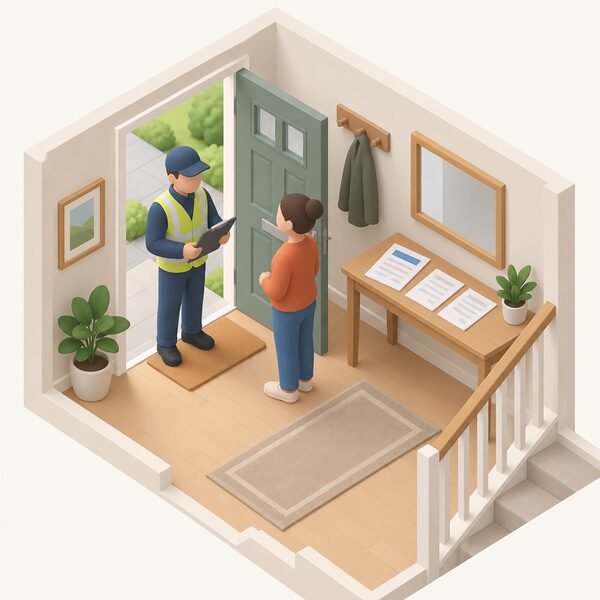
Eligibility is set by the scheme, not by the delivery partner. Derbyshire County Council's published criteria state that a household must be in receipt of a means-tested benefit or qualify through one of the ECO Flex routes, and the property must need heating or insulation measures that will deliver a significant energy efficiency improvement14. Essex adds the property band condition, bands D to G, and the tenure condition covering homeowners, private tenants and landlords6.
The application route runs through the delivery partner rather than a central government portal. A household referred by a council, a network operator or an advice service is assessed against the relevant route, and the measure is then determined by the ECO provider, agent or installer5. Most energy efficiency measures installed under ECO4 and GBIS Flex must be carried out by TrustMark-registered businesses5.
In Northern Ireland the scheme landscape is separate. The NISEP list of schemes for 2026-27 sets out the funded measures available there17, and the Better Energy Homes Plus scheme is fully funded by NISEP with no financial contribution required by the applicant for any measure17. Housing Executive tenants are not eligible for the Efficiency Plus fully funded insulation route17. Low carbon heating support in Northern Ireland is set out separately by nidirect18.
For households weighing which scheme fits, the comparison pages on ECO4 versus the Home Upgrade Grant and ECO4 Flex versus the Help to Heat route set out the differences in eligibility path.
Scale and results: 20,000 households and up to £500 a year
The headline scale figure comes from Scottish Government guidance: in 2025/26 alone, its schemes are supporting 20,000 households, saving them up to £500 a year on their energy bills4. That is a Scottish figure for Scottish schemes, and it is the clearest published number for the volume of households reached through this kind of delivery.
The national obligation behind the work is larger. ECO4 requires energy suppliers to achieve a total of £224.3 million in annual bill savings for domestic premises by 31 December 20267. That is the total the scheme must deliver across all households, not a per-household figure.
Individual outcomes published as case studies sit above and below the £500 mark. One reports an estimated saving of up to £500 a year from advice alone. Another reports estimated annual savings of £1,334 and carbon reductions of 1,048 kilograms from a full energy review. A third reports total estimated annual savings of £1,561 and a 1.18 tonne annual CO2 reduction from behaviour changes, heating improvements and additional income identified. A fourth describes a £50 energy voucher and a referral to the Local Energy Advice Programme for a Lambeth household dealing with damp, mould and high electricity costs.
The delivery record also includes larger projects. A Home Upgrade Grant 2 retrofit of a 36-flat tower block in Walsall was completed ahead of schedule and under budget, covering roofing, ventilation and low-carbon heating works, which shows the grant can be applied to multi-occupancy buildings rather than single houses alone. Earlier work included external wall insulation on park homes in North Lincolnshire and air-to-air heat pumps at a park home site in Basingstoke, both delivered with the relevant council.
Quality, accreditation and guarantees
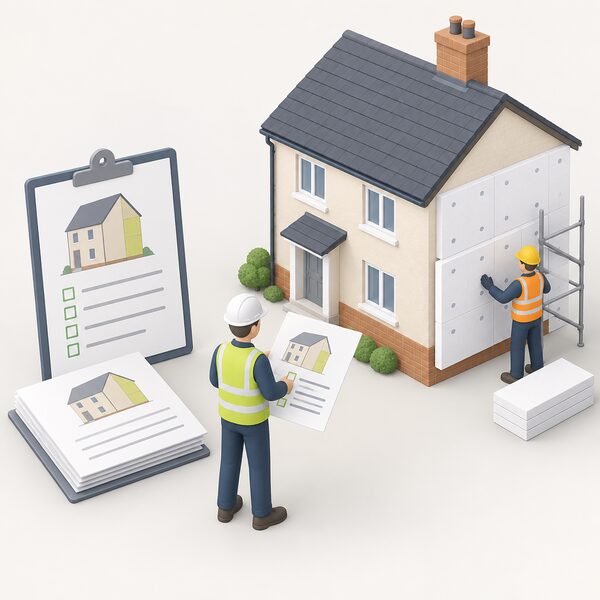
The quality framework for this work is set by the schemes rather than by the delivery agent. Most energy efficiency measures installed under ECO4 and GBIS Flex must be carried out by TrustMark-registered businesses5.
Its relevance to a household is that it places a retrofit coordinator between the assessment and the installation, so the measure fitted is the one the property needs rather than the one easiest to sell.
The delivery partner's own role in that chain is coordination and advice. The installation itself is carried out by registered businesses, and the guarantee on the work sits with the installer and the scheme rules rather than with the advice line. A household receiving a funded measure should expect the installer's own certification and warranty documentation at handover.
Working with local authorities and partners across the UK
The delivery model is partnership-based, and the partners vary by nation. In England, councils publish the route directly: West Lindsey names YES Energy Solutions as its local authority partner for ECO4, ECO Flex and GBIS Flex enquiries2, and Essex sets out its own Flex criteria alongside a delivery partnership with E.ON6. Local councils more broadly may also offer support with home or business energy bills19.
Welsh Government guidance on the energy price cap sets out the consumer-facing side16.
In Scotland, the schemes referenced in the 20,000 household figure are Scottish Government programmes4, and the Home Energy Efficiency Equity Loan pilot has its own eligibility rules, including a route where any permanent occupier receives a qualifying benefit. Scottish Government consultation work has also examined whether a Heat and Energy Efficiency Technical Suitability Assessment might become a condition of particular regulations or funding programmes, as MCS or TrustMark currently are.
In Northern Ireland, the advice and grant landscape runs through NI Energy Advice and the Housing Executive, with free advice on saving energy, energy efficiency grants and oil buying clubs9, and referrals onward to grants and other sources of help10. Belfast City Council publishes cost of living and winter support separately.
The pattern across all four nations is the same: the delivery partner is the point of contact, the scheme rules set the eligibility, and the funding comes from an obligation on suppliers or a government programme rather than from the advice service itself.
What this means for a household's energy independence
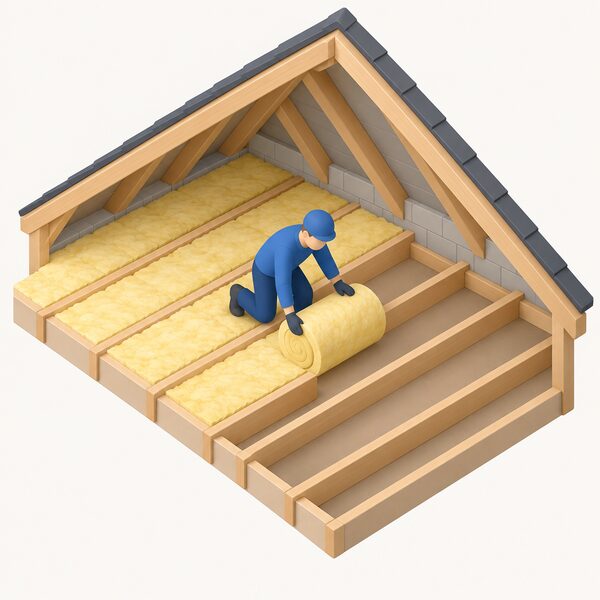
The honest position is that a scheme-delivered upgrade improves a home's energy performance without changing its fuel dependence. Insulation reduces the energy needed to keep a house warm, and that reduction persists whatever the heating source. A heat pump conversion moves a household off oil, LPG or solid fuel and onto electricity, which trades one supply dependence for another rather than removing it.
Where the funding comes from matters to that picture. ECO4 and GBIS are obligations on energy suppliers, so the money is raised through the energy market and spent on the least efficient homes7. The household receives the measure without paying for it directly, but remains a customer of a supplier and, where gas or electricity is used, of a network.
The advice element is the part that most directly increases independence, because it is the only part that changes what a household does with the system it already has. A full energy review that identifies £1,334 in annual savings is finding money in behaviour, settings and tariff rather than in new equipment. That kind of saving does not depend on a grant being available, an installer being registered or a scheme still being open.
The dependence that remains is on the delivery chain: a council that sets Flex criteria, a supplier that funds the obligation, a TrustMark-registered installer that carries out the work, and a scheme that has a closing date. For households exploring the wider picture, the full guide to home energy grants and schemes sets out how the routes fit together, and grants and household energy independence examines what funded measures do and do not change about a home's standing.
Sources19 cited
- Warm Homes Network, Turn2us, 2026-09-08
- ECO4 Scheme, West Lindsey District Council, 2025-07
- Cost of Living and Winter Support, Belfast City Council, 2026-09-20
- Scotland's Climate Change Plan 2026-2040, Scottish Government, 2025
- ECO4 Flex and GBIS Flex Information Document, Ceredigion County Council, 2025-11
- Energy Company Obligation (ECO4), Essex County Council, 2026-09-17
- ECO4 Delivery Guidance v3.2, Ofgem, 2025-12-08
- ECO Public Reports and Data, Ofgem, 2026-09-17
- Low Carbon Heating, nidirect, 2026-09-17
- NISEP List of Schemes 2026-27, Utility Regulator Northern Ireland, 2026-04
- ECO4 Guidance: Supplier Administration, Ofgem, 2026-07-06
- ECO4 and GBIS Eligibility and Pre-installation Declaration, Ofgem, 2026-01
- Energy Price Cap Explained, Welsh Government, 2026-03-04
- Energy Company Obligation (ECO4) Scheme, Derbyshire County Council, 2026-09-17
- NI Energy Advice, Northern Ireland Housing Executive, 2026-09-17
- Advice If You're Struggling to Pay Your Energy Bills, nidirect, 2026-09-17
- PAS 2035:2023, Retrofit Academy, 2026-04-06
- Ynni Cymru Capital Grants Scheme, Welsh Government, 2025-05-01
- Heat and Energy Efficiency Technical Suitability Assessment Consultation, Scottish Government, 2025-06-06