
In this guide
Council energy grants are the local end of a national system. The government sets the scheme rules and the funding, and your local authority decides which streets, which homes and which measures get treated, in what order. The main vehicle now is the Warm Homes: Local Grant, which provides energy performance upgrades and low carbon heating via local authorities, with up to £30,000 of measures available per property1.
The practical consequence is that two households on the same income, in similar houses a few miles apart, can get different answers. One council may be fully subscribed and running a waiting list; another may still be inviting applications. Eligibility is often decided by postcode, council tax band or EPC rating rather than by a single national test.
This page covers what counts as a council energy grant, who qualifies, what the money pays for, how the application runs through your authority, and how the picture differs in Scotland, Wales and Northern Ireland. It also sets out the limits: a grant is not a guarantee, queues close, and the household still depends on the grid, a supplier and, in most cases, gas.

What council energy grants are, and which schemes count
A council energy grant is public money for home energy work that is administered by a local authority rather than claimed directly from a national body. The council may be delivering a national scheme, adding its own top-up, or running a local advice service that points households to whatever funding exists. The distinction matters because the same national scheme can look completely different from one authority to the next.
The Warm Homes: Local Grant is the current national scheme delivered this way. It exists to provide energy performance upgrades and low carbon heating via local authorities, and it replaced the earlier landscape of short-term competitive funds6. Councils publish their own versions of it: Birmingham describes a Warm Homes: Local Grant running from 2025 to 2028, Surrey sets out the installer network and evidence rules, and Liverpool explains how its allocation is being spent7.
Alongside the national scheme, councils run or host a range of local offers. Torridge's Cosy Devon is a council-backed scheme offering a range of free and subsidised energy saving measures8. East Hertfordshire runs a Home Energy Support Service covering information on grants and help with checking eligibility, benefits support, supplier switching advice, energy saving advice, debt advice and referral to other organisations or contractors9. Tameside's pages cover grants and funding, and note that Your Home, Better does not offer grants or funding but can identify sources that could help towards the costs of home energy projects10.
Some schemes that carry a council name are not grants at all. The Warm Homes Fund is consumer finance, not a grant, and the Warm Homes: Social Housing Fund is for social landlords rather than individual households11. The Energy Company Obligation sits separately: grants and loans are made available for homeowner-occupiers, landlords and tenants for insulation works and heating installations, and councils often hold the flexible eligibility route into it8.
For a household, the energy independence question is straightforward. A council grant reduces the capital cost of measures that cut how much energy the home needs to buy. It does not remove the connection to the grid or to a supplier, and it does not make a home self-sufficient. What it does is lower the running cost of the building itself, which is the part a household controls.
Warm Homes: Local Grant: up to £30,000 of upgrades per property

The headline figure is up to £30,000 of measures available per property1. That is a ceiling on the value of work, not a cash payment, and the amount a household actually receives depends on tenure and on which property in a landlord's portfolio is being treated.
| Household or property | Funding rate | Ceiling |
|---|---|---|
| Owner occupier, or a private landlord's first property in England | 100% of the cost | up to £15,0002 |
| Private landlord's second and later properties in England | 50% of the cost | up to £7,5002 |
| Maximum value of measures per property | not a cash payment | up to £30,0001 |
The policy guidance states that the Warm Homes: Local Grant will fully fund upgrades for one property per landlord1.
One official source gives 100% of the cost up to £15,000 for an owner occupier or a private landlord's first property, while another gives 100% of the cost up to £30,0002. Both figures appear in official scheme rules dated 2026-09-17, and the conflict is unresolved. Households should treat the lower figure as the one to plan around and ask their council which applies.
The scheme was announced with an expectation of up to 9,000 homes upgraded through the Warm Homes: Local Grant, backed by grant funding of £88m, in 2025 to 202613. Individual council allocations are smaller and tightly bounded. Liverpool City Council, for example, was awarded £5.8m to spend on improving the energy efficiency of approximately 450 homes over a three-year period4.
Who qualifies: income, EPC band, tenure and location rules
Eligibility is a stack of conditions rather than a single test, and the household has to clear all of them.
The property condition comes first. Liverpool's guidance states that homes with an Energy Performance Certificate rating of D to G can apply for a grant4. Privately rented properties are treated separately, with an EPC rating of Band D or E specified in Greater Manchester's published rules2. Landlords face further conditions:
- The tenant or tenants must meet the household eligibility rules and provide evidence of income7.
- Properties must be at least EPC Band E unless they are Band F or G with a registered exemption7.
- The landlord must not have exceeded £315,000 in minimum financial assistance under government rules7.
Income is the second gate, and it is not absolute. Households earning more than £36,000 may still be eligible if they live in a certain postcode area, or if someone in the household is getting certain benefits5. That postcode route is why neighbouring streets can produce different outcomes.
Tenure decides who can apply and on what terms. The scheme covers owner occupiers, private landlords and their tenants, and social housing through a separate fund. All existing social housing below EPC C owned by applicants is eligible under the Warm Homes: Social Housing Fund Wave 3, regardless of archetype, including high rise blocks11.
Location rules sit on top. Councils can operate their own flexible eligibility routes into the Energy Company Obligation, and Leeds describes eligibility as dependent on a combination of factors such as income, property characteristics, health and household energy efficiency, following guidelines set by the regulator Ofgem and the Department for Business, Energy and Industrial Strategy14. Surrey operates a Pathway 5 route that applies only for EPCs rated E to G, where residents must satisfy two different proxies to become eligible3.
The practical effect is that a household cannot self-assess reliably from a national page. The eligibility checker and the council's own advice service exist precisely because the combination of property, income, tenure and postcode decides the answer.
What the grant pays for: insulation, solar and low-carbon heating
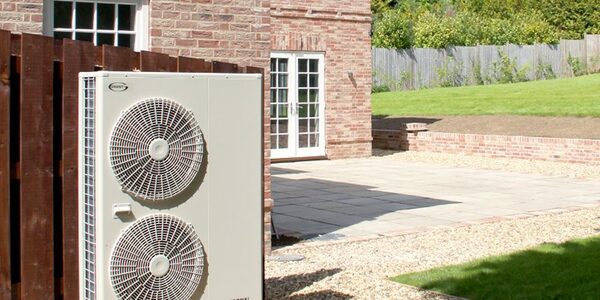
Funding splits into two pots: measures that reduce how much energy the home loses, and measures that change how it is heated. The Warm Homes: Local Grant covers both, which is what distinguishes it from insulation-only schemes.
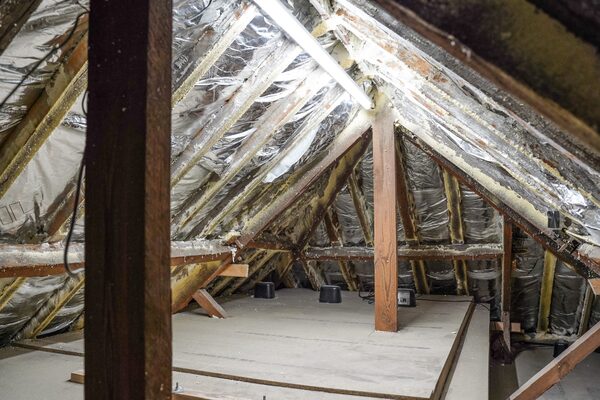
On the energy performance side, the scheme funds fabric work. The Home Upgrade Grant, the predecessor delivered through local authority funding, provided energy efficiency upgrades and low carbon heating, and the measures it supported show the shape of the work: super-efficient insulation, solar panels, underfloor heating and heat pumps under the West Midlands Combined Authority's programme15. The Warm Homes: Local Grant continues that pattern, with solar thermal insulation named among eligible measures4.
On the heating side, the scheme funds low carbon heating. The Clean Heat Grant, an earlier design, was to provide upfront capital grants for the installation of low carbon heat systems, primarily heat pumps and in limited circumstances biomass boilers6. The Warm Homes: Local Grant follows the same logic, with low carbon heating funded alongside energy performance measures6.
Northern Ireland runs its own programme with a different structure. The Northern Ireland Sustainable Energy Programme provides funding across categories: priority whole house solutions covering heating and insulation measures, priority individual measures covering insulation and various other energy efficiency measures, priority whole house solutions for innovative measures, and non-priority conventional schemes for various measures for non-priority domestic and commercial premises17. One housing association offer there illustrates the shape of a local deal:
- A grant of 50% off an air source heat pump installation17
- A grant of 50% off cavity wall insulation or loft insulation17
- A grant of £1,200 off electric high heat retention storage heaters, with a grant of £200 for cavity wall or loft insulation17
- Fully funded LED light bulbs17
Owner occupiers, tenants and landlords: who pays what
The split between tenures is the part of the scheme most likely to surprise households, because the funding rate changes with ownership.
Owner occupiers and private landlords treating their first property in England receive 100% of the cost up to £15,000 for energy performance improvements2. Private landlords treating a second or subsequent property receive 50% of the cost up to £7,5002. The policy guidance confirms that the scheme will fully fund upgrades for one property per landlord1.
Tenants do not apply in their own right for the Warm Homes: Local Grant. The landlord applies, and the tenant must meet the household eligibility rules and provide evidence of income7. That means a tenant in a qualifying property can receive the benefit of the work without paying for it, but only if the landlord chooses to apply and the tenant's circumstances satisfy the income test.
The law gives tenants a lever. Under the minimum standard rules for the domestic private rented sector, landlords must not unreasonably refuse tenant requests for energy efficiency improvements where the improvements can be funded at no cost to the landlord, for example through grants or third-party funding18. Private, local authority and other public body landlords are all covered, as well as a tenant who sub-lets a property falling within scope18.
Social housing is funded through a different route. The Warm Homes: Social Housing Fund replaces the Social Housing Decarbonisation Fund, and Wave 3 covers all existing social housing below EPC C owned by applicants11. Grant funding from other energy efficiency schemes cannot be used as co-funding for that fund, which limits how councils and housing associations can stack support11.
For a household, the independence implication is uneven. An owner occupier who receives fabric and heating measures ends up with a home that needs less bought energy and, if a heat pump is installed, one that can run on electricity rather than gas. A tenant receives the same physical improvement but no control over it, and no guarantee about what happens at the end of the tenancy.
How to apply through your local authority
The route runs through the council, and the first step is a national eligibility check. The online form on GOV.UK is used to check eligibility for the Warm Homes: Local Grant, and it may ask about benefits received, household income in one year, tax and deduction costs in one year, council tax costs in one year, and mortgage or rent costs in one year5.
Evidence requirements are specific. For sole occupiers, applications must be supported by a Council Tax Bill, and utility bills are accepted where more than one adult resides in the property or in auto-eligible postcode areas3. A recent council tax bill or a recent energy bill is the standard proof of address.
The sequence a household should expect:
- Check eligibility through the GOV.UK online form or the council's own advice service.
- Submit the application with proof of address and any income evidence the council requires.
- Wait for the council to assess the property, usually including an EPC and a survey.
- Accept a referral to an installer on the council's approved network.
- Have the measures installed and the work signed off.
Councils also run advice services that do the checking for the household. East Hertfordshire's service covers information on grants and help with checking eligibility, benefits support, supplier switching advice, energy saving advice, debt advice and referral to other organisations or contractors9. Tameside points residents to Your Home, Better, which does not offer grants or funding but can identify sources that could help towards the costs of home energy projects10. The Local Energy Advice Programme confirms eligibility before a free home visit from a qualified home energy advisor, and can help check whether a household is on the cheapest tariff10.
There is no fee to apply. Where a home lacks a valid EPC, SHINE London offers limited funding towards the cost of getting a new home energy certificate, which removes the main upfront cost of applying5.

Waiting lists, queues and why some areas are fully subscribed

Demand exceeds allocation in many areas, and the scheme is explicit about how that is handled. Once a local authority's queue is full, any further applications from that area are placed on a waiting list, and if space becomes available, applications are invited from the waiting list in the order they were received5.
Being in the queue is not a promise. The scheme states that being in the queue does not guarantee funding, and applications must meet the scheme eligibility rules5. A council may hold a queue of up to 250% of the funding allocated to it, to allow for applications that do not go ahead or are found to be ineligible, and this limit applies in Years Two and Three5.
The arithmetic explains the queues. Liverpool's allocation of £5.8m covers approximately 450 homes over three years, which is a small number against the housing stock of a single city4. Nationally, the scheme was announced with an expectation of up to 9,000 homes upgraded and grant funding of £88m for 2025 to 202613. Where a council has committed its allocation early, the waiting list is the only remaining route.
Scotland publishes processing data that shows the same pressure in a different scheme. The Home Energy Scotland Grant and Loan Scheme reports applications that were put on hold at some point during processing, alongside applications not on hold, claims on hold and claims not on hold19. The scheme helps eligible homeowners pay for energy efficiency improvements and clean heating systems, and its published statistics cover the number of grants and loans provided, the types of measures installed, total funding distributed, and installations by local council area by financial year20.
For a household, the practical position is that timing matters as much as eligibility. Applying early in a council's delivery window, and responding quickly to requests for evidence, is what keeps an application inside the queue rather than behind it.
Installers, TrustMark and quality standards
Grant-funded work is tied to an approved installer network, and the standards are set out in the scheme rules rather than left to the household.
Surrey County Council's published conditions are explicit: to be eligible for the funding, one of the installers on the Surrey County Council network must be used, and the installers on that network are TrustMark Registered and MCS accredited for renewable technologies3. The same guidance requires certification to PAS2035:20233. That combination covers the three things a household cannot easily verify alone: the firm's registration, its competence for renewable heating, and the retrofit process used to specify the work.
The requirement to use a named network is a condition of funding, not a recommendation. A household that commissions its own installer outside the network may find the work is not eligible for payment, even where the installer holds the same certifications.
Scotland: HEEPS and Area Based Schemes
Scotland runs a distinct set of area-based programmes rather than a single national grant delivered by councils. The Energy Efficient Scotland: Area Based Scheme provides non repayable grants, and it offers non means tested grants for insulation measures22. That is a meaningful difference from the means-tested routes elsewhere: the test is the area and the property, not the household's income.
Eligibility is built around council tax band and EPC rating:
- A household must be a homeowner or a privately rented landlord or tenant and be in Council Tax Band A, B or C22.
- Homeowners in Council Tax Band D are also eligible if the property has an energy rating of E to G22.
- Island-based homeowners in Council Tax Bands E to H are eligible if the property has an energy rating of E to G, subject to approval22.
The scheme is a successor to the Home Energy Efficiency Programme, and its stated purpose is to provide home owners and landlords with access to grant funding which meets the Scottish Government's future minimum energy efficiency standards23. It is supported by funding from the Scottish Government in partnership with a range of advice providers and energy companies, and supported by Glasgow City Council and other local authorities23.
Delivery is local and targeted. West Lothian Council and the Scottish Government, in partnership with utility companies and local delivery partners, run the Heat and Energy Efficient Scotland: Area Based Scheme, offering grant funding to help homeowners improve the energy efficiency of their properties, focusing on solid wall insulation and other measures for homes hard to treat due to non-standard construction24. Area Based Schemes are for private homeowners and landlords in Scotland to help with the cost of certain energy efficiency measures24.
The Home Energy Scotland Grant and Loan Scheme sits alongside the area-based work, helping eligible homeowners pay for energy efficiency improvements and clean heating systems20. For a Scottish household, the practical route is to check the council's area-based programme first, since it is not means tested, and then the national grant and loan scheme.
Warm Homes Fund: loans rather than grants
Not every scheme with a Warm Homes name is a grant, and the distinction matters for a household's finances.
The Warm Homes Fund is consumer finance rather than a grant. 7 billion of financial transactions and £300 million in subsidy11. The conflict is unresolved, and both figures are reported here as the documents give them.
The Warm Homes: Social Housing Fund is a grant programme, but it is not open to individual households. It replaces the Social Housing Decarbonisation Fund and covers all existing social housing below EPC C owned by applicants11. Grant funding from other energy efficiency schemes cannot be used as co-funding, which constrains how the fund is combined with other support11.
Wales and Northern Ireland run their own capital and area programmes rather than a household grant of the same shape. The Ynni Cymru capital grants scheme provides financial support to community energy organisations, social enterprises, public sector bodies, and SMEs developing innovative local energy projects, with over £12.9 million of total funding in one round shared across 48 successful projects25. In Northern Ireland, the Northern Ireland Sustainable Energy Programme funds heating and insulation measures through its priority categories17.
For a household, the independence question turns on whether the money is a grant or a loan. A grant reduces the capital cost of measures that lower bills permanently. A loan spreads the cost, and the household's energy independence improves only if the savings exceed the repayments over the term.
What happens to homes treated under the old HUG or LAD schemes
Homes that already received work under earlier schemes are not automatically excluded, but the rules are tighter than for untreated properties.
The Warm Homes: Local Grant allows re-treatment of properties previously treated under the Home Upgrade Grant or the Green Homes Grant Local Authority Delivery scheme, on the condition that as a result of the re-treatment the property either reaches EPC C or low carbon heating is installed1. In other words, the second round of funding has to move the property to a defined endpoint, not simply add more of the same.
Both earlier schemes have closed. The Home Upgrade Grant provided energy efficiency upgrades and low carbon heating via local authority funding, and the Green Homes Grant Local Authority Delivery scheme funded the installation of energy efficiency measures in domestic properties15. Published statistics monitor the installation of energy efficiency measures in domestic properties through both, and the November 2025 release covers carbon, bill and energy savings alongside changes in Energy Performance Certificate ratings26.
The lesson for a household is that scheme history is recorded. A council assessing an application will know what work was done before, and the re-treatment condition means the case for a second award rests on what the property will achieve, not on what it lacks.
Where council grants leave a household dependent
A council energy grant changes a property, not a household's relationship with the energy system. It is worth being precise about what remains.
The grid connection remains. A home treated with insulation and a heat pump still draws electricity from the network, and still depends on a supplier for that electricity. A grant does not install storage, and it does not disconnect anything.
Gas remains for most homes. The Warm Homes: Local Grant is open to homes using any fuel type, including gas, electric, oil, LPG, coal and solid fuel, and all primary heating fuel types are eligible for funding7. That openness is a strength, but it also means a gas-heated home can be treated without moving off gas at all.
The council remains in the middle. Applications, queues, installer networks and waiting lists are all administered locally, so the household's access depends on a local authority's allocation and capacity. Once a council's queue is full, further applications go onto a waiting list and are invited in the order received5.
The manufacturer and the installer remain in the chain. A heat pump or solar installation brings a company, a warranty and, in many cases, an app or monitoring platform into the home. Those are dependencies a grant does not remove.
What the grant does is reduce the amount of energy the home must buy, and in some cases change the fuel it buys. That is a real gain in independence, and it is a partial one. Households looking at the wider picture can compare the routes on the Home Energy Grants and Schemes in the UK: The Full Guide and the detail of the Warm Homes: Local Grant, the Energy Company Obligation and ECO4 Flex routes, and the separate Home Energy Grants in Scotland, Home Energy Grants in Wales and Home Energy Grants in Northern Ireland pages.
Sources26 cited
- Warm Homes: Local Grant policy guidance, GOV.UK, 2026-07
- Warm Homes: Local Grant, Greater Manchester Combined Authority, 2026-09-17
- Warm Homes: Local Grant, Surrey County Council, 2026-09-17
- Apply for a Warm Homes: Local Grant, Liverpool City Council, 2026-09-17
- Warmer Homes, Greater London Authority, 2026-09-17
- Warm Homes: Local Grant research briefing, House of Commons Library
- Warm Homes: Local Grant 2025 to 2028, Birmingham City Council, 2026-09-20
- Energy Efficiency Advice, Torridge District Council, 2026-09-17
- Home and business grants, schemes and advice, East Hertfordshire District Council, 2026-09-17
- Grants and funding, Tameside Metropolitan Borough Council, 2026-09-17
- Warm Homes: Social Housing Fund Wave 3 scheme guidance addendum, GOV.UK, 2026-06
- Warm Homes: Local Grant briefing paper, House of Commons Library, 2026-05-13
- Help to save households money and deliver cleaner heat to homes, GOV.UK, 2024-11-21
- Energy Company Obligation (ECO) scheme home energy efficiency, Leeds City Council, 2026-09-20
- Home Upgrade Grant: Phase 2, GOV.UK, 2022-09-29
- £16m fund to help homeowners pay for energy efficiency improvements, West Midlands Combined Authority, 2024-01-16
- NISEP List of Schemes 2024-25, Utility Regulator Northern Ireland, 2024-10
- Trading Standards guidance on other consumer problems, Isle of Anglesey County Council, 2026-05
- Home Energy Scotland Grant and Loan Scheme application and claim processing times, Scottish Government, 2026-03-12
- Home Energy Scotland Grant and Loan Scheme awards, Scottish Government, 2025-05-12
- Guidance on scam emails claiming to be from Energy Ombudsman, Energy Ombudsman, 2026-02-09
- Home energy efficiency, Argyll and Bute Council, 2026-09-17
- Area Based Schemes, Glasgow City Council, 2026-06-08
- Energy Efficient Scotland: Area Based Schemes, West Lothian Council, 2026-09-17
- £10 million support for community-led energy projects across Wales, Welsh Government, 2025-05-01
- Green Homes Grant Local Authority Delivery and Home Upgrade Grant release, November 2025, GOV.UK, 2025-11-27
 The Full Grants and Schemes GuideWhich grants can you actually get right now, and how do you apply for them?
 Check Which Energy Grants ApplyWhich energy grants can you actually get right now, and which have closed?
 Why Energy Grants DifferWhere you live in the UK changes which home energy grants you can get.
 The Full Your Type of Home GuideLiving in a flat, an old listed house or somewhere off the gas grid changes what energy help you can get and what you are allowed to install.
 Grants and Energy IndependenceCan you get a grant for solar panels or a battery?
 DESNZ Energy PolicyThe government department behind home energy rules is not the one that pays your grant.