

In this guide
The Domestic Renewable Heat Incentive closed to new applications at midnight on 31 March 2022, but it did not end. Households already accredited continue to receive quarterly payments for a seven-year accreditation period, and those payments depend on meeting a set of ongoing obligations1. Ofgem administers the scheme under The Domestic Renewable Heat Incentive Scheme Regulations 2014 and subsequent amendments, and it is Ofgem that checks compliance, suspends payments and, where necessary, revokes accreditation3.
The obligations are not onerous, but they are conditions, not formalities. Participants must submit an annual declaration confirming they still meet the scheme rules, provide quarterly meter readings if their installation is metered for payment, notify Ofgem within 28 days of a repair, replacement or any change that affects eligibility, and, for biomass systems, burn only fuel listed on the Biomass Suppliers List4. Selling a property with an accredited system brings its own timetable: contact Ofgem at least 28 days before the sale completes, and the new owner has 12 months from the date of sale to take over the accreditation4.
The scheme has paid almost £1.2 billion in support since it began in 2014, and in Scheme Year 11 alone it paid almost £106.2 million3. Ofgem's audit and compliance programme is funded from general taxation, and in Scheme Year 11 it prevented £578,530 of public funds from being paid out incorrectly, with a further £591,609 identified for recovery3. Those figures explain why the obligations are enforced rather than merely encouraged.
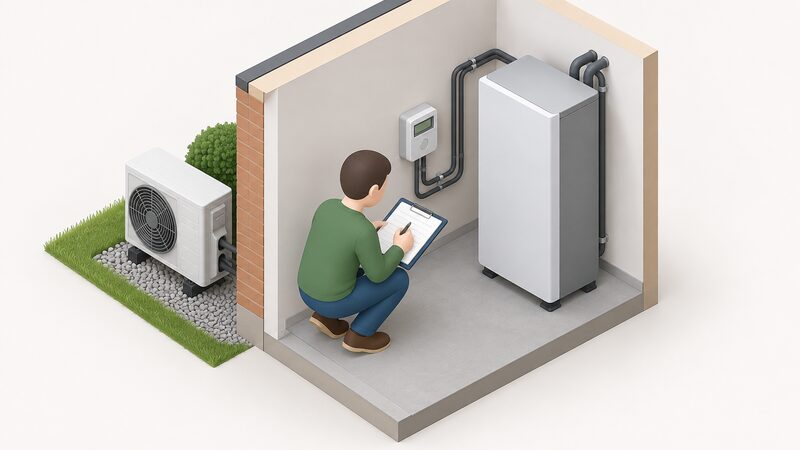
The scheme in brief: quarterly payments for seven years, run by Ofgem
The Domestic RHI opened in England, Scotland and Wales in April 2014 and closed to new applications on 31 March 20223. It pays quarterly for seven years, and payments for most installations are based on the annual heat demand of the property as recorded on its Energy Performance Certificate, rather than on measured output3. Solar thermal is the exception, paid on an MCS certificate estimate, and installations metered for payment are paid on meter readings3.
Ofgem is the administrator of the RHI under the regulations1. That means it handles accreditation, payments, declarations, metering and compliance, and it is the body a participant deals with throughout the seven years. The scheme's reach is uneven across Great Britain: 75.1% of installations are in England, 18.0% in Scotland and 6.9% in Wales, while household penetration is highest in Scotland at 0.8% of households, then Wales at 0.6% and England at 0.4%3. The South West has the highest number of accredited installations at 17,967, and London the lowest at 1,2173.
The scheme replaced fossil fuel heating at scale. A total of 78,553 boilers using fossil fuels have been replaced by lower carbon alternatives under the scheme, and 95.8% of replaced boilers used fossil fuels such as oil, gas, coal and LPG3. Oil accounted for 52.6% of replaced boilers, gas 28.6%, LPG 7.8% and coal 6.8%3. For a household, the practical effect is that the RHI payment is a fixed, inflation-linked income stream tied to a heating system that must stay compliant for the full seven years.
| Measure | Figure | Period |
|---|---|---|
| Support paid since 2014 | almost £1.2 billion | 2014 to Scheme Year 113 |
| Paid in Scheme Year 11 | almost £106.2 million | Scheme Year 113 |
| Fossil fuel boilers replaced | 78,553 | to Scheme Year 113 |
| Share of replaced boilers using fossil fuels | 95.8% | to Scheme Year 113 |
| Installations in England, Scotland, Wales | 75.1%, 18.0%, 6.9% | to Scheme Year 113 |
The annual declaration: what you confirm and when

Every year, participants are asked to complete and submit an annual declaration confirming they continue to meet the ongoing obligations4. The declaration is the scheme's main self-certification mechanism, and Ofgem's annual report describes compliance as achieved through a requirement for annual declarations to be submitted by participants, supported by an extensive audit programme and counter fraud measures9.
The timing matters more than the content. Annual declarations must be submitted within 28 days of being due, or enforcement action may be taken10. Ofgem's key terms guidance puts it directly: to ensure payments are not suspended, declarations must be submitted within 28 days7. Failure to complete them in time may lead to payments being suspended and accreditation being revoked4.
In practice, the declaration is a confirmation that the installation is still in place, still working, still owned by the participant, and still meeting the scheme rules. Applicants must be the owner of the renewable heating system at the application stage and throughout the Domestic RHI membership, so a change in ownership without notification is itself a compliance issue7. The declaration is also where a participant confirms that any repair or replacement has been reported and that metering, where required, is still in place.
The consequence of missing the deadline is not immediate removal from the scheme, but it is a suspension of payments until the position is regularised, and repeated or unresolved failure can end accreditation altogether. For a household relying on the payment as part of its heating budget, the 28-day window is the single most important date in the scheme year.
Meter reading: quarterly submissions for metered participants
Whether a participant must submit meter readings depends on how their installation is metered. If metered for payments, meter readings must be provided on a quarterly basis to receive payment4. If metered for performance only, no meter readings need to be submitted4. Payments for installations metered for payment are based on the meter readings8.
Metering for payment is required in specific circumstances:
- where a separate installation provides heat2
- where the installation is a hybrid heat pump with a fossil-fuel system2
- where biomass capacity does not provide 100% of the space heating requirement2
- where the property is a retrofit occupied for less than 183 days in the 12 months before application2
Once metering for payment is required, a participant cannot return to being deemed for payment, and the installation must stay metered for the remainder of its time on the scheme2.
There is a cap on what metered participants can receive. If metered for payment, quarterly payments are based on metered output, but a participant will not be paid more than a set payment cap based on the property's estimated annual renewable heat load, taking into account its seasonal performance factor10. The cap exists so that a metered participant is not paid more than they would have received if deemed.
Repeated failure to submit readings may lead to missed payments and accreditation being revoked, ending participation in the scheme4. Where a meter breaks, Ofgem must be told within 28 days of the fault being discovered11. For participants who have difficulty reading a meter because of age, disability or terminal or chronic illness, energy suppliers can arrange to read the meter free of charge at least once every three months, though that is a supplier service rather than an RHI obligation12.
Notifying Ofgem within 28 days: repairs, replacements and problems meeting an obligation
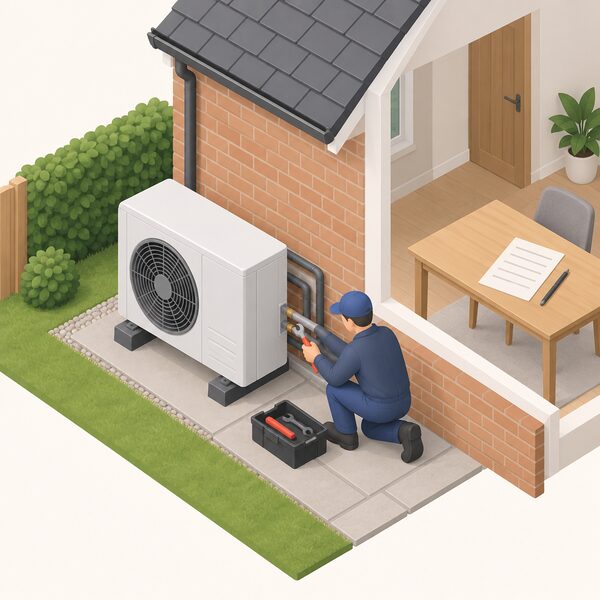
The 28-day notification rule runs through the scheme. Participants must let Ofgem know within 28 days of a repair or replacement taking place4. If unable to meet any of the ongoing obligations, they must let Ofgem know within 28 days4. Changes to the property affecting eligibility must be reported within 28 days of becoming aware of the change2. Broken meters must be reported within 28 days of discovering the fault11.
Replacing the MCS-certified product is not simply a matter of fitting a like-for-like unit. A Replacement Product Declaration Form must be completed by the participant and an MCS-certified installer and sent to Ofgem10. This is the mechanism by which Ofgem confirms that the replacement product is eligible and that the accreditation can continue.
The 28-day rule is a notification duty, not a permission process. A participant does not need Ofgem's approval before a repair, but they do need to report it afterwards, and the report must be accurate. Where a repair or replacement changes the technology, the capacity or the metering arrangement, the notification is what allows Ofgem to decide whether the accreditation continues unchanged or whether the terms need to be revisited.
Selling a property with an accredited system: notification and transfer of accreditation
DRHI accreditation may be transferred to the new owner when a property with an accredited renewable heating system is sold4. The seller must contact Ofgem at least 28 days before the sale goes through if the installation is included in the sale4. Payments are owed to the seller up until the day before the legal transfer of the property is complete10.
The incoming owner then has 12 months from the date of the sale to notify Ofgem of the change and confirm they wish to continue with the accreditation6. Ofgem's participant guidance states that the new owner must apply for accreditation within 12 months from the date of sale4. The same 12-month period applies to incoming owners who want to take over the payments from the DRHI scheme13.
This is the one route by which new applications can still be made. Only applications following a change of ownership can be made now that the scheme has closed5. A buyer who does not act within the 12 months loses the ability to take over the remaining payments, and the accreditation lapses.
For a household, the transfer matters in two directions. A seller needs to build the 28-day notification into the conveyancing timetable, because a sale that completes without it creates a compliance problem at the point of transfer. A buyer needs to know that the remaining payments are a transferable asset, but only if the paperwork is done inside the 12-month window. The value of the remaining payments depends on how much of the seven-year period is left, and the tariff rate secured at accreditation continues to apply to the transferred accreditation.
Biomass fuel rules: using Biomass Suppliers List fuels
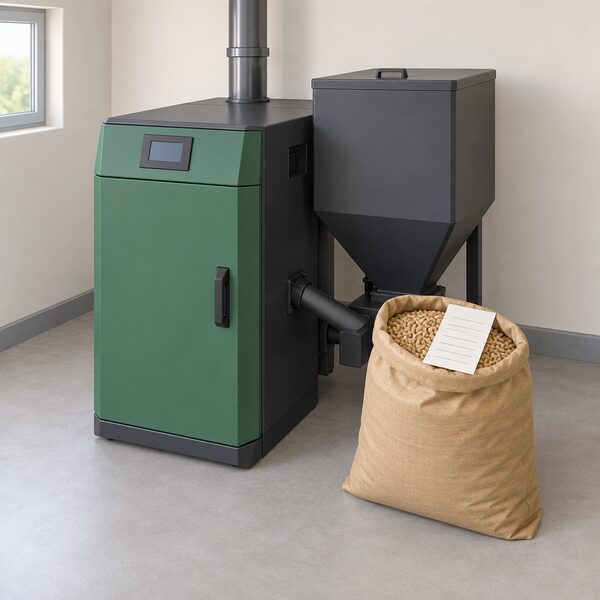
Biomass participants must only use fuels listed on the Biomass Suppliers List, which demonstrates that the fuel meets sustainability criteria4. The fuel must also be a type with the maximum moisture content allowed by the RHI emissions certificate14. Sustainability criteria for the RHI were introduced on 5 October 20157.
The evidence requirement is ongoing. Biomass participants should retain fuel receipts or supplier statements for their entire accreditation, to evidence fuel type if requested10. A BSL authorisation number on the purchase receipt is the practical proof that the fuel was listed at the time of purchase2. From 1 April 2022, fuel quality standards changed, and all fuel purchased after that date must be BSL listed10.
Biomass boilers must be designed and installed to burn solid biomass only, including wood pellets, and must not use fossil fuels except for ignition2. That rules out burning general waste, treated timber or any fuel not on the list, and it means the fuel supply chain is part of the compliance picture rather than separate from it.
"If you have a biomass heating system, you must only use fuels on the Biomass Suppliers List (BSL)."
For a household with a biomass boiler, the fuel rule is the obligation most likely to be tested in an audit, because it is the one that leaves a paper trail. Keeping receipts is not optional record-keeping; it is the evidence that the fuel used met the scheme's sustainability condition throughout the accreditation.
How compliance is checked: audits, revocations and money protected
Ofgem runs an audit and compliance programme funded from general taxation, alongside the scheme itself3. The programme uses targeted and statistical audits, both on site and by desk, and the compliance rates vary by audit type.
| Audit type | Scheme Year 11 compliance rate | Scheme Year 10 compliance rate |
|---|---|---|
| Statistical desk audits | 85.04% | 87.56%13 |
| Statistical site audits | 69.41% | 85.75%13 |
| Targeted site audits | 57.67% | 62.00%13 |
| Targeted desk audits | 57.50% | not given |
The gap between statistical and targeted audits is the point. Statistical audits sample the participant population and mostly find compliance; targeted audits follow a specific concern and find non-compliance far more often. In Scheme Year 11 there were 65 revocations, of which 16 were identified through site audits3.
The financial effect is measured. In Scheme Year 11, Ofgem prevented £578,530 of public funds from being paid out incorrectly, and a further £591,609 was identified for recovery through the debt recovery process3. The annual report describes this as safeguarding over £1.17 million of public funds during the scheme year3.
For a household, the audit programme is the reason the obligations are worth taking seriously. A participant who keeps receipts, submits declarations and readings on time, and reports repairs within 28 days has a straightforward audit. A participant who does not has a compliance problem that can lead to suspension, revocation and recovery.
When the obligations end: the scheme's final years and reporting
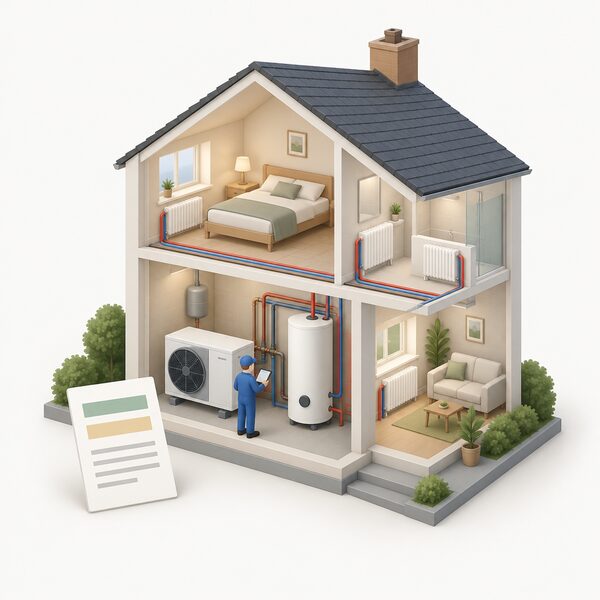
The obligations run for the full seven-year accreditation. Ofgem will continue to produce and publish annual reports until all accredited installations have reached the end of their support period, projected to be Scheme Year 15, covering 2028 to 20293. The scheme end date is March 2029, when the last participant completes their seven-year support period3. There have been no new accreditations since Scheme Year 9, and the one outstanding application from the last scheme year has been resolved and accredited3.
The regulations require publication of an annual report by 31 July following the end of each scheme year, and each scheme year runs from 1 April to 31 March3. That reporting cycle is separate from a participant's own obligations, but it is the mechanism by which the scheme's compliance record is made public.
The final years bring one hard deadline for replacements. Ofgem will not accept replacement installations after midnight on 31 December 2028 and will not pay for a replacement after that date2. A household whose system fails in the last year of its accreditation therefore faces a choice between repairing it and replacing it before the deadline, and the replacement must still be an eligible product declared on the correct form.
The tariff rate itself is secure for the remaining term. Once an accreditation has been granted, the tariff rate is secured and will change each year in line with inflation but will never decrease3. Applications accredited up to 31 March 2016 are adjusted annually by the Retail Prices Index, and applications accredited after that date are adjusted by the Consumer Prices Index3. Degression, which reduces tariffs for new accreditations by 10% or 20% when thresholds are breached, applies only to new accreditations and not to existing ones8.
Who to contact: Ofgem and MCS, and what each handles
Ofgem administers the RHI and handles everything connected to accreditation, payments, declarations, metering and compliance1. The customer service team can be reached on 0300 003 0744 or by email at domesticrhi@ofgem.gov.uk3. The postal address is Commonwealth House, 32 Albion Street, Glasgow, G1 1LH11. For metering matters, the email address is DomesticRHI@ofgem.gov.uk with MMSP in the subject line11. For help accessing metering data, the contact is mmsp@ofgem.gov.uk or 0300 003 07444.
MCS handles issues with the installation itself. Participants should contact MCS if they have issues with the installation process, the installer, or the MCS certificate or product15. MCS is a certification scheme for microgeneration installation companies and products, aiming to ensure consistent standards and provide confidence to consumers15. MCS can be contacted at mcscertified.com or on 0333 103 813016. MCS may also contact a property owner for a short, routine verification on behalf of Ofgem, by email or phone on 0333 103 8198, and property owners should aim to respond within seven days16.
Complaints to Ofgem are acknowledged within 2 working days and answered with an outcome within 20 working days18. The division of labour is straightforward: Ofgem for the scheme and the money, MCS for the installation and the installer. A household with a problem with the heat pump or boiler itself goes to MCS; a household with a problem with a payment, a declaration or a meter reading goes to Ofgem.
Sources18 cited
- Domestic Renewable Heat Incentive, Ofgem, 2026-09-17
- Domestic RHI participants, Ofgem, 2026
- DRHI Annual Report Scheme Year 11, Ofgem, 2025-07
- DRHI participants, Ofgem, 2026-09-17
- DRHI Essential Guide, Ofgem, 2024-06
- Domestic RHI closure, Ofgem, 2026
- Key terms explained: Domestic Renewable Heat Incentive, Ofgem, 2026-09-17
- Domestic RHI tariffs and payments, Ofgem, 2026
- Domestic RHI Annual Report 2021-22, Ofgem, 2022-07
- Domestic RHI Essential Guide, Ofgem, 2022-03
- Domestic RHI Guide to metering, Ofgem, 2026
- FIT Guidance for Licensed Electricity Suppliers, Ofgem, 2024-09-06
- DRHI Annual Report 2023-24, Ofgem, 2024-07
- Eligible heating systems, Ofgem, 2026-09-17
- Who to contact, Ofgem, 2026-09-17
- Boiler Upgrade Scheme guidance for property owners, Ofgem, 2026-03-25
- Boiler Upgrade Scheme guidance for installers, Ofgem, 2026-04-28
- Dispute resolution, Ofgem, 2026-09-17
 Supplier Licensing and FailureWhat happens when your energy supplier goes bust?
 Moving Home Energy AccountsMoving home means you get a new energy supplier whether you choose one or not, so who supplies your new place and what happens to your old account?
 Closed Energy PoliciesIf a scheme you used has closed, do you still get paid?
 Financial Resilience RulesYour supplier going bust raises two questions: who takes over and what happens to your credit balance?
 Manufacturer WarrantiesHow long does a boiler, heat pump or solar panel warranty actually last, and what do you have to do to keep it valid?
 Exit Fees and Contract TermsExplains exit fees on fixed energy contracts, how they are charged per fuel, and the Ofgem switching window in which a supplier cannot apply them.