

In this guide
Energy grants in Wales run on two separate tracks, and knowing which one applies to a household is most of the work. The first is free help for lower-income homes through the Warm Homes Nest scheme, which provides free, impartial energy advice and free home energy efficiency improvements1. The second is Green Homes Wales, a Welsh Government initiative managed by the Development Bank of Wales, which offers interest-free loans ranging from £1,000 to £25,000 with repayment terms up to 10 years, plus grant funding alongside the loan for specific measures2.
The scale of the free-help track is set out in Welsh Government figures: the Optimised Retrofit Programme and the Warm Homes Nest scheme collectively provide more than £130 million a year for free energy efficiency improvements to low-income households, and over £30 million has been allocated next year to fund energy efficiency, renewables and clean heat measures3.
Green Homes Wales is not a grant scheme in the ordinary sense. The scheme states that the grant cannot be accessed in isolation: it offers a finance package which provides grant funding in certain circumstances2. A household that wants money it never repays is looking at Nest, not at Green Homes Wales. A household that can carry an interest-free loan and wants a whole-home plan is looking at Green Homes Wales.
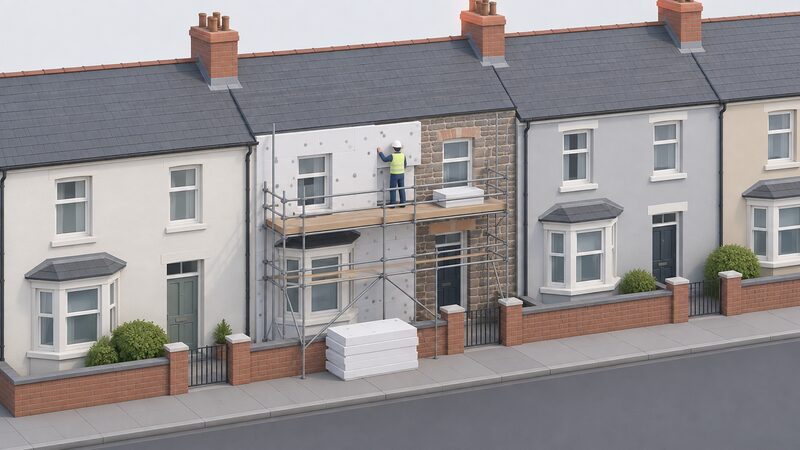
The schemes that make up energy grants in Wales
Wales has a distinct support landscape because much household energy policy is devolved. The Welsh Government is listed among the administrations that householders can approach for help with home energy bills, alongside the UK Government6. The Welsh Government's own guidance points households in Wales to its utility bill support pages8, and the House of Commons Library summarises the position as support delivered by the governments of Scotland and Wales among others9.
Three strands matter in practice, and they are not interchangeable.
| Route | Structure | Who it is for | Delivered by |
|---|---|---|---|
| Warm Homes Nest | Free advice and free improvements | Lower-income households, poor EPC homes | Welsh Government1 |
| Green Homes Wales | Interest-free loan plus grant in certain circumstances | Owner-occupiers who pass credit checks | Development Bank of Wales2 |
| Optimised Retrofit Programme | Programme funding | Social landlords and local authorities | Welsh Government5 |
Alongside these sit UK-wide schemes that operate in Wales. The Boiler Upgrade Scheme provides grants for heat pump installations across England and Wales3, and homeowners in Wales can apply for a £7,500 grant through it5. The Public Sector Energy Efficiency Loans Scheme provides interest-free loans in England, Scotland and Wales10. The Warm Home Discount operates in England and Wales under regulations that continue the scheme until 31 March 203011.
The practical consequence is that a Welsh household may be dealing with a devolved scheme and a UK scheme at the same time, each with its own application, evidence requirements and installer rules. The sections below take each in turn.
Nest: free improvements for lower-income households
Nest is the Welsh Government's free-help scheme, and it is the closest thing in Wales to a no-repayment grant for energy efficiency work. It provides free, impartial energy advice to help households lower their energy bills and improve their health and wellbeing12, and it also provides funding for home energy improvements13. The Warm Homes Nest scheme offers free energy efficiency advice and improvements to low-income Welsh households3.
Eligibility is set by income and by the property. The scheme is aimed at houses with a poor Energy Performance Certificate rating14, and the detailed criteria require that a household owns or privately rents its home, receives a means-tested benefit or lives in a low-income household, and lives in a home with an EPC rating of 54 (E) or less, or an EPC rating of 68 (D) or less where a household member has an eligible health condition15.
Two features distinguish Nest from the loan scheme. First, all households in Wales have access to free, impartial advice through it, not only those who qualify for physical improvements16. Second, the advice line is the entry point for general enquiries about Welsh support: the Green Homes Wales scheme rules direct householders to contact Nest on 0808 808 2244 for free and impartial general advice on current support options2.
For a household's energy independence, Nest delivers fabric and heating improvements at no cost to the occupant, which reduces reliance on purchased energy. It does not remove the gas connection or the electricity supply, and the improvements are determined by the assessment rather than chosen freely by the household.
Green Homes Wales: interest-free loans of £1,000 to £25,000 with grant funding
Green Homes Wales is a Welsh Government initiative, managed by the Development Bank of Wales2. It is designed to support eligible homeowners in making energy-efficiency and low carbon heat improvements to their homes3, and it helps homeowners in Wales to improve their homes with energy efficiency upgrades4.
The financial shape is specific.
| Feature | Detail |
|---|---|
| Loan range | £1,000 to £25,0002 |
| Interest | Interest free2 |
| Repayment term | Up to 10 years2 |
| Grant element | Available alongside the loan for specific measures2 |
| Assessment funding | Up to £6004 |
| Repayment holiday | 6 months upfront2 |
| Means testing | Not means tested2 |
| Credit check | Required, with affordability assessment2 |
| Security | Unsecured, homeowner personally liable2 |
The scheme funds the initial assessment up to a value of £600, alongside loan support for the work4. For larger projects, terms may be extended2. The funding can be used to cover the costs of the supply and installation of the eligible measures2, and it will not cover any remediation work required or any project management or design costs, except where agreed specifically by the scheme2.
Availability is finite. The scheme will be available on a first come first serve basis subject to funding availability2. Under the scheme terms, the scheme may be suspended or closed, meaning no further offer letters are issued, either temporarily or permanently, and grant amounts and eligibility requirements for new offer letters may be changed at any time prior to issue17. Limits may also be imposed on the number of offer letters per installer17. The scheme is funded by the Welsh Ministers17.
Who qualifies: ownership, residence and property rules
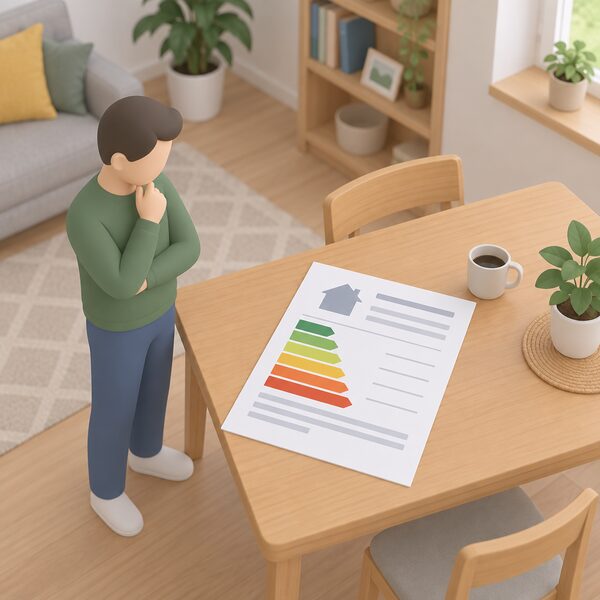
The property rules for Green Homes Wales are cumulative. The home must be owned by you, be your primary residence, and be located in Wales2. It must not be a new build property, defined as homes built in the last six months that have not previously been occupied2. The eligible property is an owner-occupied home, meaning homeowners with a freehold or long-leasehold interest in accommodation they own outright or own with a mortgage, situated in Wales17.
Private landlords cannot currently apply to the scheme, and are directed to Climate Action Wales for further information2. The Retrofit Coordinator Grant, a related scheme administered by the Development Bank of Wales and funded by the Welsh Government, uses the same owner-occupier definition and excludes properties outside Wales18.
For the private rented sector, the Energy Efficiency (Private Rented Property) (England and Wales) Regulations 2015 set the compliance framework. Private, local authority and other public body landlords are all covered, as well as a tenant who sub-lets a property falling within scope19. The regulations apply only to properties let on assured, regulated and agricultural tenancies that are legally required to have an EPC19. Exceptions include:
- Listed or officially protected properties where the minimum energy performance requirement would unacceptably alter them19
- Temporary buildings used for two years or less19
- Places of worship19
- Low-energy industrial sites, workshops or non-residential agricultural buildings19
- Detached buildings under 50 square metres of total floor space19
- Buildings occupied less than four months a year with expected energy consumption under 25 per cent of all-year use19
- Properties due for demolition with consents19
- Certain houses in multiple occupation not sold or let as a single rental in the past ten years19
For the Warm Home Discount, which operates in England and Wales, the core group requires the person to be the owner or occupier of domestic premises in England or Wales supplied with electricity or gas wholly or mainly for domestic purposes, occupying as sole or main residence, and meeting the published eligibility criteria11. Core Group 1 in England and Wales covers receipt of the Guarantee Credit element of Pension Credit on the qualifying date for that scheme year20.
What the schemes pay for: heat pumps, insulation and heating upgrades
Green Homes Wales supports the installation, in domestic properties located in Wales, of certain types of energy efficiency improvement measures and low carbon heating systems, described in the scheme terms as the eligible measures17. The scheme offers fully funded expert support, interest-free loans and in some cases grant money for home energy efficiency improvements21.
The Warm Homes Nest scheme funds energy efficiency, renewables and clean heat measures, with over £30 million allocated next year for that purpose3. Eligible households can get free energy advice and a suite of home energy efficiency improvements5.
The Boiler Upgrade Scheme is the main UK-wide heat pump grant available in Wales, providing grants for heat pump installations across England and Wales3. Homeowners in Wales can apply for a £7,500 grant through it5. Green Homes Wales can be used alongside it, and the project cost top up funding available alongside a Boiler Upgrade Scheme grant can support the costs of the heat pump technology, supply and fitting or labour, as well as associated pipework and radiator costs for heat pump projects2.
Welsh Government analysis has flagged a quality condition on grant-funded heat pumps. It recommends ensuring that heat pump installations, particularly those funded by government grant schemes, are carried out correctly and supported by associated retrofitting measures to ensure energy bills do not rise following installation22. That is a statement about installation quality and accompanying fabric work, not about the technology itself.
For comparison, the Warm Homes: Local Grant in England funds insulation, energy-efficient heating systems and renewable energy installations23, and the Home Upgrade Grant scheme in Leeds funded different types of insulation, heat pumps, solar panels and electric radiators24. Those are English schemes; they do not apply in Wales.
How the application works, from assessment to funding offer letter

The Green Homes Wales process begins with an assessment and ends with a funding offer letter. Confirmation will be given in the form of a funding offer letter once the application is fully processed and the required documents and supporting information are submitted alongside it2. Submission of an application will not guarantee funding2.
The sequence, as the scheme sets it out:
- Contact Nest on 0808 808 2244 for free and impartial general advice on current support options2.
- Apply to Green Homes Wales, accepting that credit checks and affordability assessments apply2.
- Receive a fully funded home assessment, with access to a Retrofit Coordinator, funded up to a value of £6002.
- Receive a tailored improvement plan setting out what the home needs and what the household wants4.
- Choose an installer registered with TrustMark as an approved PAS 2030 installer, or registered with TrustMark and certified with the Microgeneration Certification Scheme where a low carbon technology such as a heat pump or solar panels is involved2.
- Receive a funding offer letter once the application is fully processed and the supporting documents are submitted2.
- Complete the work, with the Retrofit Coordinator involved throughout, then begin repayments after the six-month upfront repayment holiday2.
The end decision on whether or not to go ahead with any work will always lie with the homeowner4. The installer cannot be a member of your household or immediate family2.
The Retrofit Coordinator's role in your project
A Retrofit Coordinator is a qualified professional who takes a look at a property's whole energy output, with expertise on energy use, planning, compliance and quality assurance4. Under Green Homes Wales, access to a Retrofit Coordinator to create a detailed home assessment providing energy-efficiency and decarbonisation recommendations is fully funded2.
The role is not advisory in a loose sense. After looking at the home, the coordinator develops a tailored improvement plan based on what the home needs and what the household wants, ensures recommendations are sound, cost-effective and in line with standards, and helps plan the work in the right order4. The coordinator needs to be involved throughout the installation and work on the home, ready to advise at any point4. They also need a good working knowledge of the Green Homes Wales scheme and its criteria4.
Under the scheme terms, the Retrofit Coordinator provides end-to-end support throughout the selection and installation of the eligible measures at the property17. An independent Retrofit Coordinator oversees all works to ensure they are safe, high quality and fully compliant3.
The Retrofit Coordinator Grant, administered by the Development Bank of Wales and funded by the Welsh Government, supports the installation in domestic properties located in Wales of certain types of energy efficiency improvements18. Its terms are governed by and construed in accordance with the laws of England and Wales, subject to the exclusive jurisdiction of the courts of England and Wales18.
For a household, the coordinator is the mechanism that turns a list of measures into a sequenced plan. It is also a constraint: the work is expected to follow the plan and the standards the coordinator applies, rather than the household's own ordering of priorities.

Combining Green Homes Wales with the Boiler Upgrade Scheme and other support
Green Homes Wales can be used alongside the UK Government's Boiler Upgrade Scheme, which provides grants for heat pump installations across England and Wales3. The project cost top up funding available alongside a Boiler Upgrade Scheme grant can support the costs of the heat pump technology, supply and fitting or labour, as well as associated pipework and radiator costs for heat pump projects2.
The scheme also works in conjunction with collective purchasing schemes being organised by a number of local authorities in Wales3. That matters for households in areas where a council has set up a bulk-buy arrangement, because the two routes can be coordinated rather than treated as alternatives.
The Boiler Upgrade Scheme itself is a £7,500 grant for homeowners in Wales5. It is a grant, not a loan, and it does not require repayment. Green Homes Wales is the opposite structure: a loan with grant funding attached in certain circumstances2. A household combining them is using a UK grant to reduce the capital cost of a heat pump and a devolved loan to cover the wider package of measures around it.
The Public Sector Energy Efficiency Loans Scheme provides interest-free loans in England, Scotland and Wales10, which is a separate route again, aimed at a different set of applicants.
Optimised Retrofit Programme and support for landlords and communities
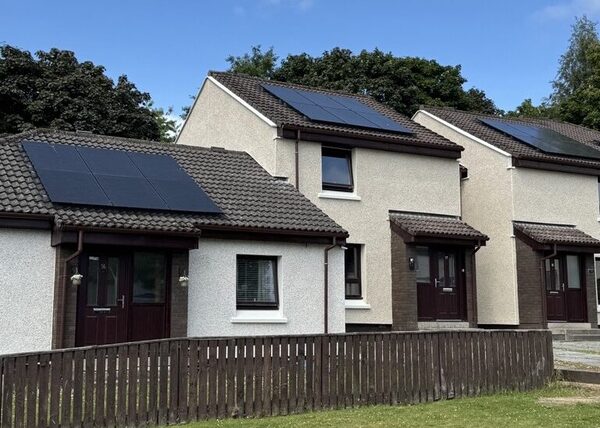
The Optimised Retrofit Programme supports social landlords and local authorities in making social housing energy-efficient through renewable energy systems5. It is the Welsh route for the social housing stock, and it sits outside the owner-occupier rules that govern Green Homes Wales.
Private landlords are not covered by Green Homes Wales, which states that landlords cannot currently apply and directs them to Climate Action Wales2. The compliance pressure on the private rented sector comes instead from the Energy Efficiency (Private Rented Property) (England and Wales) Regulations 2015, which cover private, local authority and other public body landlords, and tenants who sub-let within scope19.
Community-scale work has its own support structure. The Welsh Government Energy Service's support for renewable energy projects in Wales extends from the concept stage through to financial close and completion25. Welsh renewable energy targets include at least 1.5GW of renewable energy capacity to be locally owned by 2035, excluding heat pumps26, and a commitment to continue to keep pace with consumption thereafter27. A recommendation in the Preparing Wales for a Renewable Energy 2050 work programme proposed exploring additional financial support that could be provided to support delivery of rooftop PV as part of a wider retrofit programme22.
For a household, the significance is indirect but real: social housing tenants benefit through their landlord rather than through a personal application, and community energy structures can change what is available locally. The household's own dependence on a supplier and the grid remains unless it generates and stores its own electricity.
What the Warm Homes Plan targets mean for Welsh households
The Welsh Government's long-term ambition is to improve the energy efficiency of Welsh homes, ensuring we use only the energy we need, to keep homes comfortably warm at an affordable cost1. The New Warm Homes Programme policy statement sets out that all households in Wales, not just those in, or at risk of, fuel poverty, should continue to be eligible to access the Warm Homes Programme for advice and support1.
On investment, the Welsh Government believes the Warm Homes Programme should focus effort, and where required investment, on improving households who are least able to pay for improvements themselves, meaning households in, or at risk of, fuel poverty and those in severe fuel poverty, in the owner occupier, private rented and housing co-operative sectors1.
The funding picture behind that ambition is the more than £130 million a year that the Optimised Retrofit Programme and the Warm Homes Nest scheme collectively provide for free energy efficiency improvements to low-income households, with over £30 million allocated next year to fund energy efficiency, renewables and clean heat measures3.
Rural and off-gas households have a separate route. The Fuel Bank Foundation provides fuel vouchers for deliveries of oil or gas for those not connected to the mains gas network26. That addresses running costs rather than capital works, and it is a crisis-support measure rather than a retrofit one.
For a Welsh household, the practical reading is that the free-help track is targeted and the loan track is open to owner-occupiers who pass credit checks. Neither removes the household's dependence on a supplier for the energy it still buys, and neither is a route to disconnection from the grid. What they change is how much energy the home needs to buy, and in the case of the loan scheme, the terms on which the capital work is financed.
Sources27 cited
- New Warm Homes Programme policy statement, Welsh Government, 2023-06-15
- Green Homes Wales, Development Bank of Wales, 2026-09-17
- £5 million to help Welsh households invest in greener homes, Welsh Government, 2026-03-05
- Choosing a retrofit co-ordinator: what you need to know, Development Bank of Wales, 2025-09-30
- Your essential guide to heat pumps, Climate Action Wales, 2025-02-20
- Get help with your home or business energy bills, Ofgem, 2026
- Get help with your home or business energy bills, Ofgem, 2026-09-17
- Getting help if you can't afford your energy bills, Ofgem, 2026-09-17
- Research briefing CBP-9585, House of Commons Library, 2026-09-17
- Carbon Budget Delivery Plan, UK Government, 2023-03-30
- The Warm Home Discount (England and Wales) Regulations 2026, legislation.gov.uk, 2026-03-27
- Energy price cap explained, Climate Action Wales, 2026-03-04
- Minimum energy efficiency standards, Carmarthenshire County Council, 2026-09-20
- POSTnote 771: Home energy efficiency, Parliamentary Office of Science and Technology, 2026-06-25
- Research briefing CBP-9585, House of Commons Library, 2026-05-13
- Home energy efficiency, Bridgend County Borough Council, 2026-09-17
- Loan standard terms and conditions: Green Homes Wales, Development Bank of Wales, 2026-09-17
- Terms and conditions: Retrofit Coordinator Grant, Development Bank of Wales, 2026
- Trading standards guidance: other consumer problems, Isle of Anglesey County Council, 2026-05
- Research briefing SN06163, House of Commons Library, 2026-02-26
- Pympiau gwres canllaw arbenigol ar gyfer perchnogion tai, Development Bank of Wales, 2024-11-07
- Preparing Wales for a renewable energy 2050, Welsh Government, 2023-10
- Home and business grants, schemes and advice, East Hertfordshire District Council, 2026-09-17
- Council launches new scheme to help Leeds residents cut energy bills, Leeds City Council, 2024-01-03
- Annex: Welsh Government response to each recommendation, Welsh Government, 2024-06-14
- Written statement: support available to help with the cost of living, Welsh Government, 2026-03-18
- Renewable energy deep dive: biannual recommendations update, Welsh Government, 2035
 Energy Policy in WalesWhat help can you get in Wales to make your home warmer and cheaper to run?
 Home Energy Planning WalesSolar panels and heat pumps often need no planning permission in Wales, but the rules differ from England.
 Why Energy Grants DifferWhere you live in the UK changes which home energy grants you can get.
 The Full Grants and Schemes GuideWhich grants can you actually get right now, and how do you apply for them?
 Grants and Energy IndependenceCan you get a grant for solar panels or a battery?
 Housing Stock Data for WalesHow energy efficient are Welsh homes, and how many have a rating?