

On this page
The Household Support Fund closed on 31 March 2026, and in England its replacement is the Crisis and Resilience Fund: a council-run grant scheme funded by the Department for Work and Pensions that pays short-term help to people on low incomes facing a sudden financial crisis1. It launched on 1 April 2026 and runs to 31 March 2029, the first multi-year settlement for locally delivered crisis support, worth £842 million a year for England and £1 billion including Barnett impact1. Unlike the old fund, it also absorbs Discretionary Housing Payments in England, and it carries dedicated money for households that heat with oil1.
The fund exists to respond to sudden and unexpected financial expenses that place people at risk of hardship, and it is deliberately broad: help with essential costs after a serious shock such as redundancy, bereavement, domestic abuse, or fire or flood damage, help with housing costs, and help with sharp, unforeseen increases in essential costs, which is where heating fuel comes in2. You do not have to be claiming benefits to apply, and a payment will not affect any benefits you do receive7. Each council in England decides how to run its own scheme, so the application route, the evidence and the amounts vary by area7.
What the Crisis and Resilience Fund is
The Crisis and Resilience Fund is grant funding from the Department for Work and Pensions, paid to local authorities in England, to provide a safety net for people on low incomes who face financial crisis and need immediate support1. It is designed to respond to sudden and unexpected financial expenses that place people at risk of hardship, and it provides support if you are facing a sudden or urgent situation and need short-term help2. The fund is not a regular income: councils describe it as short-term help, including support to help you feel more stable in the future with your money5.
Two features distinguish it from what came before. First, it is a multi-year settlement. Funding covers the period from 1 April 2026 to 31 March 2029, which the government describes as the first multi-year settlement for locally delivered crisis support1. Earlier crisis support was extended in short tranches, which made planning difficult for councils and left households uncertain whether help would exist the following winter. Second, the fund has a resilience half to its name as well as a crisis half: it is intended to enable investment in preventive approaches that strengthen financial resilience and reduce repeat crisis, not only to hand out one-off payments2.
For a household's energy independence, the fund is a backstop rather than a route to self-sufficiency. It can pay for heating fuel, an essential cost, when a price shock or a sudden drop in income makes the next oil delivery or electricity bill unaffordable. It does not reduce your underlying dependence on the fuel you buy, the supplier you buy it from, or the grid. What it does is prevent a temporary crisis from turning into debt, disconnection, rationing of heat, or the loss of a home, which is the point at which longer-term measures such as insulation or home energy grants become much harder to pursue.
A multi-year scheme that replaces the Household Support Fund and absorbs Discretionary Housing Payments

The Household Support Fund ran until 31 March 2026, after which it was replaced by the Crisis and Resilience Fund3. The new fund brings together existing provisions by replacing the Household Support Fund and incorporating Discretionary Housing Payments in England4. Councils running the new scheme state the same in plainer terms: the scheme replaces the Household Support Fund and Discretionary Housing Payments5.
The absorption of Discretionary Housing Payments matters for householders who previously applied for them separately. Discretionary Housing Payments were short-term top-ups for rent shortfalls, paid by councils on behalf of the DWP. Under the new fund, housing help sits inside the same scheme: councils list "housing payments from your local council, if you need extra help to keep your home" among the support available5. One council operates a distinct branch, Crisis and Resilience Fund Housing Payments, which is separate to the main branch of the fund and is available to households receiving Housing Benefit or the housing element of Universal Credit8.
The Household Support Fund itself provided low income and vulnerable households with support towards the cost of essentials, such as food and energy, and the new fund continues that essentials-based purpose while adding the housing element and the longer settlement9. For anyone who applied to the Household Support Fund in early 2026, the government confirmed that people in crisis applying to the existing fund would be eligible for support from that point, with additional funding following from 1 April4.
The money: £842 million a year for England, £1 billion including Barnett impact
The Crisis and Resilience Fund provides £842 million per year, £1 billion including Barnett impact2. The £842 million figure was made available through the fund at Spending Review 2025, and more than £800 million had already been allocated through the spending review when the scheme was announced in March 20263. The Barnett impact is the additional money that flows to Scotland, Wales and Northern Ireland because UK government spending in England triggers corresponding funding for the devolved administrations under the Barnett formula.
The multi-year footing changes what councils can do with the money. Because funding covers three years rather than one, councils can plan schemes rather than spend down an allocation before a deadline, and the fund's guidance explicitly enables investment in preventive approaches that strengthen financial resilience and reduce repeat crisis2. The government has also said it will not require any additional reporting on how the money has been spent, and that there will not be additional conditions placed on the funding10.
On top of the core settlement, the government made an additional £27 million available through the fund to local authorities in England for 2026-27, to support people in crisis following the sharp increases in oil heating prices, targeted at areas with higher reliance on oil heating2. The allocation basis for the oil money is a combination of the number of heating oil households in individual areas and deprivation figures4. Councils are to be fully funded for any new burdens costs they incur in delivering the scheme11.
What the fund pays for: essentials, housing costs and sudden shocks
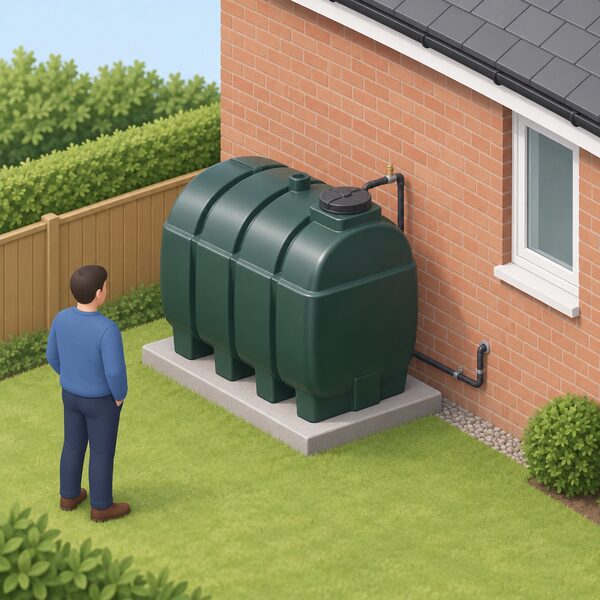
The fund pays for three broad kinds of help, and councils describe them in similar terms even though each runs its own scheme.
- Essentials after a serious financial shock. Help with essential costs if you face a serious financial shock such as redundancy, bereavement, domestic abuse, or fire or flood damage to your property5.
- Housing costs. Help with housing costs, including housing payments from your local council if you need extra help to keep your home2.
- Sharp, unforeseen increases in essential costs. This is the heading under which heating fuel falls: a sudden oil price rise or an unexpectedly large bill is exactly the kind of unforeseen essential cost increase the fund is designed for2.
Councils add their own local emphasis. Kent, for example, uses the fund to help residents who are struggling with money and dealing with a sudden change in their life, and also lists support for low-income households who rely on heating oil and are facing an immediate heating crisis5. Cornwall Council has been creating a Crisis and Resilience Fund Energy Support Scheme to help the households most affected by the heating oil crisis, with a particular focus on low-income heating oil users12.
The fund also connects applicants to wider help rather than treating the payment as the end of the matter. Councils describe a person-centred and trauma-informed approach, with applications assessed on overall circumstances and possible signposting to other support services such as a financial assessment with Citizens Advice8. Kent lists finance and budgeting advice and employment support among what the fund provides, and says it will work with applicants to connect them to the most appropriate local organisations5. Families eligible for free school meals can also get free activities and food through the Holiday Activities and Food Programme during school holidays5.
Who qualifies: low incomes, sudden crises, and no benefits requirement
The eligibility test is deliberately loose at national level and tightens at council level. The fund is a safety net for people on low incomes who face financial crisis and need immediate support, and it is focused on low-income people2. Beyond that, official guidance is explicit on two points householders often ask about.
First, you do not have to be getting benefits to get help from your local council7. This is a significant feature inherited from the Household Support Fund's approach: crisis support that is not gated on a benefit award, so a household that has just been made redundant, or whose income has fallen below the claimable threshold, is not excluded. Second, if you do get benefits, they will not be affected if you get a payment from the Crisis and Resilience Fund7.
What each council then requires varies, because the fund is discretionary and it is for local authorities, under the guidelines, to determine what they will provide4. Councils describe the qualifying circumstances in similar language: struggling with money and dealing with a sudden change in your life5. The housing payments branch is narrower, being available to households receiving Housing Benefit or the housing element of Universal Credit8.
Two practical limits are worth stating plainly. Funding is limited, as councils themselves say, so a scheme can close before its end date: one council runs its scheme until 31 March 2027, or until the allocation has been fully allocated8. And the fund is short-term help, not ongoing support, so a household with a structural gap between income and costs will need something beyond it, whether that is benefit take-up, crisis funds and hardship grants, or grant-funded efficiency work.
How each council runs its own scheme, with allocations already published

Councils decide how to run their schemes, and some councils share out money through local charities and community groups7. The fund is discretionary, so within national guidelines it is for each local authority to determine what it will provide4. Provisional allocations and draft grant conditions for the fund have already been published, with the grant conditions to be finalised in due course1.
What this means in practice is that two households in identical circumstances, in different council areas, can receive different amounts through different routes. Published examples show the range of expected payments: Lincolnshire County Council expects successful applicants to receive £300, and Norfolk County Council expects to pay around £35013. These are council expectations rather than national rates, and your own council's scheme pages will state its amounts.
Councils also differ in how they find the people who need help. Support could be delivered via application processes, or through targeted support if it is known which residents are likely to be in crisis10. The fund supports local councils to work with voluntary and community sector partners, so in some areas a charity or community group may hold part of the allocation2. In two-tier areas the arrangement can be split: in Kent, the district councils have been allocated their own funding to support their local residents, alongside the county council's scheme5.
Rollout is staged rather than simultaneous. Kent has launched an interim crisis support scheme, with the full scheme, which may include a wider range of support, to follow, and services launching in stages across the county5. If your council's pages describe an interim scheme, that is why: the national launch date of 1 April 2026 is the start of the funding period, not the date every local scheme went live1.
Extra support for heating oil and LPG households, including the £27 million top-up
The most significant energy-specific feature of the new fund is its treatment of off-gas-grid heating. In March 2026 the government announced over £50 million of targeted financial support for low-income households who heat their homes with oil, and in England that support is being delivered through the Crisis and Resilience Fund by local authorities in areas with higher rates of oil heating14. The Chancellor's announcement was of over £50 million to help low-income families who use heating oil, and a minister confirmed in Parliament that "we have made it clear that this money is going through the crisis and resilience fund"3.
The figures around this package are stated in slightly different ways in different official documents, and they differ. The March 2026 announcement was of over £50 million for low-income oil-heating households in England3. A Commons answer records an additional £27 million made available through the fund to local authorities in England for 2026-27, to support people in crisis following the sharp increases in oil heating prices, targeted at areas with higher reliance on oil heating2. A £53 million figure is given for the whole support package, and the government later described having stepped in with £53 million in immediate support to help vulnerable heating oil customers through the crisis4. Trading Standards referred to a £53 million support package for households affected by rising heating oil costs16. The £53 million covers the whole package, of which the England element flows through the fund.
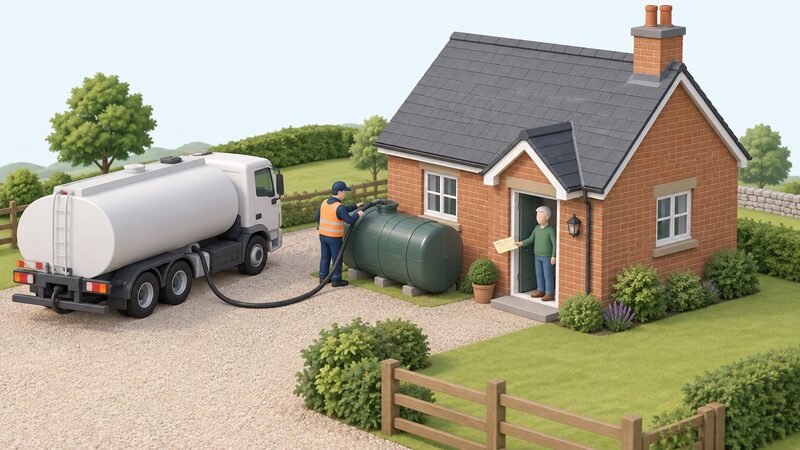
For an oil-heating household, the practical effect is that a crisis grant can go directly towards a fuel delivery. Councils ask for evidence of costs such as a heating oil quote, and Kent lists support for low-income households who rely on heating oil and are facing an immediate heating crisis among its scheme's purposes8. Cornwall's energy support scheme under the fund focuses on low-income heating oil users most affected by the heating oil crisis12. Extra support is available for households struggling with the cost of heating oil, particularly in rural areas8.
The wider context is that off-gas-grid households have fewer automatic protections than metered energy customers. The government has separately announced stronger protections for heating oil customers, and Trading Standards has warned that cost-of-living pressures and soaring prices expose gaps in bulk fuel checks15. A crisis grant is a response to a price shock, not a substitute for the protections metered customers have; for the fuller picture of what each nation offers, see help with heating oil costs and energy grants for off-gas-grid homes.
Prevention as well as crisis: a new focus on financial resilience

The word "resilience" in the fund's name is doing real work. The fund is designed not only to relieve crisis but to enable investment in preventive approaches that strengthen financial resilience and reduce repeat crisis2. Councils translate this into the support they wrap around the payment: finance and budgeting advice and employment support in Kent, signposting to a financial assessment with Citizens Advice elsewhere, and connection to the most appropriate local organisations5.
For energy, the resilience angle matters because repeat crisis is common where a home is expensive to heat. A household that needs a crisis grant every winter for oil or electricity is not being helped out of crisis by the grant alone; it is being kept afloat. The fund's preventive purpose is the official recognition of that pattern. The longer-term answers for such homes lie in grant-funded insulation and heating work, through schemes such as the Warm Homes: Local Grant or the Energy Company Obligation, which reduce the underlying bill rather than paying it once.
The fund's own mechanics also carry a preventive element in administration. The government has said it will not require additional reporting on how the money has been spent and that there will not be additional conditions placed on the funding, which is intended to let councils spend on prevention rather than paperwork10.
How to apply, evidence needed and the 48-hour payment aim
Applying means going to your own council, because there is no national application route. You can apply online using the council's application form, and a professional such as a support worker may also refer you for more support8. Some councils identify likely applicants themselves and offer targeted support without an application10. Because the fund is discretionary and locally run, the first step is to find your council's Crisis and Resilience Fund pages and read its rules.
The evidence a council may ask for is listed by the councils running the scheme:
- proof of your identity and address
- details about your household
- information about your income and outgoings
- evidence of costs, such as a heating oil quote8
Applications are assessed on overall circumstances, with a person-centred and trauma-informed approach, and councils may signpost applicants to further support such as a financial assessment with Citizens Advice8. For urgent cases, councils aim to issue payments within 48 hours of receiving a completed application, including any required information or evidence, and one council provides support through a Post Office payout as quickly as possible8. The 48-hour clock starts when the application is complete, so gathering evidence before applying is what makes the timescale real.
Contact details and costs are set locally. One council lists a telephone line with opening hours of Monday to Thursday 9am to 3pm and Friday 9am to 2:30pm, with calls from a landline costing up to 16p per minute and from a mobile anywhere from 3p to 65p per minute8. Those specifics will differ at your council.
Effect on your benefits and what the fund does not do
A payment from the Crisis and Resilience Fund does not affect your benefits. Official guidance states it plainly: if you get benefits, they will not be affected if you get a payment from the Crisis and Resilience Fund7. The government has also said there will not be additional conditions placed on the funding and that it will not require additional reporting on how it has been spent10.
It is equally important to be clear about what the fund does not do. It is not a benefit, not a regular payment, and not an entitlement: it is discretionary, so a council can decline an application, and funding is limited, so a scheme can exhaust its allocation before its end date8. It does not replace the welfare benefits you may be entitled to, and it does not fund home improvements: for insulation and heating upgrades, the routes are the grant schemes covered on this site, not the crisis fund. It also does not reach Scotland, Wales or Northern Ireland, which have their own arrangements.
Scotland, Wales and Northern Ireland: what households get instead

The Crisis and Resilience Fund covers England only: in England, this support is known as the Crisis and Resilience Fund7. The devolved administrations receive corresponding funding through the Barnett formula, and each runs its own crisis support.
In Wales, the Discretionary Assistance Fund provides emergency support to Welsh residents over the age of 16 who are in financial crisis with no other means of support, and provides cash support and other help for those in financial crisis17. Wales also ran help for oil and LPG heating costs, with households that did not qualify for the oil and LPG payment able to apply to the Discretionary Assistance Fund if in severe financial hardship19. Emergency support payments cover essentials such as rent and bills20.
In Northern Ireland, the Home Heating Oil Support Scheme was agreed as a £36.4 million support package for home heating oil users, funded through a combination of £17.2 million provided by the UK Government and a further £19.2 million from the NI Executive21. The Discretionary Support Scheme is being reformed to ensure grant assistance is available to those in need, regardless of the type of home heating they rely on21.
In Scotland, crisis support runs through the Scottish Welfare Fund, and the Scottish Government's Emergency Heating Oil Scheme has its own qualification rules, under which Child Benefit does not count when considering whether or not you qualify23. For the detail in each nation, see home energy grants in Scotland, home energy grants in Wales and home energy grants in Northern Ireland.
Sources23 sources
- Crisis and Resilience Fund: guidance for local authorities in England, 1 April 2026 to 31 March 2029, Department for Work and Pensions, 2026-01-13
- Crisis and Resilience Fund debate, Hansard, 2026-03-25
- Over £50 million to help families struggling with soaring heating oil costs, GOV.UK, 2026-03-16
- Heating Oil Support debate, Hansard, 2026-04-01
- Crisis and Resilience Fund, Kent County Council, 2026-11-09
- Help for Households, Pendle Borough Council, 2026-11-09
- Get help from your local council with the cost of living, GOV.UK, 2026-09-17
- Crisis and Resilience Fund (DWP), Westmorland and Furness Council, 2026
- Evaluation of the Household Support Fund 4, GOV.UK, 2025-01-27
- Crisis and Resilience Fund to support low-income heating oil households, GOV.UK, 2026-03-16
- Council Tax Information Letter 6/2026: Household Energy Payment 2027, GOV.UK, 2026-10-29
- Cost of living support for rising energy costs, Cornwall Council, 2026-04-02
- Household Support Fund and related crisis support briefing, House of Commons Library, 2026-08-06
- Government response to the CMA heating oil market study, GOV.UK, 2026-10-13
- Stronger protections for heating oil customers, GOV.UK, 2026-10-13
- Cost of living pressures and soaring prices expose gaps in bulk fuel checks, Trading Standards, 2026-03
- Written statement: tackling fuel poverty, Welsh Government, 2025-01-27
- Discretionary Assistance Fund (DAF), Welsh Government, 2026-09-17
- Thousands of Welsh households get help with oil and LPG heating costs, Welsh Government, 2026-03-31
- Minister encourages Pembrokeshire residents to make use of support available to keep warm and keep well, Welsh Government, 2023-03-10
- Lyons announces agreement on home heating oil support, Department for Communities Northern Ireland, 2026-04-16
- Home Heating Oil Support Scheme FAQs, Department for Communities Northern Ireland, 2026-04-16
- Home Heating Advice FAQs, Home Heating Advice Scotland, 2026-09-17
 Heating Oil Help by NationHow much help with heating oil costs can you get in 2026, and how do you claim it?
 Grants for PensionersWhat cash help can pensioner households get towards energy bills?
 Off-Gas-Grid Home GrantsWhat grants can you get if your home has no mains gas?