
In this answer
Short answer
Condensation damp is the most common cause of damp and mould in UK homes, and it is the damp complaint landlords dispute most often, because it is not caused by a defect of the building and can often be improved by small changes1. That does not put it outside the tenancy altogether. Whether a landlord must act turns on three things: what the tenancy agreement says, whether the damp follows a repair the landlord has failed to make, and whether the damp has caused damage the landlord is obliged to repair1.
The practical answer is that a landlord will probably be responsible for condensation damp where the tenancy agreement says so or says the home will be kept fit to live in, where the damp was caused by the landlord not making certain repairs such as heating or ventilation, or where the damp has damaged something the landlord has to repair, such as rotting window frames or damaged plasterwork1. Where none of those apply, the landlord may have no duty to prevent the damp, though the position is considered on the facts of each case1.
Two things shape the outcome more than anything else. The first is awareness: a landlord is usually only responsible for repairing the problem once they become aware of it, so the report itself starts the clock1. The second is the type of damp. Condensation, penetrating damp and rising damp carry different repair duties, and misdiagnosing one as another is the most common reason a complaint stalls1.
When the landlord is responsible for condensation damp
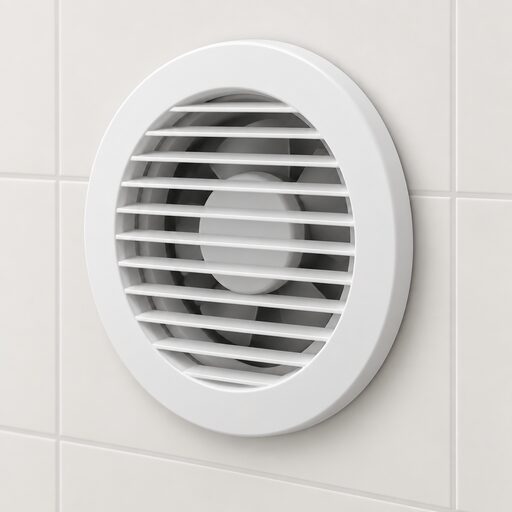
The starting point is that condensation damp generally happens when a property cannot deal with normal levels of water vapour because of a lack of insulation, ventilation or heating, or a combination of all three1. That framing matters, because it locates the cause in the building's ability to manage moisture rather than in the tenant's habits alone. The published causes include not having proper ventilation, for example in a basement room or a room where the windows do not open, not having good enough extraction fans in kitchens and bathrooms, broken heating systems such as a boiler not working properly, no insulation on external walls or ceilings, and no suitable way to dry clothes1.
Against that list, the landlord's responsibility crystallises in three situations. The first is contractual: the tenancy agreement says the landlord is responsible, or says they will keep the home fit to live in1. The second is causal: the damp was caused by the landlord failing to make repairs, such as to heating or ventilation1. The third is consequential: the damp has caused damage the landlord has to repair, such as rotting window frames or damaged plasterwork1.
There is a fourth route for social tenants. If the home is rented from the council or a housing association, the landlord is responsible for the damp if it means the home is not safe to live in, or if it is an ongoing serious problem affecting physical or mental health1. For private renters, the equivalent test is whether the damp means the home is not safe to live in, for example because it has made the tenant or their family ill1.
Two limits are worth stating plainly. Where a design problem does not affect the structure or exterior of the home and causes no damage to the building, the landlord may have no responsibility under the tenancy agreement to prevent the damp; the landlord is responsible for repairs if a design problem causes damage, for example to wall or ceiling plaster1. And where the home has no damp-proof course at all, the landlord may not be responsible for installing one, because the work may be regarded as an improvement rather than a repair, considered on its own facts1.
Fit for habitation: the legal duty behind damp complaints

The phrase that carries most weight in a damp dispute is "fit for habitation". In Wales, a landlord under an occupation contract is obliged to ensure a dwelling is both in repair and fit for human habitation7. In England, the position for renters is that the home has to be fit for habitation and it is the landlord's responsibility to ensure this8. These are the duties a tenant points to when condensation is persistent and the building cannot manage moisture.
The duty sits alongside a wider set of landlord obligations that bear on damp. A landlord must ensure there is a valid electrical condition report in respect of the dwelling during each period of occupation9. Carbon monoxide alarms are a legal requirement of landlords for rented properties10. Any gas appliance the landlord owns and provides for the tenant's use is included in their legal duties11. Where a tenant has their own gas appliance that the landlord did not provide, the landlord is responsible for parts of the associated installation and pipework but not for the appliance itself11.
For a household, the significance is that these duties are not discretionary. A landlord who fails to comply with a duty imposed by regulation 3 of the relevant Northern Ireland regulations commits an offence13. The same logic runs through the repair duties: they are obligations, not favours, and they exist because a home that cannot manage moisture is a home that damages health and fabric.
"A landlord under an occupation contract is obliged to ensure a dwelling is both in repair and fit for human habitation"
Where the property is a flat in a tenement in Scotland, the picture changes. Under the Tenement (Scotland) Act 2004, owners in mixed tenure blocks are liable for their share of common repair costs14. A private rented house does not fail the repairing standard if work otherwise needed to comply cannot be carried out because a majority of owners in the tenement have refused consent15. That is a real limit on what a Scottish landlord can deliver, and it is worth knowing before a complaint escalates.
What the tenancy agreement says about damp and repairs
Most tenancy agreements do not mention condensation at all, and that silence is why the implied terms do the work. For penetrating damp, the landlord is in many cases responsible because a term implied into the tenancy agreement says the landlord must keep in repair the exterior and structure of the home as well as installations like basins, sinks, baths, toilets and their pipework1. The same implied term is the reason rising damp is usually the landlord's problem: it is their responsibility to keep the exterior and structure of the home in repair1.
Condensation is different because it does not necessarily originate in the structure. That is why the agreement's own wording matters. If it says the landlord will keep the home fit to live in, that phrase pulls condensation into scope1. If it is silent, the tenant is left arguing causation: that the damp follows a repair the landlord has not made, or that it has damaged something the landlord must repair1.
| Damp type | Typical origin | Usual repair position |
|---|---|---|
| Condensation | Moisture the building cannot manage, from lack of insulation, ventilation or heating1 | Landlord responsible if the agreement says so, if a repair failure caused it, or if it has caused damage1 |
| Penetrating damp | Leaking roof, cracked wall, leaking guttering or external pipes, leaking drainage pipe, rotten windows or doors1 | Landlord responsible in many cases under the implied repair term1 |
| Rising damp | Failure of an existing damp-proof course1 | Landlord likely responsible for repairing an existing DPC1 |
| No DPC present | Absence of a damp-proof course1 | Landlord may not be responsible, as it may be an improvement rather than a repair1 |
Tenants also carry duties under the same agreement. In Northern Ireland, tenants must allow the landlord access to the property to carry out maintenance or safety checks on gas appliances or flues that the landlord provides16. Where a tenant has bought an appliance from the landlord, the tenant becomes responsible for the annual gas safety check and maintenance11. These are the obligations that sit on the other side of the ledger, and they matter because a refused access visit can stall a repair.
Condensation, penetrating and rising damp: why the type matters
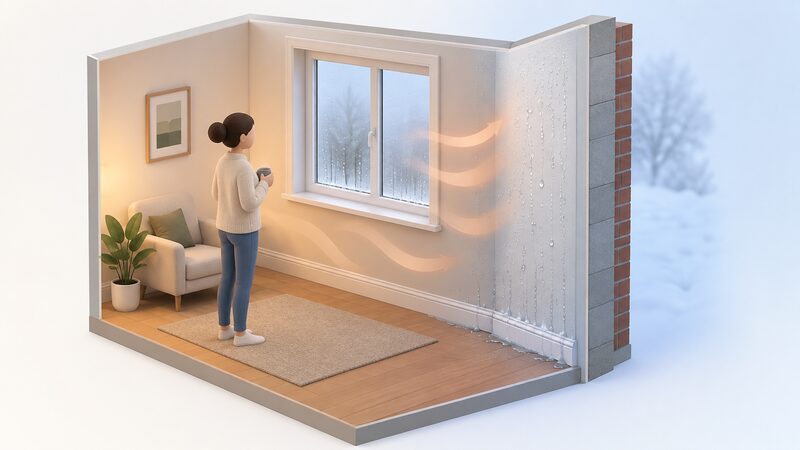
Getting the type right decides who pays. Condensation happens when warm, moist air hits a cold surface such as a window or outside wall and condenses, running down the surface as water droplets3. It is not caused by a defect of the building, so it can often be improved by making small changes3. That is precisely why landlords resist it, and why the evidence a tenant gathers has to show the building cannot cope rather than that the household generates unusual moisture.
Penetrating damp has a different signature. Its causes are a leaking roof, cracked wall, leaking guttering or external pipes, a leaking drainage pipe, or rotten windows or doors1. These are structural and external, which is why the implied repair term usually catches them1. Rising damp follows a failure of an existing damp-proof course, and the landlord is likely to be responsible for repairing it1.
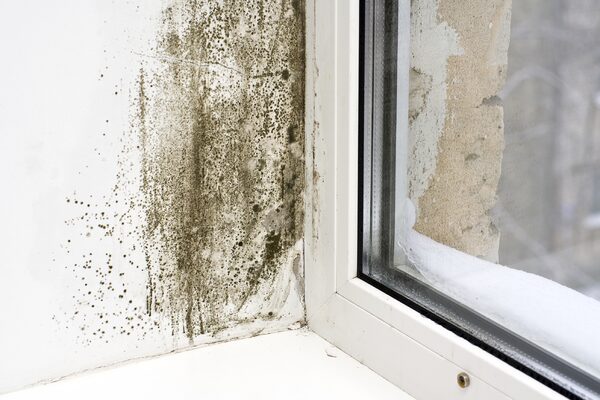
The consequences of leaving condensation untreated are not cosmetic. If condensation is allowed to sit on walls for long periods, it can penetrate the outer layers of the walls, seep into furniture and cause mould to grow17. That progression is what turns a condensation complaint into a disrepair claim, because the damage then falls within the landlord's repair duty1.
For a household, the type also determines what will actually fix it. Condensation responds to ventilation, extraction, heating and insulation, which are building measures as much as habits1. Penetrating and rising damp respond to repair. A tenant who reports "damp" without distinguishing the three is likely to receive a generic reply about drying clothes; a tenant who reports a leaking gutter and a cold unventilated bathroom is describing two different duties.
Awaab's Law and the new timescales for social rented homes
For social tenants, the enforcement picture changed in October 2025. From October 2025, Awaab's Law requires social landlords to investigate and resolve damp and mould in homes within set time periods18. The published detail is that registered social landlords must take action and investigate reports of damp or mould within 10 working days, and address emergency hazards within 24 hours4. Other reporting describes the requirement as addressing mould and damp within 10 days19, and as compelling social landlords to investigate and fix dangerous damp and mould within set time periods20. The documents give the investigation window as 10 working days in one place and 10 days in another; the working day figure is the one attached to the statutory-style guidance.
The underlying duty is not new in substance. A social landlord has a duty to fix reported damp, mould and emergency repairs by law2. What Awaab's Law adds is the clock. A tenant reporting damp to a social landlord is now reporting against a deadline, and the landlord's response time is measurable.
The scope of the regime is set to widen. Phase 2, coming into effect on 30 November 2026, expands the hazards covered and applies the same immediate response times to electrical faults, risks of falling, structural defects, excess cold and heat, fire risks and pest infestations21. Phase 3, in 2027, covers all remaining hazards under the Housing Health and Safety Rating System except overcrowding22. For social tenants, that means the damp and mould route is the first of several, and the same reporting discipline applies to each.
What you can do if condensation keeps coming back
The published sequence is straightforward. Where a rented property has persistent damp and condensation after the household has tried the practical measures, the advice is to contact the landlord3. That contact is not a formality: a landlord is usually only responsible for repairing the problem when they become aware of it, so the problem should be reported straight away1.
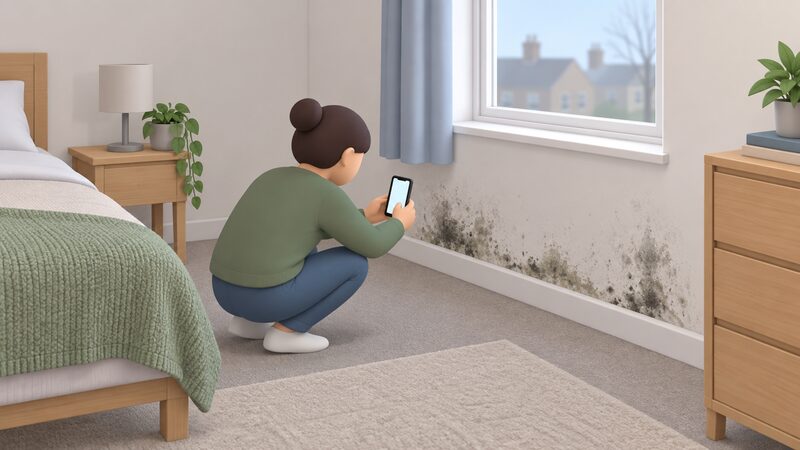
A workable record has four parts. First, a dated written report to the landlord describing where the damp is, when it appears and what has already been tried. Second, photographs taken at intervals, which show whether the problem is spreading. Third, a note of the building factors: whether extraction fans work, whether windows open, whether the heating functions, whether external walls or ceilings are insulated1. Fourth, a copy of the tenancy agreement, because the wording on fitness and repairs decides much of the argument1.
Where the landlord does not respond, the routes differ by nation and tenure. Social tenants in England have the Awaab's Law timescales behind them18. Private renters can point to the fit for habitation duty8 and, in Wales, to the occupation contract obligation to keep the dwelling in repair and fit for human habitation7. In Scotland, the repairing standard applies, subject to the tenement consent limit15. In Northern Ireland, the gas safety and installation duties sit alongside the repair obligations16.
There is also a funding angle worth knowing. Where loft insulation looks insufficient, the guidance for tenants is to contact the landlord or estate agent and ask them to improve it24. Landlords should arrange for heating equipment to be regularly serviced25. Some funded schemes cover loft or cavity wall insulation, replacing or repairing a boiler, and changes to the heating of a house26. Where a landlord has installed upgrades under a funded scheme, the landlord is covered by the contractor's guarantee but is responsible for repairing any faulty upgrades27.
Two further points bear on independence in a rented home. A tenant is not responsible for repairs to the central heating system, which is one of the landlord's obligations6, and in England the landlord must make sure plumbing and heating work properly5. But a dehumidifier is not a repair, so its cost is not covered by that duty, and the same applies to extra heating used to keep a cold surface above the dew point. Where a smart meter is involved, a tenant should discuss any changes with the landlord, as each meter may form part of the tenancy agreement28. The dependence that remains in a rented home is structural: the tenant can report, evidence and escalate, but the fabric, the heating and the ventilation belong to someone else.
Sources28 cited
- Repairs: damp and condensation, Citizens Advice, 2026-09-20
- Condensation, damp and mould, Centre for Sustainable Energy, 2025-12
- Dealing with condensation and mould, National Energy Action, 2026-07-13
- The cold truth about damp and mould, Cadent Gas, 2026-09-20
- Make sure your home is energy efficient, Citizens Advice, 2026-09-19
- Tenants' guide to switching, Uswitch, 2026-05-29
- Fitness for human habitation guidance for landlords, Welsh Government, 2022-01-13
- Draught-proofing, Which?, 2026-05-05
- The Renting Homes (Wales) Act 2016 (Consequential Amendments) Regulations 2022, regulation 6, legislation.gov.uk, 2022
- Gas Safety Week 2025, day 2: carbon monoxide alarms, HHIC, 2025-09-09
- Gas safety checks: what landlords must do, Health and Safety Executive, 2026
- Gas safety in domestic premises: frequently asked questions, Health and Safety Executive, 2026
- Domestic gas installation and health and safety, nidirect, 2024-11-27
- High Rise Retrofit and Upgrade Programme, Phase 1, City of Edinburgh Council, 2026-04-20
- Regulations to modify the repairing standard: summary, Scottish Government, 2019-03-01
- Know your rights and responsibilities in rented properties, HHIC, 2025-09-11
- How to stop condensation, Which?, 2026-05-26
- Energy in buildings and heat: EINAS 2025, Department for Energy Security and Net Zero, 2025-10
- Ventilation saved my kids, BESA, 2025-11-10
- Government affairs update, October 2025, CIBSE, 2026-09-17
- Awaab's Law Phase 2 timeframes, Chameleon Technology, 2026-11-30
- Awaab's Law summary: essential guide for housing providers, Chameleon Technology, 2027
- Dealing with condensation and mould (Northern Ireland), National Energy Action, 2026-09-07
- One thing to do this weekend to boost your insulation, Which?, 2025-11-19
- Guide to carbon monoxide safety, OFTEC, 2026-09-20
- Energy bills help, Scope, 2026-07-24
- Warm Homes Social Housing Fund, Uswitch, 2025-09-12
- How to get a smart meter, Smart DCC, 2026
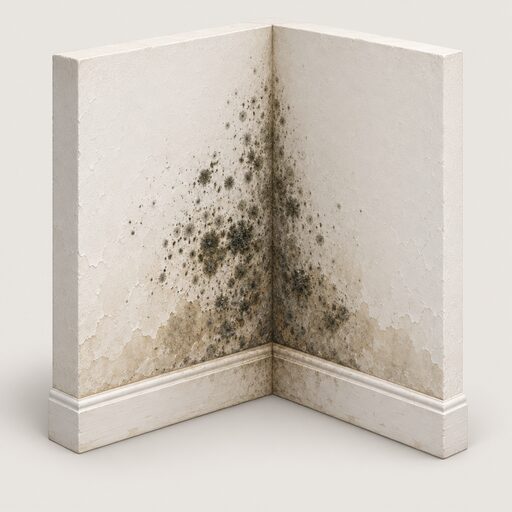 Damp and Mould in Rented HomesDamp or mould in your rented home is your landlord's problem to fix.
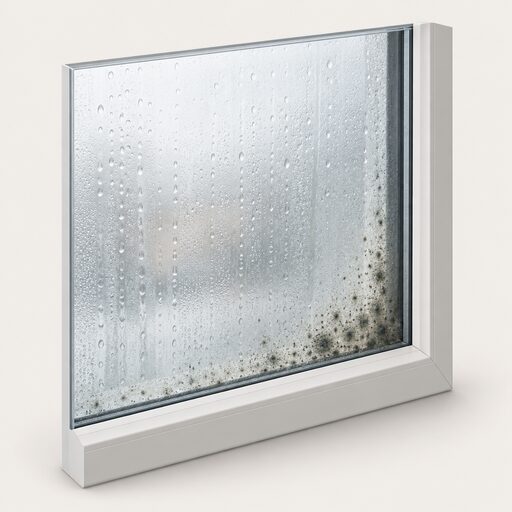 Condensation, Damp and MouldWhy does mould appear after insulation or new windows go in?
 Rented Homes and Landlord MetersWho is responsible for the energy in your rented home?
 Energy in Social HousingWhat must your landlord do if your home is cold, damp or mouldy?
 HMOs and Shared HousesWho is responsible for the electrics, the gas and the fire alarms when you rent a room in a shared house?
 Ventilation in FlatsGetting enough fresh air into a flat is harder than a house, because you often have only one outside wall and neighbours on every other side.