
In this answer
Short answer
Draught-proofing is one of the cheapest and most effective ways to improve comfort in a home, and most of it is reversible, which is what makes it work for renters1. The measures that matter most are strips around window and door frames, brushes or sweeps at the base of doors, a brush inside the letterbox, and a pillow or cover over an unused chimney. None of these requires a new window, a new door or a change to the building's fabric.
The permission question is the one renters ask first. Most tenancy agreements prohibit altering the windows, floors, walls and other parts of a building's fabric, so temporary removable measures are the ones that fit inside a tenancy2. Where a fix needs drilling, such as an outdoor socket, landlord permission is needed3. Where a scheme is doing the work, the scheme itself asks the landlord: private renters applying to Nest must provide the landlord's details so permission can be requested4.
The limits are as firm as the benefits. Air bricks, trickle vents and boiler flues must never be blocked, and kitchens and bathrooms should not be over-sealed where there is no extractor fan1. Official guidance for rented housing goes further: rooms with an open-flue gas appliance, and all kitchens, bathrooms and toilets, should have enough permanent ventilation by air brick or similar5. Draught-proofing a rented home is therefore about closing the gaps that were never meant to be open, not about making the home airtight.
Why draughts matter: where rented homes lose heat
Heat loss in a home is not spread evenly. The Energy Saving Trust estimates that an un-insulated dwelling loses a third of all its heat through the walls and a further quarter through the roof9. Heat loss through the roof alone can make up to 25% of all heat loss in the home10. Large, detached houses and bungalows lose a high proportion of their heat through the roof11. Those figures describe the fabric, and a renter cannot change the fabric, but they explain why the gaps a renter can close matter: they sit on top of an already leaky envelope.
Some rented housing has features that make the problem worse. Louvre blade windows are particularly wasteful in terms of heat loss as well as being an added security risk5. The loft hatch, where a renter has access to one, should be both insulated and draught proofed to prevent heat loss12. Draughts are commonly found around external windows and doors, open chimneys, loft hatches, and in gaps around floorboards and skirting boards13.
The effect of closing them is straightforward. Cutting draughts helps reduce heat loss, making a home more comfortable and lowering heating demand14. That is a comfort and demand statement rather than a promise about a bill, because the size of any saving depends on how draughty the home was before the work. For a household's energy independence, draught-proofing does something specific: it reduces the amount of bought-in gas or electricity needed to hold a room at temperature, without changing the supplier, the meter or the heating system. The dependence on the grid and on a supplier remains exactly as it was.
What renters can and cannot change: the permission question

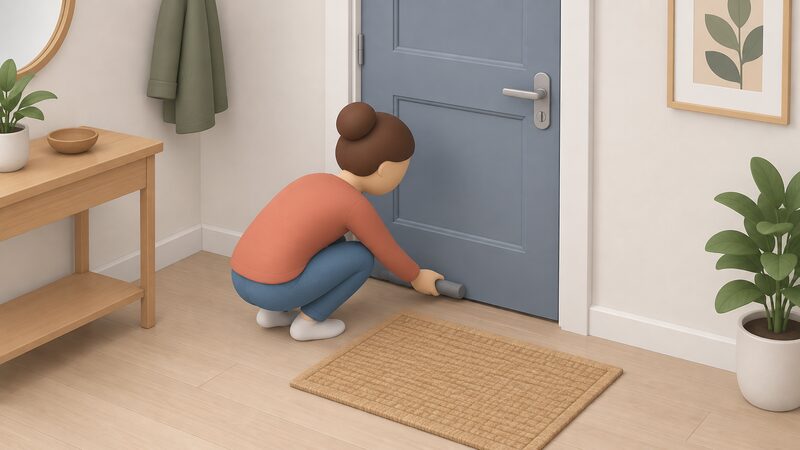
The dividing line is alteration versus addition. Most tenancy agreements prohibit altering the windows, floors, walls and other parts of a building's fabric, so temporary removable measures should be used2. A draught strip pressed into a frame, a brush screwed to the inside of a door with two short screws, or a chimney pillow pushed up a flue are additions that can be taken out again. A replacement window, a new external door or a sealed-up vent are alterations.
Where a measure needs drilling, permission is the rule. If outdoor plug sockets need to be installed or any drilling needs to take place, landlord permission is required3. The same principle applies to scheme-funded work: private renters applying to Nest must provide the landlord's details so the scheme can request permission for any work4.
Two related areas are settled in the tenant's favour and are worth knowing. If a lease says landlord permission is needed to change the meter, Ofgem, the energy regulator, says they should not unreasonably prevent this15. And a rental contract term that prevents a tenant changing supplier is unfair and cannot be enforced; the landlord or letting agent cannot stop it16. Neither point is about draught-proofing itself, but both show that a tenancy agreement is not unlimited in what it can restrict.
Cheap draught-proofing fixes that need no landlord consent
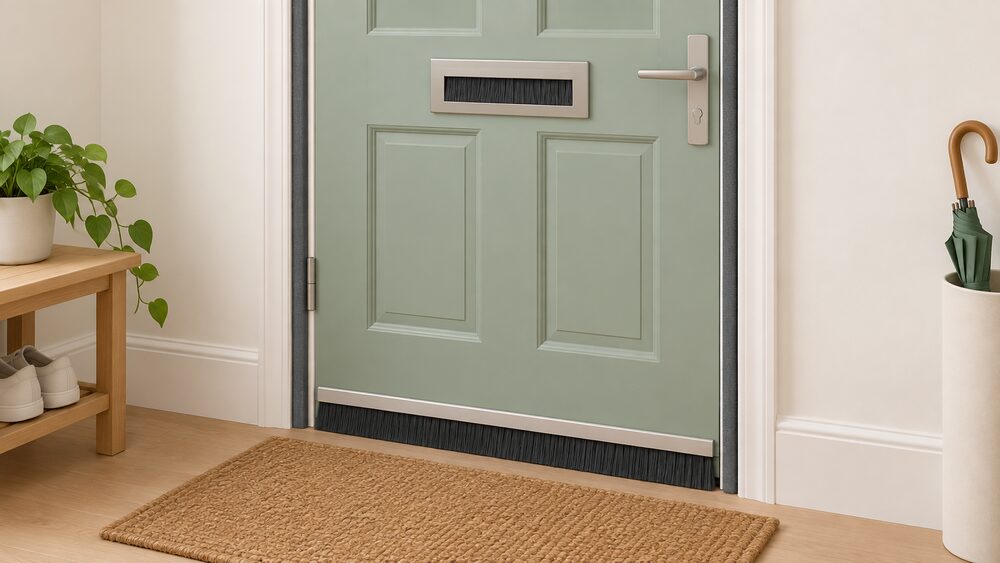
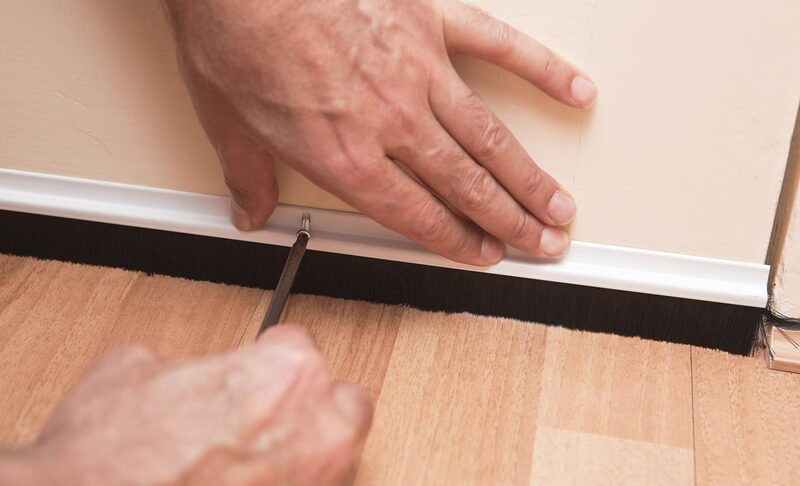
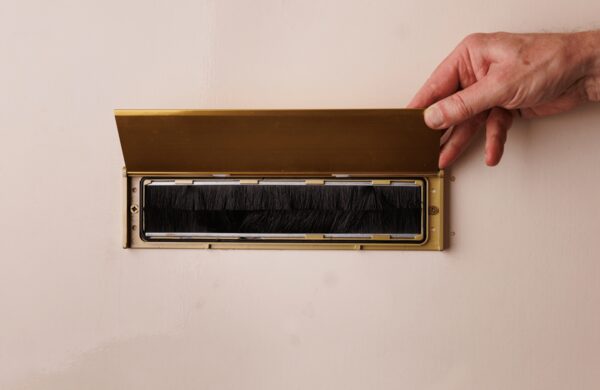
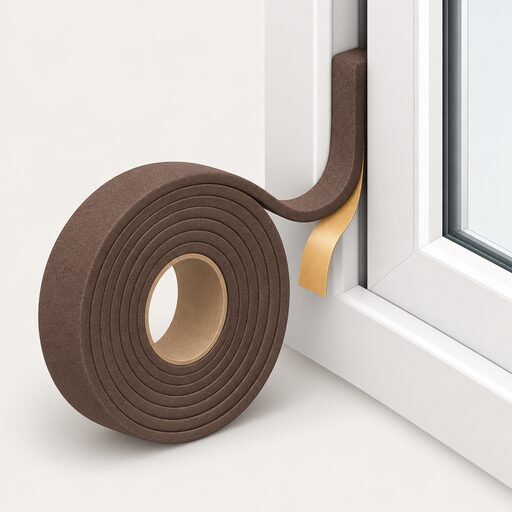
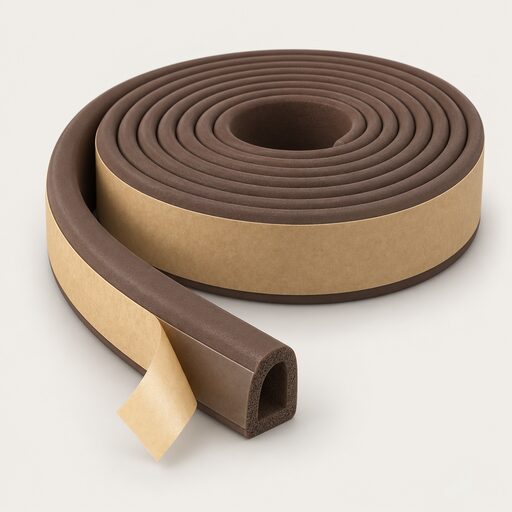
The cheapest measures are the ones that involve no fixing at all. Draught-proofing strips for window and door edges, brush or hinged-flap excluders at door bottoms, an inflatable chimney pillow for open chimneys, flexible silicone-based filler for floorboards and foam strips for loft hatches are all listed as standard methods17. Door sweeps and brushes attach to the base of a door, letterbox brushes sit inside the plate, and chimney draught excluders close an unused flue13.
For doors specifically, the sides can be insulated with simple strip insulation and draught sealers, widely available at DIY shops18. Internal doors matter too: keeping all internal doors closed retains heat within individual rooms, and draught excluders at the bottom of those doors help as well18.
Costs are modest. Professional draught proofing can cost around £55, while DIY draught proofing can be much cheaper6. Hiring a professional installer to draughtproof a home could cost around £2007. The amount saved on bills means the work is likely to pay for itself in a few years7. For a renter, the DIY route is the one that avoids both the cost and the permission question.
There is a tax position worth noting for anyone buying materials. Draught stripping, for example insulation fixed around windows and doors, qualifies for a lower rate of VAT19. The legislation lists draught stripping for windows and doors among energy-saving materials20, and HMRC describes these as strips of insulation fixed around windows, interior and exterior doors, and loft hatches to reduce draughts21.
| Measure | Typical cost | Fixing needed | Reversible |
|---|---|---|---|
| Letterbox brush | around £58 | None | Yes |
| Door brush or sweep | DIY shop prices18 | Short screws | Yes |
| Window and door draught strip | Lower-rate VAT applies19 | None to light | Yes |
| Chimney pillow | DIY shop prices17 | None | Yes |
| Professional draught proofing | around £556 | Varies | Varies |
Sealing windows and doors: strips, brushes and excluders
Windows take draught-proofing strips around the frame17. The material is a strip of insulation fixed around windows, interior and exterior doors, and loft hatches to reduce draughts21. On a sash window the choice of product matters: brush strips work better for sash windows22, because the sashes slide past one another and a brush can sit in the gap without preventing that movement. Tape run across a sliding sash is more likely to lift or jam.
Doors are the other main opening. The sides can be treated with strip insulation and draught sealers18, and the base with a door sweep or brush that attaches to the bottom13. A hinged-flap excluder is the alternative at a door bottom17. For a front door in a rented flat, the brush type is the least invasive because it fixes to the door itself rather than the frame.
The free option has a catch. A rolled towel placed over the gap at the bottom of a front door will need placing back over the gap each time the front door is opened23. It costs nothing and damages nothing, but it is a habit rather than a fitting.
Chimneys, letterboxes and keyholes: the forgotten gaps
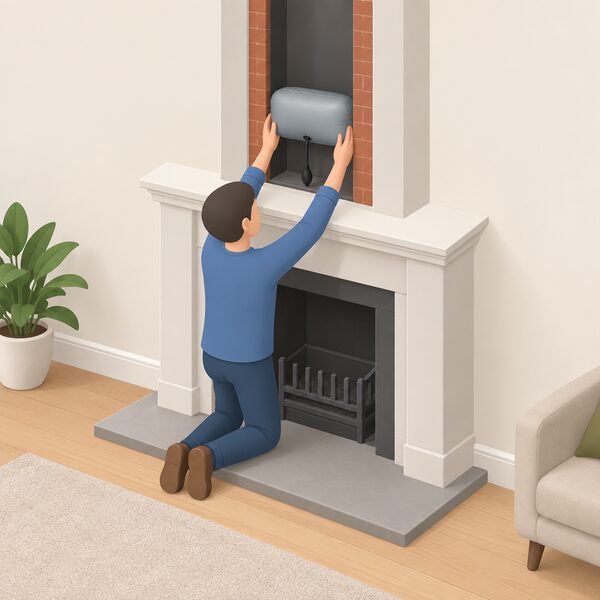
An open chimney is a direct hole in the thermal envelope, and an inflatable chimney pillow is the standard answer for one that is not in use17. A chimney draught excluder is listed among the products available for this purpose13. The condition is that the flue must genuinely be unused; a working open fire or an open-flue appliance is a different case entirely.
Letterboxes are cheap to deal with. Fitting letterbox brushes is put at around £58, and letter box brushes are listed among the draught-excluding products available13. Keyholes and other small penetrations in a door are the same category of gap: small, cheap to close, and easy to reverse.
Finding the gaps in the first place is a job in itself. Common places to find draughts are around external windows and doors, open chimneys, loft hatches, and in gaps around floorboards and skirting boards13. A short length of foam draught excluder, about 50mm, works as a test strip1. Held against a suspected gap on a windy day, it shows where air is moving.
For a household's independence, these small gaps are the cheapest reduction in bought-in energy available to a tenant. They do not change where the gas or electricity comes from, and they do not remove the standing charge or the reliance on a supplier. They reduce the volume of heat that has to be replaced.
What to leave alone: vents, flues and ventilation
Never block boiler flues, air bricks, or window trickle vents, and avoid over draught-proofing windows in kitchens and bathrooms where moist air needs to escape and where there is no mechanical ventilation such as an extractor fan1. That is the single most important limit on the whole exercise.
Official guidance for rented housing sets out the ventilation that must remain. All rooms containing an open flue gas heating appliance and all kitchens, bathrooms and toilets should be provided with enough suitable permanent ventilation by air brick or similar5. The same guidance excludes rooms containing an open-flue gas appliance from the landlord's draught-proofing duty, which is the mirror image of the same rule: those rooms are not to be sealed5.
Where damp is a concern, the advice is to improve ventilation to help remove moisture, check that none of the air vents are covered and that extractor fans are working24. Outside ventilation should be kept in areas where there are open fires or flues, and in rooms where moisture is produced, such as kitchens and bathrooms7. Portable heaters carry a related rule: vents should be kept clear and airflow should not be restricted by dust and fluff25.
There is a point at which more draught-proofing stops helping. If a home is already fairly well draught proofed, adding more draught proofing may increase the risk of poor air quality6. The practical test is whether the home already feels sealed; if it does, the remaining gaps are probably doing a job.
Grants and schemes that cover draught-proofing
Draught-proofing appears in some funded schemes and is absent from others. In Northern Ireland, draught-proofing is listed as an available measure under the individual measure schemes26. In Wales, the Nest scheme provides free home energy efficiency improvements, and private renters applying must provide the landlord's details so permission can be requested for any work4.
The gap is at the level of national obligation. The National Insulation Association has stated that draught proofing is missing from the list of eligible insulation measures25. That is a consultation position rather than a rule, but it explains why draught-proofing is more often a DIY purchase than a funded measure.
For a renter, the funded routes that do exist tend to require the landlord's involvement, which puts them in a different category from the measures in this guide. The cheap, reversible fixes need no application, no assessment and no permission, which is precisely why they suit a tenancy. Where a household wants to go further, the wider picture of grants and eligibility is set out in how to check which energy grants you qualify for, and the steps for taking more control of a home's energy are in energy independence step by step.
Sources26 cited
- DIY draught-proofing, Centre for Sustainable Energy, July 2026
- DIY vs professional home insulation, Uswitch, 7 November 2025
- Plug-in solar, Centre for Sustainable Energy, September 2026
- Get free home energy efficiency improvements: Nest eligibility, Welsh Government, 17 September 2026
- Checking your home is fit to live in, nidirect, 17 September 2026
- Quick tips to save energy, Energy Saving Trust, 21 August 2026
- Draught-proofing, Which?, 5 May 2026
- Common heating mistakes and how to avoid them, Which?, 16 January 2026
- Scottish House Condition Survey 2024: key findings, Scottish Government, February 2026
- Retrofit, Act on Energy, 2026
- How to make your home more energy efficient, Which?, 5 May 2026
- Installing blanket insulation, Which?, 26 May 2026
- Cheap and easy ways to insulate your home over a weekend, Which?, 6 October 2025
- Draught-proofing, Energy Saving Trust, 20 May 2026
- Smart meters for renters, Smart Energy GB, 16 March 2026
- Switching utility providers, StepChange, 20 September 2026
- Make your home more energy efficient in one weekend, Which?, 28 August 2026
- Draught-proofing your home, Smart Energy GB, 16 March 2026
- Tax on shopping: energy-saving products, GOV.UK, 17 September 2026
- Energy-saving materials: draught stripping, legislation.gov.uk, 17 September 2026
- VAT energy saving materials and grant funded heating supplies, HMRC, 17 September 2026
- Five top tips from Which? to cut your energy bills, Climate Action Wales, 18 March 2026
- This best draught excluder for your front door won't cost you a penny, Which?, 1 December 2025
- Repairs: damp, Citizens Advice, 20 September 2026
- Energy Company Obligation, National Insulation Association, 3 January 2023
- Energy grants Northern Ireland, Energy Saving Trust, 17 September 2026
 Draught-Proofing a HomeCovers sealing around windows, doors, floorboards, loft hatches, letterboxes and chimneys, and the products used for each.
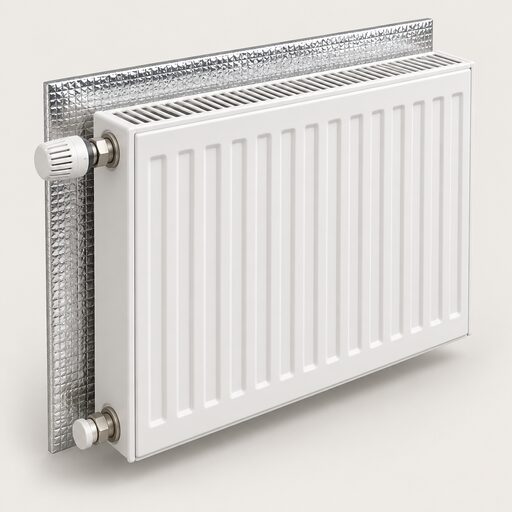 Low-Cost and DIY InsulationCovers the measures a householder can fit without a contractor: radiator reflectors, thermal curtains, chimney draught excluders, draught stripping and letterbox and floorboard sealing.
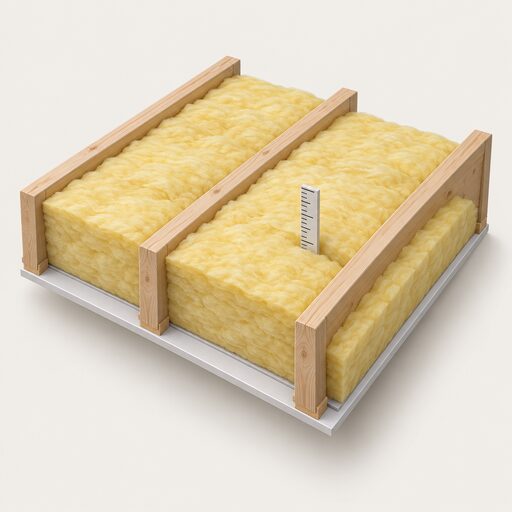 Loft InsulationHow much loft insulation do you need, and is your current depth enough?
 Renting and Home EnergyThe position of a tenant in a privately rented home: which measures need no permission, which are fixtures the landlord controls, and what the law says about heating, insulation, certificates and bills across the four UK nations.
 Where to Start If You RentRenting means you can switch supplier or get a smart meter yourself, but insulation, glazing and heating need your landlord's agreement.
 DIY or ProfessionalLoft insulation and draught-proofing are jobs most people can tackle, but anything electrical near a kitchen, bathroom or outdoors needs a registered electrician.