In this guide
The cheapest insulation measures are the ones a householder can fit without a contractor, and they are worth doing first because they cut the cost of keeping warm before any larger fabric work begins. Fabric-first measures "can help to reduce the cost of achieving thermal comfort", according to the Scottish Government's environmental report on its heat and buildings strategy1. Draught proofing sits at the front of that queue: professional draught proofing can cost around £55, while DIY draught proofing can be much cheaper2.
The measures that repay attention are draught proofing, radiator reflector panels, thermal curtains and blinds, chimney draught excluders, and simple sealing of letterboxes and floorboards. Radiator reflector panels cost around £25 for a roll that is cut to size behind a radiator, and on uninsulated external walls they can save £18 a year in Great Britain or £20 in Northern Ireland3. Draught proofing for windows and doors, done professionally, can save around £80 a year in Northern Ireland2.
What these measures do for a household's energy independence is modest but real: they reduce the heat that leaves the building, so less fuel is bought to replace it. What they do not do is remove dependence on the grid, a supplier or a fuel. They lower the size of the bill, not the fact of the connection. The sections below set out what each measure does, what the evidence says it saves, and where the limits lie.
Why cheap insulation measures are worth doing first
The case for starting with the cheap measures is not that they are the most effective, but that they are the fastest to fit, the least disruptive, and the least likely to need consent. Draught proofing, loft insulation and boiler upgrades are described in Bristol City Council's guidance on listed buildings as "low impact energy saving measures" that can be covered with a Certificate of Lawfulness, having minimal impact on the building but a big energy saving benefit5. That is a useful signal for any household in a sensitive building: the small measures are the ones least likely to run into a permission problem.
The second reason is that they address losses that larger measures do not. Insulation in a loft or a cavity slows conduction through the fabric, but a draughty letterbox, an open chimney or a gap under a door moves air regardless of how well the walls perform. Properly installed insulation, energy efficient windows and doors and reducing draughts "can significantly reduce energy use", according to Bromley Council's energy efficiency guidance6. The draught element is doing work that insulation alone cannot.
The third reason is cost sequencing. A household that spends on draught proofing and reflector panels first gets an immediate reduction in the heat it needs to buy, and can then judge whether the larger measures are worth the disruption. The Scottish Government's assessment frames this as fabric first: reducing demand before changing the heating system1. The cheap measures are the first step of that sequence, not a substitute for it.
Draught proofing: the cheapest measure with the biggest effect
Draught proofing earns its place at the top of the list because it is cheap, quick and reversible. The Energy Saving Trust puts professional draught proofing at around £55, with DIY draught proofing much cheaper2. Older government guidance on the private rented sector minimum energy efficiency standard gave an indicative cost of £80 to £120 for draught proofing, with a typical saving of £18 a year8. A 2012 impact assessment for Part L of the Building Regulations put the installation cost in a typical house at £1049. The figures differ because they were produced at different times, for different scopes of work and different housing, and none of them should be read as a current quote.
The savings figures are similarly spread. The Energy Saving Trust's Northern Ireland figure of around £80 a year covers professional draught proofing for windows and doors2. The £18 a year figure from the 2017 landlord guidance is a Great Britain figure and is much older8. The gap between £18 and £80 is not a contradiction so much as a difference in what is being measured: one is a whole-house indicative saving from a decade ago, the other a regional figure for a specific scope of work. A household should treat both as indicative.
What draught proofing does for independence is straightforward. Every cubic metre of cold air that enters a home has to be heated, and every cubic metre of warmed air that leaves takes its heat with it. Sealing the paths those air movements use reduces the fuel needed to hold a comfortable temperature. It does not change the fuel, the supplier or the grid connection. It changes the quantity bought.
Where draughts get in and how to seal each one
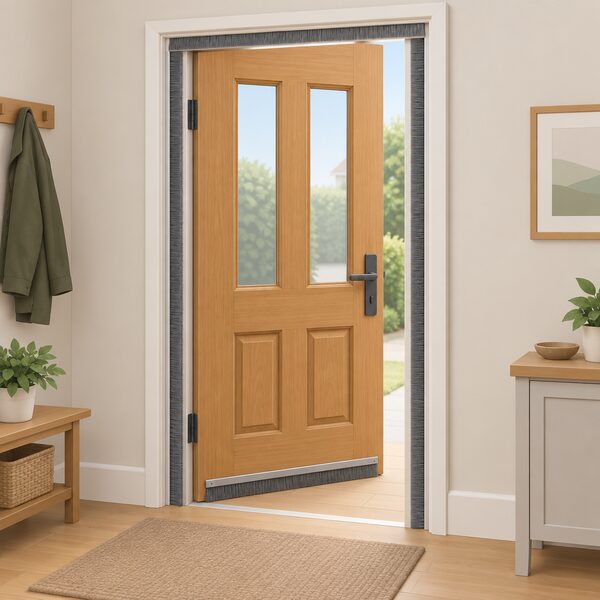
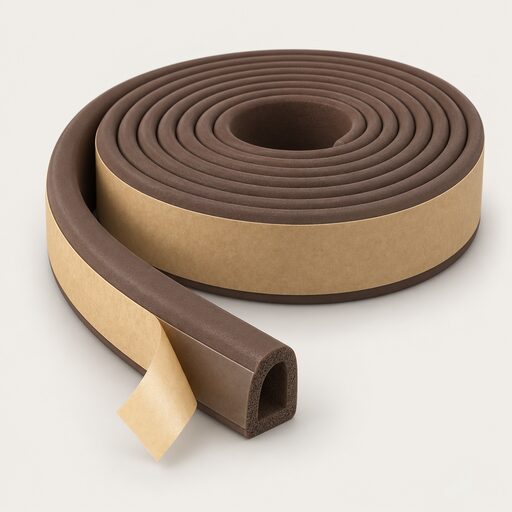
Draughts follow a predictable set of routes, and each has a matching fix. Draught stripping is the general material: strips of insulation fixed around windows, interior and exterior doors, and loft hatches to reduce draughts10. It is listed in legislation as an energy-saving material, and specifically as "draught stripping for windows and doors"11.
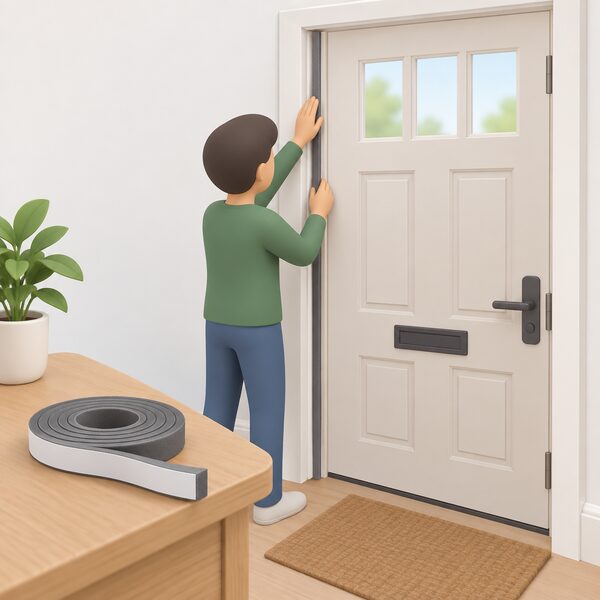
- Doors. The sides of doors can be insulated with simple strip insulation and draught sealers, widely available at DIY shops, with the front door the usual priority12. Internal doors matter too: keeping all internal doors closed retains heat within individual rooms, and draught excluders at the bottom of those doors help12.
- Windows. Draught stripping around the frame addresses the gap between sash or casement and frame, which is often the larger loss on an older window. Where the glazing itself is single, the frame is only part of the problem, and the section on thermal curtains below covers the cheaper options.
- Chimneys and fireplaces. An open flue is effectively a permanent hole in the building. For fireplaces not in use, a fireplace draught excluder such as a chimney balloon or woollen chimney insulation can be installed by the householder12.
- Letterboxes, keyholes, floorboards and loft hatches. Loft hatches are named explicitly as a location for draught stripping10. Floorboards in older homes are often the largest single unaddressed gap, and sealing them is a matter of filling the gaps between boards rather than replacing the floor.
Draught proofing costs and savings: what the numbers say
The cost figures for draught proofing vary widely, and the variation is worth understanding rather than averaging away. The Energy Saving Trust's current figure is around £55 for professional draught proofing2. The 2017 landlord guidance gave £80 to £120 as an indicative cost8. The 2012 Part L impact assessment gave £104 for a typical house9. A retrofit toolkit from Birmingham City Council put improved draught proofing at £150 for a shallow retrofit13.
| Measure | Cost | Saving | Source date |
|---|---|---|---|
| Professional draught proofing | around £55 | around £80 a year in NI (windows and doors) | 20262 |
| Draught proofing (indicative) | £80 to £120 | £18 a year | 20178 |
| Draught proofing (typical house) | £104 | not stated | 20129 |
| Improved draught proofing (shallow retrofit) | £150 | not stated | 202013 |
The savings side is thinner. The £18 a year figure comes from the 2017 landlord guidance8, and the £80 a year figure is specific to Northern Ireland and to professional draught proofing for windows and doors2. There is no single current Great Britain saving figure for draught proofing in this evidence, and a household should not assume the Northern Ireland figure applies unchanged elsewhere.
Two further cost points are unresolved. Guidance on draught proofing prices has been given as as little as £5 in one document and around £15 in another, and the two have not been reconciled. Component prices have also been given as £6.38 for approximately 5.8m of foam tape against £8.78 for 0.9m of brush strips. These are material costs for a single front door, not whole-house figures, and the two figures disagree.
What the numbers support is a simple conclusion: draught proofing is a low-cost measure with a modest but real saving, and the payback is short because the outlay is small. It is not a route to a dramatically smaller bill.
Don't block the air your home needs: the ventilation limit
Every draught proofing guide carries the same warning, and it is the single most important condition on this page. When draught proofing a home, intentional ventilation must not be blocked or sealed12. Building regulations guidance repeats the point: care should be taken not to block any ventilation14, and specifically not to block ventilation at the edges of a roof, the eaves15.
The reason is condensation. Roofs must be ventilated to protect against condensation in most cases16, and the same principle applies inside the home. A building needs a controlled path for moist air to leave, and if every gap is sealed the moisture produced by cooking, washing and breathing has nowhere to go. It condenses on cold surfaces, which is where damp and mould begin.
The distinction that matters is between intentional and unintentional ventilation. Trickle vents, air bricks, extract fans and purpose-made openings are intentional: they are sized and placed to move a known quantity of air, and they should be left alone. Gaps around ill-fitting windows and doors, open chimneys and unsealed floorboards are unintentional: they move air unpredictably and are the proper target of draught proofing.
"If your home is already fairly well draught proofed, adding more draught proofing may increase the risk of poor air quality."
There is a technical route that reduces the conflict. Installing room-sealed appliances, or appliances with a directly connected ducted external air supply, minimises ventilation energy losses from the room and the risk of cold draughts17. That is a heating-appliance decision rather than a draught proofing one, but it shows that the ventilation and efficiency goals can be met together when the appliance takes its air from outside.
Radiator reflector panels: around £25 to reflect heat back into the room
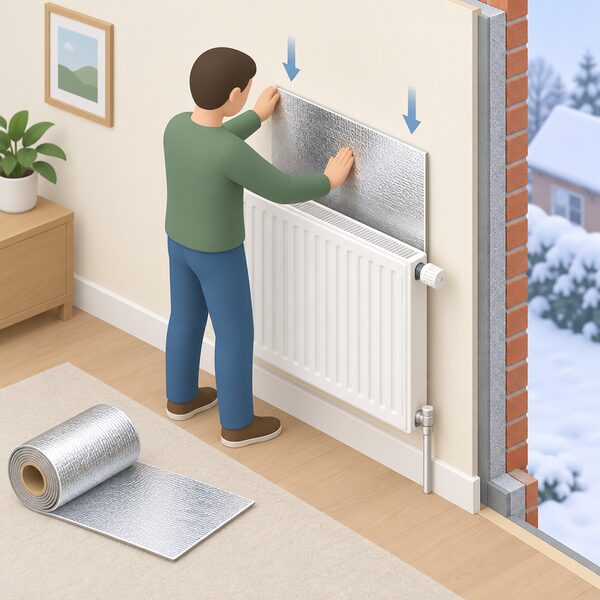
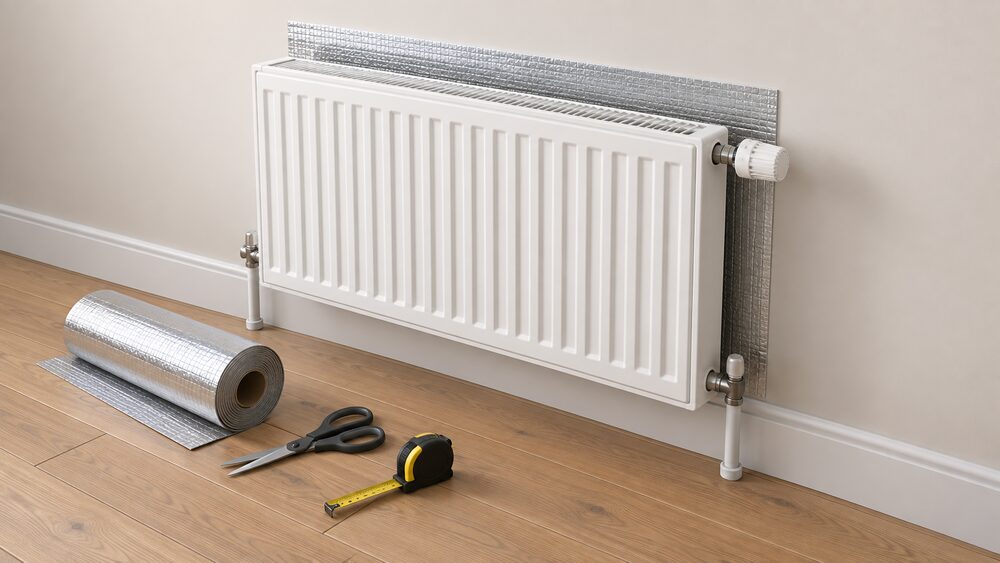
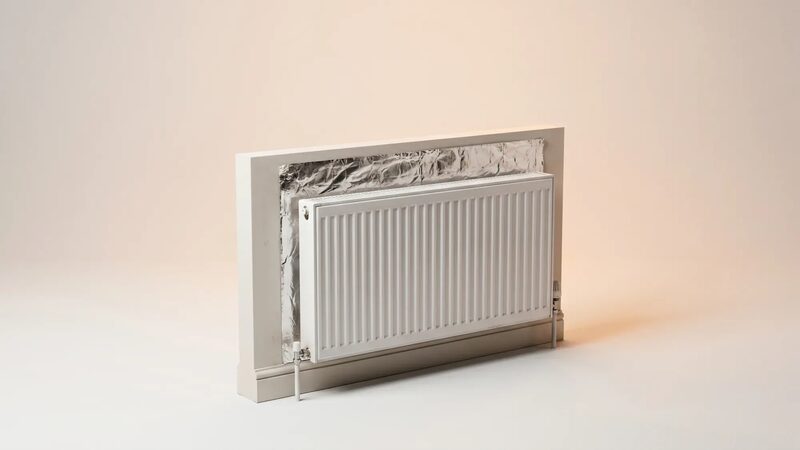
Radiator reflector panels are a sheet of reflective material fitted behind a radiator, against the wall. They reflect heat from the back of a radiator back into a room, stopping that heat escaping through outside walls3. The mechanism is simple: a radiator emits heat in all directions, and the portion directed at an external wall is largely conducted through it and lost. A reflective sheet intercepts that portion and sends it back into the room.
The cost is around £25 for a roll, which is cut to size so it fits snugly behind the radiator3. Purpose-made radiator reflector panels should be bought from a DIY store3. Some reflector material includes adhesive backing to help it stick to the wall, and this should be checked before buying; if it does not, double-sided tape or a suitable adhesive is needed3.
The savings are modest and location-specific. Installing radiator panels on uninsulated external walls can save £18 a year on energy bills in Great Britain or £20 in Northern Ireland3. They also cut carbon footprint by 60kg a year in Great Britain or 110kg in Northern Ireland3. The Northern Ireland figures are higher for both money and carbon, which reflects the different energy mix and prices there rather than any difference in the panel.
Installation is a householder job, in four steps:
- Measure radiators on external walls3.
- Cut the foil to size3.
- Slide the panel down the back of the radiator3.
- Press it against the wall so it sticks securely3.
Clip-on radiator reflector panels are easy to install and remove, which makes them a good option for saving money on energy bills3, and also makes them suitable for a rented home where the fitting should be reversible.
Where reflector panels work, and where they don't
The panels work where heat is being lost through the building fabric, and nowhere else. The Energy Saving Trust is explicit that they are most effective when fitted to radiators on uninsulated external walls3. That is the case the product is designed for: the wall behind the radiator is a path to the outside, and the reflective sheet interrupts it.
On an internal wall, the answer is a flat no. It is not really worth adding radiator panels to internal walls, because the heat stays in your home3. An internal wall separates two heated spaces, so heat reaching it is not lost; reflecting it back achieves nothing that would not have happened anyway. A household with radiators on internal walls should not expect a saving from panels fitted there.
The same logic extends to walls that are already insulated. A cavity wall or a solid wall with insulation has a much lower rate of heat loss than an uninsulated one, so the quantity of heat reaching the wall and escaping is smaller, and the panel has less to recover. The £18 and £20 figures are stated for uninsulated external walls3, and there is no equivalent figure in this evidence for insulated walls.
There is a practical point about fitting. The panel needs to sit between the radiator and the wall, which on a radiator mounted close to the wall can be awkward. Clip-on panels avoid the problem because they attach to the radiator rather than the wall3. For a panel that sticks to the wall, the surface needs to be clean and the adhesive adequate, and the double-sided tape or adhesive may be an extra purchase3.
Thermal insulated curtains: a low-cost alternative to glazing upgrades
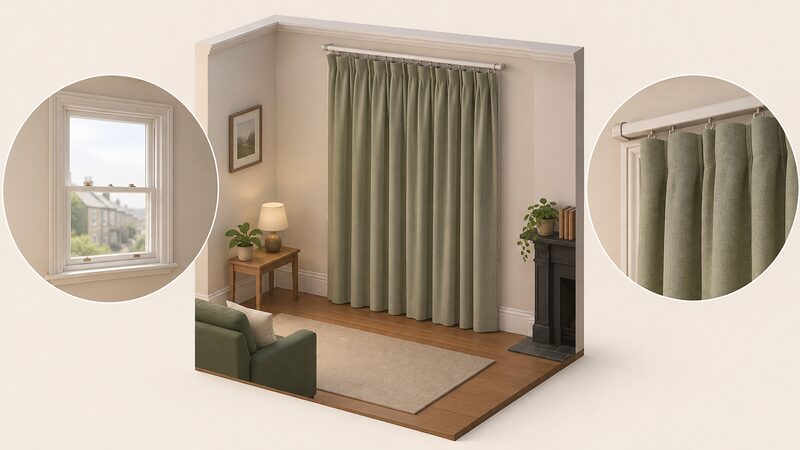
Windows are the weakest part of most walls thermally, and single glazing is the weakest window. Thick or thermal lined curtains help to keep draughts at bay, particularly with single glazing, but they should be opened during the day to let in sunshine and warmth12. That is the whole of the guidance, and it contains both the benefit and the condition: the curtain works as a barrier when closed, and as a solar gain device when open.
The mechanism is a layer of still air trapped between the curtain and the glass, plus a physical barrier to air movement at the window. A thermal lined curtain adds a second layer of fabric and a lining that reduces radiant loss. It is not equivalent to a second pane of glass, and no source here claims a saving figure for curtains, so none should be assumed.
The comparison with glazing upgrades is one of cost and disruption rather than performance. Double glazing works by trapping air between two panes of glass, creating an insulating barrier that reduces heat loss, noise and condensation18. That is a permanent, factory-made unit fitted into the frame, and it is a contractor job. A thermal curtain is a textile hung on a rail, and it is a householder job.
For a single glazed window, the cheapest measures are therefore the ones that address air movement and radiant loss without replacing the unit: draught stripping around the frame10, a thermal lined curtain12, and in some cases secondary glazing, which is a separate pane fitted inside the existing window. In Northern Ireland, replacing single glazed windows is a priority measure under the Affordable Warmth Scheme19, which indicates that the official view there is that replacement, not dressing, is the durable answer where funding allows.
Doing it yourself, or getting it done professionally
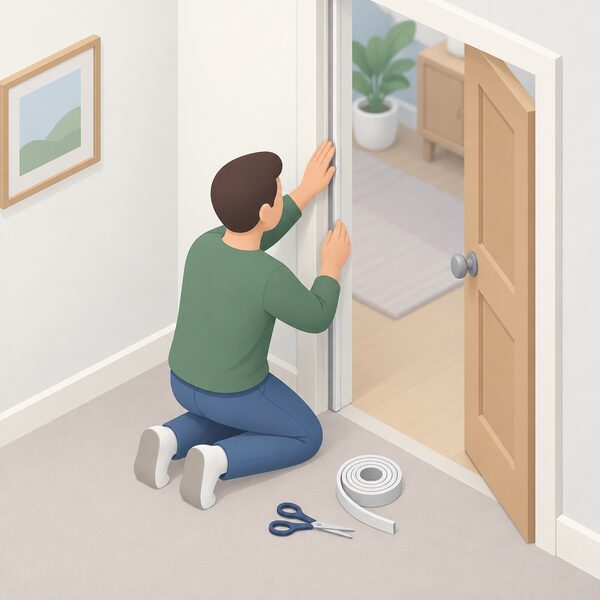
The dividing line is straightforward for most of these measures. Loft insulation is a simple and effective way to reduce heating bills and can be done yourself21. Draught stripping is sold in DIY shops and fitted by hand12. Radiator reflector panels are cut to size and slid behind a radiator3. Chimney balloons and woollen chimney insulation can be installed by the householder12. Thermal curtains are hung on a rail12.
Professional work is needed where the measure involves the building fabric, the heating system or a safety-critical appliance. Cavity wall insulation is blown into the cavity from the outside, and disruption to the householder is minimal22, but it is not a DIY job: the wall should be assessed before installation to ensure its condition, construction type and suitability23. Internal wall insulation has its own technical requirement, with the preferred technique in most cases being to install vapour permeable, capillary active and hygroscopic insulation directly against a wall that has been prepared and has no residual impermeable finishes24. That is a specification a householder is unlikely to meet without guidance.
The consent position differs by measure and by building. Planning permission for internal wall insulation is usually not required, although both planning and listed building consent may be required in some situations24. For listed buildings, low impact energy saving measures such as draught proofing, loft insulation and boiler upgrades can be covered with a Certificate of Lawfulness5. Solar panels and equipment on residential buildings may be permitted development with no need to apply for planning permission25, which is relevant where a household is considering the larger measures alongside the cheap ones.
For a rented home, the landlord's duties cover several of these measures directly: insulating roof spaces, replacing draughty ill-fitting windows and doors, draught proofing external doors and windows, insulating exposed water pipes and fitting the hot water tank with a good quality insulation jacket9. A tenant considering reflector panels or curtains should note that clip-on panels are easy to install and remove3, which makes them the least contentious option.
Grants and support for low-cost insulation
Grant funding for insulation is largely aimed at the fabric measures rather than the DIY ones, but draught proofing does appear in some schemes. The Warm Homes: Local Grant funds insulation, energy-efficient heating systems and renewable energy installations26. Its eligible measures include external or internal wall insulation27, and other measures may be recommended such as energy-efficient lighting, underfloor insulation, high-temperature heat pumps, solar thermal or direct electric heaters28. The full energy performance improvements list covers cavity, external, internal, loft, room-in-roof, flat roof, under floor and park home insulation, draughtproofing, hot water cylinder insulation, low energy lighting, heating controls, solar PV, battery storage, and double or triple glazing and energy efficient doors only in rare cases20.
ECO funds insulation, for example loft, roofs and walls29. In Northern Ireland, there are grants for householders to make their homes more energy efficient by installing loft, cavity wall insulation and a new boiler or heating system30, and the Affordable Warmth Scheme lists replacing single glazed windows as a priority measure19.
| Nation | Scheme | What it covers |
|---|---|---|
| England | Warm Homes: Local Grant | Insulation, heating systems, renewables; draughtproofing among eligible measures26 |
| England | ECO | Insulation including loft, roofs and walls29 |
| Northern Ireland | Affordable Warmth Scheme | Loft and cavity wall insulation, new boiler or heating system, single glazed window replacement30 |
| Great Britain | VAT reduced rate | Insulation on walls, floors, ceilings and lofts; draught stripping for windows and doors4 |
The VAT position is the one support that applies regardless of grant eligibility. Insulation on walls, floors, ceilings and lofts qualifies for a lower rate of VAT4, and draught stripping, for example insulation fixed around windows and doors, qualifies for the same lower rate7. Draught stripping for windows and doors is listed in legislation as an energy-saving material11, and the reduced rate applies to it7.
What grants do not generally cover is the DIY end of the list: reflector panels, thermal curtains, chimney balloons and the small sealing jobs. Those remain householder purchases, which is consistent with their low cost. The grant system is aimed at measures where the outlay is large enough to need support, and the cheap measures are cheap enough not to.
Sources30 cited
- Heat and Buildings Strategy: Strategic Environmental Assessment, Scottish Government, February 2021
- Quick tips to save energy, Energy Saving Trust, 2026
- Radiator reflector panels, Energy Saving Trust, 31 October 2025
- Energy-saving products: VAT, GOV.UK, 2026
- Making alterations to a listed building, Bristol City Council, 2026
- Energy efficiency advice and assessment, Bromley Council, 2026
- VAT Energy Saving Materials: VENSAV3010, HM Revenue and Customs, 30 September 2019
- Domestic private rented property minimum energy efficiency standard: landlord guidance, GOV.UK, 1 October 2017
- Minor Consequential Improvements: Part L Building Regulations, Parliament, December 2012
- VAT Energy Saving Materials: VENSAV3040, HM Revenue and Customs, 2026
- Finance Act 1994, Schedule 8, Part II, legislation.gov.uk, 2026
- Draught proofing your home, Smart Energy GB, 16 March 2026
- Guidance toolkit on building retrofit, Birmingham City Council, 2020
- Building regulations: energy efficiency, Planning Portal, 2026
- Building regulations: energy efficiency (Wales), Welsh Government, 2026
- Constructing a new roof, Welsh Government, 2026
- Building Regulations Part J: heat producing appliances, Welsh Government, January 2025
- Glazing, Planning Portal, 2026
- Affordable Warmth Scheme, Northern Ireland Housing Executive, 2026
- Warm Homes: Local Grant, Greater Manchester Combined Authority, 2026
- Loft insulation, Planning Portal, 2026
- Cavity wall insulation, nidirect, 2 September 2026
- Approved Document L Volume 1: consultation version, Welsh Government, August 2025
- Guide to the conversion of traditional buildings, Scottish Government, 10 August 2026
- Solar panels guidance, Islington Council, 2026
- Home and business grants, schemes and advice, East Hertfordshire District Council, 2026
- Apply for a Warm Homes Local Grant, Liverpool City Council, 2026
- Warm Homes Local Grant 2025 to 2028, Birmingham City Council, 24 June 2026
- ECO4 Flex: open, South Cambridgeshire District Council, 2026
- Home heating, Belfast City Council, 20 September 2026
 Quick Wins and No-Cost MeasuresThe measures that need little or no outlay: thermostat and flow temperature settings, heating controls, kettle and tumble dryer habits, appliance ratings and smart meter data.
 DIY or ProfessionalLoft insulation and draught-proofing are jobs most people can tackle, but anything electrical near a kitchen, bathroom or outdoors needs a registered electrician.
 DIY Air ConditioningExplains which air conditioning can be fitted without a refrigerant engineer, including portable, through-wall and pre-charged quick-connect split kits, and where the limits lie.
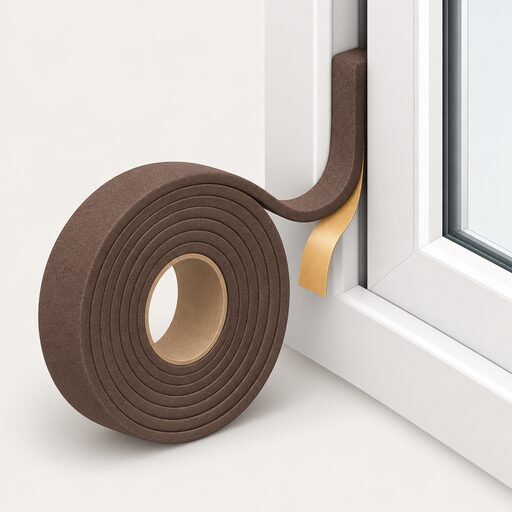 Draught-Proofing a HomeCovers sealing around windows, doors, floorboards, loft hatches, letterboxes and chimneys, and the products used for each.
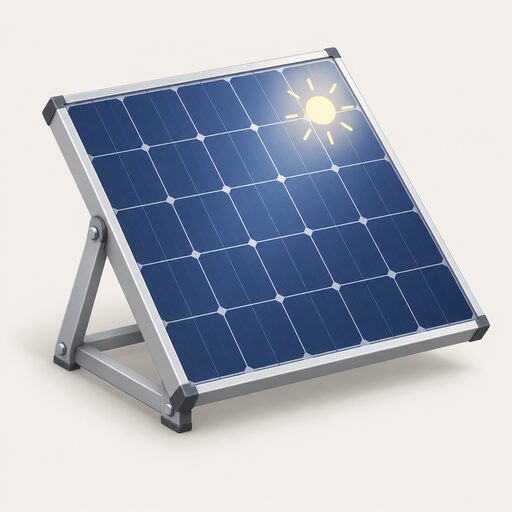 Cooling and Energy IndependenceExplains how passive measures, efficient cooling and on-site generation reduce a household's dependence on grid electricity in summer.
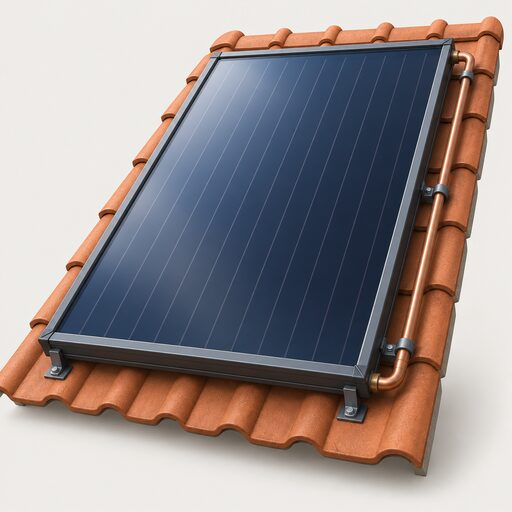 Heating and Energy IndependenceCan you heat your home without relying on gas or oil, and what would that take?