
In this guide
Replacing windows and doors is covered by the Building Regulations in every part of the UK, but the way compliance is recorded differs from most other building work. The work is a "controlled fitting", and the usual route is a registered installer who self-certifies it rather than a householder making a separate application1. Where an unregistered installer or a DIY installation is used, approval is sought from a building control body, which checks the work and issues a certificate of compliance if satisfied3.
The practical consequence is a piece of paper. Windows replaced since 1 April 2002 must be supported by a FENSA certificate or a building regulations certificate showing legal compliance, and that certificate is often requested during property sales5. FENSA was established in 2002 and operates as a government authorised competent person scheme for England and Wales, with CERTASS as the alternative registered scheme monitoring the same compliance2.
The standards themselves are set by Approved Document L. For an existing dwelling, the limiting standard for a window is a maximum U-value of 1.4 W/(m2·K), or Window Energy Rating Band B as a minimum7. New window installations need to meet the minimum standards for heat retention2. What follows sets out the two compliance routes, what each certificate proves, the energy and ventilation rules, the cases where listed building or planning rules take over, and what to do when a certificate cannot be found.
Do replacement windows need Building Regulations approval?
Replacement windows and doors are listed among the alterations covered by the Building Regulations, so the work is not exempt from the standards1. The question is not whether the rules apply but how compliance is demonstrated. In Northern Ireland the position is stated directly: replacement windows do not require a Building Control application, but the work of replacement must in all aspects meet any relevant requirements of the Regulations10. That is the pattern across the UK. The duty to comply is unconditional; the notification route is what varies.
Windows are treated as a "controlled fitting" under the Building Regulations, which is why the installation is not a minor job in regulatory terms2. A controlled fitting has to satisfy the applicable parts of the regulations, principally the energy efficiency requirements of Part L and the ventilation requirements of Part F. New openings carry a wider set of considerations: any new opening must comply with the Building Regulations, which may affect thermal heat loss, structure, ventilation and fire safety11.
There are limits to how far the regulations reach. Certain classes of new buildings and extensions of existing buildings do not need Building Regulations approval at all, and repairs, maintenance and minor improvements do not require an application12. Replacing a window is not in that category, because it is an alteration to the thermal envelope of the dwelling rather than maintenance of an existing element. Where a household is unsure whether a particular proposal falls inside or outside the regime, the official advice is to contact a building control body for advice14.
The distinction matters for energy independence because the window is part of the fabric that determines how much heat a home loses and therefore how much energy it must buy. A replacement window that meets the limiting standard reduces the heat escaping through that opening; one that does not meet it leaves the household paying for heat that leaves the building. The regulations exist to stop that loss being locked in for the life of the glazing.
Two routes to compliance: a registered installer or a Building Control Body
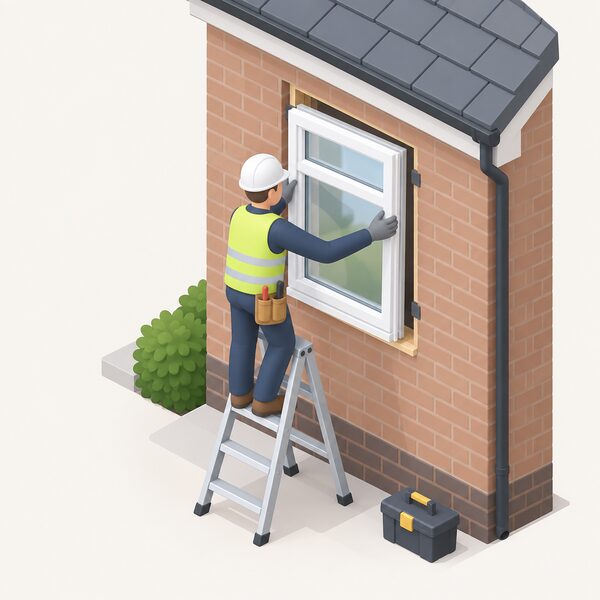
There are two ways to satisfy the regulations, and they lead to different paperwork.
The first is the registered installer route. A registered installer is approved to carry out the work to comply with building regulations without involving local authority building control, and a certificate is issued on completion3. The installer is a member of a competent person scheme, and scheme members must follow certain rules to comply with building regulations15. For replacement windows in England, a building control body does not need to be notified where the owner employs an installer registered with a relevant competent person scheme designated in the regulations7.
The second is the building control route. Where an unregistered installer or a DIY installation is used, approval can be sought from the relevant Building Control Body, either at the local authority or a registered building control approver, who will check compliance and issue a certificate of compliance if satisfied3. A building control body can be either the local authority to the site or a registered building control approver, and it is the body to contact for advice if the position is unclear14.
The two routes are not equivalent in effort. The registered installer route folds the compliance check into the installation and produces a certificate automatically. The building control route requires an application, an inspection regime and a fee, and the building control body determines the extent of inspection and testing needed to establish compliance8. Once it has decided that the work meets all the Building Regulations requirements, it issues a Building Regulations completion certificate if it is a building control authority, or a final certificate if it is a registered building control approver8.
FENSA: the government-backed Competent Person Scheme for England and Wales
FENSA, the Fenestration Self-Assessment Scheme, was established in 2002 and operates as a competent person scheme for window and door installations2. Its function is to self-certify window and door installations under the Building Regulations, and it is one of the government authorised schemes that monitor building regulation compliance for replacement windows and doors2.
Registration with FENSA carries obligations that run beyond the individual job. A company registered with FENSA can self-certify compliance and present the homeowner with a FENSA Certificate, but remains subject to regular independent inspections for building regulations compliance9. Inspections are normally carried out on 1% of each business's installations, subject to a minimum of 2 per year and a maximum of 100 installations inspected per business per year9. The scheme reports that the majority of installations inspected do meet the compliance criteria9.
Where a job fails, the consequences are set out firmly. FENSA states that it will always insist on the rectification of any job that is sub-standard of building regulations, and that failure to comply results in removal from the FENSA scheme with no exceptions9. Companies found to fail inspections are assessed more often, in line with guidance from the Communities and Local Government Department9. The scheme has taken action against poor practice a number of times, with installer prosecutions listed on the cowboy stoppers website, and it provides a Consumer Guide to Cowboys containing hints and tips to recognise a cowboy9.
For a household, the scheme's value is that the compliance check happens without the household having to commission it. The installer carries the regulatory duty and the certificate follows the job. That is the mechanism by which a replacement window installation becomes a recorded, traceable event rather than an undocumented alteration.

CERTASS: the alternative registered scheme
CERTASS is the other government authorised scheme operating in the same space. Window fitters should be registered with government authorised schemes such as FENSA or CERTASS, which monitor building regulation compliance for replacement windows and doors5. The two schemes perform the same regulatory function: a member installer self-certifies the installation and the household receives a certificate of compliance for its records and future home sales2.
The consumer protections attached to scheme membership are similar in kind. CERTASS membership provides access to insurance-backed guarantees for financial protection2. FENSA membership carries an equivalent obligation: domestic glazing installers registered with a competent person scheme like FENSA are legally obliged to provide warranty insurance covering the installation should the company cease to trade within the life of the warranty6. For FENSA certificates issued after June 2014, the warranty is insured6.
The existence of two schemes matters for how a household checks an installer. Membership of either is the signal that the installer can self-certify; absence from both means the building control route applies. The schemes are not a quality ranking of one against the other, and neither is a guarantee of workmanship beyond the compliance and warranty obligations that membership imposes.
For a compliance question about a specific installation, the route is the same whichever scheme was used: contact a building control body to check the building regulations or apply for approval17. That body can be the local authority for the site or a registered building control approver16.
What a FENSA or CERTASS certificate proves and why you keep it

The certificate is evidence that the installation complied with the Building Regulations at the time it was carried out. Windows replaced since 1 April 2002 must be supported by a FENSA certificate or a building regulations certificate to show legal compliance with building regulations5. Only a FENSA Approved Installer can obtain a FENSA certificate, which is why the document cannot be produced retrospectively by anyone other than the scheme6.
What the certificate does not do is certify the quality of the installation beyond the regulatory requirements, or extend the manufacturer's warranty on the glazing units. It records compliance, and it carries the warranty insurance obligation described above. The certificate also gives the household a dated record of when the glazing was installed, which is useful when the units themselves reach the end of their service life.
The certificate's second life is at sale. When selling a home, the buyer and their solicitor will need proof that any newly installed windows and doors were fitted to the required standards6. A FENSA certificate is often requested during property sales2. A CERTASS certificate serves the same purpose, described as a certificate of compliance for records and future home sales2.
"When selling your home, the buyer and their solicitor will need proof that any newly installed windows and doors were fitted to the required standards."
Keeping the certificate with the property papers, rather than with the household's own files, is the practical point. The document is about the building, not the owner, and it is the building that is sold.
Energy efficiency and ventilation rules your new windows must meet
The energy standard for a replacement window in an existing dwelling is expressed in two ways, and either satisfies the requirement. The limiting standard for a window is a maximum U-value of 1.4 W/(m2·K), or Window Energy Rating Band B as a minimum7. The same figure appears in the Welsh consultation version of Approved Document L, Volume 1, which gives 1.4 or minimum WER Band B18. New window installations need to meet the minimum standards for heat retention to help the UK meet its carbon reduction targets2.
| Element | Limiting standard, existing dwelling | Source |
|---|---|---|
| Window | 1.4 W/(m2·K) maximum, or WER Band B minimum | 7 |
| Roof window | 1.4 W/(m2·K) maximum, or WER Band B minimum | 18 |
The U-value and the Window Energy Rating are two ways of expressing the same performance requirement. A U-value measures heat loss through the element; a Window Energy Rating bands the whole window, including frame and glazing, on a scale where Band B is the minimum acceptable for replacement work. A household comparing quotations will see both figures quoted, and either can be used to demonstrate compliance.
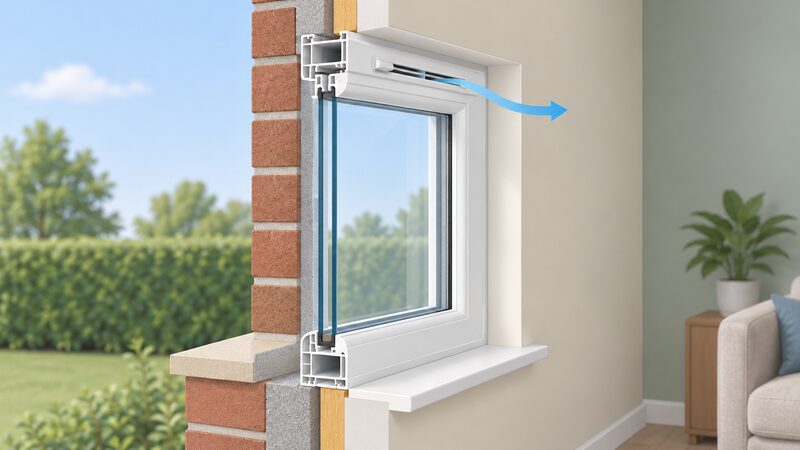
Ventilation is the second half of the requirement and the one most often overlooked. New openings must comply with building regulations, which may impact thermal heat loss, structure, ventilation and fire safety11. The reason is that a replacement window changes the air leakage characteristics of the room. Older windows often leaked air around the frame and through the sashes; a modern sealed unit does not, so the ventilation that the building previously received by accident has to be provided deliberately. This is the context in which trickle vents are specified, and it is assessed as part of the compliance check rather than as a separate application.
The energy efficiency requirements sit within a wider framework. Part 6 of the Building Regulations imposes additional specific requirements for energy efficiency, and the Approved Document L volumes set out how those requirements are met in practice18. For a household, the practical test is simple: the certificate that follows the installation is the evidence that the window met the standard, and the standard is the reason the window performs as it does.
Listed buildings and other cases where the rules differ
For most houses, replacing windows is a building regulations matter rather than a planning one. The installation of replacement windows to a single dwelling house does not generally need planning permission, except where a change of window frame material is proposed, such as timber to PVCu or the reverse19. For flats and maisonettes, the installation of replacement windows does not require planning permission so long as the replacement windows are identical like-for-like replacements in terms of appearance and material19. Where a single dwelling house is covered by an Article 4 Direction that removes permitted development rights for external alterations, planning permission for replacement windows may be required19.
Listed buildings are a different regime entirely. If a single dwelling house is a listed building, planning permission would be required for the installation of replacement windows, and Listed Building Consent would also be required for the installation of replacement windows and any internal works such as the installation of secondary glazing19. Once a building is listed, special planning controls apply and listed building consent is needed for works that affect it20. Replacement or double glazed windows or doors require listed building consent20.
The consent test is about fabric and appearance. A household will probably need either Listed Building Consent or a Certificate of Lawfulness if introducing new material to the building or removing original fabric, which includes changing windows and doors21. Listed building consent is likely needed for replacement windows, depending on the proposal details and the identified significance of the individual listed building, and new and replacement windows must match exactly the originals in their material, style, method of opening, internal and external details22. Introducing new materials to the property, such as insulation, and notable changes of colour to the exterior walls, doors or windows, also require consent23.
Different rules may apply if the property is in a listed building or a designated area11. Many proposals for works to a listed building may also require an application for planning permission or building regulation approval, so the two regimes can run in parallel20. For a household in a conservation area or a listed building, the compliance route for the glazing itself is unchanged, but the permission route is added on top.
Selling your home: proof of compliance for buyers and solicitors

The certificate becomes load-bearing at the point of sale. The buyer and their solicitor will need proof that any newly installed windows and doors were fitted to the required standards6. Windows replaced since 1 April 2002 must be supported by a FENSA certificate or a building regulations certificate to show legal compliance with building regulations5. A FENSA certificate is often requested during property sales, and a CERTASS certificate is issued for records and future home sales2.
Where the installation was done through building control rather than a scheme, the equivalent document is the completion certificate. Once the building control body has decided that the work meets all the Building Regulations requirements, it issues a Building Regulations completion certificate if it is a building control authority, or a final certificate if it is a registered building control approver8. That certificate performs the same evidential function as a scheme certificate.
The wider pattern in property transactions is that compliance documents are collected and passed on. For new dwellings, the homeowner documents include a signed copy of the Building Regulations England Part L compliance report and photographic evidence of the build quality7. The same logic applies to replacement windows in an existing home: the certificate is the record that the work was done to standard, and its absence is a question a buyer's solicitor will ask.
For a household planning to sell, the practical sequence is to locate the certificate before the sale begins rather than during it. If the installation was carried out by a scheme-registered installer, the certificate should have been issued at completion. If it cannot be found, the replacement route below applies.
Losing your certificate: how to get a replacement
A lost certificate is a recoverable problem. Even if a FENSA certificate is lost, a new one can be requested6. Because only a FENSA Approved Installer can obtain a FENSA certificate, the request normally runs through the scheme using the property address and the installation details6.
The position is less straightforward where the installation was never certified. If the work was done by an unregistered installer or as a DIY project and no building control application was made, there is no certificate to replace. The remedy is a retrospective application to a building control body, which will determine the extent of inspection and testing needed to establish compliance and, if satisfied, issue a certificate8. That is a slower and more uncertain process than producing an existing certificate, which is the argument for confirming the compliance route before work begins rather than after.
Where a certificate exists but the installer has since ceased trading, the warranty insurance obligation is the relevant protection. Domestic glazing installers registered with a competent person scheme like FENSA are legally obliged to provide warranty insurance covering the installation should the company cease to trade within the life of the warranty, and for FENSA certificates issued after June 2014 the warranty is insured6.
For a household weighing up a window replacement, the compliance question is settled before the first quotation is accepted. The two routes, the certificate each produces, and the energy and ventilation standards the windows must meet are all fixed in advance. What the household controls is which route it takes, and whether the paperwork ends up in the property file where the next buyer's solicitor will look for it.
Sources23 cited
- Building regulations approval, GOV.UK, 2026
- Window installations: guide to regulations, The CPA, 2025
- Building regulations for doors and windows, Planning Portal, 2026
- Building regulations: doors and windows, Welsh Government, 2026
- Replacing double glazing, The CPA, 2023
- What to check before appointing an installer, FENSA, 2026
- Approved Document L, Volume 1: Dwellings, 2021 edition incorporating 2023 amendments, HM Government, 2023
- Approved Document L, Volume 1: Dwellings, HM Government, 2026
- Cowboy conundrums, FENSA, 2026
- Building Control FAQs, Building Control Northern Ireland, 2026
- What are the rules around fitting a log burner, Planning Portal, 2026
- Building regulations: energy efficiency for extensions, Planning Portal, 2026
- Building regulations: electrics, Welsh Government, 2026
- Building regulations guidance: Part J, heat producing appliances, Welsh Government, 2025
- Building regulations: competent person schemes, GOV.UK, 2026
- Planning permission and building regulations approval, Planning Portal, 2026
- Building regulations approval: how to apply, GOV.UK, 2026
- Approved Document L, Volume 1: consultation version, Welsh Government, 2025
- Planning frequently asked questions, London Borough of Hammersmith and Fulham, 2026
- Planning and listed building consent requirements, West Northamptonshire Council, 2023
- Making alterations to a listed building, Bristol City Council, 2026
- Improving energy saving and sustainability in conservation areas and listed buildings, Brighton and Hove City Council, 2026
- When consent is required, Buckinghamshire Council, 2026
 Building Regs Part L InsulationAdding insulation or replacing windows?
 Certificates You Should ReceiveAfter work like solar panels or a new boiler, what paperwork should you actually be handed, and by when?
 Selling a Home With Energy KitCovers the paperwork a sale requires when a home has solar panels, a heat pump, insulation or a leased roof, and how warranties, export payments and guarantees transfer.
 Paperwork to KeepThe certificates, guarantees and records that follow each type of energy work, why they matter at sale, for grants and for export payments, and where replacements can be obtained.
 Insulation StandardsHow do you know your insulation was fitted to a proper standard, and who backs the guarantee if the installer disappears?
 EPC Regulations and ReformSelling or renting out a home means you need an Energy Performance Certificate.