

In this comparison
FENSA and Certass do the same job by different routes. Both are competent person schemes for replacement windows, doors and roof lights, and both let a registered installer self-certify that the work complies with the Building Regulations instead of the household applying to local authority building control. FENSA is described as a government-backed Competent Person Scheme for the replacement of windows, doors and roof lights, and operates in England and Wales1. Certass runs a scheme covering glazing: replacement windows, doors, rooflights and roof windows for homes or commercial properties3.
The practical difference for a household is small. What matters is that the installer is registered with one of them, that a certificate of compliance arrives afterwards, and that the warranty behind the work is insured. Windows replaced since 1 April 2002 must be supported by a FENSA certificate or a building regulations certificate to show legal compliance, and that paperwork is routinely requested during property sales4.
Where the two schemes diverge is in how they check quality after the event, and in the wording of the document issued. Certass issues a Building Regulations Compliance Certificate; FENSA issues a FENSA certificate. Both are evidence of the same underlying compliance, and both are accepted at the point of sale6.
What Competent Person Schemes do for window and door installations
Competent Person Schemes were introduced by the government to allow tradespeople to self-certify that their work complies with the Building Regulations1. For glazing, that means an installer registered with a scheme can sign off a replacement window or door installation without the household submitting a building notice or waiting for a local authority inspection. The scheme covers certain improvements to a home and building work such as replacing windows and doors11.
The scope is deliberately narrow. A competent person scheme allows an installer to self-certify that their work complies with all the local Building Regulations, without a building notice or local authority inspection, and the Certass scheme covers glazing specifically: replacement windows, doors, rooflights and roof windows for homes or commercial properties3. It does not cover structural alterations, and it does not replace planning permission where that is separately required.
The same mechanism is used across the rest of home energy work. Installers who are members of a relevant competent person scheme can self certify certain types of building work, including the installation of solar PV, avoiding the need to seek separate building regulations approval12. For heat pumps, installers can self-certify if they are part of a Competent Person Scheme, which means no separate building regulations approval is needed for the work13. The pattern is consistent: registration transfers the compliance check from the household to the installer, and the scheme audits the installer rather than the job.
For a household, the effect on energy independence is indirect but real. A certified installation is one that meets the energy performance requirements attached to replacement glazing, which is what makes the improvement count towards a warmer, less leaky home. The dependence that remains is on the scheme and the installer's continued registration: the certificate is only as good as the register entry behind it, and the household has no independent way to verify the installation standard beyond the paperwork and the audit trail.

FENSA and Certass: two recognised bodies for the same job
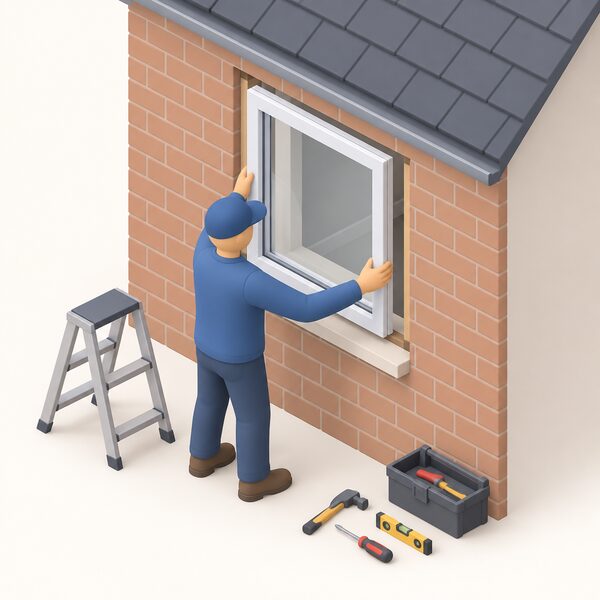
Both bodies are recognised for windows and doors registration, and both hold their members to high standards, performing regular audits to ensure ongoing competence and quality workmanship14. FENSA was established in 200214. Window fitters should be registered with government authorised schemes such as FENSA or CERTASS, which monitor building regulation compliance for replacement windows and doors4.
The two schemes are not the only route. Membership of schemes like FENSA and CERTASS is described as a mark of legitimacy, alongside accredited professionals who win work through transparent pricing, demonstrable compliance with building regulations and customer protection via insurance-backed guarantees15. That framing matters for a household comparing quotes: the scheme badge is a starting filter, not a quality ranking.
| FENSA | Certass | |
|---|---|---|
| Scheme type | Government-backed Competent Person Scheme for replacement windows, doors and roof lights2 | Competent Person Scheme covering glazing: replacement windows, doors, rooflights and roof windows3 |
| Established | 200214 | Not stated in the sources reviewed |
| Territorial extent | England and Wales2 | Not stated in the sources reviewed |
| Certificate issued | FENSA certificate10 | Building Regulations Compliance Certificate6 |
| Quality checking | Regular independent inspections; companies that fail inspections are assessed more often9 | Periodic random assessments and consumer contact8 |
| Warranty insurance | Insured for all FENSA certificates issued after June 201410 | Access to insurance-backed guarantees for financial protection14 |
Neither scheme publishes a household-facing price for registration, because registration is paid by the installer, not the homeowner. Installation prices are installer-quoted, and no published figure is available.
What registration means for installers: Building Regulations self-certification
Installers registered with FENSA or CERTASS are assessed against Building Regulations standards and are authorised to self-certify that their work is compliant16. Registration is not automatic: FENSA registered installers have made the effort to comply with the eligibility criteria of FENSA registration, have been vetted and are regularly and independently assessed9. A FENSA Approved Installer can self-certify and present the required certificate upon completion10.
The self-certification route is the same mechanism used for other notifiable domestic work. A registrant of a competent person scheme can sign the installation off themselves and notify the local authority, meeting building regulations17. Registered installers can self-certify that their work complies with building regulations and will give you a certificate of compliance when the work is complete, so that no building notice needs to be submitted18. The same principle appears in scheme rules for grant-funded work: if the installer is part of a competent person scheme like MCS, NICEIC, CIGA, or Stroma, they can self-certify their work and will not need to get building regulations approval from the council19.
Registration also carries obligations. Domestic glazing installers registered with a competent person scheme like FENSA are legally obliged to provide warranty insurance covering the installation should the company cease to trade within the life of the warranty9. That obligation is the reason the certificate and the guarantee travel together.
FENSA monitors compliance of Approved Installer installations against building regulations, and states that the majority of installations inspected do meet the compliance criteria9. Where a company fails inspection, it is assessed more often, in line with guidance from the Communities and Local Government Department8. The audit regime is therefore weighted towards installers with a poor record rather than applied evenly.
The certificate of compliance: what you receive and why it matters for home sales
Certass issues a certificate of compliance for your records and future home sales14. FENSA issues a FENSA certificate, given by FENSA Approved Installers once an installation has been completed, which demonstrates that the windows and doors were fitted in compliance with Building Regulations and were installed using energy efficient products20. A FENSA certificate is often requested during property sales4.
The document has a second layer where energy-rated products are used. A BFRC Homeowner Certificate shows the product ordered and its energy rating, the date the product was installed and the name of the FENSA Approved Installer who installed it20. That is the piece of paper that ties a specific window to a specific energy rating, which matters if a future buyer or assessor wants to know what was fitted.
The same logic applies to other notifiable home energy work. A certificate of compliance is issued when the work is complete so that no building notice needs to be submitted18. For solid fuel installations, the information can be required to validate home insurance and will be required in any home-selling process21. In Northern Ireland, a stove installation produces a Building Regulations Completion Certificate, described as an important document when it comes to selling your property or for insurance purposes22.
Certification is described as a legal requirement when selling your home, and its absence can complicate or delay a property transaction23. When selling your home, the buyer and their solicitor will need proof that any newly installed windows and doors were fitted to the required standards10. If the certificate is lost, it can be replaced: even if you lose your FENSA certificate, you can request a new one10.

Insurance-backed guarantees: financial protection after the work is done
An Insurance Backed Guarantee is an insurance policy that backs the original guarantee given by a contractor24. Subject to the policy terms and conditions, it provides protection in the event your installer ceases to trade and cannot honour the terms of their written guarantee25. Competent person schemes have insurance-backed warranties and complaints procedures if there is a problem with the work1.
The obligation on glazing installers is specific. Domestic glazing installers registered with a competent person scheme like FENSA are legally obliged to provide warranty insurance covering the installation should the company cease to trade within the life of the warranty9. FENSA states that warranty is insured for all FENSA certificates issued after June 201410. Certass describes access to insurance-backed guarantees for financial protection as part of its offer14.
What happens on a valid claim is set out by the guarantee providers. If your installer provides you with an Insurance Backed Guarantee and then ceases to trade, the insurer will honour the terms of the guarantee issued by your installer, in accordance with the terms and conditions of the policy. The insurer will send qualified tradespeople to assess the issue and arrange for the remedial work to be carried out if the claim is valid25. Cover will last for the maximum period provided on the policy issued, so if a policy is purchased for a lesser period than the guarantee provided, the cover lasts for the maximum period provided24.
Two consumer protections sit behind these policies: access to the Financial Ombudsman Service and access to the Financial Services Compensation Scheme25. Comparable arrangements exist elsewhere in home energy work. Under the Trusted Payments framework, an insurance backed warranty on the work runs for three months while the job is running and twenty four months after it is finished, underwritten by a fully authorised, A-rated insurer26. In the MCS scheme, an Insurance Backed Guarantee provides a consumer with cover for an installation in the event that their MCS certified contractor ceases to trade during the term of the guarantee, and the guarantee must be insured to ensure that the workmanship guarantee will be honoured if the company ceases to trade27.

How Certass checks quality: random assessments and consumer contact
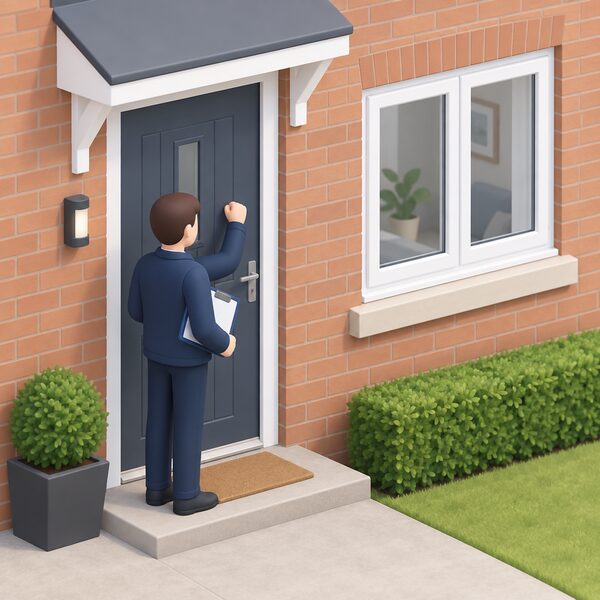
Certass carries out periodic random assessments and contacts consumers of registered installations to inspect completed work8. The contact can arrive without warning: auditors may reach out to consumers via phone, text, email, or by knocking on their door if they are in the vicinity8. Auditors will have full details of the installation to validate their identity8.
The consumer-facing document carries a warning of its own. The front page of the Building Regulation Compliance Certificate states in bold text: "You may be contacted by a Certass Auditor to inspect your installation as part of our quality assurance processes……"8. If any findings are reported, the household will be contacted to resolve any issues or provide feedback8. Members who have not registered any installations are contacted directly so that Certass can conduct an in-progress inspection of work currently being undertaken8.
The design is a check on the installer rather than on the household. Because the scheme samples completed jobs and speaks to the people who commissioned them, the audit tests what was actually built, not what was recorded. That is a stronger signal than a paper trail alone, and it is the main structural difference between the two schemes as described in their own published material: FENSA describes regular independent inspections with more frequent assessment for companies that fail8, while Certass describes random sampling plus direct consumer contact8.
For a household, the practical implication is that a knock on the door from an auditor is normal and not a sign that anything is wrong. The auditor already holds the installation details, and the visit is part of the scheme's assurance process rather than a complaint investigation.
Choosing between FENSA and Certass: what actually differs for a household
For most households the choice is not made directly. The installer holds the registration, and the household receives whichever certificate that registration produces. What differs is the paperwork and the audit method, not the legal effect: both schemes certify compliance with the Building Regulations, and both are accepted as evidence at the point of sale4.
The practical checks are the same whichever scheme is involved. Ask family and friends who have used installers about their satisfaction and whether they got a FENSA certificate10. Get at least three quotes and check you are being quoted like for like9. Get quotes, timeframes and the fact that you will get a FENSA certificate all in writing, with a proper written contract and agreed completion date10. Check the warranty and insurance cover9. Broader consumer guidance recommends comparing at least three quotes, ideally from accredited installers (FENSA, CERTASS, or MCS), insisting on written quotes and guarantees, checking accreditation and looking for insurance-backed guarantees15.
One point of confusion is worth settling. Only a FENSA Approved Installer can get you a FENSA certificate10. That does not make a FENSA certificate the only proof of compliance: the underlying document is a certificate of compliance with the Building Regulations, and a building regulations certificate is named alongside a FENSA certificate as the evidence required for windows replaced since 1 April 20024. A household that receives a Building Regulations Compliance Certificate from a Certass registered installer holds the same proof of legal compliance, issued under a different scheme's name.
The dependence that remains is on the register. A certificate proves compliance at the time of installation and identifies who did the work; it does not guarantee the installer will still exist when a fault appears. That risk is what the insurance-backed guarantee is for, and it is why the guarantee policy should be kept with the certificate.
Sources27 cited
- Use a competent person scheme, GOV.UK, 2026-09-17
- Energy efficient glazing and high performance external doors, Centre for Sustainable Energy, 2026-06
- What is a Competent Person Scheme?, Certass, 2018-02-05
- Replacing double glazing, The Consumer Protection Association, 2023-08-02
- Window installations: guide to regulations, The Consumer Protection Association, 2025-07-14
- Building Regulations explained, Certass, 2018-05-17
- What is a composite door, FENSA, 2026-09-20
- Certass compliance and quality assurance, Certass, 2025-04-23
- Cowboy conundrums, FENSA, 2026-09-20
- FENSA Safestyle FAQs for homeowners, FENSA, 2026-09-20
- Building Regulations general information, Planning Portal, 2018-05-17
- Solar photovoltaics and planning in conservation areas, West Suffolk Council, 2026-09-17
- Find a heat pump installer, GOV.UK, 2022-07-05
- Spotting rogue traders, The Consumer Protection Association, 2025-12-09
- Avoid hard selling in home improvement, The Consumer Protection Association, 2025-09-03
- Energy efficient windows and doors, The Consumer Protection Association, 2026-03-31
- 6 log burner rules, HETAS, 2026
- Installing solar and saving energy, Energy Saving Trust, 2025-04-03
- ECO4 Flex, South Cambridgeshire District Council, 2026-09-17
- The importance of BFRC energy rated windows and doors, FENSA, 2026-09-20
- Certificates of compliance, HETAS, 2026-03-31
- Stove guidance for householders, Building Control Northern Ireland, 2015-11
- Energy efficient home improvements, The Consumer Protection Association, 2026-05-07
- Insurance backed guarantee products, MCS, 2026-05-13
- Insurance backed guarantees, Flexi-Orb, 2026-02-25
- Trusted Payments: paying for home improvements, Chartered Trading Standards Institute, 2026-09-20
- What to check before appointing an installer, FENSA, 2026-09-20
 Replacement Window RulesWho signs off replacement windows so they meet building rules?
 Competent Person SchemesIf a tradesperson says they can sign off their own work, how do you know they are genuinely registered?
 Insulation StandardsHow do you know your insulation was fitted to a proper standard, and who backs the guarantee if the installer disappears?
 Using an Installer in WalesExplains how installer registration, competent person schemes and building control notification apply in Wales and where Welsh rules diverge.
 Finding an Insulation InstallerHow to find, verify and check an insulation, glazing or ventilation installer in the UK: the registration schemes, trade bodies and guarantee arrangements that cover the work, how to compare quotes, what a written specification should state, and how complaints and disputes are handled.
 Checking an InstallerBefore you sign anything, how do you know your installer is genuine?