In this guide
Safestyle UK went into administration on 30 October 2023, and FENSA suspended the company as a FENSA Approved Installer on the same day1. The company has ceased to trade, which means there is no trading entity left to honour its own workmanship guarantee, no customer service line and no installer to send back to a faulty window1.
What survives the collapse is narrower than most owners expect. Work completed before 30 October 2023 and registered with FENSA remains unaffected: the certificate still stands, with its compliance statement and its insurance-backed guarantee1. That insurance-backed guarantee, where one exists, is now the main route for repairs, because the insurer rather than the installer carries the obligation1.
The practical position for a household is that the glazing itself keeps working, but the protection around it has narrowed to a policy document and a certificate. This page sets out what Safestyle sold, what the guarantee is now worth, how FENSA approval and certification interact, and what the collapse says about buying from any firm in administration.
Safestyle UK in administration: what it means for a household
Administration is not the same as a warranty claim. When a glazing company stops trading, the workmanship guarantee it issued becomes a claim against a company that no longer exists, and the practical value of that document falls away. FENSA states plainly that where a company has gone into administration or is no longer trading, it cannot assist with contractual matters, payments or non-installations1. That removes the scheme body as a route for the things owners most often want: a refund, a completion, or a repair the installer should have done.
What remains is the insurance-backed guarantee. Domestic glazing installers registered with a competent person scheme such as FENSA are legally obliged to provide warranty insurance covering the installation should the company cease to trade within the life of the warranty3. That obligation is what turns a worthless guarantee into a live policy, and it is why the paperwork matters more than the badge on the van.
For a household, the collapse also removes the ordinary escalation path. There is no installer to call back, no service department and no complaints line. The administrator handles customer enquiries by email at safestylecustomers@interpathadvisory.com1. Refund claims sit with the administrator, and where payment was made by credit card, a Section 75 claim runs through the credit provider instead1.
The wider lesson is about dependence. A window installation is a one-off purchase with a long tail of guarantee, and the household's protection depends on a third party, an insurer or a scheme, outliving the firm that did the work. Where that third party exists, the household is insulated from the collapse. Where it does not, the household carries the risk.
What Safestyle sold and who bought from it
Safestyle was one of the national double glazing names, alongside Anglian and Everest, and all three are owned by the same parent company4. That ownership structure matters to how the collapse is read: a national brand with a shared parent is not the same as a local firm, and the failure of one trading entity does not automatically mean the others stop trading.
The product itself is ordinary domestic glazing. Double-glazed windows and skylights are sold in uPVC and white-painted timber, with brands including Crystal and Jeld-Wen and Keylite skylight windows available through trade suppliers4. The household buying from a national installer is buying the same class of product that a local fitter would supply, with the difference sitting in the sales process, the installation and the guarantee rather than in the glass.
That is the point worth holding on to. The windows Safestyle fitted are standard units, and standard units can be repaired or replaced by any competent glazing firm. The failure is a company failure, not a product failure, and the physical installation does not become unusable because the installer has gone.
Your guarantee after the collapse: is it still worth anything?

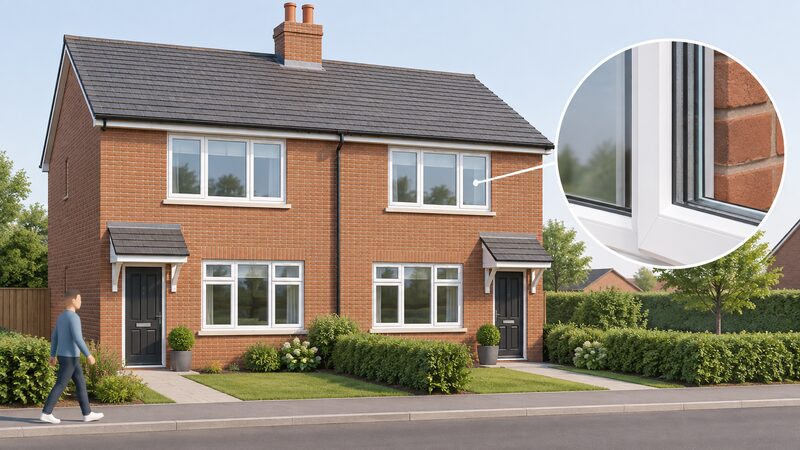
The company's own guarantee is worth very little now. Safestyle has ceased to trade, and a guarantee is only as good as the entity standing behind it1. A manufacturer's warranty or guarantee is a different thing and should still be valid, because it is issued by the maker of the product rather than the installer2. Owners should separate the two documents: the installer's workmanship guarantee, which has failed with the company, and any product warranty from the window or hardware manufacturer, which may not have.
Registration is the detail that catches people out. Where a guarantee requires registration and that step was never completed, the guarantee may not be valid, and the advice is to look for a contact number on the guarantee and get in touch2. That applies to manufacturer warranties as much as to installer schemes, and it is the first thing to check before assuming cover exists.
Where an insurance-backed guarantee is in place, the position is different. The insurer honours the terms of the guarantee issued by the installer, in line with the policy terms and conditions, and sends qualified tradespeople to assess the issue and arrange remedial work if the claim is valid5. That is the mechanism that survives a collapse, and it is why the policy document, not the glossy guarantee certificate, is the paper that matters.
FENSA approval suspended: what that means for your paperwork
FENSA suspended Safestyle as a FENSA Approved Installer on 30 October 2023, the same day the administration was announced1. The suspension affects the company's ability to register new work, not the certificates already issued. Any work completed before that date and registered with FENSA remains unaffected, and the certificate still carries its compliance statement and insurance-backed guarantee1.
FENSA itself was established in 2002 and operates as a competent person scheme, allowing registered installers to self-certify window and door installations under the Building Regulations rather than submitting a separate building control application6. Installers registered with FENSA or CERTASS are assessed against Building Regulations standards and authorised to self-certify that their work is compliant7. Registration is not a formality: certification is a legal requirement when selling a home, and its absence can complicate or delay a property transaction7.
That is why the certificate matters even after the installer has gone. A FENSA certificate is issued by the chosen installer, and a replacement can be requested if the original is lost8. Owners who never received one, or who cannot find it, should treat that as a priority, because the certificate is the evidence that the installation complied with the Building Regulations at the time.
| Document | Status after the collapse | What it is for |
|---|---|---|
| FENSA certificate, pre-30 October 2023 | Unaffected, still issued with compliance statement and IBG1 | Proof of Building Regulations compliance on sale |
| Installer workmanship guarantee | No trading entity to honour it1 | Repairs within the guarantee term |
| Insurance-backed guarantee | Live, subject to policy terms5 | Repairs where the installer has ceased to trade |
| Manufacturer's product warranty | Should still be valid2 | Faults in the product itself |
Options for owners: insurance-backed guarantees and the ombudsman route

An insurance-backed guarantee is an insurance policy taken out so that the guarantee or warranty remains valid if the trader or seller goes out of business2. Its purpose is protection in the event the installer ceases to trade and cannot honour the terms of their written guarantee, and subject to the policy terms the insurer will honour those terms, send qualified tradespeople to assess the issue and arrange remedial work if the claim is valid5. Competent person schemes have insurance-backed warranties and complaints procedures if there is a problem with the work9.
Where the guarantee is backed by an insurer, disputes about the policy can go to the Financial Ombudsman Service, and insurance-backed guarantee products also carry access to the Financial Services Compensation Scheme5. That is a different route from the Energy Ombudsman, which covers travel, retail, insurance, employment, financial products and banking rather than glazing installations10.
The direction of travel in consumer protection is towards stronger redress in home upgrade work. A government consultation proposes a single complaints and case-management function to oversee remediation processes and outcomes, with an independent ombudsman as a final safeguard for unresolved disputes11. That is a proposal, not a live scheme, and it does not help a Safestyle owner now.
For a household, the sequence is: find the insurance-backed guarantee policy, check whether the claim falls within its terms, and approach the insurer. Where no policy exists, the options narrow to the administrator for money and to independent trades for the physical work.
Repairs and spare parts after the company has gone
Repairs now run through the insurance-backed guarantee provider where one exists, because Safestyle has ceased to trade and FENSA cannot assist with contractual matters or non-installations1. Where a valid claim is made, the insurer sends qualified tradespeople to assess the issue and arrange remedial work5.
Where there is no insurance-backed cover, the household is in the ordinary position of any owner with an out-of-warranty window. Glazing units, hinges, handles and seals are standard components, and any competent glazing firm can source and fit them. The physical product does not depend on the original installer.
Some councils offer non-financial help in related housing work, including a schedule of repair works or signposting to partners such as care and repair services for applicants who do not qualify for grant funding12. That is a local authority route for housing renewal rather than a glazing-specific scheme, and availability varies by area.
Buying from a window firm in administration: lessons for householders
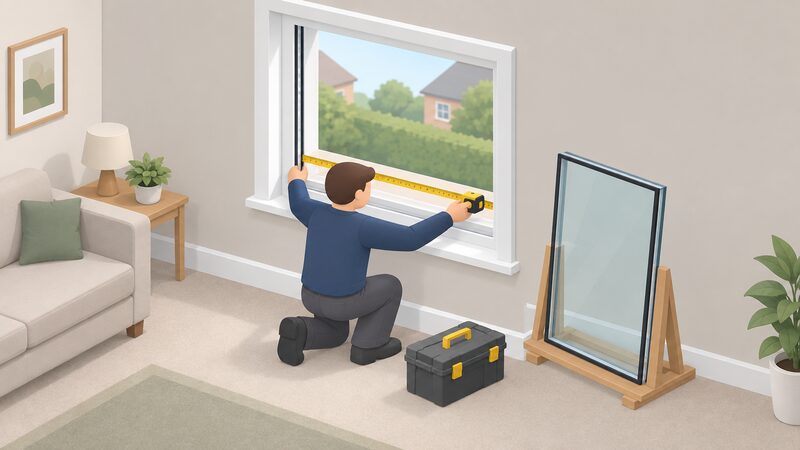
The Safestyle case is a worked example of what to check before signing with any glazing firm. The first is the insurance-backed guarantee, because that is the document that survives a collapse. Domestic glazing installers registered with a competent person scheme are legally obliged to provide warranty insurance covering the installation should the company cease to trade within the life of the warranty3. A household that asks for the policy, rather than the guarantee certificate, is checking the thing that matters.
The second is the written contract. The advice is to get quotes, timeframes and the fact that a FENSA certificate will be issued all in writing, with a proper written contract and an agreed completion date3. A verbal promise of a ten-year guarantee is worth nothing without the policy behind it.
The third is the payment method. Trusted payment routes for home improvements are designed to give the household a route back if the firm fails, and a fully authorised, A-rated insurer backing the warranty is part of what a reputable scheme provides13. Paying a large deposit in cash removes most of those routes.
The wider context is that consumer protection for home upgrade work is under active review, with proposals for a single complaints function and an independent ombudsman as a final safeguard11. Until that exists, the household's protection is the paperwork it holds: the insurance-backed guarantee, the FENSA certificate and the payment record. For how certification and building control work on a replacement installation, see replacement window rules, and for the wider fabric picture, double glazing and the full UK guide to insulation and glazing.
Sources14 cited
- FENSA Safestyle FAQs for homeowners, FENSA, 2026-09-20
- Claim using a warranty or guarantee, Citizens Advice, 2026-09-17
- What to check before appointing an installer, FENSA, 2026-09-20
- Types of double glazing, Which?, 2026-09-16
- Insurance backed guarantees for homeowners, Flexi-Orb, 2026-02-25
- Window installations: guide to regulations, The CPA, 2025-07-14
- Energy efficient windows and doors, The CPA, 2026-03-31
- Advantages of double glazed windows, FENSA, 2026-09-20
- Use a competent person scheme, GOV.UK, 2026-09-17
- Raise a dispute, Energy Ombudsman, 2026-09-19
- Reforming consumer protection for home upgrade schemes, GOV.UK, 2026-06-17
- Private sector housing renewal and adaptations, Swansea Council, 2026-09-20
- Trusted payments: paying for home improvements, Trading Standards, 2026-09-20
- Residents urged to stay safe as Oxfordshire expands support, Oxfordshire County Council, 2026-03-30