
In this guide
Everest was one of the national names in British double glazing, and it entered administration. That single fact changes what a householder can rely on: a workmanship guarantee given by a company that has failed is not the same asset as an insurance-backed policy, and a deposit paid to a failed company is not automatically recoverable from the company itself. Everest is now best understood as a brand with a corporate owner rather than a trading installer, and the practical questions for anyone who dealt with it are about paperwork, not about the company.
The ownership position is the starting point. Anglian, Everest and Safestyle are described as owned by the same parent company1. That is a statement about brand ownership, not a promise that installations, servicing or guarantees continue under the same terms. National double glazing has consolidated, and the failure of a large name is not an isolated event in home improvement.
For a household, the useful distinction is between three separate things that are often lumped together as "the guarantee": the installer's own workmanship warranty, an insurance-backed guarantee that sits with an insurer, and the manufacturer's warranty on the glazed units and hardware. Only the second is designed to survive the installer's failure, and only if it was taken out and the policy terms are met.
Everest entered administration: what it means for existing owners
Administration is a corporate insolvency process, and its effect on a householder depends entirely on which legal entity held the obligation. A guarantee is a contractual promise from a company. If that company is in administration, the promise has not been cancelled, but enforcing it against an insolvent company is a different matter from enforcing it against a solvent one. The practical consequence is that the value of a non-insurance-backed workmanship guarantee falls sharply, while an insurance-backed guarantee continues to be a claim on the insurer.
That is why the consumer protection architecture around glazing and retrofit matters more than the brand name. Certified members of a consumer protection scheme are required to provide an insurance-backed guarantee that backs the installer's workmanship warranty2. Only installers meeting strict standards receive certification2. Where a householder's Everest work was covered by such a policy, the route is to the insurer, not to the administrator.
Where the work was grant funded, there is a second layer of documentation. Under ECO4 Flex, recipients are advised that if a provider offers guarantees or warranties, they should make sure they get those documents after the installation5. That advice exists precisely because the documents are the only thing that survives a change in the company that did the work.
What Everest sold: windows, doors and conservatories
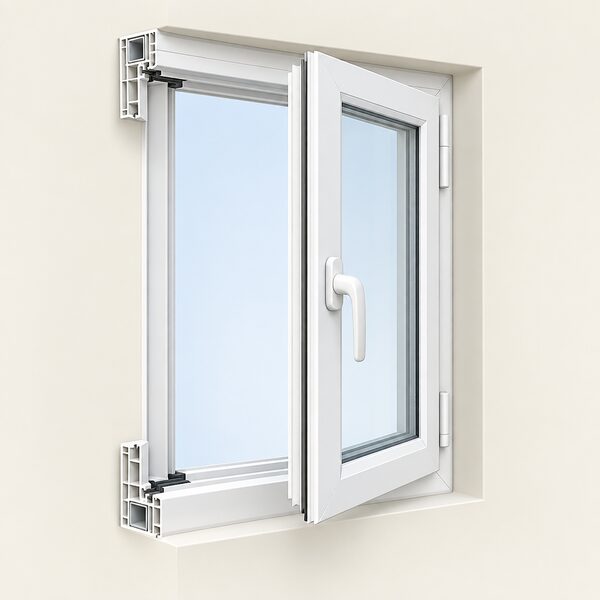
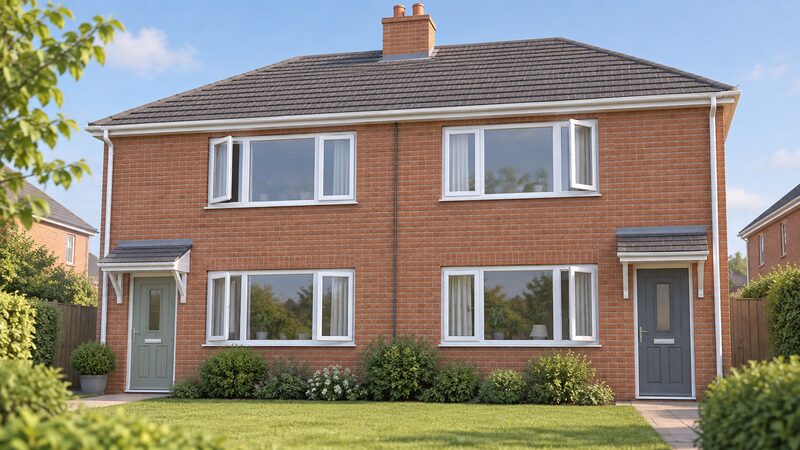
Everest's product range followed the standard national glazing model: uPVC and aluminium windows, entrance and patio doors, and conservatories. The materials matter for anyone now sourcing repairs, because the components are largely generic. Casement windows are often uPVC, but can also be made of timber and aluminium6. That range of frame materials is what determines how a window is repaired, how it is repainted or replaced, and what a replacement unit has to match.
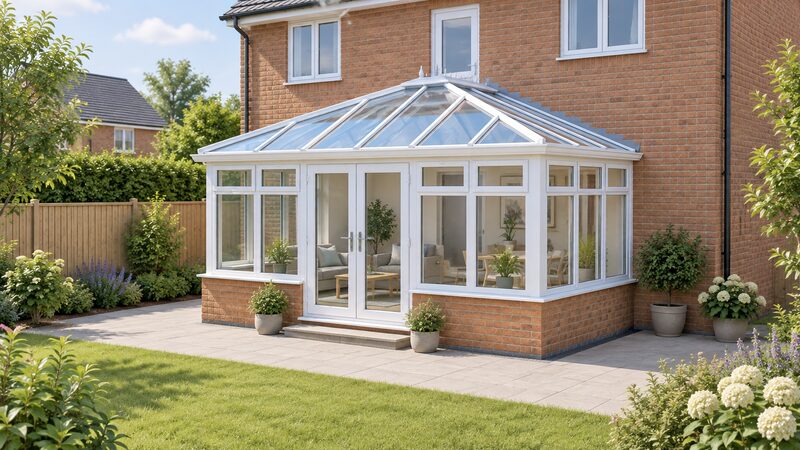
Conservatories carry their own regulatory position, and it is worth stating because it is frequently misunderstood. Where a conservatory has windows intended to help escape or rescue if there is a fire, that is particularly relevant to how the glazing and openings are specified7. A conservatory is not simply a glazed extension with no rules attached.
For older and protected properties, the constraint is different again. Original or historic windows should be retained unless they are beyond economic repair8. That is a firm position, and it means that for a listed building or a property in a conservation area, replacing Everest-era windows with modern equivalents is not automatically the right or permitted move. Householder planning consent covers dormer windows among other projects9, and the interaction between permitted development, conservation area rules and listed building consent is where most of the difficulty sits.
The wider market context is that windows are sold through several channels. Wickes sells double-glazed windows and roof windows from Euramax, Keylite and Velux, and French patio doors from Jeld-Wen and Jci1. B&Q sells double-glazed windows and sliding patio doors in both uPVC and white-finished timber, with brands including Velux, Site and Keylite6. Screwfix sells double-glazed windows and skylights in uPVC and white-painted timber, with Crystal and Jeld-Wen for standard double-glazed windows and Keylite skylight windows6. French doors open out like casement windows, and although both can open, one can be chosen to open at a time6.
The company's history and how it reached administration
The pattern behind Everest's failure is the pattern across home improvement: national brands with large sales operations, long installation lead times and heavy fixed costs, in a market where the customer pays a deposit up front and the work is completed weeks later. That structure puts the householder's money ahead of the householder's product, and it is why deposit protection exists as a separate product.
The wider corporate landscape shows how common failure is in the energy and home services sector. Orbit Energy and Entice Energy ceased trading10. Npower Business ceased trading, as the business has ceased trading11. These are energy suppliers rather than glazing firms, but the mechanism is the same: a company stops trading, and customers are left holding contracts, credits or guarantees that have to be pursued through a different route.
Ownership consolidation is the other half of the story. Anglian, Everest and Safestyle being owned by the same parent company1 means the brand names householders recognise are not necessarily separate businesses. A brand can outlive the company that traded under it, which is exactly why a guarantee needs to be traced to an entity rather than to a name on a brochure.
The retrofit sector has its own version of this problem. Currently used methodologies often produce generic recommendations, lacking solutions tailored to individual buildings and without sufficiently recognising critical factors like building condition, moisture risks, and long-term effectiveness12. That criticism is aimed at assessment methods, but it applies equally to how work is sold: a standard specification applied to a non-standard house, with the paperwork treated as an afterthought.
Warranties and guarantees after administration: what still holds
The single most useful thing a householder can do is find out whether the guarantee was insurance backed. If it was, the cover is a policy and the policy terms and conditions set out the details and level of protection of the cover2. That wording is deliberately open: an insurance-backed guarantee is not a blanket promise, and what it pays for depends on what was bought.
If it was not insurance backed, the position is weaker. The guarantee was a contractual promise from the trading company, and the company is in administration. There is no insurer standing behind it. This is the point at which many householders discover that the long guarantee they were sold was a workmanship warranty from a firm, not an insurance product.
Where the work was grant funded, the documentation route is clearer. Under ECO4 Flex, recipients are advised to obtain any guarantee or warranty documents after the installation5. Under the Boiler Upgrade Scheme, valid EPCs continue to be required at the point of application for properties where they already exist13, which shows the general direction of scheme administration: evidence at the point of application, and documents retained afterwards.
In Scotland, the building standards system places the issuing of warrants and acceptance certificates with verifiers, and on completion the owner or client must certify that the works have been constructed in accordance with the building warrant and the building regulations14. That is a different compliance architecture from England's, and it means a Scottish householder's evidence trail runs through the verifier and the completion certificate rather than through a self-certification scheme alone.
"Please check the insurance policy terms and conditions for the details and level of protection of your cover."
What to do if you had a deposit or an order in progress
Deposit and stage payment protection is the product designed for this exact scenario. It can cover deposit and stage payments if the installer stops trading before completing the installation, with completion by another installer or a refund, subject to policy terms3. Two conditions matter. The householder must have a contract with the installer named on the certificate3, and installers are expected to complete registration within seven days of contract signing3. Proof of the payments made to the installer is required3.
The general official guidance on paying for building work is blunt: not to pay in advance4. That advice exists because advance payment transfers risk to the householder. Where a deposit has already been paid to a company now in administration, the householder becomes an unsecured creditor for that sum unless a protection policy applies.
There is a statutory backdrop for deposits held in other contexts, which shows how the law treats deposit money generally. Under the relevant housing legislation, a court may order the deposit holder to repay the deposit to the applicant within 14 days of the order15, and in the landlord context the court must order payment of not less than the amount of the deposit and not more than three times the amount of the deposit within 14 days of the order15. Those provisions apply to tenancy deposits, not to glazing contracts, but they illustrate the principle that deposit money is treated as belonging to the payer.
Where a creditor or agent seeks to enforce during a moratorium period in an administration, the route is to obtain a warrant16. That is a legal process, and it is the point at which a householder with a significant sum at stake would need advice rather than a self-help route.

Servicing, repairs and spare parts for Everest windows
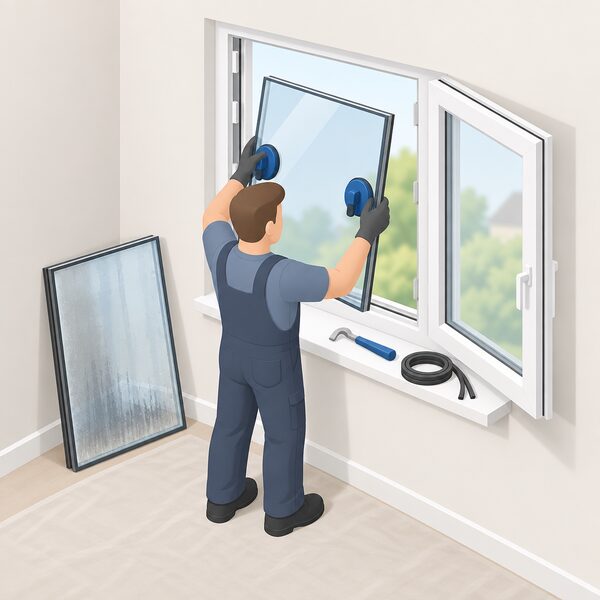
Everest windows are, in the great majority of cases, standard uPVC or aluminium units with standard hardware. That is good news for repairs, because it means the parts are not proprietary. Glazed units, hinges, friction stays, handles, locks, gaskets and trickle vents are all available from the general window trade, and a failed double glazed unit can be measured and replaced by a glazier without any involvement from the original installer.
The retail channels that supply windows and components are the same ones a householder can use for parts. Wickes sells double-glazed windows and roof windows from Euramax, Keylite and Velux1. B&Q sells double-glazed windows and sliding patio doors in both uPVC and white-finished timber, with brands including Velux, Site and Keylite6. Screwfix sells double-glazed windows and skylights in uPVC and white-painted timber, with Crystal and Jeld-Wen for standard double-glazed windows and Keylite skylight windows6. Casement windows are often uPVC, but can also be made of timber and aluminium6, which is the first thing to establish when matching a replacement.
For a householder in a protected building, repairs rather than replacement are usually the correct route. Original or historic windows should be retained unless they are beyond economic repair8. Where a window is beyond economic repair, the replacement has to satisfy the relevant building regulations, and in Scotland an unimproved single glazed window will not be able to comply with Section 6 requirements17. That is a hard constraint, not a preference.
Roof windows and rooflights have their own rules. Ceiling joists will not be able to take the load of any typical room used in a house18, which is why a rooflight or roof window installation is a structural question as much as a glazing one. Replacement roofs are normally a standard rated supply for VAT, and the replacement of a roof, even if it is thermally efficient, does not fall within the relief19.
Alternatives: choosing a new installer for window replacement
The lesson of a national firm's failure is that the installer's certification matters more than the brand on the van. Certified members of a consumer protection scheme are required to provide an insurance-backed guarantee that backs the installer's workmanship warranty2, and only installers meeting strict standards receive certification2. That is the check to make before signing anything.
Where work is grant funded, the installer route is specified. TrustMark accredited private installers will carry out the installation work5. Under the Boiler Upgrade Scheme, installers are required to pass on the full value of the grant as an upfront discount to the property owner20, and the scheme guidance places greater emphasis on installers' obligations to manage application accuracy, apply the grant discount upfront, and provide clear information where requested21. Those obligations exist because the failure mode is a householder paying full price and chasing a grant that never arrives.
For conversion and retrofit projects, the building fabric itself constrains what can be done. Existing external walls in conversion projects may well involve the addition of a new internal skin, possibly constructed of lightweight studwork, with careful planning of the detail at the foot of the new skin for damp-proofing and protection of new timbers22. Window replacement in that context is not a standalone job.
The general principle for any replacement component is that the energy performance of the new components should be assessed, recorded and given to the building owner23. That is the document that proves what was installed, and it is the same document a householder needs if a guarantee is ever disputed.
How Everest's collapse fits the wider pattern of home-improvement firms failing
Everest is not an outlier. The home improvement and energy services sector has a long record of companies that grew on national advertising, took deposits up front, and failed with work in progress. Orbit Energy and Entice Energy ceased trading10, and Npower Business ceased trading11. Different sectors, same outcome for the customer.
The structural reason is the deposit model. A householder pays before the work is done, which means the company holds the customer's money during the period when it is most exposed. Deposit and stage payment protection exists to cover deposit and stage payments if the installer stops trading before completing the installation3, but it only works if it was taken out and registered. The official advice not to pay in advance4 is the simplest mitigation available.
Consolidation compounds the confusion. Anglian, Everest and Safestyle being owned by the same parent company1 means a householder may be dealing with a brand that has changed hands more than once, and the entity that gave the guarantee may not be the entity that now owns the name. Tracing a guarantee means tracing the legal entity on the certificate.
For a household's energy independence, the position is straightforward. Windows and doors are a fabric measure: they reduce heat loss and draughts, and they do not depend on a supplier, a grid connection or an app once installed. That is their strength. The dependence they create is different: it is a dependence on the installer's solvency and on the paperwork that survives it. A well-installed window with an insurance-backed guarantee is an asset that keeps working for decades. The same window with a workmanship warranty from a failed company is a physical asset with no financial backstop.
The wider retrofit sector has been criticised on exactly this point. Currently used methodologies often produce generic recommendations, lacking solutions tailored to individual buildings and without sufficiently recognising critical factors like building condition, moisture risks, and long-term effectiveness12. A householder choosing a replacement installer is choosing between a specification that fits the building and one that does not, and the certification and insurance backing are what make the difference enforceable.
Sources23 cited
- Types of double glazing, Which?, 2026-09-16
- Consumer protection, EPVS, 2026-09-17
- Deposit and stage payment protection, HIES, 2026-07-15
- Building regulations approval for homeowners, Solihull Council, 2026-09-17
- ECO4 Flex, South Cambridgeshire District Council, 2026-09-17
- Choosing double glazed windows and doors, Which?, 2026-09-16
- Building regulations: conservatories, Welsh Government, 2026-09-17
- Improving energy saving and sustainability in conservation areas and listed buildings, Brighton and Hove City Council, 2026-09-17
- Householder planning consent, Planning Portal, 2026-09-17
- Raise a dispute: Scottish Power, Energy Ombudsman, 2026-09-19
- Raise a dispute: Npower Business, Energy Ombudsman, 2026-09-19
- Review of retrofit assessment in Scotland, Scottish Government, 2025-06-06
- Amendments to the Boiler Upgrade Scheme: government response, HM Government, 2025-11
- Building Standards Technical Handbook: Domestic, Scottish Government, 2026-03
- Housing Act 2004, Part 6, Chapter 4, legislation.gov.uk, 2026-09-17
- Insolvency Act 1986 (Coronavirus) (Restrictions on Termination of Business Contracts) Regulations 2020, regulation 7, legislation.gov.uk, 2026-09-17
- Guide to the conversion of traditional buildings, Scottish Government, 2026-08-10
- Building regulations: roof, Welsh Government, 2026-09-17
- VAT on energy saving materials and grant funded heating supplies, HM Revenue and Customs, 2026-09-17
- Boiler Upgrade Scheme guidance for installers v5.1, Ofgem, 2026-07-02
- Boiler Upgrade Scheme guidance for installers V5, Ofgem, 2026-09-17
- Building regulations: external walls, Planning Portal, 2026-09-17
- Approved Document L: Conservation of fuel and power, Volume 1: Dwellings, HM Government, 2026-09-17