In this guide
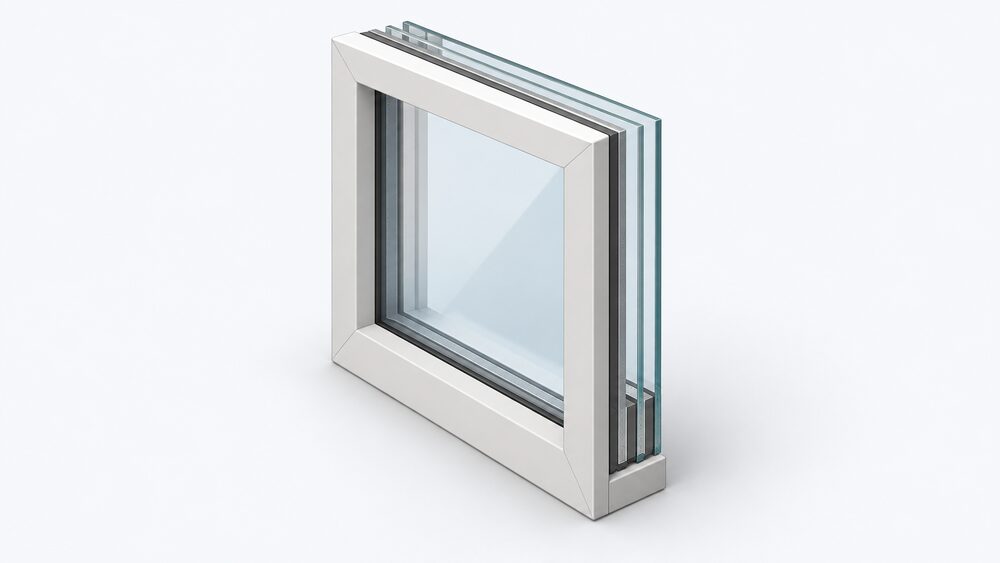
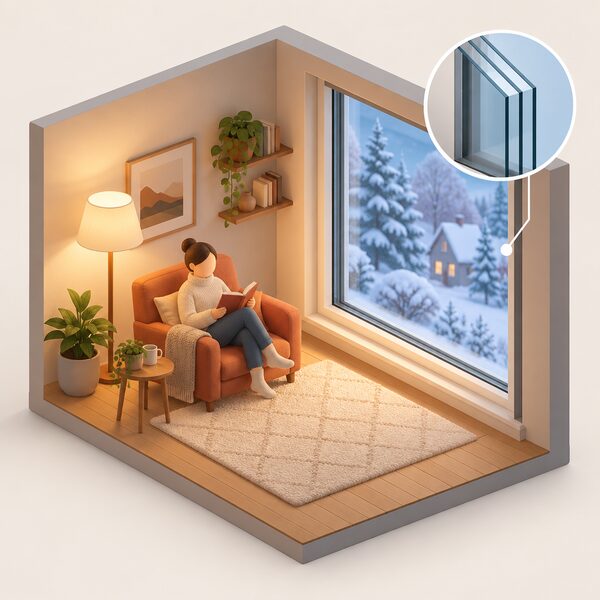
Triple glazing is a window built from three panes of glass rather than two, with two insulating sealed spaces between them1. The extra pane and the extra gas cavity reduce heat loss further than double glazing, improve acoustic performance and, in the words of one industry body, "virtually eliminates the sensation of cold felt near a window in winter"3. It is the glazing type associated with Passivhaus and with high performance new build, and it is increasingly offered as an upgrade option on mainstream UK window ranges.
The money is where the argument sits. The Energy Saving Trust puts triple glazing at around 20% more expensive than double glazing, and window makers quote a premium of roughly 10 to 20%1. One maker gives an average of £1,200 per triple glazed window, against £300 to £5,000 per window for double glazing depending on type and size5. Set against that, when Which? asked nine double glazing installers endorsed by its Trusted Traders scheme whether triple glazing is worth the extra spend for most homes, "The unanimous answer was: no"6. Independent retrofit modelling reviewed for ClimateXchange found that high cost measures including triple glazing may in many cases never pay for themselves through reduced running costs7.
For household energy independence the honest framing is this: windows are not where most of a home's heat goes, and no glazing choice disconnects a house from the grid or a gas supplier. What triple glazing buys is a warmer inner pane, a smaller heat demand to be met by whatever heating system follows, and a fabric specification that suits a heat pump. It does not generate energy, and it depends on a manufacturer's sealed unit holding its gas fill and its seal for decades.
Three panes, two sealed cavities, and what sits inside them
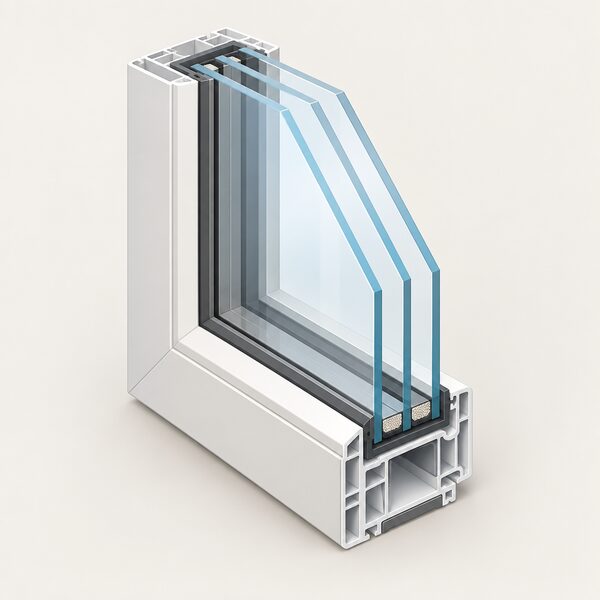
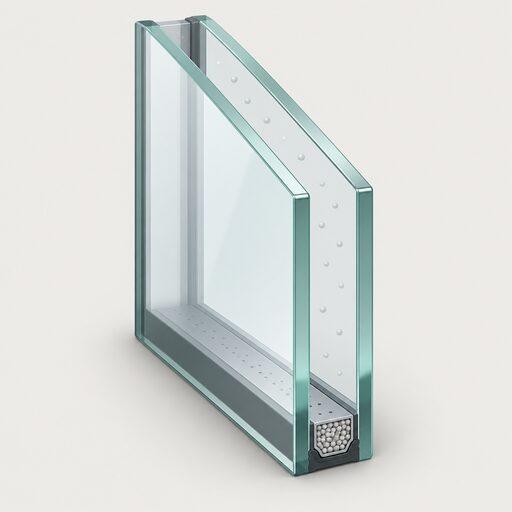
A double glazed unit is two panes of glass separated by a sealed gap, typically 6 to 20mm wide, filled with air or with a gas such as argon4. A common configuration places the panes about 16 millimetres apart11. Triple glazing takes the same principle a step further with three panes and two sealed gaps4. Argon is used between the panes in the same way as in double glazing12.
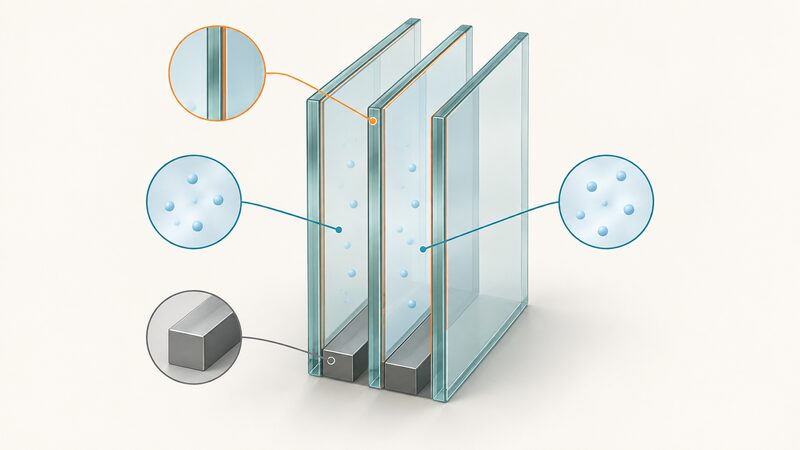
The panes are not identical. One maker describes its triple glazed unit as using two Low E panes and one Low Iron pane, so that heat is reflected back into the room while light transmission is retained, with two spacer bars and two layers of gas2. Low emissivity glass is described by the Energy Saving Trust as the most energy efficient type of glass for double and triple glazing1. The frame matters as much as the glass: the same maker fits a thermal insert into the mainframe chamber to create smaller chambers and cut heat loss through the profile itself2.
The sealed cavity also contains a crystalline desiccant, which draws moisture out of the air gap to keep the space between the panes dry14. That desiccant is why a healthy unit stays clear and why a failed one mists.
Energy efficient glazing, in the Glass and Glazing Federation's definition, covers any glazing made of two or more glass panes within a sealed unit, including double and triple glazed windows and the units found within doors15. Triple glazing is therefore an increment on an established product rather than a different technology.
How much heat a window actually loses
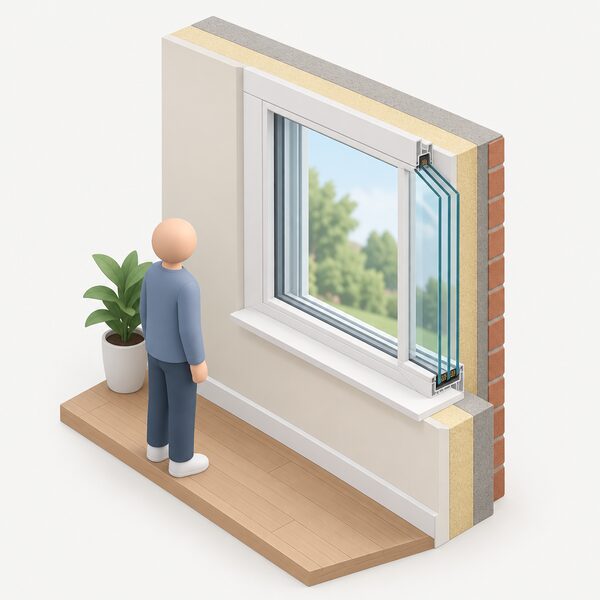
Heat loss through windows and doors happens in any property, and it can be reduced where a home has energy efficient double or triple glazing16. The question is how large the prize is, and published estimates differ widely. The Centre for Sustainable Energy puts around 10% of the heat loss from a typical house through the windows17, while a figure attributed to Historic England gives around 20% of a home's heating18. Where windows are still single glazed the loss is far larger, with one glazing company citing studies showing up to 70% of domestic heat lost through single glazed windows19. Those figures are not measuring the same thing and should not be added or averaged.
For comparison, the Energy Saving Trust estimates that an un-insulated dwelling loses a third of all its heat through the walls and a further quarter through the roof. That is the reason loft insulation and wall measures usually precede a glazing upgrade in a whole-house retrofit.
The single biggest glazing step is the first one. Installing double glazing can cut heat loss through windows by half20. Replacing single glazed windows with energy efficient double or triple glazing can make a considerable difference to comfort and heating bills, because the low emissivity coating reflects heat back into the room21. The Centre for Alternative Technology frames the progression plainly: modern double glazing should be three times better than single glazing, with triple glazing five times better22. Moving from good double glazing to triple glazing is therefore a refinement of a job already largely done, which is why the cost case is contested while the single-to-double case is not.
Performance: the gap narrows against modern double glazing
The performance claims for triple glazing span a wide band, and the source matters. Makers quote improvements of around 40 to 50% over double glazing, and a figure of 50 to 60% more energy efficient appears on another maker's page. Independent guidance from the Consumer Protection Association gives an improvement over traditional double glazing of 23% to 58%. These are marketing framings of different baselines, and none of them is a bill saving.
The more useful independent warning concerns unit thickness. Which? notes that "28mm triple glazing offers very little improvement on 28mm double glazing but 44mm triple might be a better option"9. Squeezing a third pane into a frame designed for a 28mm double glazed unit shrinks both cavities, and cavity width drives the insulating effect. A triple glazed unit is only better than a good double glazed one if the frame is deep enough to carry it.
Reference U-values show the same picture. Double glazing with a low emissivity coating and argon fill is given at 1.6 to 1.3 W/m²K22. Triple glazed products reach well below that: a uPVC profile system quotes 0.88 W/m²K with triple glazing23, and one certified triple glazed window claims a whole window U-value as low as 0.63 W/m²K24. The step down is real, but it is a step from a product that already meets regulations comfortably.
There are secondary gains. Two or more panes offer a more secure barrier against unwanted entry than single glazing, and the extra layer of glass makes a triple glazed window harder to break through than double glazing15. Double and triple glazing also make the inner glass warmer than single glazing, so surface condensation is less likely, though glazing does not control the amount of water vapour in the air14.
Cost: around £1,200 per window and a 10 to 20% premium
| Item | Figure | Source type |
|---|---|---|
| Triple glazing, average per window | £1,2005 | maker |
| Double glazing, per window | £300 to £5,0005 | maker |
| Typical double glazed uPVC window, installed | £300 to £7004 | maker |
| Triple glazing premium over double | 10 to 20%4; around 20%1 | maker; Energy Saving Trust |
| Replacing a whole casement window | £500 to £1,25011 | independent |
| A-rated double glazing, semi-detached home | £4,80025 | independent |
The premium figures are consistent across sources at roughly a tenth to a fifth on top of the double glazed price1. The absolute numbers vary far more, because a window's price is driven by size, frame material and opening type before glazing is considered: replacing a whole window runs from £500 to £1,250 for a casement to £1,500 to £5,000 or more for bow windows11. Prices quoted by makers and comparison sites are installer-quoted in practice, and VAT treatment is not stated in these figures.
Against that, savings from glazing upgrades are modest and are almost always quoted for the single-to-double step rather than double-to-triple. Which? gives A-rated double glazing as saving between £95 and £115 a year on the heating bill of a typical home, depending on size26. A maker states that average annual savings for a three bedroom semi-detached house with triple glazing are unlikely to exceed £150. This is why the ClimateXchange review of retrofit optimisation modelling reported that the high cost of some measures, including triple glazing, means they may never pay for themselves through reduced operational costs7. Further figures are set out in insulation and glazing costs and savings and payback.
Funding is thin. Home Energy Scotland lists double glazing, triple glazing and secondary glazing at £8,000 per improvement as an interest-free loan and marks grant funding as "Not available", with the loan restricted to improving single glazing27. Equivalent positions in the other nations are covered in the grants pages for England, Wales and Northern Ireland.
Where triple glazing falls short
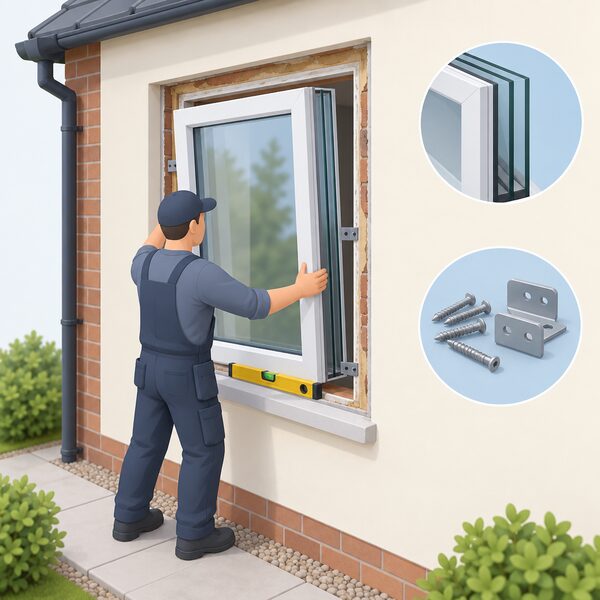
Weight is the first constraint. Triple glazing is heavier and not as easy to install in the home than double glazing, and one maker strongly recommends professional installation because poor installation can affect efficiency and cause problems with the windows28. A third pane loads hinges, friction stays and locking hardware more heavily, and the extra mass has to be carried by the frame and by the fixings into the reveal. The Consumer Protection Association's view is that the additional cost and weight may not be justified for every property, particularly in milder urban environments3.
Noise is the second, and the result is counter-intuitive. One maker states that the two air chambers "can create resonance and echo on the internal pane, which means triple glazing alone will not reliably reduce noise"29. Sealed double and triple glazing are effective against medium to high frequency noise30, and glass sealed units with enhanced acoustic options are available to reduce noise further21, but acoustic performance comes from asymmetric pane thicknesses and laminated glass rather than from the third pane as such. Certified acoustic products are rated individually: one timber-aluminium triple glazed window is listed with noise reduction up to 44 dB31.
For comparison, double glazing is commonly given a life of 20 to 35 years where the product is high quality, properly installed and well maintained1. Replacing an individual blown pane costs £55 to £145 for a single pane, or £100 to £850 for an entire window, plus £45 to dispose of the existing pane11. See double glazing and the head-to-head at double vs triple glazing.
U-values and ratings: what the numbers actually cover
A U-value measures how easily heat passes through a material: the higher the U-value, the more easily heat passes through the window and the less efficient it is30. The Energy Saving Trust cautions that it "is not a complete measure of how efficient a window is", because it says nothing about solar gain or air leakage1. Crucially, the published window U-value is for a whole window, not a centre pane, and it includes the glass and the frame together32. A quoted centre pane figure will always look better than the whole window figure for the same product.
Window energy ratings run on a scale from E to A++2, with A++ the most efficient. One maker states that most triple glazed windows achieve a rating between B and A++10, that all of its triple glazed window styles carry at least an A rating from the British Fenestration Rating Council, and that its range is A+ to A++ rated, reaching A++ with flush uPVC frames33. Ratings for particular product families are set out further in window energy ratings.
The practical advice from the Consumer Protection Association is to pay close attention to thermal performance ratings such as U-values rather than relying solely on broad marketing claims34, and to expect a quote to state brand names, performance ratings and U-values for glazing products. That is the only way to tell whether a "triple glazed" quotation is a 44mm unit in a deep frame or a 28mm unit that will perform little better than the double glazing it replaces9.
| Specification benchmark | U-value | Applies to |
|---|---|---|
| Window, new dwelling, England | 1.6 W/m²K8 | limiting standard, Approved Document L Volume 1 |
| Window, existing dwelling, England | 1.4 W/m²K or WER Band B minimum8 | new fabric elements |
| Window or roof window, Wales | 1.4 W/m²K35 | new dwellings, Approved Document L Volume 1 |
| Historic window or fully glazed door, existing dwelling | centre pane not exceeding 1.2 W/m²K36 | England, special considerations |
| Double glazing, low-E, argon filled | 1.6 to 1.3 W/m²K22 | typical product |
| Kömmerling 70 profile with triple glazing | 0.88 W/m²K23 | maker figure |
| Internorm KF 520 uPVC-aluminium triple glazed window | as low as 0.63 W/m²K whole window24 | certified product listing |
Building Regulations set minimum U-value thresholds for replacement windows and doors, but these represent a floor rather than an aspiration3. The detail of compliance, notification and certificates is in Part L and replacement window rules; Scotland and Wales set their own standards, covered in Scottish building standards and Welsh building regulations.
Passivhaus, and the 0.8 W/m²K window target
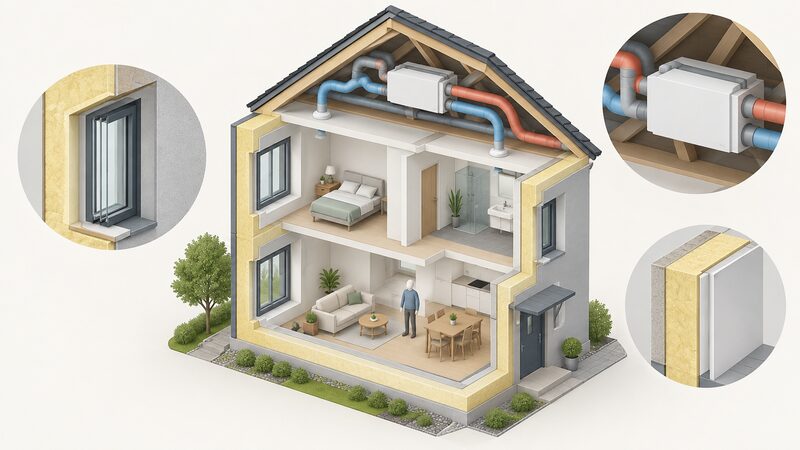
Passivhaus is an international energy performance standard for buildings which aims to reduce the requirement for space heating and cooling, with over 30,000 buildings constructed to it worldwide37. It delivers a space heating requirement of 15 kWh/m²/a38 and is achieved through a fabric first approach: high levels of insulation to the thermal envelope, exceptional airtightness and whole house mechanical ventilation37. All proposed designs must be modelled in the Passivhaus Planning Package, and a certificate is only issued by a Passivhaus Certifier if the defined criteria have been met without exception39.
Glazing follows from that. The Energy Saving Trust lists the glazing for a Passivhaus building as "Triple glazing, with insulated frames"40. A certified example, the Chippenham Passivhaus, uses Passivhaus certified triple glazed windows41. Window makers working to the standard describe a lower U-value target of 0.8 W/m²K, stating that it "is easily met by triple glazing but not by double glazing"42. That claim comes from manufacturers rather than from a regulator, and it is consistent with the product figures above: a triple glazed window at 0.88 or 0.63 W/m²K clears a threshold that a 1.3 W/m²K double glazed unit cannot.
Retrofit to the same level is harder. BRE notes that while it is possible to achieve the new build Passivhaus standard in a refurbishment, it is often difficult without undertaking major works37. The Wilmcote House retrofit replaced existing windows with high performing triple glazed windows at a U-value of 0.93 W/m²K, which illustrates the specification level involved43. Households considering this route should read Passivhaus and EnerPHit alongside airtightness and MVHR, because glazing at that level only performs inside an airtight, ventilated envelope.
Selective use: which windows justify the extra spend
Where the whole-house cost is prohibitive, Which? suggests thinking about "selectively using triple glazing in the rooms that get coldest or suffer worst from external noise"9. The Planning Portal makes the same point about glazing upgrades generally: if all the windows cannot be replaced, choose the rooms that cost the most to heat20. In practice that means north-facing rooms, large glazed elevations, rooms occupied for long periods in winter, and rooms facing a busy road, with the caveat above that acoustic performance needs an acoustic specification rather than a third pane alone29.
Mixing glazing types across a house has consequences worth understanding. The coldest remaining window becomes the condensation risk point, because the warmest glass in the house attracts the least surface moisture and the coldest attracts the most14. A household that upgrades some windows and not others should expect the problem to concentrate rather than disappear; see condensation, damp and mould.
Where original windows are being retained for conservation reasons, other routes exist. Scottish Government guidance notes that slim profile double glazing or vacuum glazing can be used within some traditional window sashes as a direct replacement for single pane glazing, which can significantly improve the thermal performance of the original window while retaining the existing joinery44. Secondary glazing is a further option, and the Centre for Sustainable Energy puts a single window at upwards of £300 depending on size, complexity and opening type45. Both are covered in secondary glazing and listed buildings.
What it means for a household's independence
Triple glazing reduces the heat a house needs, and reducing demand is the only part of an energy system a household fully controls. A lower heat demand makes a heat pump viable at a lower flow temperature and cuts the size of the generation or storage a home would need to cover its own heating, which is the thread running through insulation, glazing and energy independence and what insulation a heat pump needs.
The dependencies that remain are real. The sealed unit is a manufactured product with a finite life and a guarantee, usually of 10 years, held against a company that must still exist to honour it11. Replacement glass comes from a supply chain, not from the house. And no window removes the need for a heating system: the honest scale of the prize is a glazing upgrade that independent guidance values at roughly £95 to £115 a year for the single-to-double step26, with the double-to-triple step smaller again and, on some modelling, never recovered7. Triple glazing is a comfort and fabric decision that happens to save some energy, not an energy independence measure in its own right.
Sources45 cited
- Energy efficient windows and doors, Energy Saving Trust, 2026-05-20
- How do glazed windows work, Anglian Home Improvements, 2026-09-20
- Energy efficient windows and doors, Consumer Protection Association, 2026-03-31
- Energy efficient windows, Fuse Energy, 2026-08-07
- Ultimate guide to heating your home sustainably, Nu-Heat, 2026-09-17
- Types of double glazing, Which?, 2026-09-16
- Balancing investment in clean heat and energy efficiency in Scottish housing retrofit, ClimateXchange, 2026-06-03
- Approved Document L Volume 1: Dwellings, UK Government, 2026
- Choosing double glazed windows and doors, Which?, 2026-09-16
- Double or triple glazing, Anglian Home Improvements, 2026-09-20
- Window insulation guide, Uswitch, 2025-10-27
- Glazing options for windows, VELFAC, 2026-09-20
- Window energy efficiency by type, Anglian Home Improvements, 2026-09-20
- How to prevent condensation, Anglian Home Improvements, 2025-11-27
- Windows knowledge hub, Glass and Glazing Federation, 2026-09-20
- Energy efficient windows and doors, Glass and Glazing Federation, 2026-09-20
- Energy saving tips for winter, Centre for Sustainable Energy, 2025-12-10
- Making a Victorian house more energy efficient, Uswitch, 2025-09-25
- Four ways to enhance single glazed windows, Granada Glazing, 2026-07-19
- Glazing and building regulations, Planning Portal, 2026
- When to repair or replace your windows, Glass and Glazing Federation, 2023-12-22
- Eco renovation: windows, Centre for Alternative Technology, 2025-06-27
- Kömmerling 70 window system, Kömmerling, 2025-02-06
- Internorm KF 520 uPVC-aluminium triple glazed window, Quiet Mark, 2026-09-17
- Retrofit explained, Energy Saving Trust, 2026-02-06
- Draught proofing, Which?, 2026-05-05
- Grants and loans, Home Energy Scotland, 2026-09-17
- Window insulation, Netatmo, 2026-09-20
- Sound reducing windows, Anglian Home Improvements, 2026-09-20
- Energy efficient glazing: a useful guide, Glass and Glazing Federation, 2023-12-22
- Internorm HF 510 timber-aluminium triple glazed window, Quiet Mark, 2026-09-17
- RdSAP 10 documentation, BRE, 2024-02-12
- Triple glazing windows, Anglian Home Improvements, 2026-09-20
- Energy efficient home improvements, Consumer Protection Association, 2026-05-07
- Approved Document L Volume 1: Dwellings (Wales), Welsh Government, 2026-04
- Approved Document L Volume 1, 2021 edition incorporating 2023 amendments, UK Government, 2026-09-17
- Passivhaus standard, BRE, 2026-09-20
- Passivhaus and Building Regulations, Passivhaus Trust, 2026-09-20
- Passivhaus certification, Passivhaus Trust, 2026-09-20
- Passivhaus: what you need to know, Energy Saving Trust, 2026-02-16
- Chippenham Passivhaus case study, Future Homes, 2025-03-04
- Glazing options for doors, VELFAC, 2026-09-20
- The domestic retrofit challenge, CIBSE, 2022-10
- Guide to conversion of traditional buildings, Scottish Government, 2026-08-10
- Secondary glazing advice, Centre for Sustainable Energy, 2026-08
 Double GlazingMisted up panes, noisy streets, rooms that never feel warm: is new double glazing worth the money, and how much could it cut your bills?
 Insulation and Glazing CostsTypical installed costs for cavity wall, solid wall, loft and roof insulation, draught-proofing and replacement glazing, by measure and home size, with the savings, VAT position and funding schemes that shape the final bill.
 Insulation and IndependenceBetter insulation and glazing mean your home holds onto more of the heat you pay for, so you buy less gas and electricity.
 Secondary GlazingSecondary glazing adds a second pane inside your existing window, so you keep the original frame.
 The Full Cooling and Air Conditioning GuideDo you really need air conditioning in a British summer, or would a fan and better shading do the job?
 Whole-House Retrofit CostsA whole-house retrofit can cost anywhere from a few thousand pounds to over fifty thousand, so what you actually pay depends on how much work your home needs.