In this guide
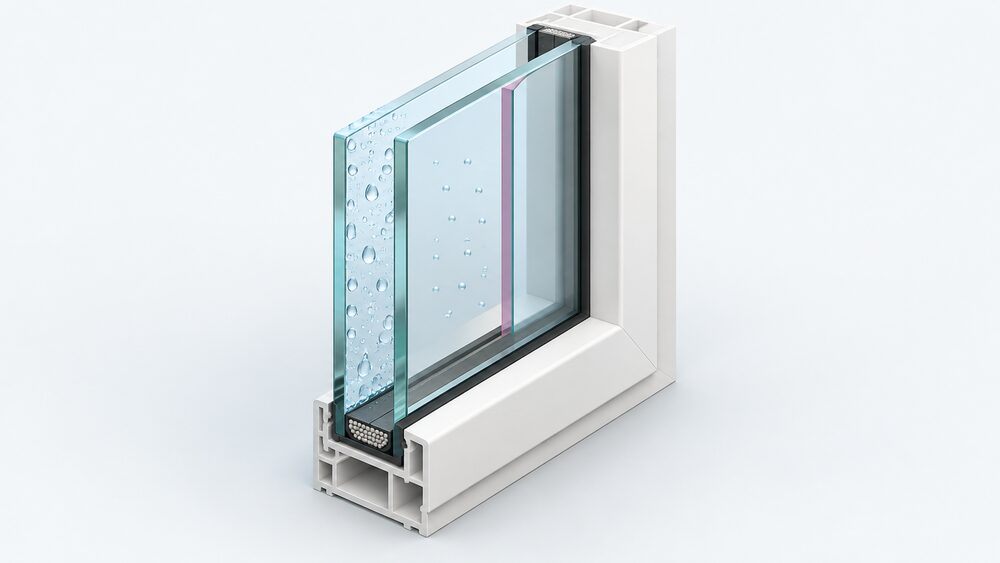
Pilkington K Glass is a low emissivity, or low-E, glass: a float glass carrying an invisible microscopic coating applied to improve its thermal efficiency, reflecting longwave heat back into the room1. It is not a window in itself. It is the pane that goes into a sealed unit, and the unit is what gets fitted into a frame. That distinction matters commercially, because a householder specifying "K Glass" is really specifying a coating on one face of one pane inside a factory-made assembly.
What the coating does is straightforward. Low-E glass has a thin coating of metal oxide on one of the internal glass surfaces, and that coating reflects heat back into the home while still letting in light2. The effect is that the heating system does not have to work as hard to hold a comfortable room temperature1. In a double glazed unit, two layers of glass with a layer of gas sealed in the gap between them do the rest of the work3.
For energy independence the contribution is indirect but real. Glazing does not generate anything, and it does not take a home off the grid or off a gas supplier. It reduces the rate at which heat leaves the building, which lowers the demand that has to be met from whatever the household buys in. The wider case for fabric measures is framed in exactly those terms: more homegrown energy means greater energy independence, and reducing dependency on imported gas is a stated aim of energy system reform4.
The Pilkington range at a glance: K Glass, low-E and Optimax
The range is best understood as a family of coated float glasses rather than a set of finished products. K Glass is the low-E coating most often named in UK specifications. Optimax is the brand's anti-reflective glass, used where the appearance of the glazing matters more than the coating, for example in shopfronts, display cases and where a household wants the glass to disappear visually. Both are supplied to sealed unit manufacturers, who assemble them into the units that window companies fit.
That supply chain is why a household rarely buys the glass by name at the point of sale. The brands a buyer actually encounters when ordering windows are the window and door systems: B&Q sells double-glazed windows and sliding patio doors in both uPVC and white-finished timber, with brands including Velux, Site and Keylite9. The glass inside those units is specified by the manufacturer, and the coating is one line in that specification.
| Product | What it is | Where it is used |
|---|---|---|
| Pilkington K Glass | Low-E coated float glass | Inner face of a sealed unit, double or triple glazed |
| Pilkington K Glass S | Low-E variant | As above, specification confirmed by the unit maker |
| Pilkington Optimax | Anti-reflective glass | Where clarity matters more than solar control |
| Pilkington low-E range | Coated glass family | Double and triple glazed units generally |
The practical point is that the coating is chosen by whoever makes the unit, and the unit is chosen by whoever fits the window. A household specifying performance is specifying a U-value and a gas fill, and the coating is the means by which the maker hits that number.
Low-E coatings: how they keep heat in and the sun's warmth out
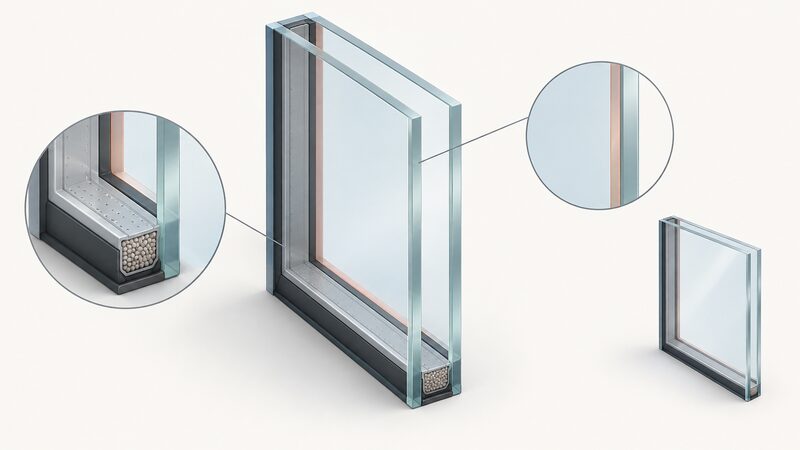
The mechanism has two halves, and they work in opposite directions on different wavelengths. The coating reflects long-wavelength heat radiation back into the room, so the heating system does not have to work as hard to maintain a comfortable room temperature1. At the same time it allows short wavelength heat from the sun to enter the home through the glazing, which works with the domestic heating system to warm the room1. That is why low-E glass is not simply a barrier: it is selective.
The insulating barrier itself comes from the cavity. Double glazing works by trapping air between two panes of glass, creating an insulating barrier that reduces heat loss, noise and condensation10. In practice the cavity is filled rather than left as plain air: double glazing reduces heat loss using an insulating cushion of Argon or Krypton gas between the layers of glass7. Triple glazed windows add a third pane, and some companies use different types of gas between the panes to further prevent heat loss, alongside low-E glass to reflect heat back inside11.
There are side effects, and they are documented rather than hypothetical. Low-E glass can produce tint, haze, external condensation, hue differences and possible overheating in some situations12. Haze may occur at times of the day when the sun is at a particular angle or under some lighting conditions, and can be influenced by the type of low-E coating used1. Colour or hue differences may be noticeable depending on coating type, glass substrate and glass thickness, and are more evident when one double or triple glazed unit is replaced in a home1.
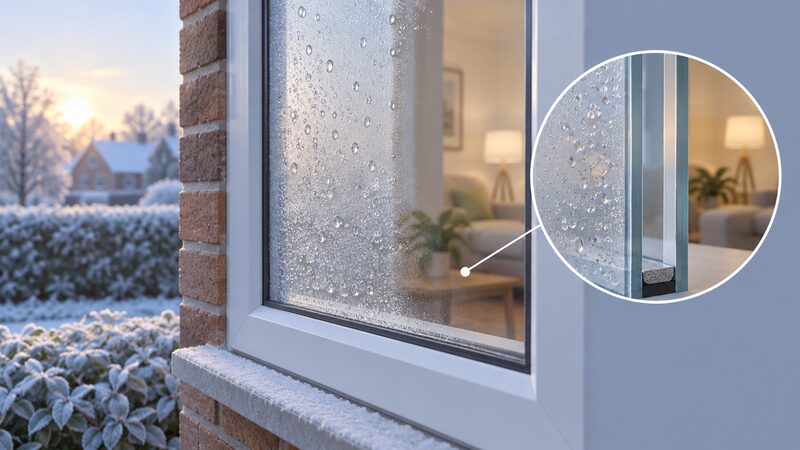
External condensation is the one householders most often misread. The outer pane can get cold and, under some weather conditions and at certain times of the year, condensation can form on the outside surface of the glass, which is a positive indication of a thermally efficient window1. The trade body's own framing is that this can be the result of the reduction in the transfer of heat from inside to out and is visible evidence of the energy efficiency of the window or door12.
K Glass versus low-E glass: which suits which window
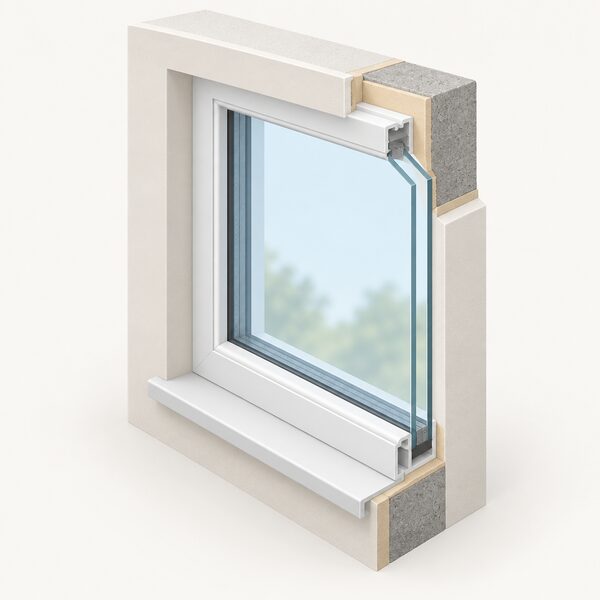
K Glass is a low-E glass, so the comparison is between one coating and the category it belongs to. The category is the one that matters for compliance. Low-E glass is described as the most energy efficient type of glass for double and triple glazing2, and it will enable a household to both achieve and surpass the new targets for windows and doors under the Building Regulations1.
Which coating suits which window depends on orientation and glazed area rather than on the room. Certain low-E glass is good at solar heat gain, which can cause overheating in some situations, and a combination of low-E and solar control glazing should be considered for large glazed areas, particularly south-facing conservatories1. A north-facing window has the opposite problem: solar gain is limited, so the priority is holding heat in. A large south-facing glazed area is where the two requirements pull against each other.
Window type also constrains the choice. Casement windows usually open inwards, which generally makes them easier for cleaning, but limits what can be stored or displayed on the windowsill11. Secondary glazing, where a second layer of glass is fitted inside an existing window, is a route for homes that cannot replace the primary window, and it is fitted on the inside of an existing window2. For a listed or traditional building, timber sash and case windows account for most of the historic glazing in Scotland, formed as sash frames which slide vertically in a timber casement set into the stone reveal of the opening13.
Where a household is weighing options, the wider comparisons are set out in double glazing, triple glazing and secondary glazing.
Self-cleaning glass: what the coating does and where it works
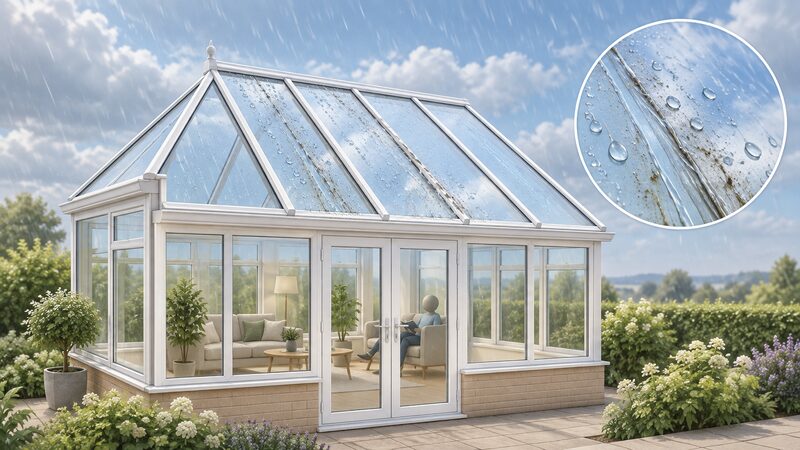
Self-cleaning glass uses a different coating from a thermal one, and it is sold on maintenance rather than on heat. The published feature set for a solar enhancer coating describes it as self-cleaning, anti-dust, antipollution, anti-icing and antifogging6. Durability testing indicates that the coating has a demonstrated durability of more than 10 years, with newer versions expected to last between 10 and 15 years before reapplication is required6.
That is a coating performance claim, and it should be read as one. Glass still needs cleaning, and the general safety rule for any glass is that it should be cool to the touch before cleaning to avoid the risk of it shattering14. Sharp or abrasive materials will damage glass, leaving scratches14. A monthly clean is the interval recommended for stove glass, which is a harsher environment than a window but illustrates that coated glass is not maintenance-free14.
Where self-cleaning coatings earn their place is on glass that is hard to reach: roof windows, lantern roofs, conservatory roofs and upper storeys. The coating needs daylight and rain to work, so a sheltered elevation under a deep overhang or beneath a canopy gets less from it. On a standard ground-floor window that a household can reach with a squeegee, the benefit is smaller.
U-values and performance: what the numbers mean in practice
The U-value is the number that matters for compliance and for comparison. It measures the rate of heat transfer through a wall, window or roof, showing how effective a material is at reducing heat loss, and the lower the U-value, the more effective it is15. For windows and doors, the requirement is expressed as the amount of heat that can pass through the door or window, including the frame, measured as a U-value, and this U-value should not be exceeded8.
Two cautions apply. First, a window U-value is a measure of how easily heat passes through a material, but it is not a complete measure of how efficient a window is2. Second, the direction of the number is easy to get wrong: the higher the U-value, the more easily heat can pass through the window and the window is less efficient12. A household comparing quotes should be reading the lower figure as the better one.
The related term is thermal transmittance. The U-value of a building's fabric element, known as its thermal transmittance, is a measure of how effective the element is at insulating and reducing heat loss17. Insulation materials are compared on a different measure: the lower the K-value, the better the performance of the insulation material18. That is a material property, not a window rating, and the two should not be confused in a specification.
Because the numbers are the substance of a quote, they belong in it. A proper quote should set out brand names, performance ratings and U-values where applicable, particularly for glazing or renewable products19. It is worth paying close attention to thermal performance ratings such as U-values rather than relying solely on broad marketing claims20. The regulatory framework is covered in window energy ratings and Building Regulations Part L.
Where Pilkington glass fits in a UK home's energy picture
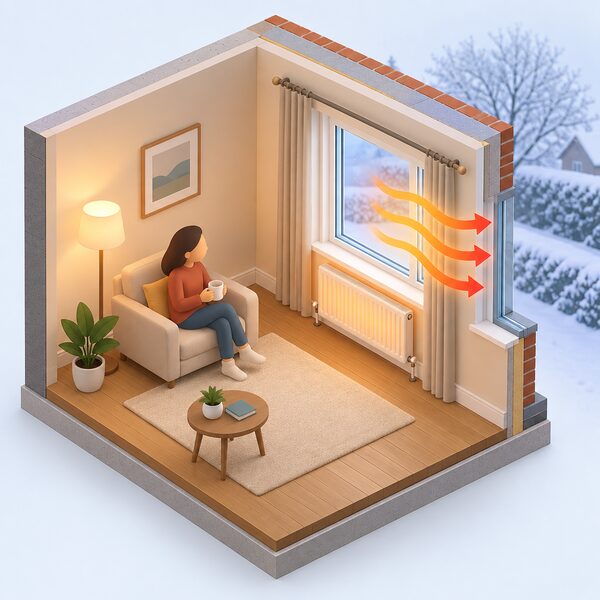
Glazing is one element of the fabric, and the fabric sets the demand that everything else has to meet. The case for insulation generally is that homes and commercial buildings need it because heat loss has to be reduced before any heating system can be sized sensibly17. Glazing is the part of the fabric a household can see through, and it is also the part with the highest heat transfer per square metre in most homes.
The independence argument is about what the household has to buy. More homegrown energy means greater energy independence, and reducing dependency on imported gas is a stated objective of energy system reform4. A low-E unit does not produce a single kilowatt hour. It reduces the rate at which heat is lost, which reduces the amount of gas or electricity that has to be bought to replace it. That is a reduction in demand, not a change in supply.
The measurement framework for self-sufficiency is defined as the percentage of electricity consumed in the property over a year which is met by either behind the meter solar or electrical energy storage21. Glazing does not appear in that definition, because it does not generate. What it does is lower the denominator. A household that reduces heat loss needs less generation to reach the same percentage, which is why fabric measures and generation measures are usually planned together.
For new build, the official statistics on energy efficiency characteristics cover new dwellings in England and those built to the Part L 2021 Standard, and are official statistics in development monitoring Part L of the Building Regulations in England22. That means the compliance data is England-specific, and the devolved positions differ. The wider picture is set out in insulation and energy independence and the energy efficiency of the UK housing stock.
Float glass: the process behind nearly all modern window glass
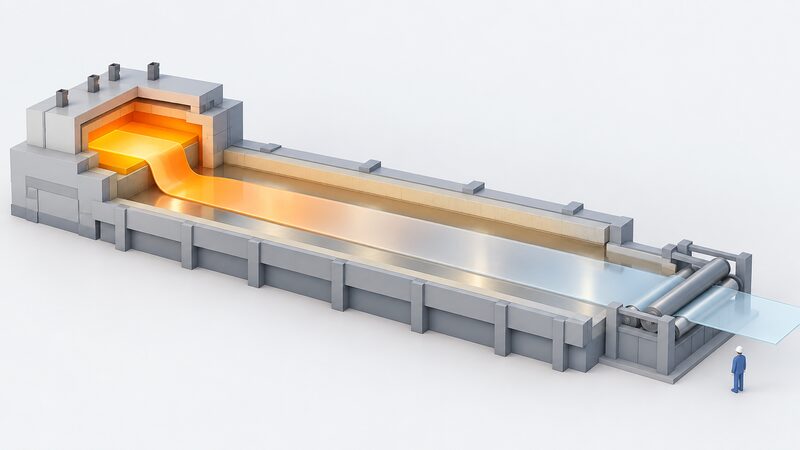
Nearly every window in a UK home starts as float glass. The float process was introduced by Pilkington in 1930, and it revolutionised glass manufacturing globally1. The method floats molten glass on a bed of molten tin, which produces a flat, uniform ribbon with a fire-polished surface, and it is the reason modern window glass is flat, clear and cheap enough to be used in large panes.
The coating is applied to that base glass. Low emissivity glass is glass that has an invisible microscopic coating applied to it in order to improve its thermal efficiency1. The coating can be applied in the factory to new glass or in situ to existing windows and doors as a film, which is a glass treatment rather than a replacement12. That distinction matters for a household with sound existing units: a film is a retrofit option, whereas a coated pane requires a new sealed unit.
The rest of the assembly is standardised. Double glazed windows feature two layers of glass with a layer of gas sealed in the gap between them3. Once sealed, replacement windows are airtight and ready to provide improved performance all year round3. The seal is the weak point over time: if window seals are old or damaged, moisture can get in and create condensation between the glass panes23. That is the failure mode that ends a unit's life, and it is a seal failure rather than a coating failure.
Buying, fitting and identifying the glass
Sealed units are made to order, so the route to Pilkington glass in a home runs through a window company or installer. Independent guidance recommends using a professional installer for installing new windows and doors, and choosing an installer registered to a competent person scheme, which is an easy way to make sure windows are fitted to building regulations2. Getting quotes from at least three installers is also recommended2. The same principle applies to related work: installation should be carried out by a suitably qualified installer24.
Identifying an existing coating is difficult. If the installation date is unknown, a household can check with Local Authority Building Control to find out when the double glazing was installed and whether there is a warranty still in date23. Checking the window seals is worthwhile at the same time, because old or damaged seals let moisture in and cause condensation between the panes23. Condensation inside the cavity is a unit failure, not a coating problem, and it is the signal that replacement is due.
For a household planning fabric work, the sequence matters as much as the product. The order of works across a whole house is set out in planning a whole-house retrofit, and the process of checking a contractor is covered in finding and checking an insulation or glazing installer. Where a home has a condensation problem after glazing work, the cause is usually ventilation rather than the glass, which is covered in condensation, damp and mould after insulation.
Sources24 cited
- Low-e (low emissivity) glass and thermal efficiency, Glass and Glazing Federation, 2023-12-22
- Windows and doors, Energy Saving Trust, 2026-05-20
- Advantages of double glazed windows, FENSA, 2026-09-20
- Solar Energy Scotland manifesto, Solar Energy UK, 2026-09-17
- Response to Ofgem's call for input on energy system cost allocation, Citizens Advice, 2025-09-26
- Coating to increase the efficiency of photovoltaic cells, UKGBC, 2024-05
- Understanding double glazing, The CPA, 2025-02-05
- Building regulations: doors and windows, Welsh Government, 2026-09-17
- Types of double glazing, Which?, 2026-09-16
- Glazing, Planning Portal, 2026
- Choosing double glazed windows and doors, Which?, 2026-09-16
- Windows knowledge hub, Glass and Glazing Federation, 2026-09-20
- Guide to the conversion of traditional buildings, Scottish Government, 2026-08-10
- Top tips for keeping your stove glass clean, HETAS, 2026
- Energy jargon buster, Energy Saving Trust, 2026-03-20
- Building regulations: rooflights, Planning Portal, 2026
- Why do homes and commercial buildings need insulation?, Energy Saving Trust Green Heat Toolkit, 2025-03-31
- Product standards and selection, Energy Saving Trust Green Heat Toolkit, 2025-04-02
- Compare contractors fairly, The CPA, 2025-11-27
- Energy efficient home improvements, The CPA, 2026-05-07
- MCS 032 2025 V1.0, MCS Certified, 2025-01-01
- Energy efficiency characteristics of new dwellings, GOV.UK, 2026-02-04
- How to stop condensation, Which?, 2026-05-26
- Planning permission: external walls, Planning Portal, 2026