

In this answer
Short answer
Yes, in most cases you must contact UK Power Networks before building or digging near its equipment. The network operator offers free safety advice and a visit from an expert when work is planned near an overhead power line, and it encourages anyone digging to request network plans beforehand to avoid underground cables1. For safety issues with power lines, the operator asks people to stay at least 10 metres away from the equipment and call 0800 31 63 105 or 105, 24 hours a day2.
The obligation is not a single rule but several. Building regulations require certain electrical work to be notified before it starts3, and separate safety duties apply to overhead lines, buried cables and substations. UK Power Networks covers London, the South East and East of England, and holds thousands of substations across that area4. If a property sits outside that footprint, a different distribution network operator applies, but the national 105 number reaches whichever one runs the local network5.
This page sets out when contact is needed, what the free services include, how underground cable plans are requested, what rights and restrictions apply where a substation or cable crosses private land, and what to do if a line or cable is struck.
When you must contact UK Power Networks before building or digging
Contact is required in three broad situations: work near an overhead line, excavation near buried cables, and any building or alteration that affects the network operator's equipment or its access to it. UK Power Networks states that it offers free safety advice and a visit from an expert when work is needed near an overhead power line1. For digging, it encourages anyone carrying out work that involves digging to request plans beforehand to avoid underground electricity cables1.
Separately, building regulations impose their own notification duties on electrical work. The building control body or registered third-party certifier must be notified before work starts3. In England and Wales, EV charger installations must be notified to local authority building control because they involve creating a new circuit8, and a full rewire must be notified to Local Authority Building Control for inspection and approval9. In England, for any case other than a higher-risk building, the building control authority must be given notice not later than the beginning of the day before the day on which the work starts, stating that the analysis has been undertaken, is documented and the documentation is available for verification10. Building regulations approval also covers changes to electrics near a bath or shower11.
These are distinct duties. Building control notification is about compliance with the regulations; notifying the network operator is about safety and the integrity of the supply. A household adding a large low-carbon load may also trigger a network notification: in most cases, if the electricity supply can support the additional demand, the installer simply needs to notify the distribution network operator once the technology has been installed, but in some cases the installer may need a supply upgrade before installation can go ahead12. In Northern Ireland, letting NIE Networks know helps make sure a home has a reliable supply of electricity now and in the future13.
Overhead power lines: free safety advice and an expert site visit
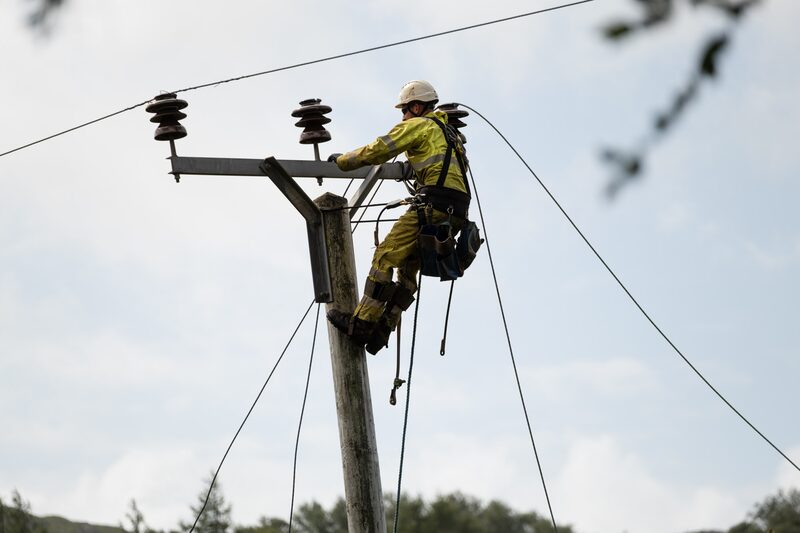
Where a property has an overhead line attached to it, or work is planned close to one, UK Power Networks runs a shrouding service. It offers a free service to arrange for one of its engineers to visit and cover the overhead power line which attaches to the property14. The first step is to request a free site visit by completing the online form or by logging onto the operator's portal14. The visit and the advice are free6.
The safety margin matters. UK Power Networks asks people to stay at least 10 metres away from equipment and to call its 24 hour line2. That distance applies to safety issues with power lines generally, including lines that appear to be dead. Trees and bushes near lines are handled through a separate service, and the operator may need to give advance notice to neighbours before temporarily turning off the power, depending on the type of power line and who it supplies power to2.
National Grid Electricity Distribution publishes downloadable safety material covering avoidance of danger from electricity overhead lines and underground cables, landowner safety and angling safety15. The same public safety commitment identifies accidental contact with overhead lines, wilful interference such as vandalism and metal theft, damage to underground assets including services to domestic properties, asset failures such as link box faults, fires involving network apparatus on consumers' premises, and communication with at-risk groups as the focus areas for incident prevention16.
Underground cables: requesting network plans before you dig
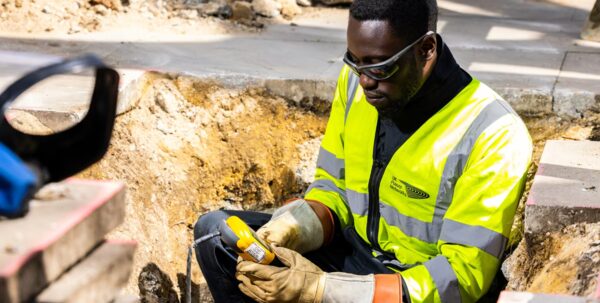
Before digging, it is important to find out the location of any underground cables17. UK Power Networks encourages anyone carrying out work that involves digging to request plans beforehand to avoid underground electricity cables1. The plans show recorded cable routes, but they are not a substitute for locating equipment on site.
The industry practice is to use cable- and pipe-locating devices on site and to follow safe digging practices18. Wales & West Utilities, a gas network operator, asks for at least 10 working days' notice before excavation18. That notice period is a gas industry requirement rather than an electricity one, but it illustrates the lead time that network operators generally need before work begins.
Repairs to buried cables themselves involve excavation. Where a fault occurs on an underground network, the operator has to complete excavation work to access and repair the cable19. That is why recorded routes matter: a household digging a foundation, laying a driveway or planting a tree can strike a cable that the operator will then need to expose and repair.
Substations and cable rights on your land: access and restrictions
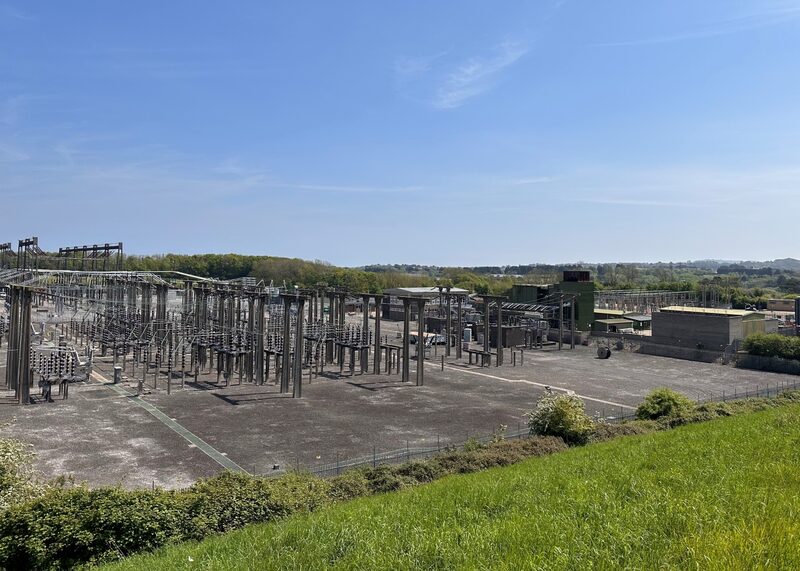
Where an electricity substation is located on a property or within a building, UK Power Networks will generally hold a lease or freehold interest in the land with associated access and cable rights20. That interest is a legal encumbrance on the land, and it gives the operator the right to enter, maintain and replace equipment. UK Power Networks has thousands of electricity substations around London, the South East and East of England4.
The practical consequences for a household are access and restriction. The operator needs to reach the substation, so structures, fences, planting and parked vehicles must not block the route. Cable rights run with the land, so a cable crossing a garden remains the operator's asset regardless of who owns the surface. Building over a cable route or against a substation affects those rights and can require the operator's consent.
Planning rules interact with this. Some outdoor signs and advertisements fall within permitted development21, and permitted development is subject to relevant exceptions, limitations and conditions22. Small extensions to a home are a common example of permitted development23. In Wales, guidance on planning permission for electrics applies24, and building regulations for extensions include an electrics section25. In Scotland, permitted development rights are subject to prior notification or prior approval and various other restrictions in some cases26. In Northern Ireland, the equivalent permitted development rules are set out in separate legislation27. Where a listed building is involved, the advice is to contact the local planning authority before carrying out any work24, and the same advice applies to installing or replacing electrical circuits in a listed building28.
What UK Power Networks covers: London, the South East and East of England, up to 132kV
UK Power Networks is the distribution network operator for London, the South East and East of England29. Its licensed companies are London Power Networks plc, South Eastern Power Networks plc and Eastern Power Networks plc, covering London, South East England and East England respectively30. The operator describes its network area as London, the East and the South East of England31.
That footprint determines who a household contacts. A property in London, Kent, Sussex, Essex, Hertfordshire, Norfolk, Suffolk, Cambridgeshire or Bedfordshire falls within UK Power Networks. A property elsewhere falls to a different operator, and the national 105 number routes the call accordingly5. The 105 service is used across distribution network operators, and National Grid Electricity Distribution directs people to call 105 in an emergency5.
The voltage ceiling matters for larger projects. UK Power Networks' distribution network operates at lower voltages than the transmission system, and the operator's public material covers work near its own assets rather than the national transmission network. For a household, the practical point is that the local distribution operator is the first contact for anything from a domestic connection to a cable crossing a garden.
If you strike a cable or a line is damaged: emergency contacts
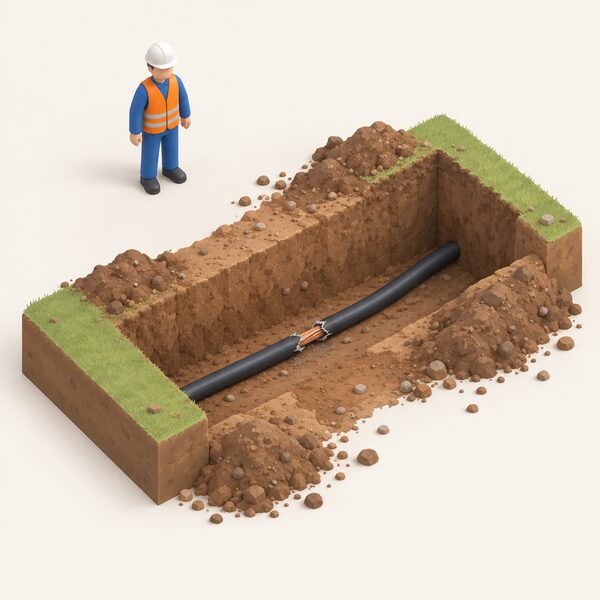
A damaged line or cable is an emergency. The first rule is to keep as far away from the hazard as possible19. UK Power Networks asks people to stay at least 10 metres away from equipment and to call 0800 31 63 105 or 105, 24 hours a day2. The emergency number is free to call from a landline or mobile4.
If the damage is causing significant risk to the public, call 99932. That covers a line brought down across a road, a cable strike in a public place, or any situation where passers-by are exposed. For a strike on private land with no risk to others, the network operator's emergency line is the route.
Emergency disconnection is available around the clock: the operator's disconnection line is open 24 hours a day7. General contact lines are open Monday to Friday, 8.00am to 5.00pm, and are free to call from a mobile or landline phone7.
For gas, a separate national emergency number applies, and the Health and Safety Executive runs a free Gas Safety Advice Line offering advice on gas safety33. A power cut is reported on 10534. Network operators also publish winter readiness guidance covering what to do before and during a supply interruption19.
"Keep as far away from the hazard as possible."
Sources34 cited
- Safety advice and resources, UK Power Networks, 2026-09-17
- Cut trees and bushes, UK Power Networks, 2026-09-17
- Building regulations general information, Planning Portal, 2026
- What is an electrical substation, UK Power Networks, 2026-09-17
- GSOP 2, National Grid Electricity Distribution, 2026-09-17
- Replace meter box, UK Power Networks, 2026-09-17
- Disconnect your supply, UK Power Networks, 2026-09-17
- EV charger regulations in England, NICEIC, 2026-08-19
- Rewiring your house, NICEIC, 2026-09-17
- Building regulations, Part 6, legislation.gov.uk, 2026-09-17
- Building regulations approval, GOV.UK, 2026-09-17
- Low carbon technology, domestic, UK Power Networks, 2026-09-17
- Why you need to inform NIE Networks, NIE Networks, 2026-09-19
- Cover my overhead power lines (shrouding), UK Power Networks, 2026-09-17
- Public safety advice, National Grid Electricity Distribution, 2026-09-17
- Public safety commitment, Energy Networks Association, 2026-09-17
- DIY safety precautions, NIE Networks, 2026-09-19
- Dial before you dig, Wales & West Utilities, 2026-09-20
- Get winter ready, Energy Networks Association, 2026-09-17
- Electricity equipment on your land, UK Power Networks, 2026-09-17
- When you don't need planning permission, GOV.UK, 2026-09-17
- Dial before you dig: can you dig it, Wales & West Utilities, 2026-09-20
- Householder planning consent, Planning Portal, 2026-09-17
- Planning permission for electrics, Welsh Government, 2026-09-17
- Building regulations: extensions, Welsh Government, 2026-09-17
- Permitted development rights, Scottish Government, 2025-09-03
- Permitted development, Northern Ireland, legislation.gov.uk, 2026-09-17
- Planning permission for electrics, Planning Portal, 2026-09-17
- Who is my gas and electricity supplier, Confused.com, 2026-07-03
- How to find out if there's a power cut, Which?, 2026-06-04
- For homes, Flex Assure, 2026-09-19
- Replace power cable or power line, UK Power Networks, 2026-09-17
- Gas safety FAQs, Health and Safety Executive, 2026
- Boiler not working, Cadent Gas, 2026-09-20
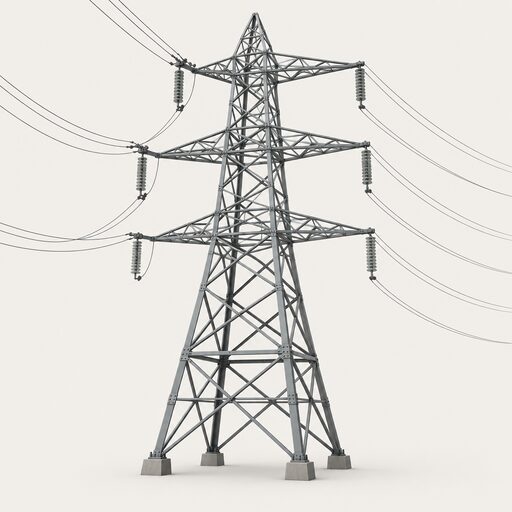 The Transmission NetworkWondering who owns the pylons near your house, or why the grid needs upgrading before you can run a heat pump or an electric car?
 Backup Power Safety RulesWho signs off a battery or backup circuit, and can you legally plug in a power station or a plug-in solar panel in the UK?
 Who to Call for Energy HelpA single reference to the right contact for each situation: gas escapes, power cuts, water leaks, meter faults, billing disputes, scams and free advice.
 Product RecallsHow recalls and safety notices work for energy equipment in UK homes, who issues them, how to check a product, and what replacement, repair and refund routes exist.
 Network Operators and 105When the lights go out, who do you actually ring?
 New Electricity ConnectionWho do you contact for a new or upgraded electricity connection, and what will it cost?