
In this guide
Northern Powergrid is the electricity distribution network operator for North East England and Yorkshire, running the cables and substations that carry power from the national transmission network to homes and businesses across those two regions1. It does not sell electricity. The company on a household bill is the supplier; Northern Powergrid owns and maintains the physical infrastructure that delivers the power to the property3.
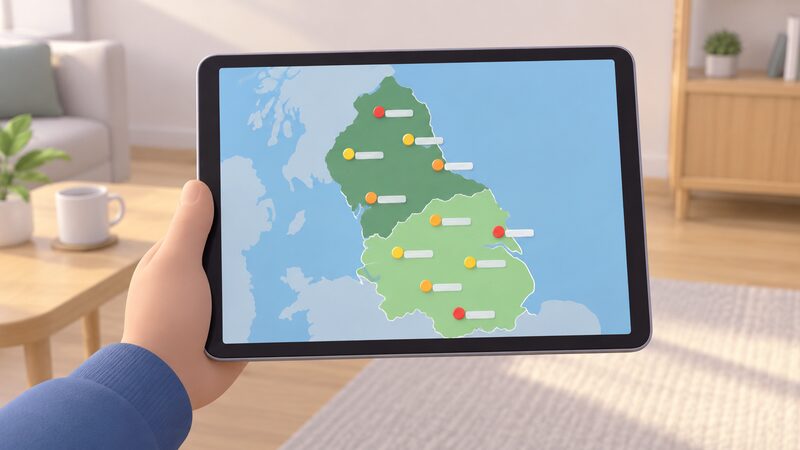
Its territory is defined by two licence areas: North Eastern England, distributor ID 15, and Yorkshire, distributor ID 232. Together these cover the North East, Yorkshire and northern Lincolnshire4. For a household, that means Northern Powergrid is the organisation to call about a power cut, a damaged cable, a new connection or a supply upgrade, while the supplier handles billing, tariffs and metering.
The practical figures a householder is most likely to need are the fault reporting route and the cost of moving a meter. Unplanned power cuts are reported free on 105, available 24 hours a day, which connects the caller to the local network operator1. Single-phase meter moves on the Northern Powergrid network start from around £793, with an average price for straightforward underground single-phase work of £1,2006.
Who Northern Powergrid is and where it operates
Northern Powergrid is one of the regional electricity network operators that together cover Great Britain1. Its two licensed entities, Northern Powergrid (North East England) Limited and Northern Powergrid (Yorkshire) plc, hold the distribution licences for their respective regions8. The company appears in the Energy Networks Association's network operator directory under both licence areas, with separate contact details for each2.
The distinction between a network operator and a supplier is the single most useful thing to understand about the company. Distribution network operators own and operate the distribution network of towers and cables that bring electricity from the national transmission network to homes and businesses9. They do not sell electricity to consumers; that is done by the electricity retailers whose name appears on the bill9. The network operator is responsible for maintaining physical electricity supplies to a home or business, which is why faults, damage and connections sit with Northern Powergrid rather than with the supplier9.
For a householder who has moved house and does not know who supplies the property, Northern Powergrid offers an online search tool that identifies the electricity supplier10. The householder fills in the postcode and the property name or number on the dedicated search portal, and the supplier's name is emailed back11. That is a different question from who the network operator is, which can be established through the Energy Networks Association website12.
The area itself is one of the larger distribution footprints in England, spanning a dense urban core around Newcastle and Teesside, the Yorkshire conurbations and a substantial rural hinterland. That mix matters for the kind of work the network does: rural single-phase supplies, long overhead lines and coastal weather all shape the fault profile.
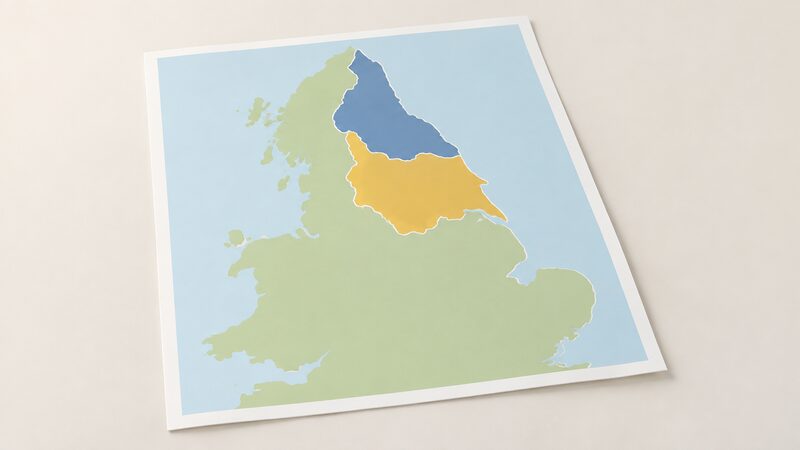
Licence areas: North Eastern England (ID 15) and Yorkshire (ID 23)
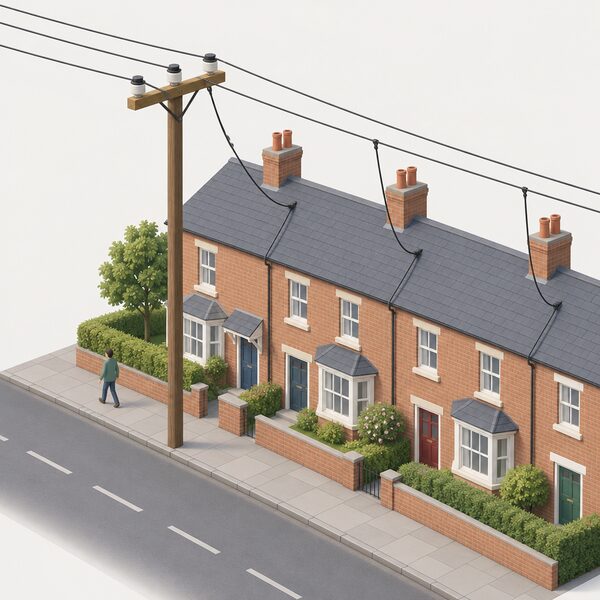
The two licence areas are administratively separate, and the contact details differ between them. For North Eastern England, ID 15, the connections email is getconnected@northernpowergrid.com, the supply assessment line is 0845 070 7172 and safety concerns are handled on 0800 66 88 77. For Yorkshire, ID 23, the same connections email applies, the supply assessment line is the same, and safety concerns are handled on 0800 375 6752.
The wider picture of distributor IDs helps a householder understand why the number matters. UK Power Networks holds Eastern England, London and South Eastern England, IDs 10, 12 and 19. Electricity North West holds North Western England, ID 16. National Grid Electricity Distribution holds East Midlands, West Midlands, Southern Wales and South Western England, IDs 11, 14, 21 and 22. SP Energy Networks holds Cheshire, Merseyside and Northern Wales, ID 13, and Southern Scotland, ID 18. Scottish and Southern Electricity Networks holds Northern Scotland and Southern England, IDs 17 and 202.
Northern Ireland sits outside this structure entirely, served by Northern Ireland Electricity2. That matters for anyone comparing network arrangements across the UK: the regulatory framework, the connection charging rules and the fault reporting routes all differ there.
| Operator | Licence areas | Distributor IDs |
|---|---|---|
| Northern Powergrid | North Eastern England; Yorkshire | 15, 232 |
| UK Power Networks | Eastern England; London; South Eastern England | 10, 12, 192 |
| Electricity North West | North Western England | 162 |
| National Grid Electricity Distribution | East Midlands; West Midlands; Southern Wales; South Western England | 11, 14, 21, 222 |
| SP Energy Networks | Cheshire, Merseyside and Northern Wales; Southern Scotland | 13, 182 |
| Scottish and Southern Electricity Networks | Northern Scotland; Southern England | 17, 207 |
What a Distribution Network Operator does for your home
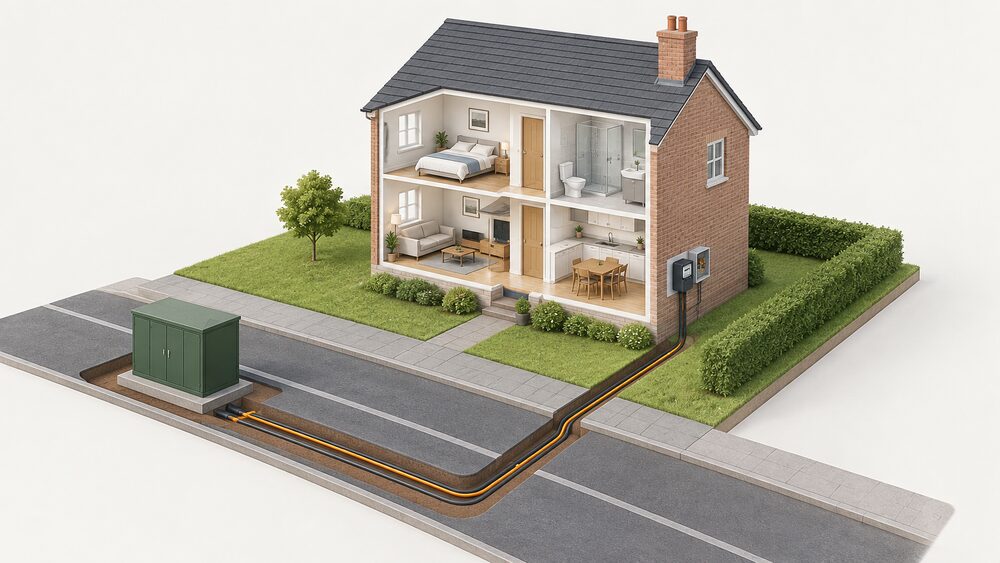
A distribution network operator owns and operates the infrastructure that delivers power to a property3. That includes the cables in the street, the substation that steps voltage down for domestic use, the service cable to the property and the cut-out where the meter connects. The operator is responsible for maintaining physical electricity supplies to the home, while the supplier is responsible for the electricity itself and the billing relationship9.
This split has practical consequences. If a supply fails because of a fault on the network, the operator fixes it and the supplier is not involved. If a meter needs to move, the answer depends on how far: often the supplier can move a meter for a small fee if it needs to move less than a metre, while longer moves or changes to the service position go to the network operator13. If a property needs a new or upgraded supply, the operator quotes for the connection work.
The network operator also holds the records that matter for anything electrical at the property boundary. That includes the location of the service cable, the capacity available at the service position and the phase arrangement. These records are what an installer needs before adding a large load, and they are why the notification processes for low-carbon technology run through the operator rather than the supplier.
For a household thinking about independence, the distribution network is the part of the electricity system a home cannot opt out of. A property with solar panels and a battery still uses the Northern Powergrid network for import when generation is short and for export when it is long. The network is the physical link to the wider system, and the connection agreement is what governs how much can flow in each direction.
Power cuts: reporting, the 105 number and the live Power Cut Map
Unplanned power cuts are reported by calling 105 free of charge, which puts the caller through to the local electricity network operator14. The line is available 24 hours a day5. The 105 service exists precisely because householders rarely know which network operator serves them; the number routes the call to the right one1.
Northern Powergrid also publishes a live Power Cut Map, which shows known outages and expected restoration times across its area. Checking the map before calling avoids reporting a fault that is already known and gives a realistic view of when supply should return. The map is the quickest way to distinguish a local problem from a wider incident.
For households with a medical dependency on electricity, the priority services arrangements matter more than the general reporting route. Network operators maintain registers so that vulnerable customers receive regular information during a power cut, and the same principle applies across the industry8. Registration is free and is arranged through the supplier or the network operator.
Compensation is a separate matter from reporting. Ofgem sets guaranteed standards that can entitle a household to a payment when supply is interrupted for longer than a set period, and the payment is made through the supplier rather than the network operator14. The rules distinguish between unplanned interruptions and planned work, and between different durations of outage.
Connecting solar, batteries and EV chargers: G98/G99 notification
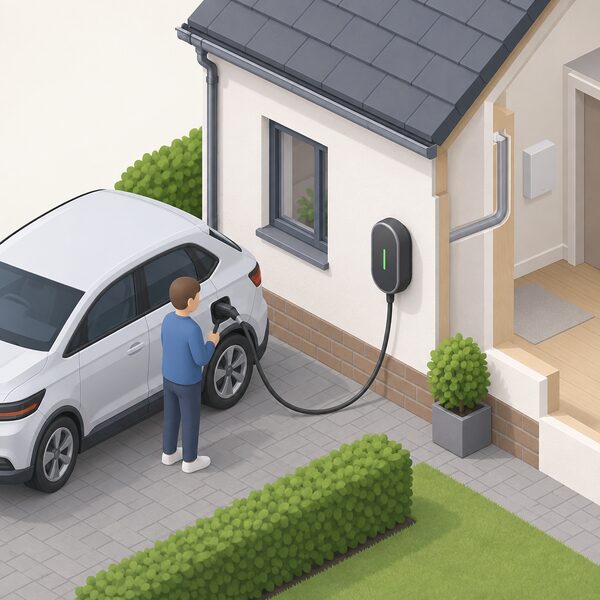
Larger low-carbon connections must be notified to the distribution network operator. Electric vehicle chargers, heat pumps and solar generation all fall under the G98 and G99 processes, which exist so the operator knows what is being connected to its network7. The reason is load: these appliances use a lot more electricity than most, and several unreported installations in the same area can put pressure on the local network15.
The notification requirement applies to the equipment, not just the installation. Chargers with vehicle-to-grid capability must be type tested to EREC G98 specifications to be eligible for connect and notify15. That is a product-level condition: a charger that has not been tested to the specification cannot use the simplified notification route.
The benefit of notifying is straightforward. Letting the operator know helps make sure a home has a reliable supply of electricity now and in the future15. The risk of not notifying is equally concrete: power cuts or flickering lights, particularly where several installations cluster on the same part of the network15.
For a household, the process usually runs through the installer, who completes the notification and receives the connection confirmation. The practical points to establish before work starts are the size of the generation or load being added, whether the existing supply can accommodate it, and whether a supply upgrade is needed. Where an upgrade is required, the application goes to Northern Powergrid as the network operator.
This is the point at which a home's energy independence meets a hard limit. Solar panels and a battery reduce the amount of electricity drawn from the grid, but the connection to the Northern Powergrid network remains, and its capacity sets the ceiling on what can be imported and exported. A larger array or a faster charger may require a bigger service, which is a network decision rather than a household one.
Meter moves and connection costs: from around £793
Meter move costs on the Northern Powergrid network are published as indicative figures. Prices for moving a single-phase meter start from around £793, with an average price for straightforward underground single-phase work of £1,2006. These are starting points rather than quotes: the cost may increase due to the specifics of the request and the set-up, and excavation on private land and meter boxes are additional costs not included in the basic figure13.
The figures vary widely across operators, which is worth knowing when comparing. Electricity North West publishes prices starting at £700 for overhead supplies and £800 for underground supplies13. SP Energy Networks gives a basic guide price of £1,401.98 without digging or £3,218.86 with digging. SGN, a gas network, quotes basic alteration costs from around £605 to £1,210 depending on whether it performs excavation work and where the customer lives. Wales & West Utilities states that moving a gas meter starts at £1,200. Northern Gas Networks quotes basic one-metre alterations from around £810 without digging rising to £1,362 with digging, with each additional metre costing an additional £24 to £1146.
| Operator | Move type | Indicative price |
|---|---|---|
| Northern Powergrid | Single-phase meter | from around £793, average £1,2006 |
| Electricity North West | Overhead supply | from £70013 |
| Electricity North West | Underground supply | from £80013 |
| SP Energy Networks | Basic, no digging | £1,401.986 |
| SP Energy Networks | Basic, with digging | £3,218.866 |
| Northern Gas Networks | One-metre alteration, no digging | from around £8106 |
| Northern Gas Networks | One-metre alteration, with digging | £1,3626 |
| SGN | Basic alteration | around £605 to £1,2106 |
| Wales & West Utilities | Gas meter move | from £1,2006 |
Where a meter needs to move less than a metre, the electricity supplier can often do the work for a small fee, which avoids the network operator route altogether13. Anything involving the service position, a new cable or excavation goes to Northern Powergrid, and the quote follows a site assessment.
For a new connection rather than a move, the process starts with the connections team. Northern Powergrid's published contact route is the getconnected@northernpowergrid.com address, with a supply assessment line on 0845 070 71722. The application requires the postcode, the property details and the load required, and the operator then assesses what the existing network can support.
The funding appeal: what Northern Powergrid claims and what the evidence shows
Northern Powergrid's network investment sits within a regulatory settlement, and the company has argued that the settlement underfunds it. In a 2023 consultation on an energy licence modification appeal, Citizens Advice recorded that Northern Powergrid claims to be underfunded, and that allowing the appeal would grant Northern Powergrid significant additional revenue16.
That is the shape of the dispute: the network operator says the allowed revenue is insufficient for the investment its network needs, while the consumer body intervening in the appeal sets out what granting it would mean for bills.
The wider context is that network costs are recovered through standing charges and unit rates rather than as a separate line. Ofgem's benchmark maximum charges for the Northern region, covering the period from 1 July to 30 September 2026, show a standing charge of £223.48 and an annual bill of £824.03 at 2,500 kWh on single-rate metering, and a standing charge of £220.70 with an annual bill of £986.44 at 3,400 kWh on multi-rate metering17. Those figures are the cap levels, not a prediction of any individual bill, but they show the scale of the fixed element that network costs feed into.
For a household, the practical point is that the distribution network's investment programme is paid for through the same bill as the electricity itself. A home that generates its own power reduces the units it buys but does not escape the standing charge, which carries a large share of the network cost. That is a structural limit on how far self-generation can reduce a bill.
What owning a home on the Northern Powergrid network means for energy independence
A home on the Northern Powergrid network has a fixed relationship with the company that no tariff change alters. The network operator owns the cables and the service position, maintains the physical supply, and sets the terms on which a property can import and export electricity3. Solar panels, a battery and an electric vehicle charger all sit behind that connection, and their capacity is bounded by it.
What a household can control is the demand side. Generating on site reduces the units bought, and a battery shifts them away from peak times. Notifying the operator before adding a large load keeps the connection reliable and avoids the power cuts or flickering lights that unreported installations can cause15. Registering for priority services where there is a medical dependency secures information during an outage8.
What remains outside household control is the network itself, the standing charge that funds it, and the regulatory settlement that determines how much investment it receives16. The 105 line and the live Power Cut Map are the practical interfaces when something goes wrong1. Beyond that, the relationship is one of dependence on a regional monopoly for the physical delivery of electricity, however much of it a home generates itself.
For households comparing network arrangements across the UK, the differences between operators are real: connection charging rules, meter move prices and fault reporting routes all vary. Northern Ireland operates a separate framework entirely, with its own network operator and connection charging arrangements2. Within Great Britain, the distributor ID on a connection application is what determines which operator handles the work.
Sources17 cited
- Power Cut 105, Power Cut 105, 2026
- Find my network operator, Energy Networks Association, 2026
- Domestic and homeowners connections help, NESO, 2026
- FlexAssure for homes, FlexAssure, 2026
- Power cuts: what to do if your power goes out, Smart Energy GB, 2026
- How to move your gas or electricity meter, Uswitch, 2026
- Connecting electric vehicles and heat pumps to the networks, Energy Networks Association, 2026
- How to find out if there's a power cut, Which?, 2026
- What to do in a power cut, Met Office, 2026
- Who is my gas and electricity supplier, Confused.com, 2026
- Who supplies my electricity and gas, Uswitch, 2026
- Network operators, Energy Ombudsman, 2026
- Meter move information, Electricity North West, 2026
- Check if you can get payment for a power cut, Ofgem, 2026
- Electric vehicles, Electricity North West, 2026
- Application to intervene in the CMA energy licence modification appeal, Citizens Advice, 2023
- Energy price cap levels 1 July to 30 September 2026, Ofgem, 2026