
In this comparison
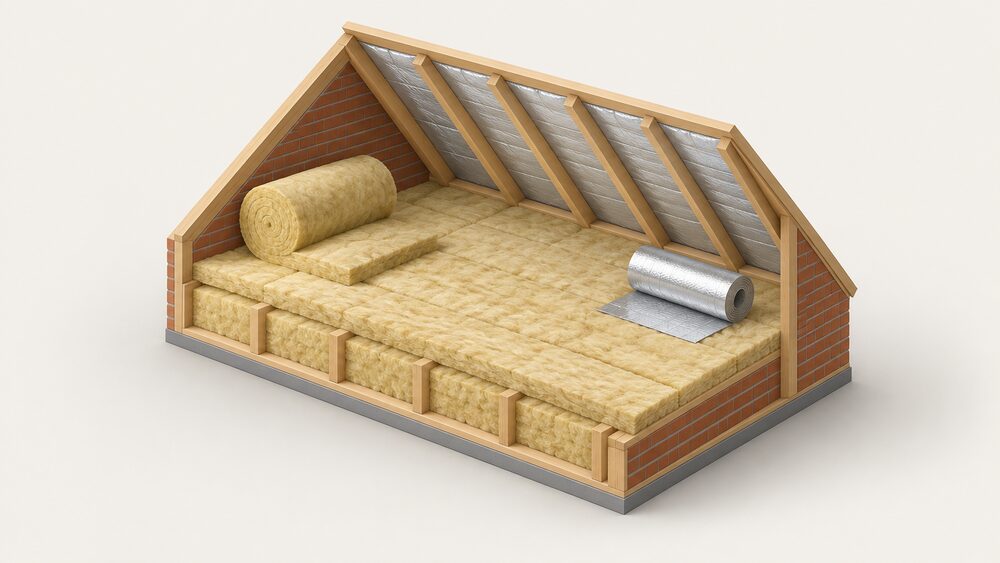
Multifoil and mineral wool solve the same problem in opposite ways. Mineral wool is a cotton wool like material produced from either rock wool or glass wool, and it is used in the majority of installations1. It works by trapping air in an open-cell, woolly matrix, which prevents convection, while conduction is reduced because there is very little solid material and radiative transfer is cut by a physical barrier1. Multifoil takes the opposite route: a thin, layered product that the maker describes as combining high-performance insulation, a radiant barrier and a vapour control layer in a single roll2.
The practical difference is depth. Independent guidance puts the recommended mineral wool depth at 270mm for most situations3, and the same figure of 270mm, about a foot, is repeated elsewhere4. A multifoil layer is a fraction of that, which is why the material comes up in loft conversions, room-in-roof projects and anywhere head height or rafter depth is fixed. The trade-off is that thinness has to be bought back through a certified system, careful detailing and, in most roof build-ups, a vapour control layer that multifoil supplies as part of the product.
For a household, the choice affects energy independence only at the margin. Both materials reduce the heat a home loses through its roof, which reduces the gas or electricity it must buy. Neither removes the grid connection, the supplier or the boiler. What multifoil changes is where insulation can physically go, and what mineral wool changes is how cheaply a large, accessible loft floor can be covered.
Multifoil and mineral wool: what each one actually is
Mineral wool is a non-metallic, inorganic product manufactured from a carefully controlled mix of raw materials, mainly comprising either stone or silica1. It is supplied as rolls, batts and slabs, and used in lofts, roofs, walls and floors6. Its thermal, fire and acoustic properties derive from the mat of fibres that prevents the movement of air, and from mineral wool's inert chemical composition1. It can be manufactured to many different densities to give varying properties, formed in various shapes and faced with a variety of sheet materials5. It is not carcinogenic9, and the requirement regarding the diameter and length of fibres is generally not relevant to mineral wool, since the manufactured fibre diameter and fibre length are greater than 3 microns and 200 microns respectively10.
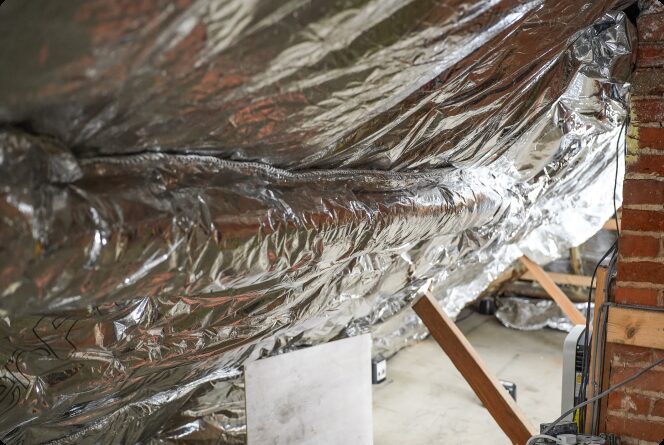
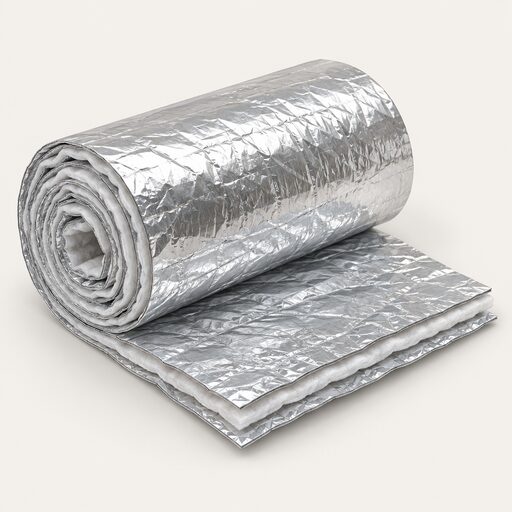
Multifoil is a different class of product. The maker describes its most popular feature as a 3-in-1 design that integrates insulation, a radiant barrier, and a vapour control or breathable layer in a single product11. Its fire rated range is described as providing excellent thermal performance, a high-quality vapour control layer, and a radiant barrier12. A single roll provides high-performance insulation, a radiant barrier, and a vapour control layer2. The maker states that multifoil works to reflect over 90% of radiant heat8, and that the product is made from 500 recycled bottles per roll2.
The two are not substitutes at the same thickness. Mineral wool is a bulk insulator whose performance comes from trapped air across a deep mat. Multifoil is a thin, reflective, multi-layer product whose performance depends on the reflective surfaces facing an air cavity, and on the assembly being installed as a certified system rather than as a single sheet.
Thickness and loft space: 270mm of mineral wool versus a thin multifoil layer
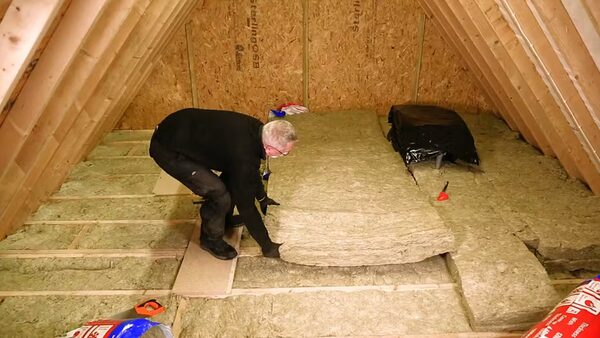
The headline figure for mineral wool is 270mm. Independent guidance gives 270mm as the recommended depth for most situations3, and separately as the recommended depth for mineral wool insulation, the most common material, at about 1ft4. The standard method is a layer of mineral wool insulation between the beams, then a second layer covering the beams7. That two-layer approach is what gets a typical loft from a single joist-depth layer to the full recommended depth without raising the floor excessively.
Building regulation guidance is not identical across the UK. Approved Document L1B for Wales, in its 2014 edition covering existing dwellings, gives 250mm of mineral fibre or cellulose fibre as cost-effective loft insulation at ceiling level13. Independent guidance on mineral wool states that just 300mm meets current Building Regulations5. The three figures, 250mm, 270mm and 300mm, come from different documents with different dates and different purposes: one is a regulatory cost-effectiveness benchmark, one a recommended installed depth, one a compliance threshold. They are not in direct conflict so much as answering different questions.
The Salford Energy House test facility gives a worked example of a real build-up: a purlin and rafter cold roof structure with 270mm insulation at ceiling level, comprising 100mm mineral wool between 100x50mm ceiling joists and 170mm mineral wool above and perpendicular to the joists14. That is the physical reality behind the 270mm figure, and it shows why loft space matters: the second layer sits above the joists, so a boarded loft floor has to be raised or the insulation compressed.
Multifoil's advantage is that it does not need that depth. The maker states that its versatility allows it to be used on its own or in combination with traditional non-reflective insulation materials, from new builds to renovations11. Where rafter depth is fixed, or where a room-in-roof has a finished ceiling close to the roof covering, a thin reflective layer plus a service void can be the only workable route.
| Mineral wool | Multifoil | |
|---|---|---|
| Form | Rolls, batts, slabs6 | Multi-layer reflective blanket2 |
| Typical loft depth | 270mm recommended3 | Thin layer, system dependent11 |
| R-value per 100mm | 2.5 to 3.0 m²K/W6 | Not stated in the available facts |
| Vapour control | Separate layer required | Integrated in the product11 |
| Radiant barrier | No | Yes, over 90% reflected, maker stated8 |
How each performs: radiant reflection, vapour control and airtightness
Mineral wool's mechanism is well documented. Its thermal performance is mainly due to prevention of convection by the entrapment of air in the material's open-cell, woolly matrix, with conduction reduced because there is very little solid material and heat transfer reduced by a physical barrier to radiative processes1. Compression fit minimises gaps at joints15, which matters because gaps at joints are where a quilted insulation loses much of its nominal performance. In a warm roof, the mineral wool is laid on top of a vapour control layer or waterproof membrane, and the roof surface applied on top, either directly or in multiple layers depending on the system used16.
Multifoil's mechanism is reflective rather than bulk. The maker states that multifoil works to reflect over 90% of radiant heat8, and that the 3-in-1 design integrates insulation, radiant barrier, and a vapour control or breathable layer in a single product11. That integration is the practical selling point: a single roll provides high-performance insulation, a radiant barrier, and a vapour control layer2. In a roof, that means one product can serve as the vapour control layer as well as the insulation, which reduces the number of separate materials and the number of chances to get the detailing wrong.
Airtightness is where the two diverge most in practice. A continuous foil layer, taped at laps, is inherently more airtight than a mineral wool quilt, which relies on compression fit and on a separate membrane for air sealing. That is a genuine advantage in a room-in-roof or a converted loft, where the ceiling line is the airtightness line. It is less of an advantage in a cold loft where the ceiling below is already sealed and the insulation is simply laid across the joists.
"The thermal performance of mineral wool is mainly due to prevention of convection by the entrapment of air in the material's open-cell, woolly matrix"
Cost and installation: which is quicker and easier to fit
Mineral wool is consistently described as the cheapest option. Independent guidance states that mineral wool is usually the cheapest, and that boards and foams cost more17. It is described as common, affordable and often used in lofts and cavity walls17. Across applications, the same phrases recur: easy-to-fit, simple installation process18, covering large areas quickly16, and batt or blown to suit any specific project15. In timber frame walls it is described as more cost effective than any other material available19.
Multifoil's claim is speed rather than material cost. The maker states that SuperFOIL can be installed at least twice as fast as traditional insulation types, using fewer materials11. That claim is the maker's own and applies to its own products. It is plausible in a room-in-roof, where a single roll replaces a quilt plus a separate vapour control membrane, and less relevant in an open loft where mineral wool can be laid in minutes.
For comparison, spray foam insulation is much more expensive to install than standard mineral wool loft insulation that is laid on the loft floor20. That is the only cost comparison the available facts support; no published price for multifoil or mineral wool is given, so both are installer-quoted or merchant-quoted at the time of purchase.
Installation order for a cold loft with mineral wool runs as follows:
- Resolve any damp in the loft before insulating; independent guidance is to get a professional to sort damp issues out before attempting to insulate7.
- Lay the first layer of mineral wool between the ceiling joists.
- Lay a second layer across the top of the joists to reach the recommended depth7.
- Keep the eaves ventilation path clear and do not compress the quilt.
For multifoil, the sequence is set by the system certificate and install guide rather than by a generic method, which is why the certified build-up matters more than the material alone.
Room-in-roof and awkward spaces: where multifoil earns its keep
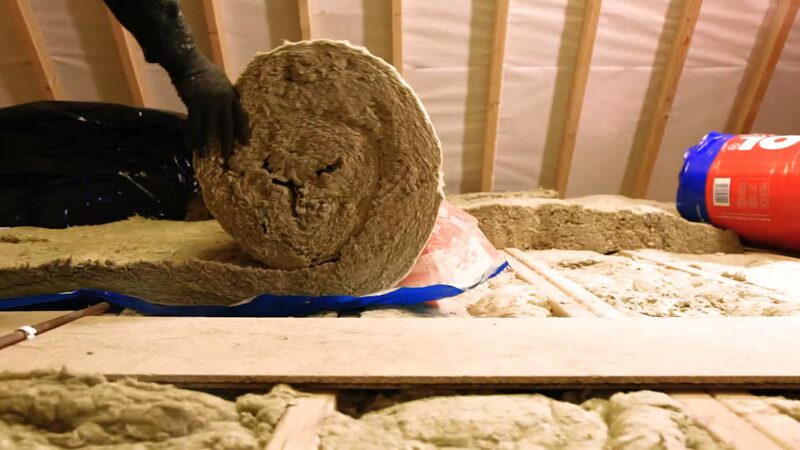
The case for multifoil is strongest where depth is the binding constraint. A room-in-roof has a finished ceiling close to the roof structure, and every millimetre of insulation depth competes with head height and with the rafter zone. Mineral wool at rafter level is possible, but it consumes the rafter depth that a multifoil assembly leaves free for a service void and ventilation gap.
The maker's certification points the same way. SuperFOIL secured a KIWA BDA Agrément certification for its Room-in-Roof insulation system, described as its second Agrément-accredited system with KIWA BDA21, and the room-in-roof system carries a KIWA BDA Agrément certificate2. A system certificate is what turns a thin reflective product into something a building control body can accept for a specific application, because it sets out the exact build-up, the fixing, the laps and the ventilation.
Mineral wool's strength in awkward spaces is different: it fills irregular voids. It can be installed in the void between beams without increasing floor depth in timber floors22, and in concrete separating floors it can go either above or below the floor, enhancing acoustic and thermal performance23. In a masonry separating wall it is typically installed into studwork fitted to that wall21, and in steel frame separating walls it absorbs sound and improves acoustic performance while providing a high level of thermal separation between adjoining properties21. That flexibility to be cut, compressed and packed into odd shapes is why it dominates retrofit.
Acoustics is a genuine mineral wool advantage. It absorbs sound energy and improves the acoustic performance of walls, floors and roofs, restricting noise transfer within and between buildings and to and from the external environment24. In timber or metal decks it produces significant improvements to acoustic performance16, and in timber frame separating floors it absorbs sound, improves acoustic performance and delivers thermal performance benefits23. A thin foil layer does not do that.
Certification and warranties: KIWA BDA Agrément, IBGs and the 25-year cover
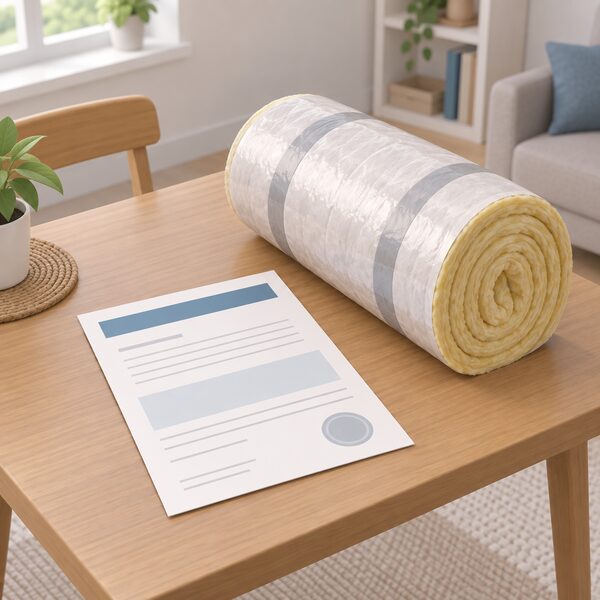
Certification is where the two materials are governed by different regimes. All UK manufactured mineral wool insulation used for construction complies with relevant BS or BBA requirements10. For retrofit cavity wall insulation, the design and materials are accredited by a recognised Agrément body such as the British Board of Agrément (BBA) or KIWA25. Mineral wool's own certification is therefore a product standards matter, not a system-by-system certificate.
Multifoil works the other way round. The maker states that it does not offer insurance-backed guarantees as a manufacturer, and explains that IBGs cover installation quality while its 25-year manufacturer's warranty covers defective products2. That distinction matters to a householder: an IBG protects against a failed installation, a manufacturer's warranty protects against a faulty product, and they are not interchangeable. The maker also urges homeowners to combine certified systems with trained approved installers following reports of faulty installations under an energy efficiency scheme2.
For comparison, an official measure listed under the ECO4 innovation route carries a product and system warranty for a full 60-year lifetime, comprising a 25-year TrustMark approved IBG plus a 35-year manufacturer warranty26. That is a different product in a different scheme, but it shows what a long-dated, insurance-backed structure looks like when one exists.
Sustainability: recycled content, waste and lifespan
Mineral wool has a strong documented environmental case. It uses recycled material, has zero ODP and GWP, and carries a BRE Green Guide rating of A+ to B27. In some plants the recycled content is as high as 80%28, and the manufacturer's association states that mineral wool insulation has up to 80% recycled content depending on the product9. It can be recycled, with the association directing enquiries to individual members9. It is found to have lower embodied energy than most non-mineral wool products, especially in applications where low density mineral wool products are used28.
The in-use case is stronger still. Finished mineral wool products save far more energy in use than is expended in their manufacture28, and mineral wool will save many tens of times more CO2 and primary energy than is invested in the sourcing of raw materials, manufacture, distribution, installation and disposal, with balances positive in the first few years after installation24. Many mineral wool products carry a Green Guide A+ rating24.
Multifoil's environmental claim rests on recycled input. The maker states that its product is made from 500 recycled bottles per roll2. No independent lifecycle assessment for multifoil appears in the available facts, so the two cannot be compared on embodied carbon from the evidence here.
Lifespan figures differ in kind. Independent guidance states that mineral wool, rigid boards, and properly installed cavity wall insulation should perform effectively for at least 40 years7. The maker states that its durable insulation is guaranteed to maintain its thermal performance for over 50 years2. One is an independent expectation of service life, the other a manufacturer guarantee, and they are not measuring the same thing.
Glass mineral wool is positioned by one manufacturer as a lower-carbon alternative for applications that previously used low-density rock mineral wool29. That is a maker's claim about its own product line, and it points to a wider truth: within mineral wool, density and raw material choice move the carbon figure as much as the material category does.
Where each material leaves a household dependent
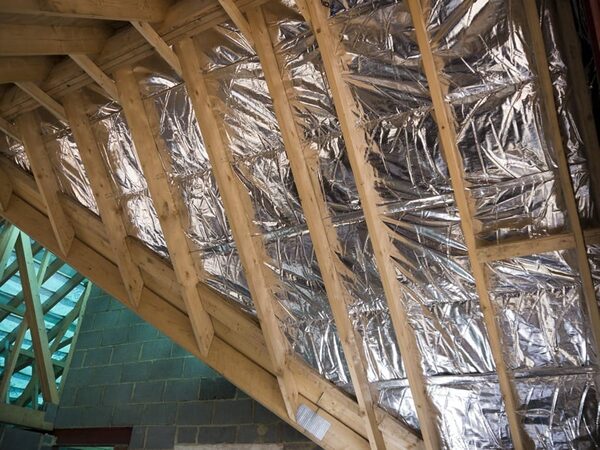
Neither material removes a household's dependence on the grid, a supplier or a fuel. What they change is the quantity of heat that escapes, and therefore the quantity that must be bought. Mineral wool at the recommended depth reduces the heat lost through a loft floor, which is the largest single fabric loss in many uninsulated homes. Multifoil reduces the heat lost through a roof plane where a deep quilt will not fit, which is often the only fabric improvement available in a room-in-roof.
The dependencies that remain are specific. Mineral wool depends on a merchant or installer for supply, and on the householder or a fitter for correct installation, since compression fit and gap-free joints are what deliver the nominal performance15. Multifoil depends on a manufacturer's certified system and on the certificate being followed exactly; a thin reflective layer installed outside its certified build-up is not the same product. It also depends on the manufacturer remaining in business for the guarantee to mean anything, which is why the distinction between a manufacturer's warranty and an insurance-backed guarantee matters2.
For a household weighing the two, the useful questions are physical rather than financial: how much depth is available, whether a vapour control layer is already present, whether acoustics matter, and whether the build-up can be certified for the application. Where depth is plentiful and the loft is accessible, mineral wool at 270mm is the documented, cheapest, most widely installed route3. Where depth is scarce and the roof plane is the only surface available, a certified multifoil system is the route that fits.
Sources29 cited
- What is mineral wool, Mineral Wool Insulation Manufacturers Association, 2026-09-20
- SuperFOIL home, SuperFOIL, 2026-09-20
- House insulation: the ultimate guide, Federation of Master Builders, 2026-09-20
- Loft insulation advice, Centre for Sustainable Energy, 2025-10
- Loft insulation at joist level, Mineral Wool Insulation Manufacturers Association, 2026-09-20
- Insulation guide, Uswitch, 2026-09-16
- Insulation and energy saving: what is insulation, Smart Energy GB, 2026-03-16
- Fire rated multifoil, SuperFOIL, 2026-09-20
- Mineral wool FAQs, Mineral Wool Insulation Manufacturers Association, 2026-09-20
- Health and safety, Mineral Wool Insulation Manufacturers Association, 2026-09-20
- 10 reasons why multifoil insulation is the future, SuperFOIL, 2024-02-19
- About mineral wool, Mineral Wool Insulation Manufacturers Association, 2026-09-20
- Building Regulations guidance Part L1B, existing dwellings, Welsh Government, 2014-07
- Salford Energy House boiler flow temperature testing, Nesta, 2022-10-10
- Masonry cavity wall insulation, Mineral Wool Insulation Manufacturers Association, 2026-09-20
- Roof insulation at rafter level, Mineral Wool Insulation Manufacturers Association, 2026-09-20
- Wrap your home in insulation, Low Carbon Hub, 2025-11-27
- Separating floor insulation, Mineral Wool Insulation Manufacturers Association, 2026-09-20
- Timber frame wall insulation, Mineral Wool Insulation Manufacturers Association, 2026-09-20
- Spray foam insulation advice, Centre for Sustainable Energy, 2025-11
- Separating wall insulation, Mineral Wool Insulation Manufacturers Association, 2026-09-20
- Floor insulation, Mineral Wool Insulation Manufacturers Association, 2026-09-20
- Roof insulation, Mineral Wool Insulation Manufacturers Association, 2026-09-20
- The 4 benefits of mineral wool, Mineral Wool Insulation Manufacturers Association, 2026-09-20
- New build FAQ, Insulated Render and Cladding Association, 2026-09-20
- ECO4 Innovation Approved Innovation Measures, Ofgem, 2024-01
- Partition wall insulation, Mineral Wool Insulation Manufacturers Association, 2026-09-20
- Sustainability, Mineral Wool Insulation Manufacturers Association, 2026-09-20
- Knauf OmniFit Thermal and Sound Slab, Quiet Mark, 2026-09-17
 Multifoil InsulationDoes thin foil insulation really keep a home warm, and how does it compare with thick rolls of wool or rigid boards?
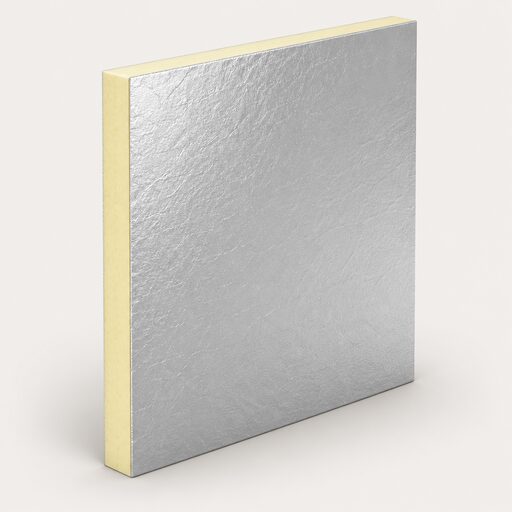 Insulation Materials ComparedMineral wool, PIR boards, polystyrene and natural fibres all keep heat in, but they suit different jobs and budgets.
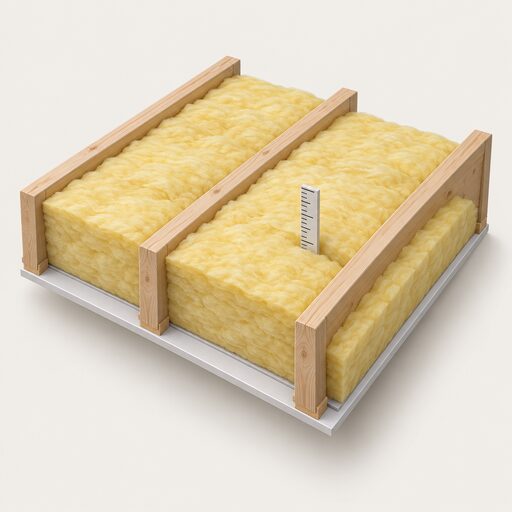 Loft InsulationHow much loft insulation do you need, and is your current depth enough?
 Retrofitting Pre-1919 BuildingsOlder homes with solid walls need different insulation from modern houses, and getting it wrong can trap damp inside.
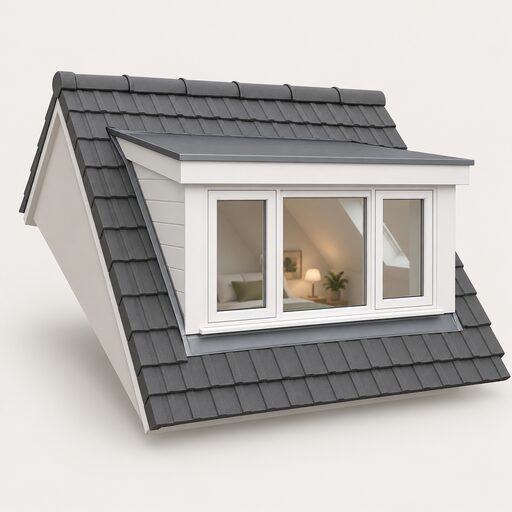 Room-in-Roof InsulationTurning a loft into a room changes how the roof keeps heat in, so the insulation has to work with the ventilation rather than being squeezed in afterwards.
 Solid Wall InsulationSolid walls lose far more heat than cavity walls, so what can actually be done about it?