
In this comparison
For a home with a gas, oil or LPG boiler, it is cheaper to turn the heating on and off than to leave it running all day. Guidance from the Energy Saving Trust, reported by ivie, is that keeping the heating on all the time with a boiler will use more energy and cost more money, and that it is more energy efficient to have the boiler come on when it is needed1. The same conclusion comes from a comparison method that involves leaving the heating on constantly for a week, then programming it to come on twice a day for a week, and taking meter readings at the start and end of each2.
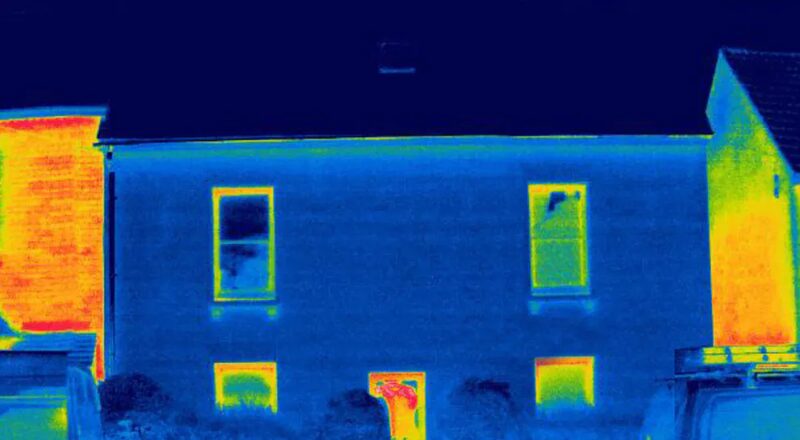
The reason is heat loss. A house does not store warmth the way a flask stores soup; it loses heat continuously through the building fabric and through draughts of warm air escaping gaps in walls, floors, roofs and lofts3. Every hour the heating runs, that loss is being replaced. A timed programme replaces it only when the household is there to feel the benefit.
The answer changes with the heat source, not with the household's preference. A heat pump is designed to run for longer periods at a lower flow temperature, and the lower the flow temperature, the better its efficiency4. So the same question has two different answers depending on what is in the cupboard or the garden.
The short answer: on and off is cheaper for a boiler
The case for a timed programme rests on a simple physical point. Heat loss happens whether or not anyone is in the house, so heating an empty home spends money on warming the street. The Energy Saving Trust position, as reported by ivie, is that keeping the heating on all the time with a boiler uses more energy and costs more, and that running the boiler when it is needed is more energy efficient1. uswitch sets out the same conclusion and a way to test it in your own home: leave the heating on constantly for a week, then programme it to come on twice a day for a week, and compare meter readings taken at the start and end of each week2.
That test is worth describing because it removes the argument from the realm of opinion. Two weeks of readings on the same tariff, in similar weather, give a household its own answer for its own building. The general finding is that leaving heating on 24 hours a day typically uses more fuel, and that the most energy-efficient approach is to programme the heating to come on when it is needed most2.
There is a second, quieter saving available on a combi boiler. Turning off preheat saves about 0.8% of a household bill, which across the country amounts to 0.6 TWh a year6. Preheat keeps a small store of hot water ready so that a tap runs hot immediately; switching it off means waiting a few seconds longer at the tap in exchange for not maintaining that store around the clock. It is the same principle as the space heating question, applied to hot water.
The scale of the thermostat itself matters more than most householders expect. Reducing the thermostat by 1°C could save up to 25% of heating bills and associated carbon, according to East Herts Council's energy advice5. That figure is a modelled upper bound rather than a promise, and it depends on how far the household was over-heating the home to begin with, but it shows that the set temperature and the run time are two separate levers.
Why the "leave it on low all day" idea took hold
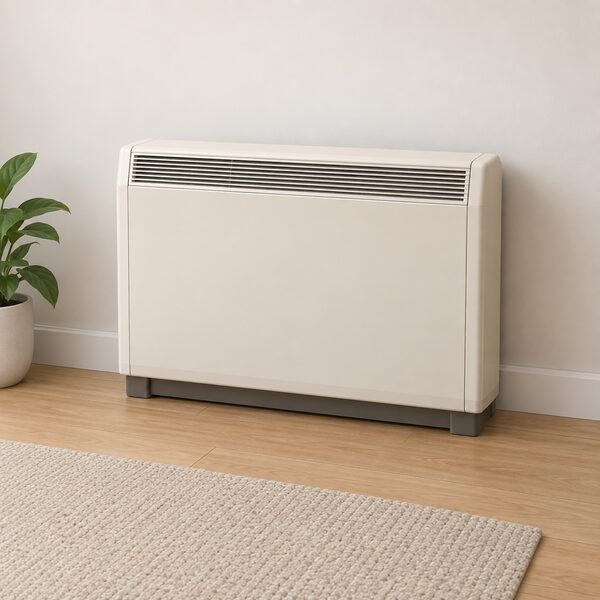
The advice is not a myth. It is a rule that was correct for a heating system that most UK homes no longer have. Night storage heaters draw electricity from the grid overnight at a cheaper rate and disperse heat at a low and slow level through the day9. They generate and store heat when electricity is cheaper and release it during the day10. For a storage heater, running continuously is not a choice, it is the design: the heater charges during off-peak hours, usually overnight, and releases that heat gradually over the following day11.
That is why the older advice sounds the way it does. A household with storage heaters genuinely cannot turn the heating on at six in the evening and expect warmth at half past six; the heat had to be bought the night before. Storage heaters fell out of favour in the 1980s and 1990s as electricity prices increased and people wanted their heat on a more flexible schedule12. The advice outlived the appliances it was written for.
Something similar applies to underfloor heating, which is best left on a low temperature for a longer period and is generally more suited to homes where people are in most of the day9. A screed floor takes hours to warm and hours to cool, so short bursts are wasteful in a different way: the system never reaches its working temperature before the timer switches it off.
The behaviour of households has also shifted. In a survey of Living Lab participants, most households reported having their heating on for longer periods during the day and in rooms that were not previously heated13. Nearly everyone chose to heat fewer rooms, with 85% deciding to heat less than half of their home14. Heating less of the house and heating it for longer are two different strategies, and the second one is the one that costs more.
What happens when you heat all day at a low temperature
The "all day" or "once" setting on a programmer means the heating switches on at the first "on" setting programmed and then stays on until the last "off" setting of the day15. The "24hrs" or "on" setting means the heating stays on all the time, and "off" means it stays off all the time15. Those three settings are the whole vocabulary of the question, and the difference between them is not a small trim to the running hours.
What the boiler does during those hours is cycle. A room thermostat keeps the home at a steady temperature by turning the heating on until it reaches the chosen temperature and then switching it off7. On an all-day setting, the boiler is therefore not burning gas continuously; it is firing, reaching the set temperature, stopping, and firing again as the house cools. Each of those firings replaces heat that has already escaped through the fabric.
The rate of that escape is what decides the cost. Heat loss occurs because heat is transferred from inside a home through the building fabric and lost through draughts of warm air through gaps in walls, floors, roofs and lofts3. The engineering calculation is explicit: total heat loss is the sum, for every building component, of area multiplied by U-value multiplied by temperature difference, plus transmission losses, plus a ventilation term of volume multiplied by air change rate multiplied by specific heat capacity multiplied by temperature difference16. The temperature difference term appears twice, which is why a colder day costs more and why holding a house at temperature through a cold night is expensive.
The practical consequence is that the longer the heating runs, the more of that loss it has to replace, and the loss does not pause when the occupants leave. Insulation reduces the rate at which the loss happens, which is why the same heating strategy costs different amounts in different homes. Heat loss through the roof alone can make up to 25% of all heat loss in the home17, and on average 60% of heat is lost through the walls and loft combined8.
When leaving the heating on for longer can make sense
There are real exceptions, and they are worth stating plainly rather than dismissing.
For properties that are exceptionally old or poorly insulated, where the temperature drops very quickly when the heating goes off, leaving the heating on low might prevent pipes from freezing or structural dampness1. That is a narrow case: it applies to buildings that lose heat fast enough for the fabric and the pipework to be at risk, not to a modern home with cavity insulation.
Damp is a related consideration. Constant low heat may be better for damp, and for air temperature, than frequently swinging between hot and cold18. A home with a condensation problem is dealing with moisture that needs a steady background temperature and ventilation, and a heating pattern that lets surfaces fall cold can make the problem worse.
Underfloor heating is the clearest case where longer running is the intended pattern. It is best left on a low temperature for a longer period and suits homes where people are in most of the day; if it is only used morning and evening, it alone may not provide sufficient warmth9. A household with underfloor heating and a boiler is therefore running a system whose thermal mass argues for longer, gentler operation.
Heat pumps belong in this section too, and are covered in their own section below. The common thread is thermal mass and fabric: systems and buildings that respond slowly are better served by steady, low-level input than by short bursts.
How heat loss decides the answer
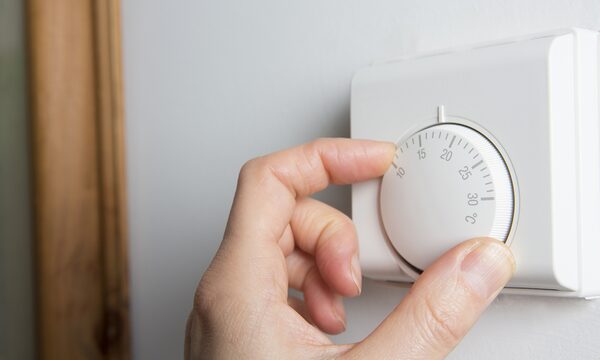
Everything above reduces to one relationship. A heating system's job is to replace lost heat at the same rate the building loses it. If the loss rate is high, the system runs more, and the cost of running it all day rises in proportion. If the loss rate is low, the difference between all-day running and timed running narrows, because there is less heat to replace during the empty hours.
That is why the same question produces different answers from different households, and why the general guidance is stated as a general rule rather than a guarantee. The comparison method uswitch describes, a week on constant and a week on a twice-daily programme with meter readings at each end, is the only way to get a figure for a specific home2.
The formula also explains why the thermostat setting and the run time interact. Raising the set temperature increases the temperature difference between inside and outside, which increases the loss rate, which increases the energy needed to hold that temperature. Reducing the thermostat by 1°C could save up to 25% of heating bills and associated carbon5. Turning the heating off for eight hours does something similar: it lets the indoor temperature fall, which reduces the temperature difference, which reduces the loss rate during those hours.
The two levers are not equivalent, and the guidance treats them differently. The thermostat setting is a comfort decision with a published saving attached; the run time is a scheduling decision with a published direction of travel. Both are covered in more detail on the page on using heating controls to save money.
Using timers and thermostats to heat only when needed
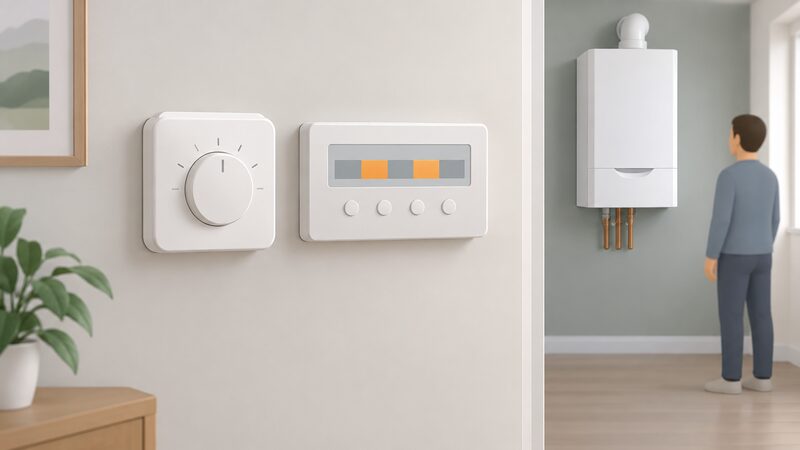
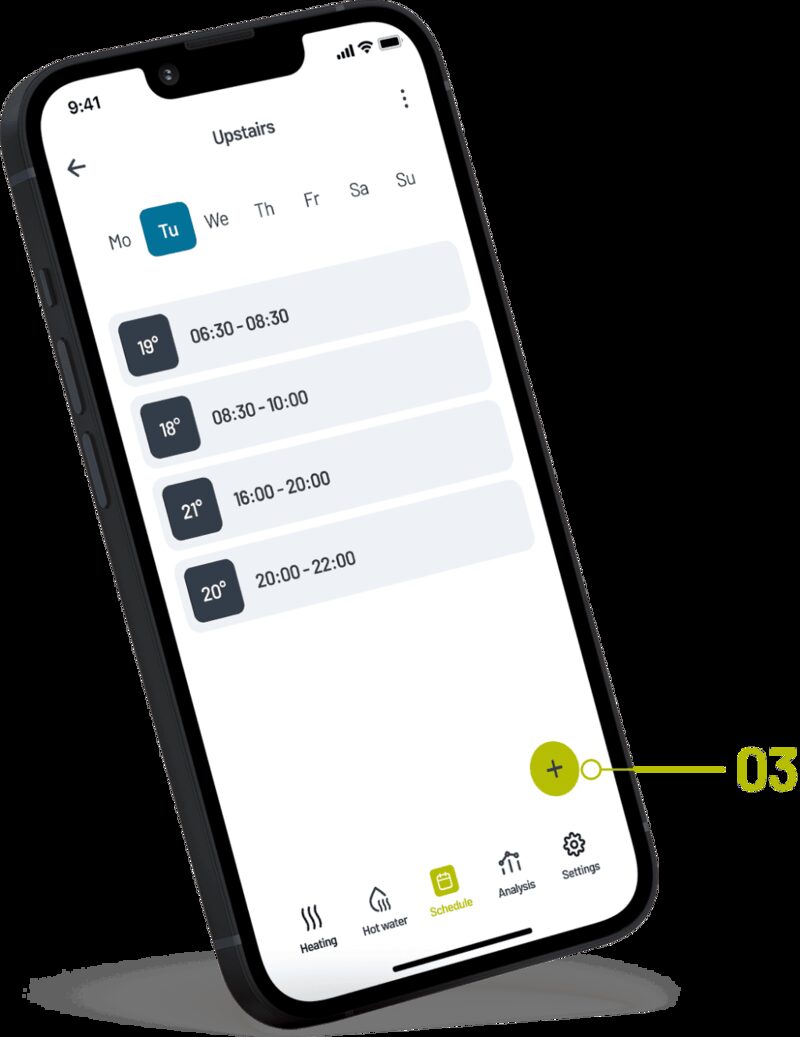
A timer lets you control when your heating or hot water turns on and off each day, so that the central heating can be programmed around the household's routine15. A timer or programmer controls when the heating comes on and off7. That is the whole mechanism: the programmer decides the hours, the thermostat decides the temperature, and the two together decide the bill.
The settings to look for on a programmer are the ones described above. "All day" or "once" runs from the first on time to the last off time; "24hrs" or "on" runs continuously; "off" stops the heating entirely15. Most modern storage heaters have timer modes described as "out all day" or "home all day" for convenience11, and a Dimplex Quantum in out-all-day mode runs 7.5 hours of heating per day in two periods, morning and evening21. That is a useful reference point for what a timed programme actually looks like in hours.
Smart thermostats do the same job with more instrumentation. A smart thermostat controls heating and helps manage how the central heating is set and adjusted22. Depending on the model it may offer app control, voice control, hot water settings, location-based heating, reminders or alerts, open window detection, routine learning and heating-use tracking22. Most allow multiple routines to be programmed so the home is at the desired temperature when it is occupied23. The practical saving comes from remote switching off by phone, more sophisticated sensors that avoid temperature extremes, and heating or pre-heating certain rooms while leaving unused rooms untouched23.
The timing of an upgrade matters for comfort rather than cost: the advice is to look into replacing an old thermostat before it gets too cold, before the autumn gets too chilly23. For households on electric storage heating, the controls are different again, and the page on Economy 7 and whether it is worth it covers the tariff side.
Does the answer change with a heat pump?
Yes, and this is the most important qualification on the page. Heat pumps usually work best if turned on at a lower temperature for a longer period of time20. Guidance for running one efficiently is to keep the heat pump on all the time and let a set-back maintain a lower temperature when the home is empty or the occupants are asleep4. That does not increase overall running costs, because the heat pump can run more efficiently and offset the longer running period4.
The mechanism is the flow temperature. The lower the flow temperature, the better the efficiency of the heat pump24. A heat pump that runs steadily at a low flow temperature is doing what it was designed to do; one that is switched on for two short bursts a day has to raise the flow temperature to recover the temperature quickly, which costs efficiency. Independent guidance states that with a heat pump you can save money by leaving the heating on all day, because heat pumps function differently to boilers and rely on good insulation to work efficiently1.
Cold weather complicates this. During winter the air temperature can drop by 5°C or more overnight, which reduces the heat pump's efficiency because it has to heat water to a higher temperature4. That is an argument for the set-back rather than for switching off entirely.
The evidence on household experience is mixed and worth stating. Households that replaced previously functioning gas boilers typically expressed a preference for a new boiler over the heat pump, and those who had previously had working gas or oil boilers were more likely to report an increase in bills or lower satisfaction than with their previous system25. That finding sits alongside the efficiency guidance rather than contradicting it: a heat pump run like a boiler will not perform like a well-run heat pump.
"it's best to keep your heat pump on all the time, and let your 'set-back' maintain a lower temperature when you're out or asleep"
What this means for your bills and energy independence
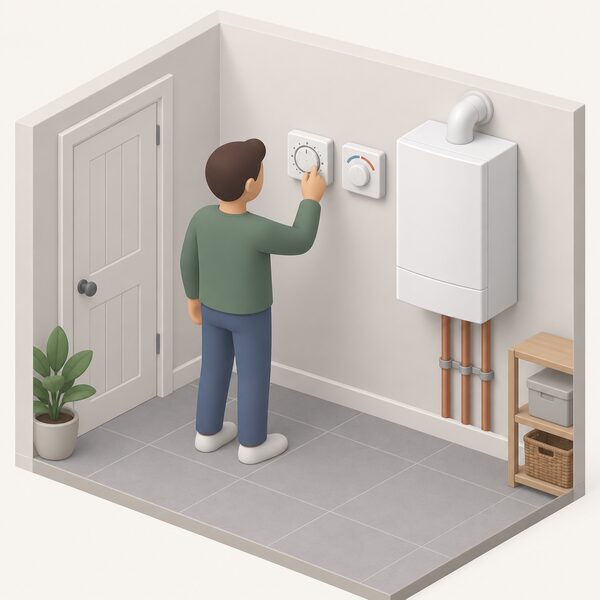
The running pattern is one of the few variables in home energy that a household controls completely, without a supplier, an installer or a grant. A timer and a thermostat decide how much gas or electricity the heating draws and when. That is a direct reduction in the volume of energy a home must buy, and it is the cheapest form of independence available: no capital cost, no application, no waiting.
The limits are equally clear. A timed programme does not reduce the rate at which the building loses heat, so it lowers the bill without changing the underlying dependence on the grid or on a fuel supplier. Insulation changes the rate; scheduling changes only the hours. The two work together, and the page on preparing a home for winter covers the fabric side.
There is a control risk that affects some households more than others. The Radio Teleswitch Service is being switched off, and where a meter has not been upgraded, heating or hot water may be continually left on or off, or the charging-up may happen at the wrong time of day, and the supplier cannot confirm peak or off-peak usage, which could mean higher electricity bills26. The same consequence is described in Age UK's guidance on the switch-off27. Households on off-peak electric heating should check their meter status before relying on a timer, and the page on what support is available when an RTS meter is replaced sets out the process.
For a household with a boiler, the practical position is that a timed programme matched to occupancy, a room thermostat set to the lowest comfortable temperature, which for most people is between 18°C and 21°C, and a hot water thermostat set between 60°C and 65°C, together give the lowest running cost consistent with comfort and safety7. For a household with a heat pump, the equivalent position is continuous running with a set-back4. Neither is a recommendation of a product or a supplier; both are descriptions of how the equipment is designed to be run.
Sources28 cited
- The best way to run your central heating to save money, ivie, 2026-09-20
- Heat the whole house or one room?, Uswitch
- Why do homes and commercial buildings need insulation?, Energy Saving Trust Green Heat Toolkit, 2025-03-31
- How to ensure a heat pump runs efficiently, Energy Saving Trust, 2026-05-19
- Home and business grants, schemes and advice, East Herts Council, 2026-09-17
- Boiler statistics, Uswitch, 2024-01-04
- Thermostats and heating controls, Energy Saving Trust, 2026-02-10
- Energy efficient glazing and high performance external doors, Centre for Sustainable Energy, 2026-06
- Underfloor heating, Centre for Sustainable Energy, 2025-11
- How to save energy when you've got electric storage heaters, Home Energy Scotland, 2025-01
- Night storage heaters, Centre for Sustainable Energy, 2025-10
- Electric central heating, Which?, 2025-09-22
- The delight of better control, Energy Systems Catapult, 2019-08-08
- Heat pump transition report, Department for Energy Security and Net Zero, 2026-05
- How to use your heating controls, Age UK, 2026-03-23
- Calculating heat loss: a simple and understandable guide, APHC, 2025-05-21
- Retrofit, Act on Energy, 2026
- How to stop condensation, Which?, 2026-05-26
- Scottish House Condition Survey 2024: key findings, Scottish Government, 2026-02
- Fuel poverty: enhanced heating, Scottish Government response, Scottish Government, 2019-12-17
- Dimplex Quantum night storage heaters, Centre for Sustainable Energy, 2026-06
- How a smart thermostat can save you money this winter, ivie, 2025-11-18
- RTS meters, National Energy Action, 2026-07-08
- Insulation and heat pumps: the perfect pairing, MIMA, 2026-09-20
- Heat pumps, nidirect, 2025-02-24
- Radio Teleswitch Service (RTS) switch off, Age UK, 2026-08-26
- Covid impact on domestic energy consumption, Energy Systems Catapult, 2021-06-15
- Why you need a boiler service and what to ask about, Which?, 2025-10-27
 Heating Schedules and SetbackIs it cheaper to leave the heating on low all day, or set it to come on only when you need it?
 Controls and Time-of-Use TariffsCheaper electricity at night only saves money if your heating actually uses it then.
 Heat Pumps vs BoilersWill a heat pump actually cost less to run than my boiler, and does it heat the house as well?
 The Full Boilers and Heating GuideWhich boiler suits your home, and when is it worth swapping the old one?
 Heat Pump Running CostsWhat does a heat pump cost to run each year, and is it cheaper than a gas boiler?
 Energy IndependenceA heat pump runs your heating on electricity instead of gas or oil, so how much does that really cut what you pay and how exposed you are when fuel prices jump?