
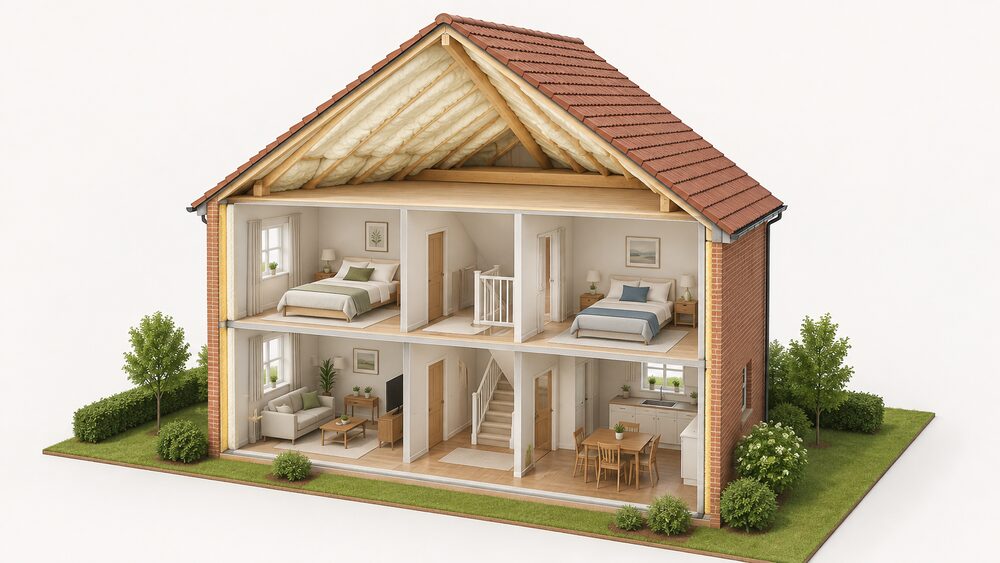
In this answer
Short answer
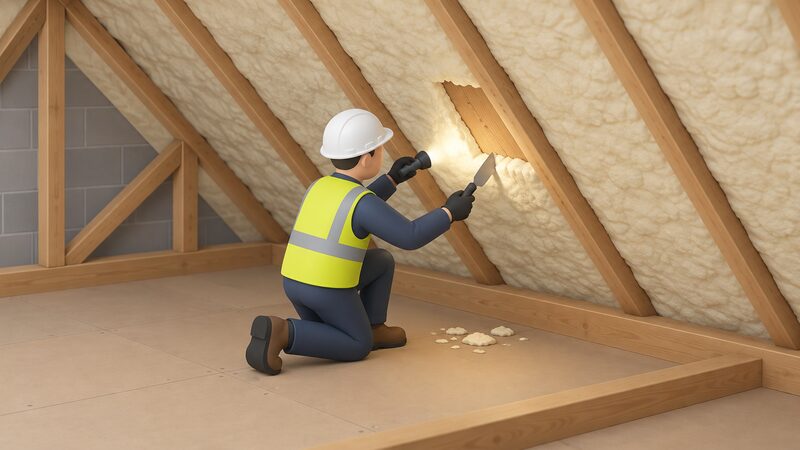
Yes, spray foam insulation can cause roof timbers to rot. Spraying foam directly to the underside of a roof partially seals the timber, so rainwater from a leak can collect and cause rot, and condensation can cause similar problems, with lower risk reported from open-cell foam1. A study by the Health and Safety Executive suggests spray foam insulation causes timber decay in more than a quarter of all cases when applied directly to the underside of roof tiles2.
The mechanism is straightforward. Foam applied directly to the timbers means the roof cannot breathe, which can cause or worsen damp problems3. Official modelling for England investigated moisture and timber degradation risk when a sprayed foam insulant is applied to typical domestic timber roofs, and identified high levels of risk in Newcastle and higher levels of risk in some scenarios where foam was applied to a high resistance underlay4.
The consequences reach beyond the roof itself. A layer of spray foam makes a survey of the roof impossible, which may prevent installing solar panels, and the presence of foam can make homes harder to sell, particularly if a survey finds the insulation has been poorly installed2. The government position is that foam installed in line with the relevant standards should not require removal or prevent homeowners obtaining a mortgage5, but lenders remain wary in practice6.
How the rot happens: sealed timbers, trapped moisture and poor ventilation
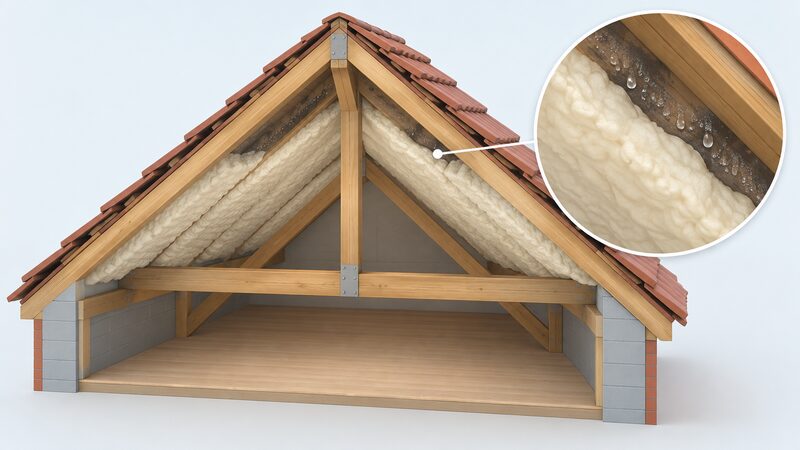
Rot in a foamed roof is a moisture problem before it is an insulation problem. Foam sprayed onto the underside of a roof partially seals the timber, so if rainwater from a leak collects there it can cause rot, and condensation can cause similar problems1. The same source notes that any timbers coated in foam are more difficult to replace, as are tiles or slates if there is no roofing felt or other layer between the foam and the tiles1.
Ventilation is the second half of the mechanism. Where a roof void is not ventilated, water vapour and condensation cannot escape and end up being absorbed by the timber structure, causing it to rot7. Foam applied directly to the timbers means the roof cannot breathe, which can cause or worsen damp problems3. Closed cell foam is also a barrier to moisture, so the room or loft needs to be well ventilated to avoid the build-up of condensation8.
Not all moisture in a roof space comes from inside the house. Penetrating damp has its own causes, including a leaking roof, a cracked wall, leaking guttering or external pipes, a leaking drainage pipe, and rotten windows or doors9. A roof that already leaks when foam is applied is therefore a poor candidate: the foam seals the leak path into the timber rather than letting the roof drain and dry.
The structural stakes are high because the timbers are doing real work. Timber elements form the overall pitch, span across the building, support the tiles or covering and transfer wind and snow loads to the walls, while ties stop the roof from spreading and form an A-frame shape10. Decay in those members is not a cosmetic issue.
"The void isn’t ventilated, which means water vapour and condensation can’t escape and so ends up being absorbed by the timber structure, causing it to rot"
The official investigation into moisture risk on timber sloped roofs in England
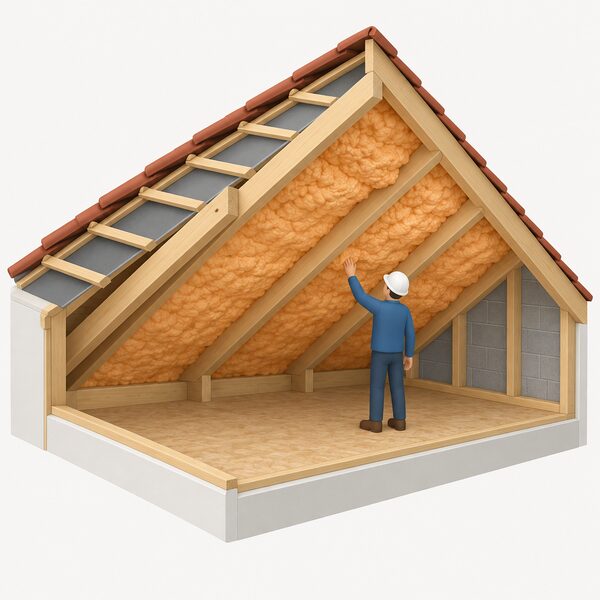
The most substantial evidence on this question is government modelling. The study applies to England and investigates the level of moisture and timber degradation risk which may be encountered when a sprayed foam insulant is applied to typical domestic timber roofs4. It is not a general warning about insulation; it is a specific assessment of what happens when foam meets a traditional timber sloped roof.
The findings are scenario-dependent rather than uniform. High levels of risk were identified in Newcastle, and the modelling identified higher levels of risk in some scenarios when a sprayed foam is applied to a high resistance underlay4. Risk reduced to low when a closed cell insulant and/or a vapour control layer (AVCL) was used, in London4. That pattern matters: the same product produces different outcomes depending on climate exposure, the underlay beneath it, and whether a vapour control layer is present.
The work has continued beyond the initial modelling. An exchange of letters in May 2024 covered research on moisture risk of spray foam insulation applied to timber sloped roofs11. A later fire safety investigation, also applying to England, examined the implications of retrospectively applied spray foam roof insulation in terms of compliance with Regulation B4(2), and found that such sprayed configurations can satisfy the highest demands for roof covering classification as currently included in Approved Document B guidance12. Moisture and fire are separate questions, and the fire testing does not answer the rot question.
For a household, the practical reading is that the risk is real but conditional. Foam on a high resistance underlay in an exposed location is the worst combination the modelling covers; a closed cell insulant with a vapour control layer performed best in the scenarios tested. The modelling is England-specific, and no equivalent published assessment for Scotland, Wales or Northern Ireland appears in the evidence here.
Whether your roof timbers sit on the cold side of the insulation
The position of the insulation relative to the timber is the single most useful thing a householder can establish. Some loft spray foam installations leave roof timbers on the cold side of the insulation, allowing condensation, damp and damage if ventilation is poor or blocked14. In that arrangement the timber is cold, the air around it is moist, and condensation forms on the very member that holds the roof up.
Building regulations guidance describes the two standard arrangements. In a cold deck roof the insulation is placed between the joists or rafters, or between the ceiling joists in the case of a pitch roof15. In a warm roof system the insulation is placed above the joists or rafters16. Flat roof guidance describes the same split: a cold roof has insulation placed beneath the deck, while a cold deck or cold roof has insulation below the roof deck and the associated joists, and typically a gap is left for ventilation because condensation may form and lead to rot17.
Spray foam applied to the underside of a sloping roof is, in effect, a cold deck arrangement with the ventilation gap filled. That is why the underlay and the presence of a vapour control layer change the outcome so much in the official modelling4. It also explains why loft conversions are a particular concern: spray foam is not recommended there because it carries a higher risk of damaging the structure of the roof18.
The distinction between open cell and closed cell foam runs through this. Closed cell foam is a better insulator than open cell foam, but it is also a vapour barrier that can reduce ventilation; open cell foam does not provide the same level of insulation because it is not as dense5. Closed cell foam sets into a rigid solid, which can help support the structure of the property, and it is generally pricier than open-cell8.
| Arrangement | Insulation position | Ventilation implication |
|---|---|---|
| Cold deck roof | Between joists or rafters, or between ceiling joists on a pitch roof15 | Ventilation gap typically left because condensation may lead to rot17 |
| Warm roof | Above the joists or rafters16 | Timbers kept on the warm side of the insulation |
| Spray foam to underside of slope | Applied directly to the timbers3 | Roof cannot breathe; timbers may sit on the cold side14 |
What this means for roof surveys, mortgages and removal
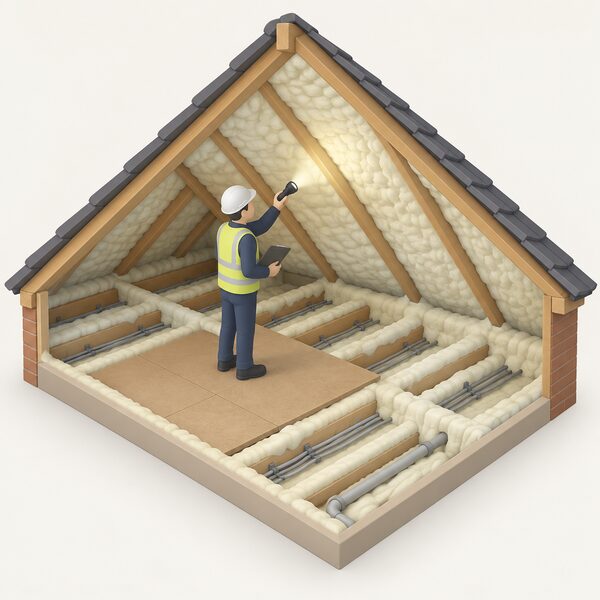
The financial consequences of foam in a roof are often felt before any rot is found. A layer of spray foam makes a survey of the roof impossible, which may prevent installing solar panels2. Surveyors who encounter spray foam during an inspection may reduce the value of the property or request an independent specialist report, and it may render a property un-mortgageable in the eyes of a lender8. Mortgage lenders are wary of spray foam insulation, often refusing to lend to buyers if the property has spray foam insulation installed6.
Parliament has taken note. In a June 2026 debate it was stated that many households who had spray foam installed have found they have encountered problems when selling their home19. Against that, the government position is that where spray foam insulation has been installed in line with the relevant standards, it should not require removal or prevent homeowners obtaining a mortgage5. The gap between the official position and lender behaviour is the practical difficulty: a household can hold a compliant installation and still meet a lender that will not proceed.
Removal is possible but rarely clean. Removal is typically prompted by damp and condensation, damage to the property, or the need to make a repair such as a roof repair20. Foam is difficult to remove from floor joists, wires and pipework, so it can present a problem when maintenance work is needed in that area in the future21. There are also reports of some traders incorrectly installing spray foam insulation, then charging for it to be removed20.
On the building control side, less than 50 per cent of the roof being affected by repairs or re-covering of an existing pitched or flat roof means a building control application is not required22. Replacement of roof coverings on pitched and flat roofs must be notified unless a Competent Person Scheme registered installer is used23. Where a pitched roof covering is replaced with a different material to its original, approval under the Building Regulations is likely to be needed to ensure the roof will be adequate in terms of structural stability, fire safety and energy efficiency24.
What spray foam does for energy independence, and what it costs you
Spray foam insulation is a type of insulation which can be sprayed on the inside of roofs, in walls and floors25. It is most often used in lofts where the foam is sprayed onto the underside of sloping roofs, and it is also used to insulate under suspended floors2. In principle that reduces heat loss through the roof, which reduces the demand a household places on the grid and on whatever heating fuel it buys.
The dependence it creates is the counterweight. A foamed roof is harder to survey, harder to repair and harder to mortgage, and the foam itself is difficult to remove from joists, wires and pipework21. A household that cannot get a roof survey cannot easily add solar panels2, which is a direct loss of generating independence. The insulation also ties the roof's performance to one installed product and, in the case of closed cell foam, to a vapour barrier that reduces ventilation5.
The recognised risks of spray foam are set out plainly: high cost compared to other forms of insulation, reduced ventilation causing condensation and dampness, covering up roof problems, difficulty of removal, lowering property value, and mortgage difficulty with some lenders20. Some types of spray foam insulation can cause damp problems or be a fire risk if not properly installed, or when cheaper products are used26.
For a household weighing this up, the evidence points to conditions rather than a verdict. Independent advice from a buildings surveyor before installation is the recommended route, or at least three quotes from different home improvement traders if surveyor advice costs too much20. Where foam is already installed, the questions that matter are the underlay beneath it, whether a vapour control layer is present, and whether the timbers sit on the cold side of the insulation4.
Sources26 cited
- Spray foam insulation, Energy Saving Trust, 2024-12-05
- Spray foam insulation, Centre for Sustainable Energy, 2025-11
- Scams warning for older people in Wales, Care and Repair, 2024-01-19
- Moisture risk of spray foam insulation applied to timber sloped roofs, GOV.UK, 2024-03-28
- Spray foam insulation and mortgages, House of Commons Library, 2026-09-20
- House insulation: the ultimate guide, Federation of Master Builders, 2026-09-20
- How to avoid condensation, Local Authority Building Control, 2016-06-08
- Spray foam insulation, Which?, 2026-05-26
- Repairs damp, Citizens Advice, 2026-09-20
- Building regulations work to an existing roof, Planning Portal, 2026-09-17
- Exchange of letters on spray foam insulation, May 2024, GOV.UK, 2024-05-08
- Fire safety: roof insulation fire testing, GOV.UK, 2025-12-22
- Building regulations conversion projects, Planning Portal, 2026
- Is underfloor spray foam the same as loft insulation?, Q-Bot, 2026-05-11
- Further information: thermal resistance insulation, Welsh Government, 2026-09-17
- Constructing new roof, eg extension, Welsh Government, 2026-09-17
- Flat roof insulation, MIMA, 2026-09-20
- Loft conversions: insulation and ventilation, Centre for Sustainable Energy, 2026-08
- Energy market consumer protection, Hansard, 2026-06-17
- Make sure your home is energy efficient, Citizens Advice, 2026-09-19
- Park homes, Centre for Sustainable Energy, 2026-07
- Building regulations work to an existing roof, Planning Portal, 2026
- Building work, replacements and repairs to your home, GOV.UK, 2014-11-03
- Further information re-roofing, Welsh Government, 2026-09-17
- Make sure your home is energy efficient, Citizens Advice Wales, 2026-09-17
- Scam alert: British Lung Foundation loft insulation cold calls, Which?, 2024-10-16
 Spray Foam InsulationOpen and closed cell spray foam on roof slopes and under floors: what it costs, the moisture and timber decay risks identified in official modelling, why lenders and surveyors ask questions, what paperwork exists and what removal involves.
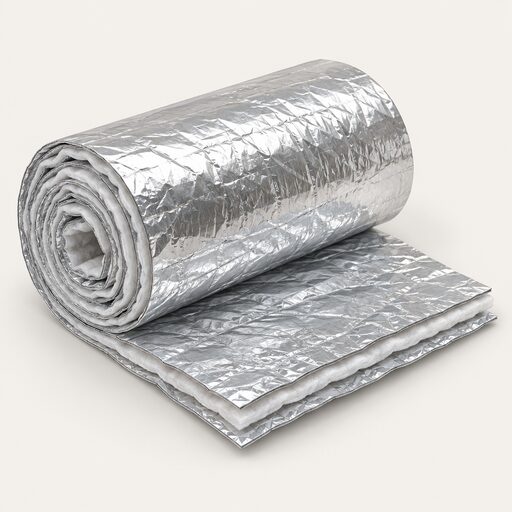 Multifoil InsulationDoes thin foil insulation really keep a home warm, and how does it compare with thick rolls of wool or rigid boards?
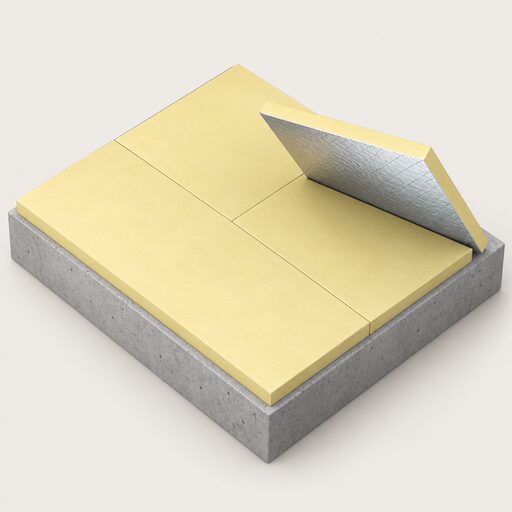 Floor InsulationHow much warmth escapes through the floor, and is it worth insulating?
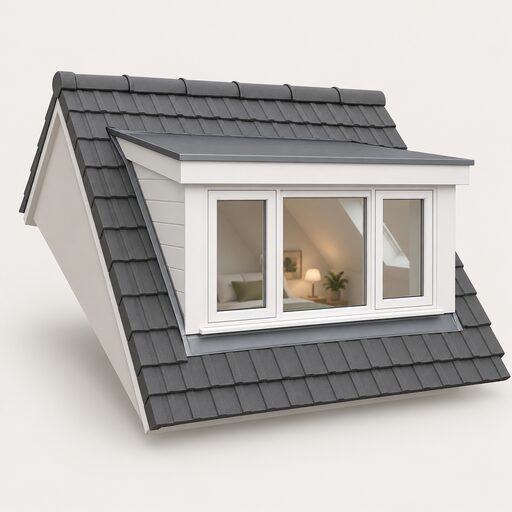 Room-in-Roof InsulationTurning a loft into a room changes how the roof keeps heat in, so the insulation has to work with the ventilation rather than being squeezed in afterwards.
 Condensation, Damp and MouldWhy does mould appear after insulation or new windows go in?
 Fabric First ApproachWhy insulate before replacing the boiler or fitting a heat pump?