
In this answer
Short answer
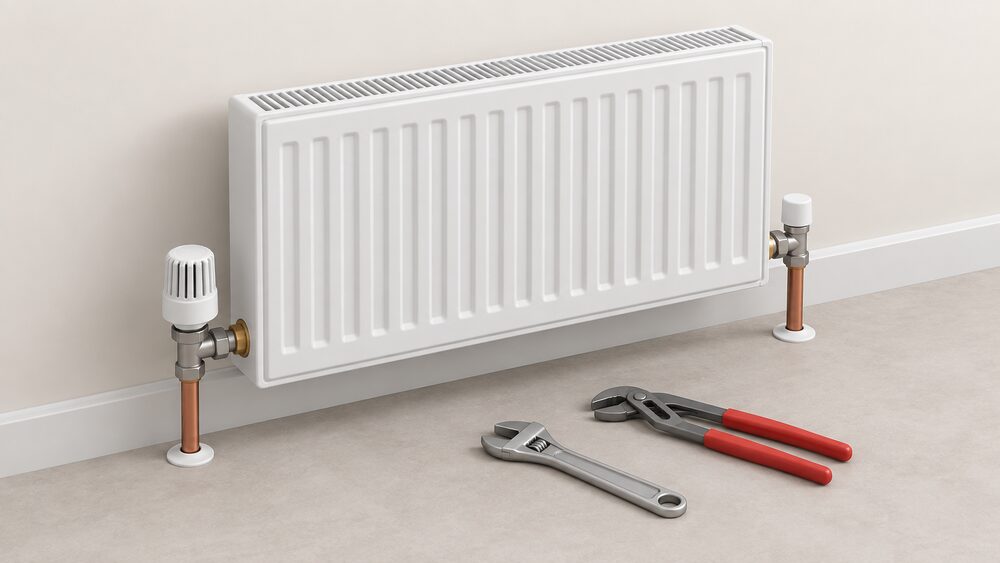
The Building Regulations do not contain a single clause that says "every radiator must have a TRV". What they contain is a requirement for thermostatic room controls, and a separate requirement that any new radiator installed carries a thermostatic radiator valve. In England, each room should be provided with thermostatic room controls in new dwellings, and when a heat generator such as a boiler is replaced in an existing dwelling1. The same guidance states that any new radiator installed will require a thermostatic radiator valve to be installed, and that placing TRVs on existing radiators is encouraged2.
The practical effect is that the rules bite at the point of work, not at the point of ownership. A household with an old system and no TRVs is not in breach simply by having one. A household fitting a new radiator, or replacing a boiler in England, is doing work that the regulations cover.
There is one siting rule that catches people out. Approved Document L Volume 1 states that thermostatic radiator valves should not be used in the same room as the thermostat, and that heat emitters in the same room as the thermostat should have manual controls3. A TRV and a room thermostat in the same room will fight each other, so at least one radiator normally stays on manual.
What the Building Regulations require for TRVs
The requirement is expressed as a control outcome rather than a product specification. Guidance on energy efficiency requirements for extensions states plainly that any new radiator installed will require a thermostatic radiator valve to be installed, and adds that it is also encouraged to place TRVs on existing radiators2. The same wording appears in the Welsh Government's energy efficiency guidance for extensions2 and in guidance on additional storeys extending upwards5.
That distinction between "required" and "encouraged" is the whole shape of the rule. New emitters must be controllable room by room. Old emitters are a recommendation. A TRV gives better control over the individual room temperatures, which is the function the regulations are reaching for2.
The wider context is that the Building Regulations include requirements to ensure that fuel and power is conserved6. Part L of the regulations, Conservation of Fuel and Power, is where the heating control requirements sit. The regulations also apply to other aspects of the work such as electrical installation and plumbing work, so a heating job can pull in more than one part of the framework7.
Where a heating system is altered or extended into a conservatory, the work must comply with the Building Regulations, which means independent temperature and on/off controls9. Adding extra radiators to a heating system is listed as covered alteration work requiring approval10. So the trigger is not only a new boiler: extending a system into a new space brings the controls requirement with it.
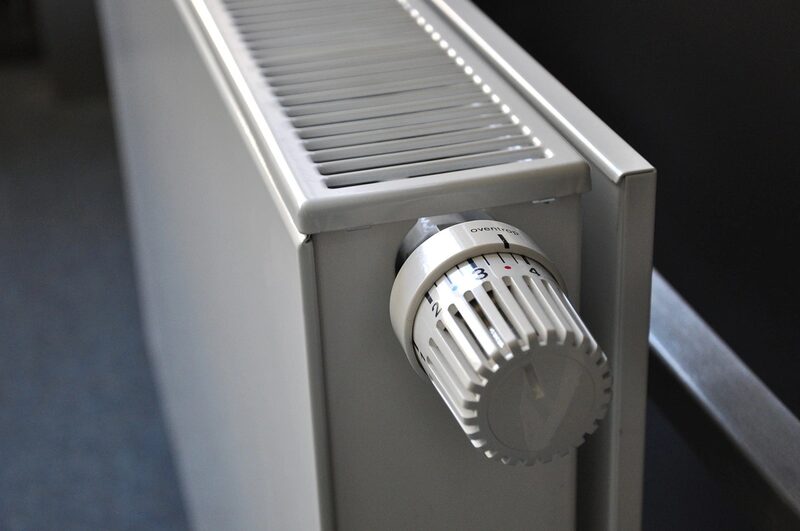
Thermostatic room controls when a boiler is replaced in England
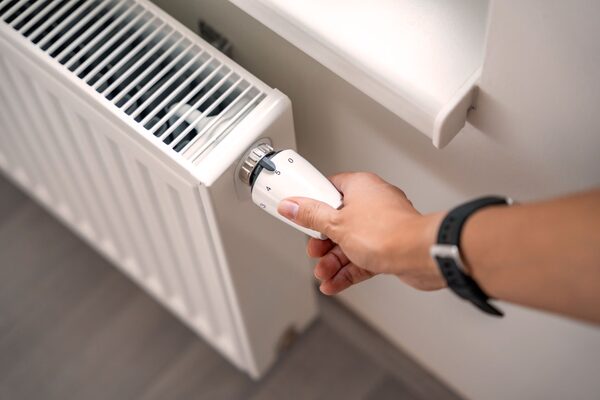
This is the requirement most householders meet without realising it. Each room should be provided with thermostatic room controls, and the requirement applies to heating systems in new dwellings or when a heat generator such as a boiler is replaced in an existing dwelling1. The requirement was added to the Building Regulations with effect from 15 June 2022 in England.
Two things follow. First, a boiler replacement is not just a boiler swap: the controls around it are part of the job. Second, the requirement is about rooms, not about a single central thermostat. A system with one room thermostat and no TRVs does not deliver room-by-room control.
Installing a new boiler also needs Building Regulations approval because of the safety issues and the need for energy efficiency11. Planning permission, by contrast, is not normally required for installation or replacement of a boiler12. Those are two different regimes and it is worth keeping them apart: building control is about how the work is done, planning is about whether the development is allowed6.
The approval route runs through a Building Control body, and an application must be made before proceeding with the work13. In practice most boiler replacements are notified by the installer through a competent person scheme, but the underlying requirement is the same.
Where the rules apply: England and the rest of the UK
Building Regulations are devolved, and the guidance is explicit that there are different rules in Scotland and Northern Ireland14. Most building work carried out in England must comply with the Building Regulations 20101. Electrical installation work in England and Wales must comply with the Building Regulations for electrics15, and the 2025 amendment regulations carry the territorial heading "Building and Buildings, England and Wales"16.
Scotland has its own framework. The Building Standards Technical Handbook, Domestic, sets out the Scottish requirements, and the building regulations always apply where construction occurs unless exempted by regulation 3, with construction including alterations and extensions as well as entirely new buildings17. The handbook is available in electronic form and available free of charge on the Building Standards Division website17.
Northern Ireland has separate building control regulations covering boilers and stoves and the siting of an oil tank18. Building Regulations apply to most building work there, and an application must be made before proceeding13. The Building Regulations (Northern Ireland) 2012 set out notice exemptions, including replacement of a combustion appliance under Part L with no structural alteration, and replacement of parts of an existing fixed building service other than a flue19.
| Nation | Framework | Where the TRV and control rules sit |
|---|---|---|
| England | Building Regulations 2010, Approved Document L Volume 1 | Thermostatic room controls on boiler replacement; TRV on new radiators1 |
| Wales | Welsh Government building regulations guidance | Same new-radiator TRV wording in extension guidance2 |
| Scotland | Building Standards Technical Handbook, Domestic | Separate Scottish requirements; handbook free online17 |
| Northern Ireland | Building Regulations (Northern Ireland) 2012 | Separate building control regulations for boilers and stoves18 |
The Welsh position deserves care. Wales publishes its own Approved Document L Volume 1 for 202620, and Welsh guidance repeats the new-radiator TRV requirement2. The England and Wales framework overlaps on electrics and on the calculation methodologies for energy performance15, but the practical guidance a householder reads is published separately by each administration.

TRVs and other heating controls: how the requirements fit together
TRVs are one layer in a stack. The regulations also reach boiler interlock, zoning, timers and the boiler's own modulation behaviour, and the layers are meant to work together rather than duplicate each other.
The siting rule is the clearest example of that. Thermostatic radiator valves should not be used in the same room as the thermostat, and heat emitters in the same room as the thermostat should have manual controls3. The room thermostat calls for heat; the TRVs decide which rooms receive it. Put a TRV in the thermostat's room and the TRV can shut the radiator while the thermostat is still calling, or hold it open while the thermostat is satisfied.
TRVs are room controls, not zone controls. A zone is a group of rooms served by its own valve and thermostat, and the two are distinct measures in scheme rules: the Boiler Upgrade Scheme measures table lists TRV as its own measure type22. For the relationship between the two, see heating zoning and boiler interlock.
The Boiler Plus requirement sits alongside this. It requires existing households in England to install an additional energy saving measure from a choice list at the point of installing a new or replacement combi gas boiler in an existing dwelling23. That is a separate obligation from the Part L thermostatic room control requirement, and both can apply to the same job.
Smart radiator thermostats perform the same function as mechanical TRVs, with scheduling and app control added. The regulation is written around the control outcome, so the technology is not prescribed. What matters is that each room can be controlled independently and that the thermostat's own room is left on manual control. For how the two compare in practice, see smart TRVs and smart TRV vs smart thermostat.
Guidance and evidence: official documents and independent testing

The primary England document is Approved Document L Volume 1, Conservation of Fuel and Power, Dwellings3. The 2026 Welsh equivalent is published by the Welsh Government20. The Scottish handbook is the Building Standards Technical Handbook, Domestic, April 202617. The Northern Ireland counterpart is the Building Regulations (Northern Ireland) technical booklet on conservation of fuel and power, and the self-build route to the Boiler Upgrade Scheme requires evidence that shows ownership, funding and non-developer status24.
On the evidence side, the most directly relevant UK testing is the BEAMA and University of Salford Energy House work on TRVs with air source heat pumps. The report presents findings from the BEAMA Energy House ASHP TRV Project testing TRVs with air source heat pumps at Energy House 14. BEAMA published Edition 1 of a technical bulletin summarising the Salford Energy House test in April 202625.
The headline finding is that TRV trimming of room temperatures cut ASHP space heating energy use by 6 to 8 per cent without significantly impacting COP4. That is a measured result from a controlled test house, not a modelled estimate, and it is the strongest UK evidence available on what room-by-room TRV control does to heat pump running costs.
Myson, a controls and radiator maker, reports simulated energy cost savings of 12 per cent for zone control and 24 per cent for eTRV control compared with a base single-thermostat system26. Those are simulation results published by the manufacturer, and they are larger than the measured Energy House figures. The two are not directly comparable: one is a controlled physical test of a heat pump, the other a simulation of cost savings against a single-thermostat baseline.
Smart Energy GB's household guidance on radiator valves, updated on 22 April 2026, advises setting TRVs to the midway point24. That is consumer guidance rather than a regulatory requirement.
"o evidence must show ownership, funding, non-developer status"
What the requirements mean for householders replacing a boiler or valves
The trigger points are narrow and identifiable. A new radiator brings a TRV requirement2. A boiler replacement in England brings a thermostatic room control requirement across the rooms1. Extending a heating system into a new space brings a requirement for independent temperature and on/off controls9. Adding radiators to an existing heating system is covered alteration work10.
What the regulations do not do is require a household to retrofit TRVs to a system that has none, purely because the system exists. The encouragement to place TRVs on existing radiators is exactly that2. A household replacing valves on existing radiators is doing work that improves control, but the compulsion attaches to new emitters and to the boiler replacement event.
For energy independence, the effect is modest but real. TRVs are entirely local devices: a mechanical TRV needs no power, no network and no account, and it keeps working when the broadband fails. A smart TRV adds scheduling and remote control but introduces a hub, an app and a manufacturer's cloud service into the chain, which is a dependence the mechanical valve does not carry. The trade-off between local control and cloud dependence is set out in heating controls and energy independence.
The remaining dependence is unchanged by any of this. TRVs reduce how much heat a room receives; they do not reduce the household's reliance on gas, on a supplier, or on the grid. What they change is how much of the heat the boiler produces is actually needed, which is why the measured heat pump figure of 6 to 8 per cent matters more than the regulatory wording4.
For the wider framework, including the parts that cover boilers, cylinders and controls together, see building regulations for heating controls and the pillar guide at heating controls.
Sources26 cited
- Building Regulations energy efficiency requirements for extensions, Planning Portal, 2026
- Building Regulations energy efficiency requirements for extensions, Welsh Government, 2026
- Approved Document L Volume 1: Conservation of Fuel and Power, Dwellings, UK Government, 2021 with 2023 amendments
- University of Salford and BEAMA TRV Energy House Report, BEAMA, 2026
- Building Regulations energy efficiency: additional storeys extending upwards, Planning Portal, 2026
- The difference between Building Regulations and planning permission, Planning Portal, 2026
- Micro combined heat and power: Building Regulations, Planning Portal, 2026
- Building Regulations: micro combined heat and power, Welsh Government, 2026
- Replacement Conservatory Roofs guidance, Building Control NI, 2026
- Building Regulations approval, UK Government, 2026
- Building Regulations: boilers and heating, Welsh Government, 2026
- Boilers and heating: smart search house elements, Planning Portal, 2026
- Building Control application forms, Building Control NI, 2026
- How to apply for Building Regulations approval, UK Government, 2026
- Building Regulations for electrics: general information, Planning Portal, 2026
- The Building Regulations etc. (Amendment) (England) Regulations 2025, legislation.gov.uk, 2025
- Building Standards Technical Handbook, Domestic, April 2026, Scottish Government, 2026
- Domestic oil installation and boiler servicing, nidirect, 2024
- The Building Regulations (Northern Ireland) 2012, Building Control NI, 2012
- Building Regulations Approved Document L Volume 1, 2026, Welsh Government, 2026
- Notice of approval of the methodologies of calculation of the energy performance of new buildings, UK Government, 2026
- ECO4 Measures Table v4.0, Ofgem, 2025
- Carbon Budget Delivery Plan, UK Government, 2023
- Radiator valves, Smart Energy GB, 2026
- BEAMA Technical Bulletin: Summary of BEAMA Air Source Heat Pump TRV Salford Energy House Test, BEAMA, 2026
- Energy efficient heating with zone temperature control, Myson, 2025
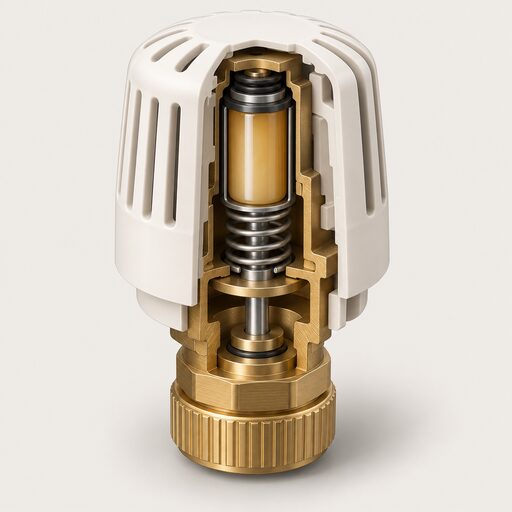 Thermostatic Radiator ValvesHow a thermostatic radiator valve senses room air temperature and throttles flow to a single radiator, what the numbered settings mean, where TRVs should and should not be fitted, and what the Building Regulations require across the UK.
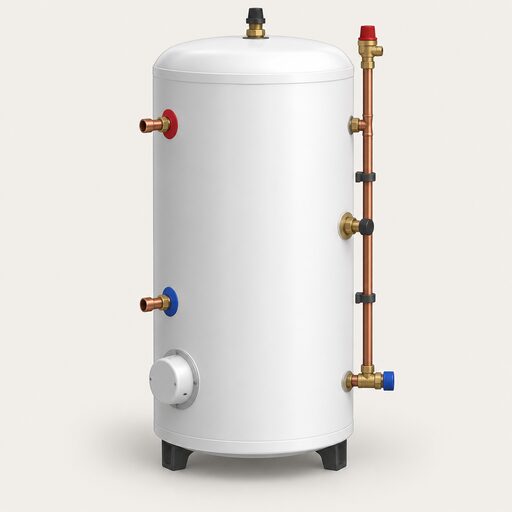 Building RegulationsReplacing a boiler or heating system usually needs building regulations approval, and the rules differ across England, Scotland, Wales and Northern Ireland.
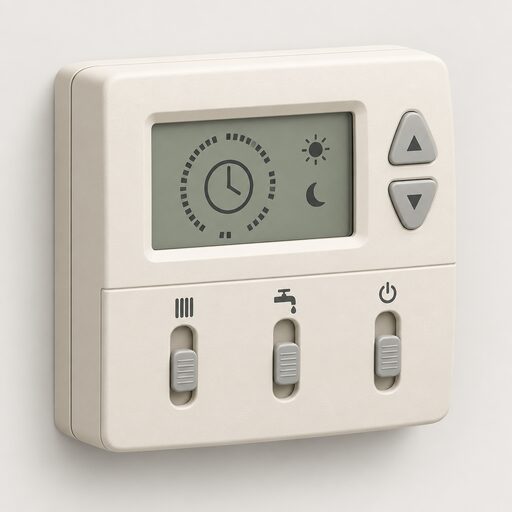 Controls, Thermostats and TRVsWhich heating controls actually cut your bills, and what does each one do?
 The Full Heating Controls GuideA room thermostat, a programmer and valves on your radiators are the basics.
 Building Regs Part L InsulationAdding insulation or replacing windows?
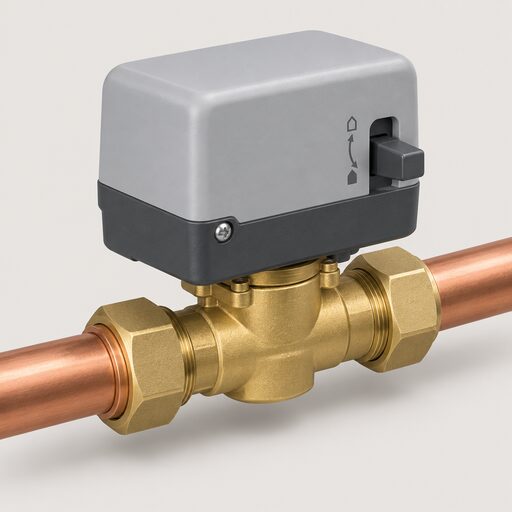 Heating Controls Building RulesWhat heating controls must you fit by law when you replace a boiler?