

In this comparison
An air conditioner used for heating moves heat rather than making it, so it delivers more warmth per unit of electricity than any resistive electric heater. That is the whole of the answer, and everything else on this page is the conditions attached to it. A heat pump installation can be two to three times more energy efficient than electric panel heaters, but with a high capital cost1. Resistive heaters, by contrast, are assumed to be 100% efficient, which sounds impressive until you notice that 100% is the ceiling, not the floor2.
The practical consequence is a running-cost gap. Heat pumps are much more efficient than traditional electric heating options, which makes them cheaper to run3. The gap is not fixed: it narrows in cold weather, when an air source heat pump becomes less efficient in the winter as the air temperature falls4. It also depends on what you are comparing against, because electricity costs around four times as much as gas per kWh3, so a heat pump competing with a gas boiler is in a different contest from one competing with a panel heater.
For a household, the choice is really about what the unit does for independence. A reverse-cycle air conditioner runs on electricity alone, needs no gas connection and no flue, and can heat and cool from the same box. What it does not remove is dependence on the grid and a supplier, and its efficiency is set by outdoor temperature rather than by anything the household controls.
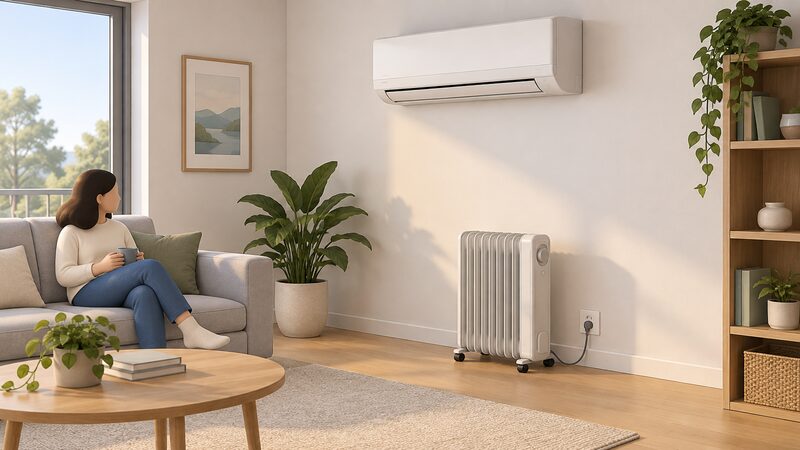
The short answer: moving heat beats making it
A resistive heater converts electricity directly into heat. Every joule that arrives at the element leaves as warmth in the room, which is why electric resistance heating is assumed to be 100% efficient2. There is no waste to eliminate and no further gain available: the technology is at its theoretical limit on day one. Electric heaters are more efficient than gas boilers as all the electricity they use is turned into heat3, but that comparison flatters them, because the cost of the electricity is the problem, not the conversion.
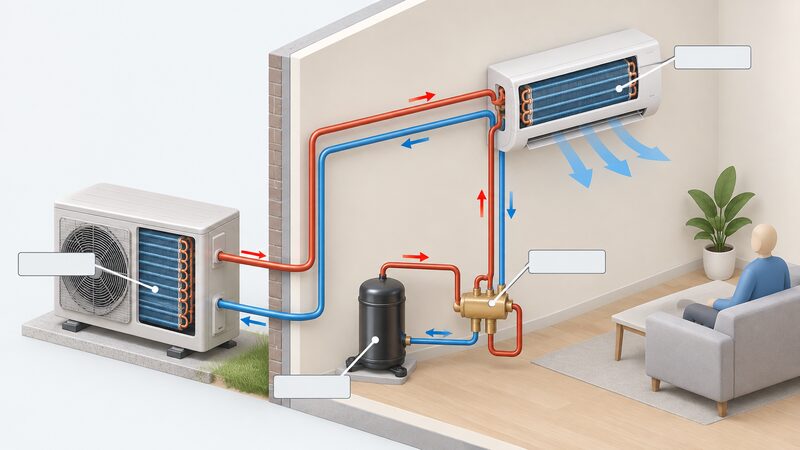
A heat pump does something categorically different. It does not generate heat; it collects it from outside air and deposits it indoors, using a refrigerant circuit and a compressor. Because most of the energy delivered is moved rather than made, the output exceeds the electrical input. Air source heat pumps typically produce three or more units of heat for every unit of electricity used5. That ratio is the entire basis of the running-cost case.
The distinction matters for how you read any efficiency claim. A 100% efficient heater and a heat pump are not measured on the same scale in any meaningful sense, because one is a conversion limit and the other is a ratio that varies with conditions. The Department for Energy Security and Net Zero's own guidance puts the comparison plainly: a heat pump installation can be two to three times more energy efficient than electric panel heaters, but with a high capital cost1. The efficiency is real; so is the upfront bill.
For energy independence, the two technologies sit in different places. Both run on electricity, so both leave the household exposed to grid prices and to whatever the supplier charges. Neither offers storage or self-sufficiency on its own. The heat pump simply extracts more warmth from each unit the household buys, which reduces the size of the exposure rather than removing it.
How efficiency is measured: COP, EER and the seasonal figures
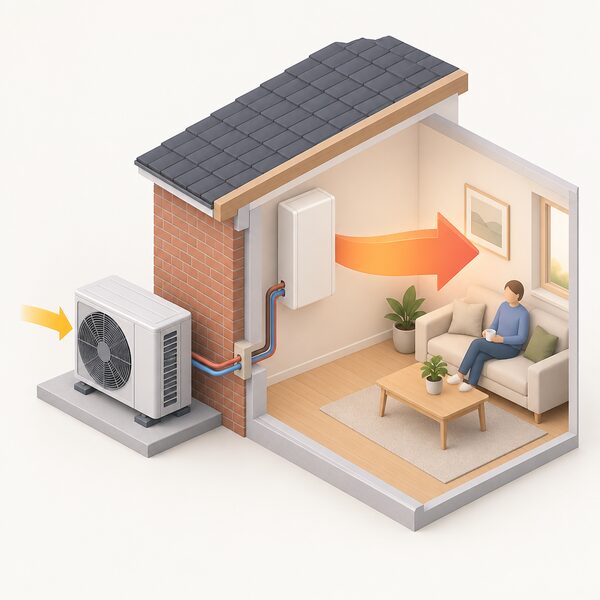
The ratio of the output to the input energy is called the Coefficient of Performance (COP)3. In heating, the calculation is stated directly: Heating COP = heat output / power input2. A unit with a COP of 3 delivers three kilowatt hours of heat for every kilowatt hour of electricity consumed. COP is a snapshot figure taken at a defined set of conditions, which is why two units with the same headline COP can perform differently across a winter.
Cooling uses a parallel metric, the seasonal energy efficiency ratio, and here the building regulations set floors rather than describing performance. For existing dwellings, a minimum of 4.0 applies to comfort cooling systems2. For new dwellings, the minimum is 4.68. The Welsh consultation version of Approved Document L repeats the 4.0 figure for existing dwellings9. These are compliance thresholds for fixed comfort cooling, not a description of what any particular unit achieves in service.
| Metric | What it measures | Figure and basis |
|---|---|---|
| COP | Heat output divided by power input, at defined conditions2 | A COP of 3 gives three kWh of heat per kWh of electricity3 |
| Seasonal energy efficiency ratio, existing dwellings | Comfort cooling compliance floor | Minimum 4.02 |
| Seasonal energy efficiency ratio, new dwellings | Comfort cooling compliance floor | Minimum 4.68 |
| Seasonal energy efficiency ratio, existing dwellings (Wales) | Comfort cooling compliance floor | Minimum 4.09 |
The gap between a laboratory COP and a real winter is the point householders most often miss. Heat pump efficiency is lower in winter than in summer, so the electrical energy required to generate a unit of heat is higher in winter10. A unit rated at a high COP in mild conditions will not hold that figure in January. The seasonal metrics exist precisely because the instantaneous one is misleading.
Ground and water source systems behave differently. For both systems, the general consistency of temperature provides a reasonably constant efficiency of the heat pump cycle11, and water source heat pumps perform similarly to ground source heat pumps due to the consistency of the temperature11. An air source unit has no such stability, because the outdoor air is the thing that changes.
Running cost comparison: what each unit of heat costs
The running-cost comparison follows directly from the efficiency ratio, because both technologies buy the same product, electricity, at the same price per kWh. If a heat pump delivers three units of heat per unit of electricity and a resistive heater delivers one, the heat pump produces the same warmth for roughly a third of the electricity. That is the mechanism behind the finding that heat pumps are much more efficient than traditional electric heating options, which makes them cheaper to run3.
The comparison against gas is less favourable and worth stating plainly. Electricity costs around four times as much as gas per kWh3. A heat pump with a COP of 3 or better can still undercut a gas boiler on running cost, but the margin is thinner than the electricity-versus-gas price ratio alone would suggest, and it depends on the COP actually achieved in the household's conditions. Electric underfloor heating illustrates the same trap from the other direction: its efficiency is lower than water-based underfloor heating, as electricity is more expensive than gas12.
Where the heat pump advantage is largest is against direct electric heating, which is the comparison this page is about. Direct electric panel heaters and night storage heaters are at least three times less efficient than heat pumps, which makes them very expensive13. That is an official assessment, and it is the strongest single statement of the case.
| Heating method | Heat delivered per unit of electricity | Basis |
|---|---|---|
| Air source heat pump | Three or more units5 | Official guidance |
| Resistive electric heater | One unit (100% efficient)2 | Official guidance |
| Panel or night storage heater | At least three times less efficient than a heat pump13 | Official assessment |
The capital cost sits on the other side of the ledger. A heat pump installation can be two to three times more energy efficient but with a high capital cost1, and panel heaters are cheaper and easier to install14. For a household heating one room occasionally, the running-cost saving may never repay the installation. For a household replacing direct electric heating across a whole home, the arithmetic runs the other way.
Where the efficiency advantage shrinks
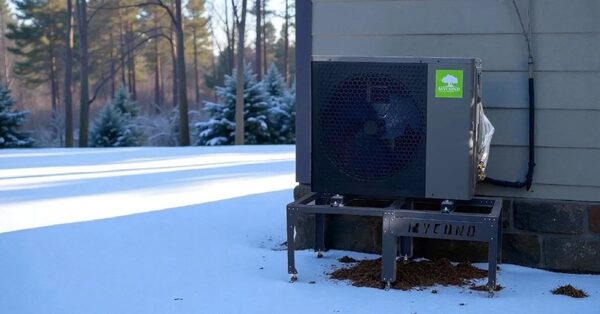
Cold weather is the main constraint, and the sources are consistent about it. Efficiency does reduce when the temperature is cold6. An air source heat pump will be less efficient in the winter when the air temperature is colder4. This is not a fault or a design flaw; it is the physics of extracting heat from a smaller temperature difference, and it applies to every air source unit.
The seasonal consequence is that the electrical energy required to generate a unit of heat is higher in winter10. A household that sized its expectations on a summer COP will find winter bills higher than the ratio suggested. Defrost cycles add a further draw in cold, damp conditions, when the outdoor coil accumulates frost and the unit periodically reverses to clear it.
Small spaces and intermittent use shrink the advantage in a different way. A heat pump's benefit accrues over hours of running, because it heats gently and steadily. A single room heated for twenty minutes in the morning suits a resistive heater, which reaches full output immediately. The comparison that matters is not efficiency in the abstract but efficiency multiplied by hours of use.
Ground and water source systems avoid the cold-weather penalty because the ground and water temperatures are stable, which is why they hold a reasonably constant efficiency of the heat pump cycle no matter the weather conditions11. They are not an option for most flats or small gardens, and the installation is more disruptive.
Types of electric heater compared
Every resistive heater does the same job at the same conversion rate. Electric resistance heating is assumed to be 100% efficient2, and that assumption applies equally to a panel heater, a convector, an oil-filled radiator and a fan heater. There is no efficiency hierarchy among them, and any claim that one is more efficient than another in converting electricity to heat is not supported by the regulations.
What differs is delivery:
- Fan heater: moves air quickly and heats a room fast, with noise.
- Oil-filled radiator: releases heat slowly after the element switches off, which suits a room occupied for hours.
- Panel heater: flat, silent and often wall-mounted.
- Convector: relies on air movement over a heated element.
None of these differences changes the kilowatt hours consumed for a given quantity of heat.
The comparison that does matter is against a heat pump. Heat pumps are more efficient but panel heaters are cheaper and easier to install14. Direct electric panel heaters and night storage heaters are at least three times less efficient than heat pumps, which makes them very expensive13. That is the trade: low capital cost and high running cost against high capital cost and low running cost.
For a household, the honest framing is that a resistive heater is a perfectly good appliance for a small, occasionally used space, and a poor choice as the primary heat source for a whole home. It offers no path to lower running costs over time, because there is no efficiency left to gain. It also offers no cooling, so a household that needs summer cooling as well ends up with two appliances rather than one.
Air source heat pumps and air conditioning: the same technology
A reverse-cycle air conditioner is an air source heat pump. The refrigerant circuit, compressor and coils are the same; the reversing valve determines whether heat is moved out of the room or into it. Air source heat pumps typically produce three or more units of heat for every unit of electricity used5, and that figure applies to a reverse-cycle unit running in heating mode just as it does to a dedicated heating-only heat pump.
This is why the two categories are difficult to separate in practice. A household installing a split system for summer cooling has, in the same box, a heating appliance that outperforms every resistive heater it could buy. The reverse-cycle units and air-to-air heat pumps page covers the equipment side; the efficiency case is the same one set out above.
The limits are also shared. An air source unit is less efficient in winter when the air temperature is colder4, and its efficiency reduces when the temperature is cold6. A dedicated heat pump designed for whole-home heating may be sized and controlled differently from a cooling-led split, but the underlying ratio behaves the same way.
For independence, the reverse-cycle unit is a genuine simplification: one appliance, one fuel, no gas connection, no flue. What remains is the grid, the supplier and the outdoor temperature. The unit reduces the quantity of electricity a household needs for a given amount of warmth; it does not reduce the household's reliance on the network that supplies it.
Installation and permitted development: England, Scotland, Wales and Northern Ireland
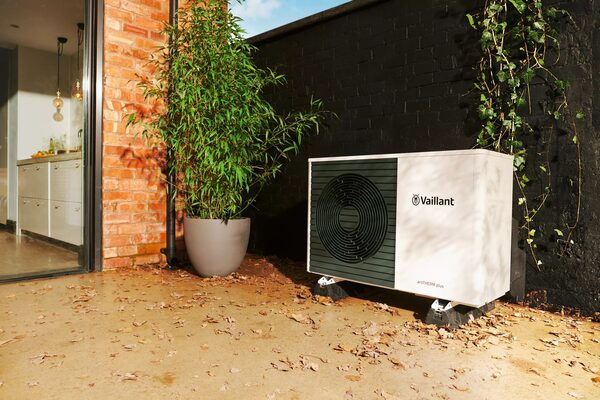
Air source heat pumps are usually considered permitted development on domestic premises, along with ground and water source heat pumps15. That general position carries conditions, and the conditions are where most installations run into trouble.
In England, permitted development rights were amended, including the removal of the rule that a heat pump must be installed at least 1 metre from the property boundary16. Planning permission is needed if the unit is on a pitched roof or less than 1 metre from the edge of a flat roof17. Permission is also required where there is already one air source heat pump on a non-detached dwelling or block of flats, or two on a detached dwelling house17, and where the house or flat is a listed building or within the garden or grounds of a listed building17. If a property is listed, listed building consent is usually needed before installing an air source heat pump, even where planning permission is not required18.
Flats and shared buildings face tighter rules. Permitted development rules for air source heat pumps are more restricted for flats and shared buildings, and planning permission is more likely to be required18. Non-domestic buildings are outside the rights altogether: permitted development rights for small scale renewables do not extend to non-domestic buildings, and planning permission may be required before installation4.
Scotland is moving toward the English position. Scottish Ministers want to ensure that there is parity in permitted development rights between Scotland and England19, and a consultation proposed permitting air source heat pumps installed under permitted development to be used for heating and cooling but not solely cooling, which would allow air-to-air heat pumps to benefit20. Energy performance legislation is devolved in Scotland and Northern Ireland, while competition and consumer protection law are reserved21.
VAT relief on air source heat pumps and air conditioning
Air source heat pumps qualify for a lower rate of VAT7, and so do ground source heat pumps7. Energy-saving materials installed in residential accommodation and certain charitable buildings are subject to VAT relief at 0% until 31 March 202722. The relief covers both the product supplied by the installer and the cost of all work to install it in the home23.
The list of qualifying technologies is specific:
- Insulation
- Central heating system controls
- Hot water system controls
- Solar panels
- Wind turbines
- Water turbines
- Ground source heat pumps
- Air source heat pumps
- Micro combined heat and power units
- Wood-fuelled boilers24
Water source heat pumps, certain electrical batteries and certain smart diverters were added to the list of energy-saving materials that can qualify for the reduced rate25.
Two conditions decide whether a given installation qualifies. Only air source heat pumps that are permanently fixed and are not portable or moveable qualify as energy-saving materials26. The equipment must be installed in, or in the curtilage of, residential accommodation or buildings intended for use solely for a relevant charitable purpose27. A plug-in portable air conditioner does not meet the fixed-installation condition, however it is used.
After the temporary zero rate ends, water source heat pumps revert to the reduced rate28. The reduced rate remains fully available except on wind and water turbines and the services of installing energy-saving materials in residential accommodation29. Where the customer is 60 or over, or in receipt of certain benefits and the accommodation is their sole or main residence, the whole supply still qualifies for the reduced rate27.
Sources29 cited
- Electric central heating, Which?, 2025-09-22
- Approved Document L Volume 1, Dwellings, HM Government, 2026-09-17
- Heat pumps, REA, 2026-09-17
- Air source heat pumps fact sheet, Pendle Borough Council, 2026-09-17
- Heat pumps, nidirect, 2025-02-24
- Do air source heat pumps work in cold weather?, Local Energy Scotland, 2026-09-20
- Tax on shopping: energy-saving products, HM Government, 2026-09-17
- Approved Document L Volume 1 consultation version, Welsh Government, 2026-09-17
- Approved Document L Volume 1, Dwellings, HM Government, 2026-09-17
- Living with heat pumps, Local Energy Scotland, 2026-09-20
- Electricity network constraints research, Scottish Government, 2021-10-07
- Electric vs water underfloor heating, Which?, 2026-05-27
- Bristol Warm Homes Plan, Bristol City Council, 2025-04
- How do heat pumps compare with other low carbon heating technologies?, Local Energy Scotland, 2026-09-20
- Heat pumps, Planning Portal, 2026-09-17
- Amendments to the Boiler Upgrade Scheme: government response, HM Government, 2025-11
- Heat pumps, New Forest District Council, 2026-09-17
- Air source heat pumps, Westmorland and Furness Council, 2026-09-17
- Permitted development rights: impact assessments, Scottish Government, 2026-09-17
- Permitted development rights to support new homes: consultation, Scottish Government, 2025-09-03
- EPC reform consultation: government response, Scottish Government, 2025-01-21
- VAT rates on different goods and services, HM Government, 2026-07-10
- Energy-saving products VAT, HM Revenue & Customs, 2026-09-20
- VAT reduced rate for energy-saving materials, legislation.gov.uk, 2026-09-17
- VAT reduced rate for energy-saving materials: explanatory note, legislation.gov.uk, 2026-09-17
- VAT energy-saving materials: VENSAV3080, HM Revenue & Customs, 2026-09-17
- VAT energy-saving materials: VENSAV2082, HM Revenue & Customs, 2026-09-17
- VAT energy-saving materials: VENSAV3081, HM Revenue & Customs, 2026-09-17
- Draft explanatory memorandum: reduced rate for energy-saving materials, HM Government, 2026-09-17
 Running CostsA portable air conditioner costs roughly twenty to forty pence for every hour it runs, while a fixed unit uses far less electricity for the same cooling.
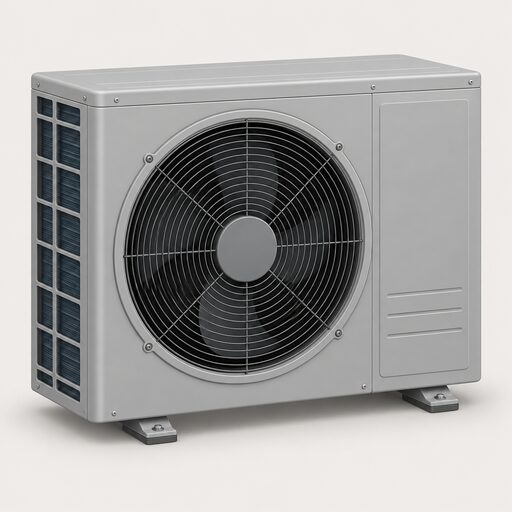 Cooling and Heat PumpsCan an air conditioner heat your home as well as cool it?
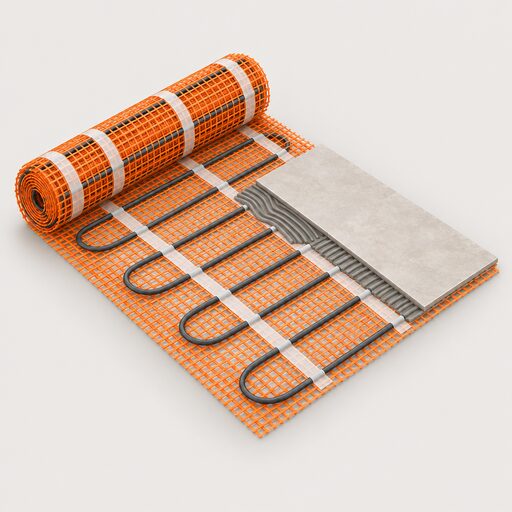 Underfloor Heating SystemsWhich rooms suit electric underfloor heating and which need a wet system?
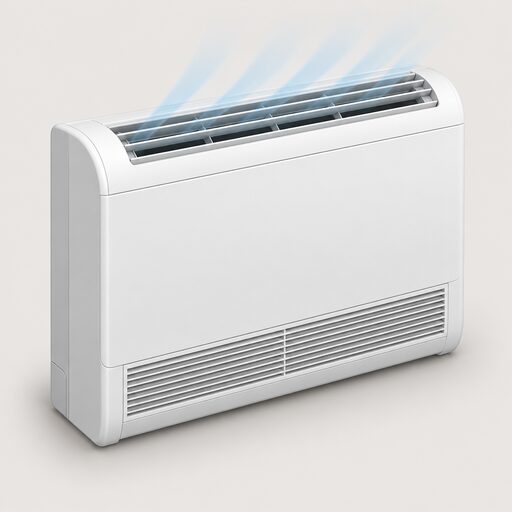 Split Air ConditioningA split air conditioning system cools or heats one room using an indoor unit and an outdoor unit linked by pipes.
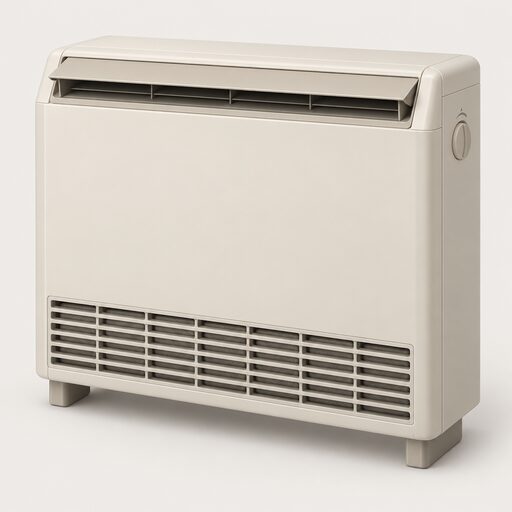 Electric Heating CostsHow to work out what electric radiators, panel heaters, infrared and storage heaters cost to run per hour and per season.
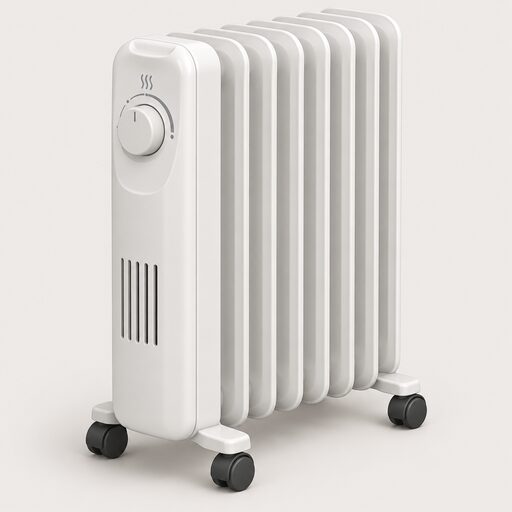 Electric Radiators and PanelsDo electric radiators cost more to run than gas heating, and are they worth it for one room or a whole house?