
In this comparison
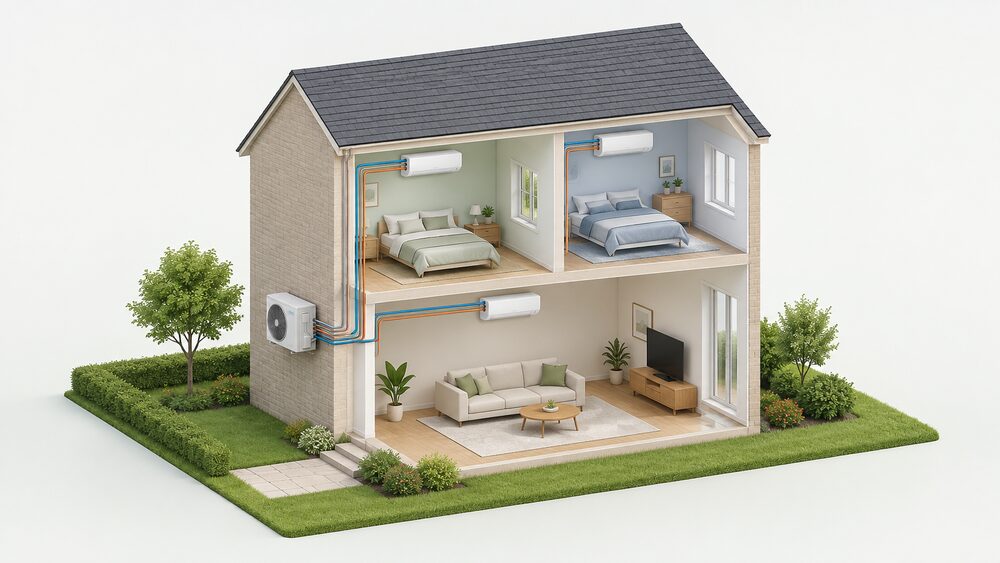
The difference between a single split and a multi-split is the number of indoor units hanging off one outdoor unit. A single split, also called a mono-split, is one indoor unit connected to one outdoor unit, and it cools the single room in which the indoor unit sits1. A multi-split connects several indoor units, typically two to five, to one outdoor unit, so several rooms can be cooled or heated independently from a single point outside the building3.
That single architectural choice drives everything else a household cares about: how many rooms are covered, how much pipework and how many wall penetrations the installation involves, how much outdoor space is needed, and what the system costs to buy and fit. A single split is the cheaper and simpler route, described by maker guidance as cost-effective with lower upfront costs and simpler installations5. A multi-split carries a high purchase price and complex, potentially expensive fitting work, but uses one outdoor unit for several indoor units rather than several separate systems1.
For a household's energy independence, both configurations run on mains electricity and both depend on a manufacturer's equipment, a refrigerant circuit and, in most cases, a professional installer. Neither removes the grid connection. What a multi-split changes is the amount of external hardware and the number of separate systems to maintain, not the underlying dependence.
Single split and multi-split: the two configurations at a glance
Air conditioning for homes divides into packaged units, split units and multi-split units10. The split family is defined by separating the heat pump into indoor and outdoor halves11. Within that family, the mono-split and the multi-split are the two arrangements a UK household is most likely to be offered.
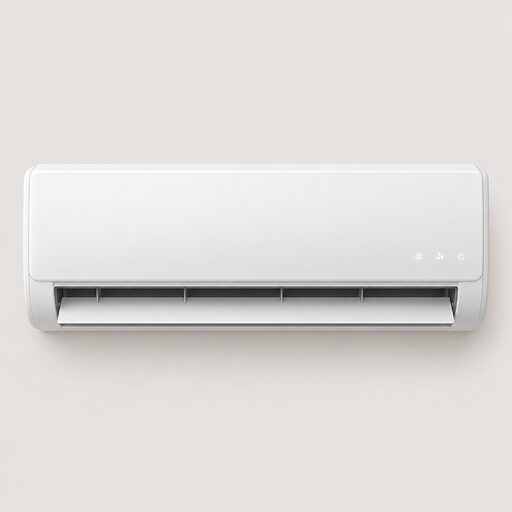
A single-split air conditioner consists of one outdoor unit connected to one indoor unit2. It is designed for one room or location9, and maker guidance suggests one air conditioner may be all that is needed in a smaller home such as a two-bedroom apartment2. The split system is described as ideal for cooling a single room or an open-plan space, and as a cost-effective solution with lower upfront costs and simpler installations than the alternatives5.
A multi-split system is one in which an outdoor unit is connected to two or more indoor units9. Independent guidance puts the usual count at two to five indoor units per outdoor unit, allowing individual room control3. Maker guidance describes it as the more advanced version of the split system, and notes that it is more energy-efficient than using several separate units, because one outdoor unit serves multiple indoor units, reducing overall energy consumption and maintenance costs compared with multiple single-split systems5.
The practical distinction is not just count. A multi-split gives each room its own indoor unit and its own control, so temperatures can differ room by room12. A single split gives one room one unit and one control. Where a household needs two rooms cooled, the choice is between two single splits, each with its own outdoor unit, and one multi-split with two indoor units and one outdoor unit.
| Single split (mono-split) | Multi-split | |
|---|---|---|
| Indoor units | One1 | Two or more, typically two to five3 |
| Outdoor units | One1 | One7 |
| Rooms served | One room or location9 | Several rooms, each controlled independently12 |
| Best use | A single room or an open-plan space5 | Homes with several rooms needing individual control without ductwork5 |
| Cost position | Lower upfront cost, simpler installation5 | High purchase price, complex fitting work1 |
| Mode | Cooling or heating for that room | All indoor units in cooling or heating together9 |
How a split system is built: indoor unit, outdoor unit and the connecting pipe
A split system separates the heat pump into indoor and outdoor units11. A standard split is essentially two halves, an indoor unit and an outdoor unit13. The two are connected with a refrigerant pipe14, and the refrigeration circuit is divided between the outdoor and indoor units and joined by refrigerant lines installed on site15.
That on-site joint is the defining engineering feature. Unlike a monobloc, where the refrigerant circuit is sealed at the factory, a split system is charged and connected where it is fitted. The single split-system air conditioner requires an indoor unit and an outdoor unit, connected via wiring and piping, with no ductwork needed and professional installation required9. A split system has an inside unit and an outside unit, connected via refrigerant hoses and electrical cable16.
The outdoor unit is typically mounted on an outside wall, the roof or even a balcony17. On a multi-split, that one compact unit fits small spaces such as roofs or terraces and can even be installed on a wall2. This matters in flats and terraced housing, where ground space is scarce and the outdoor unit has to go somewhere acceptable to the building and the neighbours.
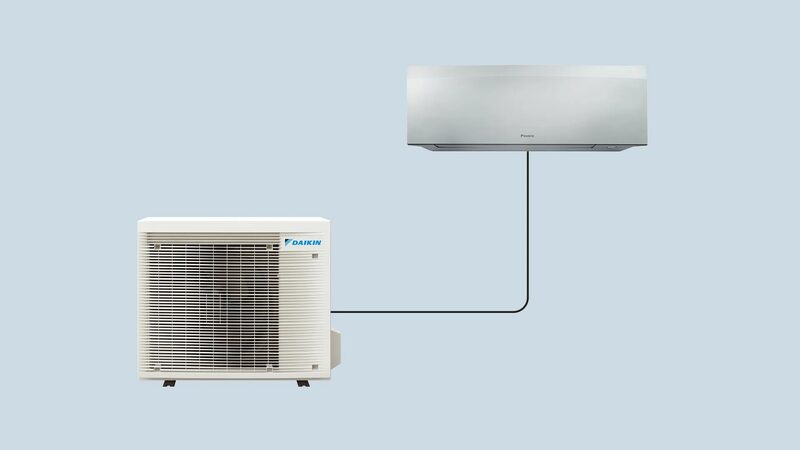
"In a split heat pump system, the refrigeration circuit is divided between outdoor and indoor units and connected by refrigerant lines installed on site."
The dependence this creates is worth stating plainly. A split system cannot be commissioned without someone qualified to make the refrigerant joint, and the F-gas rules that govern refrigerant handling apply to the equipment. Official guidance sets out exceptions for smaller single split systems, including stationary single split air-conditioning systems used solely for cooling, which sit outside certain bans on higher global warming potential refrigerants18. That is a regulatory boundary, not a statement that a household can legally charge its own system.
Mono-split: one indoor unit serving one room
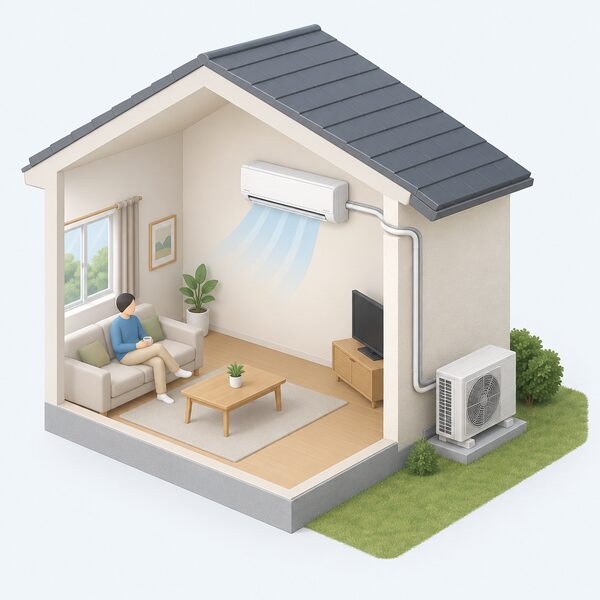
A mono-split air conditioner consists of an indoor unit and an outdoor unit connected by a pipe, and it can only be used for cooling one room in the house, the one in which the indoor unit is located1. The wall-mounted indoor unit is designed to provide climate control to one room within the house9. Maker product pages describe monosplit solutions as ideal for individual rooms or targeted applications19, and as perfect for a single room such as a bedroom or home office20.
It is worth separating the mono-split from the monobloc, because the names are close and the hardware is not. A monobloc or single-packaged model has only one indoor unit and no outdoor unit, with the refrigerant liquid and the main components, including the evaporator and compressor, contained in the unit and hot air expelled through a duct4. A mono-split has two units and a refrigerant pipe between them. The monobloc avoids the outdoor unit entirely; the mono-split does not.
Mono-split hardware is sold as wall units and as floor-standing column units. Aermec lists an SCG as a mono-split air-to-air conditioner with an indoor column unit in heat pump version with DC inverter technology21, and an SMG as a mono-split air-to-air conditioner with an indoor unit for wall installation, again in heat pump version with DC inverter technology22. Those are two form factors of the same one-to-one architecture.
For a household, the mono-split is the smallest genuine step into split air conditioning. It covers one room, needs one outdoor position, and leaves the rest of the home untouched. Where a second room later needs cooling, the mono-split does not extend: it is a one-to-one pairing, and a second room means a second system or a different architecture.
Multi-split: several indoor units on one outdoor unit
A multi-split air conditioner consists of one outdoor unit and several indoor units, all connected to the outdoor unit, with each indoor unit adjustable independently, so several rooms can be cooled1. Maker guidance puts the ceiling at up to five indoor air conditioners connected to just one outdoor unit2. Independent guidance gives the same shape, describing multi-split systems as using a single outdoor unit connected to multiple indoor units, typically two to five, allowing individual room control3.
The single outdoor unit is the point of the design. Multi-split systems can climatise several rooms using a single outdoor unit19, and are described as one outdoor unit for multiple rooms, ideal for whole-home comfort23. Hitachi's airHome Multi Pro states that there is only one outdoor unit for all the indoor units7. Midea describes its multi-split systems as delivering energy-efficient heating and cooling from a single outdoor unit, with individual room control, flexible installation and smart climate management24.
There is one operating constraint that catches people out. On a multi-split, all the indoor units must be operating in cooling or heating mode simultaneously9. A household cannot heat one bedroom while cooling another from the same outdoor unit. For most UK homes that is not a practical limitation, because the demand is seasonal, but it rules out the mixed-mode use that separate single splits would allow.
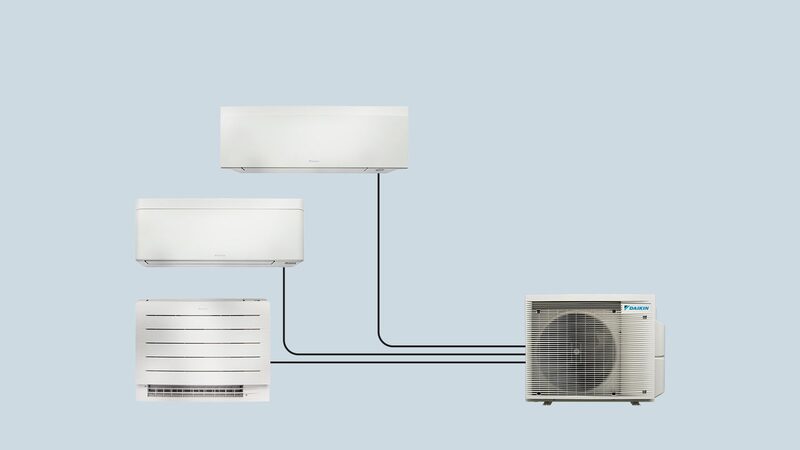
The independence picture is mixed. A multi-split reduces the number of outdoor units and the number of separate systems to service, and maker guidance argues it is more energy-efficient than using several separate units, reducing overall energy consumption and maintenance costs compared with multiple single-split systems5. But it concentrates the whole installation on one outdoor unit: if that unit fails, every room it serves loses cooling at once. Separate single splits fail one room at a time.
Easy-Fit single split systems: what the one-to-one setup involves
An Easy-Fit single split system is a single split supplied as a one-to-one pairing: one indoor unit connected to one outdoor unit, offering targeted climate control25. Maker product pages describe Easy-Fit single split systems as suited to bedrooms, living rooms, garden offices and small commercial spaces25. The name describes the configuration and the intended simplicity of the installation, not a different refrigeration principle.
The one-to-one setup is what makes it straightforward. There is one indoor position, one outdoor position, and one pipe run between them. No ductwork is needed9, so an existing room can be served without opening up ceilings or floors. The outdoor unit can go on an outside wall, the roof or a balcony17, which widens the number of homes where a single split can be fitted at all.
For a household, the Easy-Fit route is the lowest-commitment version of split air conditioning: one room, one outdoor unit, one pipe run. It is also the version most likely to be extended later by adding a second single split, which means a second outdoor unit, rather than by converting to a multi-split, which would mean replacing the outdoor unit with one sized for several indoor units.
Choosing between them: rooms to cover, installation work and outdoor space
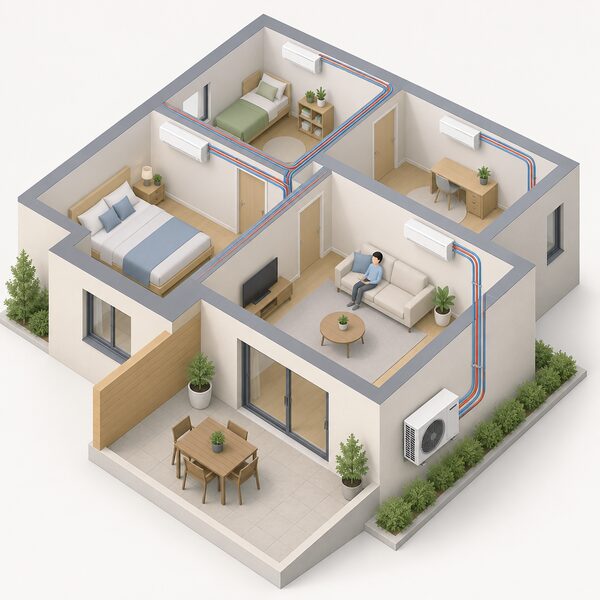
The choice comes down to three practical questions: how many rooms need cooling, how much installation work the building can take, and where an outdoor unit can legally and practically sit.
On rooms, the split system is ideal for cooling a single room or an open-plan space, while the multi-split suits homes with several rooms that need individual temperature control without ductwork5. A single-split air conditioner may be all that is needed in a smaller home such as a two-bedroom apartment2. Where several rooms need conditioning, the multi-split covers them from one outdoor unit23.
On installation work, the split system is the simpler job, with lower upfront costs and simpler installations than the alternatives5. The multi-split is the harder one: maker guidance lists complex and potentially expensive fitting work, noisy outdoor units and a high purchase price among its disadvantages1. That is a fair summary of the trade: more rooms served, more cost and more disruption.
On outdoor space, the multi-split wins on count. One compact outdoor unit fits small spaces such as roofs or terraces and can even be installed on a wall2, and it serves every indoor unit in the home7. Several single splits would mean several outdoor units, each needing its own position, its own clearance and its own noise footprint. In a flat or a tight terrace, that alone can decide the architecture.
On cost, the direction is clear even without published prices. A single-packaged air conditioner costs less than installing a system with multiple units8, and the split system is described as cost-effective with lower upfront costs5. A mono-split reverse cycle unit is generally more expensive than a monobloc reverse cycle unit, especially because of the outdoor unit and other components12. Prices for split and multi-split installations are installer-quoted, and no published figure is given here.
On efficiency, the multi-split has the edge in maker guidance, being more energy-efficient than using several separate units because it uses one outdoor unit for multiple indoor units5. Split units generally are quieter, sleeker and more efficient at cooling than portables17. For running costs and electricity use, see air conditioning running costs.
What this means for independence is modest either way. Both architectures run on grid electricity, both depend on a manufacturer for parts and refrigerant, and both need a competent engineer for the refrigerant circuit. A multi-split concentrates that dependence into one outdoor unit; a set of single splits spreads it across several. Neither removes it. Households weighing the wider picture can read home cooling and energy independence, and those comparing architectures further can look at ducted vs multi-split air conditioning and split vs portable air conditioning.
Sources25 cited
- Home air conditioning guide, Netatmo, 2026-09-20
- How to choose your air conditioner location, Daikin UK, 2026-09-20
- Air-to-air heat pumps: a low-carbon solution for UK homes, Nesta, 2026-02-17
- Home air conditioning guide, Netatmo, 2026-09-20
- How to choose the right home air conditioning, Mitsubishi Electric Living Environmental Systems, 2025-04-07
- Air conditioning FAQs, Cool Easy, 2026-09-23
- airHome Multi Pro multi-splits, Hitachi Cooling and Heating, 2026-09-17
- How does air conditioning work, Netatmo, 2026-09-20
- Air conditioner buying guide, Hitachi Cooling and Heating, 2026-09-17
- Cooling down a room: what is the best way, Netatmo, 2026-09-20
- Air source heat pumps, Energy Saving Trust, 2026-07-16
- Reverse cycle air conditioner, Netatmo, 2026-09-20
- How does air conditioning work, Hitachi Cooling and Heating, 2026-09-17
- Air source heat pump types, IDM Energie, 2026-07-06
- Monoblock heat pump, IDM Energie, 2026-07-06
- How does air conditioning work, Cool Easy, 2026-09-23
- Guide to air conditioning units, EDF Energy, 2024-05-22
- Bans on F-gas in new products and equipment, GOV.UK, 2019-08-21
- Air conditioners, Ferroli, 2026-09-17
- Home solutions: air conditioning, Clivet, 2026-09-17
- SCG mono-split air/air conditioner, Aermec UK, 2026-08-13
- SMG mono-split air/air conditioner, Aermec UK, 2024-09-10
- Domestic air conditioning ranges, Panasonic Air Conditioning, 2026-09-17
- Midea multi-split systems, Midea UK, 2026-09-17
- Easy-Fit single split air conditioning systems, Cool Easy, 2026-09-23
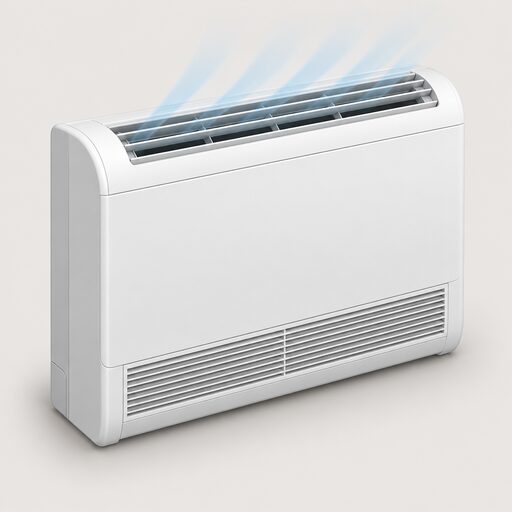 Split Air ConditioningA split air conditioning system cools or heats one room using an indoor unit and an outdoor unit linked by pipes.
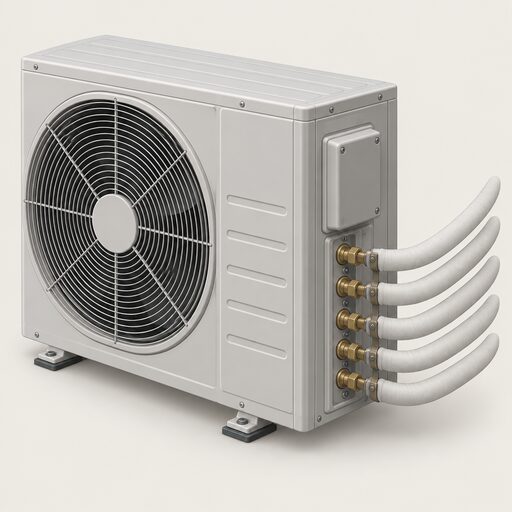 Multi-Split ACHow multi-split air conditioning works when one outdoor unit serves several indoor units: how many rooms one system can serve, independent room control, efficiency, outdoor unit size and sound, planning rules in England and Scotland, servicing and lifespan, the 0% VAT position and how it compares with separate single splits.
 Monobloc and Split Heat PumpsWhich heat pump suits your home, a monobloc or a split?
 Cooling and Heat PumpsCan an air conditioner heat your home as well as cool it?
 Air Conditioning CostPublished UK equipment prices and the parts of an installed price for portable, single split, multi-split and whole-house air conditioning.
 Heating Zones and ZoningSplitting your heating into zones lets you warm upstairs and downstairs separately, or heat just one room, instead of paying to heat the whole house.