
In this comparison
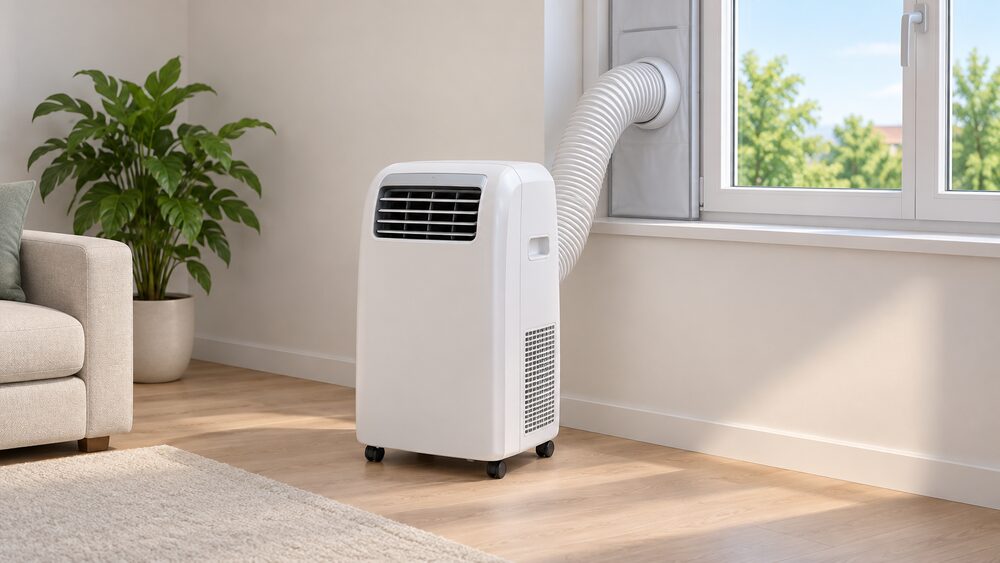
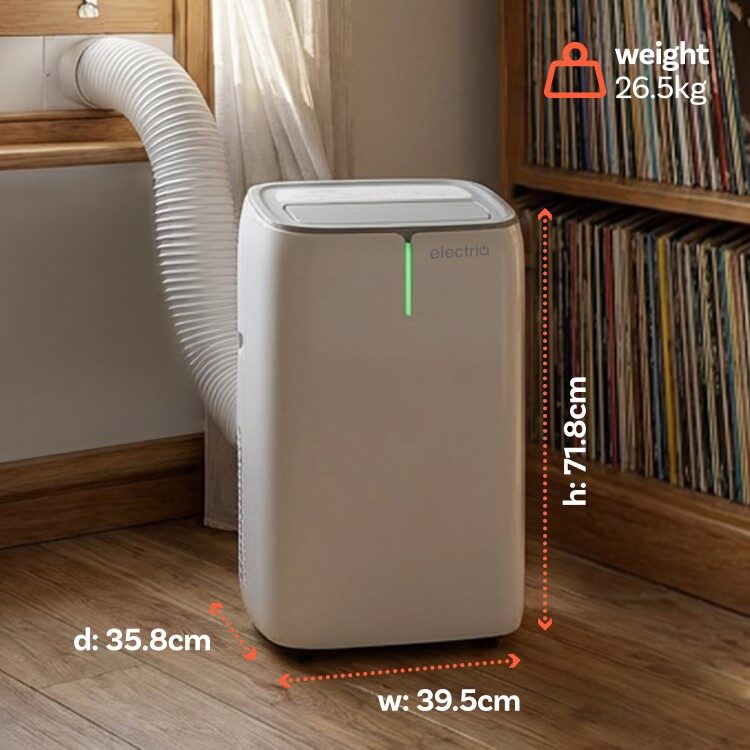
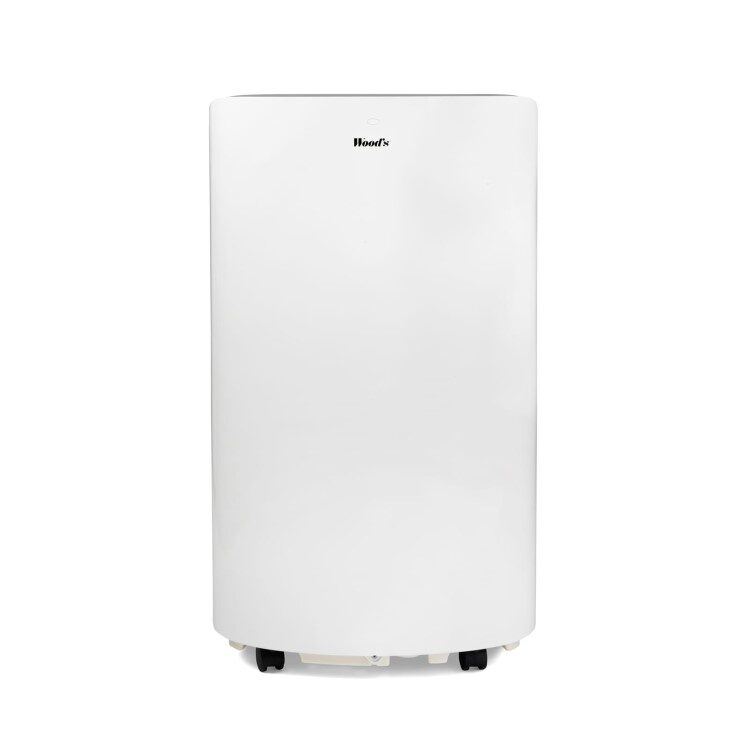
A portable air conditioner is defined by one design choice: how many hoses leave the room. A single-hose unit, such as the electriQ P12C 12,000 BTU model, is described by its maker as a single-hose model, and the electriQ EcoPlus10HPW is likewise a single-hose portable air conditioner, not a dual-hose model1. A twin duct unit uses two separate ducts, one for fresh air intake and one for exhaust3.
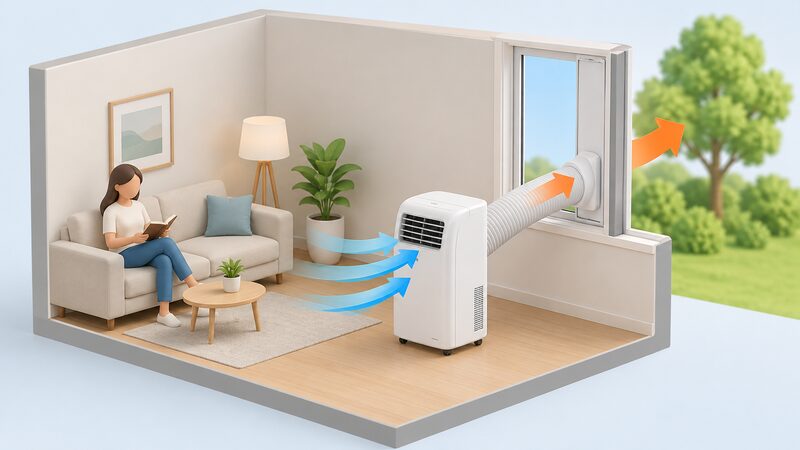
That difference decides how much of the room's cooled air survives the process. A portable air conditioner removes warm air from the room and vents it outside through an exhaust hose while circulating cooled air indoors4. With one hose, the air pushed out has to be replaced, and it is replaced by air drawn from the room itself. With two, the intake comes from outside, so the room is not raided to feed the exhaust.
The practical consequences are capacity, running cost and noise. Portable units use 30 to 50% more electricity than fixed systems, and a portable A+ class model could still consume 2.4 times more electricity than a wall-mounted unit of the same class5. Portable units are also described as an auxiliary device with limited cooling capacity and noisier than a fixed unit7. What a portable buys in return is that no work is required: it plugs into a wall socket and vents through a window or door8.
Single hose vs dual hose: the difference in one line
A single-hose portable air conditioner has one duct, and it is an exhaust. A twin duct unit has two, and the second one feeds the machine with outside air rather than room air. The maker of a twin duct range states the arrangement plainly: twin duct air conditioners use two separate ducts, one for fresh air intake and one for exhaust3.
The reason the distinction matters is that a portable air conditioner is a monobloc. A monobloc or single-packaged model has only one indoor unit and no outdoor unit, with the refrigerant liquid and the main components, the evaporator and compressor among them, contained in the unit, expelling hot air via a duct12. Everything that would sit outside on a split system sits in the room instead. The compressor, the condenser and the fan are all indoors, and the only connection to the outside world is the ducting.
On a single-hose machine, that ducting carries hot air out. Air leaving a sealed room must be replaced, and the only place for replacement air to come from is the room itself, or through gaps around doors and windows. On a twin duct machine, the intake duct supplies the air that the condenser and exhaust need, so the exhaust stream is fed from outside rather than from the cooled interior.
There is a second, quieter difference. A twin duct unit has two openings to seal at the window or wall, which is more work at installation and more to get wrong. A single-hose unit has one. That is part of why the single-hose design remains common in the cheaper end of the market, and why the twin duct range is sold as a distinct category rather than the default3.
Why the single hose design loses cooling air from the room
The single hose does not merely fail to help. It works against the unit. Air is expelled through the hose, and because the room is otherwise closed, that expelled air is replaced by air pulled in from the same room, or through the fabric of the building. Some of the air that has just been cooled is therefore sent outside, and the unit has to cool it again.
This is the mechanism behind the efficiency figures. Portable units use 30 to 50% more electricity than fixed systems5. A portable A+ class model could still consume 2.4 times more electricity than a wall-mounted unit of the same class6. The comparison is not between two equally sealed machines; it is between a machine that keeps its condenser outside and one that keeps it in the room and then has to manage the consequences.
The same design feature drives the noise. Portable air conditioners often operate at higher noise levels of up to 65 dB, against fixed air conditioning that is described as quiet with better performance than portable units6. The compressor is in the room, a metre or two from where anyone is sitting.
"Air conditioning works best in a completely sealed environment, so to achieve the optimum results all windows and doors should be kept closed while in operation."
That rule applies to both designs, but it bites hardest on the single hose. If a window is left open to help the exhaust, the unit is cooling the street. If the window is sealed with a kit, the single hose is pulling against the seal. The independent guidance is explicit that portable units need to be properly vented to the outside using a special fitting for the window, and that a vent simply put through an open window will let heat back in5.
How a dual hose unit keeps the room sealed while it runs
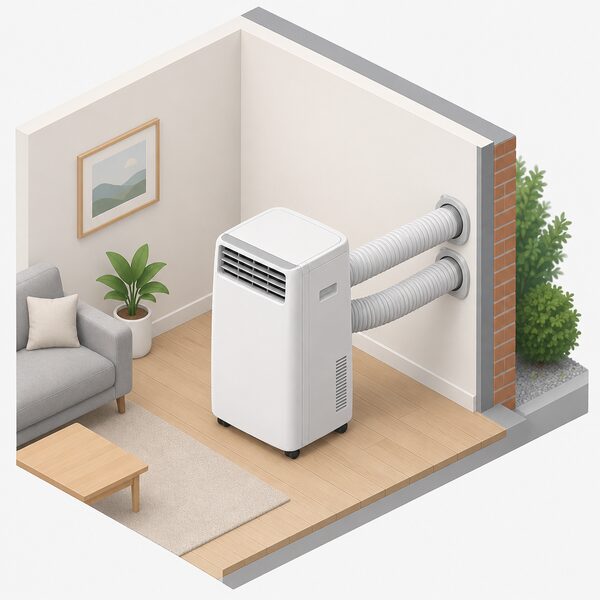
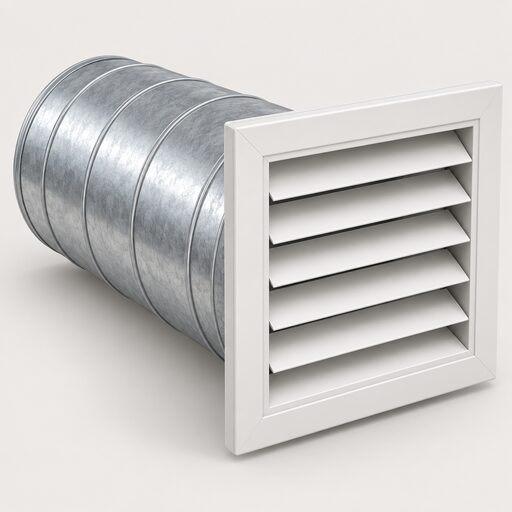
A twin duct unit separates the two air streams. One duct brings outside air in to the condenser side, the other takes the hot air back out. The room air that has been cooled is not used to feed the exhaust, so it stays where it was cooled. The maker describes the arrangement as two separate ducts, one for fresh air intake and one for exhaust3.
The cost of that separation is installation. Twin duct air conditioning requires three holes through an exterior wall: one small hole for condensate, and two larger ducts for the exchange of cool and hot air3. That is a fixed installation, not a window kit, and it puts the twin duct category closer to a light building project than to a plug and play appliance. Where a single-hose unit can be wheeled out of a cupboard and set up in ten minutes, a twin duct unit is positioned once.
The benefit is that the room stays sealed. Air conditioning works best in a completely sealed environment, and a twin duct unit can achieve that without the exhaust pulling against the seal8. The unit still sits indoors, so the compressor noise remains indoors, and the machine still has to reject heat through ducting rather than through an outdoor coil. It is a better version of the same compromise, not a split system.
For a household weighing independence, the twin duct design reduces the energy penalty of cooling a single room without any outdoor unit and without refrigerant work. It does not remove the dependence on the electricity supply, and it does not remove the dependence on a manufacturer for parts and filters. It does mean the unit is not fighting itself every hour it runs.
Room size and cooling capacity: what a portable unit can handle
Portable units are for small spaces. Portable air conditioning units still have a place, particularly for temporary set-ups or rooms under 10 m², but for longer-term use the guidance points elsewhere6. A single portable or wall mounted unit is usually designed for one main space, and a single unit cannot cool multiple rooms at once13.
Where a portable unit is specified for a larger room, the figures come from the maker. The Lux Air 14,000 Btu portable heat pump is quoted as cooling spaces up to 35 m², with conservatories up to 22 m² maximum15. Other makers are more cautious: Pro Breeze states that a single unit can't cool multiple rooms at once, so its wheeled models are moved from room to room instead. These are maker claims for specific models. They sit alongside the general position that packaged air conditioners have less cooling capacity than split systems, and are suitable for small indoor areas but not powerful enough to cool a large room11.
| Model type | Quoted coverage | Source |
|---|---|---|
| Portable, general guidance | Rooms under 10 m² | Daikin6 |
| Packaged (portable) units, general | Small indoor areas, not a large room | Independent11 |
| Lux Air 14,000 Btu portable heat pump | Up to 35 m²; conservatories up to 22 m² | Maker15 |
Sizing is not only about floor area. Because the main unit sits inside the room and vents through a hose, portable units may not feel as quiet or efficient as a fixed system, and the guidance notes that a single portable or wall mounted unit is usually designed for one main space13. A conservatory with a large glazed area, or a loft room, will behave differently from a bedroom of the same floor area.
Portability is the compensating feature. Portable units sit on castors so they can be wheeled from one room to another, and Pro Breeze notes that while a single unit cannot cool multiple rooms at once, wheels make it easy to move the unit between them11. Some portable air conditioners also double as dehumidifiers, cooling the room while helping reduce humidity and tackle damp14. For a household that needs one room cool at a time, that is a genuine advantage over a fixed system.
Efficiency and running cost: portable units vs split systems
The efficiency gap is the central trade-off. Portable units use 30 to 50% more electricity than fixed systems, and a portable A+ class model could still consume 2.4 times more electricity than a wall-mounted unit of the same class5. Portable models tend to be less expensive upfront compared to split systems, but they are not as efficient as split units, and they tend to use more energy, especially when left running all day7.
Running costs follow the power draw. A typical portable air conditioner draws 1,000 to 1,500W and can cost around 26 to 39p per hour, roughly 14 to 20 times more than a fan16. A portable unit of 0.75 to 1.5 kW is put at £0.20 to £0.39 per hour, based on the July 2026 Ofgem price cap of 26.11p per kWh17. One 12,000 BTU model is quoted by its maker at 35p per hour18.
Weekly figures give a sense of scale. A 1kW portable air con unit is put at £13.37 per week at cheapest fix rates, and £16.70 per week at predicted July rates, both assuming average daily use of 9.1 hours over seven days18. Those are modelled figures for a specific unit size and tariff, not a bill.
The comparison with fixed cooling is not only about the unit. A single-packaged air conditioner costs less than installing a system with multiple units, which is the upfront case for portables12. Against that, the running penalty is permanent. For a household using cooling for a few weeks a year, the upfront saving may dominate. For one running a unit through a long summer, the electricity figure compounds.
Cost: what you pay upfront and what you pay to run
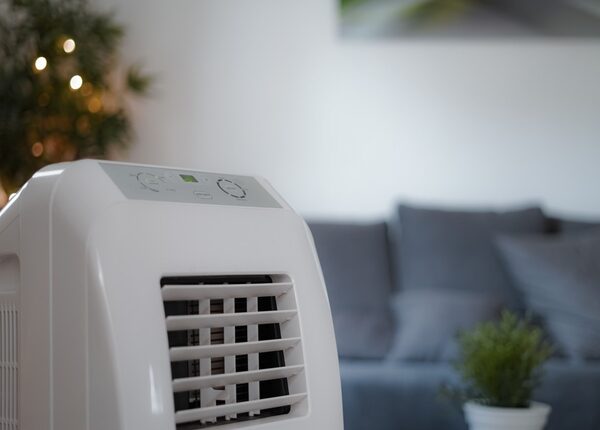
Portable packaged air conditioners can cost between £170 and £700, depending on their capacity and features11. A wider figure from the same maker guidance puts portable air conditioning at around £250 for entry-level models, rising to more than £3,500 for more comprehensive and sophisticated models such as portable split air conditioning systems12. Those two ranges describe different things: the first is the packaged portable category, the second spans the whole portable field including split portables.
| Cost item | Figure | Source |
|---|---|---|
| Portable packaged unit, upfront | £170 to £700 | Netatmo11 |
| Portable air conditioning, entry level | Around £250 | Netatmo12 |
| Portable air conditioning, top of range | More than £3,500 | Netatmo12 |
| Running cost, typical 1,000 to 1,500W unit | 26 to 39p per hour | NEA16 |
| Running cost, 0.75 to 1.5 kW unit | £0.20 to £0.39 per hour | Uswitch17 |
| Running cost, Meaco Cirro 12,000 BTU | 35p per hour | Meaco18 |
The running figures are the ones that decide the long-term position. A unit costing £300 that runs at 35p per hour for four hours a day through a warm month is spending more on electricity than on the hardware. The 30 to 50% electricity penalty of the portable format is the reason, and it applies whether the unit has one hose or two5.
For context on what cooling costs against other household loads, an immersion heater on a single rate tariff is put at 93p per hour19. A portable air conditioner at 26 to 39p per hour is cheaper than that, and considerably more expensive than a fan16. Prices for portables are retail prices; where a unit is bought through an installer or a bundled package, the figure is quoted rather than published.
Installation and upkeep: plug and play, with filters to clean
Portable air conditioning units need no proper or professional installation and are described as a plug and play set up, with the hose vented out of a window or door8. No permanent installation is required: the unit is positioned near a window, the exhaust hose connected, and cooling started4. Pro Breeze portable air conditioners come with a window kit for quick setup and no need for permanent installation14. Portable models are standalone units that plug into a wall socket9.
That is the whole installation. Fixed models must be fitted by a professional, and several companies should be contacted for quotes7. A single split-system air conditioner requires an indoor unit and an outdoor unit connected via wiring and piping, with professional installation required, and the maker guidance is blunt that no matter what type of air conditioner is selected, all of them require a professional to install the indoor and outdoor units20. Easy-Fit single split systems are designed for quick, simple installation without the need for a professional engineer, with pre-charged pipework meaning no refrigerant handling is required, but that is a separate category from portables21.
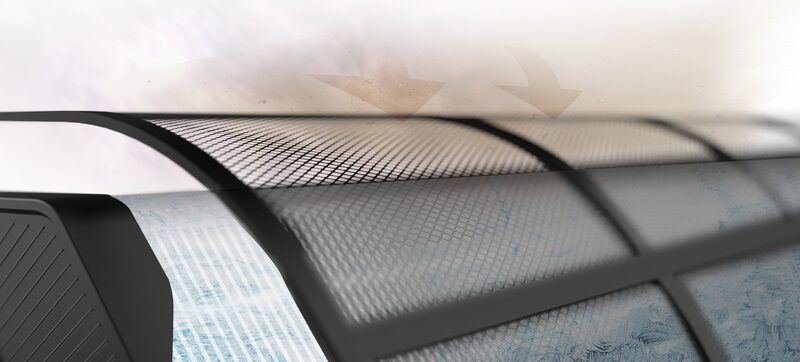
Upkeep is limited. Portable air conditioning units are not usually equipped with service valves, so they do not require full services, but their mesh filters require regular cleaning8. Pro Breeze units have washable filters and easy-access drainage points14. The wider guidance on air conditioning maintenance covers washing the filter, removing dust, and checking for mould and other build-ups20. For comparison, MVHR systems need their filters checked every few months and cleaned or replaced as necessary, and condenser coils are described as needing a clean probably twice a year22.
Condensate is the other maintenance point. The Lux Air 14,000 Btu portable heat pump has an automatic inbuilt condensate pump in heat mode and can evaporate water through the exhaust hose in cool mode, with manual emptying only in extremely humid conditions15. The Meaco Cirro 12000 BTU has a drainage hose length of 65 cm18. Portable air conditioning units do not require a water connection8.
What the choice means for a household
A single-hose portable air conditioner is the simplest cooling appliance available: it plugs into a wall socket, vents through a window kit, and needs no professional work8. It is also the least efficient way to cool a room, using 30 to 50% more electricity than a fixed system, and it pulls some of the air it has just cooled out through its own exhaust5. A twin duct unit fixes the second problem by drawing its intake from outside through a second duct, at the cost of three holes through an exterior wall3.
Neither design removes the household's dependence on the electricity grid, and neither removes the dependence on a manufacturer for filters, spares and warranty support. What a portable unit does offer is cooling without an outdoor unit, without refrigerant work, and without a fixed installation, which matters in a rental property or a room where a split system is not an option. The trade is a permanent running cost penalty and a noise level that most fixed systems avoid.
For a room under 10 m², or a temporary set-up, the portable format is the one that fits6. For a room used through the summer, the efficiency gap is the figure that decides the economics, and it is larger than the difference between one hose and two.
Sources23 cited
- electriQ P12C 12000 BTU Portable Air Conditioner, electriq, 2026
- electriQ EcoPlus10HPW Air Conditioner, electriq, 2026
- Twin Duct DIY Air Conditioning, Cooleasy, 2026
- Domestic portable air conditioners, Cooleasy, 2026
- How to keep your home cool in hot weather, Centre for Sustainable Energy, 2026
- Air-to-air heat pumps for small rooms, Daikin, 2026
- Home air conditioning, Netatmo, 2026
- FAQs, Cooleasy, 2026
- Guide to air conditioning units, EDF Energy, 2024
- Ratings of electrical appliances, Electrical Safety First, 2026
- Packaged air conditioning, Netatmo, 2026
- Home air conditioning, Netatmo, 2026
- Air conditioning size guide, Cooleasy, 2026
- Air conditioners, Pro Breeze, 2026
- Meaco Cirro 12000 BTU Super Quiet Smart Portable Air Conditioner, Meaco, 2026
- Summer energy tips, National Energy Action, 2026
- Is air conditioning worth it in the UK?, Uswitch, 2026
- The cost of keeping cool, Uswitch, 2026
- NI electrical items cost, National Energy Action, 2025
- Air conditioner buying guide, Hitachi Air Conditioning, 2026
- Easy-Fit single split air conditioning systems, Cooleasy, 2026
- Tips to help lower the cost of running your fridge freezer, Which?, 2026
- Airtightness and ventilation, Centre for Alternative Technology, 2025
 Running CostsA portable air conditioner costs roughly twenty to forty pence for every hour it runs, while a fixed unit uses far less electricity for the same cooling.
 Types of Air ConditioningPortable, wall-mounted, multi-room or ducted: which air conditioning suits your home?
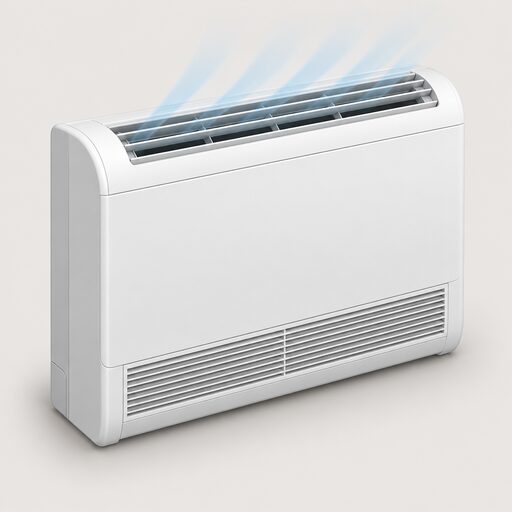 Split Air ConditioningA split air conditioning system cools or heats one room using an indoor unit and an outdoor unit linked by pipes.
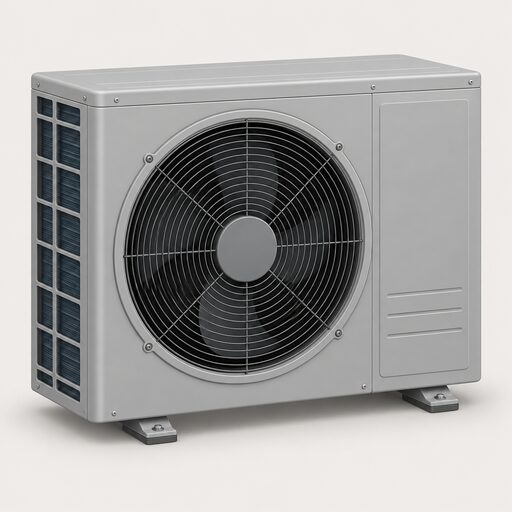 Cooling and Heat PumpsCan an air conditioner heat your home as well as cool it?
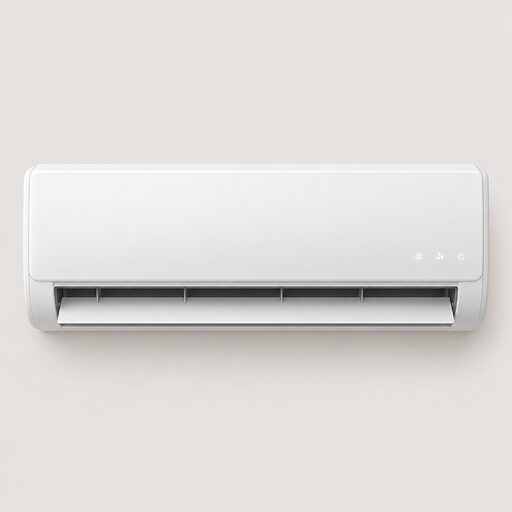 Air Conditioning CostPublished UK equipment prices and the parts of an installed price for portable, single split, multi-split and whole-house air conditioning.
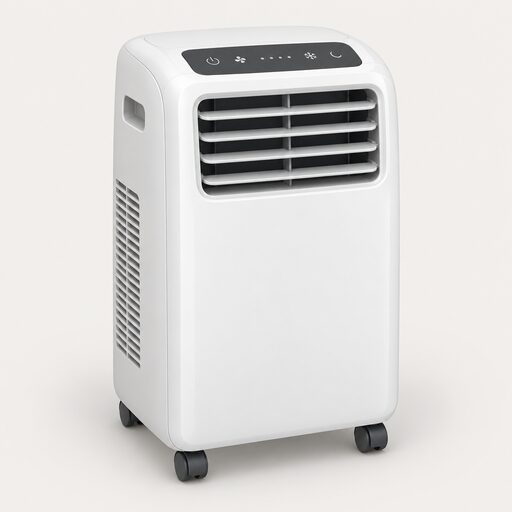 The Full Cooling and Air Conditioning GuideDo you really need air conditioning in a British summer, or would a fan and better shading do the job?