

In this guide
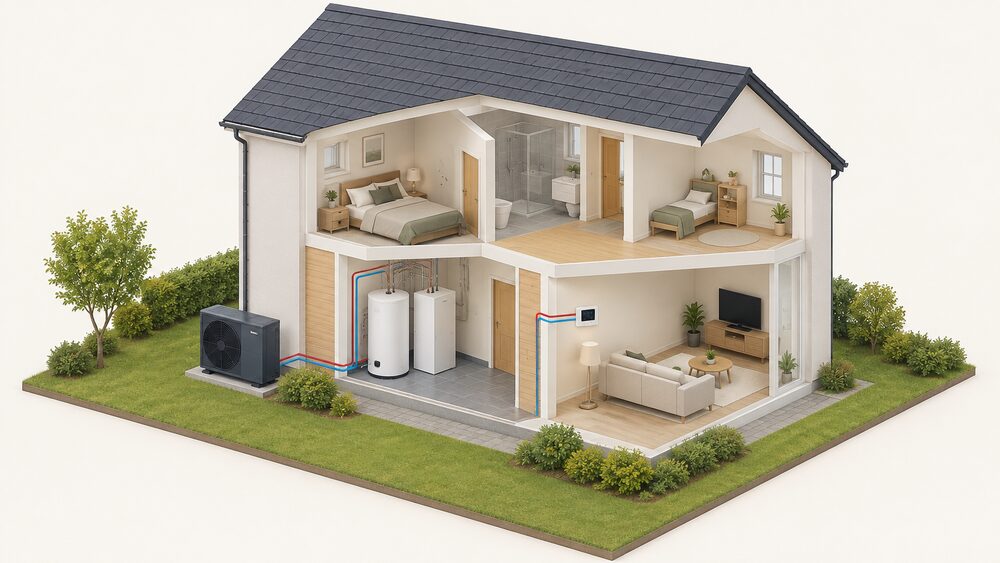
Aira sells one heat pump, not a family of them. It is an air-to-water system, meaning it takes heat from the outside air and transfers it to water in a wet central heating system, so it feeds radiators, underfloor heating and a hot water cylinder rather than blowing warm air around the house1. The company describes it as designed in Sweden and installed across the UK, in outdoor unit sizes of 6kW, 8kW and 12kW3.
Prices start at £6,729 for a system built around the 6kW outdoor unit with a 100L all-in-one indoor unit, a 40L buffer tank and two standard radiator upgrades, and that figure already has the £7,500 government grant taken off5. Aira's wider published range for an installed system is £7,150 to £12,000 after grants5. The company states the heat pump will perform at least four times more efficiently than a gas boiler, and quotes a seasonal coefficient of performance of up to 4.71.
What follows is what the maker publishes about its own product, set against independent guidance on heat pumps generally, so a household can see where the claims are firm and where they are the company's own.
What the Aira Heat Pump is, and where it comes from
The Aira Heat Pump is an air-to-water heat pump1. Air-to-water is the most common form of air source heat pump in the UK: it warms water that is then circulated around the home through radiators or an underfloor heating system2. That is different from an air-to-air heat pump, which produces warm air circulated by fans and does not produce hot water, so a separate system is needed for water heating10.
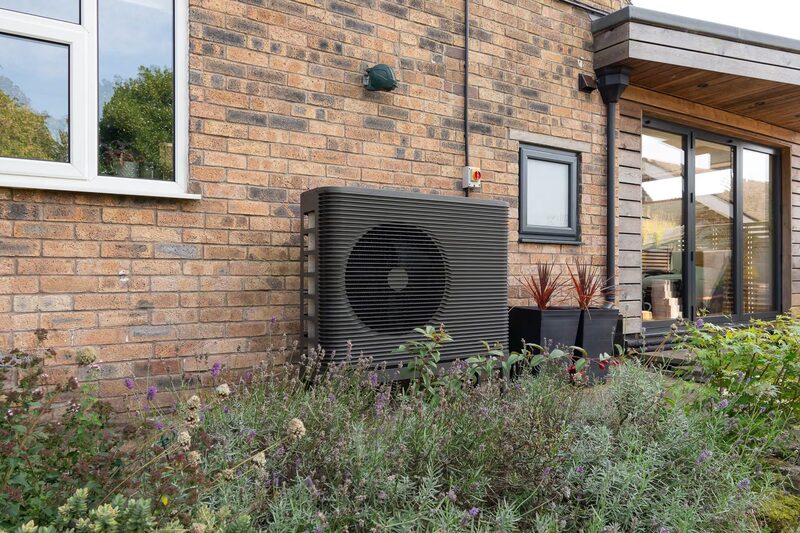
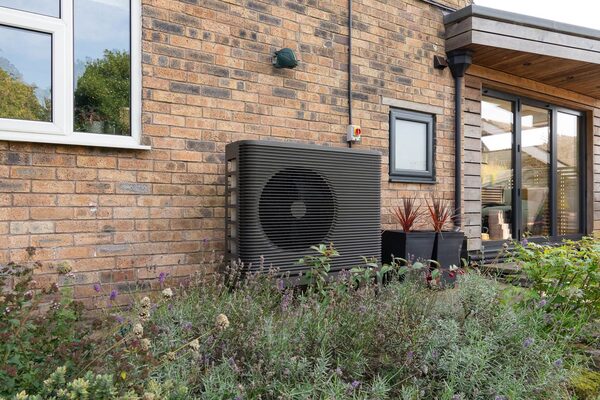
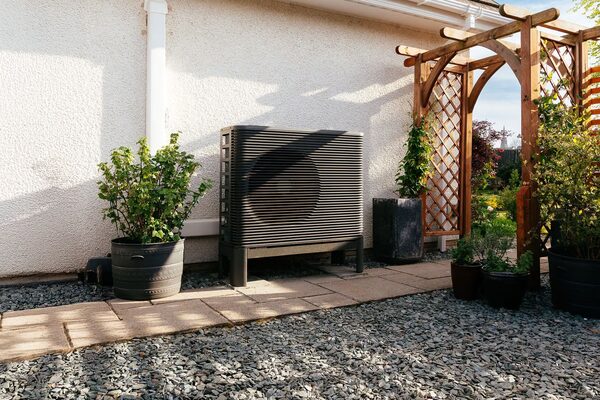
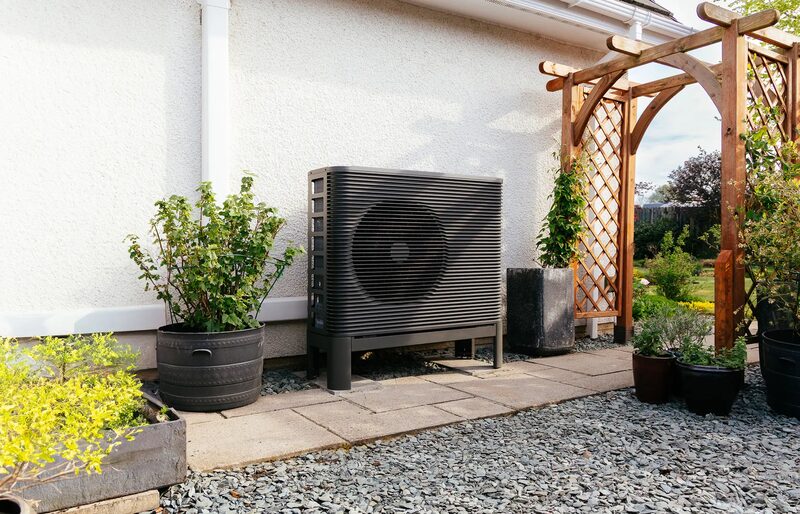
Aira's own framing of its origin is blunt: "We're from Sweden, where sub-zero winters are the norm. So are heat pumps"12. The relevance is not sentimental. Cold-climate design is a real engineering question for heat pumps, and Aira uses natural R290 refrigerant, which the company says works even in sub-zero weather7. The outdoor unit is described as compact and sits in a garden, driveway or along an external wall, with a 230V power supply and a maximum flow temperature of 70°C4.
For a household, the practical point is that this is a like-for-like replacement for a wet heating system, not a change of heating method. The radiators, pipework and cylinder stay in the same family of components. What changes is the fuel: electricity instead of gas, and the efficiency with which that electricity is turned into heat.
Range and specifications: 6, 8 or 12 kW, and two indoor units
Aira offers three outdoor unit sizes: 6kW, 8kW and 12kW4. The company describes them as three sizes available to suit a wide range of homes and development sizes13. The 6kW unit is rated at 6 kW power output at -7°C outdoor temperature and 35°C flow temperature, which is the cold-weather test point that matters most in the UK4.
Inside, there are two options: the Aira Indoor Unit and the Aira Indoor Unit Compact4. The indoor unit is the part that connects to the heating circuit and, in the all-in-one version, holds the hot water. The example system price Aira publishes is built on a 100L all-in-one indoor unit with a 40L buffer tank5.
| Specification | Aira Heat Pump |
|---|---|
| System type | Air-to-water1 |
| Outdoor unit sizes | 6kW, 8kW, 12kW4 |
| Indoor options | Aira Indoor Unit; Aira Indoor Unit Compact4 |
| Power supply | 230V4 |
| Maximum flow temperature | 70°C4 |
| Refrigerant | R2901 |
| Example system | 6kW outdoor unit, 100L all-in-one indoor unit, 40L buffer tank, 2 radiator upgrades5 |
The 70°C maximum flow temperature is worth noting because it is higher than many heat pumps manage, and it means the system can in principle run existing radiators at temperatures closer to what a boiler would use. That does not make radiator upgrades unnecessary, and Aira's own example price includes two standard radiator upgrades5. The company also markets Future Homes Standard-ready designs for new build and development work13.
Efficiency: up to 4.7 SCOP and a 4X promise
Aira's headline efficiency claim is that the heat pump "will perform at least 4X more efficiently than a gas boiler"1. The company repeats the figure as "4X more efficient than a traditional gas boiler" and describes modern air source heat pumps as able to produce 4 units of heat for every unit of electricity used3. The seasonal coefficient of performance is given as up to 4.77.
That 4X figure is a maker's promise, and it is written into the guarantee: Aira states that under the 15-Year Aira Guarantee it promises the heat pump will perform at least 4X more efficiently than a boiler over the course of the year8. Independent guidance supports the general principle without endorsing the specific number: air source heat pumps are described as up to 400% efficient14.
The gap between a promise and a real installation is where households should look hardest. One independent product page for Aira records a customer installation in West Sussex performing with a heating COP of 4.9 to 5.1, but the same page also records figures of 2.9 to 3.2, and the two are not reconciled15. For context, other makers publish SCOP figures in a similar band: the Ideal Logic Air is listed at up to 4.96 and the Vaillant aroTHERM Split at up to 4.8816. Aira's 4.7 sits inside that group rather than above it.
What drives the real number is the fabric of the house, the size of the radiators and the flow temperature the system runs at. Aira's own guidance on cold weather notes that the heat pump has an inbuilt defrost cycle that stops frost building up on the back of the outdoor unit7. Defrost cycles cost efficiency, and they are a normal part of winter running rather than a fault.
Cost: £6,729 to £12,000 after the £7,500 grant
Aira publishes a starting price of £6,729 for a heat pump system, based on a 6kW outdoor unit, a 100L all-in-one indoor unit, a 40L buffer tank and two standard radiator upgrades, including the £7,500 government grant6. The company's wider published range for an installed air source heat pump is £7,150 to £12,000 in the UK, including installation and taking into account government grants5.
The grant in question is the Boiler Upgrade Scheme. From 21 July 2026 the grant value for an air-to-water heat pump is £7,500, and the scheme covers air-to-water heat pumps18. Households in England and Wales that switch from heating oil to a heat pump can get £9,000 from 21 July 2026, a 20% increase on the £7,500 grant20. Aira states that it applies for the BUS grant on the homeowner's behalf and deducts it from the quote5. The scheme is for eligible homes in England and Wales21.
For comparison, independent guidance puts air-to-water heat pump installation at around £11,000, with the Boiler Upgrade Scheme providing £7,50022. Another independent analysis puts the out-of-pocket cost with the £7,500 grant at roughly £500 to £4,500 depending on the system and property23. Aira's published range sits at the upper end of that spread, which reflects a full-service installation rather than a bare unit.
Aira also offers monthly payment options, and its all-inclusive plan covers the guarantee and the first year of maintenance5. The company states plainly that it will not install a heat pump unless it is confident the new system will decrease the household's energy bills21.
Running costs and savings: up to £490 a year, with caveats
Aira states that the heat pump slashes energy bills by up to £490 a year, and repeats the £490 figure across its product pages3. Its own cost breakdown gives a running cost of about £912 per year for electricity for heating, falling to £744 per year on the Cosy Octopus tariff5. A separate Aira page gives a running cost of about £920 per year including maintenance and combined with a clean energy tariff25.
One Aira product page gives £490 per year, while another gives £550 a year on energy bills, and the two are not reconciled3. Both are the maker's own figures, so the honest position is that the saving depends on what the household was paying before and what tariff it moves to.
Maintenance is part of the running cost. Aira lists an annual or biennial maintenance visit at £238.80 per year, free for the first year with the Aira all-inclusive plan5. That is a real annual figure and it belongs in any comparison against a gas boiler, which also needs an annual service.
The tariff question matters more for a heat pump than for a boiler, because the running cost depends on the price of electricity rather than gas. Aira promotes the Cosy Octopus tariff, which it describes as powered by Octopus Energy and designed exclusively for heat pumps, allowing Aira to adjust the system to heat the home and hot water when it is cheapest5. Aira also states that the heat pump is designed to optimise heating around the home's energy usage and electricity tariff, adapting to lower-cost periods8.
Aira Intelligence: monitoring, tariff optimisation and Away Mode
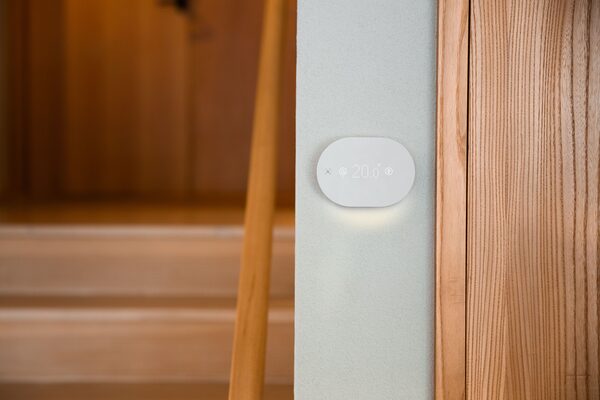
Aira Intelligence is the control layer. Aira describes it as monitoring outdoor temperatures, weather forecasts and how the home warms up, then automatically fine-tuning heating throughout the day to maintain the chosen temperature using as little energy as possible26. The system is described as built to work together as one connected home energy eco-system, powered by Aira Intelligence13.
The tariff optimisation is the part with a financial effect. Aira states that the heat pump is designed to intelligently optimise heating around the home's energy usage and electricity tariff, adapting to lower-cost periods8. That is what makes a time-of-use tariff worth having: the system can shift when it heats, within the limits of the building's thermal mass.
This is also where the clearest dependence sits. Aira Intelligence is a manufacturer's platform, and the optimisation depends on the system's connection to it. Local control remains: indoor temperature is adjusted using the Aira app or the thermostat27. If heating has been switched off at the app level, Aira's own support guidance is to open the Aira app, go to Indoor Temperature, then Settings, then Allowed Modes, and make sure heating is enabled27.
"Open your Aira app, go to Indoor Temperature > Settings > Allowed Modes and make sure heating is enabled."
For a household weighing independence, the position is that the heat pump itself runs on electricity from the grid and does not need the internet to produce heat. The optimisation, the monitoring and the tariff-shifting do. That is a dependence on a broadband connection, on Aira's servers and on the company continuing to support the app, and it is the same shape of dependence that any connected heating system carries.
Cold weather, noise and siting
Cold weather performance is the question most households ask first. Aira's position is that the heat pump uses natural R290 refrigerant, which works even in sub-zero weather, and that the unit has an inbuilt defrost cycle that stops frost building up on the back of the outdoor unit7. The 6kW unit is rated at 6 kW output at -7°C outdoor temperature and 35°C flow temperature, which is the figure that matters for a UK winter4.
Siting is straightforward but not unlimited. The outdoor unit sits in a garden, driveway or along an external wall, and Aira states that it works best with clear airflow on all sides4. Independent guidance makes the same point in general terms: air source heat pumps need a place outside where a unit can be fitted to a wall or placed on the ground, with space around it for a good flow of air11. Air-to-air units need the same kind of space10.
On noise, Aira does not publish a sound power figure in the material available. Independent guidance puts typical air source heat pumps at around 45dB(A), and another source gives around 40 decibels, rising to 60 decibels when working very hard14. The outdoor unit of an air-to-air heat pump is described as likely to be the same as an air-to-water heat pump28. Siting, distance from a neighbour's window and clear airflow all affect how noticeable it is in practice.
Warranty, maintenance and lifespan: the 15-Year Aira Guarantee
Aira backs the heat pump with a 15-Year Aira Guarantee, included in all installs1. The company states that any parts and labour required to ensure the function of the product and installation are covered for 15 years5. The first year is free under the all-inclusive plan21.
One Aira page gives the guarantee as 15 years covering parts and labour, while another gives 10 years, and the two are not reconciled5. The 15-year figure appears more often across Aira's own pages and in its news material, but a household reading the terms should confirm the term that applies to its own installation in writing8.
Maintenance is lighter than a boiler's. Aira recommends a maintenance visit every two years and describes maintenance as minimal25. Independent guidance is more cautious, suggesting an engineer services a heat pump according to the manufacturer's advice, usually once a year15. The cost breakdown Aira publishes lists an annual or biennial maintenance visit at £238.80 per year, free for the first year on the all-inclusive plan5.
Installation timing is worth knowing before committing. Aira describes its technicians as designing and installing the system in weeks, not months, and aims to design and install within 30 days of an approved quote24. On the days themselves, one Aira comparison gives 2 to 4 days for a heat pump against 1 to 2 days for a boiler, while another page gives 2 to 5 days25.
Getting a quote and claiming the grant

Aira runs a Home Energy Assessment in which every room is assessed to make sure the heating system is designed to keep each one at the temperature wanted26. A technical survey follows, and the company aims to design and install the system within 30 days of an approved quote24.
The grant is handled by Aira rather than by the household. Aira states that it applies for the Boiler Upgrade Scheme grant on the homeowner's behalf and deducts it from the quote5. The scheme covers air-to-water heat pumps, with a grant value of £7,500 from 21 July 2026, and is for eligible homes in England and Wales18. Households switching from heating oil can get £9,000 from the same date20.
Aira also publishes material aimed at specific markets: new build and development work, where it markets Future Homes Standard-ready designs, and affordable heat pumps in the north of England13. For a household in an older property, the relevant route is the standard assessment and quote.
Where the Aira Heat Pump sits for a household
The independence question has a clear answer for this product. A heat pump moves a home off gas and onto electricity, which removes the gas standing charge and the gas supply from the household's energy position. It does not remove dependence on the grid: the heat pump runs on electricity, and in a UK winter that electricity is largely generated from a mix that includes gas. What changes is that the household is no longer burning gas in its own home, and that the running cost is set by electricity prices rather than gas prices.
The remaining dependences are worth naming plainly. The system depends on a grid connection and an electricity supplier. Aira Intelligence depends on a broadband connection and on Aira continuing to run the platform. The 15-Year Guarantee depends on Aira as a company, and on the maintenance regime being kept up. The tariff optimisation depends on a time-of-use tariff being available and on the household staying on it.
Against that, the system is a like-for-like replacement for a wet heating system, it uses a refrigerant the maker says works in sub-zero weather, and the guarantee term is longer than the two to ten years typical of gas boilers. For a household already considering a heat pump, the Aira proposition is a full-service installation with the grant handled and the guarantee bundled in, priced at the upper end of the independent cost range.
Sources28 cited
- How a heat pump works, Aira, 2026-09-17
- Air source heat pump, MCS Certified, 2026-07-24
- Heat pumps, Aira, 2026-09-17
- Outdoor units, Aira, 2026-09-17
- Cost of an air source heat pump, Aira, 2026-09-17
- Affordable heat pumps in North England, Aira, 2026-09-17
- Do heat pumps work in cold weather, Aira, 2024-01-16
- Energy price cap increase, heat pumps and gas boilers, Aira, 2026-05-28
- Everything you need to know about air source heat pumps, Plymouth Energy Community, 2026-09-20
- Air-to-air heat pumps, Energy Saving Trust, 2026-09-11
- Renewable heating: what are the options, Energy Saving Trust, 2024-03-01
- Aira, Aira, 2026-09-17
- Heat pumps for new builds and developments, Aira, 2026-09-17
- Air source heat pump, Plymouth Energy Community, 2026-09-20
- Aira, Which? Trusted Traders, 2026-04-11
- Ideal Logic Air 4kW heat pump, Quiet Mark, 2026-09-17
- Vaillant aroTHERM Split air source heat pump, Quiet Mark, 2026-09-17
- Boiler Upgrade Scheme guidance for installers v5.1, Ofgem, 2026-07-21
- Boiler Upgrade Scheme installers, Ofgem, 2026-09-17
- UK increasing heat pump grant for heating oil households - pv magazine Global, pv-magazine.com
- Heat pump for a semi-detached home, Aira, 2026-01-15
- Electric heating, Centre for Sustainable Energy, 2026-06
- The real cost of a heat pump, Low Carbon Hub, 2025-10-30
- How does Aira compare, Aira, 2026-09-17
- Heat pumps vs boilers, Aira, 2025-05-05
- Why is my house so cold with a heat pump, Aira, 2026-06-26
- Ready your Aira Heat Pump for winter, Aira, 2026-09-17
- Air-to-air heat pumps: common questions, Nesta, 2026-06-24
 Home Energy Efficiency ToolThe Energy Saving Trust Home Energy Efficiency Tool turns an address and a few home details into a tailored action plan with costs, savings, carbon figures and an indicative EPC rating, and it is free to use.