


In this guide
The Home Energy Efficiency Tool is a digital tool that uses a market leading calculation engine to give tailored energy efficiency advice1. It takes an address and a short set of details about the building, then returns a personalised action plan: what to do, in what order, what it is likely to cost, what it could save on bills and carbon, and an indicative energy rating for the home.
It is built and run by the Energy Saving Trust, the grant-awarding body and advice organisation that also supplies the calculation engine behind several council, retailer and utility services2. The householder-facing versions are free. Home Energy Scotland, for example, offers free advice on improving the energy efficiency of your home3, and the tools that sit inside council schemes are provided at no cost to the resident.
The tool is a planning instrument, not a certificate. It does not lodge an Energy Performance Certificate, and it does not replace an assessment by an accredited assessor. What it does is turn the data already held about a property into a ranked list of measures with numbers attached, which is the point at which most households move from wondering where to start to booking work.
What the Home Energy Efficiency Tool does
The tool exists to answer a question most households cannot answer from a bill: how efficient is this home, and which changes would actually reduce its energy use7. It does that by combining what is already recorded about a property with what the householder reports, then running the combination through a calculation engine that produces measure-by-measure advice.
The output is not a single number. HomePlus, one of the services built on the same engine, gives customers a personalised report and an action plan to improve energy efficiency, and it also provides potential carbon savings1. Customers can discover optimum energy saving solutions to suit their budget and understand the potential bill savings to be made from implementing home upgrades1. That combination, a ranked list plus a cost and a saving against each item, is what separates the tool from a general advice page.
The engine behind it is used at scale. City Plumbing Supplies uses Energy Saving Trust's digital Home Energy Improvement Tool to provide its customers with energy efficiency advice across 360 City Plumbing branch locations and online2, and the same organisation developed a bespoke Energy Saving Tool for Yorkshire Building Society2. B&Q's Energy Saving Service was built as a bespoke product using the Home Energy Efficiency Tool and Dynamic Engine technology4. For a householder, the practical consequence is that the same underlying calculation appears under several different front doors, and the advice should be consistent whichever one is used.
What the tool does for independence is modest but real. It reduces reliance on a single installer's opinion about what a house needs, because the recommendation comes from a calculation rather than a sales visit. It does not remove the dependence on a supplier, a grid connection or a gas network, and it does not carry out any work. It is a map, not a vehicle.
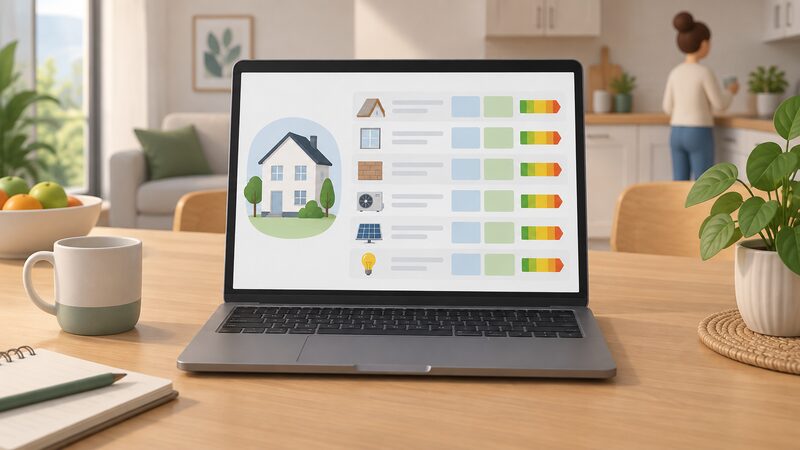
Who makes it: Energy Saving Trust

The Energy Saving Trust is the organisation behind the tool. It is described in official guidance as a grant-awarding body8, and it also provides advice on energy at home and a guide to green renovation to help households put energy efficiency first room by room3. That dual role, grant administration and public advice, is why its calculator carries weight with councils and with the services that license it.
The Trust's tools are white-labelled into other organisations' services rather than only offered directly. HomePlus states that the Energy Saving Trust's Home Energy Efficiency Tool is now an integral part of its HomePlus Digital Home Report1. City Plumbing Supplies is using Energy Saving Trust's digital Home Energy Improvement Tool to provide its customers with energy efficiency advice2. The Trust has also developed a bespoke Energy Saving Tool for Yorkshire Building Society2.
This matters for how a householder should read the output. The advice is impartial in the sense that the Trust does not sell installations, but the front door through which it is reached may be a retailer, a lender or a council with its own onward offer. The calculation is the Trust's; the surrounding service is not.
The Trust also publishes separate calculators for specific measures. Its solar panel calculator uses the size, insulation and energy performance certificate rating from your home or similar homes5, and it states that if it cannot find your home in its database it can still provide potential savings, but they will not be specific to your home5. That is the clearest published statement of how the family of tools behaves when the data is thin.
What you need to enter: your address and home details
The starting point is the address. Which?'s home energy planning service asks users to register with a name and email, then enter a postcode and select the address9. The address is not incidental: it is the key that unlocks the records already held about the property.
Those records are extensive. The Energy Performance of Buildings Regulations set out the data items that may be used to produce a certificate for a residential building, including the address and postcode, the energy rating and potential energy rating, building type and built form, floor area, glazing, extensions, fuel type, heating systems and controls, insulation, lighting, ventilation, solar water heating, construction age band, tenure type and air permeability10. A certificate must also carry the address of the building8.
In practice the tool gathers a home's address, the building's age, construction and Energy Performance Certificate rating, along with a customer's current energy use4. The householder supplies the parts that are not on a register: how the home is heated, how it is used, and what the budget is.
The National Energy Efficiency Data-Framework shows what sits behind this kind of analysis at national level: property level data including gas and electricity consumption from 2005 to 2022, property characteristics and energy efficiency measure installations11. The same framework is used to assess the impact of installing home efficiency measures such as loft insulation on household energy consumption12. A householder is not seeing that dataset, but the tool's estimates rest on the same kind of evidence.
What the plan tells you: savings, EPC rating, costs and CO2
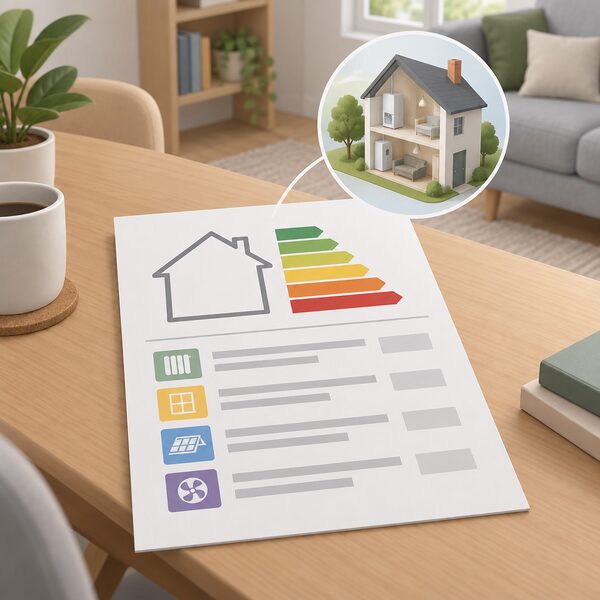
The plan's core output is a set of measures with money and carbon attached. Homewise tells residents the cost of any recommended energy efficiency improvements and any potential carbon and energy bill savings13. Which?'s service shows home data, improvement options, ballpark costs, bill savings, grant checks, ways to pay and trusted installers9. HomePlus provides potential carbon savings alongside the bill figures1.
The rating element is indicative. An EPC provides an assessment of a home's energy efficiency14, and each EPC comes with a report setting out the cost effective measures that homeowners or businesses can take to improve energy efficiency and energy rating, such as low energy bulbs or upgrading insulation15. The tool mirrors that structure without producing the lodged certificate.
The rating system itself is in flux, which affects how a plan should be read. The Scottish Government has consulted on reforming the current metrics to provide more holistic information about the efficiency of a home that is relevant to owners and occupiers16, and its stated limitation is that the current metrics do not accurately reflect the fabric efficiency of a home nor do they support the transition to net zero16. A new set of ratings has been proposed: a Heat Retention Rating reflecting fabric energy efficiency, a Heating System Rating covering type, emissions and efficiency, and an Energy Cost Rating. Those new certificates and ratings are intended to help monitor progress in the heat decarbonisation target and to underpin minimum energy efficiency standards17.
For context on what the numbers mean, a home rated EPC C or above is generally regarded as having an adequate level of energy efficiency18. Official statistics also break down delivery at national level, including further analysis and geographical breakdowns of ECO measures, ECO delivery costs, estimated carbon and energy savings from measures installed and the supply chain19.
Setting a goal and a budget to shape your plan
The plan is shaped by two inputs the householder controls: the target and the money available. Setting a target is a separate decision from running the tool, and the site's guide to setting a target for your home covers the choice between an EPC band, a bill reduction and low-carbon heat.
Budget is the constraint that reorders the list. HomePlus is explicit that customers can discover optimum energy saving solutions to suit their budget and understand the potential bill savings to be made from implementing home upgrades1. Homewise produces a tailored retrofit action plan from its property tool, with a personalised home energy action plan, an indicative EPC rating and a breakdown of the cost for any work and potential savings20.
Where the budget is very small, the tool's value is in sequencing rather than in the size of the measures. The site's guide to starting on a small budget deals with that case directly, and quick wins and no-cost measures covers the items that need no capital at all.
Grant funding is the third input, and it varies by nation. The Northern Ireland Housing Executive's home energy saving tool states plainly that there may be energy grant help to allow you to make these changes21, and it can be used to create an action plan to make your home more energy efficient21. In Wales, the Nest scheme's customer charter requires households to give correct information at the right time22. In Scotland, Home Energy Scotland offers free advice on improving the energy efficiency of your home3. In England, council-run services such as Action on Energy provide communities with advice and support for improving home energy efficiency23.
How accurate it is when you don't know the details
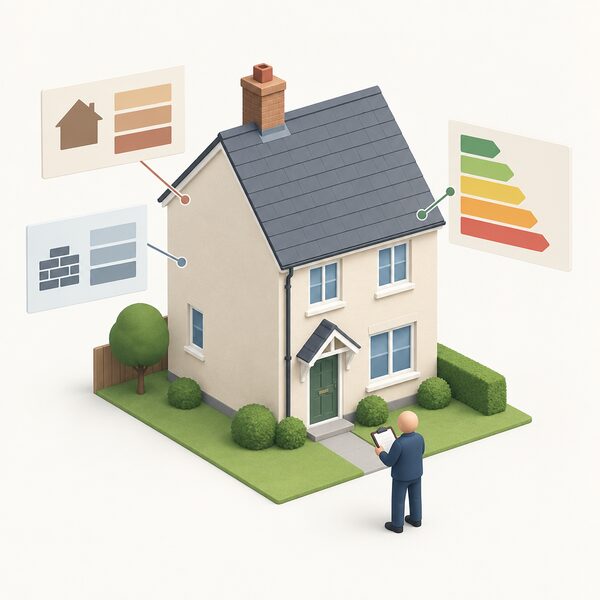
Accuracy depends on how much of the property record the tool can reach. Where the address matches, the estimate draws on the building's age, construction and EPC rating plus current energy use4. Where it does not match, the Energy Saving Trust's own wording is that it can still provide potential savings, but they will not be specific to your home5.
The second limit is the householder's own knowledge. Official statistics found that 16% reported knowing their exact rating for their home6. A plan built on a guessed rating will be directionally right and numerically loose.
The third limit is the rating system itself. The Scottish Government's consultation states that the current metrics do not accurately reflect the fabric efficiency of a home nor do they support the transition to net zero16, which is a limitation of the underlying framework rather than of any one calculator. Reform is anticipated, with the final date depending on when the UK Home Energy Model becomes available.
For a householder, the practical reading is that the tool is reliable for ranking and sequencing, and less reliable for predicting a bill to the pound. The site's guide to measuring results after the work sets out how to check the outcome once measures are installed, and baseline your energy use covers establishing the starting figure the plan should be judged against.
Saving, editing and returning to your plan
Whether a plan can be reopened depends on which version produced it. Services that require registration, such as Which?'s, hold the plan against a name and email address9, so returning means signing in with the same details. Council and advice service versions are held by the organisation that ran the survey.
Editing the assumptions is part of the process rather than a separate step. The tool asks a short set of questions about the property, and the Energy Saving Trust notes that homes without electric heating can still use its calculators, with a few more questions asked about the home5. Correcting the heating type, the glazing or the insulation level moves the plan closer to the actual building.
Downloading follows the same route as the plan itself. HomePlus issues a personalised report and an action plan1; Homewise issues a tailored retrofit action plan with an indicative EPC rating and a cost breakdown20. Where the tool is run through a council, the report is issued through that service.
Keeping the paperwork matters more than it appears. The site's guide to the paperwork to keep explains why the plan, the quotes and the completion evidence should be retained together, particularly where a grant or a future sale is involved.
Where it fits with other tools: HomePlus, Home Energy Saver and Homewise

Several tools share the same engine and the same underlying data, and the differences are in the surrounding service rather than in the calculation.
| Tool | Who runs it | What it adds |
|---|---|---|
| Home Energy Efficiency Tool | Energy Saving Trust | Tailored advice from the calculation engine1 |
| HomePlus | Energy Saving Trust | Digital Home Report, personalised report and action plan, carbon savings1 |
| Homewise | Council and advice services | Tailored retrofit action plan, indicative EPC rating, cost breakdown20 |
| Home Energy Improvement Tool | City Plumbing Supplies | Advice across 360 branch locations and online2 |
| Energy Saving Tool | Yorkshire Building Society | Bespoke version developed by Energy Saving Trust2 |
| B&Q Energy Saving Service | B&Q | Bespoke product using the tool and Dynamic Engine technology4 |
Homewise is described as a market-leading tool that helps residents make energy efficiency improvements to their homes13, and it gives energy saving advice to help save money on energy bills and boost the energy rating of your home25. HomePlus is the Energy Saving Trust's own consumer-facing route, with the tool as an integral part of its Digital Home Report1.
The wider advice landscape is being reorganised. The new Home Energy Advice service is intended as a single-entry point for consumer home energy advice on GOV.UK, helping homeowners, landlords and tenants find tailored, impartial and trusted advice on how to heat their homes and make them more energy efficient26. The site's guide to the GOV.UK Find Ways to Save Energy in Your Home tool covers that route, and home energy assessments covers what a paid assessment adds beyond any calculator.
What the tool cannot do, and what still depends on others
The tool produces a plan. It does not produce a certificate, carry out work, or guarantee a saving. An EPC is a formal assessment of a home's energy efficiency14, and only an accredited assessor can lodge one. The tool's rating is a planning figure.
Meter data is a separate dependency. A home energy monitor can help track electricity use, but it does not replace a smart meter because it cannot automatically send meter readings to a supplier27, and it does not automatically break usage down by appliance27. Households without a smart meter will still need to submit manual meter readings to their energy supplier to avoid getting an estimated bill27. Where a smart meter is fitted, automatic meter readings provide a supplier with monthly, weekly, daily, or even half-hourly readings28, and the household does not need to submit meter readings itself29. Ofgem's guidance on getting help with a smart meter covers the practical route29.
The remaining dependencies are the familiar ones: a grid connection, a supplier, and for gas-heated homes a gas network. The tool reduces dependence on a single installer's judgement, and it makes the sequence of work visible before money is committed. It does not change where the energy comes from. The site's guide to planning a route to household energy independence sets out what would.
Sources29 cited
- E.ON Next helps customers with home energy efficiency advice, Energy Saving Trust, 2025
- Digital energy advice tools help thousands save money, Energy Saving Trust, 2025
- Financial help for energy efficiency and low carbon heating, City of Edinburgh Council, 2026
- B&Q, Energy Saving Trust, 2025
- New calculator shines a light on solar panels, Energy Saving Trust, 2026
- DESNZ public attitudes tracker: heat and energy use in the home, winter 2025, GOV.UK, 2025
- Home energy, Northern Ireland Housing Executive, 2026
- Energy Performance of Buildings Regulations 2012, regulation 9, legislation.gov.uk, 2012
- Use our home energy planning service, Which?, 2026
- Energy Performance of Buildings Regulations 2012, Schedule B1, paragraph 2, legislation.gov.uk, 2024
- NEED anonymised data 2024, GOV.UK, 2024
- NEED impact of measures data tables 2025, GOV.UK, 2025
- Homewise, Energy Saving Trust, 2026
- Solar photovoltaic (PV) panels, London Borough of Bromley, 2026
- Energy Performance Certificates, nidirect, 2026
- Scottish Government EPC reform consultation, CIBSE, 2026
- Proposals for a Heat in Buildings Bill, Scottish Government, 2026
- Bristol Warm Homes Plan, Bristol City Council, 2025
- Household Energy Efficiency Statistics, headline release June 2026, GOV.UK, 2026
- Homewise, Bridgend County Borough Council, 2026
- Home Energy Saving Tool, Northern Ireland Housing Executive, 2026
- Nest home energy support scheme customer charter, Welsh Government, 2024
- ECO4 Flex open, South Cambridgeshire District Council, 2026
- Energy incentives and schemes, South Cambridgeshire District Council, 2026
- Want to make green improvements to your home?, Cornwall Council, 2025
- Reforming consumer protection for home upgrade schemes, GOV.UK, 2026
- Smart meters vs home energy monitors, Smart Energy GB, 2026
- How to get a smart meter, Smart DCC, 2026
- Get help with your smart meter, Ofgem, 2026
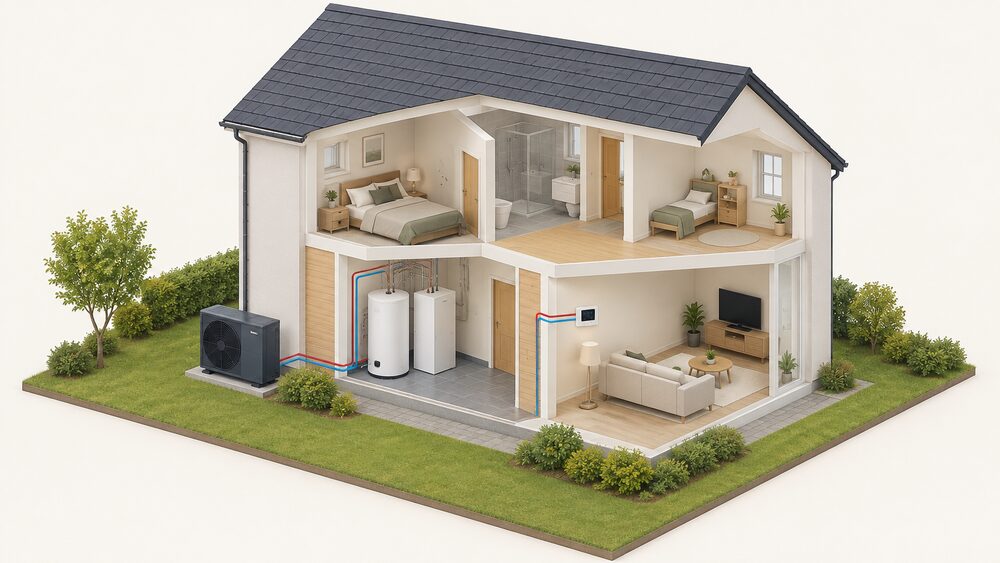 Aira heat pumps in the UKAira sells an air-to-water heat pump designed in Sweden and installed across the UK, in 6, 8 or 12 kW sizes, with prices from £6,729 after the £7,500 Boiler Upgrade Scheme grant.