
In this answer
Short answer
The number for an energy complaint depends on who the complaint is against. For a dispute with a supplier, a broker, a network operator or a heat network supplier, the Energy Ombudsman is on 0330 440 1624, and callers with a heat network problem press option 3 when prompted1. A textphone line on 0330 440 1600 is published alongside it2.
That number is not the first call. A complaint has to be logged with the company itself before the Ombudsman can take it on, and the Ombudsman only accepts a dispute once a final decision or deadlock letter has arrived, or eight weeks have passed without resolution3. Supplier lines differ by company: EDF Energy publishes 03330 069 9504.
Complaints about government energy policy go somewhere else entirely. The Department for Energy Security and Net Zero publishes 0207 215 5000 as its telephone number, with written complaints to its Enquiry Unit in London5.
Who to call: the numbers that matter
The Energy Ombudsman describes itself as an independent service, separate to Ofgem, for problems with an energy supplier, an energy broker, a network operator or a heat network supplier7. That scope is what makes a single number work across most domestic disputes, and it is why the same 0330 440 1624 appears on Ofgem's own complaint guidance, on distribution network operator complaint pages and on the Ombudsman's own site8.
Before dialling it, the supplier route has to be exhausted. Ofgem's guidance tells households to contact their energy supplier about late, incorrect or missing bills, back billing, being overcharged, a faulty meter, poor customer service, and a refusal to refund credit from an account10. The Ombudsman's own process page sets the trigger: a final decision or deadlock letter, or eight weeks passing without the complaint being resolved3.
Two practical points make the call shorter. The Ombudsman asks for the account number and the case reference number if there is one, and for the complaint itself it wants to know what the problem is, when it happened, what outcome is wanted, the first date the supplier was contacted, and the letters, emails and phone calls about it11. A household that has kept that record can register a dispute by website, telephone, email or post, free of charge6.
Where the complaint is not about a supplier at all, the number changes. Network operators publish their own complaint routes, and the Ombudsman sits above them2. Energy Performance Certificate complaints start with the Domestic Energy Assessor and then their certification body, not with the Ombudsman13. Feed-in Tariff disputes have their own licensee contacts and dispute resolution route at Ofgem14. The pattern is consistent: the Ombudsman is the escalation point, not the entry point.
The Energy Ombudsman: 0330 440 1624
The main line is 0330 440 1624, published by the Ombudsman for energy complaints and repeated across independent complaint guidance1. A textphone on 0330 440 1600 covers callers who need it2. Email goes to enquiry@energyombudsman.org8.
One conflict is unresolved in the published material: an independent support article carries both 0330 440 1624 and 0845 055 0760 for the same service. The 0330 number is the one carried by the Ombudsman's own pages and by Ofgem's guidance, so it is the figure to treat as current, with the 0845 number noted as a second figure that still appears in circulation.
The service is free. The Ombudsman states that a dispute can be registered via the website, post, email or telephone at no cost12. Registration online begins by searching for the name of the energy supplier16. The Ombudsman's process page sets out the eligibility test in its own words:
"If you receive a “final decision” or “ deadlock” letter , or 8 weeks have passed and your complaint hasn’t been resolved"
For a household, the independence question matters as much as the number. The Ombudsman is not the supplier, not the regulator and not a government body, and it is funded through the industry rather than by the complainant. What it does not do is remove the dependence on the supplier's own complaint handling: the eight-week clock, the deadlock letter and the supplier's willingness to engage all sit upstream of the call. A household that wants to understand the escalation route in full, including what a deadlock letter is and what resolution to expect, can follow the wider guides on making an energy complaint and on what a deadlock letter means.
Complaining to your supplier first: the EDF complaints line
Every route to the Ombudsman runs through the supplier first. The Ombudsman's own guidance is blunt about it: the first thing a complainant needs to do is log a dispute with the supplier17. Ofgem's consumer pages list the problems that belong on that call, from late, incorrect or missing bills through to back billing, being overcharged, a faulty meter, poor customer service and a refusal to refund credit10.
Supplier numbers are published individually. EDF Energy lists 03330 069 950 as its telephone number4. That is a supplier contact line rather than an ombudsman line, and it is the number a household would use to open the complaint that later becomes an Ombudsman case. Other suppliers publish their own numbers, and the general directory of who to ring for each kind of home energy problem sits on who to call for an energy problem.
What to have ready is set out by Smart Energy GB's complaints guidance: the account number, the case reference number if there is one, what the complaint is about, when the problem happened, what outcome is wanted, the first date the supplier was contacted, and the letters, emails and phone calls about it11. That record is what the Ombudsman later asks for, so the supplier call and the Ombudsman call draw on the same file.
The dependence here is real and worth stating plainly. Until the supplier has had its chance, the Ombudsman cannot act, and the household's leverage is the paper trail rather than the phone number. A complaint that is logged, dated and referenced is the one that escalates cleanly at the eight-week mark.
Heat networks: option 3 on the Ombudsman line
Heat network complaints use the same number with a different menu choice: 0330 440 1624, pressing option 3 for Heat Networks when prompted16. The Ombudsman's own support articles for individual heat networks repeat that instruction, and it appears on the pages for named housing association and management company schemes as well as on the general raise-a-dispute page20.
The scope widened recently. The Ombudsman states that from 1 April 2025 it can help consumers and small businesses resolve heat network disputes26. Eligibility also depends on the provider: heat network customers can access the Ombudsman if their heat network provider is signed up to Heat Trust27. Where a heat network is not registered on the Ombudsman's website, the published instruction is to call 0330 440 1624 to raise the dispute28.
The sequence is the same as for a supplier complaint, with one addition. A heat network customer notifies their heat supplier first and works to resolve the issue, and the heat supplier has eight weeks to resolve the complaint29. The deadlock-or-eight-weeks test applies here too20.
Parliamentary material from 2022 anticipated this arrangement, naming the Energy Ombudsman and Citizens Advice as the frontline organisations to handle escalated consumer complaints30. Ofgem's heat network consumer protection work sets out the same expectation that consumers notify their supplier before the Ombudsman is involved29. For a household on a communal or district heating scheme, the practical effect is that the same 0330 number now covers a service that was previously outside the Ombudsman's reach, but the route in still runs through the heat supplier.
Complaining about energy policy: DESNZ on 0207 215 5000
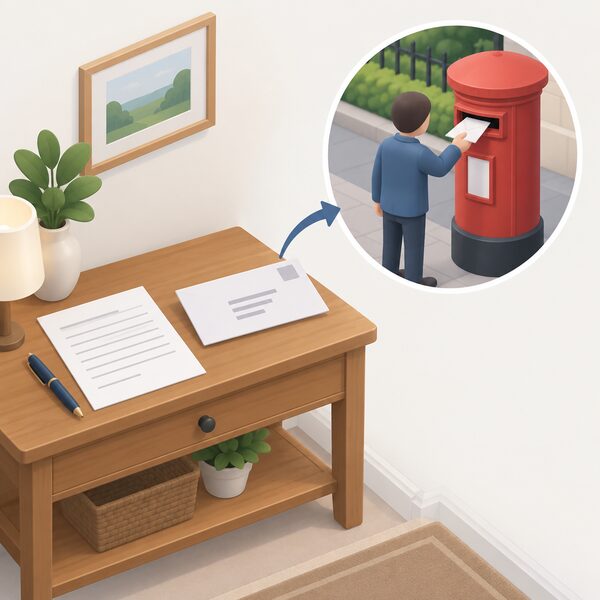
Complaints about government energy policy are not Ombudsman cases. The Department for Energy Security and Net Zero publishes 0207 215 5000 as its telephone number, and written complaints go to the Complaints Manager, Enquiry Unit, Department for Energy Security and Net Zero, 1 Victoria Street, London, SW1H 0ET5.
Scheme-specific routes sit alongside that. Boiler Upgrade Scheme policy complaints go to DESNZ at boilerupgradescheme@energysecurity.gov.uk31. Green Deal consumer queries go to gdconsumers@energysecurity.gov.uk32. These are policy and scheme administration contacts, not dispute resolution services, and they do not adjudicate on a supplier's handling of an account.
The distinction matters because the two kinds of complaint look similar from a household's point of view and are handled by entirely different bodies. A wrong bill is a supplier matter that escalates to the Ombudsman. A complaint about how a grant scheme is designed or administered is a departmental matter. DESNZ's own public attitudes work tracks awareness, attitudes and behaviours relating to its policies, including energy and climate change, which is the kind of policy feedback that flows through the departmental contact rather than the Ombudsman33.
For households in England, Scotland, Wales and Northern Ireland, the Ombudsman and DESNZ numbers are UK-wide, while grant administration and some advice services differ by nation. Local authority and regional advice lines exist separately, and one example in the material is a council energy advice line on 0800 082 223434. Where a complaint is about a grant rather than a bill, the starting point is the scheme administrator named in the grant paperwork, and the guides on checking which grants you qualify for and applying for a home energy grant set out that route.
Sources34 cited
- Energy Ombudsman FAQs, Energy Ombudsman, 2026
- How to make a complaint, National Grid Electricity Distribution, 2026
- Our process, Energy Ombudsman, 2026
- Feed-in Tariff licensee contact details, Ofgem, 2026
- Feed-in Tariff dispute resolution, Ofgem, 2026
- We may be able to help resolve your energy dispute, Energy Ombudsman, 2026
- Complain about your energy supplier or network operator, Ofgem, 2026
- Complain about your energy supplier, Ofgem, 2026
- Complaints and Ombudsman Services, SSEN, 2026
- Complain about your energy supplier or network operator, Ofgem, 2026
- Complaints process easy read, Smart Energy GB, 2026
- Information for disputes with flexibility service providers, Energy Ombudsman, 2026
- Who to contact, Ofgem, 2026
- Green Deal energy saving measures, GOV.UK, 2026
- Boiler Upgrade Scheme guidance for property owners, Ofgem, 2026
- Raise a dispute, Energy Ombudsman, 2026
- Understanding your rights, Energy Ombudsman, 2026
- Sanctuary Housing Association, Energy Ombudsman, 2026
- Barnet Homes, Energy Ombudsman, 2026
- Theodore Stevenage Limited, Energy Ombudsman, 2026
- Theodore Bracknell Limited, Energy Ombudsman, 2026
- ESP Heat Ltd, Energy Ombudsman, 2026
- Cardiff Community Housing Association Limited, Energy Ombudsman, 2026
- Edmunds House Management Company Ltd, Energy Ombudsman, 2026
- Citizen, Energy Ombudsman, 2026
- Heat networks affected by the Energy Prices Act 2022, Energy Ombudsman, 2026
- Boiler Upgrade Scheme guidance, Ofgem, 2023
- Heat network disputes, Energy Ombudsman, 2026
- Heat networks consumer protection evidence, UK Parliament, 2022
- Heat networks consumer protections draft guidance, Ofgem, 2026
- Get a grant or loan to improve your home energy efficiency, Bristol City Council, 2026
- Heat networks research briefing, House of Commons Library, 2026
- Heat networks regulation consumer protection guidance decision, Ofgem, 2026
- DESNZ public attitudes tracker winter 2025, Department for Energy Security and Net Zero, 2026
 Complain About Energy SupplierThe order of a complaint: the supplier's own procedure, the eight-week point or deadlock, and referral to the Energy Ombudsman in Great Britain or the Consumer Council in Northern Ireland.
 Who to Call for Energy HelpA single reference to the right contact for each situation: gas escapes, power cuts, water leaks, meter faults, billing disputes, scams and free advice.
 Energy Complaints and RedressMaps the routes a householder has when an energy supplier, network operator, broker or heat network gets something wrong, which body handles which dispute, and what the Energy Ombudsman can and cannot do.
 Complaining About a SupplierHow do you complain about your energy supplier, and how long should it take?
 Energy Consumer BodiesWho do you call about an energy problem where you live?
 Product RecallsHow recalls and safety notices work for energy equipment in UK homes, who issues them, how to check a product, and what replacement, repair and refund routes exist.