

In this answer
Short answer
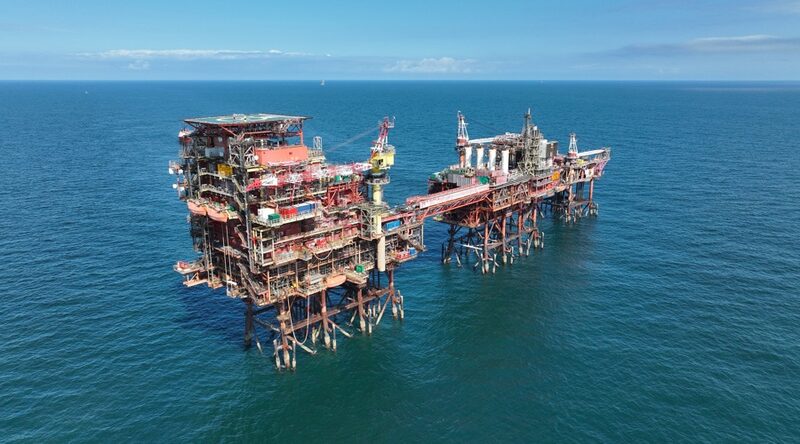
Rough is the largest gas storage facility in Great Britain and the one that dominates every conversation about the country's stored gas. It is a depleted offshore field in the southern North Sea, converted to hold gas and later run down, then partially brought back into service. Great Britain has eight gas storage facilities in total, and Rough is the biggest of them1.
The site matters because storage is the buffer between a volatile world market and a domestic system that has to keep flowing through winter. The UK draws most of its gas from the UK Continental Shelf and the Norwegian Continental Shelf, which together made up 43 per cent and 35 per cent of gross annual supply on a five-year average, with LNG shipments accounting for 21 per cent1. Storage sits behind those flows as a reserve.
Rough's recent history is a story of closure, partial reopening and profit. It reported adjusted operating earnings of around £57 million in the first half of 20262, and Centrica has confirmed that its production consent for the site expires in April 2027 and that it does not intend to seek an extension2. That combination, a profitable site with a lapsed consent ahead of it, is what makes Rough worth understanding.
Rough: what the site is and why it matters
Rough is a storage facility built into a depleted offshore gas field. That distinguishes it from the salt caverns and onshore sites that make up the rest of the national fleet, and it is the reason its capacity is so much larger than anything else on the list. The government's statutory security of supply report records eight gas storage facilities in Great Britain and a maximum deliverability across the fleet of 117mcm/day1. Rough's scale is what gives that figure its weight.
Why does one site carry so much attention? Because storage is the part of the system a country controls directly. Import capacity is large, at around 368 million cubic metres per day or 134 billion cubic metres per year, with 150mcm/d of that from LNG1. But imports depend on ships, terminals, pipelines and the willingness of other countries to sell. Stored gas is already in the system, and it can be withdrawn when the market tightens.
The dependence that remains is worth stating plainly. Rough does not make a household self-sufficient. It sits inside a national network of pipelines, interconnectors and terminals, and it is operated by a commercial company whose decisions are driven by the market. For a householder, the practical relevance is indirect: the site shapes the resilience of the gas system that heats most British homes, but it does not change what arrives at the meter. The wider picture of where supply originates is set out in where Britain's gas comes from, and the storage fleet as a whole is covered in UK gas storage.
Storage capacity and how much of Britain's gas it holds
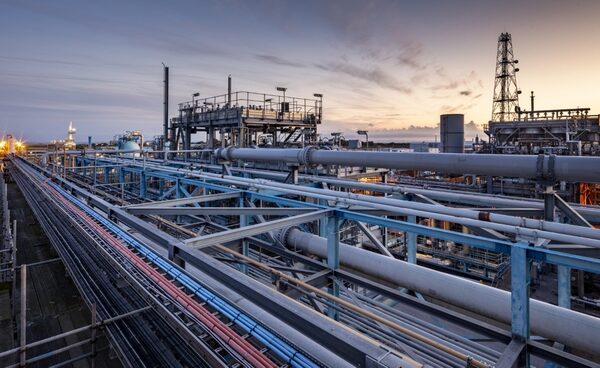
The national storage picture is small relative to the flows through it. Eight facilities, 117mcm/day of maximum deliverability, against import capacity of around 368mcm/d1. Storage is a buffer, not a substitute for supply, and Rough is the largest single component of that buffer.
The comparison that matters is between storage and the daily demand it has to cover. Deliverability is the rate at which gas can be pulled out on a cold morning, and it is a different measure from how much gas the site can hold. A facility can be large in volume and modest in deliverability, or the reverse. The government's reporting gives the fleet figure rather than a site-by-site breakdown, so the honest position is that Rough dominates the fleet without a published per-site capacity figure in the official statistics.
There is a live disagreement in the reporting about how full UK storage is. One account puts storage levels at 90 per cent, another at 30 per cent of capacity, both from press reporting on the same date3. Both figures should be treated with caution until a settled official number is published. What is not in dispute is the structural point: the UK's storage fleet is small compared with its import capacity, and Rough is the biggest part of it.
For a household, this is the difference between a system with a cushion and one without. Storage does not lower a bill directly, but it changes how the system behaves when supply tightens. The mechanics of that are covered in gas supply emergencies, and the import side in LNG imports and UK terminals.
Why Rough was closed and how it came back into service
Rough was closed for storage and then partially reopened. The reopening was a response to the same conditions that have kept wholesale markets unsettled: oil and gas wholesale markets remain volatile4. When supply routes are uncertain, a domestic storage asset that had been written off becomes commercially interesting again.
The reopening was partial rather than a full return to the site's original role. That distinction matters, because a partially reopened facility does not restore the storage volumes the country had before closure. It restores some of the deliverability and some of the reserve, on a commercial basis, for as long as the operator judges it worth running.
The wider system shows how quickly a gas network can be disrupted and how carefully it has to be restored. A Thames Water main burst put water into the local gas network in the TW10 area of Richmond Hill in July 20255. In a separate incident, gas could not be restored to a street until all properties had been confirmed switched off safely6. Restoration has to be done by an appropriate qualified person7. Those episodes are about distribution rather than storage, but they illustrate the same principle: gas systems are restored in a controlled sequence, not switched back on at will.
That is the context in which Rough's reopening should be read. It was a commercial decision taken against a volatile market, not a permanent restoration of national storage capacity. The network side of the story, including who delivers gas to a street, is covered in gas distribution networks.
What Rough means for household energy security

Storage is national infrastructure, and its benefit to a household is indirect. The UK's gross annual gas supply on a five-year average came 43 per cent from the UK Continental Shelf, 35 per cent from the Norwegian Continental Shelf and 21 per cent from LNG shipments1. Those are the flows that heat homes. Storage sits behind them as a reserve that can be drawn on when they tighten.
The dependence that remains is substantial and worth naming. A household connected to the gas grid depends on the network, on a supplier, on imports from Norway and further afield, and on the commercial decisions of companies like Centrica. Rough reduces one kind of risk, the risk of a short, sharp supply squeeze, without touching the others. It does not make a home self-sustaining, and it does not insulate a bill from world prices.
For households thinking about what they can control, the useful distinction is between national resilience and household independence. National resilience is what Rough contributes to. Household independence is a different question, covering insulation, on-site generation, storage of heat or power, and the ability to ride out a price spike. That subject is developed in energy security and household independence, and the way global events feed through to prices is covered in how global events move UK energy prices.
The price context is unsettled. Oil and gas wholesale markets remain volatile4, and the government's own reporting treats storage as part of a national picture rather than a domestic line item. For the household, the honest summary is that Rough improves the resilience of the system a home depends on, while leaving that home's exposure to the market intact.
Profitability: back in the black for Centrica
Rough reported adjusted operating earnings of around £57 million in the first half of 20262. That figure is the clearest signal that the site has moved from a written-down asset to a commercially viable one, at least for now.
The company behind it is Centrica. British Gas is a subsidiary of Centrica, a multinational that owns multiple companies with similar interests in the market4. Centrica's headquarters are at Staines-upon-Thames in the United Kingdom5. That structure matters for how a reader should interpret statements about Rough: the site is an asset of a large group with interests across supply, generation and trading, and its operation is a commercial decision within that group.
Profitability at a storage site is driven by the spread between the price of gas when it is injected and the price when it is withdrawn. When that spread is wide, storage earns. When it is narrow, storage costs money to run. The volatility in wholesale markets4 is therefore not background noise for Rough; it is the mechanism that determines whether the site is worth operating.
The wider energy market has had its own turbulence. The fifth allocation round for offshore wind in 2023 secured no offshore-wind projects because of the limit on prices set by the government8. That is a different market, but it illustrates how policy design and commercial returns interact. For Rough, the equivalent interaction is between the production consent, the market spread and the operator's willingness to keep the site in service.
"They are a subsidiary of Centrica, a multinational that owns multiple companies with similar interests in the market."
The consent question: what happens when production permission lapses
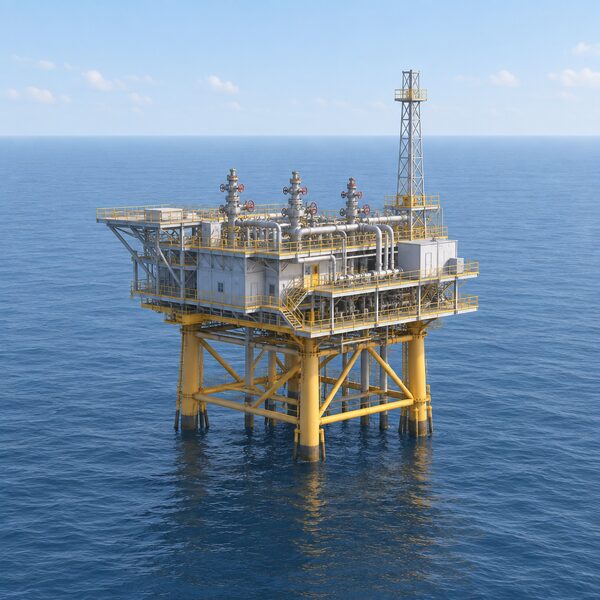
Centrica has confirmed that its production consent for Rough expires in April 2027 and that it does not intend to seek an extension2. That is the single most important dated fact about the site's future, and it is a decision by the operator rather than a regulatory refusal.
What follows from a lapsed consent is not published in confirmed form. The reservoir does not lose the physical ability to hold gas, and the wells and platform do not disappear. What changes is the regulatory basis on which the site can produce. Beyond that point, the outcomes for the reservoir, the infrastructure and any future storage use are matters for the operator and the regulators, and no confirmed plan is in the public record.
The consent question sits inside a wider planning and regulatory framework. Development by a gas undertaker for the purposes of its undertaking, including underground mains, pipes and apparatus, gas measurement and pressure equipment, and other development on operational land, falls within permitted development under Part 14 Class D9. That framework governs how gas infrastructure is built and altered, and it is the kind of consent regime that any future use of the Rough site would have to work within.
For a household, the practical question is what a lapsed consent means for the gas system. The honest answer is that it removes one reserve from the national picture at a date that is already known, and that the system's response will come from imports, from other storage and from demand. The mechanics of a supply shortfall are covered in electricity margins and supply shortfalls and the winter planning process in NESO winter outlook.
Sources9 cited
- Statutory Security of Supply Report 2025, GOV.UK, 2025-12-17
- Gas storage turns a profit as Britain's reserves could be hit, End Fuel Poverty Coalition, 2026
- Energy bills due to increase 12% from 1 July, End Fuel Poverty Coalition, 2026-04-21
- British Gas, Energy Helpline, 2026-09-20
- Which energy suppliers are British?, Uswitch, 2026-06-26
- Water in gas pipes, Richmond Hill TW10, Cadent Gas, 2025-07
- Loss of gas N10, Cadent Gas
- QA: What the UK's record auction for offshore wind means for bills and clean power by 2030, Carbon Brief, 2026-01-15
- Gas Act 1986, Schedule 7A Part 2 Chapter 2, legislation.gov.uk, 2024-04-06
 UK Gas StorageHow much working gas storage Great Britain holds, what the eight remaining sites do, how storage is filled and drawn down across a winter, and how Britain's position compares with continental Europe.
 Where Britain's Gas Comes FromWhere does the gas in British homes actually come from, and how much of it is ours?
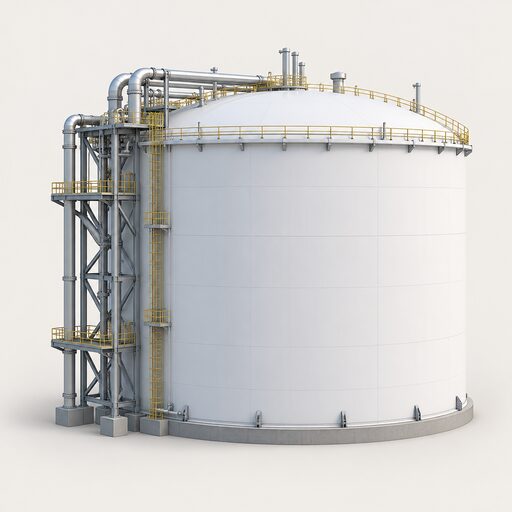 LNG Imports and TerminalsHow much of Britain's gas arrives by ship, where does it come from, and why does a damaged plant in Qatar or a storm of bidding in Asia change what a household pays?
 Hydropower and Pumped StorageExplains the UK's conventional hydro fleet, concentrated in Scotland and Wales, and the pumped storage schemes that store energy at scale.
 Gas Pipelines and LinksWhere does the gas in your home actually come from, and what happens when it gets really cold and the wind stops blowing?
 Grid-Scale Battery StorageConnected and pipeline battery capacity in Great Britain, what these assets are paid to do, how long they can run, and how grid batteries differ in purpose and scale from a home battery.