
In this answer
Short answer
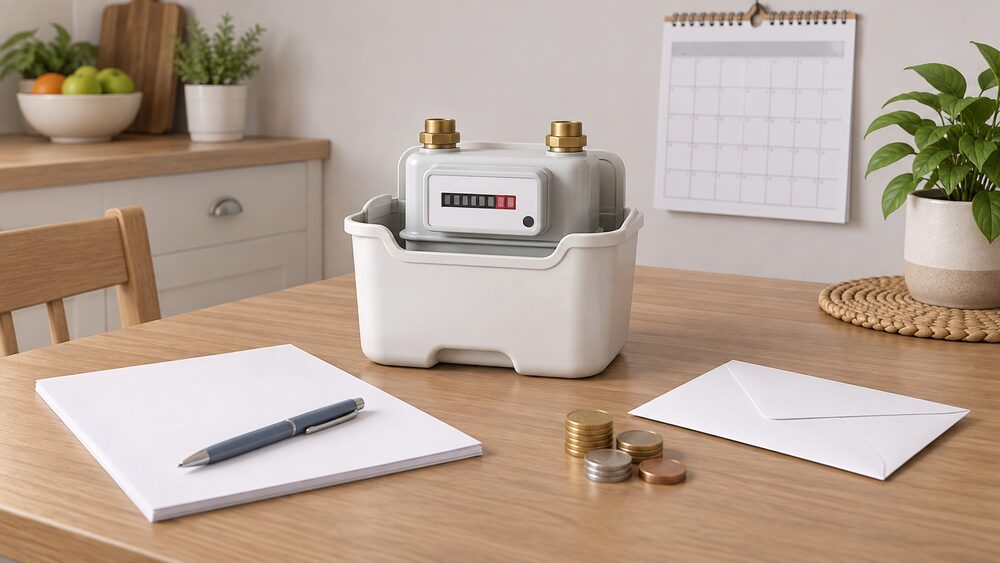
No, you cannot move your gas meter yourself. Moving a gas meter is illegal and very dangerous, and it is illegal for anyone but a licensed professional to do it1. Ofgem states the position plainly: you may have to pay a fee, and it is illegal to move the meter yourself3. The same rule applies to electricity meters4.
The work belongs to two organisations. Your gas supplier owns the meter and is responsible for installing and maintaining it, while the pipes and service position belong to the gas network operator for your area5. Gas meters can only be moved or removed by your energy supplier or the network operator, never independently, for safety and regulatory reasons7. A plumber cannot do it either.
Costs are quoted per job rather than published as a standard tariff. Wales & West Utilities gives a starting figure of £1,000 plus VAT for a domestic meter move8, and Citizens Advice reports network charges usually of at least £400, sometimes over £1,000, depending on the work involved2. The physical move takes a few hours, but the whole process can run to several weeks2.
Moving a gas meter yourself is illegal and dangerous
The prohibition is not a matter of paperwork. Gas safety guidance from the industry body HHIC is blunt: avoid DIY gas work, it is illegal and dangerous10. Cadent, the network that runs the gas distribution in its region, states that attempting to move a meter yourself is actually illegal and very dangerous1. Citizens Advice adds the practical reason: the gas supply would need to be turned off throughout the process, and getting that wrong carries real risk2.
The rule covers more than the meter itself. Cadent's building regulations guidance states that you must not build over or attempt to move or alter the gas pipes or meter without seeking advice from the network11. That matters for anyone planning an extension, a conservatory or a new kitchen, because pipework that ends up inside a new structure or under a floor is a problem the network needs to know about before the build, not after.
"No, you must not build over or attempt to move/alter the gas pipes or meter without seeking advice from us."
For a household, this is the first hard limit on energy independence. The meter is the point where the public gas network meets your home, and it is not yours to alter. Everything downstream of it, the boiler, the radiators, the controls, is yours to change. The meter and the service pipe are not.
Who can move a gas meter: your supplier or the gas network
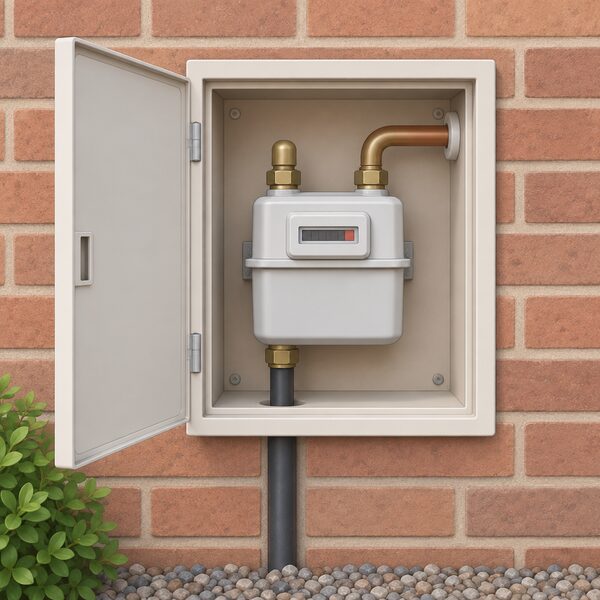
Two organisations share the work, and knowing which one to approach saves time. Your supplier owns the meter and the gas travelling through the network's pipes, and is responsible for the installation and maintenance of the meter and for billing5. The network operator owns the pipes and the service position. Northern Gas Networks describes the same split: the supplier is responsible for the installation and maintenance of your gas meter, owns the gas and sends the bills6.
Citizens Advice sets out who can actually do the job: you cannot move the meter yourself, it is illegal, and usually your meter is owned by your current supplier, which you will have to ask to move it2. Only your current supplier can move your meter; if you want a different company to do it, you have to switch your supply to that company first2. Wales & West Utilities confirms that gas meters can only be moved or removed by your energy supplier or the network operator, never independently7.
Whether the supplier can move the meter depends on where it is now, how far you want it moved, the type of connector if it is a gas meter, and why you want it moved2. SGN, a network operator, states that it can move an existing meter or gas pipe for household customers12, and that your gas meter and pipes can be moved to a more suitable location13. Cadent says its meters and pipes can be moved together and that it can do that for you1.
If you are on the Priority Services Register because of a disability, illness or access need, your supplier may be able to move your gas meter if you cannot access it14. For prepayment customers, the supplier should try to move the meter to somewhere you can get to, though you might have to pay16. If the meter cannot be moved at all, the supplier must replace it with a different type of meter3.
How far a meter can be moved: the one-metre rule and bigger relocations
Distance is the trigger for a formal application. Electricity North West states that if you require your meter to be moved further than one metre in distance, or if it affects the service position to your property, a service alteration application through the connections team is needed17. The same logic runs through gas work: a short reposition within the same spot is a different job from relocating a meter to the other side of the house.
Cadent's service alteration process asks for the distance of external pipework needed to move the gas meter from its current position to its new position18, which is the figure that shapes the quote. SGN's mains replacement programme takes the opposite starting point: it will always try to keep your meter in the same location, with relocation being the final option, possibly requiring excavation in a garden or driveway19.
Where a meter can sit varies. Cadent lists the possible locations as a garage, the back of the house, under the stairs, the kitchen, or outside the front or side of the house20. Moving an indoor meter and pipes outside may be easier when carrying out remodelling or extension work1, and Wales & West Utilities says moving a meter outside is a common reason customers contact it, subject to assessment of the property and pipework8.
If the network replaces your gas supply, it may also need to reposition your gas meter22. That is a network decision rather than a household request, and it is worth knowing before pipe upgrade work begins in your street.
What a move can affect: wireless connectivity and your supply
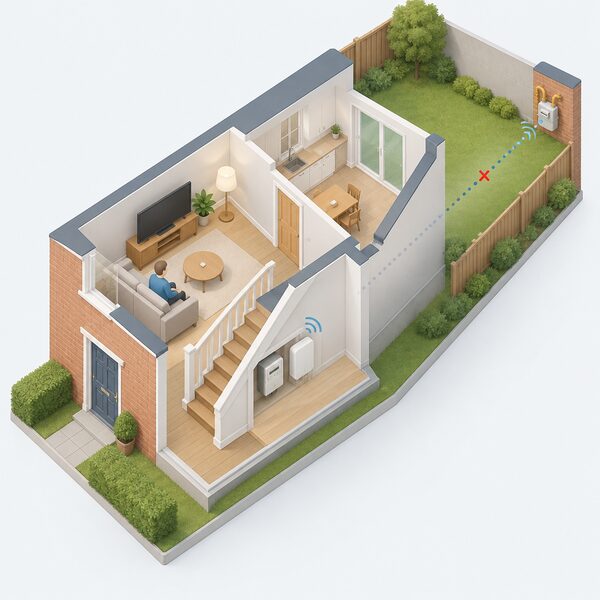
A smart meter is not just a box that moves. Wales & West Utilities warns that it can alter your gas supply pipe and move your meter, but this may result in the loss of the meter's wireless connectivity, which the supplier may need to re-establish, possibly at a cost to the customer9. SGN gives the same warning in the same terms23, and its connections FAQ repeats it for customers with a smart meter, advising them to contact their supplier to discuss plans24.
The technical reason is the communications hub. The Energy Ombudsman explains that the hub is typically situated within or near the electricity meter, and if the gas meter is too far away it may not be able to communicate with it25. A gas meter moved to an outside wall at the far end of a property can end up beyond reliable range of a hub sitting in a hallway or under the stairs.
There is a second, separate connectivity risk that has nothing to do with moving: if you change supplier, your meter may not work in smart mode with the new supplier, and you may need to take readings manually and submit them instead26. Which? notes that a gas smart meter should send a notification to its supplier when it needs replacing27, so a meter that has lost its link is not silent forever, but the household may be reading it by hand in the meantime.
For energy independence, this is the honest trade-off. A smart meter gives you near-real-time visibility of gas use, but that visibility depends on a radio link to a hub, a supplier's systems and, in the background, the network's own equipment. Moving the meter can break the link. The gas itself still flows, and the meter still measures it, but the convenience layer is the part at risk.
Costs and how to arrange a meter move
Costs are quoted per property. Wales & West Utilities publishes a starting price of £1,000 plus VAT for moving a domestic gas meter8, and an online portal for an instant quote2. Citizens Advice reports that network operators usually charge at least £400 for the work, but it could be over £1,000 depending on how much work needs to be done, in cases where the supplier cannot move the meter2. For electricity supply and meter moves, SSEN's published range is £308 to £607, excluding additional work such as digging or traffic management, with a detailed quote provided during the application2.
| Item | Figure | Source |
|---|---|---|
| Domestic gas meter move, starting price | £1,000 plus VAT | Wales & West Utilities8 |
| Network charge where the supplier cannot move the meter | At least £400, sometimes over £1,000 | Citizens Advice2 |
| Electricity supply and meter move range | £308 to £607, excluding digging and traffic management | SSEN, via Uswitch2 |
| Fee for a prepayment meter move | You may have to pay a fee | Ofgem3 |
In most cases where you request the move, you pay the cost, for both gas and electricity meters2. Tenants need their landlord's permission in most cases, and will almost certainly be expected to pay unless the landlord wants the move as part of a renovation or improvement2. On the Priority Services Register, whether you pay depends on your supplier15.
The process runs in order:
- Contact your current supplier, since only it can move the meter2.
- If you have a smart meter and want the gas supply altered, discuss your plans with the supplier as well24.
- The network assesses the property, the pipework and the distance involved, and issues a quote18.
- Work is scheduled. Cadent aims to complete all work at a property within six to eight weeks of the quote being accepted1.
- The physical move takes no more than a few hours, but application to completion can take several weeks2.
Moving an electricity meter at the same time
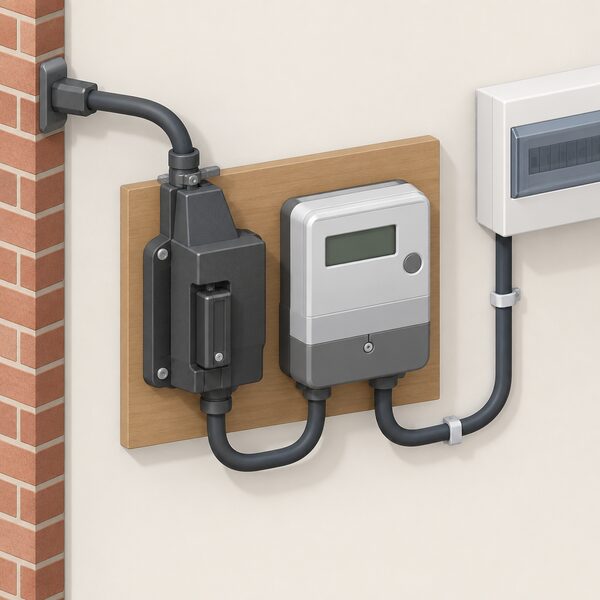
If both meters are being dealt with, the electricity side has its own rules. Only your electricity supplier, the company you pay your bills to, is able to move the electricity meter28. Moving it likely means the cut-out, the main fuse and service head where the supply enters the property, will also have to be moved or altered29. Electricity North West confirms that as part of a project it will move your supply and meter, even if it is a smart meter30.
For dual-fuel customers, both meters need to be replaced when smart meters are fitted, the supplier aims to install both on the same visit, and only one in-home display is needed for both fuels31. You do not have to have your gas meter changed if you do not want to, and if your gas and electricity suppliers are the same, both meters might be changed at the same time32.
The independence point is the same on both fuels. The meter and the service connection are the boundary between your home and the public network, and neither is a householder's to move. What a household controls is everything after the meter: the boiler, the controls, the tariff, and how much gas is used. For the wider picture of what can be changed and what cannot, see how to get a meter moved, exchanged or removed and the full UK home energy guide.
Sources32 cited
- Moving your gas meter, Cadent Gas, 2026-09-20
- How to move your gas or electricity meter, Uswitch, 2026-09-04
- Get help with your prepayment meter, Ofgem, 2026
- Domestic and homeowners connections help, NESO, 2026-09-17
- New gas connection, Cadent Gas, 2026-09-20
- What to expect when you get connected, Northern Gas Networks, 2026-09-04
- Gas connections, Wales & West Utilities, 2026-09-20
- Make changes to your gas connection, Wales & West Utilities, 2026-09-20
- Smart meters, Wales & West Utilities, 2026-09-20
- Top gas safety tips from HHIC, HHIC, 2025-09-14
- Building regulations, Cadent Gas, 2026-09-20
- Household customers, SGN, 2026
- Move your gas meter, SGN, 2026
- Priority services register, Wales & West Utilities, 2026-09-20
- Priority Services Register: extra services from energy suppliers, Scope, 2026-08-17
- Problems getting to or topping up your prepayment meter, Citizens Advice, 2026-09-17
- Advice and support FAQs, Electricity North West, 2026-09-20
- Alterations, Cadent Gas, 2026-09-20
- Upgrade work FAQs, SGN, 2026
- Locating your meter and turning off the gas, Cadent Gas, 2026-09-20
- Under your feet, Cadent Gas, 2026-09-20
- Domestic customers FAQs, Wales & West Utilities, 2026-09-20
- Smart meters, SGN, 2026
- Connections FAQ, SGN, 2026-09-17
- Smart meters, Energy Ombudsman, 2026-09-20
- What happens if your energy supplier goes out of business, Ofgem, 2026
- Smart meter installation, Which?, 2026-02-26
- What do you need to move, UK Power Networks, 2026-09-17
- What is a cut-out, UK Power Networks, 2026-09-17
- Moving your meter, Electricity North West, 2026-09-19
- How can I read a smart meter, Smart Energy GB, 2026-08-17
- DTS energy meter, Citizens Advice, 2024-02-03
 Move, Exchange or Remove a MeterMoving a meter is not a DIY job and it is illegal to do it yourself.
 How a Smart Meter WorksHow a British smart meter measures gas and electricity, how the in-home display and the DCC's secure network fit together, what data leaves the house, what it costs, and where smart mode goes wrong.
 What Does a Smart Meter Cost?There is no upfront charge for a smart meter or a standard installation: the cost is recovered indirectly through energy bills.
 Wholesale Prices and BillsGas prices around the world keep changing, so why do your bills move so slowly, and why does gas still set what you pay for electricity?
 The Full Smart Meters GuideDo smart meters really save you money, and how do you use one to cut your bills?
 Meters and Energy IndependenceDo smart meters really save you money, and can you still get one fitted for free?