
In this answer
Short answer
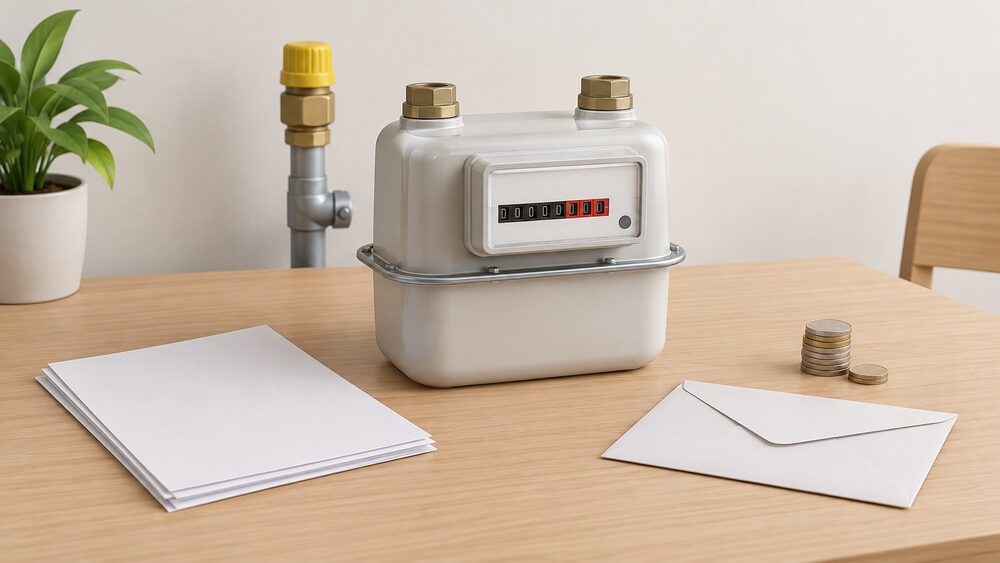
Once the gas meter is removed, the gas standing charge stops. Wales & West Utilities states plainly that after the meter is gone, a household stops paying standing charges and usage costs1. The Energy Saving Trust puts it the same way: after the gas supply is terminated, the standing charge for gas is no longer paid2. The charge is attached to the meter and the supply point, not to the property or the pipework.
The order of events matters. The meter is removed by your energy supplier, not by the gas distribution network. Northern Gas Networks advises contacting your current gas supplier and arranging for the meter to be removed before the planned disconnection date3. IGEM, the gas industry body, states that the network operator will not disconnect pipes and equipment until the meter has been safely removed by the energy supplier4. Until that happens, the standing charge continues.
The cost of removal is not published as a single national figure. The Energy Saving Trust says the cost varies according to supplier2, and Wales & West Utilities notes that its own meter moves start at £1,200, which is a different service from removal5. One consumer guidance figure puts a supplier's charge for removing and replacing a meter at around £200 in a meter-testing case6. Prices are supplier or installer quoted.
How standing charges work and why they continue while a meter is in place
Ofgem describes the standing charge as a daily payment made even on days when no energy is used7. It is not a usage charge and it is not avoidable by turning the gas off at the appliance. Smart Energy GB explains that standing charges are fixed daily amounts that help cover the cost of meter installation and maintenance for all meters, both smart and traditional8. The House of Commons Library adds that the charge recovers the costs of providing and maintaining the wires, pipes and cables that deliver power to a customer's door, along with the staff and buildings an energy business needs to function9.
That structure explains why a household that has stopped using gas still pays. The meter is still installed, still owned by the supplier, and still requires maintenance and reading. Northern Gas Networks states that the supplier is responsible for the installation and maintenance of the gas meter and owns the gas10. Cadent says the supplier owns the meter and the gas and is responsible for installation, maintenance and billing11. SGN states the same responsibility sits with the supplier, not the network12. The Welsh Government's climate action guidance notes that if a smart meter stops working, the supplier is responsible for maintenance and will fix or replace it13.
Prepayment customers see the charge accrue even with no credit. The Centre for Sustainable Energy explains that if a meter is not topped up, the daily standing charge builds as a debt, and top-ups may be used to pay off previous weeks' unpaid daily charges14. Confused.com notes that even with no credit on the meter, the supplier still charges daily, recovered on the next top up15. The Centre for Sustainable Energy adds that a customer cut off after stopping top-ups remains liable to the standing charge16. National Energy Action describes the same mechanism: when credit is used up, standing charges accrue as a debt on the meter that must be cleared in full before accessing energy again17.
The charge is also a policy instrument. The Warm Home Discount consultation describes it as a fixed daily fee applied to all customers regardless of energy usage, used to recover supplier costs18. The Debt Relief Scheme working paper proposes recovering costs through standing charges for electricity customers and volume charges for gas customers19. Anglesey Council's consumer guidance notes there is only one charging structure, made up of a standing charge and the unit prices of gas and electricity20. Tracker tariffs can discount against the price cap using standing charges21.
Disconnection and meter removal: who does what
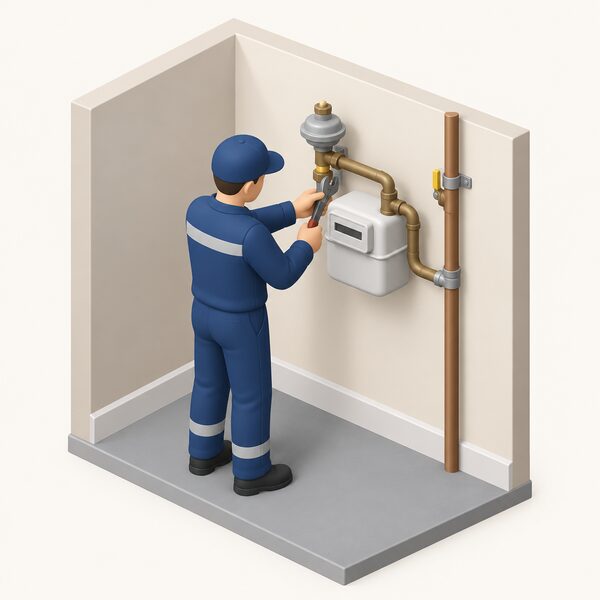
The division of labour is consistent across the networks. Wales & West Utilities states that gas meter removal is arranged through your energy supplier, not directly through the network1. Northern Gas Networks says the same: you will need to arrange your gas supplier to remove the gas meter before the network can disconnect the supply3. IGEM confirms the network operator will not disconnect pipes and equipment until the meter has been safely removed by the energy supplier4.
The supplier's role extends to the meter itself. Northern Gas Networks states the supplier is responsible for the installation and maintenance of the gas meter and owns the gas10. Cadent says the supplier owns the meter and the gas and handles installation, maintenance and billing11. SGN states the supplier is responsible for the maintenance of the gas meter and for sending bills12. The Welsh Government's guidance confirms that if a smart meter stops working, the supplier fixes or replaces it13.
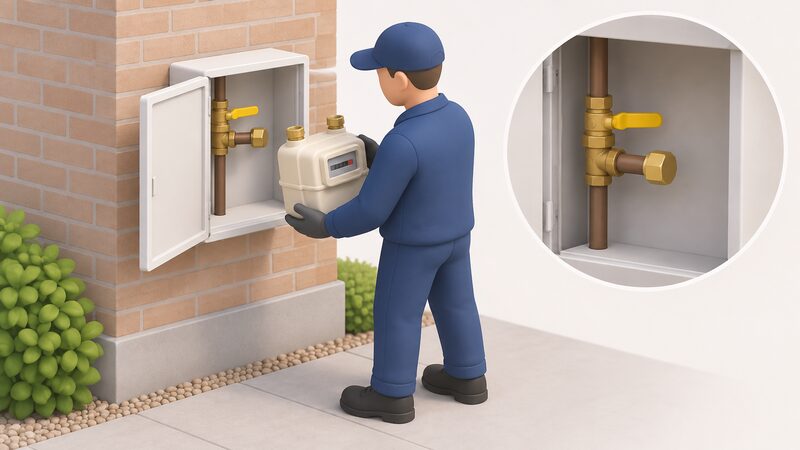
The network's role is the pipework and the supply point. SGN states it can disconnect a gas supply if the customer no longer needs it, and can move an existing meter or gas pipe22. Wales & West Utilities notes that pipe removal is chargeable, quoted individually, and can only proceed once every meter on site has been safely removed, which matters for multi-property sites, redevelopment or demolition1.
For electricity, the equivalent rule is that disconnection of an electricity meter is arranged through your electricity supplier23. The same principle applies: the meter is the supplier's asset and the supplier arranges its removal.
The Area Based Scheme: the only process that ends a gas standing charge
The Scottish Government's Area Based Scheme documentation states that meter removal with pipework capped at the emergency control valve is presently the only process by which a gas standing charge may cease to be levied, because the meter typically belongs to the supplier24. That is a strong statement of the position: capping a meter, moving a meter or leaving a supply unused does not end the charge. Only removal does.
The scheme documentation also sets out the safety framework. Remedial repairs, alteration and reinstatement of a certified gas installation must proceed in accordance with the Gas Safety (Installation and Use) Regulations 1998, as amended in 201824. That is the regulatory basis for the work, and it applies to the pipework after the meter has gone.
IGEM's guidance adds an important qualification. The capped gas pipe will still be live, but the household will no longer pay standing charges or for gas usage4. The pipe carrying gas to the property might remain in place4. So removal of the meter ends the charge, but it does not necessarily mean the pipe is gone or that the supply point is dead.
That distinction matters for safety and for future plans. The Health and Safety Executive states that if there is a live gas supply to rented premises, a safety check will need to be carried out irrespective of whether a tenant uses gas25. A capped but live pipe therefore still carries obligations for landlords.
SGN offers a free live or dead check to find out if a property has a gas supply22. That check establishes whether the supply point is live before any work is arranged, and it is the practical first step for a household that is unsure of the position.
Life after gas: bills, tariffs and what changes when you go all-electric
Removing the gas meter removes the gas standing charge and the gas usage charge1. What remains is the electricity bill, which carries its own standing charge. Uswitch explains that a standing charge covers the fixed costs of providing your home with both gas and electricity, each with its own charge26. National Energy Action notes that dual-fuel customers may pay a separate standing charge for gas and electricity27. British Gas Energy Trust defines the standing charge as the daily fixed costs of supplying gas and electricity to your home28.
The all-electric household therefore pays one standing charge instead of two. That is the direct financial effect of meter removal, and it is the point of the exercise for a household that has already switched heating and cooking to electricity.
No standing charge tariffs exist as an alternative, but they work differently. National Energy Action explains that they charge a much higher unit rate for the first two units of gas and electricity used each day, then a lower, more normal rate for all other usage27. Uswitch notes that these tariffs typically charge higher unit rates, which could result in higher energy bills29. The Energy Saving Trust notes that a bill identifies the tariff by name and shows the price per unit and any standing charge30.
For a household going all-electric, the practical position is that the gas standing charge ends with the meter, and the electricity standing charge continues. The capped pipe may remain live4. The gas account is closed once the meter is removed and the supply disconnected. The household's remaining dependence is on the electricity grid and its supplier, not on the gas network.
"The capped gas pipe will still be live but you will no longer pay standing charges or for gas usage."
Where a meter move differs from removal
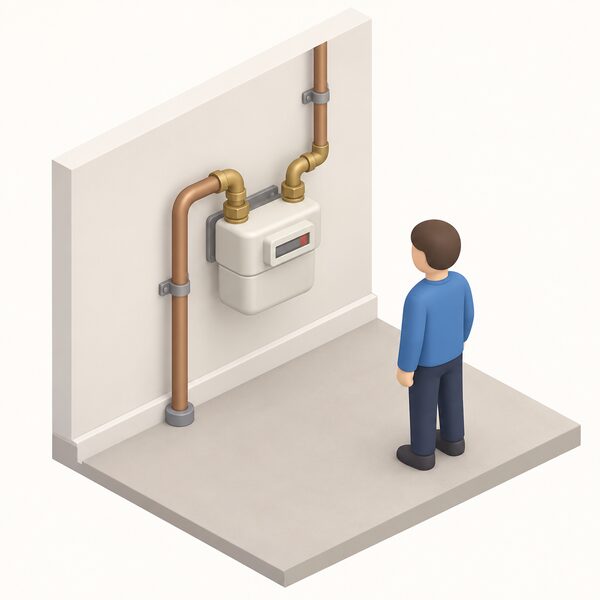
SGN states it can move an existing meter or gas pipe22. A move is not a removal. The meter stays in place, the supply point stays live, and the standing charge continues. Wales & West Utilities notes that the cost of moving a gas meter starts at £1,200, with an online portal for an instant quote5. That figure is for a move, not a removal, and it is quoted individually.
The Energy Saving Trust says that if a gas supply is terminated, there may be a cost for removal of the meter, and the cost varies according to supplier2. Which? notes that while meter testing is free, suppliers can charge for the cost of removing and replacing a meter31. Citizens Advice gives a figure of around £200 for a supplier's charge for removing and replacing a meter in a meter-testing case6. These are different services and different prices, and none of them is a published national tariff.
For a household weighing up removal, the sequence is: establish whether the supply is live, arrange the supplier to remove the meter, then let the network disconnect. The standing charge stops when the meter is gone1. The pipe may remain4. The gas emergency number, 0800 111 999, applies throughout3.
Sources31 cited
- Disconnect your gas supply, Wales & West Utilities, 2026-09-20
- Heat pump installation: a step by step guide, Energy Saving Trust, 2026-07-15
- FAQs and guidance, Northern Gas Networks, 2025-10-30
- Disconnecting from the gas network, IGEM, 2026-09-20
- How to move your gas or electricity meter, Uswitch, 2026-08
- Find out if your energy meter is faulty, Citizens Advice, 2026-09-20
- Energy price cap, Ofgem, 2026-09-17
- Smart meter costs: are smart meters free?, Smart Energy GB, 2026-03-16
- Energy standing charges, House of Commons Library, 2026-09-17
- What to expect, Northern Gas Networks, 2026-09-04
- New gas connection, Cadent Gas, 2026-09-20
- Meter exchange, SGN, 2026
- Smart meters, Welsh Government, 2026
- Energy debt on prepayment meters, Centre for Sustainable Energy, 2026-08
- Gas and electricity standing charges, Confused.com, 2026-07-06
- What if you can't pay your energy bill?, Centre for Sustainable Energy, 2026-06
- National Energy Action responds to Ofgem's decision not to lower the standing charge, National Energy Action, 2024-12-12
- Warm Home Discount cost recovery, GOV.UK, 2025-12-08
- Debt Relief Scheme working paper, Ofgem, 2025-08
- Problems with services, Isle of Anglesey County Council, 2025-10
- What is a tracker tariff?, Uswitch, 2026-06-26
- Household customers, SGN, 2026
- Disconnect an electricity meter, UK Power Networks, 2026-09-17
- Area Based Scheme information release, Scottish Government, 2024-08
- Gas safety in the home: FAQs, Health and Safety Executive, 2026
- Energy standing charges, Uswitch, 2026-08-26
- Standing charges, National Energy Action, 2026-04-28
- How to check your energy tariff and switch, British Gas Energy Trust, 2026-07-30
- Should I get a no standing charge tariff?, Uswitch, 2026-08-26
- How to understand your energy bill, Energy Saving Trust, 2024-11-08
- Gas meters and electricity meters: what you need to know, Which?, 2026-01-16
 Standing ChargesWhy is there a daily charge on a gas or electricity bill even when nothing is used, and what does it actually pay for?
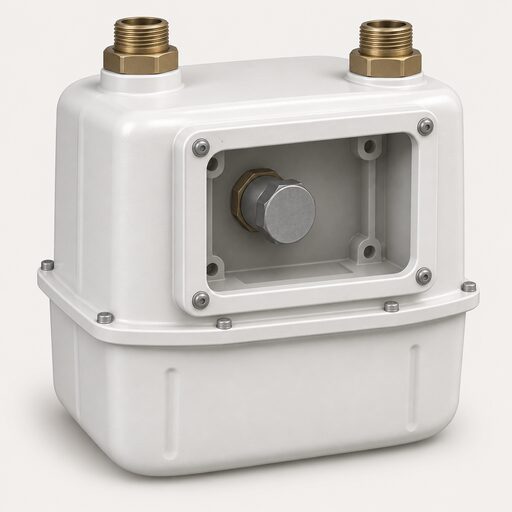 Disconnecting From the Gas GridThe practical route to removing a gas connection, including abandonment versus capping, who does the work, what it costs and the standing charge saved.
 What Does a Smart Meter Cost?There is no upfront charge for a smart meter or a standard installation: the cost is recovered indirectly through energy bills.
 Smart Thermostat SubscriptionsDo you have to pay a monthly fee to use your smart thermostat, and what do you actually get for it?
 Batteries and Smart TariffsA home battery can earn its keep if your electricity prices change through the day.
 Smart Meter Faults and FixesYour smart meter has stopped working.