
In this answer
Short answer
An SSEN Power Cut Plan is the personalised document Scottish and Southern Electricity Networks sends to households on its Priority Services Register. It is not a tariff, a contract or a piece of equipment. It is a free support arrangement that sets out what extra help a household will receive during an unplanned outage, and it is tailored to the needs of the person registered1.
SSEN is responsible for powering homes in the north of Scotland and central and southern England2. The Priority Services Register is free, and signing up brings tailored support, live updates and more during unplanned outages3. The Power Cut Plan itself is described by SSEN as a personalised plan tailored to your needs1.
The scheme matters for household energy independence because it addresses the one dependency a home cannot remove on its own: the distribution network. A household can install a battery, a generator or a portable power station, but the wires and the fault repair remain the network operator's responsibility. The Power Cut Plan is the formal channel through which a vulnerable household gets information, support and, in some circumstances, financial help during an outage.
Who qualifies: eligibility for SSEN's priority services
SSEN offers extra help and support during a power cut for customers for whom a power cut can be worrying or difficult8. The register is not means-tested and does not depend on income. It depends on circumstances that make an outage harder to manage.
SSEN's published eligibility criteria cover households where someone is deaf or hard of hearing, has a disability, lives with children under five, is blind or partially-sighted, has a chronic illness, uses medical equipment or aids reliant on electricity, or is over 609. The same list appears in SSEN's later storm communications, confirming the criteria have not changed10.
The Power Cut Plan is the personalised output of that registration. SSEN states it will send a personalised Power Cut Plan tailored to your needs1. A separate SSEN scheme, the home battery pack programme, has narrower eligibility: it is for people who meet certain specific criteria and are signed up for Priority Services, determined by a needs assessment and data on the frequency of power cuts in their area11.
For a household, the practical effect is that the Power Cut Plan is the entry point. It does not reduce dependence on the network, but it formalises the support a household can expect when the network fails.
What SSEN provides during a power cut
The core provision is information and tailored support. SSEN describes the register as giving tailored support, live updates and more during unplanned outages3. The Power Cut Plan sets out what that means for the individual household1.
For planned interruptions, SSEN aims to provide written notice at least 2 days before it plans to switch off the power4. Once a date and time for a planned power cut is confirmed, SSEN states it is unable to make any changes4. During rota disconnections, customers are notified by text message by 6pm the day before, stating the start and end time of the interruption, with information also on powercut105.com, the SSEN website and the PowerTrack app5.
SSEN does not offer compensation for planned power cuts, and follows the standards set by Ofgem4. Storm compensation packages have been issued in specific events, for example to cover the cost of food and drink after Storm Floris10.
Alternative accommodation support is the most significant financial element. Customers on SSEN's Priority Services Register can claim reasonable costs for alternative accommodation if it is expected they will be without power for over 24 hours; if a power cut is estimated to last beyond 48 hours, all customers can benefit6.
"customers on SSEN's Priority Service Register can claim reasonable costs for alternative accommodation if it is expected they will be without power for over 24 hours"

How to sign up and keep your details current
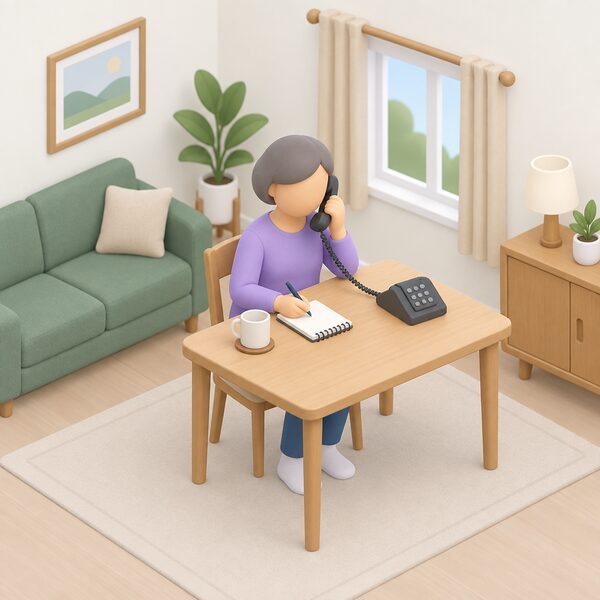
Registration is free and can be completed through SSEN's Priority Services pages, by phone or by email1. You can also sign up on behalf of others, including a family member who you think would benefit from this free service1. The same applies to a family member, friend or someone you care for2.
Keeping details current matters because the Power Cut Plan is built from them. If circumstances change, the plan should change with it. SSEN provides a removal route: email networks.priority.services@sse.com or call 0800 294 3259 to be removed from the register1.
On data handling, SSEN states it will typically be collecting and aggregating the half-hourly consumption data on a regular basis for sections of its low voltage network and will not be storing individual customers' half-hourly consumption data12. That is relevant to households considering a smart meter alongside PSR registration.
For reimbursement claims after a storm, SSEN has previously asked customers to retain receipts and submit them once power is back on, with reimbursement issued by cheque13. In the Shetland storm reimbursement scheme, applicants visited a claims page, inserted and confirmed their details, chose 'power cut' and 'reimbursement' on the drop-down menus, attached receipts and submitted14.
SSEN compared with other network operators' schemes
Every electricity network operator in Great Britain runs a Priority Services Register, and Ofgem states that for both planned and unplanned power cuts, network operators must offer customers on the priority service register extra help, for example giving them battery packs so that they can still charge phones or medical equipment15. That obligation is not unique to SSEN.
What differs is the local scheme. SSEN's Power Cut Plan is its branded version of that support, and the alternative accommodation thresholds are published in its storm communications6. UK Power Networks has run community energy work aimed at households at risk of fuel poverty17. Northern Ireland is separate: NIE Networks runs a Customer Care Register, which provides up to date information by phone during a power cut or a planned interruption to supply18.
| Operator | Scheme name | Area | Key provision |
|---|---|---|---|
| SSEN | Priority Services Register and Power Cut Plan | North of Scotland, central and southern England | Personalised plan, live updates, alternative accommodation over 24 hours for PSR customers1 |
| NIE Networks | Customer Care Register | Northern Ireland | Up to date information by phone during a power cut18 |
| All GB operators | Priority Services Register | England, Scotland, Wales | Extra help including battery packs for phones and medical equipment15 |
Emergency power cut rotas, where they apply, are shared across customers throughout England, Scotland and Wales19. In Northern Ireland, planned emergency power cuts can take place without warning if SONI instructs NIE Networks to reduce demand immediately to protect the electricity system, though NIE Networks aims to notify via media and social media beforehand20.
For a household, the comparison matters less than the local reality. The Power Cut Plan is the SSEN-specific route to support; the underlying obligation to provide extra help applies across operators.
Preparing your home for an outage yourself
The Power Cut Plan covers what the network operator will do. It does not cover what happens inside the home, and that remains the household's responsibility.
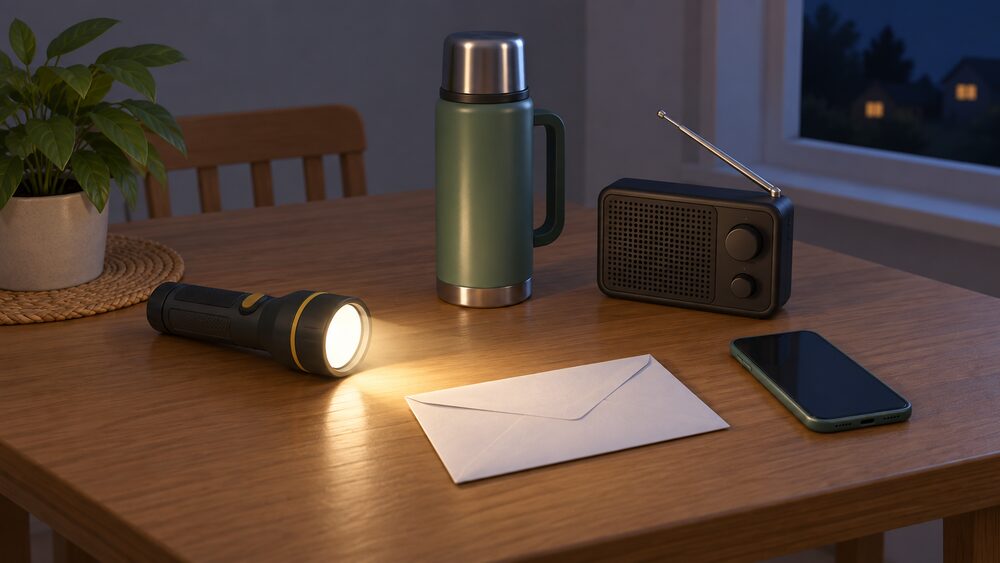
SSEN's own preparation guidance recommends keeping a mobile phone charged and ready, keeping a torch nearby, keeping a battery-powered radio tuned to a local station, keeping a note of key contacts, checking with neighbours, keeping warm with a thermos flask, and regularly saving your work3. Energy Networks Association guidance adds warm clothes, blankets and food that does not need heating, and following your network operator on social media for local updates22.
Other network operators give the same core advice. NIE Networks advises keeping a torch and batteries in the house23. Northern Gas Networks advises keeping a torch handy in case of power cuts24. SGN's winter guidance covers similar ground25. The Met Office advises signing up for the Priority Services Register in case of power cuts, describing it as a free service26.
SSEN has published posters, leaflets, home emergency plans and a checklist with hints and tips on creating your own home emergency plan3. These are downloadable resources rather than equipment.

The limit of self-preparation is that it addresses comfort and information, not supply. A torch and a charged phone do not restore heating, refrigeration or medical equipment. For those, a household needs either the network operator's support, a backup power source, or both. The Priority Services Register is the formal route to operator support, and the 105 power cut number is the free line for reporting a loss of supply27. Households weighing their own backup options can compare approaches in backup power for UK homes, while those in Scotland may find power cuts in Scotland useful for the local picture.
Sources27 cited
- Priority Services, SSEN, 2026
- Priority Services: sight, SSEN, 2026
- Preparing for a power cut, SSEN, 2026
- Planned power cuts, SSEN, 2026
- Electricity Supply Emergency Code, SSEN, 2026
- SSEN final push to restore power following Storm Gerrit, SSEN, 2023
- Storm Gerrit 10pm update, SSEN, 2023
- Your power cut explained: cable fault, SSEN, 2026
- We're finalising our preparations ahead of Storm Amy, SSEN, 2025
- An update on our response to Storm Eowyn, SSEN, 2025
- SSEN gives 20,000 home battery packs to customers who need the most support, SSEN, 2026
- Smart meters, SSEN, 2026
- SSEN Distribution moves to Weather Warning status, SSEN, 2023
- SSE response to Ofgem RIIO-ED2 draft determination, SSEN, 2022
- Plan for a power cut, Ofgem, 2026
- Check if you can get payment for a power cut, Ofgem, 2026
- Cambridge households helped to avoid fuel poverty, UK Power Networks, 2026
- Customer Care Register, NIE Networks, 2026
- Emergency planning portal: residential, SSEN, 2026
- How much notice will be given, NIE Networks, 2026
- Emergency power cuts, NIE Networks, 2026
- What happens in an energy shortage, Energy Networks Association, 2026
- Power cuts help, NIE Networks, 2026
- Staying safe and warm this winter, Northern Gas Networks, 2025
- Be winter ready, SGN, 2026
- What to do in a power cut, Met Office, 2026
- Can a smart meter cut off power, Smart Energy GB, 2026
 Power Cuts in ScotlandWho do you call when the power goes out in Scotland, and how long should it take to come back on?
 Prepare a Home for a Power CutA household checklist for before, during and after an outage: what to keep charged and to hand, which appliances to switch off, how long food stays safe and what to do about medical equipment.
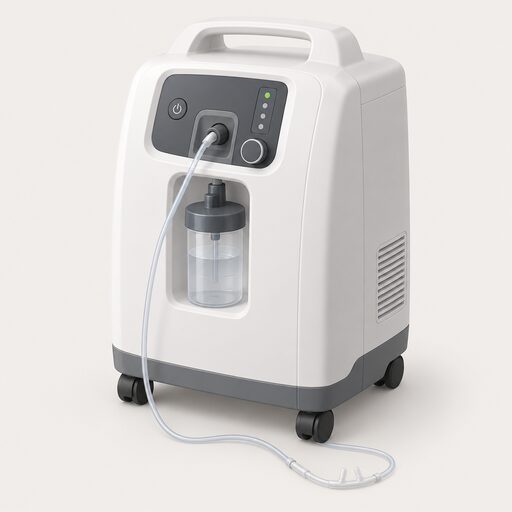 Vulnerable Households EnergyIf someone in your home relies on powered medical equipment, or needs extra warmth because of a health condition, what help is available?
 Power Cuts in WalesWho do you call when the power goes out in Wales, and how long should it take to come back on?
 The Full Backup Power GuideHow long do UK power cuts usually last, and what can keep your fridge, heating or phone going until the power comes back?
 Islanding and Anti-IslandingWhy do solar panels switch off in a power cut, and can you keep the lights on anyway?