
In this guide
Victron Energy is a Dutch manufacturer whose monitoring products sit at the centre of domestic off-grid and battery storage systems. The company's GX communication centres, the VictronConnect app and the free VRM portal bring battery state of charge, inverter load, solar yield and alarms into one place, and the same equipment manages the system rather than only reporting on it. Victron states that its monitoring solutions are free to use and that it has more than 1 million users worldwide1.
The warranty position is straightforward: a standard 5 year warranty across the range, which Victron says is upgradable to 10 years by an additional 10% of the initial investment1. The company describes itself as a family run business with over 50 years of experience, based in Almere in the Netherlands, and states that it offers full technical support in the UK2.
For a household, the appeal is independence of a particular kind. A Victron system can run a home's batteries and inverters without a cloud account, because local control and a wired display keep working when the internet does not. What remains is a dependence on the manufacturer's app and portal for remote access, on a dealer for warranty administration, and on the equipment itself being correctly specified in the first place.
What Victron monitoring covers: GX devices, VictronConnect and VRM
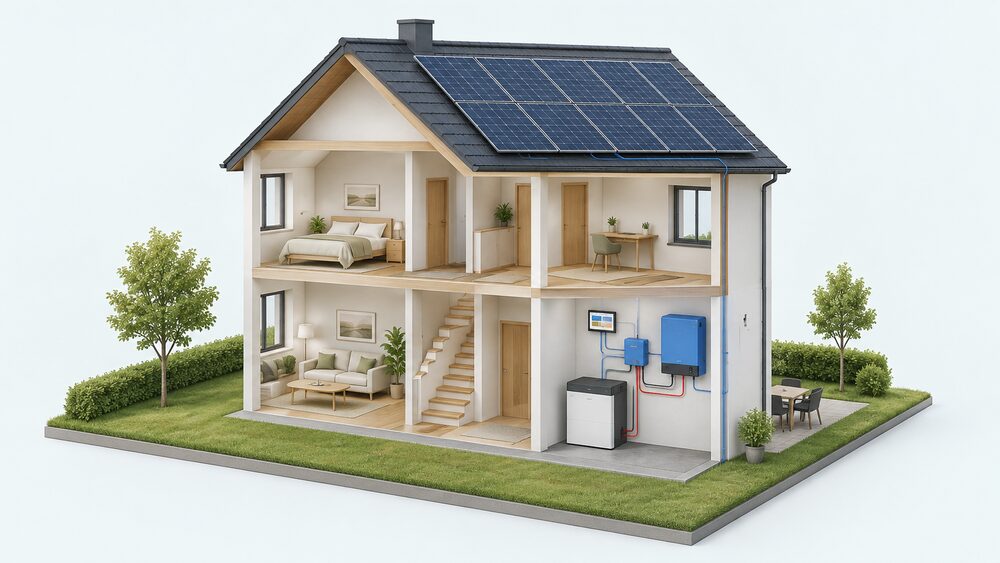
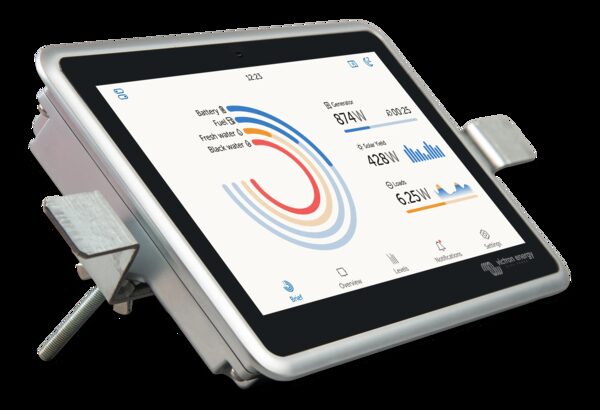
Victron's monitoring runs on three layers. At the bottom are the individual devices, each with its own local readout or app connection. Above them sits a GX communication centre, which gathers data from everything connected to it. Above that is the VRM portal, Victron's free remote monitoring website, which stores and displays operational data graphically, allows settings to be changed remotely and sends alarms by email or push notification2.
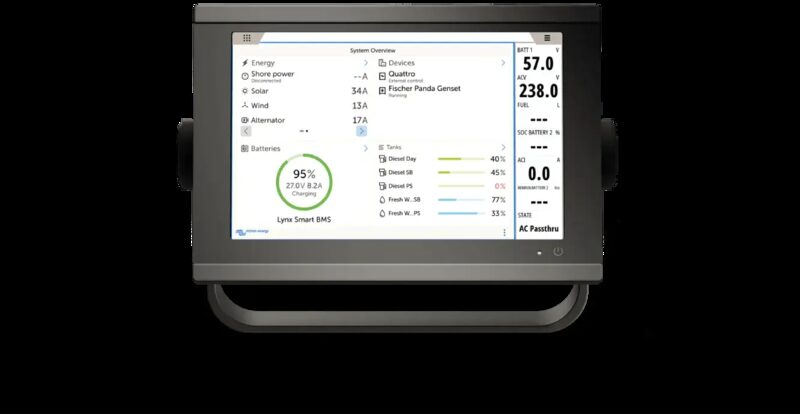
The Cerbo GX is described by Victron as a flexible communication centre that takes remote monitoring to the next level, and it can be reached through the VRM portal, a separate GX Touch display, a multi-function display or the VictronConnect app over Bluetooth6. The Ekrano GX does the same job with a built-in touchscreen, and can be accessed through the VRM portal, the screen itself, a multi-function display or VictronConnect via its built-in WiFi access point7.
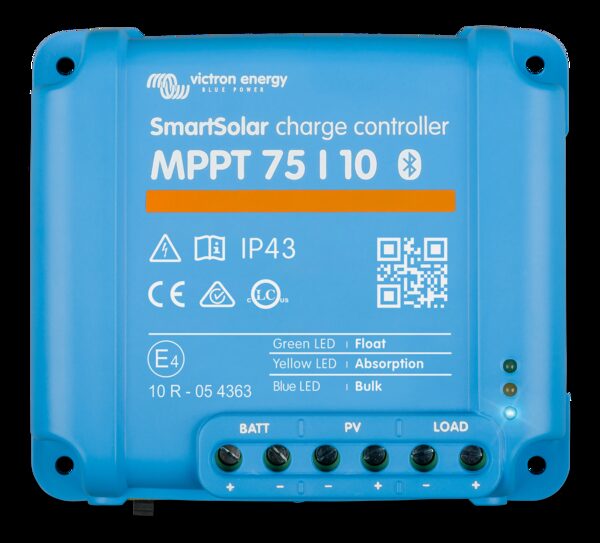
VictronConnect is the local tool. On the SmartSolar MPPT 75/10, 75/15, 100/15 and 100/20 charge controllers it delivers real-time data and a 30 day performance history8. The VRM portal is the remote one, and it is free of charge on the inverter charger datasheets that reference it9.
"Operational data can be stored and displayed on our VRM (Victron Remote Management) website, free of charge."
The distinction matters for a household because the two tools have different failure modes. VictronConnect works over a local Bluetooth link with no internet connection at all. VRM needs the GX device to reach the internet, which in a fixed home means broadband and in a remote or off-grid property may mean a mobile modem.
Cerbo GX and Cerbo GX MK2: the control hub of a home system
The Cerbo GX is the device most home systems are built around. It runs a dual core processor and provides non-isolated VE.Can ports, and it is the recommended replacement for the older Venus GX, which Victron now lists as deprecated and describes as equally priced but far less powerful than the Cerbo GX6.
The MK2 revision, released in 2023 or 2024, addressed several practical limitations of the original. It has two fully functional CAN bus ports, an isolated VE.Can 1, three fully functional USB ports, rotated RJ45 sockets and pulse counting digital inputs11. On the original Cerbo GX, the USB socket closest to the HDMI connector is a power port only with no data, and Victron states that future Venus OS versions will disable all data-related features of that port; the limitation does not apply to the MK26.
The Ekrano GX is the alternative where an on-site screen is wanted. Its quad-core processor manages all connected Victron products and a large range of supported third party devices, and its compatibility list covers managed lithium batteries, Victron connected products, solar irradiance and wind meters, auto start and stop generators, marine multi-function displays, and resistive tank level and temperature inputs7.
For a household energy storage system, Victron's own guidance is that a GX device is needed for system management and monitoring, with a GX Touch added if an on-site touchscreen display is wanted2. The GX device is therefore not an optional extra in a monitored installation: it is the component that turns a set of separate products into one system with a single view.
| Device | Processor | Access routes | Notable detail |
|---|---|---|---|
| Cerbo GX | Dual core6 | VRM, GX Touch, MFD, VictronConnect over Bluetooth6 | One USB port is power only on the original model6 |
| Cerbo GX MK2 | Not stated | As above | Two CAN bus ports, isolated VE.Can 1, three USB ports, pulse counting inputs11 |
| Ekrano GX | Quad core7 | VRM, built-in touchscreen, MFD, VictronConnect via WiFi access point7 | Built-in screen, no separate display needed7 |
| Venus GX | Not stated | VRM via smartphone or other device4 | Deprecated; Cerbo GX recommended for new installs4 |
What the monitoring shows: voltage, load, alarms and battery data
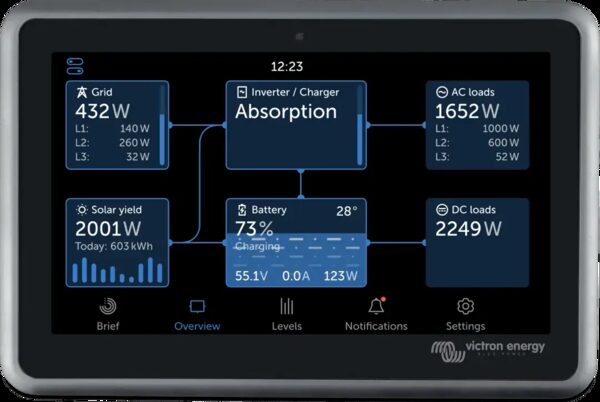
The data available depends on which device is reporting. On the VE.Direct inverter range, monitoring covers in and output voltage, percentage load and alarms12. The Phoenix Smart Inverters report the same three: in and output voltage, load and alarms13. The Multi RS Solar 48/6000 reads battery, inverter and solar parameters on its display, with the same parameters available to a smartphone or other Bluetooth device through VictronConnect14.
Battery state is handled separately and more precisely. Victron's battery monitors are designed to measure the power going in and out of the battery to determine the battery state of charge exactly, and the company offers a range of monitoring solutions to suit all sizes of low voltage battery systems15. The Lynx Smart BMS includes a battery monitor indicating state of charge percentage and more data, with local and remote monitoring through a GX device such as the Cerbo GX or Ekrano GX16.
At the component level, the MPPT Control displays panel power, panel voltage, yield today, charger state, battery current, battery voltage, load output state and load current17. The EV Charging Station has a built-in LCD touch screen for monitoring and control directly from the unit18.
The pattern is that Victron monitoring is granular rather than summarised. A household sees the individual measurements behind the system's behaviour, which is useful for diagnosing why a battery is not charging as expected, and less useful for someone who wants a single daily figure. The alarms are the part that carries the most practical weight: they are what turns monitoring into something that acts when nobody is watching.
Free to use, with more than 1 million users worldwide
Victron states that its monitoring solutions are free to use and that it has more than 1 million users worldwide1. The VRM portal is described as free of charge on the MultiPlus-II datasheets, and the same wording appears in the self-consumption brochure2.
That free position is worth stating plainly because it is not universal in home energy monitoring. The VRM portal stores operational data, displays it graphically, allows remote settings changes and sends alarms by email or push notification, all without a subscription2. Victron's off-grid systems page describes monitoring, configuration, alerts and alarms through the app and VRM portal as part of the system rather than a paid tier1.
The dependence that remains is on Victron's servers and on the company continuing to run the portal. A household that wants to avoid that entirely can use VictronConnect locally over Bluetooth, or a GX Touch screen, or the built-in display on the Ekrano GX, none of which require an internet connection6. Remote access from outside the home is the feature that needs the portal, and it is the feature that would stop working if the service did.
Warranty: 5 years standard, upgradable to 10
The standard warranty across the Victron range is 5 years. The self-consumption brochure states a 5 year warranty, and Victron's off-grid page states that the standard 5 year warranty is upgradable to 10 years by an additional 10% of the initial investment1.
The 5 year term is repeated across individual product pages: the Phoenix Smart Inverters, the MPPT Control, the SmartSolar charge controllers, the SmartSolar MPPT 150/35 and 150/45, and the Multi RS Solar 48/6000 all list 5 years13. That consistency is unusual in home energy equipment, where warranty length often varies by model tier.
The extension is priced rather than conditional on installer registration. Victron's terms are that the upgrade costs an additional 10% of the initial investment, which makes the cost proportional to the system rather than a flat fee1. A household weighing the extension is therefore weighing a percentage of what it has already spent against four extra years of cover.
Integrating batteries and AC-PV inverters into one monitored system
Victron's integration story is the reason its monitoring matters beyond its own products. The company states that managed batteries can be integrated through its GX devices in minutes, and that AC-PV inverters are supported directly after installing a software assistant on its inverters, with strong collaboration with Fronius PV inverters2. Its off-grid page repeats the position: deep integration with third party managed battery brands via GX devices, and AC-PV inverters via a software assistant1.
The system design options Victron sets out are PV in parallel, AC-coupled PV, DC-coupled PV, or a combination of all of them2. That flexibility is what allows a Victron monitoring layer to sit over an existing solar installation rather than requiring it to be replaced. One UK distributor describes a Victron energy storage add-on as suitable for use with any PV system21.
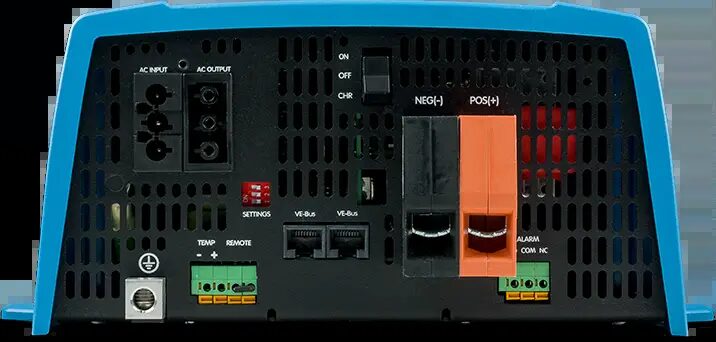
The EasySolar-II GX shows the opposite approach, integrating the components into one unit. The GX models combine a MultiPlus-II inverter charger, a SmartSolar MPPT solar charge controller and a GX device with a 2 by 16 character display22. The MultiPlus-II itself lists monitoring and control options including the Ekrano GX, Cerbo GX, a laptop or computer, Bluetooth, a battery monitor and a Digital Multi Control Panel9.
The EV Charging Station extends the same control layer to vehicle charging, and Victron states it can be fully integrated with and remotely controlled via a GX device and VRM18. Energy meters display their data on GX devices such as the Cerbo GX or Ekrano GX and in the VRM portal23. The result is one interface for battery, solar, grid import and vehicle charging, which is the practical meaning of integration for a household.
Victron in the UK: availability and technical support
Victron Energy B.V. is registered at De Paal 35, 1351 JG Almere in the Netherlands, and appears as the manufacturer and licence holder on its own declarations and certificates24. The company states that it is based in the Netherlands with representatives all over the world, and that it offers full technical support in the UK3.
Equipment reaches UK households through distributors and dealers rather than direct sales. One UK distributor lists Victron battery monitors from £25.83 and four compatible energy meter models from £65.444. The same distributor's Victron range covers energy storage packages, Lynx BMS units, Phoenix Smart inverters, EasySolar-II GX units, MPPT Control units and SmartSolar MPPT charge controllers21.
Prices for complete systems are quoted by the dealer or installer rather than published as a list, and the figures above are component prices from one distributor, not installed system costs. The technical support position is the more significant one for a household: Victron states that full technical support is available in the UK, which matters for a system whose configuration runs through a GX device and a portal rather than through a single appliance3.
An independent comparison of solar battery monitoring platforms, published in January 2022, reviewed Tesla Powerwall, GivEnergy and Victron monitoring and recommended Victron for commercial users, with Tesla or GivEnergy suggested for domestic settings27. That is a dated view from one source and it concerns monitoring platforms rather than the equipment itself, but it is the only independent assessment of Victron monitoring in the UK context available here, and it points to a system whose depth suits users who want to configure and diagnose rather than only read a summary.
A Dutch family firm with over 50 years in the business
Victron Energy describes itself as a family run business with over 50 years of experience, and says it has been supplying off-grid and on-grid battery storage systems for automotive, marine and industrial use2. Its off-grid page puts the figure at over 45 years of experience building backup and off-grid systems1. The two figures come from different Victron pages and are not reconciled; both are the company's own statements about its trading history.
The company is Dutch, based in Almere, and its certificates name Victron Energy B.V. as manufacturer and licence holder24. Its products carry safety certification to IEC 60335 and IEC 62109 standards, and the Blue Smart IP67 charger datasheet names Victron Energy as the trademark or brand24.
For a household, the significance of the company's age and ownership is continuity. A monitoring system depends on the maker continuing to run a portal, issue firmware and supply spare parts, and a privately held firm with a long trading history is a different proposition from a venture-backed entrant. That is a statement about the structure of the business, not a prediction: no company's future is guaranteed, and the warranty and the portal both depend on Victron continuing to operate.
The dependence a Victron installation creates is therefore specific. The household owns the hardware and can control it locally without any external service. What it does not own is the remote monitoring layer, the firmware updates that keep the GX device current, or the warranty administration, which runs through the dealer. For a home seeking energy independence, that is a system that keeps working when the grid and the internet do not, provided the configuration was done properly at the outset.
Sources27 cited
- Off-grid systems, Victron Energy, 2026
- Self-Consumption and Energy Storage brochure, Victron Energy, February 2026
- Victron Energy UK distributor page, Wind and Sun, 2026
- Battery monitors, Wind and Sun, 2026
- Victron compatible energy meters, Wind and Sun, 2026
- Cerbo GX and Venus OS manual, Victron Energy, 2025
- Ekrano GX, Victron Energy, 2026
- SmartSolar MPPT 75/10, 75/15, 100/15 and 100/20, Victron Energy, 2026
- MultiPlus-II inverter charger datasheet, Victron Energy, 2026
- MultiPlus-II 4k, 4k5, 6k5, 10k datasheet, Victron Energy, 2026
- Venus GX, Victron Energy, 2026
- VE.Direct inverter datasheet, Victron Energy, 2026
- Phoenix Smart Inverters, Wind and Sun, 2026
- Multi RS Solar 48/6000, Wind and Sun, 2026
- Battery monitors, Victron Energy, 2026
- Lynx Smart BMS NG, Victron Energy, 2026
- MPPT Control, Wind and Sun, 2026
- EV Charging Station, Victron Energy, 2026
- SmartSolar charge controllers, Wind and Sun, 2026
- SmartSolar MPPT 150/35 and 150/45, Wind and Sun, 2026
- Victron ESS package, Wind and Sun, 2026
- EasySolar-II 48V 4k5 and 6k5 GX datasheet, Victron Energy, 2026
- Energy meters, Victron Energy, 2026
- Blue Smart IP67 charger certificate, Victron Energy, April 2026
- MultiPlus-II GX safety certificate, Victron Energy, November 2025
- Victron Lynx BMS, Wind and Sun, 2026
- Solar battery monitors compared, Spirit Energy, January 2022
 Victron MultiPlus-II inverter-chargerThinking about a Victron MultiPlus-II for home backup?
 Victron Energy Systems for Off-Grid and Home Battery UseThinking about Victron for a home battery or off-grid setup?
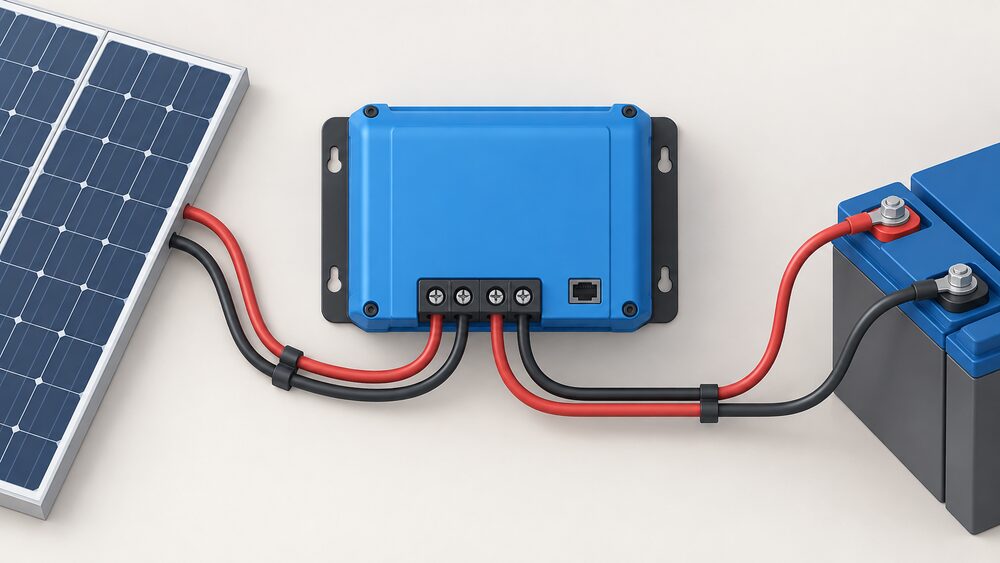 Victron Energy Solar Charge Controllers and Off-Grid EquipmentWhich Victron controller suits your panels and battery when you put solar on a boat, cabin or off-grid home?