In this guide
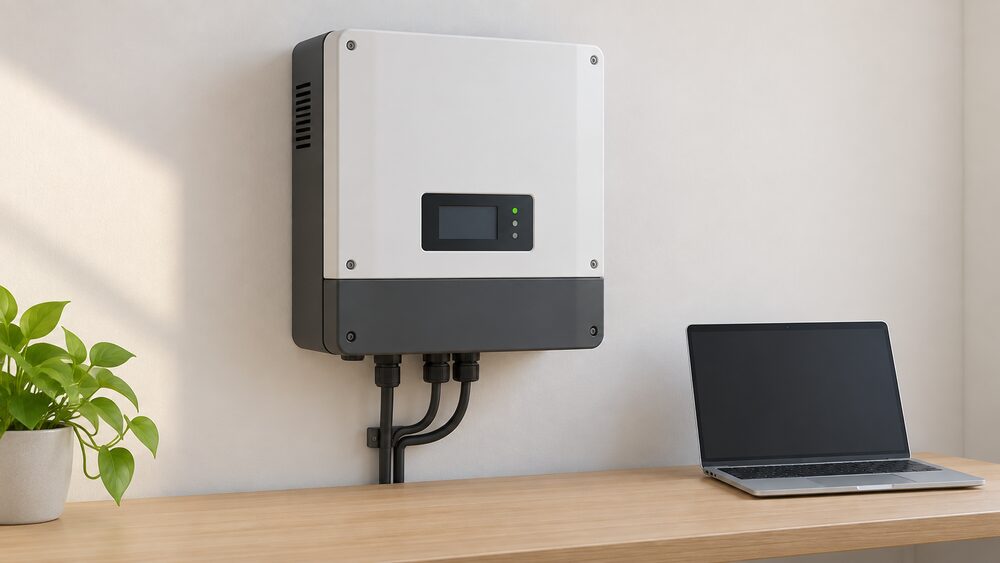
The Fronius Datamanager is the monitoring and data-logging part of a Fronius solar installation. On the Primo range it is not a separate purchase: data logging and a web server are listed as integrated across the models1. It records what the system generates and what the house consumes, and it feeds that data to Fronius Solar.web, the maker's free monitoring platform7.
For a household, the practical effect is that the inverter arrives with the monitoring already inside it. Fronius describes integrated data communication as usually included as standard, otherwise easily retrofitted, and lists it as a requirement for using Solar.web9. A separate Fronius Smart Meter is needed to display power consumption rather than generation alone9.
The Datamanager's own power draw is small: the maker's datasheet gives energy consumption of under 2.0 W for both the Datamanager 2.0 and the Datamanager Box 2.010. Its warranty is not a separate term. It automatically imports the warranty period of the inverter it is installed in11.
What the Datamanager is and what it does
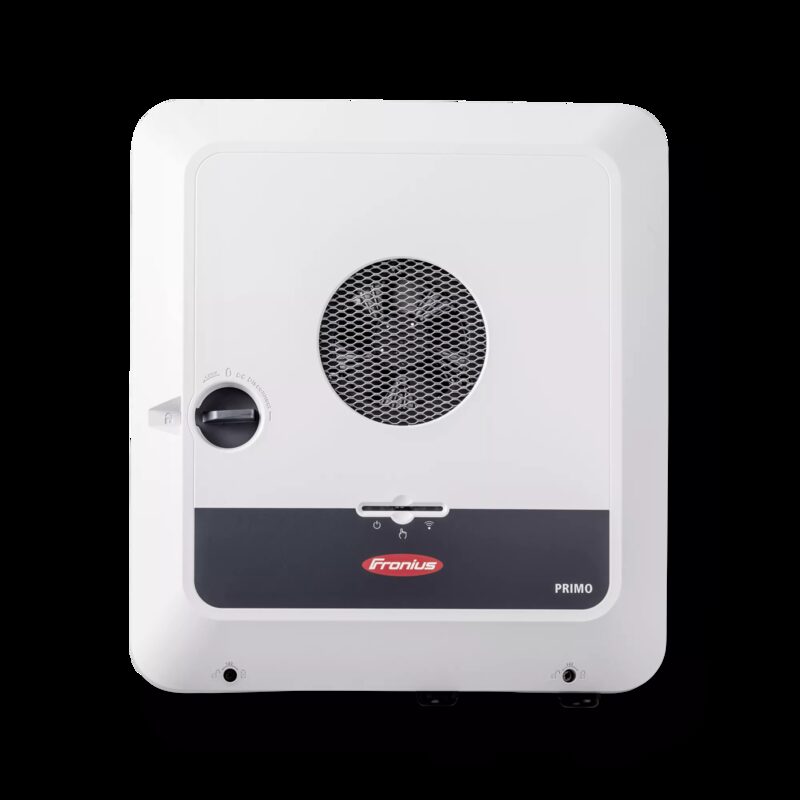
The Datamanager is the data layer of a Fronius system. On the Primo models it appears in the specification as an integrated datalogger and web server, which means the inverter can log its own operating data and serve a local web interface without extra hardware1. The Primo range also lists data logging and inverter updates by USB flash drive, so a household is not wholly dependent on a network connection to retrieve or update the system3.
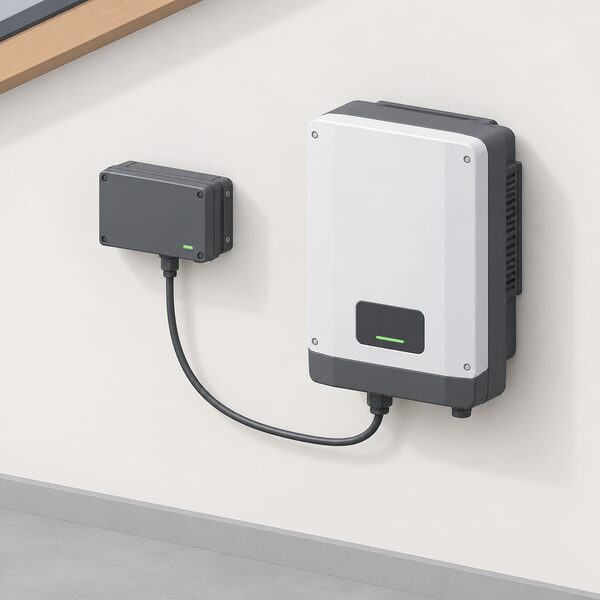
What the Datamanager does not do on its own is measure the house. Generation data comes from the inverter; consumption data requires a Fronius Smart Meter, which the maker lists as the component for displaying power consumption and as a requirement for using Solar.web's consumption view9. That distinction matters when reading a specification: an inverter with integrated data communication can report what the panels produced, but the fuller picture of energy flows in the home depends on the meter being fitted at the right point.
The Datamanager also carries the system's signalling. The Primo models list an energy management output as a floating relay output, which is the interface used for switching or signalling functions rather than for metering1. For households with a Wattpilot charging product, the Datamanager appears again in the compatibility list: PV optimisation can be used with third-party inverters if they are combined with a Fronius Smart Meter IP or a Datamanager Box 2.0 and a Fronius Smart Meter at the feed-in point, with no other self-consumption regulations active in parallel, and household loads not taken into account in the app14.
Monitoring in one interface: generation, export and consumption
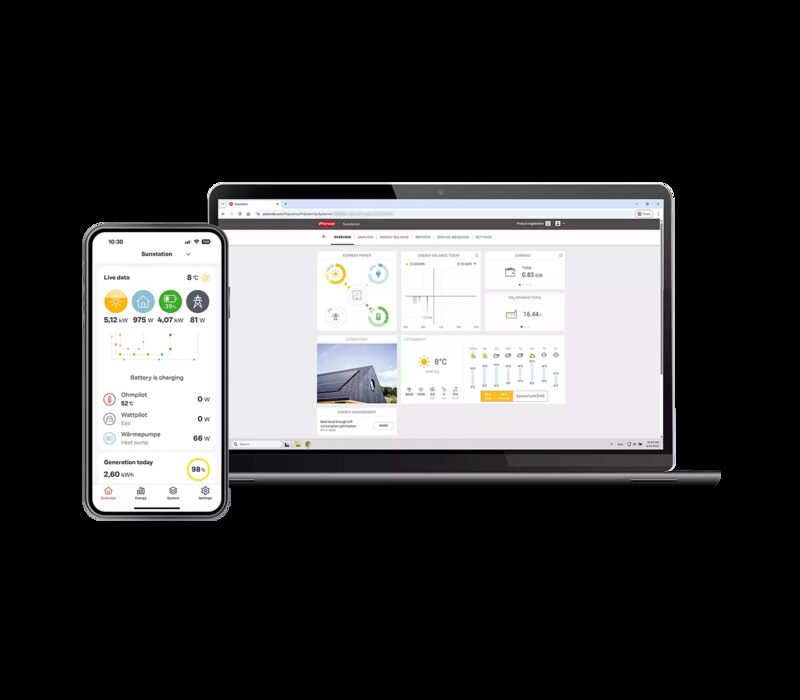
Fronius Solar.web is the interface the Datamanager feeds. The maker describes it as a monitoring tool for photovoltaic systems that records all the key data and provides a clear overview of the energy flows in the home8. Across the maker's own pages the wording is consistent: it monitors energy yield and consumption, and lets a household keep an eye on both at all times7.
The scope is wider than generation alone. Fronius positions its photovoltaic systems around the generation, management and storage of solar power for homes and businesses, and Solar.web is the layer that shows how those flows move17. For installers, the same platform carries fleet monitoring in real time, remote fault monitoring, and add-on simulations for battery storage or an Ohmpilot18. A household therefore sees a consumer view of the same data an installer uses for diagnostics.
There is a limit worth stating plainly. Monitoring a time-of-use tariff once it is set up can require a greater level of engagement than consumers may be used to, according to Citizens Advice19. A monitoring platform makes half-hourly prices visible; it does not remove the need to act on them. The value of the interface depends on whether anyone reads it.
Specifications at a glance: power draw and hardware
The published hardware figures are narrow but specific. Both the Datamanager 2.0 and the Datamanager Box 2.0 are rated at under 2.0 W of energy consumption10. The Box 2.0 also lists an RS422 interface described as Fronius Solar.Net OUT, which is the connection used to link it into the system10.
| Item | Published figure |
|---|---|
| Datamanager 2.0 energy consumption | under 2.0 W10 |
| Datamanager Box 2.0 energy consumption | under 2.0 W10 |
| Datamanager Box 2.0 interface | Fronius Solar.Net OUT (RS422)10 |
| Primo datalogger and web server | Integrated across the range1 |
| Primo DC connections | 2 + 23 |
The under 2.0 W figure is a continuous draw from the household supply while the system is powered. It is small, but it is not zero, and it sits alongside the inverter's own standby consumption rather than replacing it. The DC connection count of 2 + 2 on the Primo models describes how many strings the inverter accepts, which shapes what the monitoring can separate: two inputs allow generation to be logged per string rather than as a single total3.
Warranty: how the Datamanager inherits the inverter's cover
The Datamanager does not carry its own warranty term. Fronius states that it automatically imports the warranty period of the Fronius inverter in which it is installed11. For a household, that means the monitoring hardware is covered for exactly as long as the inverter is, and no separate registration or certificate applies to it.
The inverter's own period starts with the date of initial commissioning of the covered product11. Where a covered product is replaced or repaired, the remainder of the original warranty period applies to the replaced or repaired item and does not restart or extend11. That is a common warranty construction, and it means a repair late in the term does not buy fresh cover.
Registration is the step that unlocks the free extension. Fronius directs owners to log in to Solar.web, register the inverter using its serial number, and then choose the warranty option18. The maker's guidance is that all a household needs to do is register the inverter on Solar.web to receive the free warranty extension20. The certificate is then displayed in Solar.web under Product registration, next to the registered inverter12.
Two further conditions are worth knowing. The Ohmpilot and the Fronius Smart Meter have serial numbers but cannot be registered in Solar.web, because an extended warranty is not available for them12. And paid extensions are available for inverters still covered by an existing Fronius warranty, with the maker describing up to 15 years of cover subject to a fee20.
Export limitation and the application guide
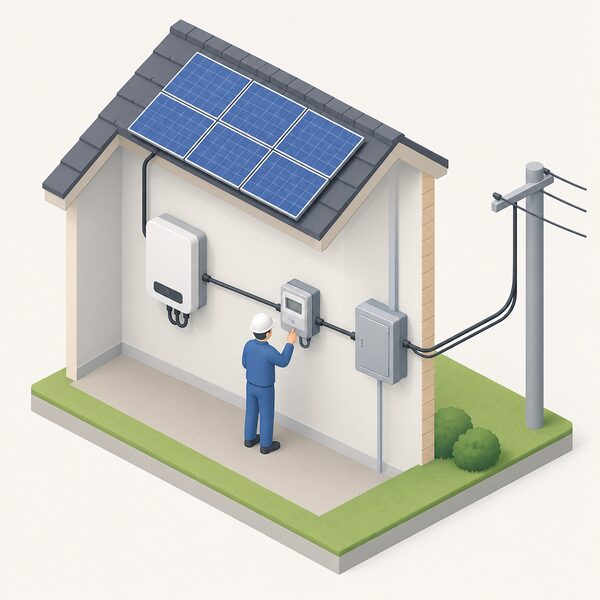
Export limitation is the control that stops a generating system exporting above a set level. The principle is set out in network guidance: export limiting devices allow a limit to be set above which the generation will not export21. Where a connection requires one, an EREC G100 compliant export limitation scheme must be present22.
Fronius publishes an application guide for feed-in limitation covering its inverters. The current document identifies itself as version 03 dated 11/2025, and an earlier version 4.0 of the export limitation guide was published in 2020. The Primo models list their overload behaviour as operating point shift and power limitation, which is the inverter-side mechanism that keeps output within a set ceiling4.
The metering side is separate from the Datamanager. Feed-in Tariff guidance states that an export meter is always located at the point where the installation connects into the distribution or transmission network and must measure export separate from any other energy source, unless pro-rating is available23. Where an installation exports all its electricity, a separate generation meter is not required but a compliant export meter is24. For the Smart Export Guarantee, generators must have a smart meter to monitor exports, and the Energy Saving Trust states the requirement as a registered smart meter that records exported electricity, even where the household is not on a smart tariff25.
Scheme rules add their own conditions. Under one flexibility scheme, a member with an export meter must inform the operator in order to accrue earnings from export, and until then only import meter earnings accrue, with no retrospective accrual29. The control equipment also appears in application requirements for an export MPAN30. The Datamanager logs and reports; it does not replace any of these metering or scheme obligations.
Who Fronius are: an Austrian, family-owned maker since 1945
Fronius is a family-owned enterprise, founded more than seven decades ago by Günter Fronius, with a team of more than 5,000 people7. The company describes 75 years of experience and states that it has been developing solutions for solar energy since 19927. Its partner network consists of over 6,000 expert installers around the world, and it describes itself as solar pioneers with more than 30 years of experience31.
Manufacturing is European and concentrated in Austria. Fronius states that all its products are developed in Austria and that more than 90% of them are also manufactured there14. It describes its inverters as produced in compliance with strict quality guidelines in Europe, and its GEN24 and GEN24 Plus products as Made in Europe31. The registered address of Fronius International GmbH is Froniusstrasse 1, 4643 Pettenbach, Austria11.
For a UK household, the significance is supply chain rather than assembly line. A European manufacturer with a long trading history and a large installer network is a different proposition from a maker that has entered administration, and the warranty sits with a company that has been trading for decades. The Datamanager's dependence is on that company continuing to run Solar.web, which is the platform the monitoring and the warranty registration both rely on.
Cost position: strong monitoring at a higher price
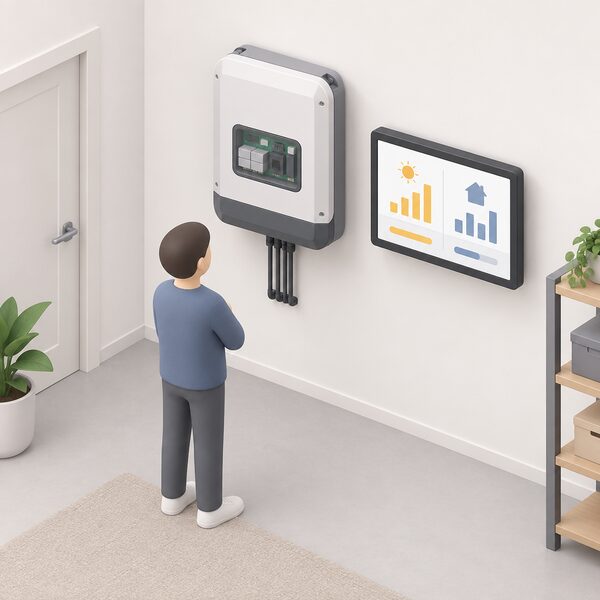
The monitoring itself is free at the point of use. Fronius describes Solar.web as its free monitoring tool, and the same wording appears across its product pages7. There is no subscription stated for the platform, and the Datamanager hardware is integrated into the Primo inverter rather than sold as an add-on1.
What a household pays for is the system. Fronius does not publish a UK installed price for its inverters or for the Datamanager in the material available, so prices are installer-quoted. The cost position described here is therefore about what the monitoring delivers rather than a figure: generation and consumption data in one interface, installer-grade fleet and fault monitoring on the same platform, and add-on simulations for battery storage or an Ohmpilot18.
The trade-off is engagement. A monitoring platform that shows half-hourly flows is only useful if the household acts on what it shows, and Citizens Advice notes that monitoring a time-of-use tariff can require more engagement than consumers are used to19. The free platform removes the subscription barrier; it does not remove the attention cost. Households comparing monitoring options across brands can weigh that against systems where the app carries a recurring charge, covered in app subscriptions and cloud dependence.
What owning a Datamanager means for household energy independence
The Datamanager gives a household its own record of what the system produced and what the house used. That data sits with the owner, is visible in a free platform, and can be retrieved locally from the inverter, including by USB on the Primo range3. Fronius positions its photovoltaic systems around gaining independence from the public grid, and states that self-sufficiency with solar energy can rise to up to 85% with storage17.
The dependence that remains is worth naming. The system stays connected to the grid, and export is governed by network rules and scheme metering rather than by the inverter alone21. Remote visibility depends on the inverter's data communication and on Fronius continuing to operate Solar.web9. The warranty extension depends on registering the inverter in that same platform, and for inverters commissioned on or after 1 June 2026 registration is a condition of the free extension12. A household that wants its monitoring to keep working through a platform change is relying on a manufacturer's cloud service, a point examined in local data access and Modbus.
Set against that, the Datamanager is a modest piece of hardware with a clear job: under 2.0 W of draw, integrated into the inverter, and covered for as long as the inverter is10. It does not make a home independent of the grid. It makes the home's own generation and consumption legible, which is the precondition for using either well. Wider context on how monitoring fits household independence is at smart meters and energy independence, and the metering side of export is covered in export metering and limitation.
Sources32 cited
- Fronius Primo 3.0-1 technical data, Fronius, 2026-09-17
- Fronius Primo 5.0-1 technical data, Fronius, 2026-09-17
- Fronius Primo 3.6-1 technical data, Fronius, 2026-09-17
- Fronius Primo 6.0-1 technical data, Fronius, 2026-09-17
- Fronius Primo 8.2-1 technical data, Fronius, 2026-09-17
- Fronius Primo 4.6-1 technical data, Fronius, 2026-09-17
- Solar monitoring, Fronius, 2026-09-17
- GEN24 Plus inverter for PV system backup power, Fronius, 2026-09-17
- Solar monitoring support article, Fronius, 2026-09-17
- Fronius Datamanager 2.0 datasheet, Fronius, 2019-07
- Fronius International GmbH terms of warranty, Fronius, 2026-09-17
- Solar inverter warranty help centre, Fronius, 2026-09-17
- Store solar power, Fronius, 2026-09-17
- E-mobility, Fronius, 2026-09-17
- Heating with PV, Fronius, 2026-09-17
- Heating with PV, Fronius, 2026-09-17
- Photovoltaics, Fronius, 2026-09-17
- Fronius Solar.web, Fronius, 2026-09-20
- Smart timing: making time-of-use tariffs work for consumers, Citizens Advice, 2025-09-09
- Fronius UK warranty models, Fronius, 2026-09-17
- G98 Single Premises, Energy Networks Association, 2026-09-17
- Connecting generation to the electricity networks, Energy Networks Association, 2026-09-17
- Guidance for FIT generators V18, Ofgem, 2026-04-01
- FIT guidance for licensed electricity suppliers V17.1, Ofgem, 2024-09-06
- Smart Export Guarantee, Energy Saving Trust, 2026-05-20
- POST note 771, Parliamentary Office of Science and Technology, 2026-06-25
- EVs and heat pumps FAQs, NIE Networks, 2026-09-19
- What is an import or load limiting device, NIE Networks, 2026-09-19
- Reduce & Earn Sessions terms, Uswitch, 2026-09-14
- Export MPAN guide, UK Power Networks, 2026-09-17
- GEN24 UL inverter for PV system backup power, Fronius, 2026-09-17
- Solar monitoring, Fronius, 2026-09-17
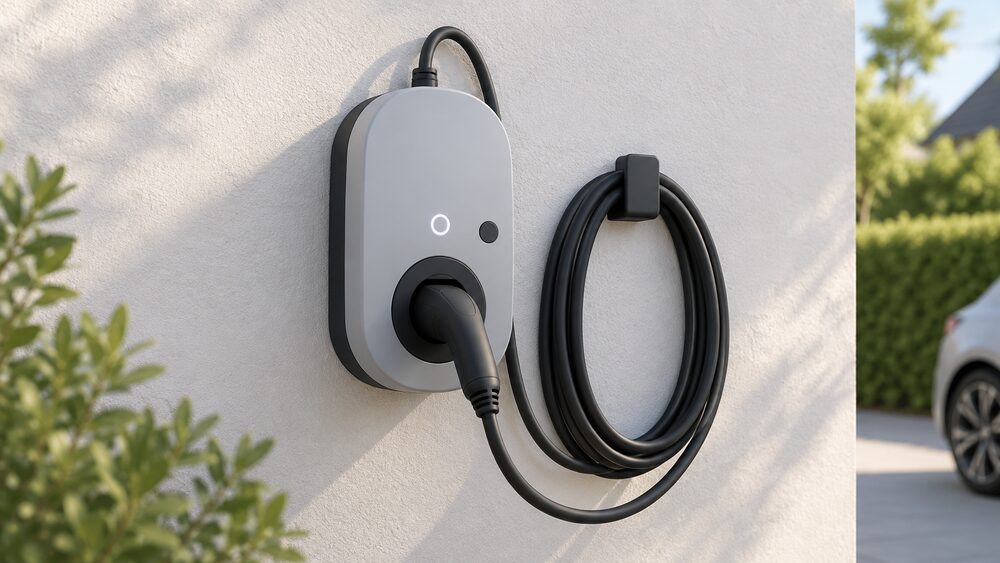 Fronius WattpilotCan the Fronius Wattpilot charge your electric car using only the power your solar panels make?
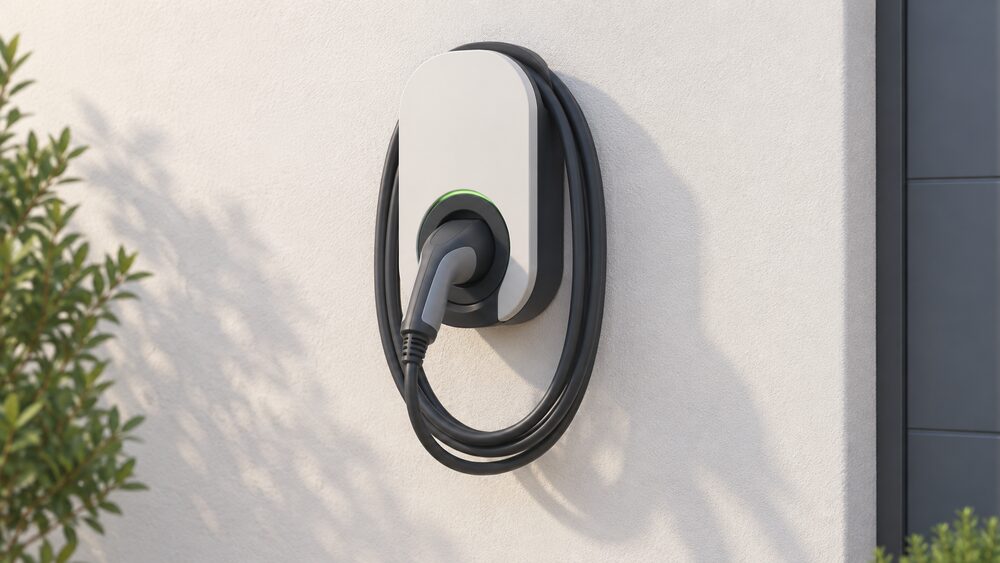 Fronius Wattpilot chargerHow much of your solar power can the Fronius Wattpilot send to your car instead of the grid?
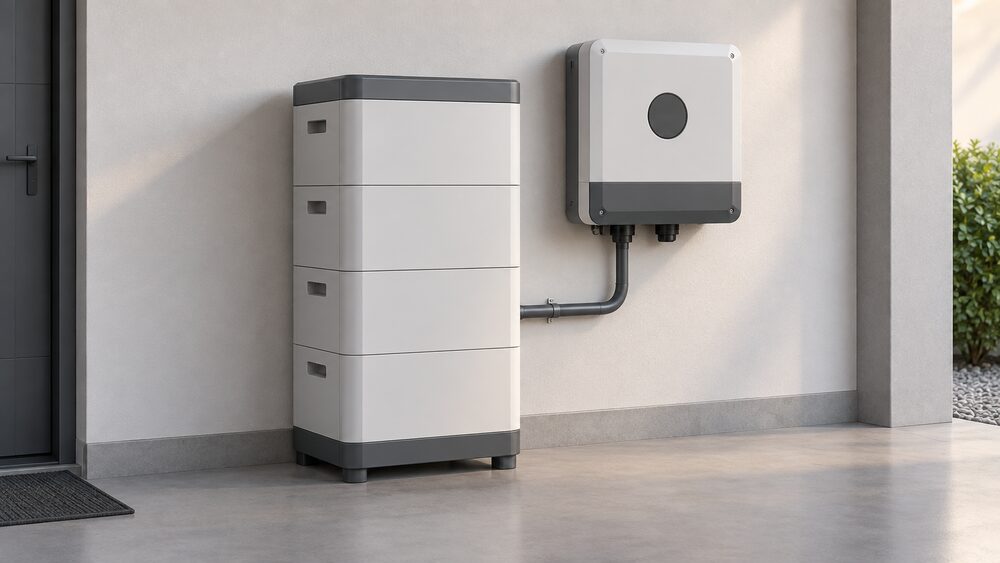 Fronius Reserva Battery and GEN24 InvertersIf you already have a Fronius inverter, or you are weighing up a Fronius system, the Reserva is the battery that goes with it.
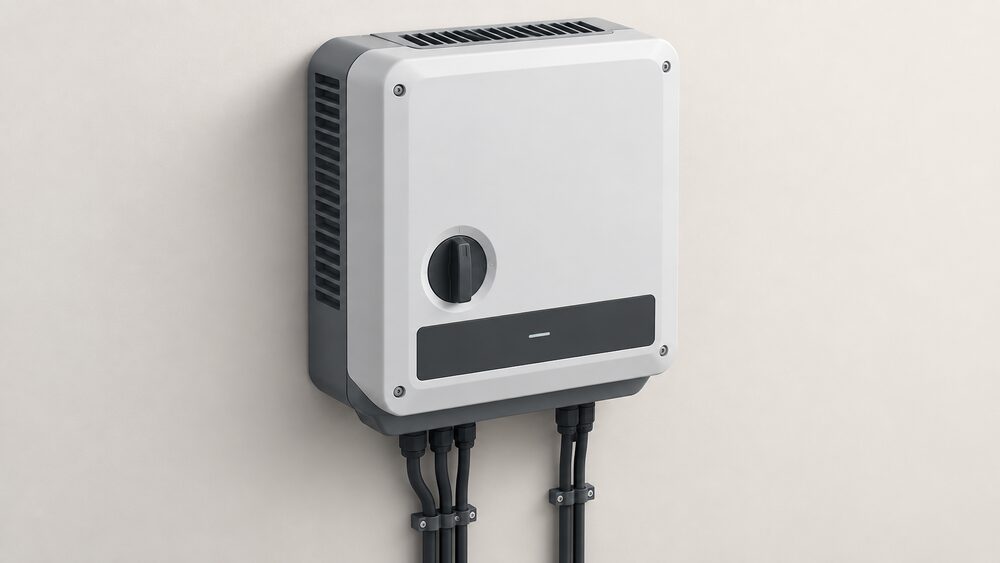 Fronius solar invertersFronius is an Austrian inverter maker whose Primo GEN24 and Symo ranges are widely installed in UK homes, with 10 years of warranty as standard and up to 15 with a paid extension.