In this guide
SolarEdge is one of the inverter brands most often quoted for UK homes, and it is the reference point for panel-level electronics. The company was founded in 2006 and reports millions of systems installed in over 140 countries1. Its pitch is that a Power Optimizer sits on every panel, so each one is managed individually rather than as part of a single series string2.
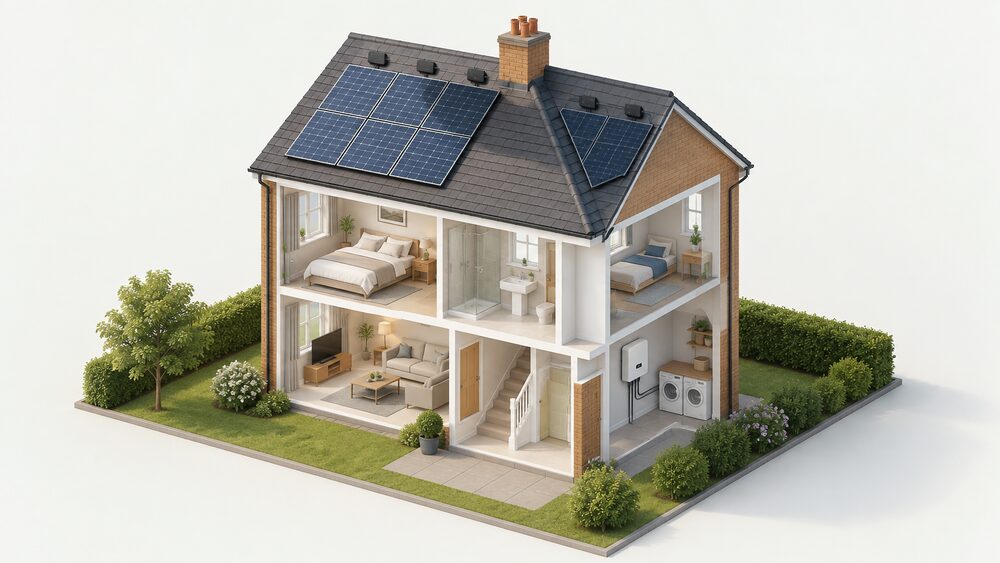
That architecture is why installers reach for it on awkward roofs. SolarEdge systems are described as often favoured for complex roofs with mixed orientation or partial shade, and the maker's own Short String Inverter is listed as optimised for multi-facet roofs and different orientations3. The trade-off is more electronics on the roof, a monitoring platform that depends on the internet, and a company whose warranty is only as good as the business behind it.
Who SolarEdge are and where they stand
SolarEdge describes itself as the world's number one solar provider with the number one award-winning inverter, and its Home Hub Inverter carries a PV Magazine Award for number one inverter10. Those are the maker's own claims and should be read as such. What is independently checkable is the shape of the business: Which? notes that SolarEdge sells solar panels, storage batteries and inverters and optimisers, and describes it as saying it is a one-stop shop for your energy needs9.
The company is not a roof-only business. It reports millions of systems installed across more than 140 countries and was named one of the Top 100 Most Sustainable Corporations by Corporate Knights1. It also has a corporate life that matters to anyone relying on a 25-year warranty: in March 2026 SolarEdge announced that its chief financial officer, Asaf Alperovitz, would step down and leave the company in June 2026, with the board beginning the search for a replacement, and the company reaffirmed its first-quarter financial guidance at the same time12.
For a household, the practical question is not the award shelf but the ecosystem. SolarEdge's residential range covers inverters, Power Optimizers, batteries, backup solutions and smart energy devices, and the company says the ecosystem is built to simplify installations, maximise system uptime and deliver more value13. That is a closed system: the optimisers, inverter, battery and app are designed to work together, which is convenient while it works and constraining when it does not.
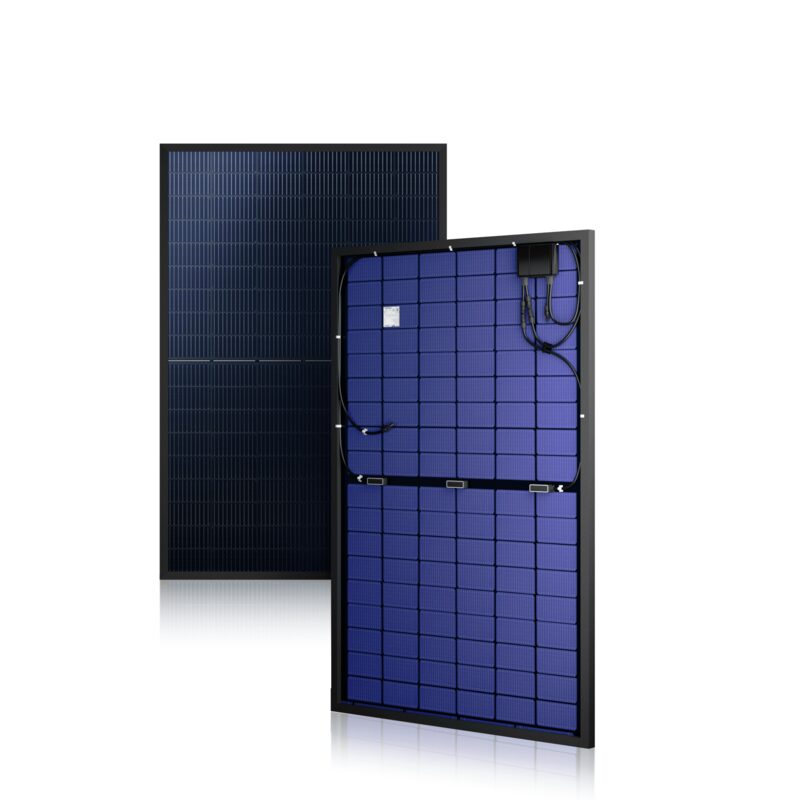
The range: inverters, Power Optimizers, batteries and smart energy devices
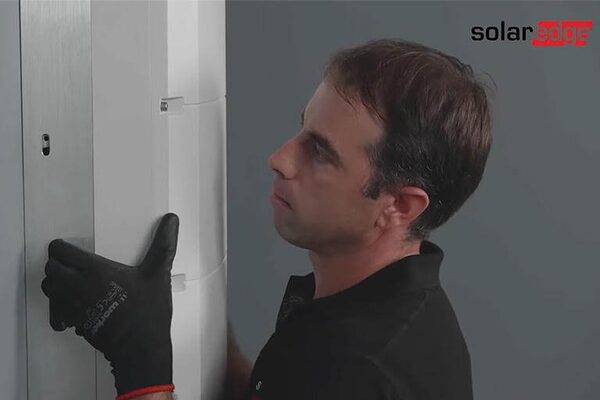
The inverter families sold in the UK are the Home Wave, the Home Hub and the Home Short String. The Home Wave manages PV production, on-grid battery storage, EV charging and smart energy devices, and is available in single phase and three phase10. The Home Hub is positioned as the backbone of SolarEdge Home, installed with Power Optimizers, batteries, backup applications and smart energy devices, and is described as handling PV production, battery storage, backup applications and smart energy devices11. The Short String Inverter is a three phase unit for low power residential systems, aimed at small-scale projects where a full string inverter would be oversized4.
Around the inverter sit the supporting parts. SolarEdge Smart Modules have Power Optimizers integrated at the factory rather than fitted on site14. The Home Network Plug-In connects the inverter wirelessly to system devices, which the maker says avoids wired network infrastructure and reduces installation times and labour costs; it supports the Home Hub Inverter, Home Battery, Home Inline Meter and smart energy management devices when integrated with network-ready inverters15. The Home Battery 400V uses wireless inverter-to-battery communication16. The Home Load Controller is listed as increasing savings and reducing grid dependency by maximising solar self-consumption17.
| Product | What it does | UK availability |
|---|---|---|
| Home Wave Inverter | PV, battery, EV charging, smart devices | Single and three phase10 |
| Home Hub Inverter | PV, storage, backup, smart devices | UK product page11 |
| Home Short String Inverter | Three phase, low power residential | Design flexibility for small projects4 |
| Power Optimizers | Panel-level management | With all SolarEdge inverters2 |
| Home Battery 400V | Storage, wireless to inverter | Storage support limited on Short String16 |
| Home Load Controller | Raises self-consumption | Distributor search on product page17 |
| EV Charger | Solar-linked EV charging | UK charger page18 |
One limit is worth flagging early. Storage support for the Short String Inverter is currently only available in Poland and the Netherlands, so a UK household looking at that model cannot assume battery pairing16.
Panel-level optimisation: how the architecture works and where it wins
A conventional string inverter takes the whole array as one circuit, so the weakest panel sets the current for the string. SolarEdge's approach is DC optimised technology, with Power Optimizers that individually manage each solar panel, and the maker claims this harvests more energy from the panels and stores more in the battery19. The company has a strong reputation for panel-level optimisation and monitoring, and the design allows arrays combining mixed wattages and orientations, including two roof parts facing different directions3.
The practical consequences are three. First, shading on one panel does not drag the rest of the array down to its level, which is the main reason the architecture exists. Second, panels of different ages or outputs can be added later without matching the originals, because each is managed separately. Third, the system is scalable: SolarEdge says panels or a battery can easily be added onto an optimised system, and describes the home solution as modular and scalable, starting with a basic solar system and adding batteries, EV charging or smart energy devices later21.
The cost of that flexibility is more components. Every panel carries an optimiser, which is more to install, more to fail and more to replace over the system's life. The claimed gain is real but conditional: on an unshaded, single-orientation roof, a well-specified string inverter can perform close to an optimised array, and the advantage shows up where the roof is difficult. For the wider comparison, see power optimisers and string inverters.
Complex roofs and partial shade: where SolarEdge fits best
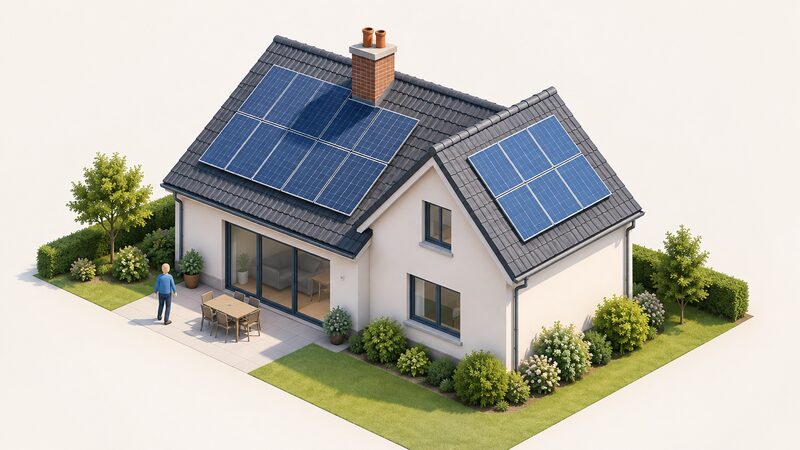
This is the case the product was built for. SolarEdge systems are described as often favoured for complex roofs with mixed orientation or partial shade, and the Short String Inverter is optimised for installations with complex roofs, including multi-facets and different orientations3. The maker's design flexibility allows an array of panels that combine mixed wattages and orientations, including two roof parts facing different directions20.
The size range is broad. SolarEdge says it is optimised whether a home has a small single phase roof of 2 to 6 kWp or a large three phase system up to 25 kWp1. Both the Home Wave and the Short String Inverter can be mounted indoors or outdoors, which matters where a garage or outbuilding is the only sensible location10.
Where it fits less well is a simple roof. A south-facing, unshaded array on one plane gives the optimisers little to correct, and the extra hardware adds cost without a matching gain. The honest position is that the architecture earns its place on complexity, not on every roof. For the underlying physics of shading and orientation, see roof orientation, pitch and shading and how shade affects output.
Specifications at a glance
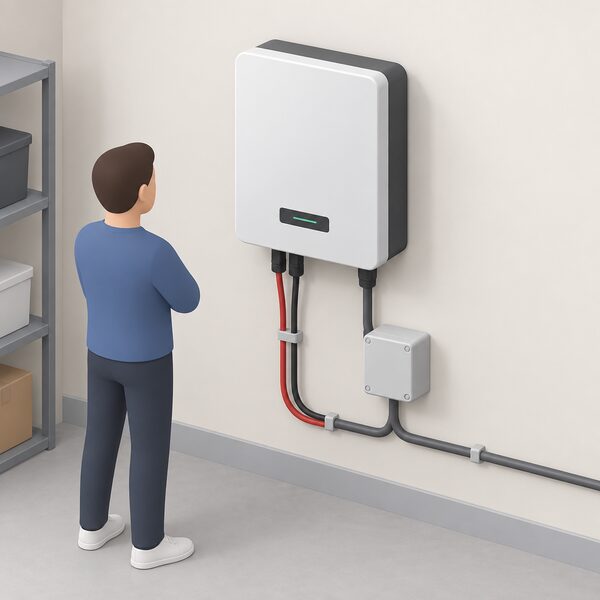
The figures below are the ones tied to specific products. Note that the module efficiency figure belongs to SolarEdge's own panels, not to the inverters.
| Specification | Figure | Product |
|---|---|---|
| Maximum inverter efficiency | 97.6% | Single phase SE2200 to SE60006 |
| Inverter efficiency | 98.3% | Three phase SE25K, SE30K, SE33.3K7 |
| Rated AC power | 25,000 W | Three phase SE25K7 |
| Rated AC power | 29,990 W | Three phase SE30K7 |
| DC input connectors | 4 MC4 pairs | Three phase SE25K to SE33.3K7 |
| Module efficiency | 22.53% at 440 W | SolarEdge panels9 |
| DC oversizing | up to 200% | SolarEdge Home inverters5 |
| Warranty | 12 to 25 years | Single phase SE2200 to SE60006 |
The single phase range is a fixed voltage inverter doing DC to AC conversion only, with natural convection cooling, so there is no fan to fail6. The three phase units are described as fixed voltage inverters for superior efficiency and longer strings, with export limitation as a smart energy management function and integrated type 2 DC surge protection that is field replaceable7.
On the panel side, Which? lists SolarEdge modules at 440 W and 22.53% efficiency, and an Ofgem innovation document records a warranty registered for a Solar PV array including system components covering over at least a 25-year period9. For context on how that efficiency compares, Good Energy lists AIKO at over 22.8% and Jinko at over 23%23. Reading a datasheet properly is covered in solar panel specifications and efficiency.
Safety and monitoring: SafeDC, panel-level monitoring and data stored in Germany
The safety story is the strongest part of the pitch. SafeDC reduces the system's DC voltage to a safe-touch level whenever the system shuts down, and the Home Hub Inverter lists module-level monitoring, SafeDC, Sense Connect, arc fault circuit interruption and ground fault detection and isolation testing10. SolarEdge Smart Modules have SafeDC built in for module-level voltage shutdown, described as protection to people and property14. The maker frames this as securing the work environment for first responders and maintenance staff20.
Monitoring is panel-level, which the maker says gives pinpointed fault detection11. That is genuinely useful: a single underperforming panel shows up as a single underperforming panel rather than as a vague dip in array output. The dependence is the other side of it. The mySolarEdge platform is where you connect to home Wi-Fi, see connection status and view or configure inverter communication24. Data goes to SolarEdge's monitoring servers, and the platform's own status language is S_OK, meaning communication to the SolarEdge Monitoring Server is successful25.
For a household, that is a real but modest dependence: the system still generates and the inverter still works if the router fails, but the visibility that justified the extra hardware goes with it. More on this in monitoring a solar PV system.
Warranty: 12 to 25 years, with conditions

The warranty ladder is worth reading carefully because the headline number is not the default. Single phase inverters in the SE2200 to SE6000 range are listed with 12 to 25 years of warranty6. The extension is available in 20 or 25 year terms depending on the inverter model, bought as a one-time payment fee, and must be purchased within 24 months of the inverter shipping from SolarEdge8.
Two conditions matter. The extension applies to the inverter only and does not apply to any built-in communication accessories5. And the purchase window is fixed from shipment, not from installation, so a system that sits in a warehouse or a slow project can lose part of that window before the panels are even on the roof. Once a request is processed and approved, the customer number is sent by email8.
"The warranty extension is available with a one-time payment fee and must be purchased within 24 months of inverter shipment from SolarEdge."
The Home Battery 400V carries its own year warranty, listed separately from the inverter terms16. SolarEdge describes its warranties generally as industry-leading26. For the wider picture on how inverter and panel warranties compare across brands, see solar panel warranties and degradation.
Cost, availability and what UK owners report
There is no single installed price. What exists is component pricing and one independent benchmark for replacement. The SolarEdge Single Phase Inverters with compact technology are priced at £405.00 and the Three Phase Home Wave Inverters at £1,019.5227. Those are component prices, not installed prices, and the VAT position is not stated on the listing. For context, replacing a solar inverter is put at about £500 to £1,00027.
For context on what an inverter replacement costs when one fails out of warranty, independent guidance puts a solar inverter at about £500 to £1,00023. That is the figure a household should hold in mind when weighing a 25-year warranty extension against its one-time fee.
Availability is straightforward for the main lines: the Home Wave is available in single phase and three phase, and the Home Load Controller page directs buyers to find a distributor in their area10. Firmware is region-specific, with the Home Wave single phase carrying a UK-only variant, which is a reminder that UK units are not interchangeable with units built for other markets28.
What owning SolarEdge means for energy independence
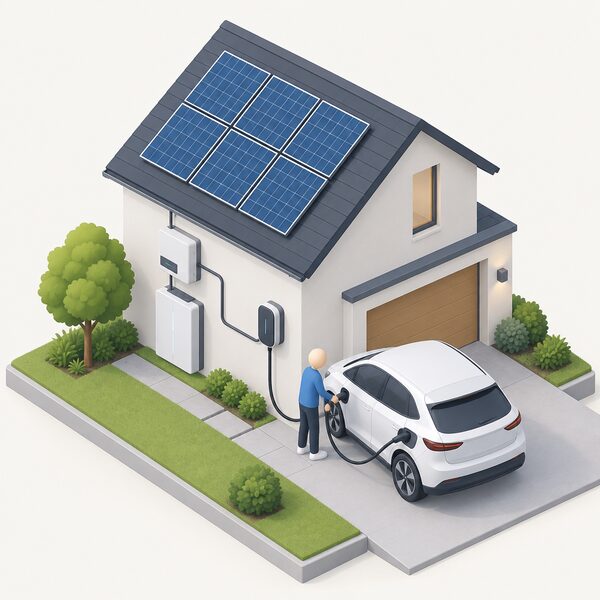
The honest summary is that SolarEdge reduces dependence on the grid for daytime electricity and increases dependence on a manufacturer. The Home Load Controller is explicitly aimed at reducing grid dependency by maximising solar self-consumption17. The Home Battery stores energy to power appliances, EVs and provide critical backup during outages19. Paired with the Home Battery and Backup Interface, SolarEdge Home Hub Inverters provide backup power for either full or partial home loads in the event of grid interruption11.
The EV side is where the ecosystem is most joined up. The SolarEdge EV Charger uses available solar energy for EV charging, supports up to three chargers on a single site for households with multiple EVs, and lets the home battery be enabled or disabled for EV charging according to need29. All of it is controlled from the mySolarEdge app29. The charger is described as bringing the convenience of fast home charging18.
What remains is a list of dependencies. The system needs the grid for export payments and for the periods when the battery is empty. It needs a broadband connection and SolarEdge's servers for monitoring and remote control. It needs the manufacturer for firmware, for the monitoring platform and for warranty claims, and the company's own support articles route owners to their installer first30. Backup capability is real but partial, and it depends on the battery and backup interface being specified at the outset. For the wider question of what independence a solar system can actually deliver, see solar panels and household energy independence and the pillar guide at Solar PV for UK homes.
Sources30 cited
- SolarEdge Home, SolarEdge, 2026-09-17
- Residential PV Inverters, SolarEdge, 2026-09-17
- Which Hybrid Inverter Should I Buy?, SolaX Power, 2026-07-31
- SolarEdge Home Short String Inverters, SolarEdge, 2026-09-17
- SolarEdge UK Warranty, SolarEdge, 2026-09-17
- Single Phase Inverter Datasheet, SolarEdge, 2026-09-17
- Three Phase Inverter with SetApp Configuration Datasheet, SolarEdge, 2026-09-17
- SolarEdge Warranty, SolarEdge, 2026-09-17
- SolarEdge Solar Panels, Which?, 2026-08-12
- SolarEdge Home Wave Inverters, SolarEdge, 2026-09-17
- SolarEdge Home Hub Inverters, SolarEdge, 2026-09-17
- ECO4 Innovation Approved Innovation Measures, Ofgem, 2026-02
- Residential Products, SolarEdge, 2026-09-17
- Smart Solar Modules, SolarEdge, 2026-09-17
- SolarEdge Home Network Plug-In, SolarEdge, 2026-09-17
- SolarEdge Home Battery 400V, SolarEdge, 2026-09-17
- SolarEdge Home Load Controller, SolarEdge, 2026-09-17
- SolarEdge EV Chargers, SolarEdge, 2026-09-17
- SolarEdge Home, SolarEdge, 2026-09-17
- Retrofit, SolarEdge, 2023-09-28
- What Type of Solar Panels Should I Install?, Good Energy, 2026-09-07
- SolarEdge Solar Panels Review, Which?, 2026-08-12
- Best Solar Panels and Batteries for Your Home, Good Energy, 2026-04-15
- mySolarEdge, SolarEdge, 2026-09-17
- Configuring Inverter Communication, SolarEdge, 2026-09-17
- Solar Energy Primer, SolarEdge, 2024-03-14
- SolarEdge Collection, Wind and Sun, 2026-09-20
- Residential Inverters Firmware, SolarEdge, 2026-09-17
- EV Charging, SolarEdge, 2026-09-17
- Verifying Inverter Status, SolarEdge, 2026-09-17
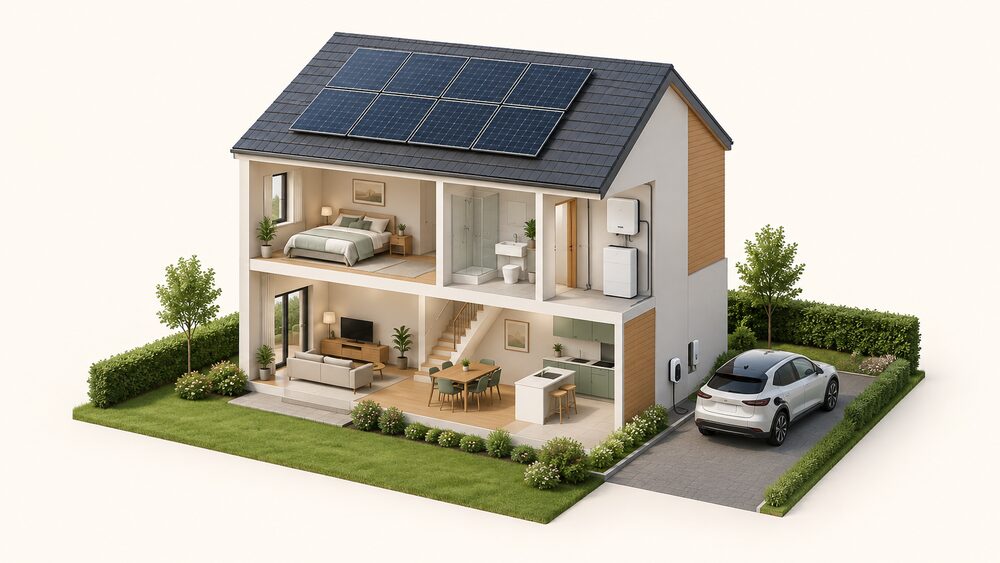 SolarEdge home EV chargersDoes a SolarEdge EV charger work better with your existing SolarEdge solar panels than other brands?
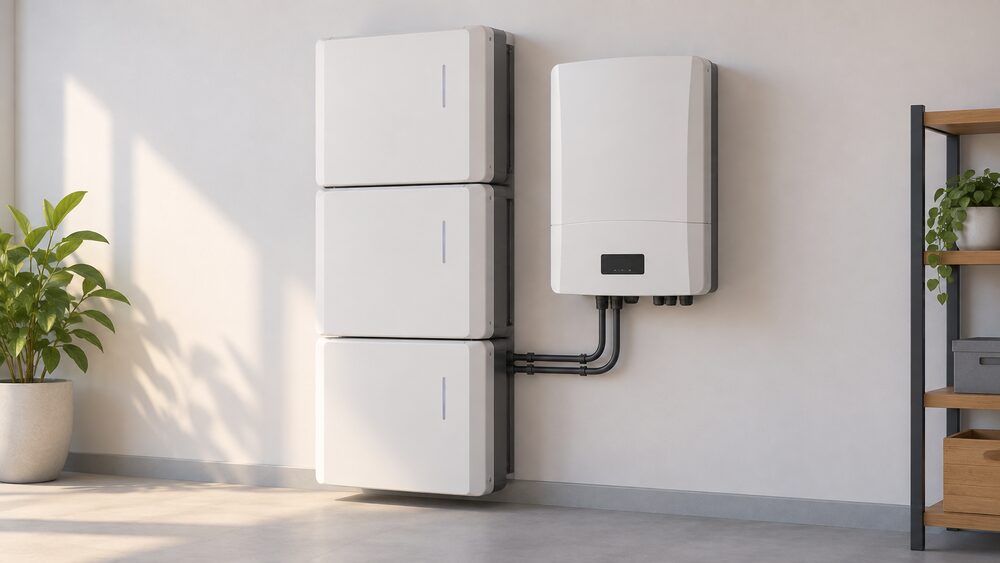 SolarEdge Home Batteries and Home Hub StorageCan you add a SolarEdge battery to panels you already have, and how many modules will fit your inverter?
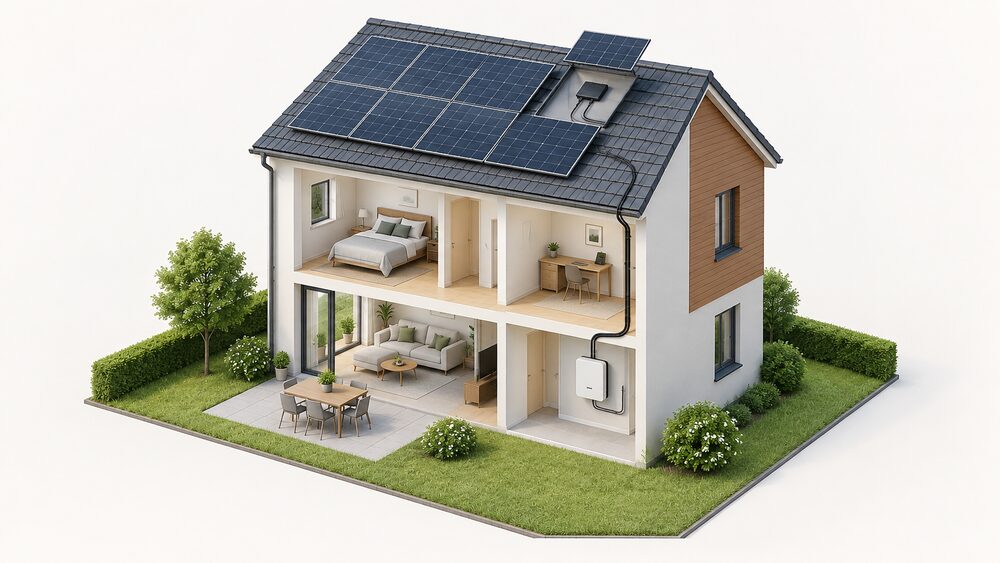 SolarEdge inverters and power optimisersSolarEdge systems pair an inverter with power optimisers on each panel.
 SolarEdgeIf one panel stops working, can you tell which one?