
In this answer
Short answer
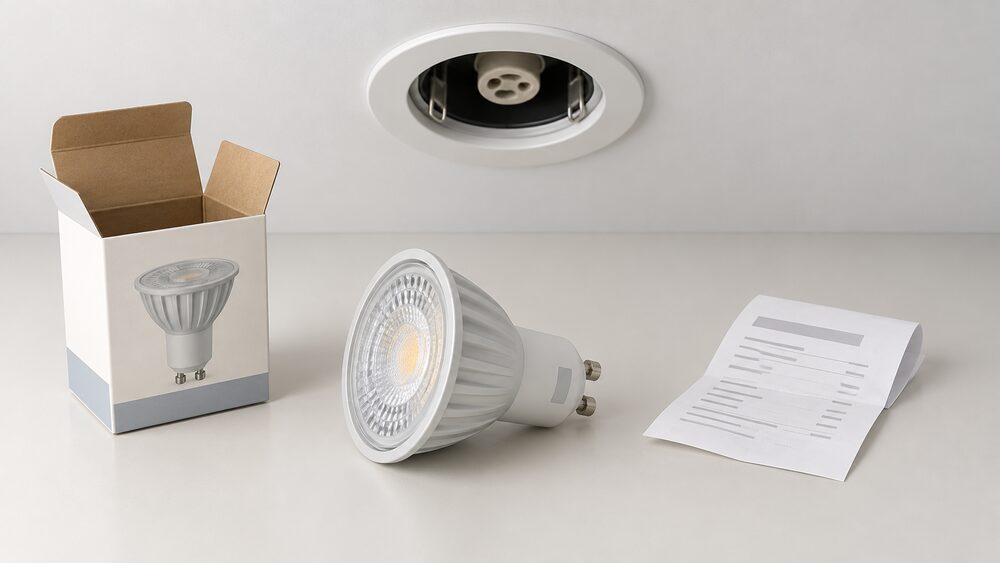
A recall of E0209 GU10 LED bulbs is a household electrical safety notice, and the action it asks for is a single one: stop using the affected bulbs, remove them from their fittings, and return them to the point of sale for a refund or replacement. Recalls of this kind are run through the retailer or distributor, and the remedy offered on comparable electrical recalls is a full refund of the purchase price or a replacement1.
The reason a bulb recall matters is the same reason any electrical recall matters. Recalled electrical items in this category have been linked to electric shock and fire risk, and safety bodies advise that anyone who discovers they have a recalled item stops using it until it has been checked by the manufacturer2. A GU10 bulb sits in a mains-voltage fitting, often in a ceiling or a downlight, and a fault there is not a minor inconvenience.
What follows sets out what the recall covers, how to identify an affected bulb, what refunds and replacements look like in practice, why the risk is taken seriously, and what a household can do if a retailer will not help. It also covers disposal, since an affected bulb should not simply go into the bin4.
What the E0209 GU10 LED recall covers
A recall notice of this type names the exact product, the model or models affected, and the batch or date range that falls inside it. The scope is defined by the notice, not by the shape of the bulb: a GU10 LED from one production run can be affected while an identical-looking bulb from another run is not.
Comparable electrical recalls show how the scope is drawn. One convector heater recall states that products displaying batch code 500907 are unaffected, which means every other unit in the affected range is caught7. A lithium battery charger recall carries recall numbers 22/43 and 23/43, identifying the specific notice rather than the product family2. An EV charging cable recall identifies the affected model by its listing code, B091GQK7MQ8. The pattern is consistent: a recall is bounded by a code, a batch, or a model identifier, and the household's job is to match its own product against that boundary.
Where a recall covers a range of variants, the notice lists them. Home battery recalls have named individual models such as RESU7H_Type C, RESU10H_Type C and RESU10H_Type R as affected, each subject to replacement of all potentially affected units9. That level of specificity is what a household should expect to see, and what it should check its own bulb against.
For a GU10 LED recall, the practical questions are therefore: which model numbers are named, which batch codes are inside the affected range, and whether the notice covers only the standard version or extends to other variants. If the notice does not name a variant, that variant is not covered by it.
How to tell if your bulbs are affected
Identification starts with the bulb itself. Batch codes and model identifiers are printed or etched on the body of the bulb, usually near the base or on the collar below the pins. The code is what the recall notice asks you to compare, and it is the only reliable way to tell affected stock from unaffected stock.
The wider lesson from electrical safety guidance is that visual inspection catches problems a code will not. Guidance on appliance checks before use advises looking for damage, poor maintenance, black marks, staining, unusual smells or condensation10. Guidance on electrical faults lists the smell of burning, buzzing sounds, flickering lights and plugs that become very hot to the touch when plugged into a socket-outlet as signs of overloaded circuits and electrical faults11. A GU10 bulb that shows scorching at the base, discolouration on the pins, or a burning smell is a bulb to stop using regardless of whether it falls inside a recall.
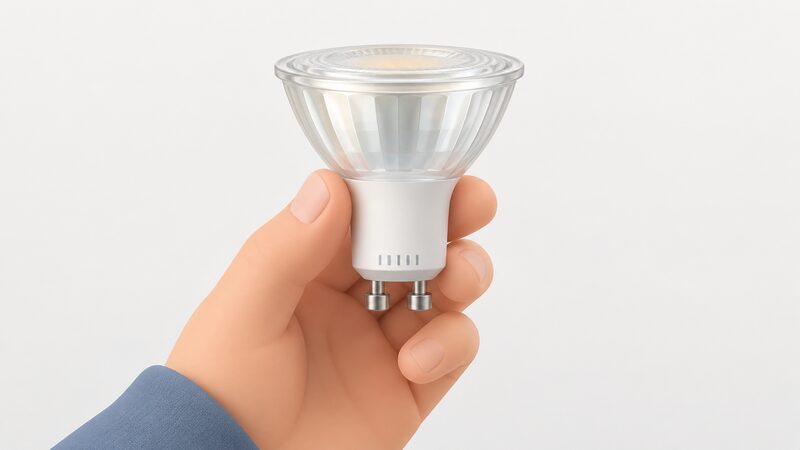
If the code is illegible, other clues help. Bulbs bought in a multipack often share a batch, so a code read from one bulb identifies the rest, and where the packaging has been kept the model number and batch are usually printed on the box as well. Warning signs at the fitting matter too: the smell of burning, buzzing sounds, flickering lights and plugs that become very hot to the touch when plugged into a socket-outlet are signs of overloaded circuits and electrical faults11.
Refunds and replacements: what to expect
The standard remedy on an electrical recall is a full refund of the purchase price or a replacement, returned to the retailer it was purchased from1. Some manufacturers run the return directly: one heater recall asks customers to return the item to the supplier or to the manufacturer for a refund12. Either route ends in the same place for the household, which is a refund or a replacement bulb.
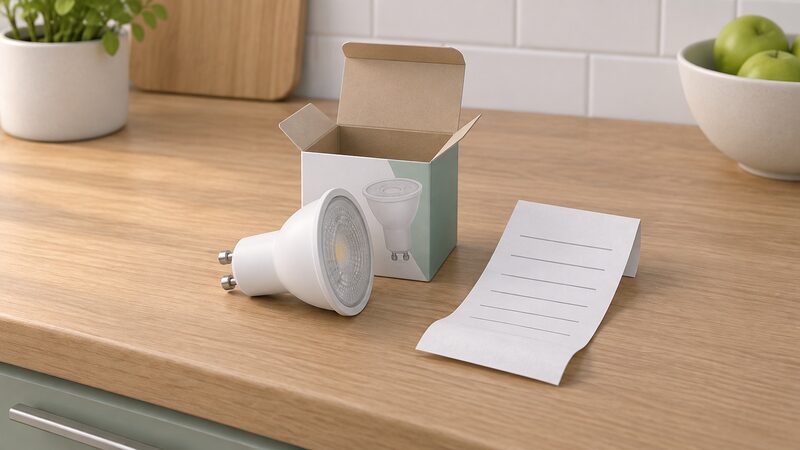
Warranties and guarantees sit alongside the recall. A warranty claim typically entitles the holder to a refund, repair or replacement, and usually requires proof of purchase, normally a receipt showing where and when you bought the goods5. That is a lower bar than a negligence claim, and it is the route most households will use.
| Route | What it provides | What it usually needs |
|---|---|---|
| Recall return | Full refund of the purchase price or a replacement1 | The affected product, returned to the retailer |
| Manufacturer return | Refund on return to the supplier or the maker12 | The affected product and the maker's instructions |
| Warranty claim | Refund, repair or replacement5 | Proof of purchase, usually a receipt5 |
| Compensation claim under £275 | Damages for loss caused | Proof that the maker or seller was negligent6 |
Recall notices also carry a contact route. One heater recall gives a manufacturer phone number, 01179 341 799, for further information12. A recall of this kind will publish an equivalent contact point, and that is the number or address to use if the retailer is unhelpful.
Fire and electric shock risk: why the recall matters
Recalled electrical products in this category are recalled because of a risk of electric shock and fire. The pattern across notices is consistent and worth setting out, because it explains why a bulb recall is treated as urgent rather than administrative.
One fan heater was recalled due to a risk of electric shock and burn hazard13. A greenhouse heater was recalled because water may enter the heater, posing a risk of electric shock and fire14. Heat mats were recalled for risk of electric shock15. A small oil filled radiator posed a risk of fire because the thermostat may become faulty and therefore not stop the product overheating16. A space heater recall described excessive heat build-up in the product's plug, resulting in damage to the plug and posing a risk to the user4. A lithium battery charger presented a serious risk of electric shock2. E-bike batteries and chargers were recalled for electric shock and fire3.
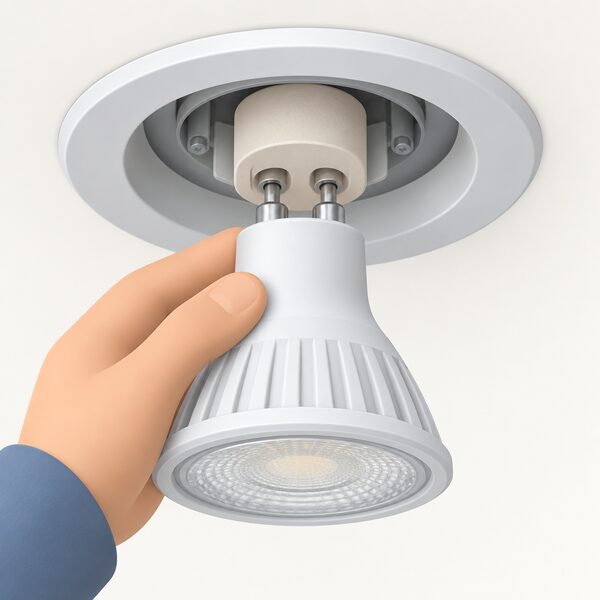
The common thread is heat and current at a connection point. A GU10 bulb draws mains current through two pins into a ceramic or plastic base, and a fault at that junction is exactly the kind of failure these notices describe. The risk is not confined to the bulb: a scorched base can damage the lampholder, and a damaged lampholder is a hazard in its own right.
"The product presents a serious risk of electric shock"
For a household, the independence question is straightforward. A recalled bulb is a small item, but the fitting it sits in is part of the home's fixed electrical installation, and a fault there is not something a household can manage around. Removing the bulb removes the immediate risk; the fitting should be inspected before a replacement goes in.
Your rights if a retailer will not help
Consumer law gives a household several routes when a retailer declines to act on a recall. The first is the statutory remedy. Under section 54, if a service does not conform to the contract, the consumer has the right to require repeat performance and the right to a price reduction17. For goods, the equivalent rights include repair or replacement and a price reduction18.
The second route is a compensation claim. For a claim of less than £275, the claimant may have to prove that the manufacturer or seller was negligent6. That is a higher bar than a warranty claim, and it is the route to use where a faulty product has caused damage rather than simply failed.
The third route concerns cancellation rights. Regulation 34 sets out when a diminished-goods deduction applies, and paragraph (9) does not apply if the trader has failed to provide the consumer with the information on the right to cancel required by paragraph (l) of Schedule 219. Regulation 29 sets out an exception where the value of goods has been diminished by consumer handling20. Regulation 27E provides a right to unwind where the consumer indicates to the trader that the consumer rejects the product, within the relevant period and at a time when the product is capable of being rejected, though that right does not apply if the consumer has already exercised the right to a discount in respect of the same prohibited practice21.
In practice, the sequence is: return the bulb to the retailer and ask for the recall remedy; if refused, ask in writing under the warranty; if that fails, consider a statutory claim. Consumer bodies advise contacting the seller for redress, with more information on the Government's website22.
Disposal, and what to do with a failed bulb
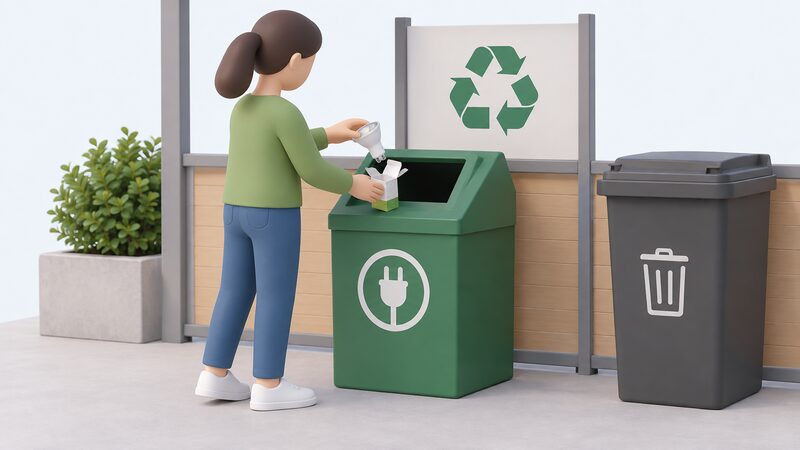
An affected bulb should not go into general domestic waste. Guidance on recycling electricals states that old electrical appliances should not be disposed of with general domestic waste and should be taken to a recycling facility which accepts electric and electronic appliances, in line with the WEEE Directive4. For a recalled bulb, the recall notice takes priority: return it as instructed, and recycle it only if the notice says to.
Where a bulb has already failed, or has scorched its fitting, the response is the same as for any faulty electrical product. Independent guidance is to unplug and contact the retailer, manufacturer, or a qualified repair technician4. Guidance on sub-standard or faulty chargers and batteries is to stop using the item immediately and report the fault to the manufacturer or retailer23. A scorched fitting should be inspected before any replacement bulb is installed.
For the household's energy independence, the recall changes nothing structural: a GU10 LED still runs on mains electricity from the grid, and the bulb's efficiency is unaffected by the recall. What the recall does affect is the safety of the fitting, and that is the part of the installation a household cannot substitute or work around.
Sources23 cited
- Igenix 2000W Oil Filled Radiator recall, Electrical Safety First, 2026-09-17
- Lithium Battery Charger szYB-100W-42V2A recall, Electrical Safety First, 2026-09-17
- HL R-Team E-Bike Batteries and Chargers recall, Electrical Safety First, 2026-09-17
- Recycling electricals and batteries, Electrical Safety First, 2026-09-17
- Claim using a warranty or guarantee, Citizens Advice, 2026-09-17
- Claim compensation if an item or product causes damage, Citizens Advice, 2026-09-17
- Convector heaters recall, Electrical Safety First, 2026-09-17
- EV charging cable SEVA-24016P recall, Electrical Safety First, 2026-09-17
- LG ESS Home Batteries recall, Electrical Safety First, 2026-09-17
- Holiday carbon monoxide safety tips, Northern Gas Networks, 2026-07-24
- Standby power: the hidden costs of vampire devices, NICEIC, 2026-01-28
- Bosmere N292 2KW Greenhouse Heater recall, Electrical Safety First, 2026-09-17
- Argos Simple Value 2kW Upright Fan Heater recall, Electrical Safety First, 2026-09-17
- Komodo Heat Mats recall, Electrical Safety First, 2026-09-17
- Electric radiator recall, Electrical Safety First, 2026-09-17
- Screwfix space and convector heaters recall, Electrical Safety First, 2026-09-17
- Consumer Rights Act 2015, Part 1, Chapter 3, legislation.gov.uk, 2026-09-17
- Consumer Rights Act 2015, Part 1, Chapter 4, legislation.gov.uk, 2026-09-17
- The Consumer Contracts Regulations 2013, regulation 34, legislation.gov.uk, 2026-09-17
- The Consumer Contracts Regulations 2013, regulation 29, legislation.gov.uk, 2026-09-17
- Consumer Protection from Unfair Trading Regulations 2008, regulation 27E, legislation.gov.uk, 2026-09-17
- Is your e-bike battery safe?, Electrical Safety First, 2026-09-17
- E-scooters safety advice, Electrical Safety First, 2026-09-17
 Lithium Battery SafetyLithium batteries power phones, e-bikes, scooters and home storage, and any of them can catch fire.
 Recalls and Safety NoticesWhich LG RESU home batteries have been recalled, and how can you tell if yours is one of them?
 Product RecallsHow recalls and safety notices work for energy equipment in UK homes, who issues them, how to check a product, and what replacement, repair and refund routes exist.
 Panel RecyclingWhat actually happens to a solar panel when it stops working, and what can a household do with one?
 Maintenance and FaultsWhat does it mean when your home battery starts beeping or showing a warning, and can you fix it yourself?
 Smart Meter Faults and FixesYour smart meter has stopped working.