On this page
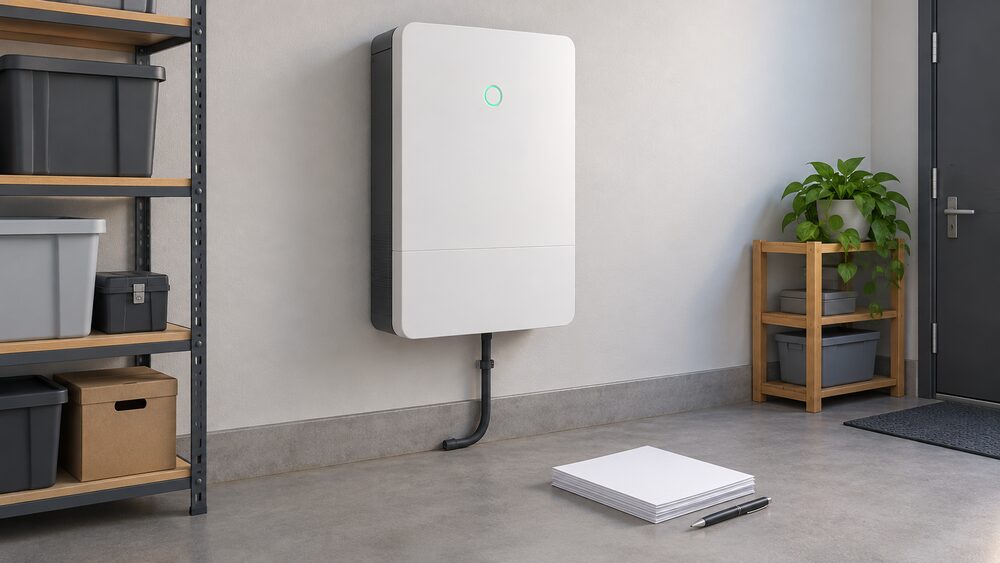
A home battery stores electricity so a household can use it later rather than buying it at peak prices or losing it altogether. With solar panels, the battery holds the surplus generated in the middle of the day for use in the evening; without panels, it can be charged cheaply overnight on a time-of-use tariff and run the home during expensive hours1. Either way, the point is the same: the household buys less electricity when the supplier sets the price, and more when it does not.
The numbers behind that shift are worth knowing before anything else. A typical domestic battery system of 4 kWh to 10 kWh costs between £2,500 and £10,000 fully installed in the UK3. A battery storing as much electricity as a household typically uses in a day can enable a solar PV system to provide up to 70% of the home's annual electricity demand4. In Coventry, fuel-poor households combining a home battery with a time-of-use tariff have saved more than £250 a year on average5. Around 20% of new solar installations in the UK now include battery storage6.
This page sets out how to choose rather than what to buy: how to size a battery, whether an all-in-one unit or separate components suit your home, what the grid connection rules allow, and how to check an installer and a tariff before committing. The UK has a strong domestic battery market, with no evidence that other battery companies plan to stop operating, which matters when you are judging warranties that run for a decade or more7.
What a home battery does for a household
Batteries are a way for homeowners to store excess electricity produced from their solar system1. Without one, surplus solar electricity is either wasted or exported to the grid, often at a relatively low rate; with one, that surplus is captured and held for when the household actually needs it, including overnight EV charging2. The battery turns intermittent generation into electricity the home can call on at 7pm in January as readily as at midday in June.
The independence a battery buys is real but partial. It does not generate anything: it shifts when a household draws from the grid, and the household remains connected to that grid, to a supplier for the electricity it still imports, and to the manufacturer whose warranty, app and software updates the system depends on. A battery also does not remove the household's exposure to fire-safety questions that apply to any lithium-ion product, the same chemistry family found in laptops, mobile phones, e-scooters and mobility vehicles in the average UK home8. Domestic batteries are principally lithium, but also use cobalt and nickel9.
The market context is encouraging for buyers. Domestic solar comprised 30% of UK solar capacity and 84% of total UK solar installations at the start of 20266, and April 2026 alone saw 23,000 new solar installations10. Solar energy and battery storage supported over 20,000 jobs across the UK economy in 2024, and the sector's contribution is projected to reach £5.0 billion GVA by 203511. A market of that size supports competition, spare parts and installers, which is itself a quality signal when you are choosing.
Capacity and power: how to size a battery

The starting point for sizing is how much electricity the household actually uses in a day, because a domestic battery system can store as much electricity as a household typically uses in a day4. A battery sized to that daily use, charged by solar or by an overnight cheap rate, can carry the home through the expensive hours. Undersizing leaves the household still buying peak electricity; oversizing means paying for storage capacity that never fills.
The typical UK domestic system sits between 4 kWh and 10 kWh, at a fully installed cost of £2,500 to £10,0003. Installation costs vary, so it is always best to get a quote from at least three installers3. Within that range, the right size depends on the use:
- Overnight EV charging from solar needs more stored energy than running a fridge and lights, because a car battery is itself a large store to fill.
- A time-of-use tariff needs enough capacity to bridge the whole expensive period, not part of it.
- A home without panels sizes the battery against the gap between the cheap and expensive rates, not against any generation.
Capacity is only half of the sizing question. The power rating, in kW, determines how many appliances the battery can run at once, and it is a separate figure from the energy stored. A full treatment of the two numbers, and of usable versus nominal capacity, is on our pages on battery capacity, power ratings and what size home battery you need. For a fuller picture of costs, see how much a home battery costs, and for the payback arithmetic, home battery savings and payback.
All-in-one systems versus separate battery and inverter
Every battery system needs an inverter to convert the battery's direct current into the alternating current a home uses. The first structural choice is whether that inverter comes in the same cabinet as the battery or as a separate unit wired to it.
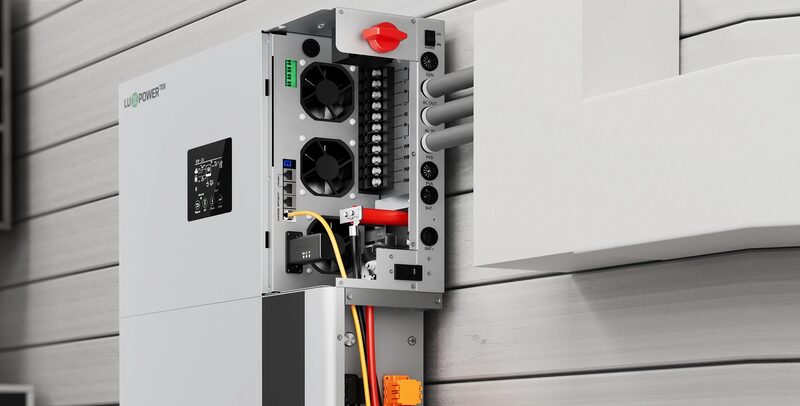
An all-in-one system combines the two. Sunsynk's Elite battery range, for example, is described by the maker as an "All-in-one hybrid inverter and LiFePO₄ battery system for intelligent energy management"12. The appeal is simplicity: one product, one installation, one point of contact for warranty, and typically a cleaner fit for homes where plant space is tight. The trade-off is that the battery capacity and the inverter power are fixed together at purchase, and an upgrade later usually means replacing the whole unit rather than adding a module.
A separate battery and inverter gives the opposite profile. Capacity can often be extended by adding battery modules, the inverter can be sized independently of the storage, and a failure in one component does not remove the other. The cost is more equipment, more wiring and two products whose warranties and software must work together. Our pages on all-in-one battery systems, modular and stackable batteries and AC and DC coupling set out the differences in full.
The new names entering the UK market
The UK's main solar and storage trade show, Solar & Storage Live UK at the NEC Birmingham in September 2026, gave a clear picture of which brands are arriving and what they are bringing.
| Brand | Product shown | Type | UK status |
|---|---|---|---|
| Solis | FlexAIO | All-in-one residential storage | UK debut, 22 to 24 September 202613 |
| Jackery | SolarVault 3 series | Home battery | First UK trade show appearance14 |
| Marstek | Venus E 4.0 | 3 kW, 5 kWh plug-in storage | Initial UK focus on the 5 kWh model15 |
For a buyer, new entrants cut both ways. A wider field means more price competition and more product types, including plug-in units aimed at households that would not consider a full installation, and the UK's strong domestic battery market means no shortage of choice7. But a brand new to the UK has no track record here: no established installer network, no history of warranty handling and no complaints record to inspect. A maker's own product claims describe the product; they are not evidence of how the company behaves after the sale. That distinction matters most for the warranty, covered on our home battery warranties page, and for the question of what happens if a manufacturer goes bust.
G98 and G99: the connection rules that shape what you can install
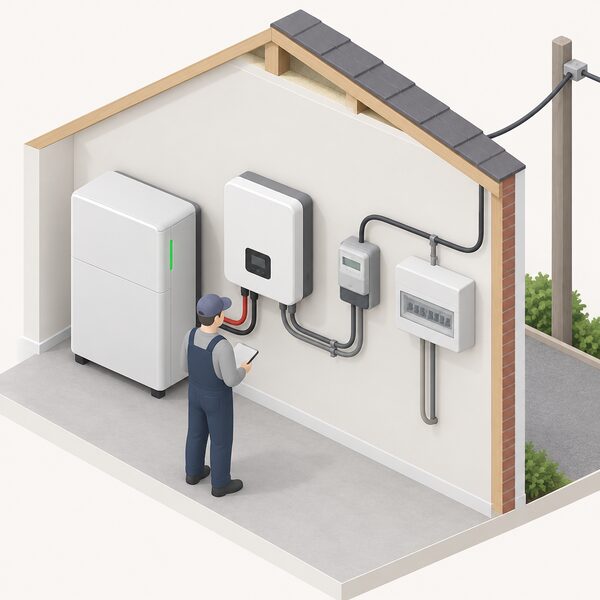
Any home battery, and any solar array it works with, must be notified or approved through the distribution network operator's connection procedures. These are the G98 and G99 routes, and they set hard limits on what can be installed and how quickly.
G98 covers smaller systems, while G99 is for larger systems16. The dividing line matters for households planning more than a modest setup: a larger system needs approval before connection rather than simple notification, which adds time to a project.
The practical consequences for a buyer are threefold. First, the connection route can determine the maximum inverter power a household can install without a longer process, so it belongs in the conversation at quotation stage, not after the equipment has been ordered. Second, an installer who cannot explain which route applies to your planned system is telling you something. Third, the rules are the same across Great Britain's distribution networks, so the route depends on the equipment, not on where you live. Our page on G98 and G99 for home batteries covers the process in detail.
Matching a battery to an energy tariff
A battery's saving depends on the tariff behind it as much as on the hardware. Smart storage battery tariffs are offered by several providers, including British Gas, E.ON Next and EDF Energy17. These tariffs pay a household to charge its battery when electricity is abundant and cheap, and let the household run the home from the battery when it is not.
The critical check before buying is compatibility: some tariffs only work with specific systems17. A battery that cannot respond to the tariff's signals, or whose manufacturer has not integrated with that supplier, cannot earn the rate. This is a genuine constraint on choice, and it should be confirmed in writing before any equipment is ordered, because it narrows the field of both tariffs and batteries.
The evidence that the combination works is strong where it has been measured. Fuel-poor households in Coventry combining a home battery with a time-of-use tariff have saved more than £250 a year on average5. That figure comes from a supported scheme rather than a typical private purchase, so treat it as an indication of what the combination can deliver rather than a promise. Our pages on which tariffs work with a home battery, stacking a battery with smart tariffs and Economy 7 set out the options, and batteries and grid services covers selling flexibility back to the grid.
Choosing an installer and getting the work recorded
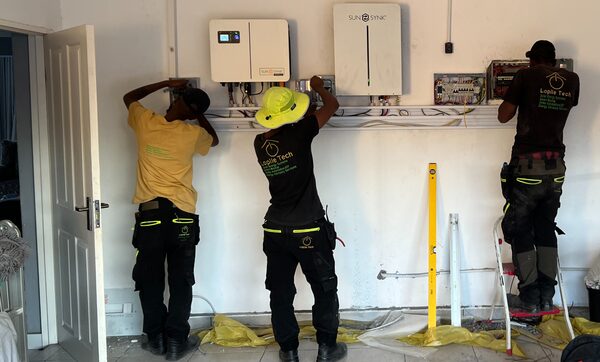
The installer matters as much as the battery. Official guidance across the UK's schemes points consistently to one register: consider searching a competent person register such as TrustMark, which lists installers who will assess your circumstances and property to identify suitable measures18. Green Homes Wales requires its installers to be registered with TrustMark as approved PAS 2030 installers, and where the installation involves a low carbon technology such as solar panels, to be TrustMark registered and certified with the Microgeneration Certification Scheme19. The Warm Home Discount (England and Wales) Regulations 2026 require relevant installations to be carried out by a person registered with TrustMark, with a certificate of lodgement issued by the operator of TrustMark20.
Getting a quote from at least three installers is advised, because installation costs vary3. Once the work is done, you can verify it was recorded: in England and Wales, domestic electrical installation work notified by a NICEIC electrical contractor to the local building control body is searchable through the checkmynotification site21. If a record cannot be found, chase the installer. Our pages on the installation process, the standards governing installation and the buying checklist cover what to expect at each stage.
What a supplier's complaints record tells you
Pairing a battery with a tariff ties the household to a supplier for years, so the supplier's record deserves a look before the choice is made. Larger suppliers publish complaints data: E.ON Next's Q2 2026 report shows 59,276 complaints opened and 59,138 resolved, with customer service the top complaint reason at 32.28%22. A supplier's own performance pages, and the Energy Ombudsman's published decisions, are the record to consult.
If a dispute does arise, the route is fixed. The Energy Ombudsman requires that you complain to the supplier first, and that you have sufficient evidence including the date you raised the complaint; the supplier's name must match the name on the bill23. The Ombudsman's case guidance lists what to have ready: your energy supplier's name, the name of the account holder, the account number and the date you first raised the complaint24. In Wales, the Nest home energy support scheme's complaints process asks for your contact details, background information so the issue is understood, and the impact the issue is having on you together with your preferred resolution25.
Sources25 sources
- What is solar energy?, Solar Energy UK
- Can solar panels charge electric cars?, The Consumer Protection Agency, 2026-04-15
- Everything you need to know about battery storage, Plymouth Energy Community, 2026-09-20
- Making the most of your solar PV panels, Centre for Sustainable Energy, 2026-08
- Warm Homes Loan scheme factsheet, GOV.UK, 2026-10-27
- POST-PN-0771: Domestic battery storage, Parliamentary Office of Science and Technology, 2026-06-25
- GivEnergy FAQs, Energy Saving Academy, 2026-04-17
- Lithium-ion batteries at home, North Wales Fire and Rescue Service, 2026
- Battery storage advice, Centre for Sustainable Energy, 2025-10
- Britain continues to break clean power records, GOV.UK, 2026-04
- Economic impact of solar and battery storage, Solar Energy UK, 2025-04
- Elite 5.1kWh Battery All-In-One, Sunsynk, 2026-09-17
- Solis UK debut of FlexAIO at Solar & Storage Live UK 2026, Solis, 2026-09-22
- Jackery debuts at Solar & Storage Live UK 2026, PR Newswire, 2026-09-22
- A closer look at Marstek's 5 kWh plug-in battery, PV Magazine, 2026-10-01
- Solar panel installation in Wandsworth, Fuse Energy, 2026-08-20
- Time-of-use tariffs explained, Which?, 2026-04-23
- ECO scheme home energy efficiency, Leeds City Council, 2026-09-20
- Green Homes Wales, Development Bank of Wales, 2026-09-17
- Warm Home Discount (England and Wales) Regulations 2026, legislation.gov.uk, 2026-03-27
- How to work with your tradesperson, NICEIC, 2026-09-17
- Our performance, E.ON Next, 2026-Q2
- Raise a dispute: British Gas Trading, Energy Ombudsman, 2026-09-19
- Creating a case with the Energy Ombudsman, Energy Ombudsman, 2026-09-20
- Nest home energy support scheme complaints policy, Welsh Government, 2024-04-01
 Home Battery Buying ChecklistWhat should a proper battery quote contain, which questions sort a good installer from a poor one, and what paperwork must you see before signing?