
In this guide
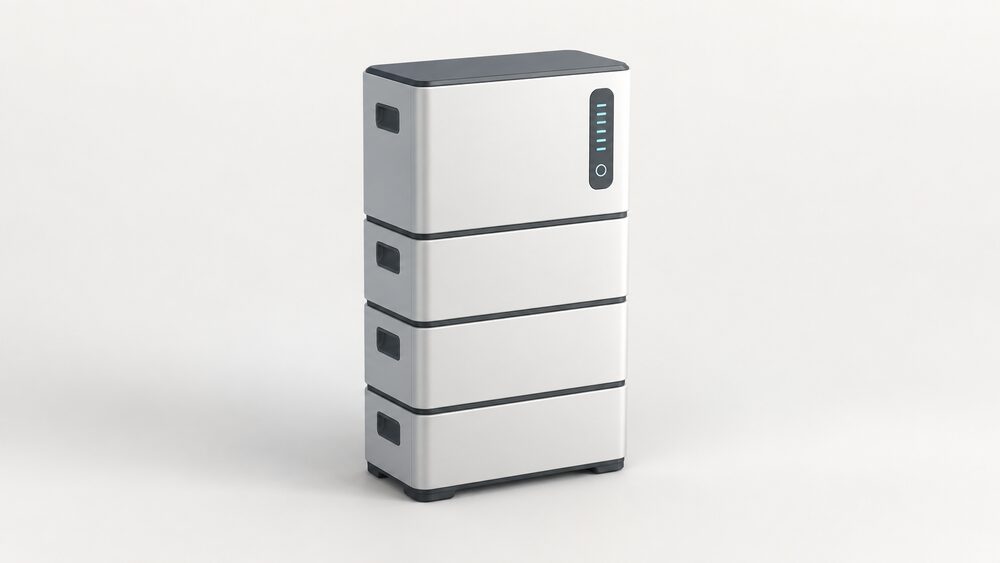
Marstek is a consumer battery brand that has entered the UK market through plug-in and stackable storage rather than through the installer-led route that established names use. Its Venus range is sold as a home battery that can be expanded with additional modules, and it has appeared in UK-facing comparison articles and collective purchase schemes. The brand sits in the same part of the market as other modular systems, where capacity is built up in stages rather than bought as one large unit.
What a Marstek battery does for a household is the same thing any home battery does: it stores excess electricity produced from a solar system so that it can be used later rather than exported1. That single function is what changes the economics of a solar home. Without storage, a household might only use 30 to 50% of what its panels generate2. Adding a battery to a solar installation increases self-consumption from 30 to 40% up to 70 to 80%, according to Great British Energy3.
The dependence that remains is worth stating plainly. A Marstek battery does not remove a household from the grid or from a supplier. It shifts when electricity is drawn, not whether it is drawn. Remote monitoring and tariff automation depend on a home broadband connection, the manufacturer's servers and an app. Support runs through the seller rather than a national service network, and the warranty depends on registration being completed by whoever supplied the unit.
What Marstek makes: home batteries and smart storage
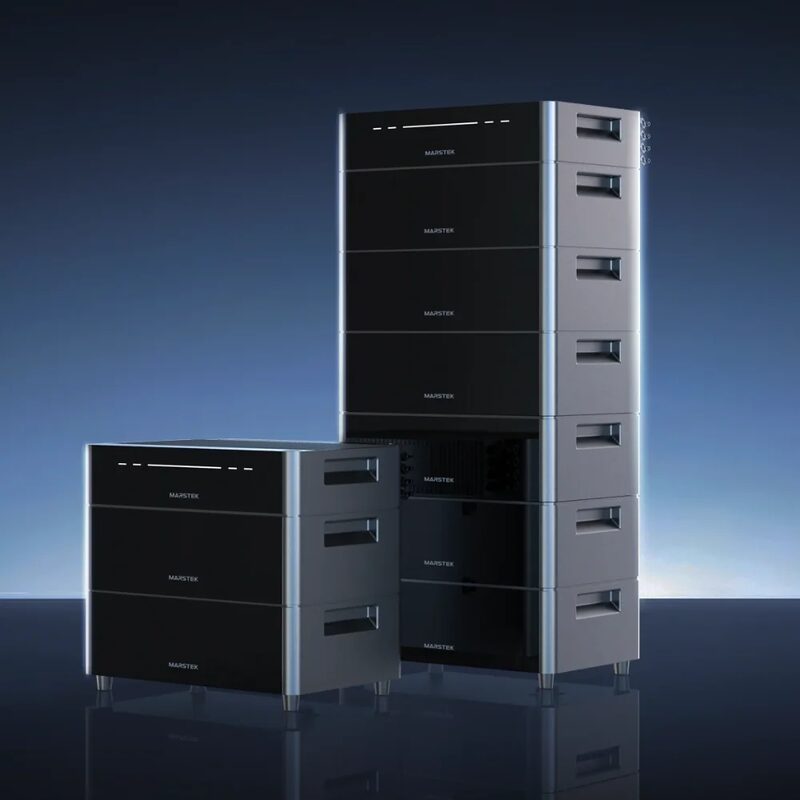
Marstek's product line is built around the idea that a household should be able to store excess energy to keep the home powered day and night8. That is the standard description of what battery storage is for, and it is the function the Venus range is sold to perform. The range includes a main battery unit and separate expansion modules, which is the modular approach: buy a base capacity, then add to it.
The wider context matters for judging the brand. Battery storage is now treated as a normal component of an energy efficient home rather than an add-on. The Energy Saving Trust's house of the future assumes the home uses battery storage and an EV battery to store electricity9. In Wales, the Cosmeston Farm development of highly energy efficient homes is powered by photovoltaic panels and batteries10. Marstek is competing in a market where storage is becoming standard equipment.
Smart storage is the second half of the proposition. A battery that only stores solar output is a passive device; a battery that charges on a cheap tariff and discharges on an expensive one is doing something active. That requires a control layer, either the manufacturer's own app or a third-party energy management system. The Energy Systems Catapult has looked at what makes home energy management work for consumers, and the finding that matters here is that automation has to be reliable enough that a household does not have to intervene11.
For a household's independence, the distinction is between energy and control. A Marstek battery increases the share of a home's electricity that comes from its own roof, which is genuine independence from the wholesale market. It does not reduce dependence on the grid as a physical backup, on a supplier for billing and export payments, or on the manufacturer for firmware, app access and fault diagnosis. Those dependencies are the price of the automation that makes the battery worth having.
The range at a glance
Marstek's UK-facing range centres on the Venus family. The Venus A, Venus D and Venus E 3.0 have been compared directly against other consumer batteries in published comparison work, and the Venus E 3.0 has been sold through a collective purchase scheme limited to 300 units12. That sales model is unusual: rather than a national retail listing, the brand has moved through organised group buys and specialist solar retailers.
The Venus D is sold both as a main unit and as an expansion module, which is how the stackable model works in practice. The published capacity figures for the Venus D are not consistent across the maker's own product pages: one states 15.36 kWh, another states 10.12 kWh13. Those figures cannot both describe the same product, and the maker's published numbers are unresolved until confirmed against the specific model and version being quoted.
| Product | Role | Published capacity | Status of figures |
|---|---|---|---|
| Venus A | Home battery | Not stated in reviewed material | Sold in UK comparison listings12 |
| Venus D | Home battery | 15.36 kWh or 10.12 kWh | Maker's pages disagree13 |
| Venus D expansion | Expansion module | Not stated in reviewed material | Sold as an add-on module13 |
| Venus E 3.0 | Home battery | Not stated in reviewed material | Collective purchase, 300 units12 |
The practical point is that a stackable system's headline capacity is a sum of modules, and the module figure is the one that matters when adding capacity later. Where a maker publishes two different capacities for the same product name, the household should ask the supplier to confirm in writing which version is being supplied and what the usable capacity is, as distinct from the nominal figure. The difference between nominal and usable capacity is covered in battery capacity and usable capacity.
Capacity and specifications: what the numbers mean
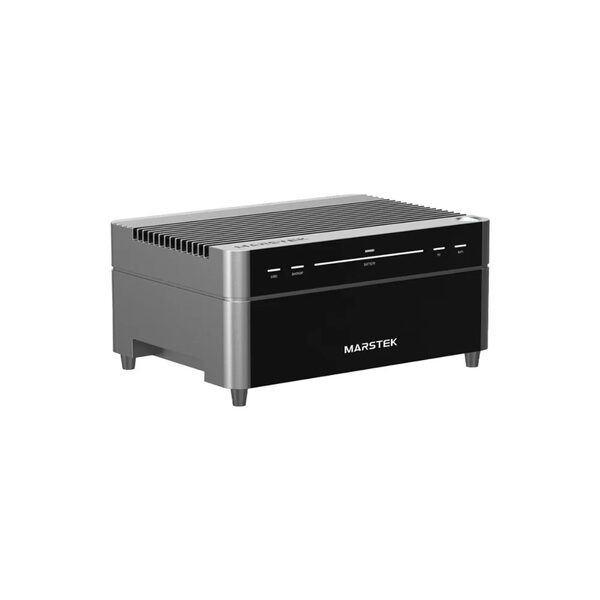
Capacity is the figure households fix on, and it is the one most often misread. A battery's nominal capacity is the total energy the cells hold; the usable capacity is what the system will actually let you draw, because the battery management system holds back a reserve at the top and bottom of the range to protect the cells. Official statistics on domestic battery installations group systems into bands chosen to cover distinct groupings: batteries approximately smaller than 6kWh, approximately larger than 11kWh, and a grouping in between6. Those bands are a useful way to place any quoted capacity.
For scale, one of the smallest home batteries sold in the UK is the Enphase AC Battery at 1.2kWh, with a 10 year warranty2. A Marstek Venus D at either of its published figures sits well above that, in the upper band. The gap between a 1.2kWh unit and a 15.36kWh unit is not a matter of degree: the small unit shifts a few hours of lighting and standby load, while the large one can carry a household through an evening and overnight.
Power rating matters as much as capacity and is often left out of marketing. A battery with a large capacity but a modest power rating will empty slowly, which is fine for overnight baseload but not for running an oven, a heat pump or a car charger at the same time. The relationship between kW, C-rate and charge and discharge limits is set out in battery power ratings.
Round-trip efficiency is the third number. Every battery loses some energy in the round trip from grid or solar into the cells and back out, and standby losses continue while the unit sits idle. Those losses are covered in round-trip efficiency. A household comparing two batteries of similar capacity should compare the efficiency and the power rating, not the capacity alone, because capacity without power and efficiency is a headline rather than a specification.
How a Marstek battery fits a home solar setup
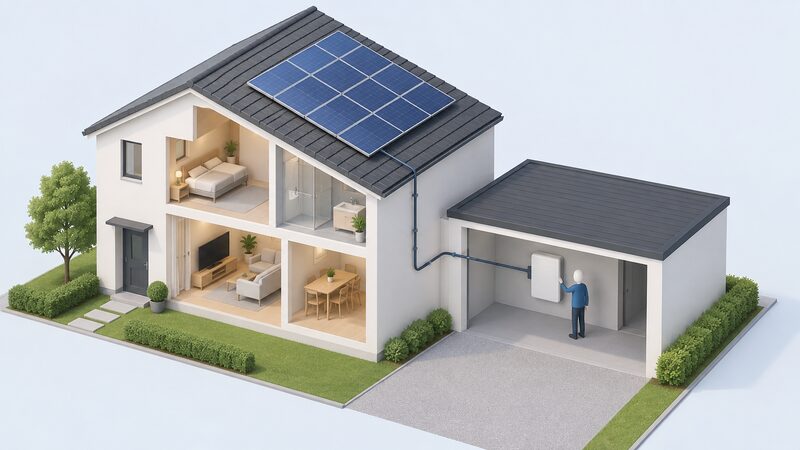
A home battery is designed to store excess electricity produced from a solar system1. That is the primary use case, and it is where the numbers are strongest. Without a battery, a household might only use 30 to 50% of what its panels generate2. With a battery, Great British Energy puts self-consumption at 70 to 80%, up from 30 to 40%3. The battery is what converts a solar array from a partial supplier into a substantial one.
The pairing also extends to other loads. Combining solar panels with a home battery lets a household store free, renewable electricity to power a heat pump, making it less reliant on grid electricity14. A home battery captures surplus solar energy for later use including overnight EV charging, whereas without it unused solar electricity is wasted or exported to the grid, often at a relatively low rate15. That last point is the one that changes the arithmetic: export rates are typically lower than import rates, so every unit kept and used on site is worth more than the same unit sold.
There is a scheme condition worth knowing. Domestic batteries can only be installed under the Warm Homes schemes where it complements existing or new solar PV16. In other words, where public funding is involved, a battery is not treated as a standalone measure. That is a policy view of what a battery is for, and it aligns with the self-consumption case.
Plug-in storage is a separate route. The government has consulted on plug-in solar systems that connect without batteries directly to a standard mains socket17, which shows the direction of travel for small-scale kit. A plug-in battery is a different proposition from a wired, installer-commissioned system, and the safety and regulatory position differs. That is covered in plug-in battery storage and are plug-in batteries safe.
Smart control: tariffs, automation and the app
A battery earns its keep on tariffs as much as on solar. The basic operation is to set the battery to charge up when electricity is cheap, and to discharge when electricity is expensive18. That is the whole mechanism, and it works whether the cheap electricity comes from an overnight rate or from a solar array.
Time-of-use tariffs are what make this worthwhile. Having an EV charger, heat pump or home battery makes smart tariffs much more valuable19. The tariff structures vary. Agile Octopus tracks half-hourly wholesale prices and updates its rates daily20. Intelligent Octopus Flux is a two-rate tariff with matching import and export prices and automated battery management, charging when power is cheapest and exporting between 4pm and 7pm21. The second model is the one built for batteries: it manages the battery automatically rather than leaving the household to watch prices.
For a Marstek battery, the question is whether the control layer can follow those signals. A battery that can be scheduled to charge in a cheap window and discharge in a peak window captures most of the value. A battery that can also respond to half-hourly price signals captures more, but only if the automation is reliable. The Energy Systems Catapult's work on home energy management found that consumer-facing control has to work without constant attention11.
The dependence this creates is real. Tariff automation depends on the battery's controller receiving price data, which normally means a broadband connection and the manufacturer's or a third party's servers. If the connection drops, the battery reverts to whatever local schedule it holds. Local control at the unit continues, but the tariff optimisation stops. Households weighing a battery on tariff savings alone should understand that the savings depend on a chain of software and connectivity that sits outside the home. The wider picture is in batteries and smart tariffs.
Cost and what affects the installed price
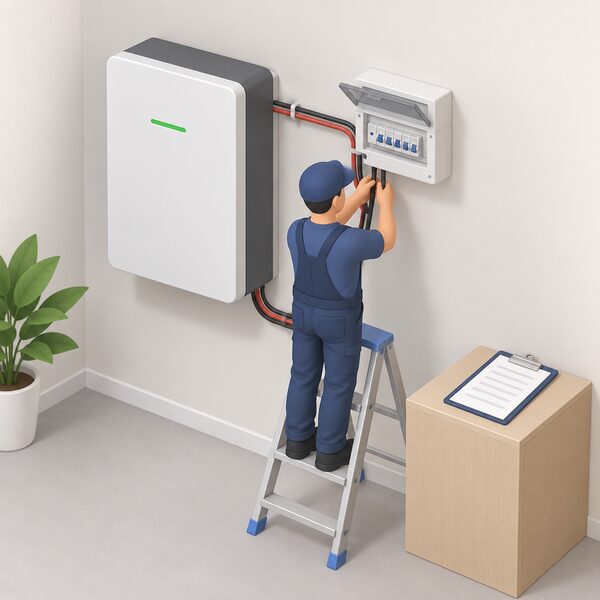
There is no published Marstek list price for a supplied and fitted battery in the material reviewed here, so prices are installer-quoted. What exists is the general market range, which is wide. Battery storage systems typically cost around £5,000 to £8,0004. A parliamentary briefing note puts battery storage at up to £10,000 depending on size, with a typical 5kWh system around £4,6003. A battery typically adds £2,500 to £5,000 to a solar installation2. For 8 to 10 kWh batteries, the installed price was £4,500 to £7,000 as at March 202622. The average cost for a battery storage installation listed on the Data Dashboard in 2025 was just around £9,0005. The up-front cost of installing a battery can be up to £2,544 more than the alternative23.
Those figures do not agree, and they are measuring different things: some are the battery alone, some the added cost to a solar job, some the full installed average. The spread is the point. A household should expect a quote that reflects the specific property, and should ask what is included.
| Source basis | Figure | What it covers |
|---|---|---|
| Energy Saving Trust, via briefing note | up to £10,000; typical 5kWh around £4,600 | Battery storage by size3 |
| Energy Saving Trust guidance | around £5,000 to £8,000 | Battery storage systems4 |
| Independent guidance | £2,500 to £5,000 | Added to a solar installation2 |
| ClimateXChange | £4,500 to £7,000 | 8 to 10 kWh installed, March 202622 |
| MCS Data Dashboard | just around £9,000 | Average installation, 20255 |
| NICEIC | up to £2,544 more | Additional up-front cost23 |
Three things move a quote: the capacity and number of modules, whether the installation is a retrofit to an existing solar system or part of a new one, and the electrical work needed to connect and protect the battery. A retrofit to an existing system is generally more involved than a battery fitted at the same time as the panels. The general cost picture is set out in how much does a home battery cost, and the way savings are calculated is in battery payback and savings.
Warranty and registration
Warranty terms for consumer batteries vary by maker and by seller, and the registration step is where claims are won or lost. The clearest published deadline in the material reviewed here comes from a Welsh scheme specification: inverter product registrations to activate guarantees and warranties are to be completed within 48 hours of commissioning7. That is a scheme rule rather than a Marstek term, but it shows how short the window can be and why registration should be treated as part of the installation rather than an afterthought.
For comparison, some battery-backed products carry long terms: a smart thermostat with an unreplaceable battery carries a twelve-year manufacturer's warranty under an approved innovation measure24. That is a different product class, but it illustrates that battery warranty length is a commercial choice rather than a technical limit.
The conditions that matter for any home battery warranty are the ones that void it: installation by a competent person, registration within the stated window, and compliance with the maker's operating requirements. The general framework is covered in home battery warranties, and the standards that govern installation are in battery installation standards.
What owning a battery means for energy independence
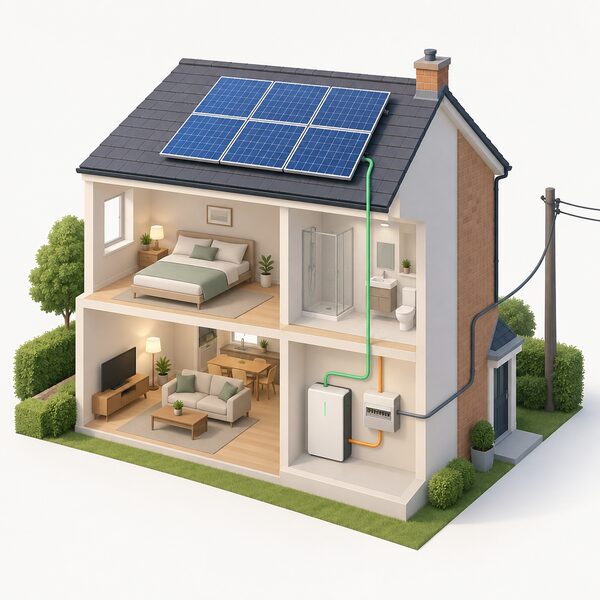
The independence a home battery delivers is measured as self-sufficiency: the percentage of electricity consumed in the property over a year which is met by either behind the meter solar or electrical energy storage27. A narrower definition is the fraction of electricity consumed in the property which is met by self-consumed electricity27. Both definitions exclude the grid, which is the point.
The gain is substantial but partial. Self-consumption rises from 30 to 40% to 70 to 80% with a battery3. Installing battery storage lowers the amount of electricity exported to the grid, meaning less income from export payments, but overall savings are greater than relying on export payments28. That trade is the core of the case: keep the unit and use it, rather than sell it cheap and buy it back dear.
What remains is dependence. The grid stays as the backup for everything the battery and panels cannot cover, and as the source of charge on a cheap tariff. A supplier remains for billing, for export payments and for the standing charge. The manufacturer remains for firmware, app access and fault diagnosis. Where a fault appears, the cause is not always the battery: solar inverter faults are listed among the symptoms of grid voltage mismatch29, which is a network condition rather than a product failure.
For a household, the honest summary is that a Marstek battery increases the share of electricity that comes from the home's own generation and shifts the rest to cheaper hours. It does not take the home off the grid, and it adds a software and support dependency that a passive solar array does not have. The broader picture is in home batteries and household energy independence and the pillar guide at home battery storage.
Sources29 cited
- Batteries in the home, Solar Energy UK, 2026
- Solar panels guide, Uswitch, 2026
- Battery storage and self-consumption, UK Parliament POST, 2026
- Storing energy, Energy Saving Trust, 2026
- Battery storage installation costs, MCS Certified, 2025
- MCS domestic retrofit battery installations 2025 to 2026, Department for Energy Security and Net Zero, 2026
- Barcud solar panel installation scheme specification, Sell2Wales, 2026
- MCS Certified consumers, MCS Certified, 2026
- House of the future, Energy Saving Trust, 2026
- UK's largest net zero housing development to be delivered in Wales, Welsh Government, 2025
- Making home energy management work for consumers, Energy Systems Catapult, 2026
- Solar energy Scotland manifesto, Solar Energy UK, 2026
- Marstek Venus product pages, Robinsun, 2025
- How to ensure a heat pump runs efficiently, Energy Saving Trust, 2026
- Can solar panels charge electric cars, The CPA, 2026
- Warm Homes schemes wave 3 guidance addendum, GOV.UK, 2026
- Plug-in solar consultation, GOV.UK, 2026
- Tariffs for renewable technology, Energy Saving Trust, 2026
- Should I switch to a time of use tariff, Energy Saving Trust, 2026
- How to choose the best energy company, Which?, 2026
- Smart Export Guarantee rates, Which?, 2026
- Balancing investment in clean heat and energy efficiency in Scottish housing retrofit, ClimateXChange, 2026
- Solar panel installation, maintenance and repair, NICEIC, 2026
- ECO4 innovation approved measures v1.17, Ofgem, 2026
- ECO4 innovation approved measures v1.11, Ofgem, 2024
- ECO4 innovation approved measures v1.10, Ofgem, 2024
- MCS 032 self-consumption calculation, MCS Certified, 2025
- Battery storage, Home Energy Scotland, 2026
- Managing voltage changes in your property, Electricity North West, 2026
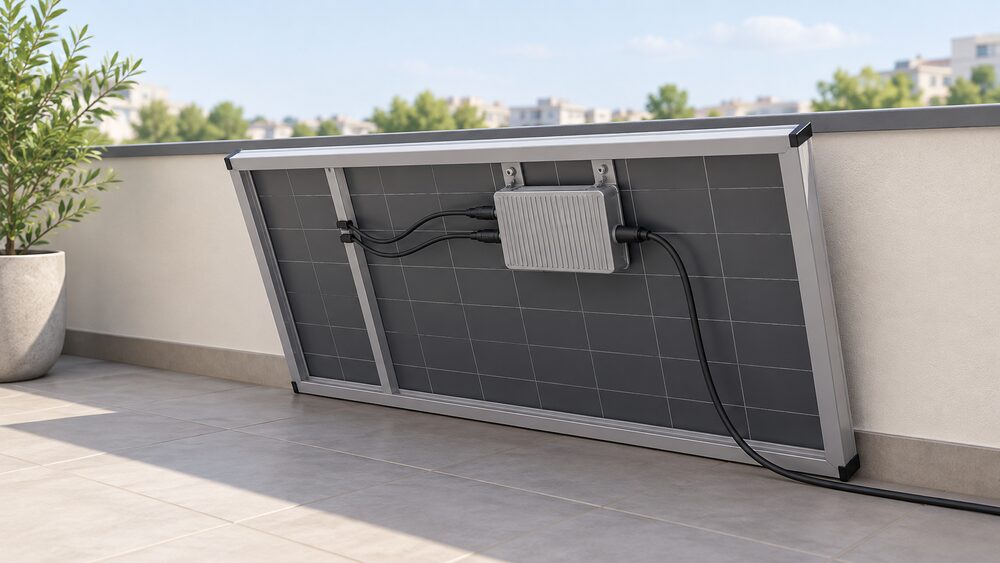 Marstek microinvertersThinking about a balcony solar kit with a Marstek M2-800?