
In this guide
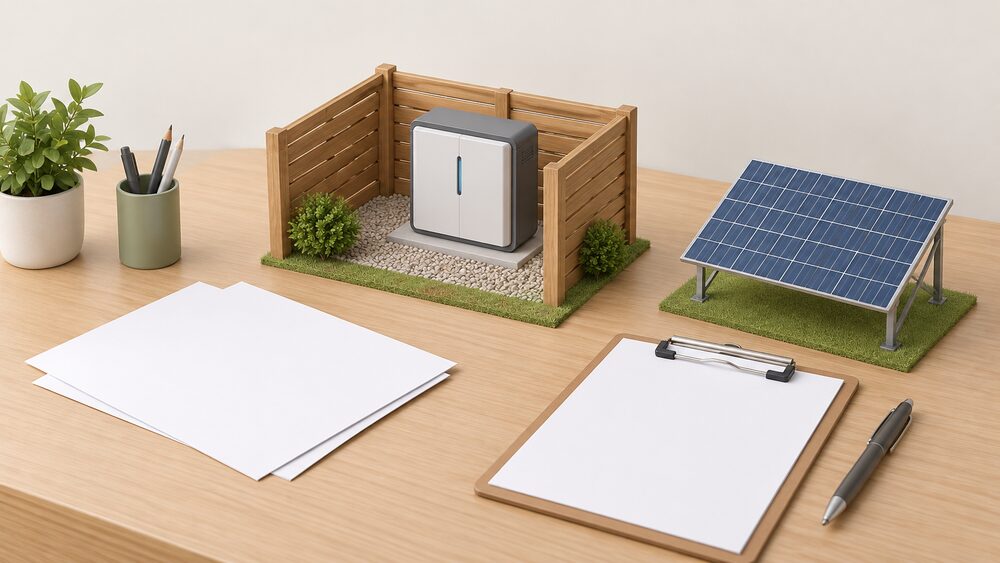
There is no permitted development right in Wales that names domestic battery storage on its own. A battery fitted inside a dwelling, or inside an existing outbuilding, normally raises no planning question at all. A battery in a separate garden enclosure, or a unit bolted to an external wall, is assessed as a building or structure under the general rules, and the answer comes from the local planning authority rather than from a national class.
What Wales does have is a set of recently updated permitted development rights for solar, and those matter to batteries because most domestic batteries are bought alongside an array. The stand-alone solar right was updated on 27 August 2026, with a 12-month transitional period ending on 27 August 2027 during which either the old rules or the new rules may be followed1. Only the first stand-alone solar installation is permitted development; further installations require planning permission1.
The practical position for a Welsh household is therefore: check the designation of the property, check whether the battery sits inside or outside the building, and ask the duty planning officer before ordering equipment. Wales also has a large grid-scale battery sector, with 23 battery energy storage projects having received planning permission and two under construction, amounting to more than 1 GW of capacity2.
What permitted development means for battery storage in Wales
Permitted development is a national grant of planning permission. Where a class applies, a household does not submit an application and does not pay a fee; where no class applies, the work needs consent. The Welsh Government maintains its own permitted development regime, and it has been actively revising it. A 2025 consultation sought views on proposed changes to various permitted development rights in Wales, covering air source heat pumps, off-street parking electric vehicle charging units, temporary camp sites, development by statutory undertakers for electricity, emergency affordable housing and meanwhile uses, and the definition of major development3.
That list is instructive for batteries. Heat pumps and electric vehicle charging both sit close to battery storage in the sense that they are small electrical equipment installed at a dwelling, and both have been the subject of Welsh permitted development work. The Welsh Government's own heat strategy states that the current permitted development rights related to heat pumps are a barrier to heat pump installation rollout4. A separate Welsh Government report identifies the biggest constraint for air source heat pump deployment in Wales as the 3 m permitted development rights rule, alongside the existing volumetric constraint in Wales of 1 m³5. Those constraints are specific to heat pumps, but they show how Welsh permitted development limits have been drawn more tightly than the equivalent English classes.
For a battery, the consequence is that the household cannot point to a named class and stop there. The equipment is assessed under the general provisions for buildings and structures within the curtilage of a dwellinghouse, and the local planning authority's view of the enclosure, its height, its distance from the boundary and its position relative to the highway all bear on the outcome. The Welsh Government's own guidance on solar panels is the natural starting point, and it is written for Wales rather than adapted from England6.
Permitted development rights for stand-alone solar: the updated rules
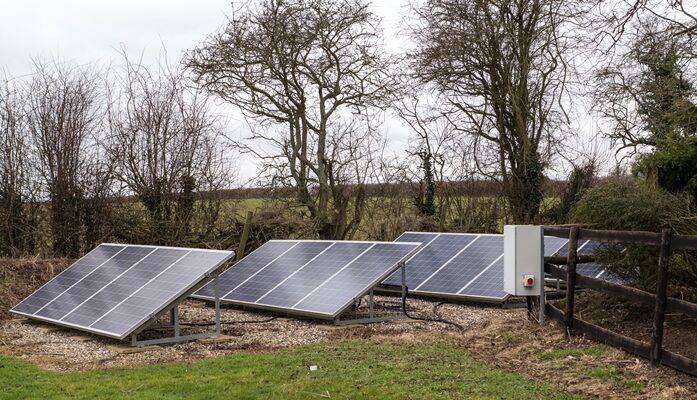
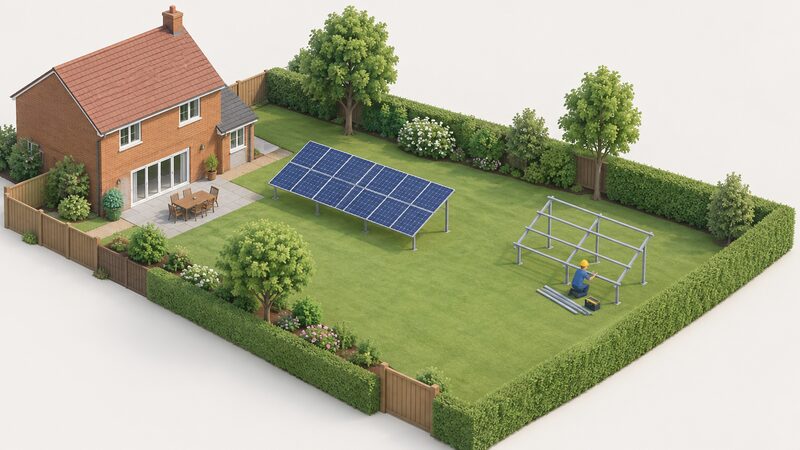
The permitted development right for stand-alone solar equipment within the grounds of a house or block of flats was updated on 27 August 20261. Stand-alone means panels not mounted on a building: a ground-mounted array in the garden, or a structure in the grounds. The Welsh Government's own page on planning permission for solar panels confirms that standalone solar panels are permitted development provided that they comply with the listed conditions6.
The conditions are where the detail lives. Following the 2026 changes, equipment must be no more than 1 metre in height when it is within 5 metres of the boundary and situated on land forward of the principal elevation of the house1. That single condition does most of the work in a typical suburban garden, because a ground-mounted array placed in front of the house and close to the pavement will usually exceed it.
The Welsh non-domestic thresholds give a sense of scale for the wider regime: permitted development rights are applicable for installations where capacity does not exceed 50kW for the generation of electricity and 45kW for the production of heat7. Those figures govern non-domestic solar photovoltaic and thermal panels, not a household array, but they show the capacity bands the Welsh system uses.
For a household, the sequence is straightforward. A roof-mounted array on a house is the least constrained option. A ground-mounted array is permitted only for the first installation and only within the height and siting conditions. A battery added to either is a separate question, and the enclosure that houses it is the part most likely to attract attention.
The transitional period: old rules or new rules, which apply to you

The 2026 changes did not take effect abruptly. The Planning Portal states that a 12-month transitional period has been added, ending on 27 August 2027, and that until this point a household can follow the rules as they were immediately prior to 27 August, or the new rules1. The Planning Portal's news summary of the same changes gives the deadline as 26 August 2027 and describes the option as available for 12 months8. The two published dates differ by a day.
The transitional choice matters where the old rules were more generous for a particular layout. A household that began a project under the previous regime, or that has a design which fails a new condition but satisfied the old one, has until the end of the transitional period to rely on the earlier rules. After that point the amended rights govern.
Wales runs transitional arrangements of its own in building regulations, and they follow a similar pattern. The Building etc. (Amendment) (Wales) Regulations 2026 provide that building work must have already commenced or be started within 12 months of the Regulations coming into force, and that the changes will not apply to work where building control approval has been sought before 1 July 20269. Earlier Welsh building regulations used the same structure: the amendments do not apply where work has commenced or starts within 12 months of the Regulations coming into force, subject to the stated notification condition10. A building notice or an initial notice must have been given, or full plans deposited, before the regulations come into force, and work must start within 12 months11.
The pattern across both planning and building regulation is consistent: Wales protects projects that are genuinely under way, and the protection is time-limited. A household that has commissioned a survey and deposited plans is in a different position from one that is still considering a purchase.
Prior approval on article 2(3) land: when the 5 metre rule applies
Article 2(3) land is a statutory category. The Town and Country Planning (General Permitted Development) (England) Order 2015 lists Article 2(3) land, Article 2(4) land and Article 2(5) land in Schedule 112. The category covers designations such as conservation areas, areas of outstanding natural beauty and National Parks. Whether a specific address falls inside one of those designations is a question for the local planning authority, which holds the definitive maps.
On article 2(3) land the stand-alone solar right is qualified. Following the 2026 changes, if solar equipment is to be installed on article 2(3) land within 5 metres of the boundary of the curtilage, the developer must apply to the local planning authority for prior approval1. The 5 metre rule and the article 2(3) designation therefore work together: the designation triggers the requirement, and the distance from the boundary determines whether it bites.
Prior approval is not the same as a full planning application. It is an application to the planning authority for a determination as to whether the authority's prior approval will be required, and where it is, on design and siting. The Scottish Class 9M rules for solar canopies, battery storage and equipment housing for recharging vehicles show how such a regime is written: the developer applies for a determination, and the authority has 28 days from receipt of the application to decide13. Class 9M also sets a combined size limit of 58 cubic metres for all battery storage units and all pieces of equipment including equipment housing but excluding cabling, a maximum height of 4 metres for the development or 3 metres for parts other than a solar canopy from the parking surface, a minimum distance of 5 metres from a road, and a restriction within 3 kilometres of the perimeter of an aerodrome or technical site13. Those are Scottish figures for qualifying parking areas, not Welsh domestic rules, but they illustrate the shape of a prior approval regime and the kind of limits that accompany it.
In England, non-domestic solar installations have been allowed in front of buildings up to 2m in height on Article 2(3) land, subject to prior approval7. That is an English provision and does not apply in Wales.
Only the first installation is permitted development
The single most consequential limit in the stand-alone solar right is the count. Only the first stand-alone solar installation will be permitted development, and further installations will require planning permission1. The same wording appears in local authority guidance dating from 2022, which states that only the first stand-alone solar installation will be permitted development and that further installations will need planning permission15.
The rule is a count of installations, not a count of panels. A household that installs a ground-mounted array and later wants a second, separate ground-mounted structure has moved outside the permitted right, even if the second structure is small. The Planning Portal's guidance on stand-alone solar equipment is explicit that a household needs full planning permission for flats, or householder planning permission for houses, when a trigger applies, and that one trigger is that more than one stand-alone solar panel would be installed16.
There is a practical consequence for batteries that is easy to miss. A battery added to an existing array is not the same as a second solar installation. Guidance from a UK solar scheme confirms that households with existing solar panels can register to have battery storage added to their existing solar panels15. The battery is additional equipment on an existing system, not a further stand-alone solar installation, so the count limit does not by itself bar it.
Where a household does want a second array, the route is a householder planning application to the local planning authority. The application is assessed on its merits, including visual impact, and the outcome is not guaranteed. The Welsh solar market is large enough that this affects a meaningful number of homes: 108 MW of new solar PV capacity was installed in Wales in 20232, and total solar PV capacity in Wales was already over 1.1 GW across almost 64,000 individual projects by 202117.
How battery storage planning differs from solar panel rules
Solar panel rules and battery rules are not the same, and the difference is structural rather than a matter of degree.
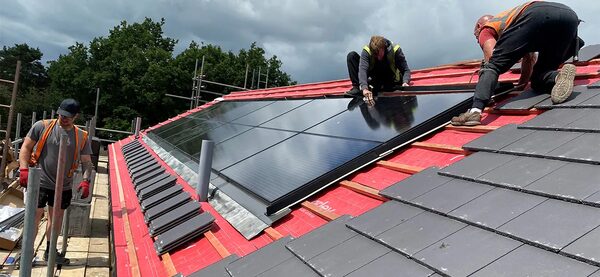
Solar panels on a roof are usually permitted development. Homes can often have solar panels without requiring planning permission from the council, covered by permitted development so long as certain conditions apply18. Placing solar panels on the roof of a house or flat, or on a building within the grounds, is considered in most cases permitted development under the Town and Country Planning (General Permitted Development) (England) Order 2015, Schedule 2, Part 14, Class J16. The permitted development rights relating to solar panels are set out as Class A and Class B for domestic premises18.
Batteries have no equivalent named class in the Welsh regime. The nearest analogue in the legislation is the Scottish Class 9M, which expressly covers battery storage alongside solar canopies and equipment housing for recharging vehicles13. Northern Ireland has its own classes: Class C covers the installation, alteration or replacement of stand alone solar within the curtilage of a dwellinghouse, and Class B covers solar PV or solar thermal equipment on a dwellinghouse wall, a wall of a building within the curtilage, or any wall within the curtilage19. Those are Northern Ireland provisions under the 2015 rules and do not extend to Wales.
The second difference is that solar has a clear capacity threshold in the Welsh non-domestic regime, at 50kW for electricity generation and 45kW for heat production7, while a domestic battery has no published Welsh threshold at all. A household therefore cannot test a battery against a number.
The third difference is building regulations. Solar panel installation engages building regulations for the associated electrical works15. In Wales, the Building Regulations etc. (Amendment) (Wales) Regulations 2022 require confirmation to be given to a local authority that a system for on-site electricity generation has been commissioned10. Building regulations in Wales probably apply if a household wants to put up a new building, extend or alter an existing one, and they may also apply to certain changes of use of an existing building20. A battery enclosure that is a new structure, or a conversion of part of a building, can therefore engage building regulations as well as planning.
| Question | Solar panels on a roof | Stand-alone solar in the grounds | Domestic battery |
|---|---|---|---|
| Named permitted development class in Wales | Class A and Class B for domestic premises18 | Updated right, 27 August 20261 | None specific to Wales |
| Count limit | Not a count limit | Only the first installation1 | Not applicable |
| Height condition | Conditions apply18 | 1 metre within 5 metres of the boundary, forward of the principal elevation1 | Assessed as a structure |
| Article 2(3) land | Prior approval where within 5 metres of the boundary1 | Prior approval where within 5 metres of the boundary1 | Local authority assessment |
| Building regulations | Associated electrical works15 | Associated electrical works15 | Commissioning confirmation required10 |
Large-scale context: the 23 battery energy storage projects in Wales
Wales has a substantial grid-scale battery sector, and its scale is worth understanding because it shapes how local planning authorities read battery applications of any size. In Wales, 23 BESS projects have received planning permission, and two are currently under construction, amounting to more than 1 GW of BESS capacity2. Wales now has 73 MW of battery storage capacity2.
The pipeline has been building for years. In 2022 there were 11 projects with a capacity greater than 150 kW with planning permission or under construction in Wales, plus nine applications submitted, two of almost 50 MW17. At that point there were three commercial-scale batteries in Wales currently operational, with a total power capacity of 26.6 MW17. The growth from 26.6 MW operational to 73 MW of capacity, with 23 projects consented, is the shape of a market moving from demonstration to deployment.
Wales also stores energy at very large scale in another form. Wales is home to two operational pumped hydropower energy storage sites, with approximately 11 GWh of storage capacity2. That figure dwarfs anything battery storage will contribute in the near term, and it is a useful corrective to any assumption that grid-scale batteries are the whole of Welsh storage.
The wider renewable picture sets the context. In 2023, 176 MW of renewable energy capacity was installed in Wales, comprising 109 MW of new renewable electricity capacity and 67 MW of new heat technologies2. In 2021, 116 MW of renewable electrical capacity and 29 MW of renewable heat capacity was installed17. The Welsh Government has a target for at least 1.5GW of renewable energy capacity to be locally owned by 2035, excluding heat pumps21. Locally owned renewable energy in Wales totalled 89,632 estimated projects by 20232, and in 2021 stood at 78,373 projects, 581 MWe, 316 MWth and 1,928 GWh17.
The planning system's own capacity is part of the story. The time it takes from conception of a renewable energy scheme to being brought into use is long, up to 15 years22. The Welsh Government has set an aim that by 2025, where renewable energy planning applications have a mandated, statutory time allocation, decisions should be delivered within it22. A household battery application sits at the opposite end of the scale from a 15-year scheme, but it shares the same planning authority.
Checking with your local planning authority before you install
The duty planning officer service is the correct first stop. Local authority guidance is consistent that a household in a conservation area should check with the planning department first, through the duty planning officer service14. The same principle applies to any property whose designation is uncertain, and to any battery enclosure whose status is unclear.
The questions worth putting to the authority are specific. Is the property on article 2(3) land, and if so which designation applies? Is the proposed battery enclosure a building or structure requiring consent in its own right? Does the enclosure sit forward of the principal elevation, and how far is it from the boundary? Is the property in a conservation area, and would the equipment be visible from the highway? Planning consent is required when panels are fitted on the principal or side elevation walls and are visible from the highway in a conservation area or World Heritage Site6, and in some cases, such as in conservation areas and on listed buildings, planning permission may be required15.
Listed buildings raise a further layer. A local listed building consent order in the Royal Borough of Kensington and Chelsea, made under the Planning (Local Listed Building Consent Orders) (Procedure) Regulations 2014 and Sections 26D to G and 28A and Schedule 2A of the Planning (Listed Buildings and Conservation Areas) Act 1990, requires that details of the position, size, fixing, colour and finish of the solar PV array and associated equipment shall be submitted to and approved in writing by the Local Planning Authority before works commence22. That order runs for a period of no more than 5 years from its starting date22. It is an English local order and does not apply in Wales, but it shows the level of detail a listed building consent regime can demand of associated equipment, which is the category a battery falls into.
Wales has its own consultation culture on these questions. Before creating a smoke control order, a local authority must consult those affected by the change and take their comments into consideration, and the guidance recommends informing the Land Registry of smoke control areas, although this is not a legislative requirement22. The same instinct, that a household should know what designation applies to its property, is the reason to ask before installing rather than after.

What this means for a household's energy independence
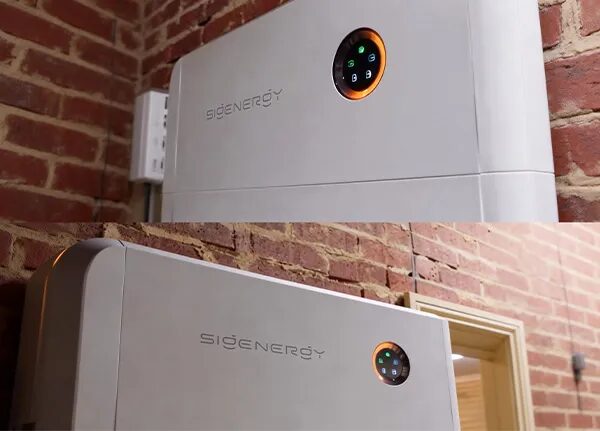
A battery moves a household's energy independence in a specific direction: it lets a home store what it generates and use it later, rather than exporting at whatever price the supplier offers and buying back at the retail rate. That is the independence a battery delivers, and it is real. What it does not deliver is independence from the grid. A grid-connected battery still relies on the network for the periods it cannot cover, on a supplier for the tariff that makes the arithmetic work, and on a manufacturer for the monitoring app and, in many cases, the warranty service.
Planning is the gate in front of that. In Wales the gate is narrower than in England because there is no named domestic battery class, and because the stand-alone solar right carries a count limit and a height condition that a garden installation can easily breach. The transitional period ending on 27 August 2027 gives a household that is already committed a route to rely on the earlier rules, but it is a deadline rather than an open option1.
The dependence that remains after installation is worth stating plainly. The battery is a manufactured product with a warranty, a monitoring platform and a service network, and the household's ability to use it depends on all three continuing. The grid connection remains, and the network operator's notification process applies to the connection as it would to any generation. Building regulations in Wales require confirmation to a local authority that a system for on-site electricity generation has been commissioned10, which is a step in the process rather than an optional extra.
For a household weighing a battery in Wales, the sequence that follows from the rules is: establish the designation of the property, establish whether the enclosure is a structure requiring consent, establish whether the installation is the first stand-alone solar installation on the site, and establish whether the transitional period applies. Those four questions determine whether the project is a permitted development, a prior approval application or a householder application. The answers come from the local planning authority, and they come before the equipment is ordered.
Sources22 cited
- Planning permission: stand-alone solar equipment, Planning Portal, 2026-09-17
- Energy generation in Wales 2023, Welsh Government, 2025-02
- Changes to permitted development rights, Welsh Government, 2025-04-08
- Draft heat strategy for Wales, Welsh Government, 2023-08
- Air source heat pump noise and permitted development rights in Wales: phase 1 report, Welsh Government, 2023-12-13
- Planning permission: solar panels, Welsh Government, 2026-09-17
- Permitted development rights and non-domestic solar photovoltaic and thermal panels, Welsh Government, 2025-12
- Changes to permitted development rules for domestic solar installations, Planning Portal, 2026-08-28
- The Building etc. (Amendment) (Wales) Regulations 2026, Welsh Government, 2026-03-06
- The Building Regulations etc. (Amendment) (Wales) Regulations 2022, Welsh Government, 2022-05-24
- The Building Regulations (Amendment) (Wales) (No.2) Regulations 2022, Welsh Government, 2022-09-29
- The Town and Country Planning (General Permitted Development) (England) Order 2015, legislation.gov.uk, 2015-03-18
- The Town and Country Planning (General Permitted Development) (Scotland) Amendment Order 2024, legislation.gov.uk, 2024-05-24
- Solar panels and planning permission, Wirral Council, 2026-09-17
- Solar Together Norfolk, South Norfolk and Broadland Council, 2026-09-17
- Solar panels guidance, City of York Council, 2026-09-17
- Energy generation in Wales 2021, Welsh Government, 2022-12
- Solar panels guidance, Islington Council, 2026-09-17
- The Planning (General Permitted Development) Order (Northern Ireland) 2015, legislation.gov.uk, 2015-03-05
- When you need building regulations approval, Planning Portal, 2026-09-17
- Energy generation in Wales 2021 written statement, Welsh Government, 2021
- Energy generation and energy use in Wales: first combined edition report, Welsh Government, 2026-03-18
 Planning Permission in ScotlandDo you need planning permission for a home battery in Scotland?
 Planning Permission in NIDo you need planning permission for a home battery in Northern Ireland, and does it matter whether it goes inside the house or in an outbuilding?
 Planning Permission in EnglandWhen a domestic battery or its enclosure falls within permitted development in England, when an application is needed, and how the position differs for outbuildings, listed buildings and conservation areas.
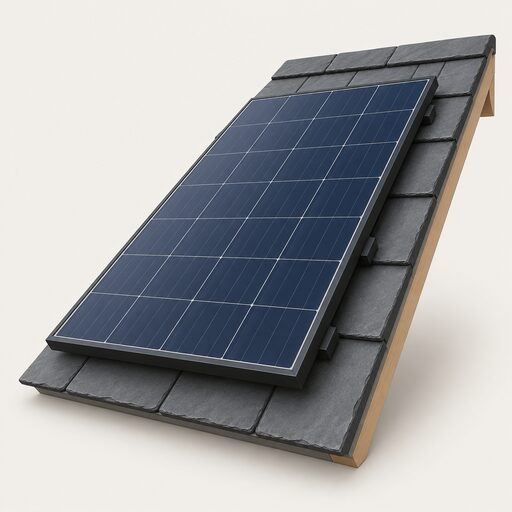 Planning Permission WalesDo you need planning permission for solar panels on your house in Wales?
 Home Energy Planning WalesSolar panels and heat pumps often need no planning permission in Wales, but the rules differ from England.
 Wind Turbine Planning in WalesDo you need planning permission for a wind turbine at home in Wales?